Live Love Laugh Learn … Create the possibilities

Category: Self esteem

  • A garden party

    www.openclipart.org
    http://www.openclipart.org

    The purposes of education are many; but perhaps one important purpose of “free” public schooling is to ensure that everyone is provided with the opportunity of being educated. While this goal is achieved to a certain extent, inequalities of opportunity still exist, many of which are related to socioeconomic status (SES).

    letter from Camus

    While there is no doubt that a teacher can have a powerful effect upon the lives of students and any teacher would love to receive a letter such as that written by Albert Camus, socioeconomic status is often considered to be the most reliable predictor of success in school and, therefore, in life. There are many reasons for this, few of which have anything to do with intelligence.

    www.openclipart.com
    http://www.openclipart.com

    According to Macquarie University the majority of students in tertiary education are of mid to high socioeconomic status. The parents of these students may have professional backgrounds and may have attended tertiary institutions themselves.  Most have an appreciation of the benefits of higher education and are able to continue supporting their students, to some extent, while they study.

    While students of lower SES are attending tertiary institutions in greater numbers they are disadvantaged in doing so by a number of factors, primarily financial in origin. Although Australia is supposedly free of class distinctions, attitudes towards those from lower SES areas are often demeaning and unsympathetic. Students from these areas may battle to develop the self-esteem that seems to be a birthright for others from more privileged backgrounds. The negativism with which they are viewed, and some come to view themselves, can become a self-fulfilling prophecy.

    Ready for school - year 2
    Ready for school – year 2

    I was a fortunate one for, while I grew up in a family with low SES background, my parents saw the value in education and sacrificed much for their children to have the opportunities it provided. The high costs of tertiary education that are now incurred could not have been afforded, but I achieved well enough in school to obtain a scholarship to teachers’ college and a three-year bond (guaranteed employment) when that was finished.

    Nowadays there is no such thing as guaranteed employment and few scholarships. Many families cannot afford to have post-secondary/adult students continue to live at home and not contribute to expenses while they undertake further study. This means that students have the additional burden of working while they are studying. Many opt out of study altogether to seek long term employment, often in low paying jobs with little opportunity for advancement. And so the cycle continues. The lack of permanent employment even for graduates makes deferring earnings less desirable again.

    caravan

    Of course the disadvantage doesn’t just begin when approaching final years of school. The impacts can be observed from the earliest age. (My suggestion for an early learning caravan addresses this in part.) Although education is provided “free” to students, there are many other associated costs that families may struggle to meet, such as books, equipment, and extra-curricular activities such as excursions and incursions.

    In most Australian schools, the wearing of uniforms helps to minimize differences that may otherwise be obvious by choices of clothing and footwear. It also helps to reduce costs. Sometimes additional activities can be a drain on family expenses, and while many schools will fund expenses for those in need, not all families are willing to ask for that help.

    DCF 1.0

    Studies have shown that many children arrive at school without having eaten breakfast. While this phenomenon can occur in any family, it is more prevalent in low SES areas. Some schools are now providing a healthy breakfast for students when they arrive at school. I think this great as hungry children tend to have difficulty concentrating and learning, are often lethargic and may suffer from mood swings and negative attitudes. I know how irritated I become when I am hungry. My family “joke” about not getting in the way of me and my food! How much worse for children who come to school with empty bellies.

    Of course these issues are compounded for children who live in dysfunctional families. As much as we may try to be inclusive and equitable in the way we treat them, these students are often the ones who notice their differences and inadequacies and become most self-critical. It can be a very difficult task to change the attitudes and habits of generations.

    This week at the Carrot Ranch Charli Mills talked about attending a garden party. The hosts and guests at this party had obviously enjoyed some of the finer things that life reserves for a few.

    lake-pend-oreile-cruise-may-21-31

    Charli shared a photo of a rather idyllic spot on an island and challenged writers to In 99 words (no more, no less) write a story, using the above photo as a prompt.

    Well the photo is beautiful, but I couldn’t get away, I was stuck at the garden party. I thought it was a wonderful analogy for the rewards that can be had from an education; rewards that may be obvious and perhaps available to many, but rewards that may be out of reach to others because of circumstances over which they have no real control. I thought of Marnie who suffers the double disadvantage of a dysfunctional family in a low SES area; but who knows there is something better out there and wants it for herself.

    Thanks to Charli for her prompt, here is another episode from Marnie’s life. I hope you enjoy it.

    The garden party

    Marnie’s face pressed into the bars of the tall white gate with amazement: white-covered tables laden with food; chairs with white bows; white streamers and balloons; and a band!

    But the ladies had her spellbound with elegant dresses and high, high heels; flowers in their hair and bright painted lips.

    A man in uniform opened the gate to guests arriving in limousines. Marnie followed.

    “Not you, Miss,” said the uniformed man.

    Marnie held out her invitation, “Jasmine . . .”

    But he’d closed the gate and turned away.

    Marnie looked down at her stained dress. What was she thinking?

    Thank you

    Thank you for reading. I appreciate your feedback. Please share your thoughts about any aspect of this post or flash fiction.

  • Stop bullying now!

    No bullies allowed2

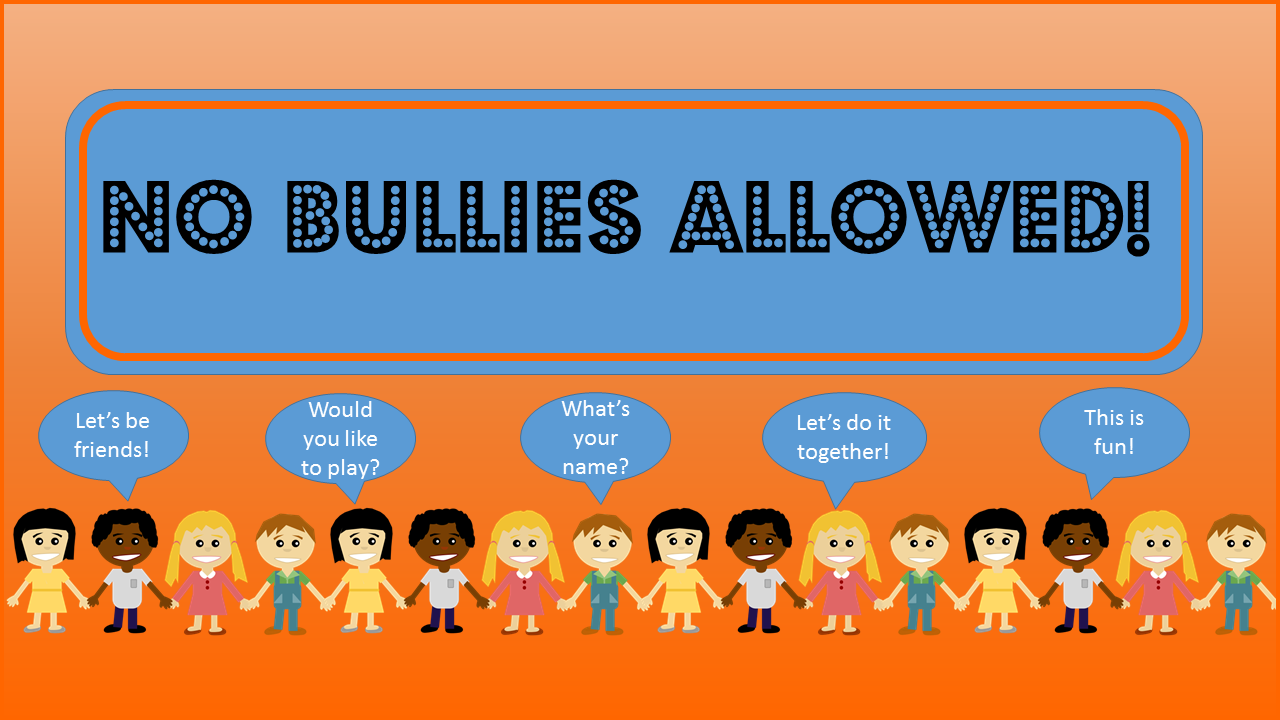
    Today all across Australia children, teachers and other school personnel are dressing in orange to mark the National Day of Action against Bullying and Violence. The Bullying No Way! Program aims to

    “create learning environments where every student and school community member is safe, supported, respected and valued”

    A very worthwhile goal, I’m sure you’ll agree.

    The Bullying No Way website has resources for parents, teachers and students, including this video for young children:

    The Prime Minister Tony Abbott delivered a message to children telling them that there is no place for bullying in Australia, that bullying is wrong.  I definitely agree!

    Picture1

    Last month Yvonne Spence organized a very successful #1000 Speak for Compassion campaign. This month she has placed the focus on bullying and requested bloggers to unite their voices against bullying. You can join in by visiting the Facebook page. I have already linked my most recent post Bully for you! as well as this one. There are many others there to read.

    Last week Charli Mills extended a challenge to write a flash fiction story about bullies. She has compiled the wonderful stories in her post Circling the Bullies.

    My previous post, Bully for you! received many comments, some sharing experiences of bullying, either of themselves or someone close to them. One comment was from a new visitor to my blog Sherrill S Cannon who shared information about her books dealing with bullying for children, and also explained her involvement with I’m bully free.org to which she donates 50% of the revenue from her books purchased through that page.

    There are many other organizations that promote information about and actions against bullying worldwide.  Hopefully as more voices unite in making others aware of, and in speaking out against bullying, we can come close to eradicating it from our society.

    As Michelle James commented on my previous post

    “More needs to be done to prevent bullying. I really believe that there should be more intensive courses for teachers and administrators to learn to deal with the bully issue. We will never eradicate bullying completely. It is a tactic used by despots and terrorists, and sadly, they seem to thrive.”

    Many of the comments on the post last week were in relation to the bullying incident involving Marnie. I share her story again here in case you missed it:

    Not funny at all!

    Jasmine and Georgie rushed towards the cluster of children who were laughing hysterically at something unseen. They expected to see an entertainer performing magic tricks. Instead they saw Marnie, face down in a puddle, reaching for her unicorn; sobbing.

    “Good one, Brucie!” Two boys high-5ed. Another called, “Way to go!”

    The children stood transfixed by the spectacle. Jasmine pushed through. She picked up the muddied unicorn, stretched out a hand to help Marnie up, then put an arm around her waist,

    As she led Marnie away Jasmine glared at the group of disbelieving faces.

    “Shame on you,” she said*.

    *Thanks to Donna Marie for suggesting I change “mouthed” to “said”.

    In this piece I tried to show that there may be many participants in bullying, not just the obvious “victim” and “bully”.

    Marnie is the obvious victim. But there were many onlookers. None, except Jasmine, spoke up against the bully. By their silence were they condoning it? Or were they fearful that they would be the next targets if they said anything? Does that also make them victims? How does that affect their confidence and self-image?

    Brucie was the obvious bully, causing Marnie’s embarrassment. But what of the boys who applauded with their high-5s and words of encouragement? Were they joining in because they too were mean; part of a gang of bullies? Or like the other onlookers, did they feel threatened about what may happen to them if they didn’t join in?

    But is Brucie also a victim? What makes a bully a bully? Why did he pick on the vulnerable? What in his life caused him to act this way?

    And what of Georgie who stood back in the crowd and did nothing while her friend Jasmine went to Marnie’s rescue? Why was she reticent to support her friend?

    I wonder, too, what they all said when they turned away. Did they speak out in private about the bullies? Geoff Le Pard commented on a similar lack of support for him when he was bullied at school.

    Jasmine was the only one who came to her rescue? Why did she? How was she feeling? Had she been the victim of bullying and so felt empathy with Marnie? Did she just know it was wrong and that it was important for someone to take a stand? What had happened in her life to make her so strong?

    Donna Marie of Writer’s Side Up commented how being bullied had ruined her boyfriend’s life and suggested that more needs to be done to change the bully’s behaviour. Perhaps some bullies need protection from bullies themselves. Did they need to learn the behaviour somewhere?

    https://openclipart.org/detail/205654/Angry%20Smiley
    https://openclipart.org/detail/205654/Angry%20Smiley
    https://openclipart.org/detail/213515/Emoticon%20-%20tongue
    https://openclipart.org/detail/213515/Emoticon%20-%20tongue

    The word bullying is sometimes used to describe a one-off unpleasant incident, like poking out a tongue or showing the “rude” finger. However bullying usually refers to something more ongoing, where there is an imbalance of power, the “stronger” picking on the “weaker”.

    To avoid becoming the weaker, I think children need to develop resilience. They need to realise that just because somebody says it doesn’t make it true. They need to learn to take responsibility for their feelings, realise that they can choose to feel upset or choose to ignore it. I am in no way saying they should ignore aggressive, violent, intimidating behaviour, but learning to be resilient about the little things helps to develop strength of character.

    I think we would probably all agree that bullying is a complex issue with many facets. That education is required to reduce its incidence is a given. What do you think?

    Thank you

    Thank you for reading. I appreciate your feedback. Please share your thoughts about any aspect of this post.


  • Bully for you!

    No bullies allowed

    Everybody knows what a bully is. If you have never experienced bullying of some kind on a personal level, then you are probably pretty lucky. But you have possibly witnessed, or were at least aware of, bullying at school, in the community, or in the workplace, maybe even at home.

    https://openclipart.org/detail/27915/Thug
    https://openclipart.org/detail/27915/Thug

    Bullies feature strongly in traditional fairy tales such as the stepmother and stepsisters in Cinderella and the mean Rumpelstiltskin in the story of the same name. Roald Dahl also introduced us to bullies through Veruca Salt in Charlie and the Chocolate Factory and Mr and Mrs Twit in The Twits.

    The first picture books I think of when the topic of bullying is raised are Anthony Browne’s Willy the Wimp and Willy and Hugh. They are great to read and use to stimulate discussion of bullying with young children. In this video author Anthony Browne explains that most children recognize a little of themselves in Willy. The transformation from timidity to self-confidence appears achievable and encouraging to all.

    The opposite of being a bully is being kind. This article by Kari Kubiszyn Kampakis, Raising a Kind Daughter tells a heart-warming story of selfless kindness shown by a daughter and her mother. As was commented on in many posts about compassion, including this one, modelling is the best way of teaching children attitudes and behaviours we wish them to learn.

    This week at the Carrot Ranch, Charli Mills has challenged writers to In 99 words (no more, no less) write a story that shows the bully mentality countered with a different, unexpected or kind action.

    Over the past year while I have been engaging with Charli’s flash fiction challenges, I have been developing a character, Marnie, who is definitely no stranger to bullying. Each of Charli’s prompts encourages me to think a little more about Marnie, what may have occurred in her life, and what her responses would be. While I sometimes write about other things, I could not ignore Marnie with this prompt.

    This is what we already know about Marnie,

    as a child:

    • she has a dysfunctional family
    • she suffers physical and emotional abuse, including neglect, from both parents
    • she has a toy unicorn as a comforter
    • she finds the expectations of school challenging
    • she feels alone and excluded at school with few friends
    • she gains the support of one teacher who helps her to develop more self-confidence

    as a teenager:

    • the teacher continues to support her
    • she leaves home and breaks contact with her family

    as an adult:

    • when both her parents have passed she is contacted and returns to the family home, which she sells, relieved that there is no longer any chance of abuse such as occurred in her childhood

    There are still many gaps and unknowns which I am hoping to explore in more detail in the future. In a recent discussion with Charli, I commented that each time I write about Marnie she reveals a little more, in much the same way as she would reveal herself to a new friend or a therapist. I’m thinking she may need to talk to a therapist at some stage. I might need to see who, and what, Anne Goodwin would recommend!

    I hope that somewhere in her life, Marnie has a friend like Annie, described in the article by Kari Kubiszyn Kampakis. Maybe it is Jasmine who we have already met in a previous episode, which also touched on a situation which may have involved bullying. Please let me know what you think.


    https://openclipart.org/detail/117199/Friendship
    https://openclipart.org/detail/117199/Friendship

    Not funny at all!

    Jasmine and Georgie rushed towards the cluster of children who were laughing hysterically at something unseen. They expected to see an entertainer performing magic tricks. Instead they saw Marnie, face down in a puddle, reaching for her unicorn; sobbing.

    “Good one, Brucie!” Two boys high-5ed. Another called, “Way to go!”

    The children stood transfixed by the spectacle. Jasmine pushed through. She picked up the muddied unicorn, stretched out a hand to help Marnie up, then put an arm around her waist,

    As she led Marnie away Jasmine glared at the group of disbelieving faces.

    “Shame on you,” she mouthed.


    Thank you

    Thank you for reading. I appreciate your feedback. Please share your thoughts about any aspect of this post or flash fiction.


  • I’m learnerate and loving it!

    In my previous post I can do this – one step at a time! I shared two words that I had just learned: illearnerate and learnacy*. I was excited by the power of their meaning and proudly declared myself to be learnerate.

    But it wasn’t always that way. Like the students Guy Claxton described in his article Learning to learn: a key goal in a 21st century curriculum, I had been schooled to be illearnerate. Over time, with the opportunity to take control of my learning and follow my interests, I developed a passion for learning, especially learning about learning, and became learnerate. Enthusing others about learning has been a life-long ambition and journey.

    Included in that post were two videos in which I demonstrated ways I use PowerPoint. I found out immediately after publishing that the ways I demonstrated weren’t the most efficient. I am grateful to Bec for informing me of a better way of saving PowerPoint slides as images; and also for the consideration she showed by informing me away from my blog in order to reduce the chances of my feeling  embarrassment about having  my “primitive” method pointed out (my words, not hers).

    Bec’s consideration for my feelings as a learner was in great contrast to school experiences in which humiliation and ridicule seemed the preferred way of dealing with any inadequacy, real or imagined.  Whenever a lack of knowledge or skill was revealed, rather than being perceived as an opportunity for learning, it was seen as an opportunity to be singled out, chastised and embarrassed in front of as many others as possible.

    sad

    One particular instance stands out in my memory.  I was in year eight. History tests had been marked and handed back; all except mine.  I tentatively raised my hand and told the teacher. Wrong move. The teacher made a big show of looking for my paper, finally “finding” it in a stack of papers on the desk and announcing to the class that it had been set aside as it was such poor work and I should be thoroughly ashamed of myself.

    Over the years I have come to realise that there is no shame in not knowing, or not being able to do something. It simply indicates an opportunity for learning. It is rare that someone will intentionally do less than the best they know how. If there is a better way, they need to be shown. Thank you, Bec, for showing me.

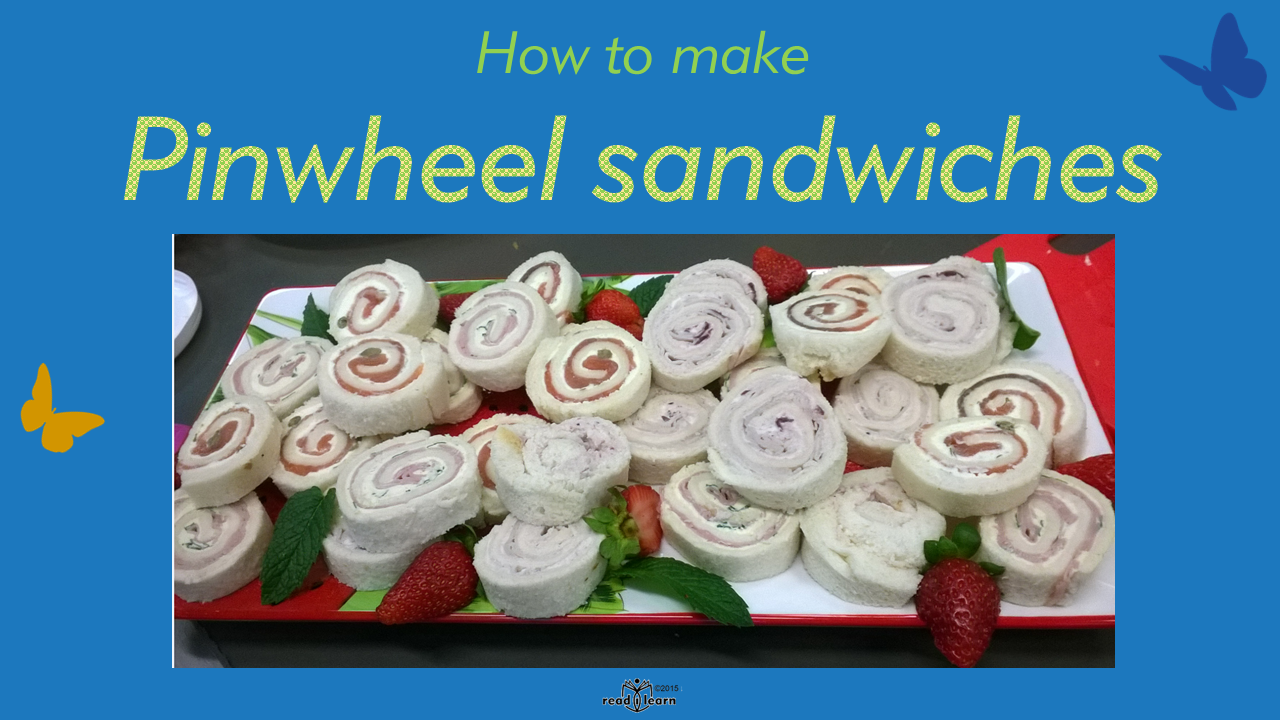
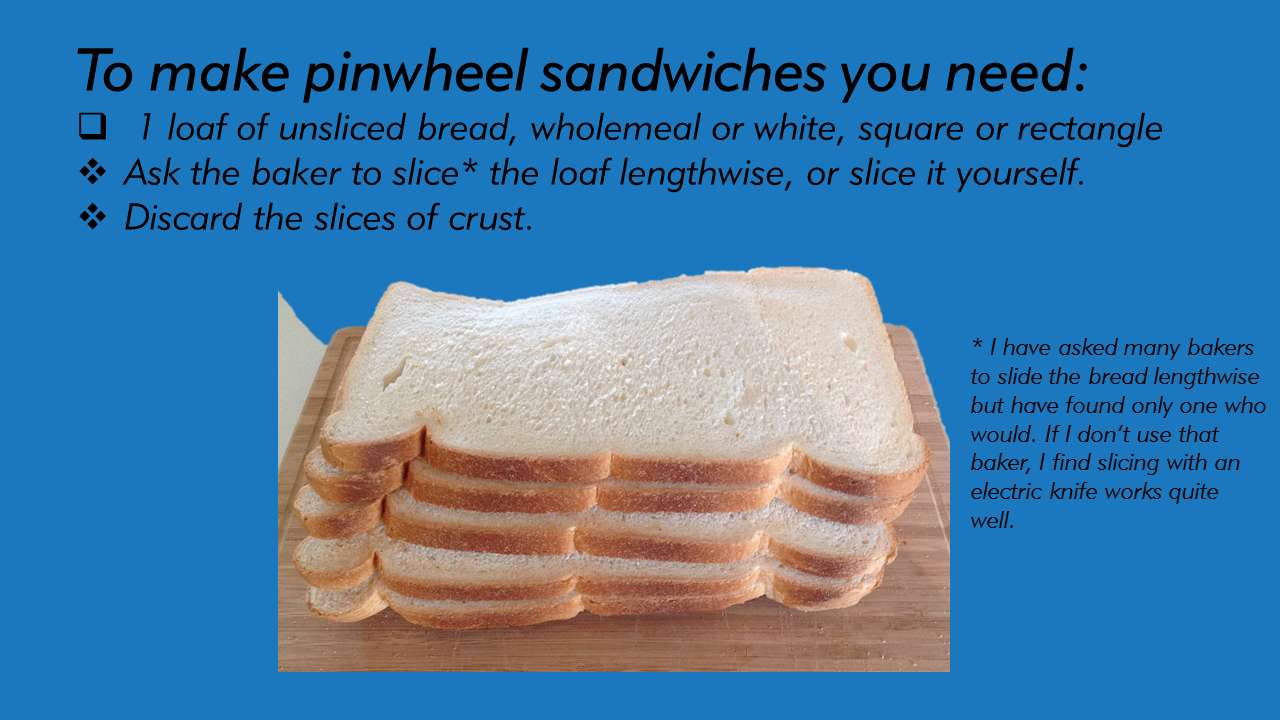
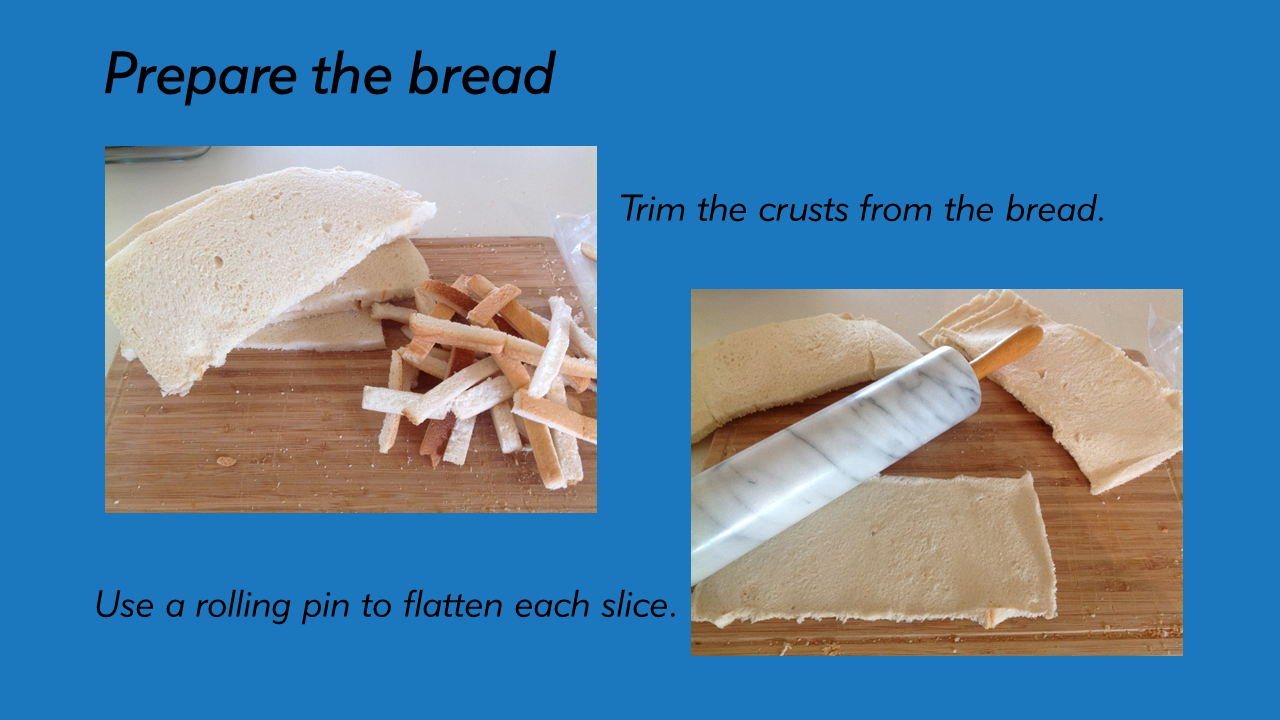
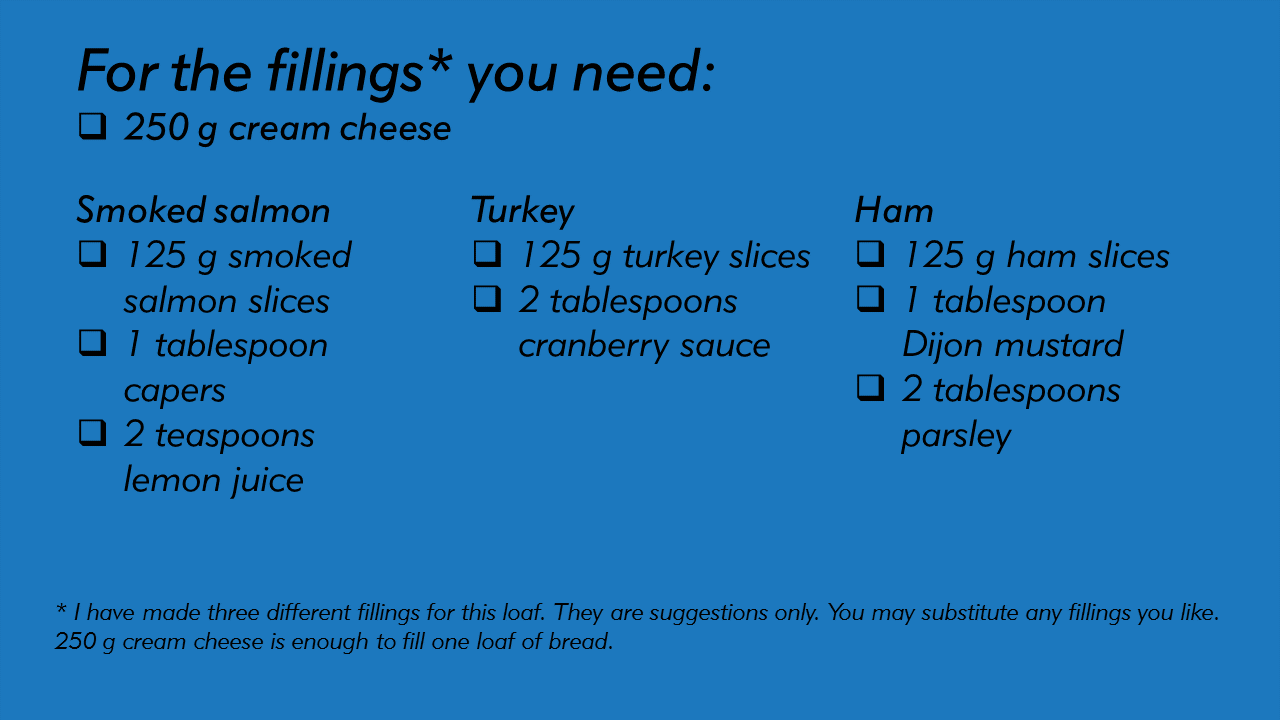
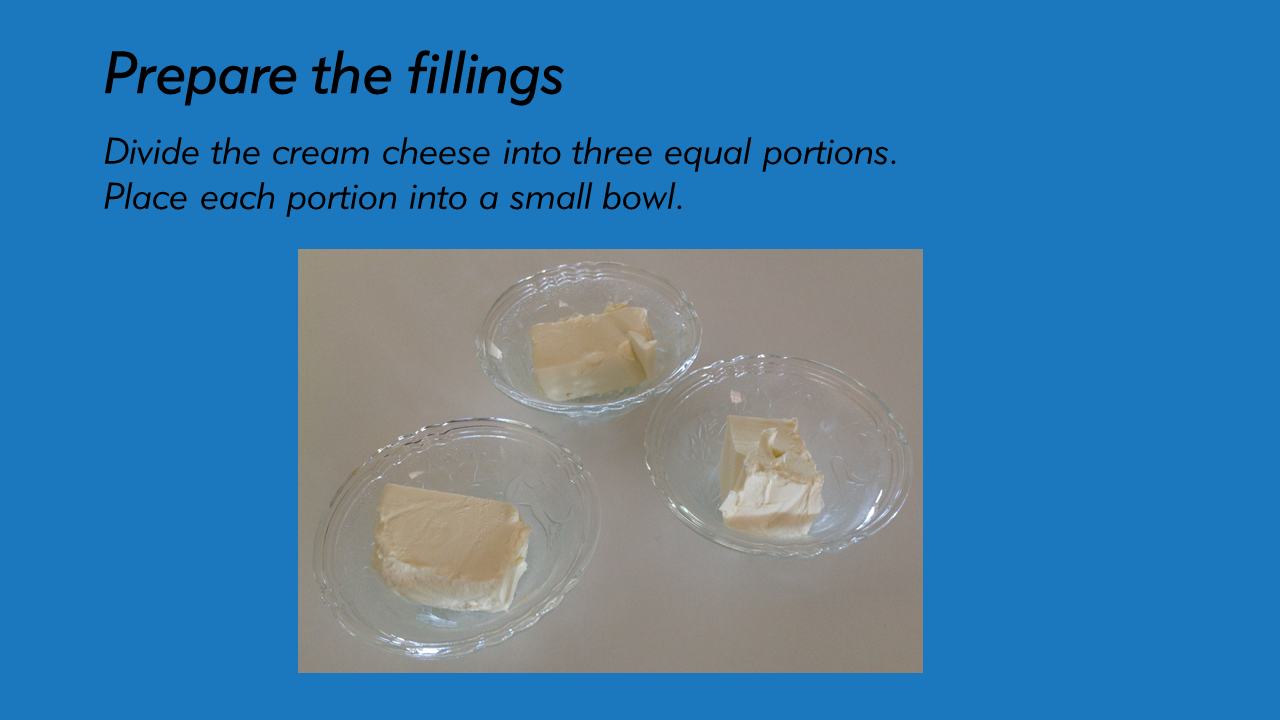
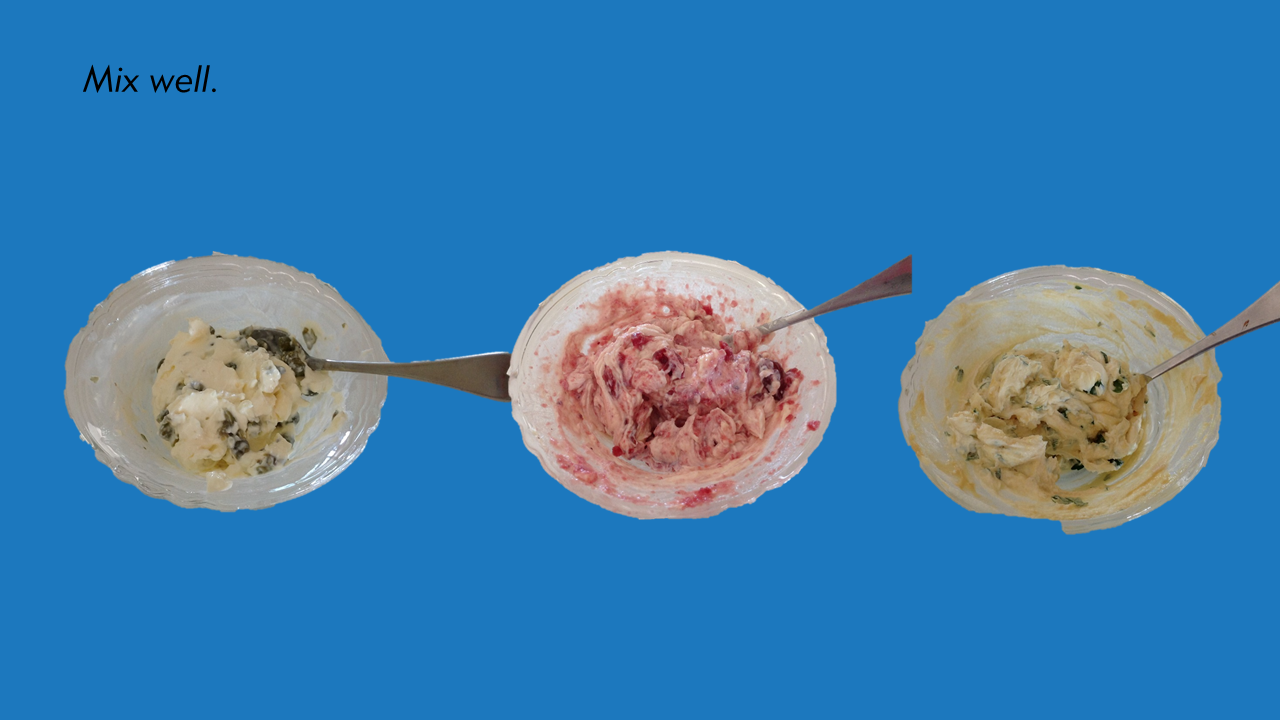
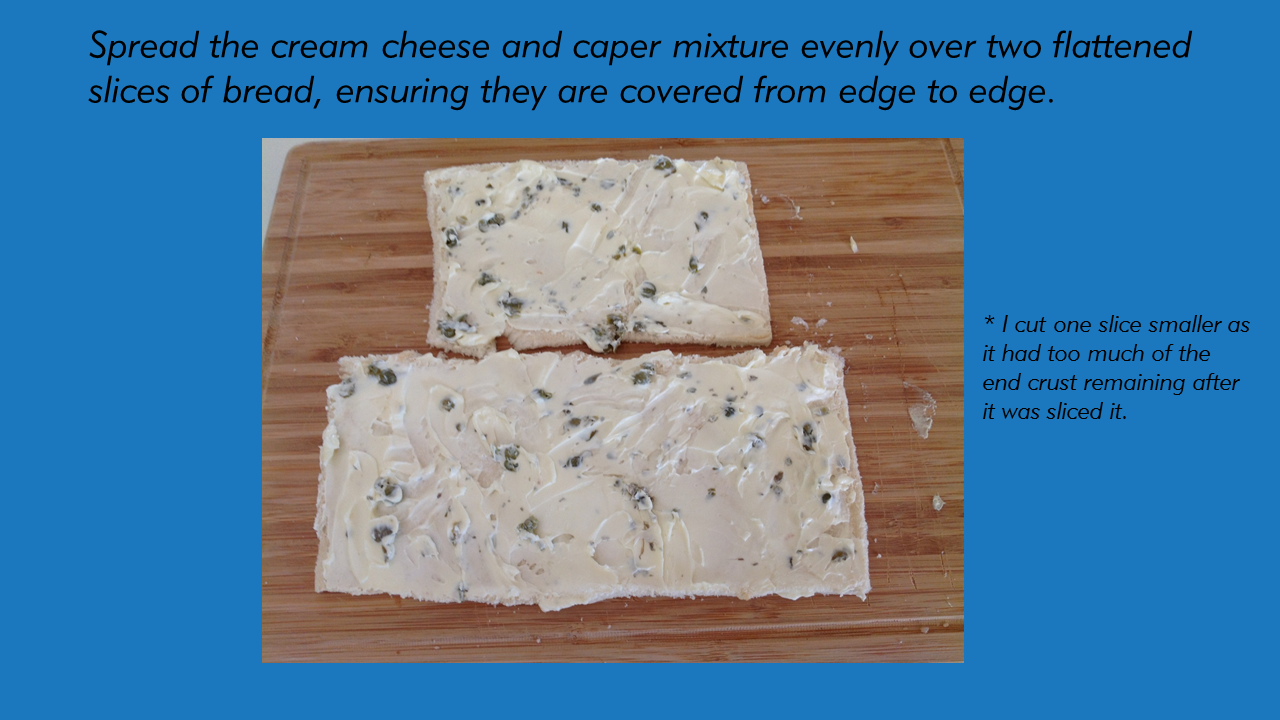
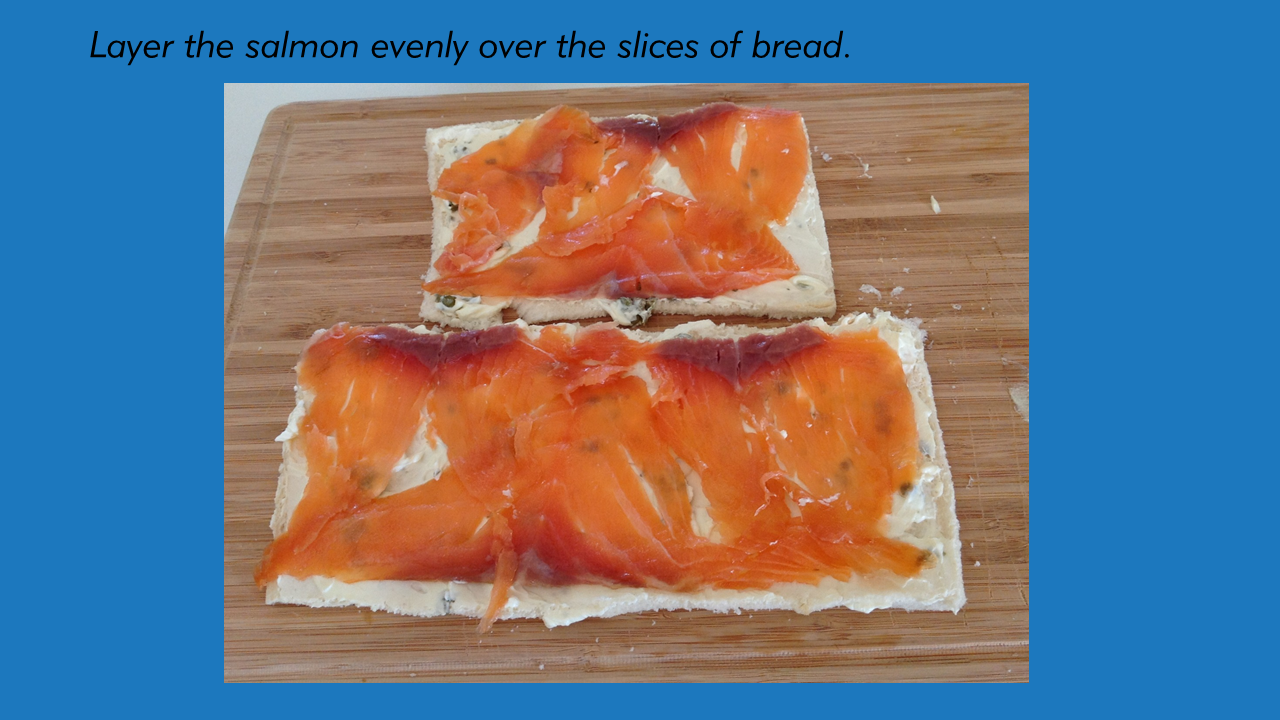
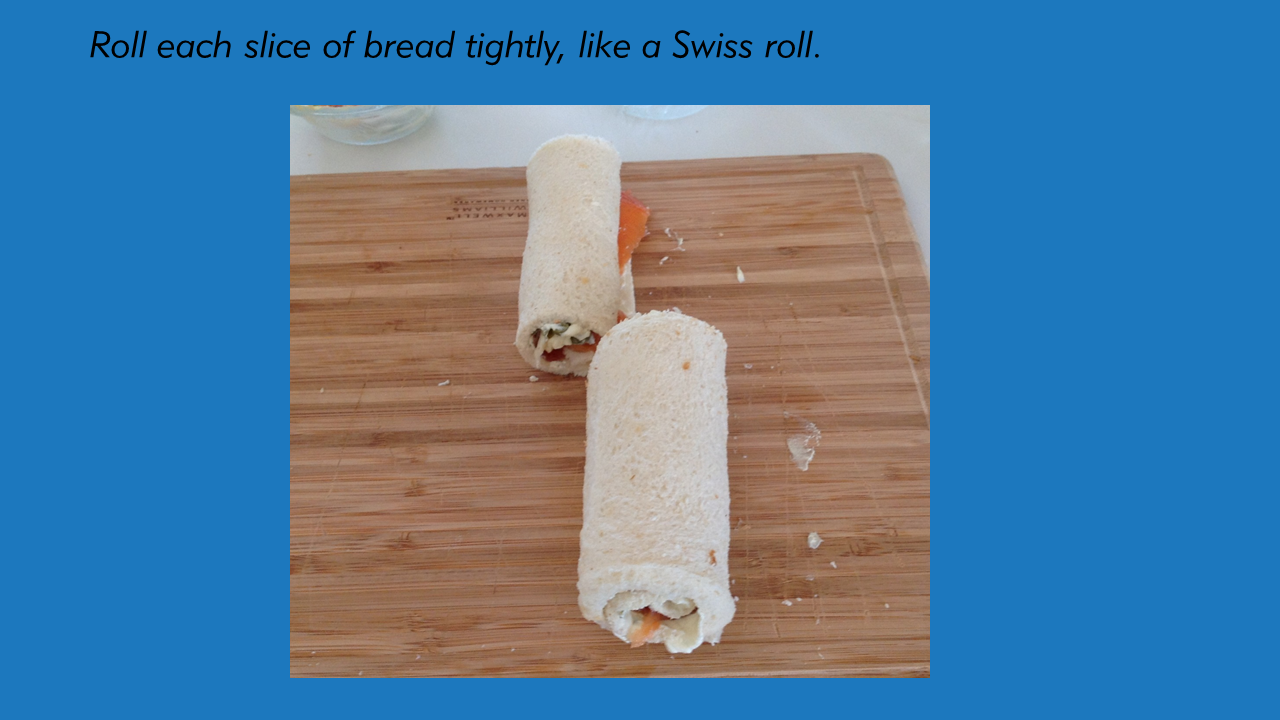
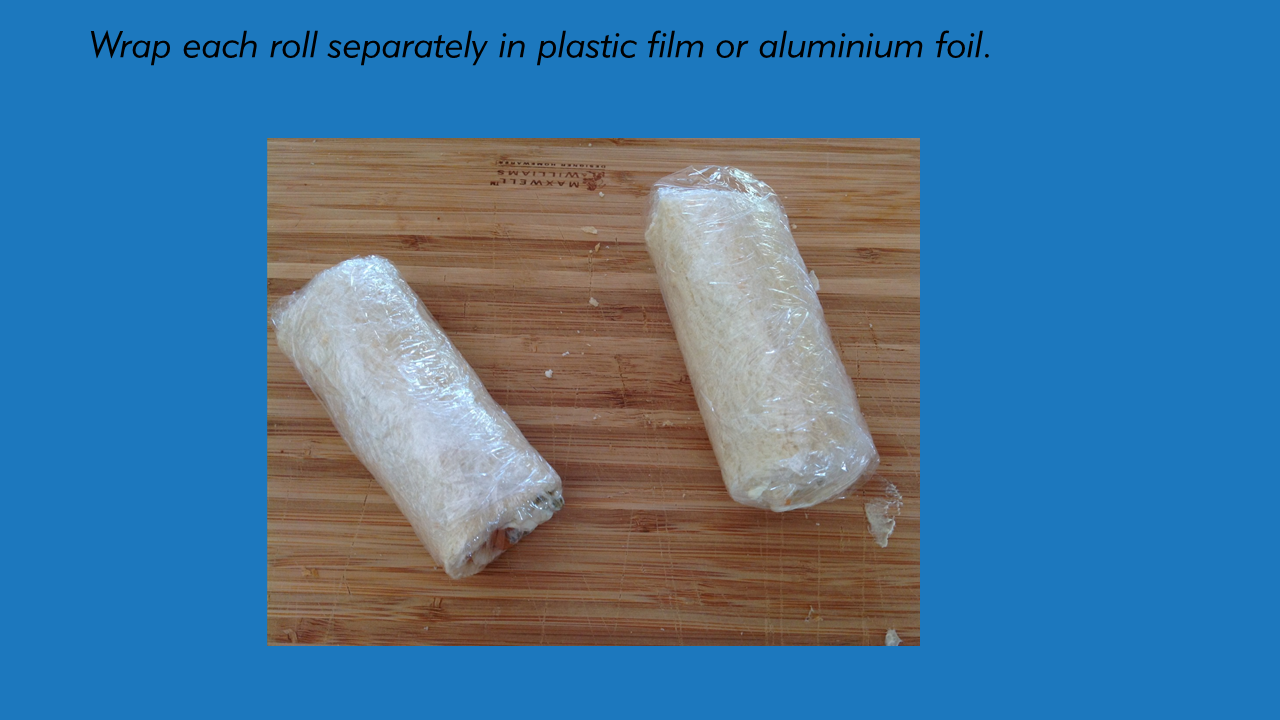
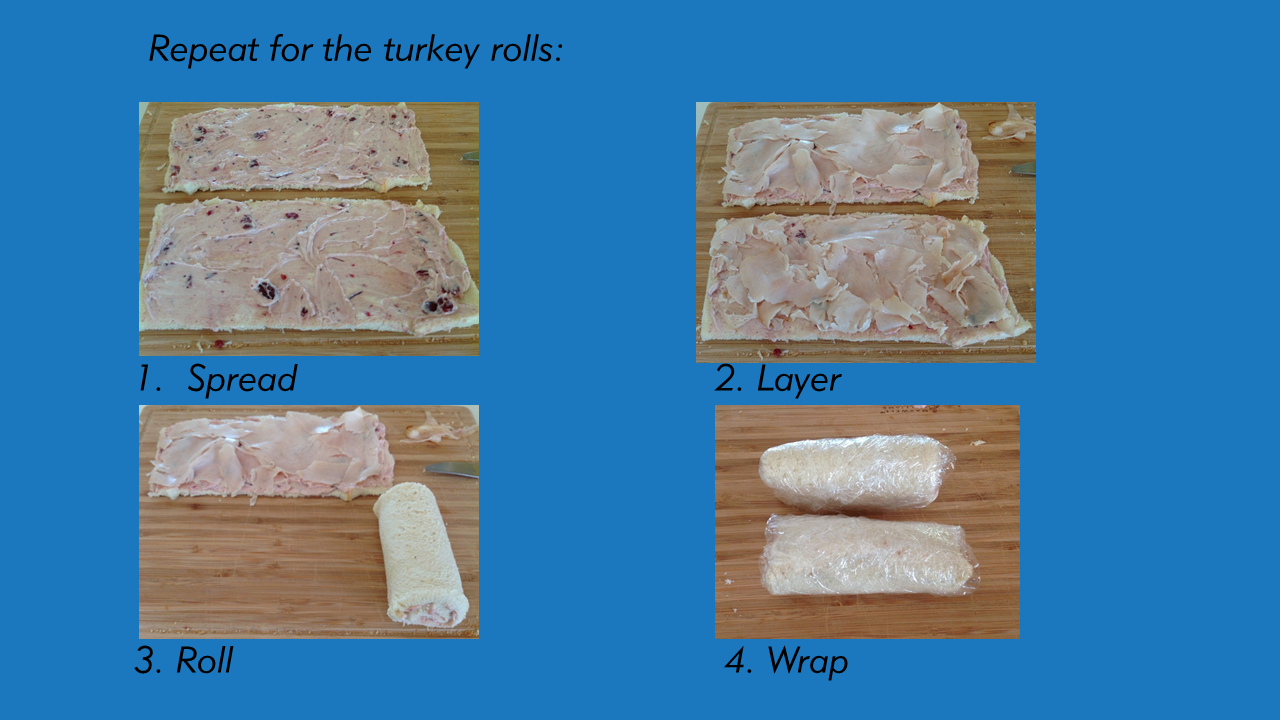
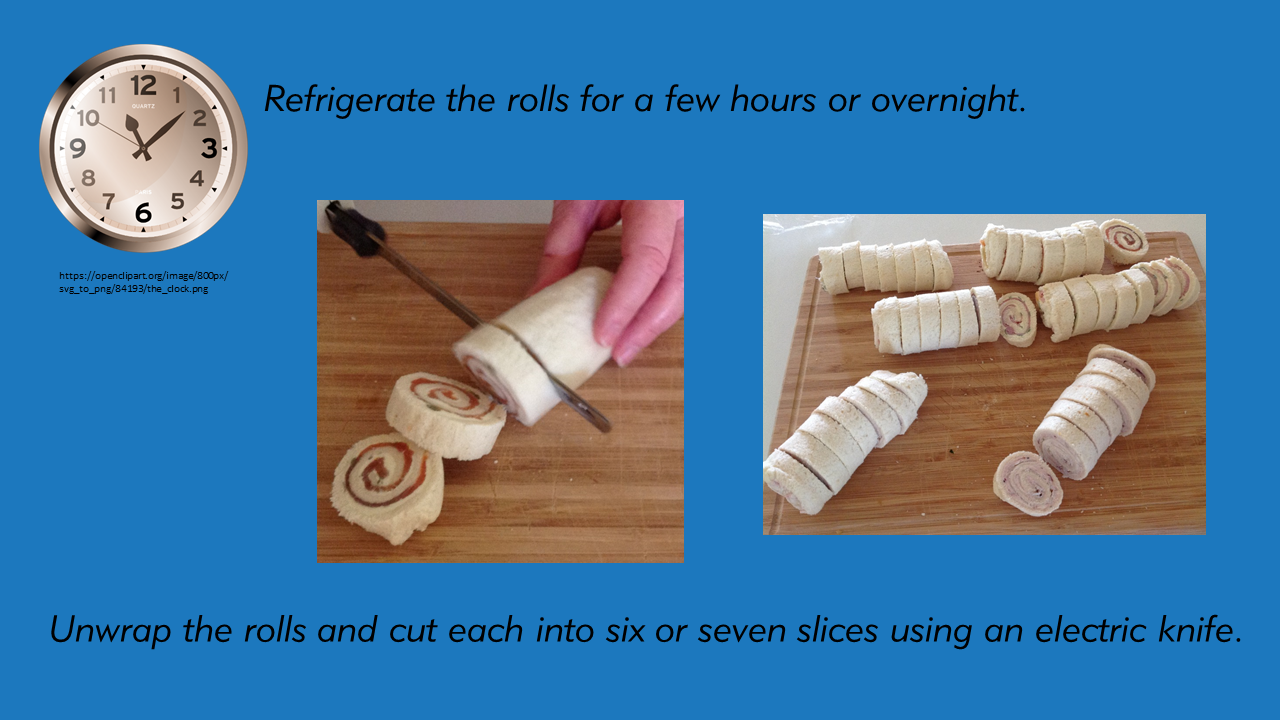
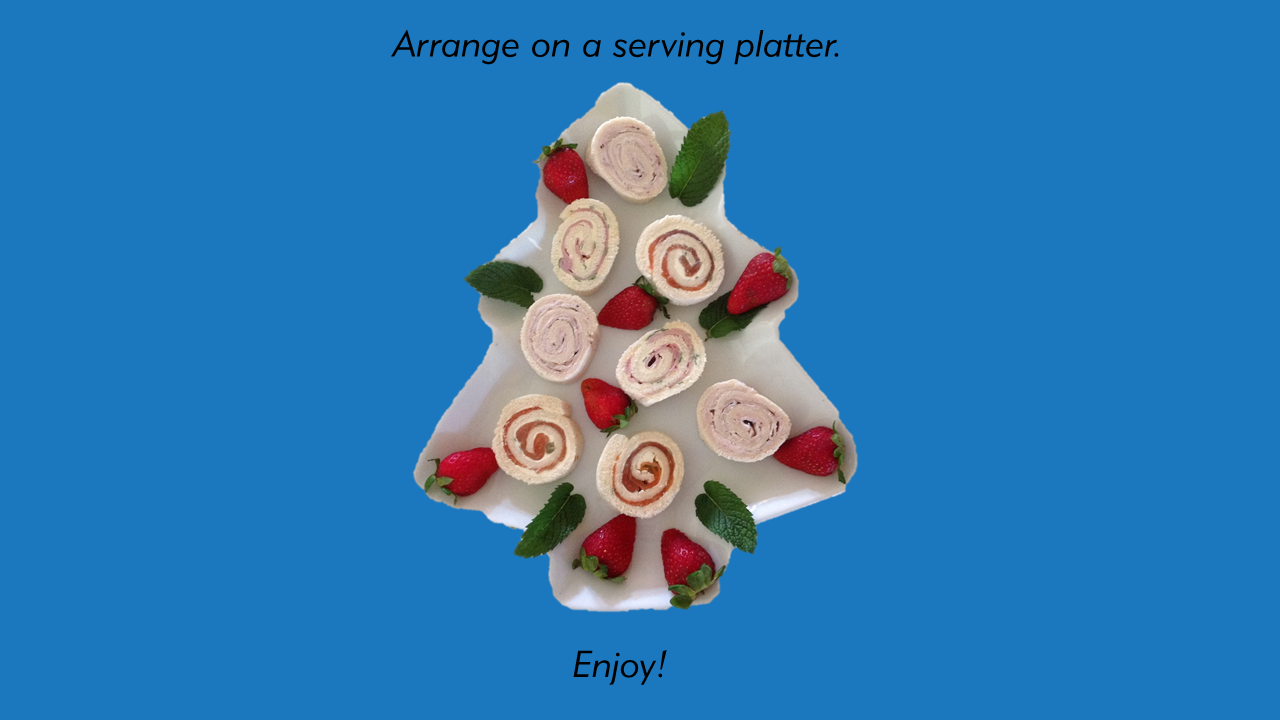
    My intention for this post was, and still is, to share my recipe for Pinwheel sandwiches. At the time of making the videos used in the previous post, I had already made the PowerPoint but had not made each slide into an image for uploading to my blog. How lucky was I that Bec told me a much more efficient way before I had done so! Instead of saving as a PDF, and then snipping and saving an image of each individual slide as I had demonstrated, all I had to do was click “Save As” and select “PNG” as the file type and every slide was saved as an individual image. Simple: very quick and easy, as I demonstrate in this 90 second video!


    And now for my pinwheel sandwiches. They also are simple, very quick and easy; very popular and just as tasty as they look!

    Slide1Slide2Slide3Slide4Slide5Slide6Slide7Slide8Slide9Slide10Slide11Slide12Slide13Slide14Slide15Slide16


    *Think of the terms illiterate and literacy and apply them to learning and you will have a good idea of the meaning.

    Thank you

    Thank you for reading. I appreciate your feedback. Please share your thoughts about any aspect of this post.

  • The Power of Not Yet by @TeacherToolkit

    The Power of Not Yet by @TeacherToolkit

    Some of my most popular posts of 2014 were those that discussed praise, growth mindset, assessment and failure.
    My final post for the year included thoughts about failure and the need to reflect and refine to move forward.
    It is fitting to begin 2015 with a post that revisits and extends those themes. I’m sharing a post about The Power of Not Yet I read on @TeacherToolkit’s blog. The post includes a video of Carol Dweck explaining that

    “if (students) didn’t pass a course, they got the grade “Not Yet.” And I thought that was fantastic, because if you get a failing grade, you think, I’m nothing, I’m nowhere. But if you get the grade “Not Yet” you understand that you’re on a learning curve. It gives you a path into the future.”

    I would much rather consider that I have not yet achieved my writing goals, than think I failed to achieve them in 2014. Not yet means I am making progress, and will continue to do so in 2015 and beyond.
    In the video Dweck shares research showing a difference that having a growth ‘not yet’ mindset can make to student effort and achievement.
    For me, her most powerful statement is that at the end of the talk:

    “Once we know that abilities are capable of such growth it becomes a basic human right for children, all children, to live in places that create that growth, to live in places filled with yet.”

    It’s a bit like learning to ride a bike. There is no failure, just stages of growth in ability.

    I hope you enjoy the article, and especially, Carol Dweck’s video.

    Thank you

    Thank you for reading. I value your feedback. Please share your thoughts about any aspect of this post.

  • What do you bomb at?

    According to my online sources, including internetslang.com, bomb can mean “something really bad” or “something really good”.

    The urbandictionary.com states that before 1997 it meant “something really bad; a failure”; and that since 1997 it has referred to something excellent, and if preceded by the word ‘the’ it means the best!

    My use of the word “bomb” fits neatly into the pre-1997 definition. Perhaps it’s not surprising since I lived most of my life so far pre-1997! Hopefully, should I live long enough, half of my life will be lived after 1997 as well, but I’ve a while to wait to see if that happens!

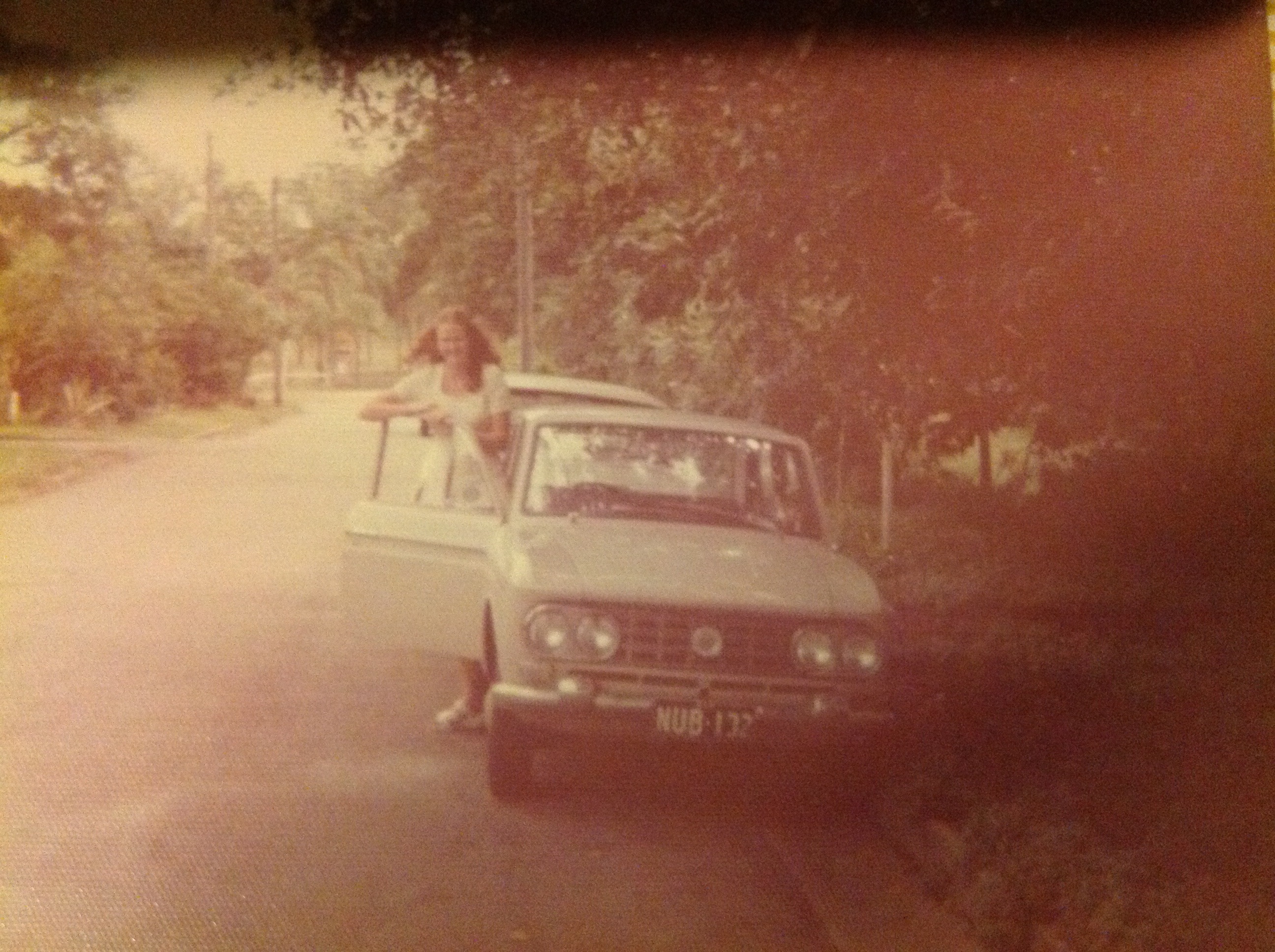
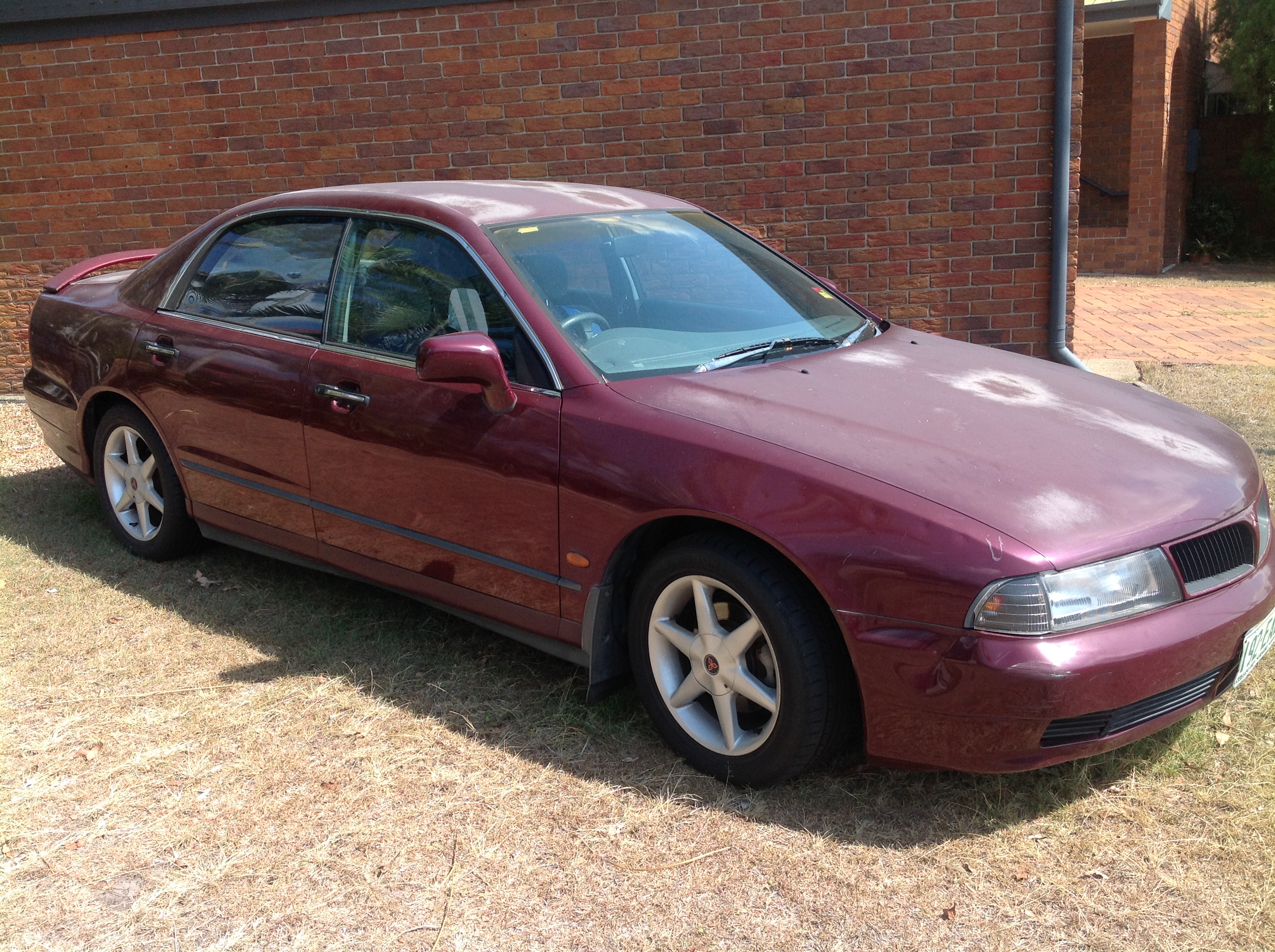
    In my day the word “bomb” was often used to describe an old beat-up car. I bought my first car when it was ten years old. It may have been described by many as a bomb (it burned oil and smoked terribly amongst other things) but I loved it, adorned it with flower stickers and even named it “Ziggy”.

    car Ziggy

    Nowadays cars seem to last a lot longer before they earn the title of bomb. Dare I say our 1997 car has only in recent years earned that title, and really only after it became unsightly due to hail damage and deterioration of the paintwork. It has been replaced by a car we might call “the bomb” but it still sits in the front yard and gets an occasional outing, too precious for someone (other than me!) to part with.

    magna

    The most common use of the word as a verb was to refer to failure, particularly with regard to exams. After what felt to be a particularly dismal attempt at an exam, various students would bemoan its difficulty saying, “I bombed”. I have talked about failure in previous posts including my “failure” at singing here, and the failure of some aspects of schooling here. The word ‘bomb’ doesn’t appear in either of those posts.

    It was Charli Mills of the Carrot Ranch who got me thinking about bombing with her Nov 12: Flash Fiction Challenge to In 99 words (no more, no less) write a photo bomb (serious scene interrupted by something absurd or unexpected).

    Now Charlie was talking about photo bombs which she described as an “earnest photograph interrupted by the unexpected”, but I thought I would tackle video bombs. I knew I had made quite a few of those!

    In an effort to learn more about making videos, which has been on my to-do list for ages, I also decided to make a compilation of video bombs to accompany my 99 words, while endeavouring to meet both Charli’s criteria and mine:

    Charli:

    99 words

    bombing

    Me:

    99 words that make sense (always a priority)

    find videos to match the 99 words

    make a compilation video

    record the video and words

    My attempt is quite experimental and rather rudimentary at best but I learned a lot in the process. Since my blog is about learning, I decided to share it with you as a checkpoint on my learning journey. I know it’s definitely not “the bomb”, but I hope I haven’t totally bombed.


    In the words of C.S. Lewis,

    “Failures are finger posts on the road to achievement.”


    Video bombing

    Are you a video bomber?

    Ever tried making a video but

    the subject won’t cooperate,

    or turns its back to you,

    or perhaps it even disappears Poof! It’s out of view.

    You shoot upside down or to the side,

    the focus you can’t get right.

    You shoot with the camera supposedly off,

    then close-up your fingers when on.

    You record to capture a photo,

    or snap when it’s action you want.

    If your answer is ‘Yes” to just one of these

    come join the vid-bombers club.

    We’ll commiserate

    And then celebrate

    When your video capture’s “the bomb”!

    Thank you

    I appreciate your feedback. Please share your thoughts about any aspect of this post, flash fiction or video.

  • Benefits of inclusion

    Recently I listened to a compelling TEDx talk by Dan Habib. You can listen to it here:

    Dan opens his talk by asking the audience some questions about their school days:

    Did kids with and without disabilities study together and learn together?

    Did they have a best friend who had a disability?

    Did they have a boyfriend or girlfriend that had a significant disability?

    Very few of the approximate one hundred in the audience answered in the affirmative.

    Then Habib asked the audience to consider and answer the following question:

    Did you feel some fear or nervousness when you were a kid about talking to a kid with a disability?

    The majority of the audience affirmed they did.

    Had I been in the audience, my responses would have been similar.

    When I was a kid, there were no children with disabilities in my classes. Children with disabilities were hidden away as an embarrassment and were segregated into what where called ‘opportunity schools’.

    Thinking back, my impression is that people with disabilities were not visible in the community and their needs were not catered for. They were not expected to have any participation in society. Often they were targets of taunts and laughter, but mostly ignored and avoided.

    https://openclipart.org/image/800px/svg_to_png/183559/oldmaninwheelchair.png
    https://openclipart.org/image/800px/svg_to_png/183559/oldmaninwheelchair.png

    However, when I was a kid discrimination wasn’t restricted to people with disabilities. It was a time in which racial discrimination and segregation was more prevalent; before the emergence of women’s rights and children’s rights.

    Sometimes when we see how far humanity still has to go towards equality, tolerance and compassion it is hard to see how far we have come. But looking back on the changes that have occurred in just my life time, the progress is obvious, if still insufficient.

    Even into my college years I had little contact with people with disabilities and my teacher training made no mention (that I can remember) of catering for students with disabilities, who were still segregated into what became called ‘special’ schools. I don’t recall catering for individual differences being high on the agenda back then.

    I worked as a remedial teacher for a few years, supporting students who were achieving below the expected level, of reading mainly. These children were generally of average intelligence but experiencing a learning difficulty. Children falling below average on an intelligence test would still be shunted away to special schools.

    I cannot recall the inclusion of any students with intellectual or physical disabilities at any school at which I taught prior to the 1990s when integration and mainstreaming was introduced. Dan Habib says in his talk that, as he was growing up, ‘disability was just a blip on the radar screen’ as well. Maybe this experience was similar to yours?

    When Dan came to accept that his son Samuel had a disability and that he would have that disability for life, he realized that they had to create a vision for Samuel, and let ‘Samuel create a vision for himself“.

    https://openclipart.org/image/800px/svg_to_png/195899/EPA-clubhousekids.png
    https://openclipart.org/image/800px/svg_to_png/195899/EPA-clubhousekids.png

    Part of this was the need for a sense of belonging: to the neighbourhood, the community and the local school. It was this that got Dan thinking about inclusion. Dan goes on to describe the ways in which Samuel was included in the school and the community, and the benefits, for both Samuel and others.
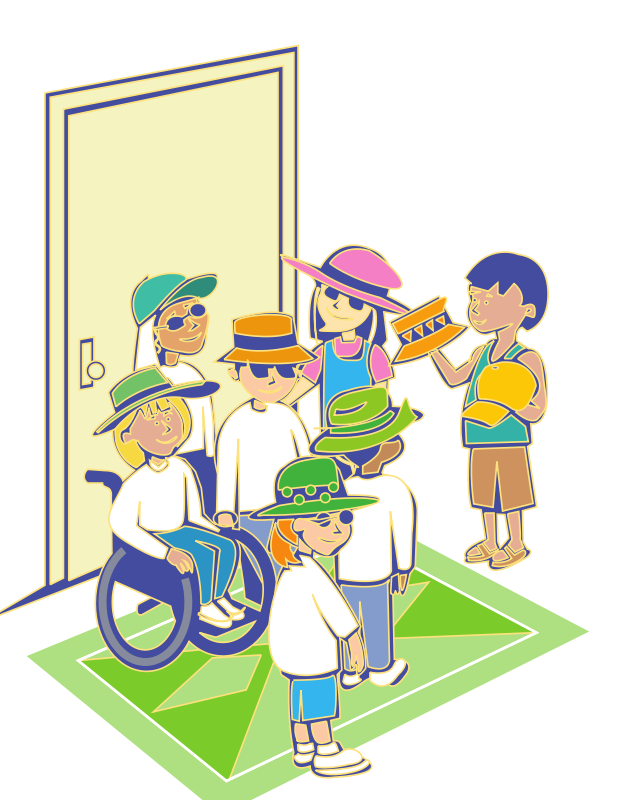
    He urges everyone to advocate for inclusive education as the benefits include better communication skills, higher academic achievements, wider social networks and fewer behaviour problems. He decries the fact that, despite the benefits, most kids with disabilities still spend their day segregated.

    He explains that the benefits are just as valuable for typical kids who achieve higher academically while learning to be patient, caring, compassionate, and loving. In my more recent years of teaching, I got to see these benefits of inclusion first hand. Not only did the children learn, so did I.

    I didn’t just chance upon this TEDx talk. It was included in a great guest post by Gary Dietz on The Cool Cat Teacher’s blog. The post introduced a book, written by Gary, about dads of kids with disabilities and proposed 5 practical lessons for elementary classroom inclusion. The book Dads with Disabilities is described as inspiring and ‘a must read for any teacher working with special needs kids’.

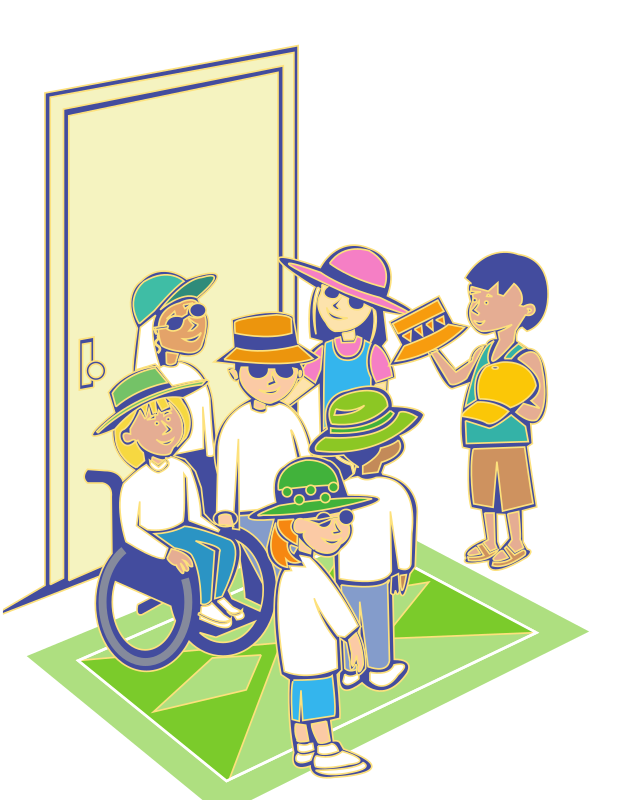
    https://openclipart.org/image/800px/svg_to_png/651/ryanlerch_kids_with_hats.png
    https://openclipart.org/image/800px/svg_to_png/651/ryanlerch_kids_with_hats.png

    The five suggestions (which I think are based on respect and are applicable for all students) are:

    1. ‘Meet the student “where the student lives” (where they need to be, at their level of development)
    2. Presume competence
    3. Be creative in your use of ‘adaptive’ technology (e.g. use of video and Skype or Facetime)
    4. Listen to parents and help them listen to the child
    5. Give “overlooked” children the same chance to shine as the superstars


    Vicki Davis is the Cool Cat Teacher. Her blog is consistently among the top 50 education blogs worldwide. Her byline is “A real teacher helping teachers be really excellent”. I agree that she is and recommend her blog to you.

    Update from Gary Dietz (12/08/2014):

    “The book ‘Dads of Disability’ is now a FREE loan if you subscribe to Amazon Prime or Kindle Unlimited. And if not, it is on sales as an ebook for $4.99. Look it up on Amazon. (Of course the paperback is still available!)”

     

    How do you view inclusion? What is your experience?

    I appreciate your feedback. Please share your thoughts about any aspect of this post.


  • I’ve got the music in me – let me count the ways!

    I’ve got the music in me – let me count the ways!

    For any hearing person, music is integral to our lives.

    Every country has a national anthem which may be taught in schools and played or sung at many and varied ceremonies and occasions, inspiring unity and national pride. Many other organisations such as schools and colleges have their songs praising their strengths and fostering a sense of identity. Couples have their special or ‘theme’ songs.

    When we enter a store we are serenaded with music chosen to make us feel comfortable and entice us to stay longer and buy more.

    Joyful advertising jingles with their subliminal messages encourage us to memorize the product name and make it our next purchase. These jingles can stay in our heads for years, like this famous one about Louie the Fly:

    A few bars of a song can revive memories from long ago. I have written about this previously in a flash fiction piece, Vagaries of time.

    Music can call us to dance, to relax, to sing, to cry. It can be chosen to match our mood, or can help to create a mood or atmosphere. The soundtrack of a film or television show tells the audience what to expect and how to feel.

    Music is also an integral part of education and learning. Learning information in a song can help one remember. Many people like to have music playing when they are reading or studying. I did when studying towards my high school exams, but now I prefer quiet when I write. Programs such as Accelerated Learning recommend using Baroque music to help learners stay relaxed and focused, increasing retention.

    I have previously written about using songs in the classroom, such as I love the mountains which I learned from Bill Martin Jr. and affirmation songs such as those of Anne Infante here and here.  I have also composed class songs and chants such as Busy Bees chant, and used songs to support class work, for example The Ugly Bug Ball when learning about mini-beasts.

    I have used music to calm and settle after play breaks, and music for activity between seated activities. I used songs in the morning to signal to children that it was time to be ready for the day’s learning, including action songs or songs about our learning, for example a phonics song:

    Image courtesy of Anne
    Image courtesy of Anne

    But of course, once we were settled, every day started with an affirmation song, or two. It got everyone into a happy expectant mood. It’s hard to be sad when singing (unless it’s a sad song).


    image courtesy of www.openclipart.org
    image courtesy of http://www.openclipart.org

    . . . and  songs in the afternoons to send the children home happy and singing with joy.

    As a year level we would sing songs to settle the children when lining up to return to class after lunchtime play. The children hurried to join in and sang their way joyfully into class. This is quite different from when I was at school and we would line up in silence and then march into school in step, subdued and quietly obedient.

    I composed songs as a child but did not continue the practice as an adult, except for one: a lullaby that I sang to soothe my baby girl to sleep. A few years later I decided to learn to play the keyboard from a very talented musical friend who guided my writing of the accompanying music. This remains my one real musical accomplishment!

    For someone who does not consider herself at all musical I certainly enjoy, and promote the use of, music in many different ways.

    On that note, I leave you with my flash fiction response to the prompt set by Charli Mills of Carrot Ranch Communications: In 99 words (no more, no less) write a story influenced by a musical score.

    Final act

    A collective gasp interrupted the music mid-beat.

    All eyes turned synchronously, as if worked by unseen strings, towards the French doors, burst open and revealing a silhouetted figure framed by billowing gossamer-like curtains.

    Out of the darkness the figure emerged: clothed in black with coat tails flapping, a top hat in one hand and a white-tipped cane held aloft in the other.

    The conductor revived the orchestra as the figure glided across the floor, seized the heroine decisively and whirled her around and around.

    The spell now broken, the cast joined in the dance to tumultuous applause.

    I hope you can imagine the score that would be written to accompany this piece and its change of moods.

    What score would you give it?

    Thank you for reading. I appreciate your feedback. Please share your thoughts about any aspect of the article or my flash fiction piece.

  • 3 Inspiring educators

    3 Inspiring educators

    Like every other teacher, I want to make a difference in the world.

    The thought that I could make a positive difference to the life of another is both empowering and inspiring.

    To do so, I seek out others making a positive difference and pay it forward, hoping that the ripple effect will carry it far and wide.

    flag on twitter

    Three inspiring educators who have positively influenced me are:

    Brian Cambourne

    Brian is an amazing literacy educator from whom I had the extreme good fortune of learning many years ago. I have written about him before here and here.

    Brian’s work focused on the conditions necessary for literacy development. His influence has spread beyond the classroom with the application of the conditions to learning in the workforce demonstrated.

    Tony Ryan

    Tony is an amazing educator who does his best to be the change he wants to see in the world. He talks about future-proofing and using innovative thinking to solve problems of both local and global importance.

    Anyone who believes ‘that education is the most important profession on the planet’ and does everything in his power to support teachers to be outstanding, as does Tony; must be pretty good in my books.

    One of Tony’s books The Ripple Effect is particularly apt for mention in this post. Tony says,

    “you must believe in your personal power to create ripples that spread out and change the world. In fact, if it is not you who is going to do it, then who else do you think is likely to make the effort? Remember that every change on this planet begins with a human being somewhere, somehow. It may as well be you.”

    This year Tony has started a new project called The Earth Movers Foundation which ‘helps young teenagers to create solutions to local and global issues. And they get to choose their own project. No adults will be telling them what project to do. They decide for themselves.’ Sounds pretty good to me.

    Ken Robinson

    Ken is another amazing educator. I fell in love with his ideas when I listened to his TED talk Do schools kill creativity? which I have also shared before here.

    The statement on his website declares that

    “Imagination is the source of all human achievement”.

    I could not argue with that.

    Ken introduces this short video The writing spirit which presents quotes from artists, thinkers, writers, innovators and snippets of interviews with writers. Just incidentally, and exciting for me, Richard Bach is included. Richard is the author of Jonathan Livingston Seagull, one of my favourite books for its inspirational message.

    It is more than likely that these educators have no idea how they have influenced my life (and others as a result).

    How wonderful might it be to know of the positive influence you have had on someone, and to have the opportunity of letting others know that they have positively impacted your life?

    This is the purpose of The Butterfly Light Award which was bestowed upon me my Lisa Reiter, a lovely lady who is herself inspirational for her courage and her positive attitude which she shares with others through her blog Sharing the story. Thank you, Lisa. I am honoured and accept with pleasure.

    As with any award, it comes with conditions:

    1. You should write an acceptance post, making sure you link back to the blogger who awarded you and thank them. You MAY NOT lump this award in with a batch of other awards.

    Thank you Lisa Reiter!

    1. You must individually name and re-award to a minimum of 1 and a maximum of 9999999 bloggers. You must let them know either personally with a comment on their blog OR a pingback.

    As I have been writing about educators, I am going to stick with that theme. A quick visit to these blogs will explain why I have selected them.

    Ruth Mancini

    The Nerdy Book Club

    Two Writing Teachers

    Raising a literate human

    3.  You should link back to Belinda’s blog either to http://idiotwriting.wordpress.com/about/ or http://idiotwriting.wordpress.com/2014/03/13/i-love-charismatic-geeks/

    Done!

    1. You must write a short paragraph entitled either “How I’m Spreading Light” OR “How I’m A Positive Influence” (what Lisa calls ‘the squirmy bit’).

    Done! See beginning of article.

    5. Display Belinda’s lovely “Butterfly Light Award” badge on your blog.

    Thank you, Belinda. It’s a pleasure! We can never have too many butterflies!

    butterfly-light-award

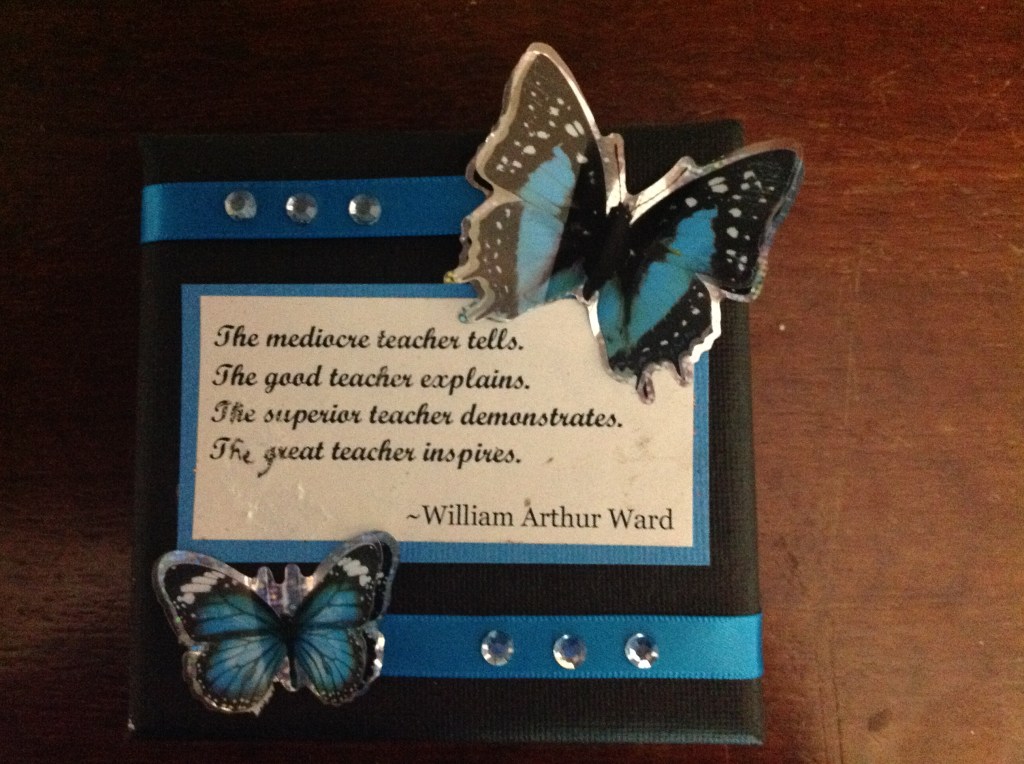
    Note: The beautiful framed quote, pictured at the top of this post, was made for me by a wonderful lady, the mother of two of my students. They all share my love of butterflies! I thank them for sharing their appreciation of my positive influence.

    I welcome your feedback. Please share your thoughts about any aspect of the article.

  • What do you have in mind?

    This week Two Writing Teachers posted a wonderful article by Stacey Shubitz (one of the Two Writing Teachers) about A Picture Book that Pushes the Growth Mindset.

    This post coincided beautifully with the flash fiction prompt posted by Charli Mills at Carrot Ranch Communications. Charli’s challenge is to:

     In 99 words (no more, no less) write a story about getting stronger.

    This is a perfect prompt for a teacher as a major focus of our work is in developing children’s strengths:

    Strengths as in abilities; strength as in self-esteem and self-confidence; strength as in willingness to face setbacks and try, try again; strength as in keeping on going even when the going gets tough.

    The picture book discussed in the article by Stacey Shubitz is The Most Magnificent Thing by Ashley Spires. Stacey suggests that the book is a great opener for discussions with children about the importance of a growth mindset.

    According to Stacey, an understanding of ‘the power of having a growth mindset’ has been enabled by the work of Carol Dweck, a Stanford psychologist. It is grounded in a belief that

    Someone can accomplish a lot more through hard work and dedication, rather than by relying on their smarts alone.

    I agree with Stacey that

    ‘Educators know the benefits of having a growth mindset, rather than having a fixed one. We learn from trial and error. There is value in failure.’

    I will not quote Stacey’s article in its entirety, but suggest you pop over and read it for yourself. (If you do, and leave a comment prior to June 27th, you may win yourself a copy of The Most Magnificent Thing, if you live in the USA or Canada.)

    Stacey says that “The girl in the story tries over ten times to build something and get it right. Through hard work and some help from her trust sidekick, her pug, she eventually succeeds.” As well as a starting point for discussing the growth mindset, Stacey suggests eight features of the book which are useful for teaching writing. The article also includes a brief, but informative, interview with the author/illustrator Ashley Spires.

    In response to Stacey’s question about using The Most Magnificent Thing for discussing a growth mindset, Ashley responds:

    ‘The character is a perfectly capable girl with a great idea and the skill to make it, but she has to try, try and try again in order to succeed. Most kids (I was one of them) think that if it’s not perfect the first time, then they should move on to something that comes to them more easily. Working hard to succeed is what true success is.”

    <p><a href=”http://vimeo.com/89499612″>The Most Magnificent Thing Book Trailer</a> from <a href=”http://vimeo.com/kidscanpress”>Kids Can Press</a> on <a href=”https://vimeo.com”>Vimeo</a&gt;.</p>

    My flash fiction, told through the jottings of a classroom teacher over time, shows a growth mindset emerging from one that was previously crushed.

    Progress

    Day one

    Timid. Needed help getting things out of bag to put in drawer. Sat towards back of group. Drew knees up under chin. Hunched over. Sucked thumb. Twisted long tangled hair under nose. Rocked.

    Day twenty-six

    Responded in roll call! Sat with ‘friend’. Legs crossed. Back straight. Smiled – briefly. Someone looked! Screamed, “Stop looking at me!” Dissolved in tears. Again. Retreated under desk. Again.

    Day fifty-two

    Initiated conversation!! Hair combed!! Nose not running!! Brought toy for show and tell. Responded with one- or two-word answers. Small, dirty, pink unicorn. B laughed. Erupted, but went to desk, not under!


    I welcome your feedback. Please share your thoughts about any aspect of the article or my flash fiction piece.