I take this opportunity of wishing you all a very happy and safe Easter long weekend however you enjoy it.
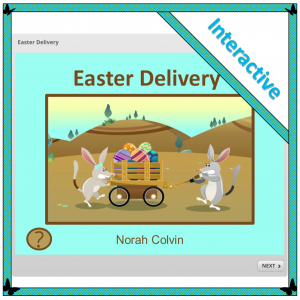
In this video, I read one of our stories called Easter Delivery which is about Bilby twins Benny and Belinda who are excited to be old enough to make their first Easter delivery on their own. Before they are allowed to go out, they must prove to Mother and Father Bilby that they are capable of following instructions and delivering just the right number of Easter eggs for each family.
With this month being National Poetry Month in the US and 17 April being International Haiku Day, I thought it was timely to share some of our poetry resources. Here in Australia, we celebrate poetry month in August, but I don’t think we need wait until then. We can celebrate again in August or make every month poetry month. No month should go by without enjoying some poetry anyway.
Poetry is a great introduction to the rhythms and sounds of our language. Children are introduced to it from a young age through nursery rhymes and picture books. Some of children’s favourite picture books are those that read like poems with rhythm, rhyme and repetition. The books of Dr Seuss and Julia Donaldson come immediately to mind. But, of course, there are many others too.
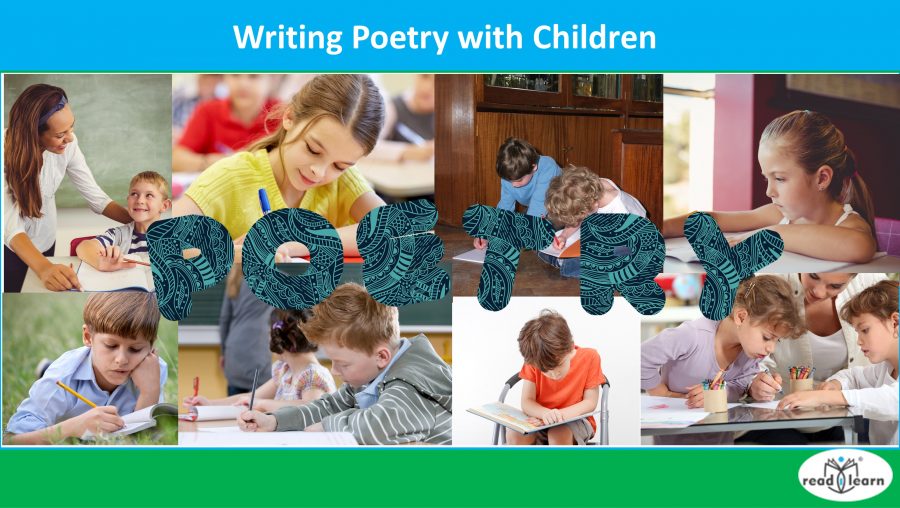
When they enter school, children love listening to poetry and experimenting with writing poems of their own. Here at readilearn we have some resources to help you help them get started on their poetry writing journey. All poetry resources are found in their own section of the literacy collection.
Writing poetry
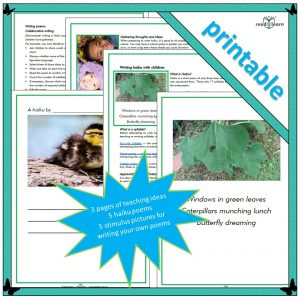
Writing Haiku with Children — This collection includes five haiku poems for reading and five stimulus photos for writing. It can be used to introduce children to the structure of haiku poetry and to encourage them to write haiku poems of their own. The resource includes information about the structure of haiku poetry as well as teaching suggestions.
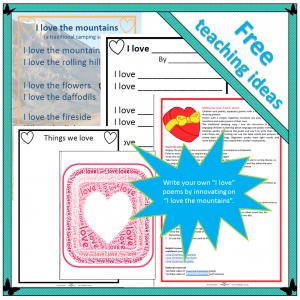
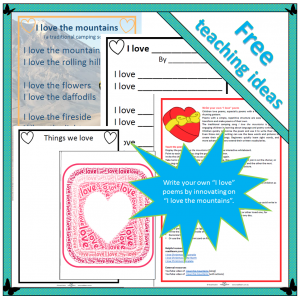
Write your own “I love” poem — This resource encourages children to write their own poems by innovating on the traditional camping song ‘I love the Mountains’. Great for even beginning writers.
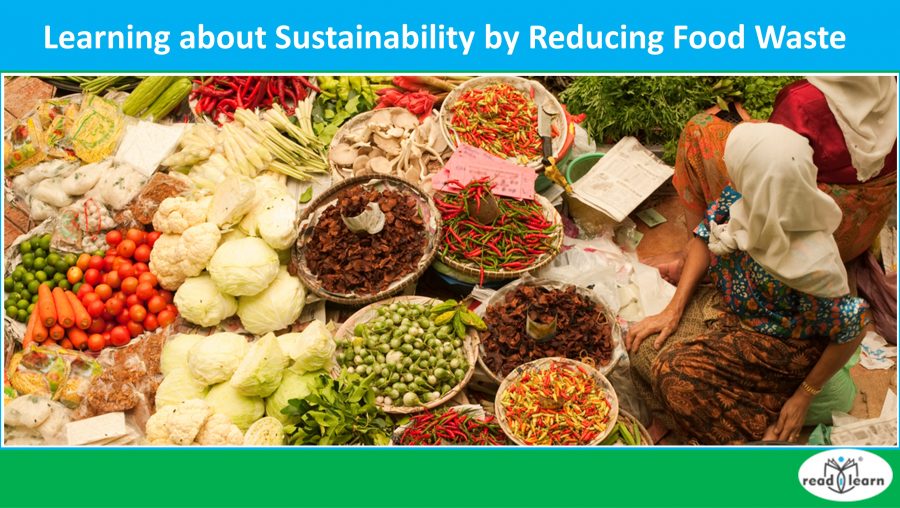
This post is a little different from my usual post in that I am not sharing teaching resources for the first three years of school. Instead, I am sharing information about a food rescue organisation and a sustainability program for Years 5 and 6. While I don’t usually share resources for older classes, I thought this may be useful information to have and to share with your colleagues who teach upper primary classes.
OzHarvest
OzHarvest is an Australian food rescue organisation founded in 2004 by Ronni Kahn. I’m embarrassed to say that I wasn’t aware of it until I read Kahn’s book A Repurposed Life in 2020 and was blown away by her dedication to helping feed people in need by saving surplus food from going to landfill. (A Repurposed Life is a fascinating and inspiring memoir, and I am happy to recommend it.)
After reading her book, I began noticing bins for accepting donations of food in the local shopping centres. I was surprised that I’d never seen them before and wondered how many times I’d walked past them, oblivious.
A quote from the website explains the OzHarvest mission:
“We are committed to halving food waste by 2030, inspiring and influencing others to do the same, and transforming lives through education.”
You can read more about the OzHarvest story and Ronni Kahn on the website here.
This video gives a very brief introduction to Ronni.
Feast
What I really wanted to share with you, though, is the OzHarvest education program called Feast with the goal of ‘Inspiring kids to eat healthy, waste less and be change-makers in their local community.’
As I said earlier, the program is for Years 5 and 6. According to the website, it is a STEM project-based learning program that runs for 7-10 weeks. The program focuses on food and fibre and the cross-curriculum priority of Sustainability.
This video gives a quick introduction to the program.
Easter is almost upon us. It has snuck up on me this year and I’m a bit late sharing our Easter resources since most of you will be on holidays at the end of next week. However, there is still one week before the holidays, so you may still have time to use some of these lessons and activities. Enjoy!
All our Easter resources can be found in the Cultural Studies collection here. They include:
Interactive lessons ready to teach on the interactive whiteboard
Easter Delivery — a story that gives children practice in finding combinations of numbers to ten.
The Bilby twins, Benny and Belinda, are excited to be making their first deliveries for Easter. Before they do, they must prove to Dad that they are capable of leaving the correct number of eggs for each friend’s family. Children help Benny and Belinda by working out what combinations of eggs could be delivered to the families.
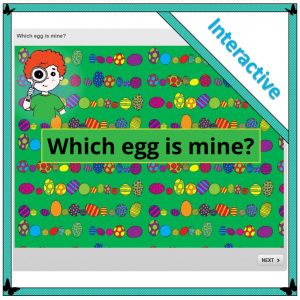
Dragona’s Lost Egg — a story that encourages the development of logical thinking and problem solving.
Dragona has lost her egg and turns to her friend Artie, owner of a Lost and Found store, for help. Artie is confident of helping her as he has many eggs on his shelves. He asks Dragona to describe features of her egg, including size, shape, pattern, and colour. He uses a process of elimination to identify which egg might be Dragona’s. Children join in the process by choosing eggs with the characteristic described.
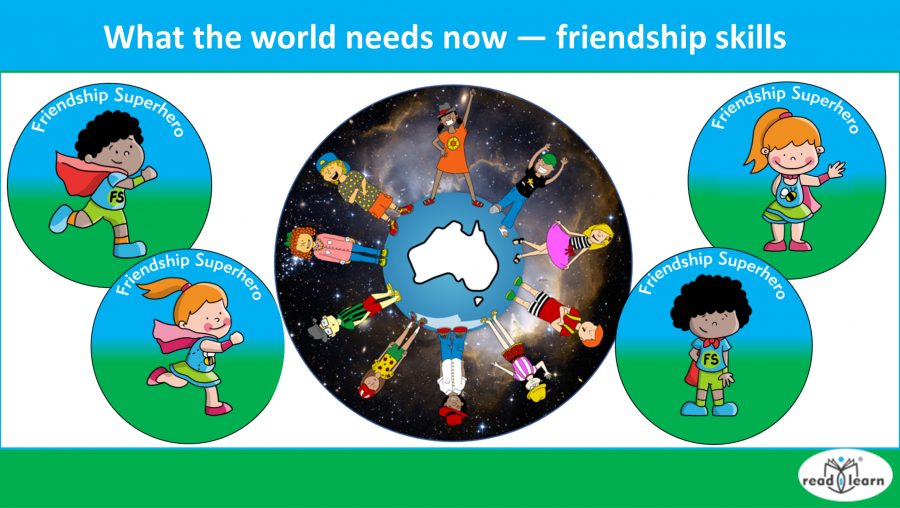
While none of these events have ‘friendship’ in their title, that to me is what it all comes down to: acceptance, kindness and friendship. It is sad to see how difficult it can be to attain on a personal, local, national and international level. We must all do what we can to make the world a happier place through inclusion and respect.
Here at readilearn, friendship skills have always been a focus. We have over twenty resources to support the teaching of friendship skills. They can all be found under the heading ‘Friendship Skills’ in the resources for Character Development.
These are just a few of the readilearn friendship skills lessons and resources:
Busy Bees ABC of friendship is an alphabet of words that can be used to stimulate discussion about what a friend is and what friends do.Each letter has a word and accompanying explanatory statement on its own chart. The entire alphabet is also available on one printable chart. It could be used for a bingo-type card on which children colour the box for each letter as they do something appropriate to the word.
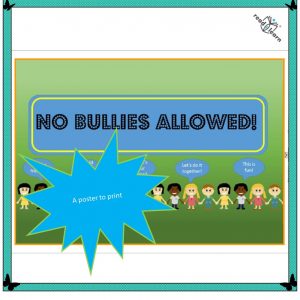
Be friends not bullies provides suggestions for teaching children friendship skills. It teaches them to identify the differences between friendly and unfriendly behaviour, to recognise bullying and to provide strategies for dealing with bullying that they may encounter personally or as an onlooker.
The resource includes:
a story stimulus with suggestions for presentation and discussion
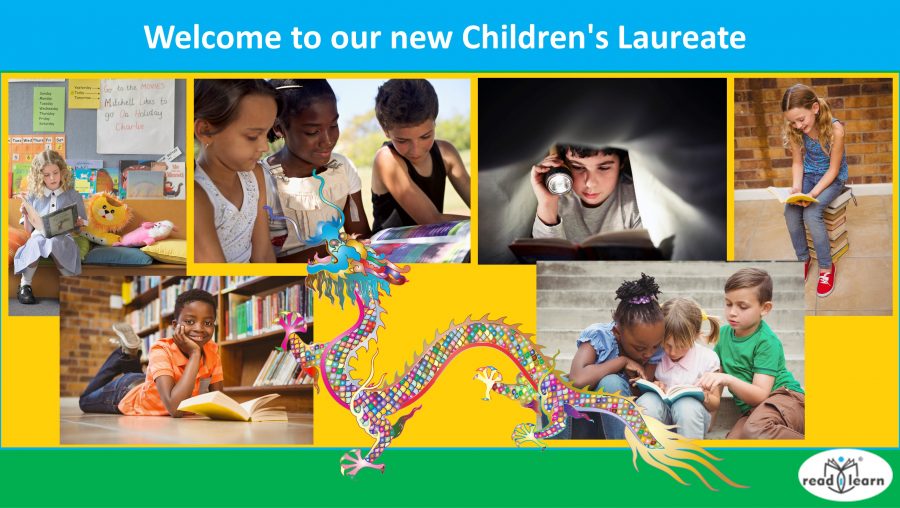
This week the Australian Children’s Laureate Foundation announced our new Children’s Laureate for 2022-2023, Gabrielle Wang.
Gabrielle Wang is an Australian author and illustrator and our seventh Children’s Laureate. She was born in Melbourne of Chinese heritage. Her father is from Shanghai. Her maternal great grandfather came to Victoria during the Gold Rush.
Gabrielle has been an author for 21 years and has had 20 books published. She mainly writes for 8-12 year olds, but has written for older and younger children too. Her stories are a blend of Chinese and Western culture with a touch of fantasy.
Be inspired by Gabrielle’s journey in a video that can be viewed following this link.
The theme for Gabrielle’s term as Children’s Laureate is ‘Imagine a Story’.
She says,
“Your imagination is your most treasured possession and I want to encourage all children to use their imaginations regularly by reading, drawing and writing stories.”
What a wonderful theme.
In her two year ‘Follow the Dragon’ tour of Australia, visiting and conducting workshops in schools, galleries and libraries, Gabrielle has four key messages for children, parents and librarians:
The recent audit of readilearn resources for teaching number showed that, while there were many lessons for teaching understanding of number and place value to 100, lessons for teaching numbers above 100 were scant. This is somewhat understandable as confidence with numbers relies upon a firm foundation in understanding the basics of our decimal system. However, it was a situation I needed to remedy.
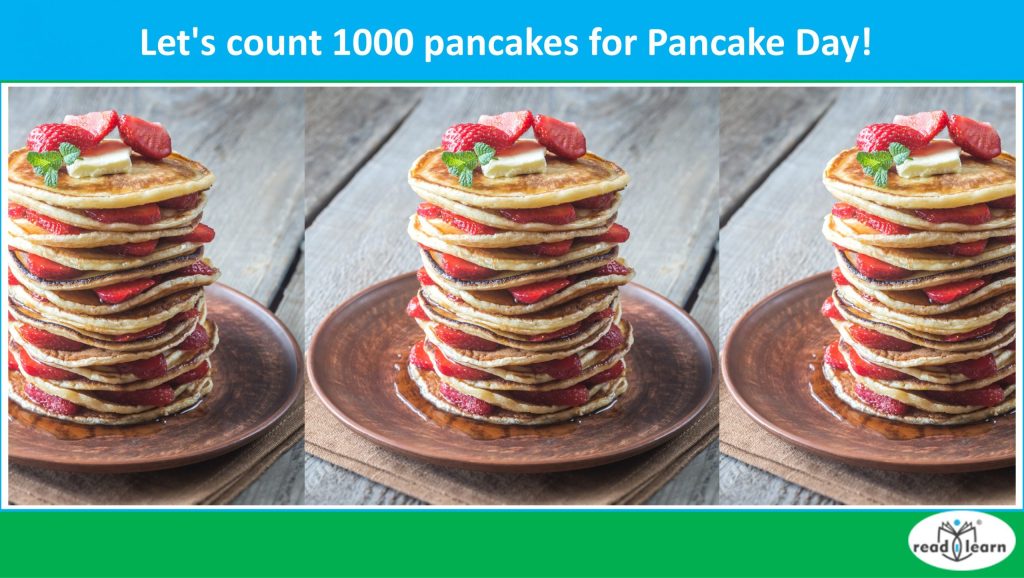
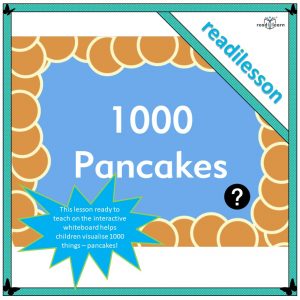
Last week I added 1000 Pancakes to the collection, a lesson to help children visualise 1000 objects by counting in 1s to 10, 10s to 100 and 100s to 1000.
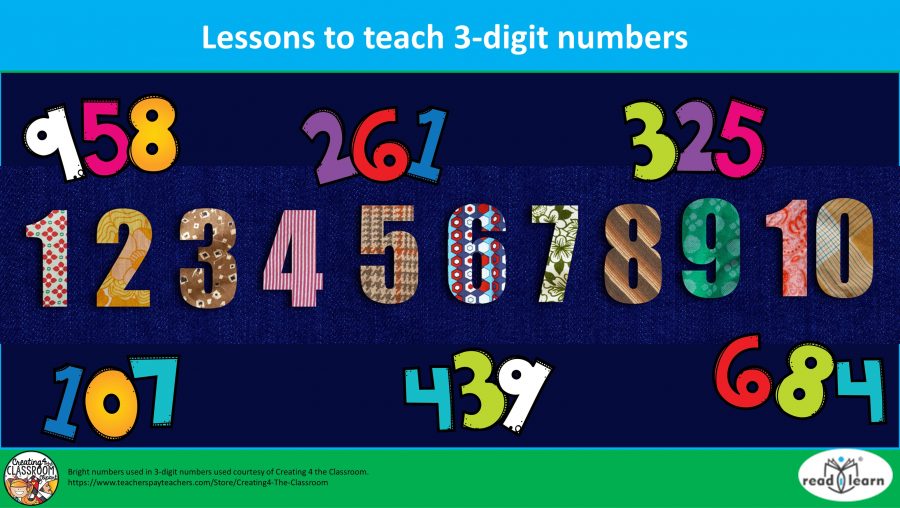
This week, I added Let’s Count Pancakes — 3-digit numbers, a lesson that helps children recognise and represent 3-digit numbers and understand the value of each numeral in its place. The interactive lesson ready to teach on the interactive whiteboard consists of ten different slides ready to discuss with the children.
On each slide, children count the pancakes and write the number of hundreds, tens and ones they count.
Next week sees us here in Australia bid farewell to summer and welcome in the cooler (we — or I — hope) days of Autumn. Next Tuesday is not only 1 March, but also Pancake Day, which means it’s only six weeks until Easter and, for many of us, school holidays.
When I completed the recent audit of readilearn lessons in teaching number by mapping them to the Australian Curriculum, I realised that we were missing lessons in numbers over one hundred. As children in Year Two learn about numbers up to one thousand, I realised there was a gap to fill. I started by making a lesson called 1000 Pancakes.
I chose pancakes for three reasons:
Pancake Day is next week. However, the lesson can be used at any time of the year; it makes no reference to Pancake Day.
Pancakes are popular with children as well as adults.
Pancakes in stacks are easy to visualise.
The lesson 1000 Pancakes gives children the opportunity to visualise 1000 pancakes by comparing the quantity to 10 and 100. It is a lesson ready-to-teach on the interactive whiteboard, a readilearn readilesson.
For the past little while, I’ve been doing an audit of the readilearn maths resources that focus on number and matching them to the Australian Curriculum Number and Algebra Content Descriptions. Before making new resources, I wanted to see what concepts and content I’d already included and where the gaps, if any, were. I presented my findings in a table that I have made available as a free resource in the Maths Number collection. The table will make it easier for you to find resources to teach particular concepts.
It didn’t surprise me that the majority of resources target the basic understanding of numbers to ten and then to 100. After all, if children understand these numbers, they have a firm foundation on which to build an understanding of larger numbers.
In this post, I share where some of the readilearn maths resources can be used when teaching the Australian Curriculum. No doubt, maths concepts to be taught are the same worldwide.
These are only a few of the resources that match each of the codes and only a few of the codes. For further information, please refer to the list ACARA and readilearn lessons in number which can be downloaded free. Note that some of the resources support your teaching of more than one content description.
Counting and naming numbers in sequence to and from 20
It’s not difficult for me to talk about love and books in the same sentence as I have loved books for as long as I can remember. Although my reading habits have changed over the years, I have always been an avid reader and was a dedicated borrower of books from the library as I was growing up.
As an adult, I tend/ed to purchase rather than borrow for my own reading and could never pass a book shop without purchasing something for me, a family member or friend, and a picture book or three for my classroom collection. Books borrowed from the school library filled out the classroom library.
A birthday, Christmas or other occasion never passed without giving and receiving books. So, being able to combine the celebration of love, books and an appreciation for libraries is a treat. Nothing could be easier. Simply take someone you love to the library and gift them a book.
Valentine’s Day probably needs no introduction. In many parts of the world, it is a day for celebrating love and romance. Gifts of chocolates, flowers and verses in cards are often given.
Of course, in the classroom, our discussions aren’t about romantic love, but that doesn’t mean we can’t think about those important people in our lives whom we do love.
Children can write their own “I love” poem by innovating on the traditional camping song I love the mountains.














 Norah Colvin