Live Love Laugh Learn … Create the possibilities

Category: readilearn

  • It’s a Kind of Magic – Teacher notes – #readilearn

    It’s a Kind of Magic – Teacher notes – #readilearn

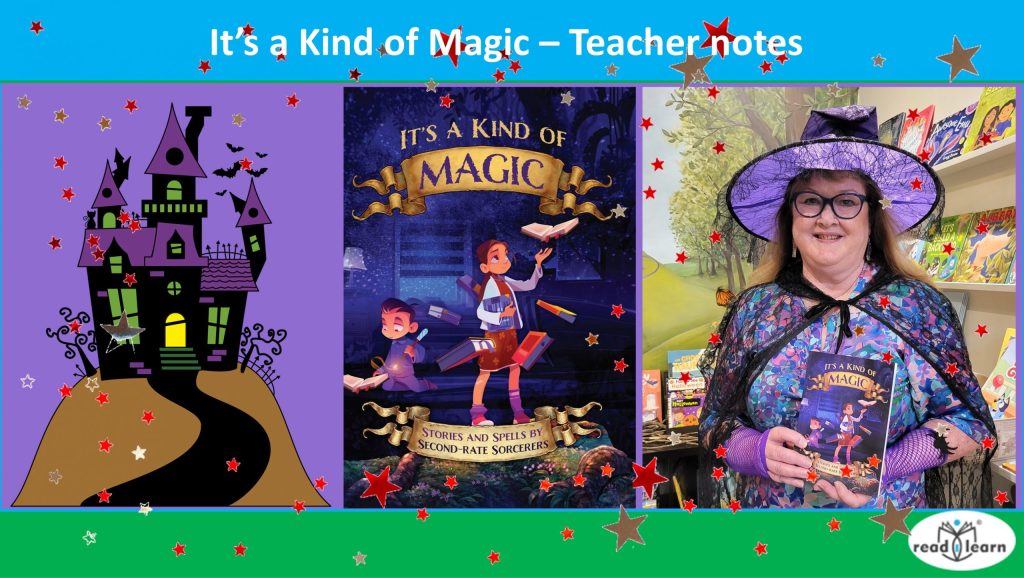
    I’m delighted to tell you that It’s a Kind of Magic, Stories and Spells by Second-Rate Sorcerers is now available for purchase. The anthology is a collection of over 35 stories and poems written by authors young and old, emerging and established.

    The book launch last Saturday was a lot of fun with story and poetry readings from the book. Authors, poets, children and their parents came in costume to set the mood for the festivities.

    After listening to the readings, children did craft activities before trick-or-treating around the shopping centre where they received treats from all the stores whose participation had been organised by the launch host, The Mad Hatters Bookshop. What amazing collaboration to make the day so special for all involved.

    It was a great morning and I thank The Mad Hatters Bookshop, Michelle Worthington (publisher and editor of the book and international award-winning author) and Kayt Duncan (author and story teller extraordinaire) for their hard work in making the event such a success. What an amazing team.

    It’s a Kind of Magic, Stories and Spells by Second-Rate Sorcerers is available from Amazon and the Book Depository. You might even find it in a local bookstore, like The Mad Hatters Bookshop where the launch was held on Saturday. Proceeds from sales of the book support the charity Children’s Rights Queensland.

    If you missed the launch, many of the stories may be viewed on the Storytime with Anthology Angels YouTube channel. If you wish to find out additional information about the writers, many of them have their own websites and are active on social media.
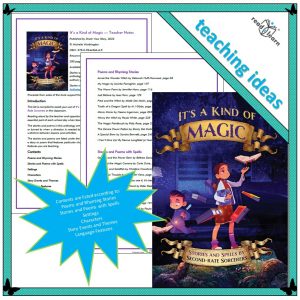
    I have written some teacher notes for the book, which I hope you will find useful. You can read them here or download a free PDF copy here.

    It is easy to find opportunities for using the book when teaching the English Curriculum as reading aloud by the teacher and opportunities for children to read independently are an essential part of each school day. The stories and poems are short and can be incorporated in the program or turned to when a diversion is needed to settle the class or when there a few minutes wait-time between lessons and activities.

    I’ve listed the stories and poems under the following headings so that you can easily find a story or poem that features particular characters, settings, events, themes or language features you are teaching.

    Poems and Rhyming Stories

    Annie the Wonder Witch by Deborah Huff-Horwood, page 68

    Continue reading: It’s a Kind of Magic – Teacher notes – Readilearn

  • Say ‘thank you’ to a teacher on World Teachers’ Day 2022 – #readilearn

    Say ‘thank you’ to a teacher on World Teachers’ Day 2022 – #readilearn

    Although World Teachers’ Day is held internationally on 5 October, because that date often falls during our school holidays, here in Queensland we celebrate it on the last Friday in October — today!

    I think every day is a great day for celebrating teachers and thanking them for the work they do. They are some of the hardest working people I know and sadly, often are abused rather than thanked. Many teachers are suffering burnout and leaving the profession due to lack of support. Some of these teachers are the most dedicated and caring people you would meet and often go beyond to provide wonderful opportunities for their students.

    So, teachers, in celebration of you, wherever you are, in this post I am reminding you how amazing you are by sharing some of my favourite videos about teachers and teaching. Each one lets you know that the job you do is incredible, that you do make a difference to your children’s lives and that your relationship with them is vital. I’d love to know which is your favourite.

    Enjoy!

    Continue reading: Say ‘thank you’ to a teacher on World Teachers’ Day 2022 – readilearn

  • Halloween-themed Lessons for K–2 Classrooms – #readilearn

    Halloween-themed Lessons for K–2 Classrooms – #readilearn

    In just a little over a week, children will be celebrating Halloween. They are already planning Halloween parties and costumes, and shops are filled with Halloween decorations and merchandise. If you choose to join in the fun in the classroom, I’m here to tell you that learning can be combined with that fun. All readilearn resources are designed to encourage learning. They are not just time-filling worksheets.

    readilearn Halloween resources

    All readilearn Halloween-themed resources can be found via the Halloween tab in the Cultural Studies collection. Here are some favourites:

    Trick or Treat — a game for Halloween

    Trick or Treat is a printable game for two or more players of all ages. It is suitable for use in maths and literacy groups, with buddies or in family groups. It combines reading, mathematics, activity, and loads of fun and laughter.

    The zip folder contains everything needed to play the game (just add a dice) and includes follow-up activities that can be used to extend the learning.

    Find out more about the game here.

    How Many Treats?

    How Many Treats? is an interactive Halloween-themed addition lesson for use on the interactive whiteboard. The lesson provides practice with numbers up to ten, and involves children in counting, adding and writing number sentences.

    A follow-up worksheet for independent practice can be accessed from within the resource.

    Who Has More?

    Who Has More? is an interactive Halloween-themed lesson in comparing numbers to ten.

    The lesson provides practice in the following number concepts:

    • estimation
    • subitisation
    • counting
    • comparison
    • using the terms ‘more’ and ‘less’
    • addition
    • subtraction

    A follow-up worksheet for independent practice can be accessed from within the resource.

    Continue reading: Halloween-themed Lessons for K–2 Classrooms – readilearn

  • Thinking Tools – facilitating deeper discussion in the Early Years – #readilearn

    Thinking Tools – facilitating deeper discussion in the Early Years – #readilearn

    Article by Gerard Alford, Director of itc publications and thinkdrive and collaborator on readilearn.

    As announced last week, I am delighted to introduce Gerard Alford and the first of his series of guest posts for readilearn.

    Gerard is a very experienced and respected education consultant, author and education resource developer. He is passionate in promoting high-order thinking and cooperative learning through engaging and effective evidence-based teaching methods. His teaching resources inspire and support busy teachers in creating engaging pedagogy and time-saving strategies to encourage successful student outcomes. 

    The worth of using thinking tools is well documented; they provide a clear pathway for students to complete a given task, provide students the means to organise their research and thoughts in a systematic way, and provide teachers with a clear insight into their student’s thinking.

    That said, can thinking tools also be used to facilitate deeper discussion in the Early Years? I believe so, and here’s an example in action.

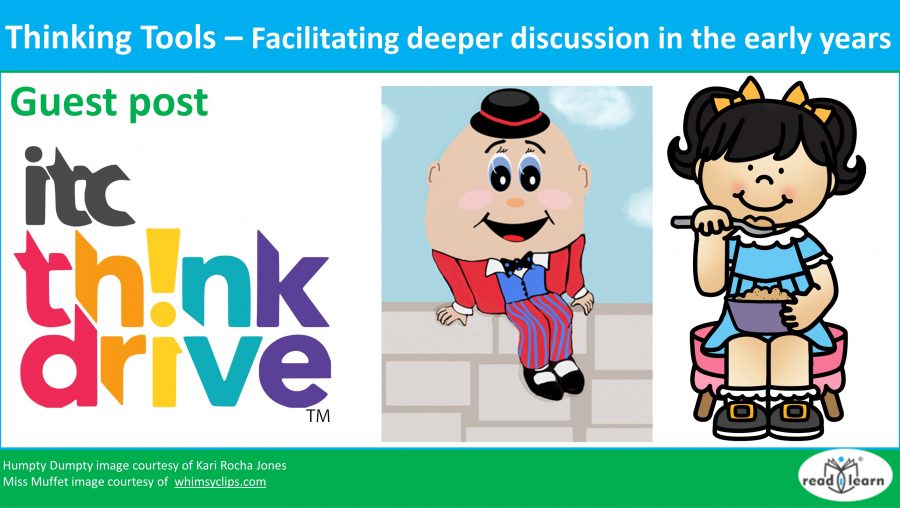
    Your students have just read two texts: Humpty Dumpty and Little Miss Muffet, and you now have asked them to compare these texts.

    Exactly what they compare (similarities and differences) will depend on the Year level; however, at a minimum, students will be comparing the events and the characters in the texts while also sharing their feelings and thoughts (as per ACELT1783).

    Continue reading: Thinking Tools – facilitating deeper discussion in the Early Years – readilearn

  • Teaching thinking in the early years with itc thinkdrive – #readilearn

    Teaching thinking in the early years with itc thinkdrive – #readilearn

    Today I am pleased to announce a new collaboration with itc thinkdrive. While we have been working in partnership since 2019, starting from next week, Gerard Alford, Director of itc thinkdrive, will contribute an occasional guest post to the readilearn blog.

    While we are all aware of the importance of teaching critical and creative thinking and of providing opportunities for cooperative learning in the classroom, that teaching can sometimes be overpowered by the demands of content to be taught, tests to be administered, timetables to be followed, and ever-increasing standards to be achieved.  However, help is close at hand with the wonderful resources on thinkdrive, and Gerard will be able to show you just how easy it is in his guest posts.

    About Gerard Alford

    Gerard is a very experienced and respected education consultant, author and education resource developer. He is passionate in promoting high-order thinking and cooperative learning through engaging and effective evidence-based teaching methods. His teaching resources inspire and support busy teachers in creating engaging pedagogy and time-saving strategies to encourage successful student outcomes. (For a more complete bio, click here.)

    Needless to say, I am enormously excited that we will have the additional benefit of his expertise right here.

    About thinkdrive

    Although I told you about thinkdrive in the post Teaching critical and creative thinking and cooperative learning in the classroom, it was a while ago. So, before I published Gerard’s first guest post, I wanted to remind you about thinkdrive and recommend you take a look, if you haven’t already.

    thinkdrive is an online resource for teachers with a focus on critical and creative thinking and cooperative learning. It is a collection of thousands of downloadable worksheets and templates that are designed to support your teaching of these important skills and save you hours of preparation time.

    With its focus on cognitive verbs and ways of thinking about things, thinkdrive differs from many other resources available for teachers. The strategies and thinking tools are clearly explained with examples and video demonstrations that make it easy for you to implement or adjust to suit your own lessons. The tools can be applied to any content you are teaching and embedded in your lesson planning.

    Each of the 60 cognitive verbs; for example, compare, contrast, calculate, explain, describe, is matched to appropriate thinking tools. The use of each thinking tool is explained with examples, templates or sentence starters.  With more than thirty thinking tools in the kit, there are plenty to choose from; including, KWHL Charts. T-Charts, Y-Charts, Concept Maps, Flow Charts, and Bubble Maps. Most of the thinking tools are used effectively by students in small groups or pairs, though some can involve whole class thinking and discussion.

    Other resources from itc publications

    In addition to the online resource thinkdrive, itc publications have a range of other resources to support your teaching. You can find the full list of products here.

    One of my favourites, that I wouldn’t be without, is the innovative teacher’s companion Early Years edition (F–2), also known as the Early Years Diary. It is available for all year levels.

    This video gives you a great overview of just how useful it is.

    Continue reading: Teaching thinking in the early years with itc thinkdrive – readilearn

  • The Rabbit’s Magician by Shae Millward and Andy Fackrell – #readilearn

    The Rabbit’s Magician by Shae Millward and Andy Fackrell – #readilearn

    Today it is my pleasure to review a beautiful new picture book The Rabbit’s Magician, written by Shae Millwood, illustrated by Andy Fackrell and published by Ford Street Publishing. This post is part of a Books on Tour promotion.

    About the author Shae Millward

    Shae Millward is an enthusiastic advocate for literacy. She aims to inspire through a love of books, the joy of reading and writing, and the art of storytelling. Shae enjoys writing picture books, poetry, song lyrics, inspirational quotes, short stories and more. Shae’s other books include A Boy and a Dog and Koalas Like To…

    About illustrator Andy Fackrell

    Andy Fackrell is one of the most awarded and recognised multi-dimensional creatives in the world. A career in advertising earned him the highest honours, including the Cannes Grand Prix in film for his work for Nike. A true creative nomad, living and working in all continents — Antarctica excepted — he is now a film maker exploring documentaries on social and environmental issues. Andy lives by the beach in Sydney. This is his second book.

    About The Rabbit’s Magician

    The Rabbit’s Magician is a gentle story of love, loss and comfort for 3 to 8 years olds.

    The blurb

    Ziggy’s beloved magician has performed an amazing disappearing trick. But just where is The Amazing Albertino? Ziggy waits. And waits some more. Has something gone wrong with the trick?

    What I like about The Rabbit’s Magician

    I was quite intrigued by the title of this book. We’ve all heard of the magician’s rabbit, right? But a rabbit’s magician — that was a different take. I wondered if it was to be the usual magic tale with the characters in reverse. It was not.

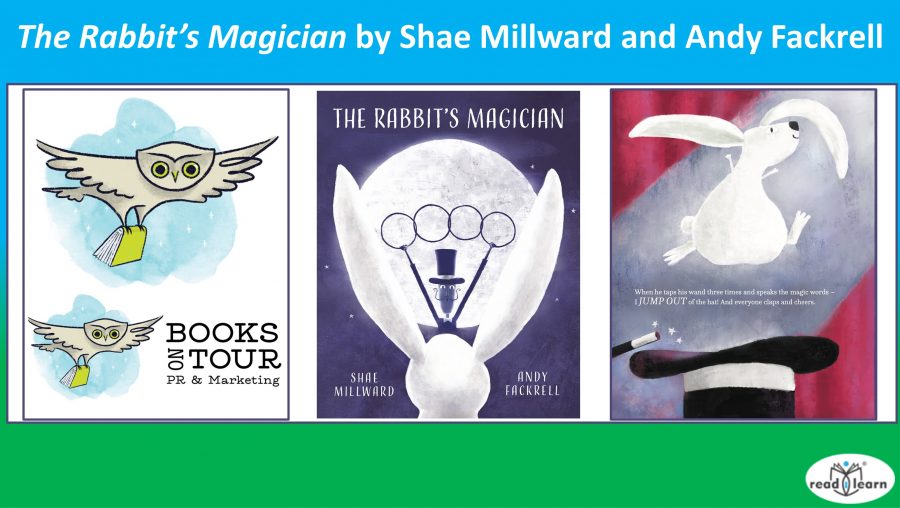
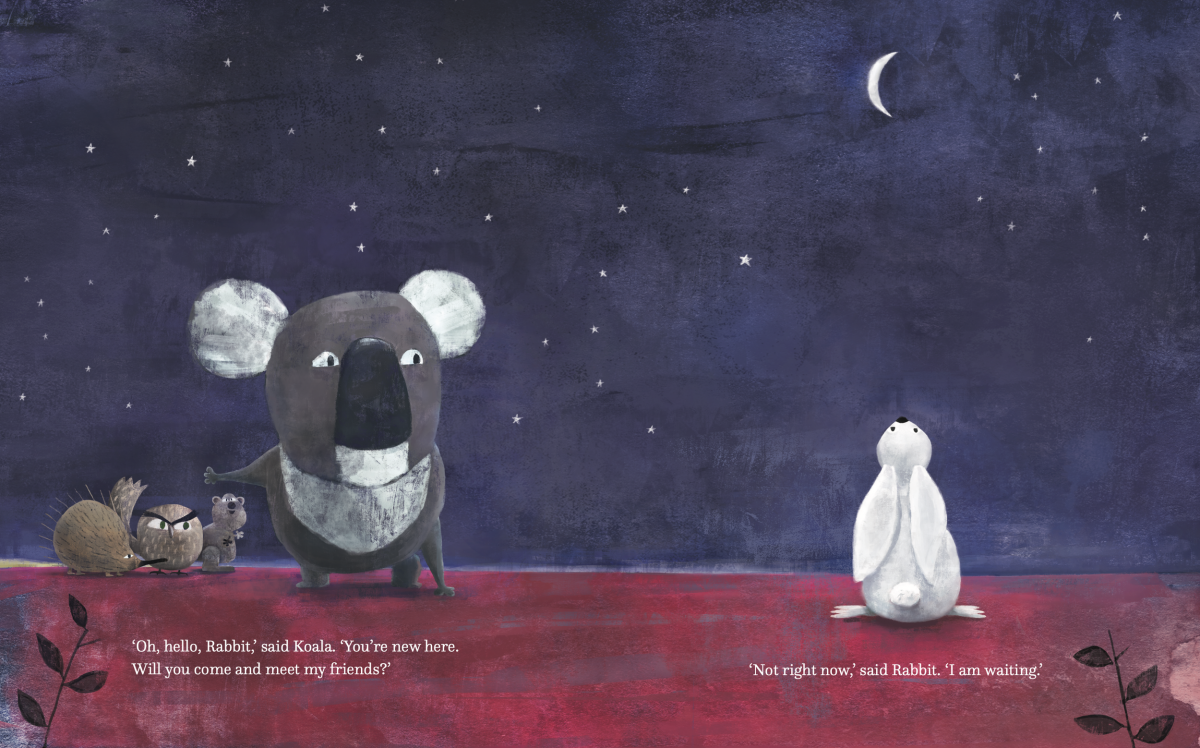
    The cover shows a beautiful full moon, that looks as if it is being held up by the rabbit’s ears, and a magician holding up four rings. When we turn to the first story page, the rabbit is gazing at a crescent moon in a deep blue sky. He refuses an invitation to meet new friends because he is waiting. But waiting for what? For the full moon to appear again?

    It takes another few invitations and another few phases of the moon before we find out; and that’s only because, when the moon is full in the sky, the owl asks Rabbit why he is waiting and offers to help. Rabbit accepts Owl’s offer.

    I think there is a wonderful lesson in that already — if you see someone in need, ask, listen and offer to help.

    Ziggy introduces himself and explains that he is the companion of an amazing magician Albertino, Alby, who can change things and make things disappear and reappear.

    But now his magician has done a truly astonishing trick, something he has never done before. He has made himself disappear. Ziggy is worried that he may never reappear again.

    This is where the real magic of the book begins because wise Owl knows what Ziggy and we don’t. Owl knows that the magician’s last trick was

    Continue reading: The Rabbit’s Magician by Shae Millward and Andy Fackrell – readilearn

  • About Michael Rosen and his Sticky McStickstick – #readilearn

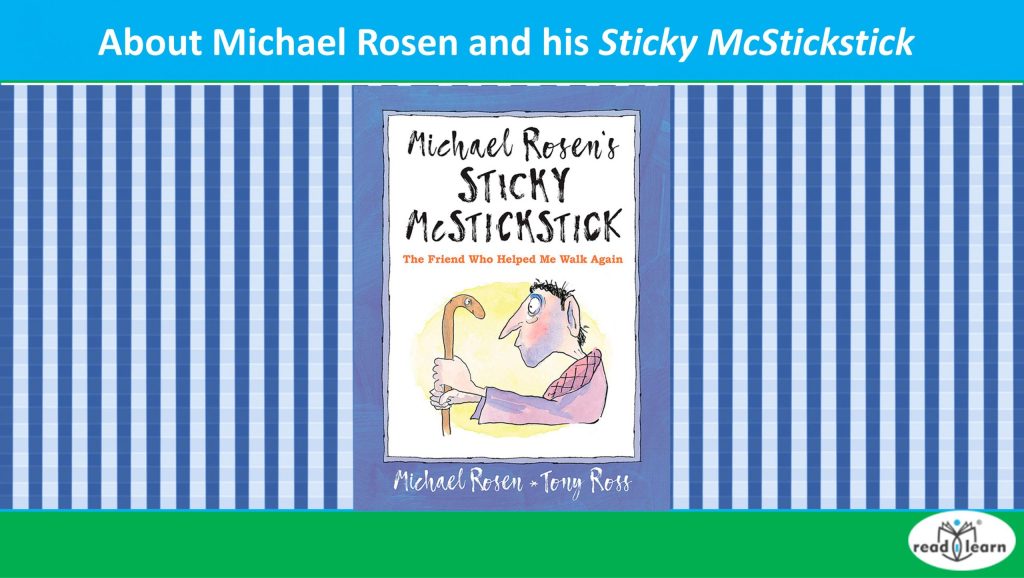
    About Michael Rosen and his Sticky McStickstick – #readilearn

    In this post, I share some information about Michael Rosen. I hope you are already aware of Michael Rosen because he is an amazing poet, author, educator and so much more.

    If you know nothing else about him, you probably know his award-winning picture book Going on a Bear Hunt with its wonderful illustrations by Helen Oxenbury. This article in the Guardian that tells how he came to write it and Helen to illustrate it is quite fascinating.

    Here’s a video of Michael telling Going on a Bear Hunt and some others of his stories.

    Or maybe you know of him as a meme.

    Perhaps you’ve read the post Storytelling with author Michael Rosen in which I introduce you to Michael and his wonderful story Chocolate Cake.

    The story is great fun, perfect for storytelling and a wonderful stimulus for writing. In that post, I suggest some lessons you can build around the story.

    Continue reading: About Michael Rosen and his Sticky McStickstick – readilearn

  • Inspire Creativity with International Dot Day – #readilearn

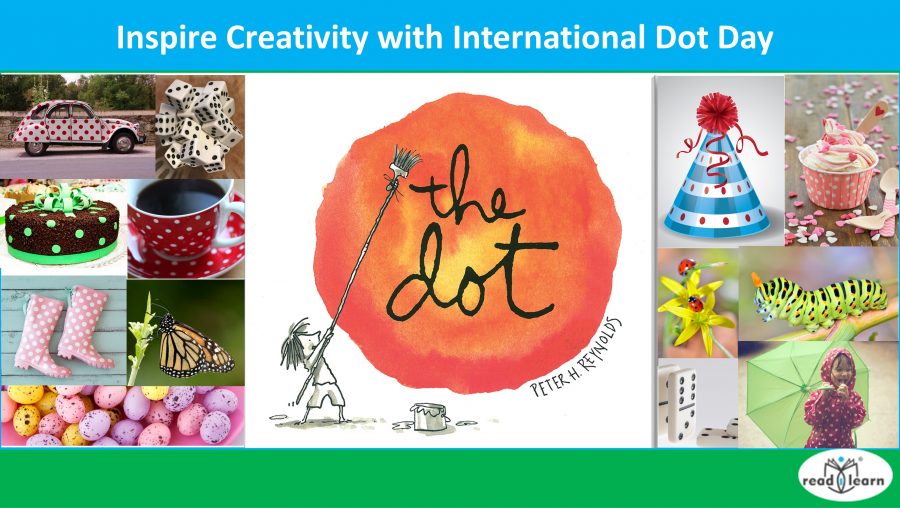
    Inspire Creativity with International Dot Day – #readilearn

    September 15-ish is International Dot Day.

    The goal of International Dot Day is to inspire people of all ages to embrace the power of personal creativity, to make their mark on the world, making it a better place.

    Creativity is important to me. I love being creative. I love inspiring creativity in children, and I acknowledge that it is only through creativity that we can innovate, advance and improve our world. For this reason, I am posting a day early to ensure you all know about International Dot Day in time to celebrate. However, any day is a good day to celebrate and promote creativity.

    The Dot — the book

    The Dot, written and illustrated by Peter H. Reynolds and published by Walker Books in 2003, tells of an art teacher who encouraged a young artist, who didn’t believe she could, to make her mark on a piece of paper. Although the story features an art teacher, Reynolds dedicated the book to his 7th grade math teacher who, he said, ‘dared me to “make my mark”.’

    Like Reynolds, I believe there is a spark of creativity in everyone and that a dot is as good a place as any to start. What I really love about this book, is the way the teacher encourages the student Vashti, who then goes on to encourage others in a similar way. The ripples of a ‘you can do it’ philosophy spread. Who know where they will reach? Hopefully everywhere.

    How International Dot Day began

    (from the website)

    International Dot Day began when Iowa teacher Terry Shay introduced his classroom to Reynolds’ book, and noticed the original publishing date of The Dot was Sept. 15, 2003. Shay and his students decided to celebrate the book’s birthday – and, little did they know, launched what would become a worldwide celebration of creativity and courage to “make your mark.”

    “The Dot, is an invitation to students to be creative, and experience a breakthrough in confidence and courage, igniting a journey of self-discovery and sharing, said Shay, a public school teacher for over two decades “Every great teacher works for those transformational moments.”

    Exploring the themes of creativity, bravery and self-expression, The Dot is a story of a perceptive and caring teacher who reaches a reluctant student who thinks she can’t draw by encouraging her to be brave enough to “just make a mark and see where it takes you.”  The Dot has been translated into many languages (including Portuguese, Chinese, Korean, Hebrew, Spanish and even Braille) and the animated film of The Dot (produced by Reynolds’ multimedia design and development firm FableVision Studios and co-producer Scholastic) earned the Carnegie Medal of Excellence.

    Continue reading: Inspire Creativity with International Dot Day – Readilearn
  • Interview with author Sandhya Parappukkaran – #readilearn

    Interview with author Sandhya Parappukkaran – #readilearn

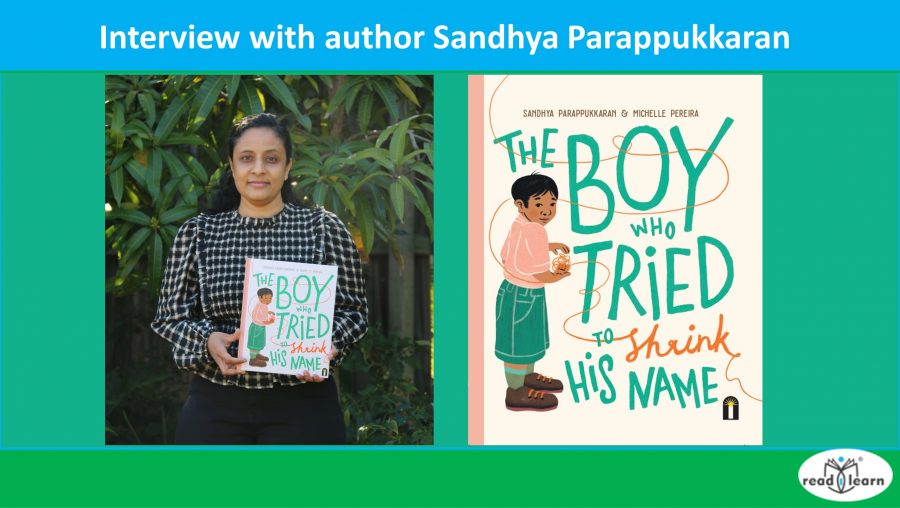
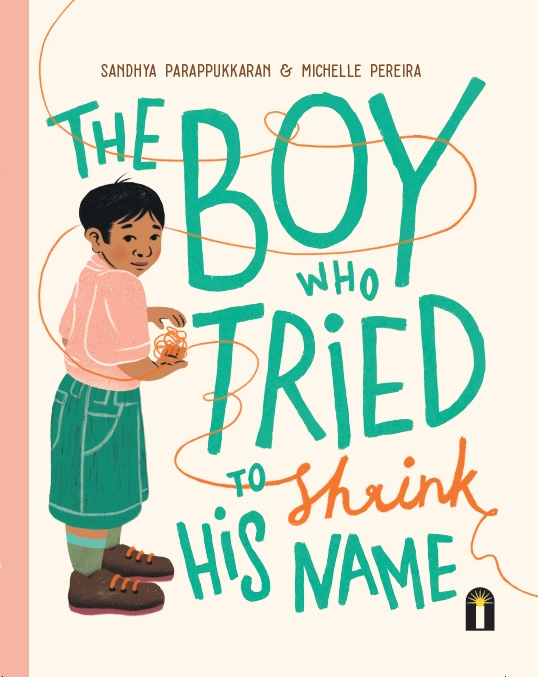
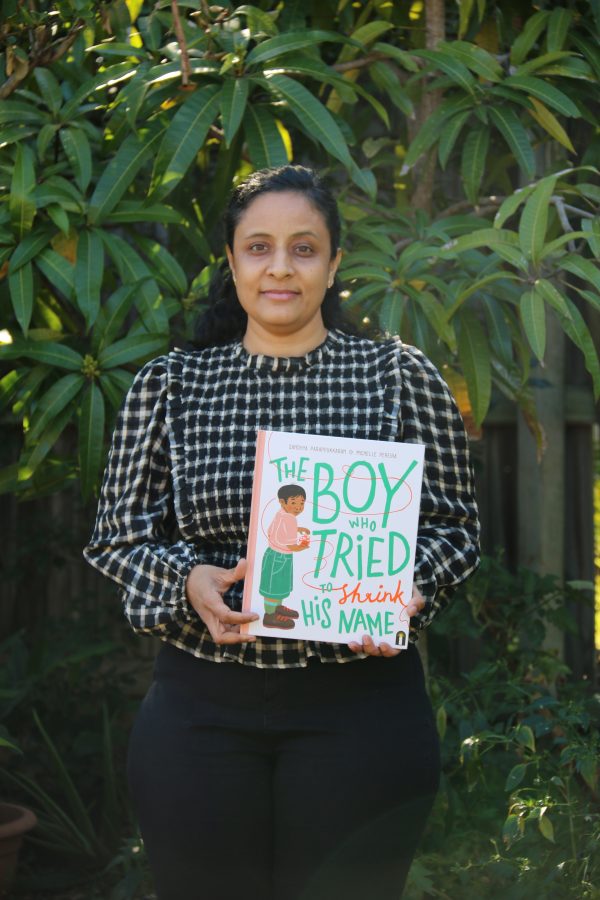
    Today it is my pleasure to introduce you to Sandhya Parappukkaran, author of The Boy Who Tried to Shrink His Name which is illustrated by Michelle Pereira and is a Bright Light 2021 publication by Hardie Grant Children’s Publishing.

    About Sandhya Parappukkaran

    Sandhya Parappukkaran left her job as a Food Technologist so she could put her feet up and read. Then she rediscovered her passion for children’s books. She writes stories with themes of ‘embracing your cultural identity’ inspired by her South Indian heritage. Sandhya resides in Brisbane with her husband, three children and a backyard brimming with mango trees, curry leaves and green chillies.

    About The Boy Who Tried to Shrink His Name

    No-one should ever have to shrink themselves down to fit in.

    When Zimdalamashkermishkada starts a new school, he knows he’s got to do something about his long name.

    When no amount of shrinking, folding or crumpling works, he simply settles for Zim — but deep down, it doesn’t feel right.

    It’s not until a new friend sees him for who he is that Zimdalamashkermishkada finds the confidence to step boldly into his name.

    What I like about The Boy Who Tried to Shrink His Name

    This is a beautiful book about culture and identity, about accepting ourselves and respecting others. As the blurb says, ‘No-one should ever have to shrink themselves down to fit in.’ Our names are an essential part of who we are.

    In Australia, people often take liberties with the names of others, lengthening some, shortening others or creating a nickname from their parts, often without asking permission. Over the years, many from migrant families have Anglicised their names to make it easier for the English-speaking population to pronounce.

    In both a profound and subtle way, through her story, Sandhya Parappukkaran shows us the importance of respect for others and their culture by something as simple, but significant, as learning to pronounce their names correctly.

    Even Zimdalamashkermishkada had difficulty pronouncing his name. When his new friend Elly shortened it to Zim, he asked his mother if he could do the same. She explained, ‘We named you after the coconut trees that stretch high and hold up the sky while sheltering all underneath’, and she asked him to ‘Give people a chance to say it right.’

    So, he does. As Elly teaches Zimdalamashkermishkada to skateboard, he teaches her to pronounce his name.

    Continue reading: Interview with author Sandhya Parappukkaran – readilearn

  • Let’s celebrate Indigenous Literacy Day 2022 – #readilearn

    Let’s celebrate Indigenous Literacy Day 2022 – #readilearn

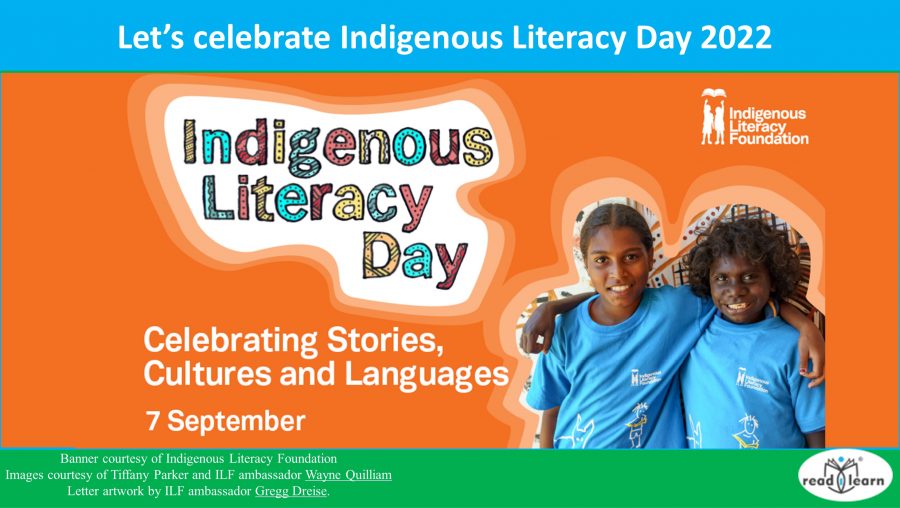
    Next Wednesday 7 September is Indigenous Literacy Day.

    Indigenous Literacy Day is a free national event Celebrating Stories, Cultures and Languages.

    This year’s digital story will premiere at 10.30 am AEST from The Sydney Opera House.

    According to the website, Celebrating Stories, Cultures and Languages is a magical story led by children from remote Milikapiti and Jilkminggan in the Northern Territory. In a 20-minute video, the children are joined by music icon Jessica Mauboy and dynamic performer Gregg Dreise.

    (Gregg is also an author and illustrator and I introduced him to you in an interview in 2017. Earlier this year, I included some of his books in a post for National Reconciliation Week.)

    Here’s Jessica Mauboy inviting you to join in celebrating Indigenous Literacy Day.

    Registrations for the event have been open since 9 August. Have you registered yet? I have. You can book here. If you can’t watch the scheduled event, the story will be available to watch online anytime that suits you.

    This video tells of some of the wonderful work of the Indigenous Literacy Foundation.

    The website explains that 2022 is the first year of UNESCO’s Decade of Indigenous Languages. It will be interesting to see the extent to which Aboriginal and Torres Strait Islander languages can be revitalised and preserved during the next ten years due to the efforts of organisations such as the Indigenous Literacy Foundation and its celebration of Indigenous Literacy Day.

    To find out more about the Indigenous Literacy Foundation and Indigenous Literacy Day and how you can support this great work, please visit their website: Indigenous Literacy Foundation https://www.indigenousliteracyfoundation.org.au/.

    A free booklet of teaching resources can be downloaded here.

    Continue reading: Let’s celebrate Indigenous Literacy Day 2022 – Readilearn