Parents often approach teachers wanting to know what they should teach their children or how to prepare their children for school—should they teach them the letter names or sounds or how far should they teach them to count?
However, for most teachers, these are not of highest priority.
What teachers value most is an ability to:
engage in conversation about experiences and ideas
get along with others and make friends
identify and organise personal belongings
and to have:
an interest in books
a curiosity about the world, and
a willingness to have a go and try new things.
The best way parents can prepare their children for school is by spending time with them, talking with them, playing games with them, reading stories to them and encouraging their curiosity by providing them with opportunities to question, learn and explore.
It is important for parents to see themselves as their children’s first and most important teachers. When their children start school, it is not time for them to relinquish their responsibility. Instead, it is important for them to work in partnership with teachers to ensure the best chance of success for their children.
Last week I shared an article, originally published in The Conversation, in which Kym Simoncini provided parents with suggestions for developing young children’s interest in STEM (science, technology, engineering and mathematics.)
This week, I share a letter to parents of children beginning school, congratulating them on their contribution and requesting their ongoing support.
The development of STEM (Science, Technology, Engineering and Mathematics) skills can be encouraged in children, even before they start school, by parents who are attuned to opportunities for learning.
I’ve previously introduced you to Rebecca Johnson, Narinda Sandry, Brenda Miles and Susan Sweet with their books and suggestions for including STEM in early childhood classroom learning, and soon I will be interviewing Andrew King about his beautiful Engibear series of picture books that focus on the engineering component in STEM. These supplement my own posts about incorporating STEM in the classroom here and here.
In this post, I share with you Five things parents can do every day to help develop stem skills from a young age by Kym Simoncini Assistant Professor in Early Childhood and Primary Education, University of Canberra. This article was first published in The Conversation. Throughout Kym’s article, you will notice links to other articles. Be sure to follow the links for even more great ideas and resources.
Five things parents can do every day to help develop STEM
skills from a young age
Educators and researchers agree early literacy experiences are important for children’s cognitive and language development. For the past 30 years there has been a strong movement to foster children’s literacy skills. This has resulted in an abundance of information on how parents can do this by reading books, singing songs and nursery rhymes, playing word games and noticing print.
This is a good thing and should continue, given the importance of early literacy skills in learning to read, and how this leads to later success in school and life.
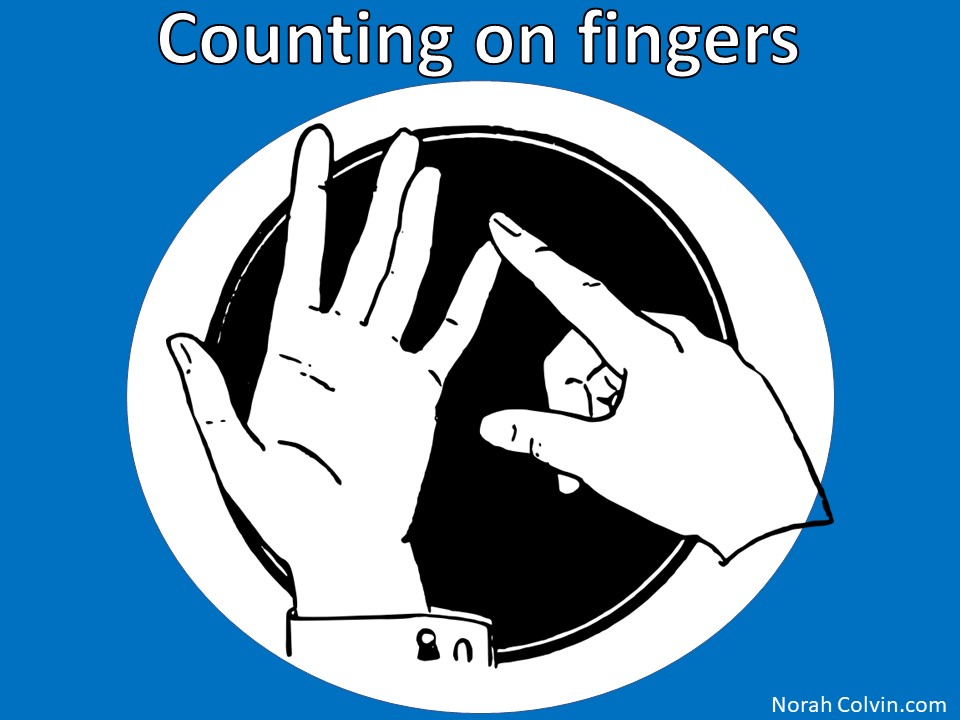
I thought about the use young children make of their fingers when counting. It may increase their speed and ease of calculation in the beginning, but continued use tends to slow them down.
I also thought about magicians, and how the speed of their fingers amazes us with tricks and sleight of hand.
Combining both thoughts brought me to the mathemagician Arthur Benjamin who never ceases to astound with his calculations.
Are you a math whiz, solving complicated problems and making calculations with large numbers effortlessly, or do you still need to count on your fingers at times?
I don’t think I was ever what would be considered a maths whiz, but I did have my confidence in maths taught out of me. Sadly, I think this happens to far too many.
Many children who have been provided experiences with number and engaged in discussions about number from a young age develop strong understandings and are able to calculate with little effort, arriving at answers almost intuitively. While it can be good to help them develop metacognition by asking them to explain how they knew, or how they worked it out, sometimes they don’t know how—they just know.
While some children need to be taught methods of working out answers, requiring maths intuitive thinkers to use the same working can cause them to second-guess themselves and to lose confidence by breaking what they know down into steps that only cause confusion.
I was interested to hear Arthur Benjamin’s plan for improving maths education when he is made “Czar of Mathematics”.
His suggestions relate more to high school than primary, but probability and statistics still have their place in the early years, as I’ve shown with many readilearn resources.
For my response to Charli’s prompt, I’ve considered what may occur if a child’s intuition with maths is neither appreciated nor encouraged.
Counting on fingers
Everyone said she had a way with numbers. Even when still in nappies she was counting effortlessly to large numbers in multiples of twos, fives and tens as well as ones. The parents didn’t dare think they’d bred a genius, an outlier. They wished for an ordinary child who fitted in, unnoticed, like them. They strove to inhibit her talent and discourage her enthusiasm. She tried to hide her ability by delaying responses with finger actions resembling calculation aids. But they slowed her none and flew too fast, earning her the nickname “Flying fingers” and ridicule instead of appreciation.
Thank you for reading. I appreciate your feedback. Please share your thoughts.
With today 16 March being the National Day Against Bullying and Violence and next Wednesday 21 March being Harmony Day in Australia, now is a good time to think about what it means to be a friend, what bullying is, and how to combat it. Of course, any time is a great time for developing friendship skills, but these special days help to raise awareness.
The purpose of the National Day Against Bullying and Violence is fairly clear in its title. Harmony Day is for celebrating cultural diversity. “It’s about inclusiveness, respect and a sense of belonging for everyone.” That sounds very much like friendship to me.
The development of social skills, including the friendship skills of getting along, can not be left to chance. The skills must be actively encouraged and taught. Children must learn what behaviour is friendly, what is not friendly and what is bullying.
The teaching of these skills and behaviours should not be left to one or two days of the year but integrated into the teaching program. In fact, the best way to encourage friendship and discourage bullying is through the implementation of policies that foster respect and accept
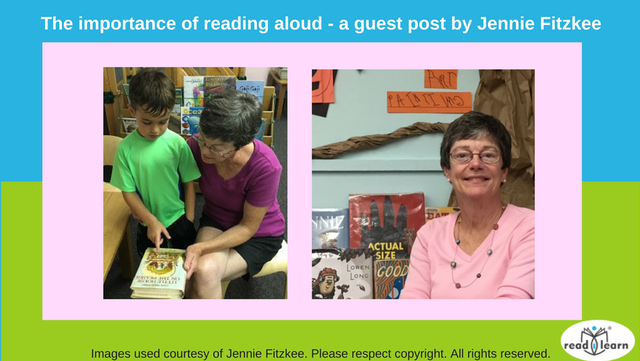
Every day is a great day for reading aloud to children, but with the celebration of International Read to Me Day on March 19, now is a great time to give some thought to the importance of reading aloud in preparation for the Day’s celebrations. by arming yourself with a basket of books to read.
To help put us in the mood and assist our preparations, Jennie Fitzkee is here to tell us why reading aloud to children is important.
Jennie, a passionate and inspirational teacher, has been teaching preschool in Massachusetts for over thirty years. She is considered by many to be the “book guru” and the “reader-aloud”. She is also a writer and her work is often posted by The Eric Carle Museum of Picture Book Art. This is what Jennie says of teaching:
“I believe that children have a voice, and that is the catalyst to enhance or even change the learning experience. Emergent curriculum opens young minds. It’s the little things that happen in the classroom that are most important and exciting. That’s what I write about.”
Jennie is highlighted in the new edition of Jim Trelease’s bestselling book, The Read-Aloud Handbook because of her reading to children. Her class has designed quilts that hang as permanent displays at both the National Liberty Museum in Philadelphia, and the Fisher House at the Boston VA Hospital. Their latest quilt is currently hanging at the Massachusetts State House in Boston. In 2016, Jennie was one of seven teachers in Massachusetts to receive the Teacher of the Year Award.
I’m sure you’ll agree that there is much we can learn from Jennie.
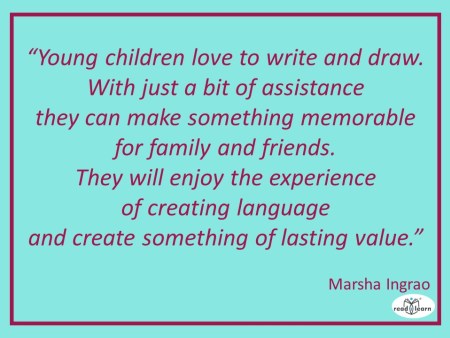
Providing children with fun and purposeful activities for writing is one of the best ways to encourage a love of writing, to replace the drear with enthusiasm.
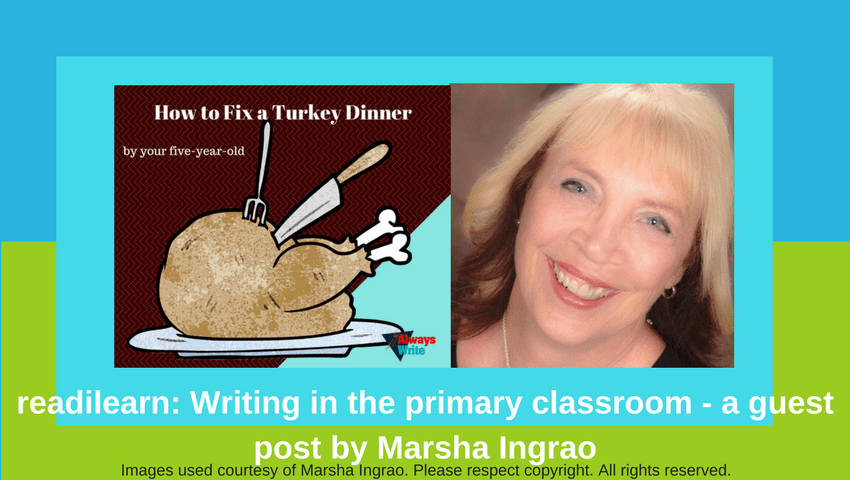
In this post, I introduce guest author Marsha Ingrao who shares suggestions for bringing joy to your writing lessons through the Language Experience Approach.
“The Language Experience Approach (LEA) is a literacy development method that has long been used for early reading development with first language learners…It combines all four language skills: listening, speaking, reading, and writing.”
Although Marsha retired from public education in 2012, her passion for education remains and she continues to educate through blogging, speaking engagements and volunteering for Kiwanis and the Chamber of Commerce. Her classroom experience ranged from teaching kindergarten to fourth grade. She left the classroom to work as a consultant for the county office of education first in math, working with migrant education, then in history and language arts. She is author of Images of America Woodlake, a history of her local Woodlake area, published by Arcadia Press.
Welcome to readilearn, Marsha. Over to you.
Because LEA employs all four branches of language arts, listening, speaking, reading and writing, it is perfect for teaching writing to pre-school and primary students as well. With the thrust in the United States for non-fiction reading, the language experience approach becomes the perfect avenue for teaching writing to young children.
To make the language experience approach applicable to all young students, adult assistance is required.
The “How To” Essay
Beginning in pre-school, we tackled one of the hardest types of writing, the “how to” essay. Holiday traditions are the perfect avenue for this
Pizza is a popular food in many countries around the world and is often a children’s favourite. Why not capitalize on children’s interests to make learning fun and meaningful?
This week I have uploaded six new pizza-themed resources with suggestions for learning across the curriculum; including literacy, mathematics, and science.
The new interactive resource What’s on your pizza is a great stimulus for engaging children. Children help Andy and Paige make their own pizza by choosing the toppings and working out the different combinations of toppings that are available. The resource can be used as a springboard for discussion, writing, mathematical investigations, science explorations and talking about healthy food choices.
In this post, I outline some ways pizza-themed learning can be incorporated across the curriculum. I anticipate the suggestions will inspire ideas of your own with relevance to your own group of children.
Literacy
Oral Language
Discussion is one of the best ways of developing children’s language. Starting with topics already familiar to and of interest to children facilities discussion into which new vocabulary and concepts can be added. Discussion could centre around; for example: who likes pizza, types of pizza, when children have pizza and their favourite pizzas.
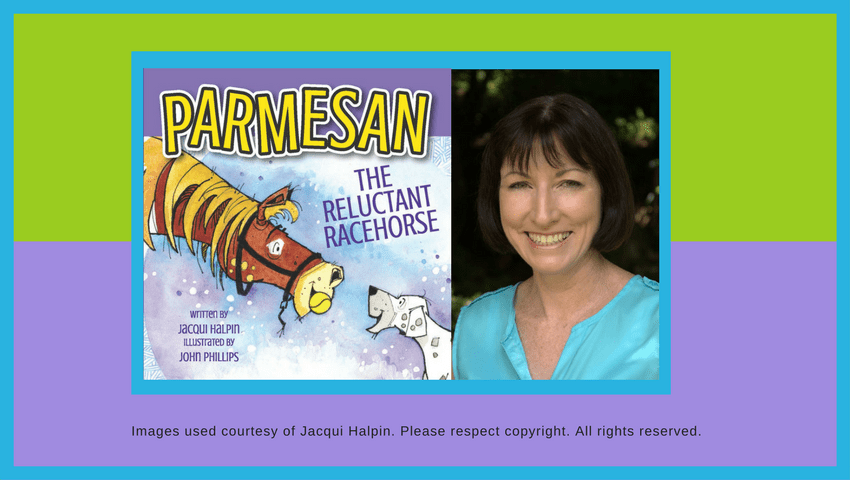
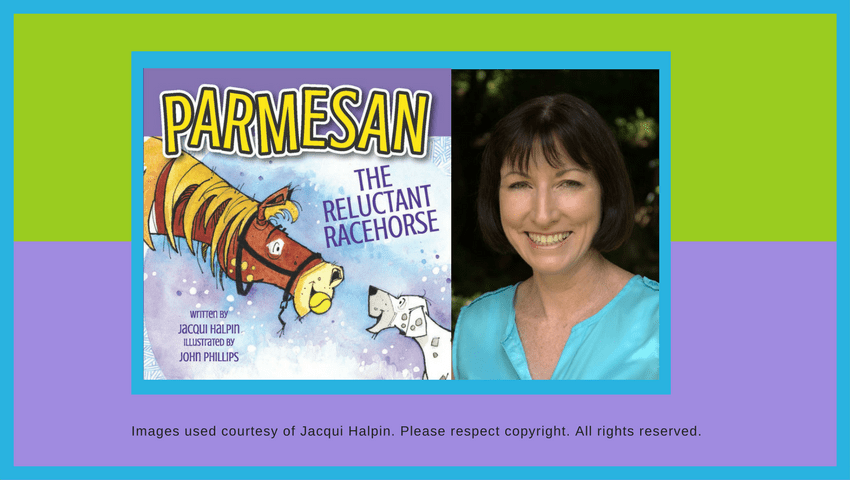
This week, it is my pleasure to introduce you to Jacqui Halpin – author, founding member of Write Links (a local group of published and unpublished authors and illustrators of children’s books), a former nurse and tuckshop convenor.
Jacqui grew up in Brisbane where she still lives with her husband, one of her three adult children, and a cat called Loki. While writing and editing, Jacqui likes to sip tea from fine china and eat copious amounts of chocolate. She says she should never be allowed in a bookshop with a credit card in her possession.
Jacqui writes picture books and short stories, some of which appear in anthologies by Stringybark Publishing and Creative Kids’ Tales. She co-wrote and independently published her elderly father’s memoir, A Long Way from Misery.
Today Jacqui is talking with us about her first picture book Parmesan The Reluctant Racehorse, humorously illustrated by John Phillips and published by Little Pink Dog Books in October 2017. Jacqui’s second picture book, Where’s Lucky?, based on an orphaned swamp wallaby joey at a wildlife shelter, will be published in mid-2019.
Parmesan is a delightful story of a thoroughbred racehorse who should be winning races and earning lots of money for his owner. However, Parmesan thinks he’s a dog. Instead of training with the other horses, he’s off with his doggy friends doing doggy things like playing fetch. His owner is not happy. If Parmesan isn’t ready to run in the Spring Carnival, he’s getting rid of him. Parmesan’s trainer is worried. He knows Parmesan won’t be ready, but as they arrive at the Spring Carnival, he thinks of a brilliant way to get Parmesan to run around the track. Parmesan’s triumph proves you can be a winner and stay true to who you are.
Welcome to readilearn, Jacqui, we are looking forward to getting to know you better.
Thanks for inviting me.
Jacqui, when did you know you wanted to be a writer?
Learning lists of sight words is an activity familiar to beginning readers, their parents and teachers. There’s no denying the importance of being able to recognise words by sight, and the aid it is to reading fluency and comprehension. Yes, comprehension. Due to the constraints of short-term memory, it is difficult to think about meaning, when working memory is employed in attempts to figure out individual words.
Many lists of basic sight words are available, but there is a consistency to the words included and their number, generally varying between one and two hundred. Many of the words do not have a regular letter-sound correspondence and cannot be “sounded out” using knowledge of phonics. They are also words that have meaning only in context and cannot be “pictured”. The words make up a high percentage of those appearing in texts for beginning readers and so are often referred to as high frequency words.
Children are often given lists of words to take home and learn with the assistance of parents. Not all parents know how to encourage children to learn the words and it can be a battle if children struggle to remember them. If you are sending children home with words to learn, it is important to provide parents with strategies as well as what they need; for example:
Provide the words on strips or in small booklets with the word written on one side and a short sentence with a picture on the other for checking.
Provide one set of words. Spread the words face up on the table. Ask the child to find the word; for example, put. This is easier at first as other letter/sound cues can be used. Later, as the child is
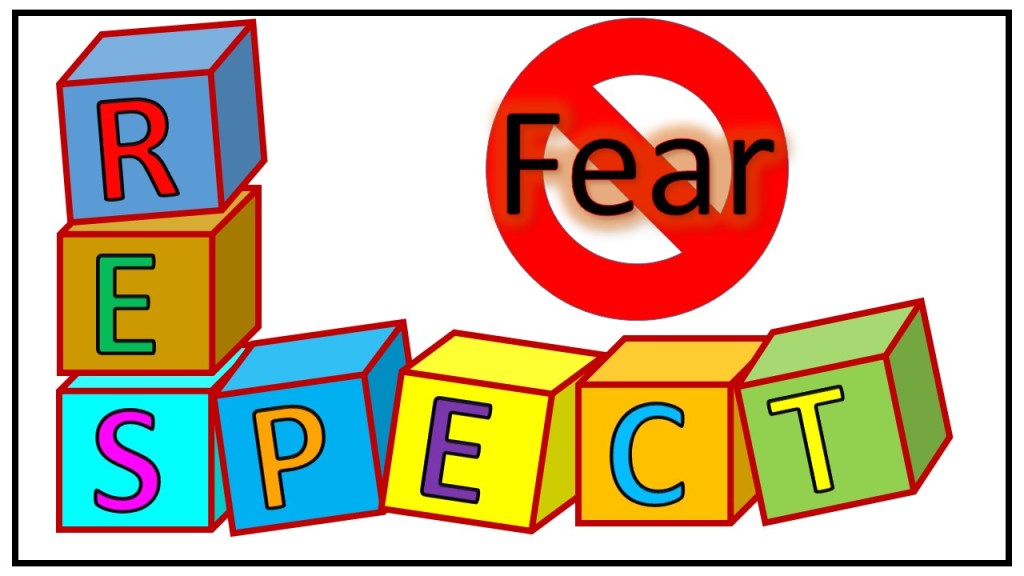
As an early childhood educator, I believe that children need to be respected. It is only through being shown respect, that children learn to respect. It is not learned through fear. Sure, fear may generate what appears to be respect – compliance, conformity, obedience. But inside, feelings of discontent may simmer until, at some future time they manifest in a variety of unpleasant ways.
Children also need to respect, and not fear, each other. I frequently write about the need to develop a welcoming and supportive classroom in which children feel valued and respected. They need to understand the diversity that exists in our world and learn to accept, appreciate, respect and embrace it. Fear is often the result of the unknown, so by getting to know each other better, that opportunity for fear, at least, can be erased.
In a previous post Watching ink dry, I wrote a story about a child being singled out and humiliated for an inability to keep between the lines in a handwriting lesson. An interesting discussion developed in the comments about nuns–teaching nuns, which surprised me. You see, although that particular situation wasn’t one I personally experienced, I did have in mind one of my teachers, who happened to be a nun, as I wrote, but I made no mention of it. I really didn’t think the attitude I portrayed was reserved for nuns during my childhood.
Within a few days of publishing the post, I visited the optometrist where the assistant, without prompting of any kind, (I have no idea how we got onto the subject) told me about nuns who repeatedly humiliated her at school. I then told her about my story, but not my real experiences which were quite similar to hers. I added this to the discussion, and so the conversation grew, prompting Charli Mills from the Carrot Ranch to entertain the thought of “Nun” as a flash fiction prompt.
But it was too late for me to consider the fear, or perhaps to feel the fear and resist doing it anyway. I’d already started recording my black and white view, coloured from years under the rule of those nuns in their black and white habits (literally and figuratively).
One memorable event occurred when, handing out history test results, the teacher (a nun) distributed everyone’s but mine. She then made a big show of trying to find it while telling the class what a dreadful result it was, and that she must have put it aside out of disappointment. Though I am quite tall, she did her best to make me feel small.
Funnily enough, when I experienced a similar situation at a writers’ critique session over the weekend–one of the writers had everyone’s story but mine–I was able to accept his apology and not relive the earlier trauma, even though it was brought to mind.
Perhaps I’m more like the nuns of my childhood than I’d like to acknowledge. Perhaps I find forgiveness no easier than they. So, apologies to all the lovely nuns, whom I am sure must exist, this poem is not for you. It is a reflection of my black and white reflections on my black and white experiences. I’m not sure that I expect you to enjoy this one.
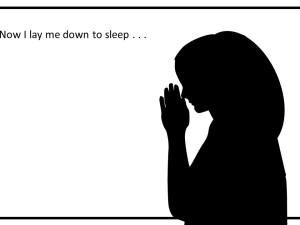
The nun’s prayer
Now I lay me down to sleep,
I pray the Lord my soul to keep.
I have no need for counting sheep,
I count the girls that I made weep.
Lord, I ask Thee, help me please
To do my job with greater ease–
Bless them even when they sneeze,
And keep their skirts below their knees.
I know the task should be not hard
And I should never drop my guard
But if they’re ever marred or scarred,
It puts a mark upon my card.
And while she dreamed her cunning schemes,
Her girls were strangling silent screams.
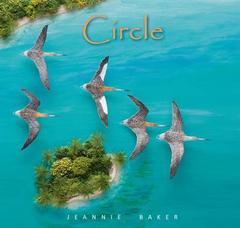
To finish on a more positive note, which is more my way, on her Big Sister Blogs this week, Maria Parenti-Baldey shared a post of wishes creatives have for children. Those wishes are opposite to those of the nun in my disrespectful poem. One of my favourite quotes is that by Jeannie Baker whose books I have previously written about here and here and here.
According to Maria,
Jeannie Baker wished for every ‘single’ child ‘to love and be loved’. For children to have a supportive home, a peaceful environment and ‘to be creative and not be criticised’. To go to school with time to ‘exercise their curiosity… use their imagination’ and find and make things. Jeannie wanted children to think for themselves, play outside and engage with nature with feelings of awe and wonder. Some children experience a fear of nature – ‘Nature deficit syndrome’. ‘What one fears, one destroys. What one loves, one defends.’
I thought it was a perfect quote to round out my post. I wholeheartedly agree with her wishes–they match my dream.
Please pop over to Maria’s post to read what other creatives; including, Leigh Hobbs, Gus Gordan, Mark Wilson, Anna Fienberg, Kyle Hughes-Odgers and Deborah Abela, wish for children. Great wishes, every one.
Thank you for reading, I appreciate your feedback. Please share your thoughts.


















 Norah Colvin