Live Love Laugh Learn … Create the possibilities

Category: Quotes

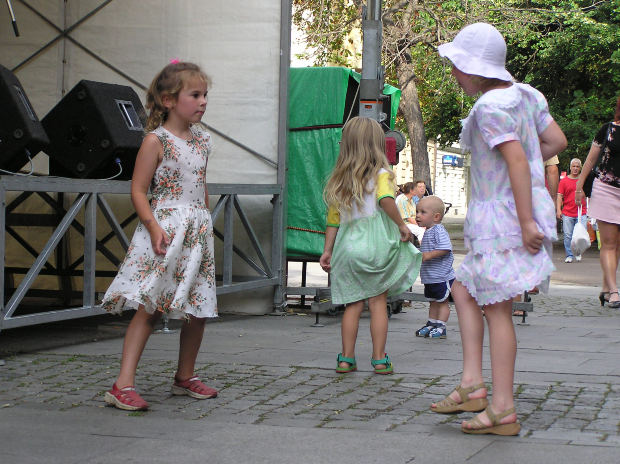
  • Let’s dance!

    www.morguefile.com
    http://www.morguefile.com

    I have always enjoyed working in early childhood classrooms. Being able to share and assist children’s pathways into literacy is as much a privilege as it is exciting. To keep alive their innate curiosity, wonder and joy of learning is an aspiration that rewards me as much as it does them.

    However the role can be rather daunting at times. It requires that one be a generalist, able to move comfortably through and teach effectively in the full range of subjects: English, mathematics, sciences, the humanities and social sciences, technology, health and physical education, and the arts. But the diversity can also provide opportunities for fun.

    Take dance, for example.  Dance can fit into both the arts and physical education programs. While the formal subject areas require some progression of learning in skills and understanding, some form of movement or dance can be incorporated into daily routines such as transition times. I touched on this briefly in a recent post about using the game Freeze, which involves moving to music.
    Moini, Dancing Penguins https://openclipart.org/detail/124759/dancing-penguins
    Moini, Dancing Penguins https://openclipart.org/detail/124759/dancing-penguins

    These are some other ways I incorporated movement and dance into daily routines:

    • At the beginning of each day, after giving the children a few minutes to organise their belongings, I would play a video of music and dance moves. This would signify to the children that it was time to join in and be ready for our day’s work together. By the end of the dance everyone was ready.
    • During our morning sessions children shared items related to their interests or our units of work. Sometimes I asked them to bring in a favourite piece of music to share, with the proviso that they teach us some dance moves to it. The children enjoyed showing their moves as much as they enjoyed following the moves of others.

    In addition to using the game Freeze, I had other CDs of music with patterns of moves that could be used to transition from a noisy to quiet activity, to regain children’s attention after independent or group work, or to complete the tidying of the room at the end of the day.

    • Sometimes I used music that had set dance routines.
    • Other times we moved to the music freely, or responded to the tempo, pitch or volume with large, small, high, low, fast, slow, loud or quiet movements.
    • Sometimes dance routines were performed independently but in unison such as The Hokey Pokey. The Chicken Dance and The Macarena.
    • Sometimes they required participation as a group, for example learning simple square dances.

    Whichever way we did it was always fun and the children loved to participate. They had no need of being told to “Dance like there is nobody watching.”

    Dance like there's nobody watching

    I wonder at what age that becomes a necessity. Perhaps the phrase,and if they are watching, dance anyway” needs to be added.

    My thoughts turned to dance this week in response to the flash fiction prompt set by Charli Mills of The Carrot Ranch to In 99 words (no more, no less) write dance into your story. Charli is talking about writing as her dancing partner.

    Of course my thoughts turn to the classroom (as explained above) and to books about dance.

    2015-09-19 11.15.56

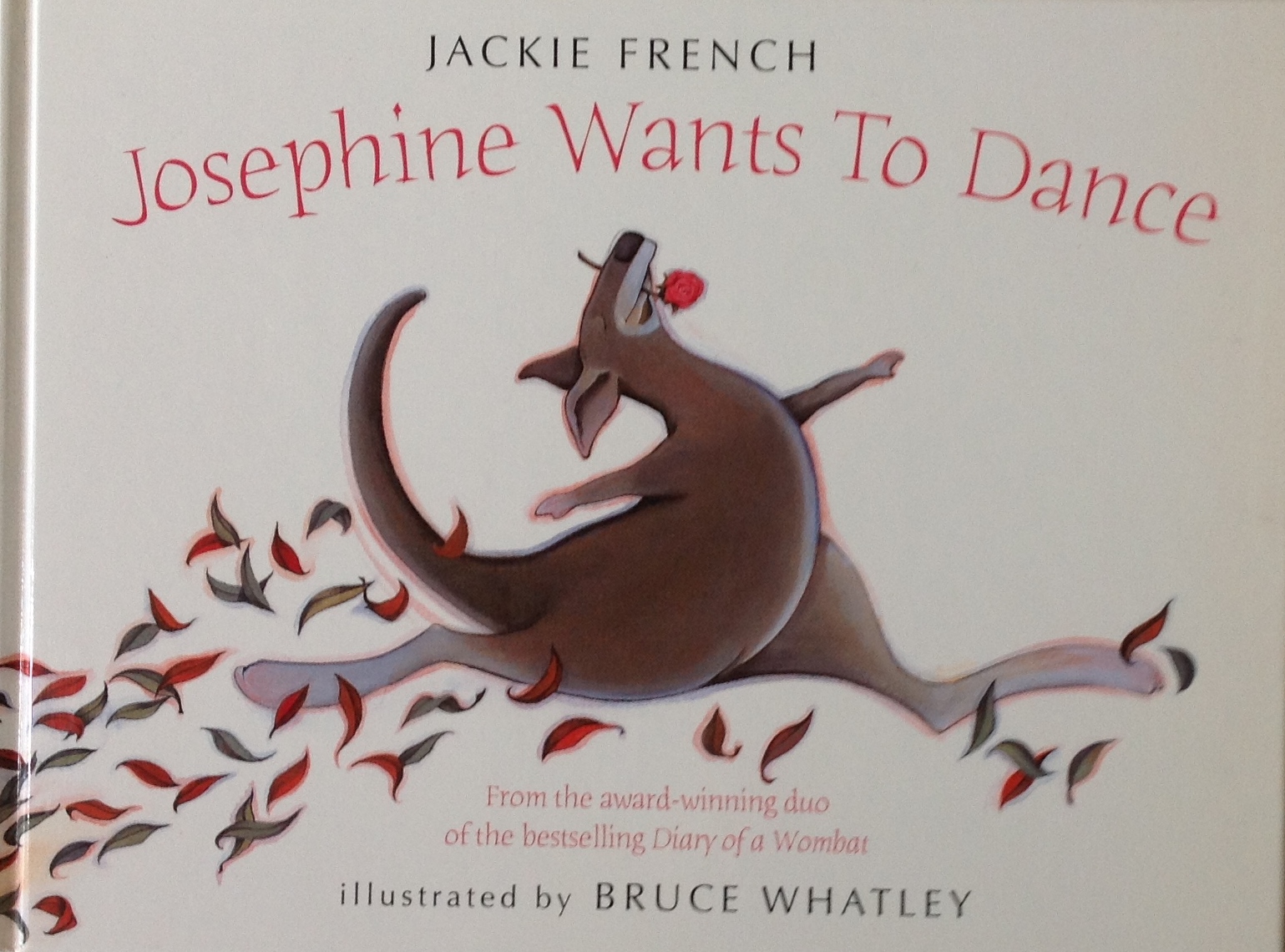
    In a previous post about Australian picture books by Jackie French I wrote about Josephine Wants to Dance. This book, illustrated by Bruce Whatley, is a delightful story of a kangaroo who loved to dance but dreamed of dancing another way. One day the ballet came to town and Josephine decided that was how she wanted to dance. Though others discouraged her, Josephine was determined to give it a try. It is a lovely story of believing in yourself and following your dreams.

    giraffes can't dance

    Another delightful picture book about dance is Giraffe’s Can’t Dance by Giles Andreae, illustrated by Guy Parker-Rees. While I have read this book many times, it took the recent reading of a post To Thine Own Self Be True by Sarah Brentyn on her blog Lemon Shark to remind me of it. The title of Sarah’s post beautifully sums up the theme which is expressed in the book this way: “We all can dance when we find music that we love.”

    We can all dance

    For adults there is the story of Mao’s Last Dancer, the inspirational story of Li Cunxin, who is now the artistic director of the Queensland Ballet, based in my home city. He was Queensland’s Australian of the year in 2014.
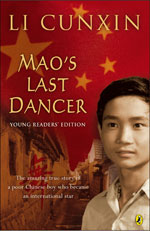
    Mao's_Last_Dancer_book_cover

    This leads me to my flash fiction response:

    A Night at the Ballet

    The audience hushed as the lights dimmed. Marnie shuffled. Darkness was not to her liking. Josephine patted her hand reassuringly. The girls on her other side twittered with anticipation. They’d been to theatre before. Observing their confidence earlier had Marnie feeling even more conspicuous as she balanced on unfamiliar heels and clutched a borrowed evening bag so tightly it left imprints on her hand. At least now the darkness hid her from view.

    Soon the darkness was banished by a brightly lit stage and enormous Christmas tree surrounded by happy children dancing. Marnie was mesmerised. So this was ballet!

    Thank you

    Thank you for reading. I appreciate your feedback. Please share your thoughts about any aspect of this post or flash fiction.

  • The comfort zone

    John Hattie

    Creating a positive classroom environment in which students feel welcome, accepted and respected is probably high on the agenda for most teachers. It certainly was for me during all my years of classroom practice.

    Students require an environment in which they feel comfortable and supported, as well as encouraged and challenged to stretch beyond current levels of skills and knowledge, to step beyond their current comfort zones with confidence in the knowledge that, while learning anything new can be a risky business, they will be supported in the process.

    But this does not just come from a “feel good” place in teachers’ dreams and imaginations. Research provides evidence that it is true. Professor John Hattie, a researcher in education, undertook a very ambitious project, synthesising data from over 800 studies involving more than 80 million students. He published his findings in two books called Visible Learning and Visible Learning for Teachers.

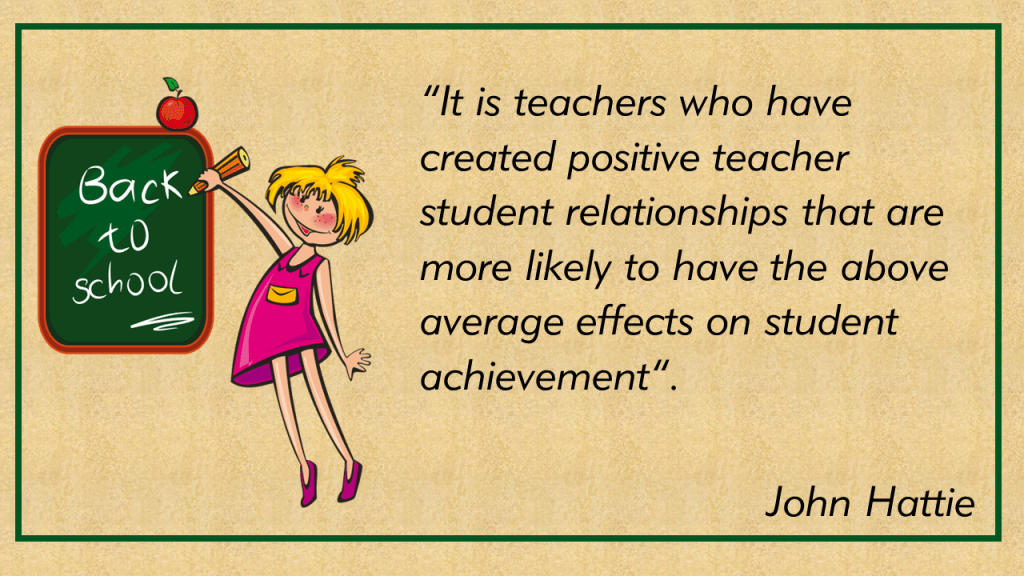
    Hattie says that

    “It is teachers who have created positive teacher student relationships that are more likely to have the above average effects on student achievement”.

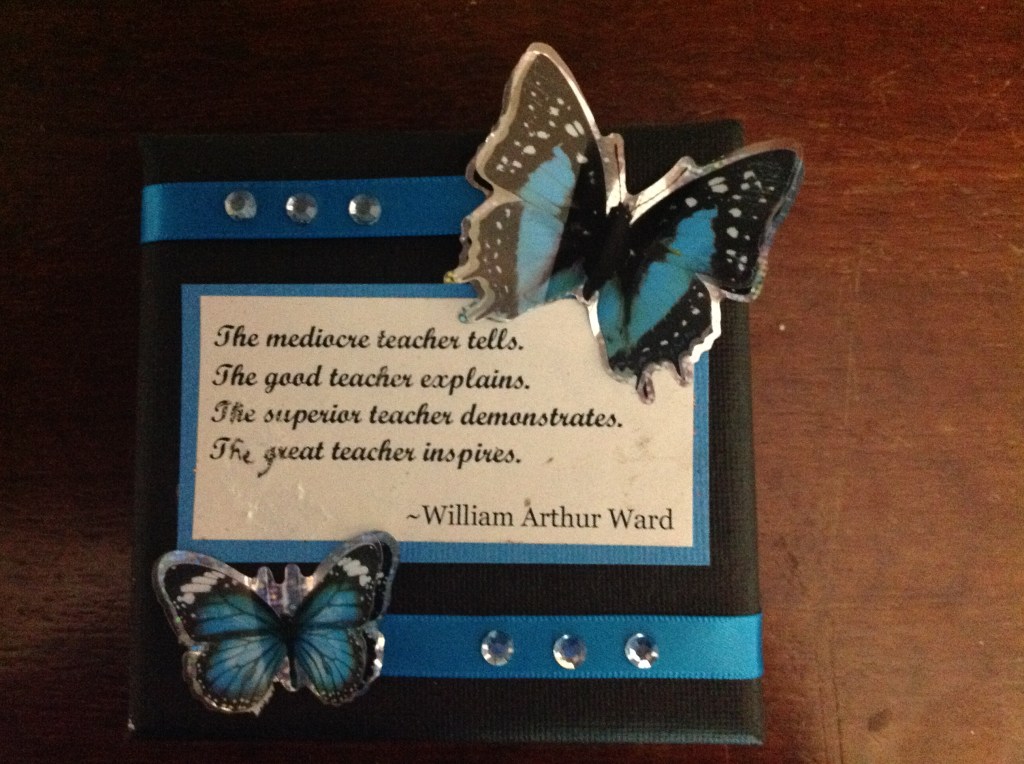
    Thank you to my wonderful students, and their lovely Mum who made this for me!
    Thank you to my wonderful students, and their lovely Mum who made this for me!

    This article, which summaries some of Hattie’s findings about teacher-student relationships, states that

    “the quality and nature of the relationships you have with your students has a larger effect on their results than socio-economic status, professional development or Reading Recovery programs. It is not that these things don’t matter, but rather that your relationships with students matter more.”

    It is wonderful to find that what I have always believed and practiced is now firmly backed up with research.

    I have written before about my use of affirmation songs and of connecting literacy learning to children’s lives and interests. In this post I will share just a few of the physical attributes of the classroom that contributed to that overall positive and supportive environment I worked so hard to establish.

    Readilearn bookmark

    From the very first day of any school year I ensured that children not only felt welcome in the classroom but knew that it was their classroom, that they had part ownership of the space and its environment.

    I would prepare a large welcome chart for the door with my name and photograph and the words: “Welcome to grade one.” Children’s names and photographs would be added by the close of the day.

    Welcome to year one

    In our school each child was allocated an individual desk with a tidy tray underneath for storing belongings. I would arrange the initial seating of children in groups based on what I knew of their friendship groups from the previous year. For each child I would place on the allocated desk:

    • A desk name (to identify the desk, to use as a model for writing, to assist children in learning to read each other’s names)
    • A welcome letter
    • A name badge (to identify them and their class at break time)
    • A small gift e.g. a pencil or keyring
    Welcome pack
    Welcome pack

    During the day I would photograph each child and print two of each.

    One of each child’s photographs would be added to the welcome chart  with the child’s name. (see above)

    The other would be added to a self-portrait and displayed on a classroom wall.

    I am Michael

    I usually asked the children to complete these during the first session so that I could have them on display when the children returned to class after first break.

    This was just the start. Throughout the year my classroom was a constantly changing display of children’s work. Children love to see their work displayed. It gives them an immediate sense of belonging, of being valued, and of ownership. Parents love to see it too, as this (unsolicited) letter written by a parent to the principal at the end of a school year testifies.

    Marianne's letter

    This week at the Carrot Ranch Charli Mills has challenged writers to In 99 words (no more, no less) write about a place of comfort that is a refuge.

    My classroom welcomed everyone: children, parents, volunteers, aides and administrators. It was a comfortable place to be. Fortunately it was not often required to be a refuge in the true sense of the word, though allowing me to experience over and over the joys of being six certainly shielded me from many less pleasant situations that may have been met elsewhere.

    While Marnie of my stories is a fictional character, sadly there are many children suffering as much as or more than I portray for her. It is for children like her that a warm, caring relationship with a special teacher can be empowering and life-changing, the one bright spot in an otherwise difficult life. I wish for all children a loving place of safety, acceptance, trust and respect. Marnie found it in a special teacher, Miss R.

    Safety

    Marnie loved art classes with Miss R. She loved art, but she loved Miss R. more. The days when art class was last were best; had been ever since that first time when she’d dallied, nervously, reluctant to leave, and Miss suggested she stay and “help”.

    Miss R. understood Marnie and Marnie trusted Miss R. Sometimes they would tidy in silence. Other times they’d chatter lightly about distracting things like television, music or books. But sometimes, when dark clouds loomed, Miss R. would gently ask, “What would you like to tell me?” Today the clouds looked about to burst.

    Thank you

    Thank you for reading. I appreciate your feedback. Please share your thoughts about any aspect of this post or flash fiction.
  • Power tools


    www.openclipart.org
    http://www.openclipart.org

    This week at the Carrot Ranch Charli Mills has challenged writers to In 99 words (no more, no less) include a tool in a story. I open this post with a quote by Jackie French I used to close my previous post.

    Jackie French - books - tools

    Books are a great tool. So is the ability to think creatively.

    Being literate is a key that opens many doors. Being able to think opens many more. You could say they are the power tools of education and success.

    In his book The Outliers (recommended to me by Rowena who blogs at Beyond the Flow), Malcolm Gladwell talks about the role of intelligence in success. He says that “intelligence only matters up to a point”, and that “past that point, other things — things that have nothing to do with intelligence — must start to matter more”. He raises the question of what those things are.

    He makes a suggestion to

    “Write down as many different uses that you can think of for the following objects:

    1. a brick
    2. a blanket”

    and calls it a “divergence test”. Rather than asking you to come up with a one right answer, a divergence test “requires you to use your imagination and take your mind in as many different directions as possible.”

    Gladwell describes the test as a measure of creativity, of the ability to come up with imaginative and unique responses rather than a list of commonplace uses. He considers this imaginative thinking combined with intelligence, not intelligence alone, to be what is required to make new discoveries such as those that may be awarded Nobel Prizes.

    www.openclipart.com
    http://www.openclipart.com

    Can this sort of creative thinking be taught?

    Edward de Bono certainly thinks so. As long ago, dare I say, as the late 60s I read (and did) The Five Day Course in Thinking, a series of puzzles to help readers (thinkers) understand their thinking strategies. The puzzles in the book are divided into three sections: Insight Thinking, Sequential Thinking, and Strategic Thinking.

    Over the years I read a number of de Bono’s books including but not limited to Lateral Thinking, Six Thinking Hats, How to Have a Beautiful Mind, Teach Your Child How to Think, Textbook of Wisdom and Why I Want to Be King of Australia. I had a thirst for learning how to think, as thinking had not been encouraged and memorising content had not come easily in my younger years. Discovering that I was able to think, and think outside the box, was empowering.

    www.openclipart.org
    http://www.openclipart.org

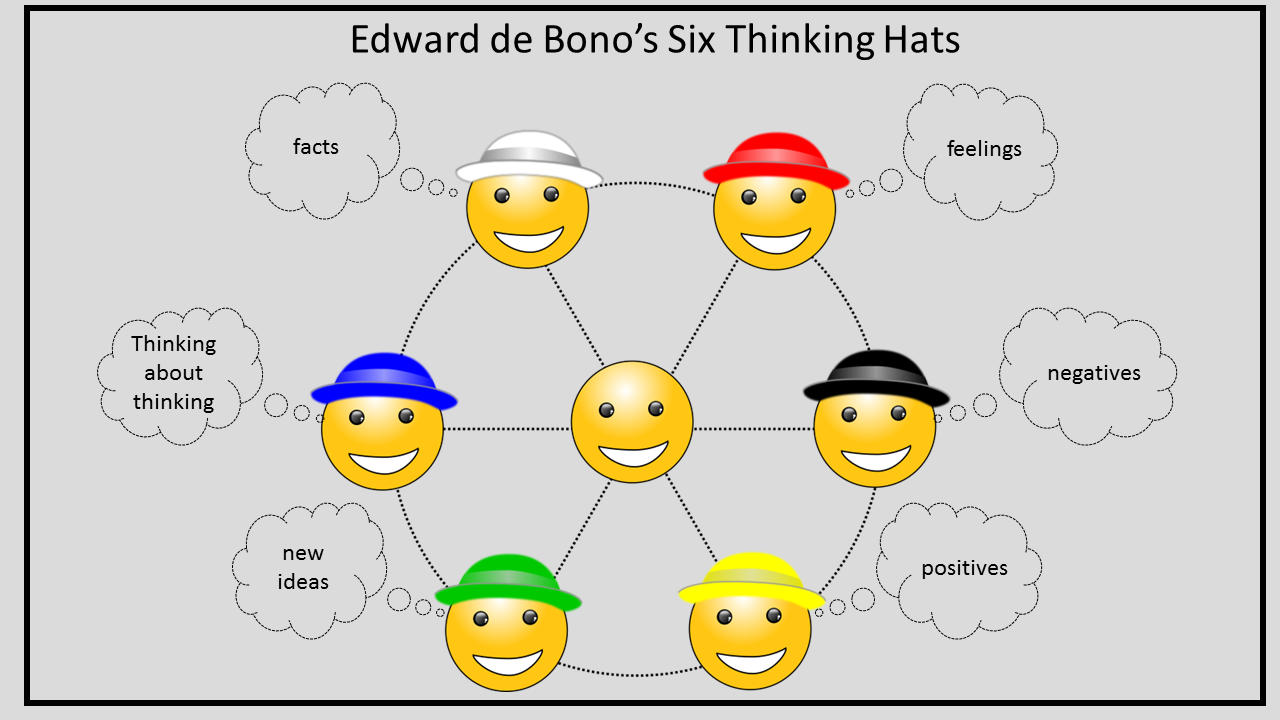
    I enjoyed using de Bono’s strategies and teaching them to my own children as well as to children in my classrooms over the years. His Six Thinking Hats are used in classrooms worldwide as are many others of his thinking strategies.

    six hats

    In this video de Bono talks about creativity, creative thinking, and thinking “outside the box”:

    Tony Ryan is another educator who believes it can. He has published a number of books that aim to get students thinking in creative ways. His Thinkers Keys “a powerful program for teaching children to become extraordinary thinkers” is designed to do just that.

    Tony Ryan says that we now need to think beyond the square and think “outside the dodecahedron”.

    In a comment on a previous post about Lifetime Changes, Steven linked to an amusing video showing the reactions of 21st century children to our earliest computers, tools of technology. This is it in case you missed it:

    I combined the notions of books, creative thinking and technology as tools for learning, productivity and success with a little bit of backward (historical) thinking to inspire my futuristic flash this week. I hope you enjoy it.

    tools for learning

    Relic

    The family shuffled amongst the haphazard collection of primitive artefacts without attempting to disguise disinterest or disdain. The waiting seemed interminable in this “so-last-century” outpost.

    Haven’s seen one of these before,” they’d been told. “I’ll need to order a specialized tool as well as the part. Shouldn’t take long though. Look around while you wait.”

    Confidence in the simpleton’s tools “upstairs”, even if the correct parts arrived, was as low as their interest.

    Hey look!” one called. “Is this …?”

    Can’t be.”

    All destroyed centuries ago.”

    Would be worth a fortune though.’’

    They opened it.

    A book!” they gasped.

    Thank you

    Thank you for reading. I appreciate your feedback. Please share your thoughts about any aspect of this post or flash fiction.

  • A celebration of Australian picture books #6 — Jackie French

    If-you-want-intelligent children

    This post is the sixth in a series celebrating picture books by Australian authors. If you missed earlier posts, please follow these links to the introduction, Mem Fox, Kim Michelle Toft, Narelle Oliver and Jeannie Baker.

    In this post I reintroduce you to Jackie French, prolific and well-known Australian author and advocate for literacy and the environment. She is currently the Australian Children’s Laureate with the task of promoting the importance and transformational power of reading, creativity and story in the lives of young Australians. In January she received an Australian of the Year Award for her contribution to literacy. Jackie’s words from her acceptance speech “If you want intelligent children, give them a book” resonated with me.

    You can listen to Jackie’s acceptance speech in its entirety here:

    These are some of my favourite quotes from the speech:

    Failure-is-not-an-option

    A-book-can-change-the

    There-is-no-such-thing

    Jackie has written over 140 books and won more than 60 awards. I am not going to share all of Jackie’s books here; just a few of her picture books that I own. This complete(ish) list of her books indicates the range of genres in which Jackie writes. Although in Standing on the Shoulders of Giants by Mark Rifidi Jackie describes it differently. She says,

    “People assume I write in different genres. From my point of view I don’t. Whether it’s history, ecology, or the fiction I’m writing about now, it’s all grounded in the way of life here and the landscape here.”

    (Jackie lives a self-sufficient life in the Araluen valley on the edge of the Deua wilderness area.)

    jackie french's books

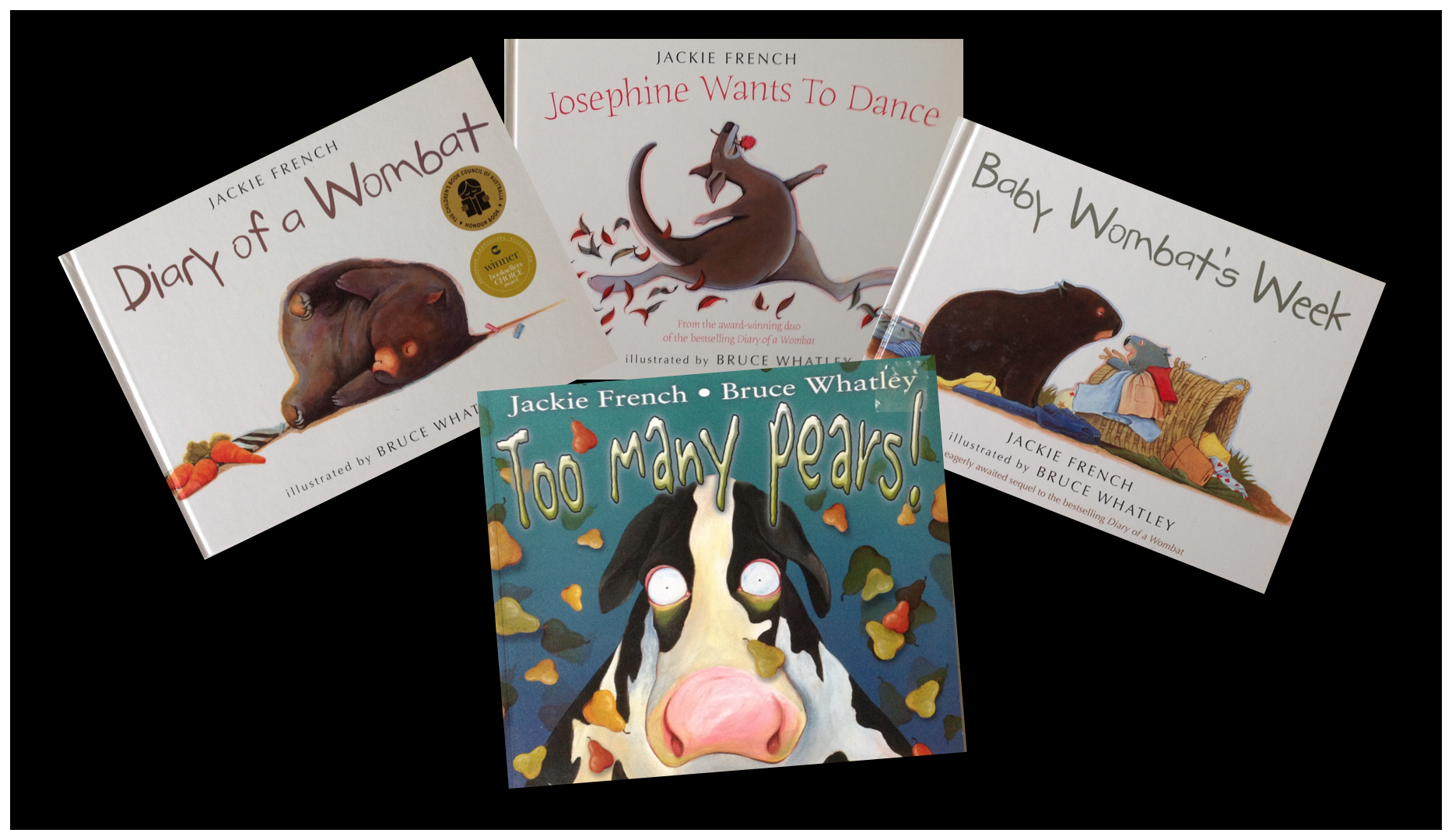
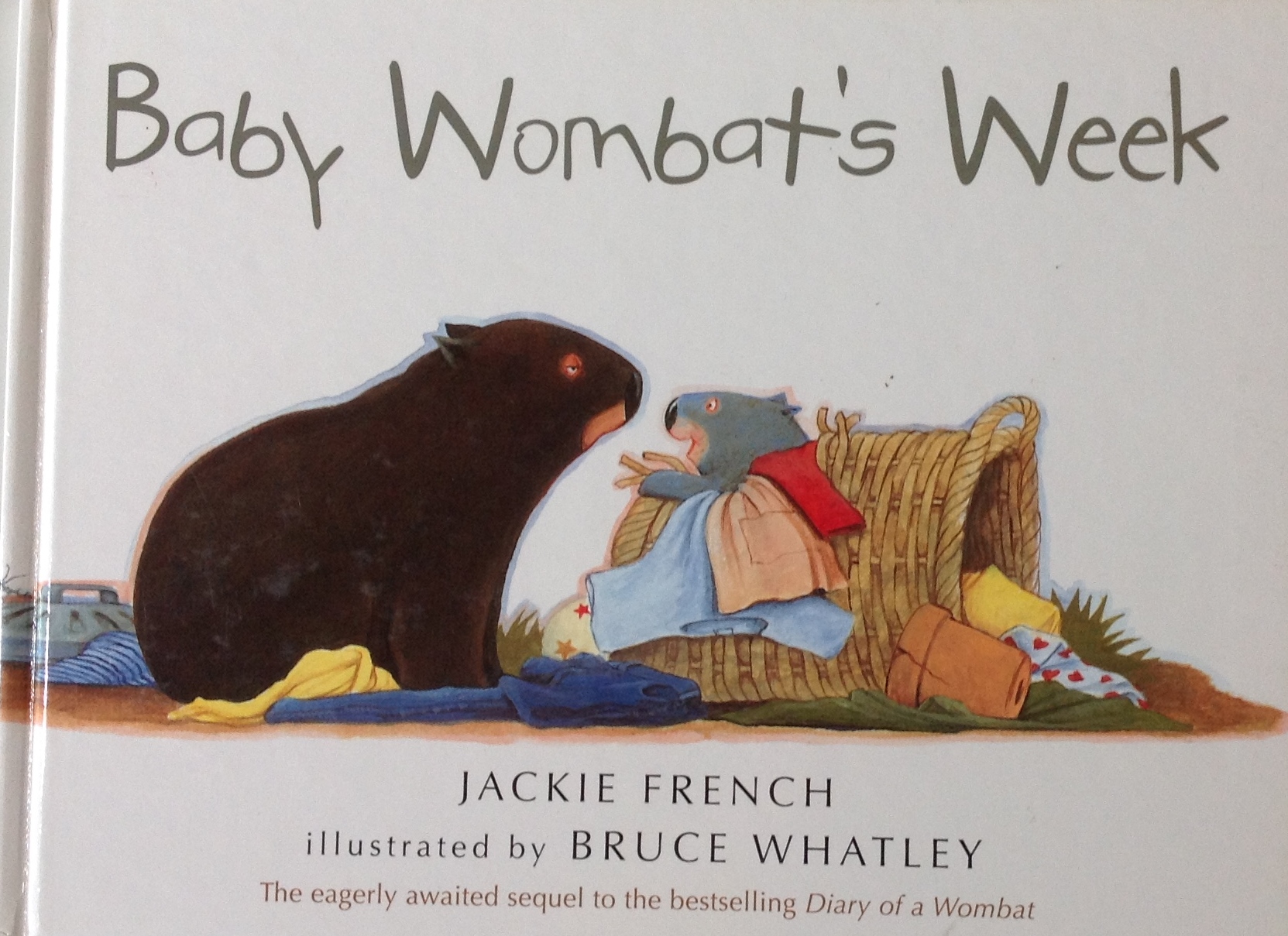
    These are the four of Jackie’s picture books that I currently own. I have read others and given others away as gifts. While these four are illustrated by Bruce Whatley, Bruce is not the only illustrator of her work.

    2015-09-19 11.19.08

    Diary of a Wombat is probably Jackie’s best known and most popular picture book. This is what Jackie says about it, as recorded in Standing on the Shoulders of Giants:

    Diary of a Wombat isn’t fiction … (it) is pretty much a week in the life of Mothball, who is one of the wombats that got fed last night” 

    The seeming simplicity of the text coupled with Bruce Whatley’s gorgeous illustrations make this book a joy to read, over and over.

    In the book Mothball sleeps, eats, scratches, eats, sleeps, and easily trains humans to be “quite good pets”.

    You can listen to Jackie read it here.

    2015-09-19 11.16.36

    A sequel to the Diary, Baby Wombat’s Week is pretty much a week in the life of Mothball’s baby. It is just as delightful and humorous as the original story with new adventures and escapades; but still lots of sleeping and eating.

    There are two other books in the series: Wombat Goes to School and Christmas Wombat. The Secret World of Wombats is a non-fiction text exploring “everything you ever wanted to know about wombats.”

    2015-09-19 11.15.56

    Josephine Wants to Dance is a delightful story of a kangaroo who loved to dance but dreamed of dancing another way. One day the ballet came to town and Josephine decided that was how she wanted to dance. Though others discouraged her, Josephine was determined to give it a try. It is a lovely story of believing in yourself and following your dreams.

    2015-09-19 11.18.32

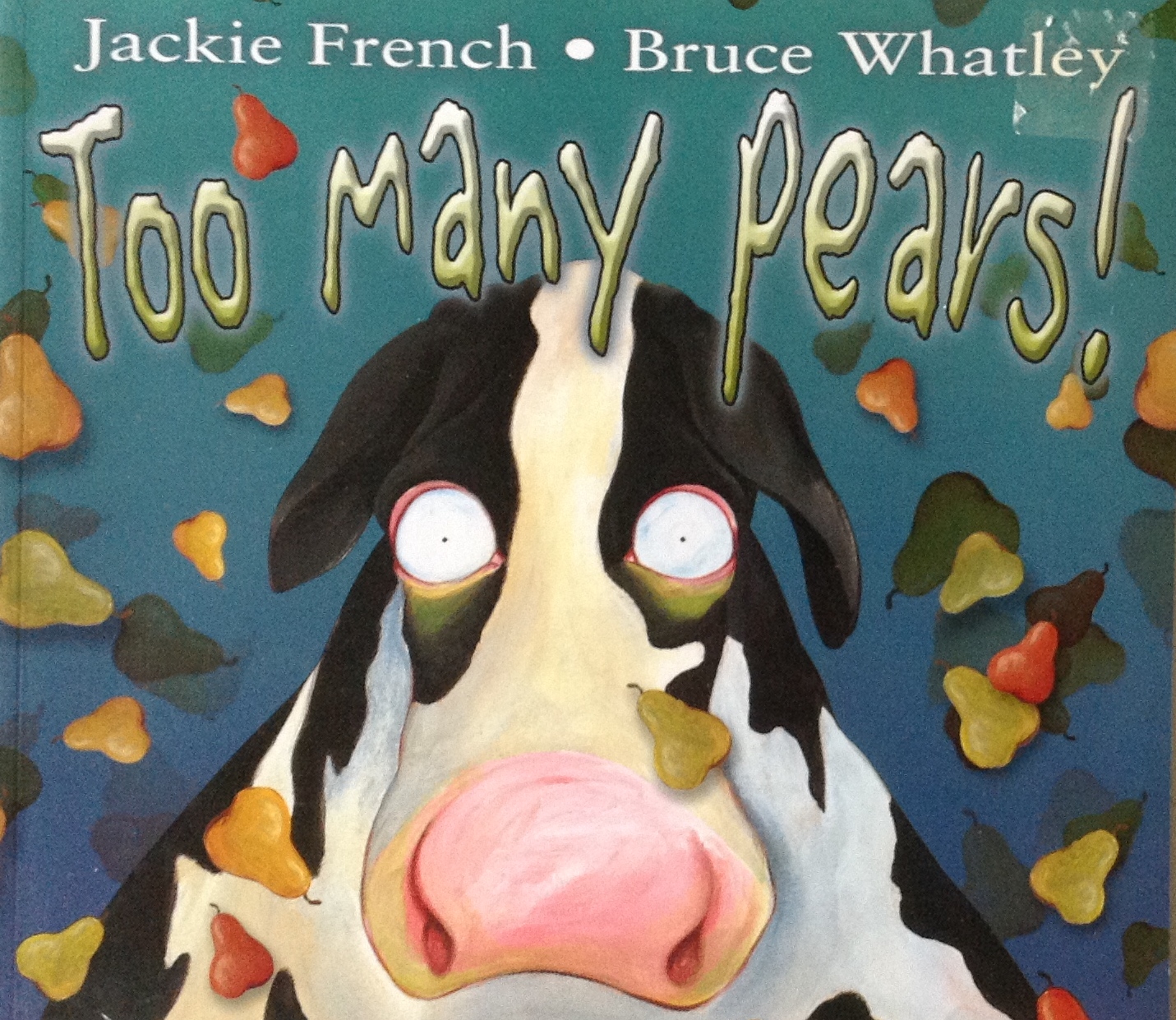
    Too Many Pears is another delightful and humorous story with illustrations that add interest and humour. (It reminds me a little of the battle Charli Mills had with gophers in her vegetable patch.)

    Pamela, a cow, loves pears. She loves them straight from the tree, in pies, with ice cream … any way she can get them. Amy and her family have to figure out a way of stopping Pamela from eating all their pears. They do. But then Pamela spies the apples!

    I am happy to recommend each of these books. They will not disappoint. Jackie’s text coupled with Bruce’s perfectly matched illustrations continue to delight during repeated readings.

    Jackie’s website too is a treasure trove of interesting stuff. On her Kids’ Facts and Info for School Projects page she shares her writing process and a lot of other information that would be of interest to writers as well as to kids. She also has a page of Writing  Tips and Advice and a page about How to Get Kids Reading, topics close to my heart.

    In addition to illustrating Jackie’s books, Bruce Whatley writes and illustrates books of his own as well as those of other authors. In a recent post I talked about drawing on the right side of your brain. In this video Bruce challenges everyone to have a go at drawing with their left hand. Is that engaging the right side of your brain?

    I am very grateful to Sarah Brentyn, who blogs at Lemon Shark, for alerting me to Standing on the Shoulders of Giants by Mark Rifidi just in time for this post. Thank you Sarah and Mark. I’m certain I will be having more to say about Mark’s book in future posts. It is a great resource celebrating the work of 20 Australian picture book authors and illustrators.

    In the final paragraph of her biography chapter in Mark’s book, Jackie says,

    “The one thing you show readers by writing about history is not to be afraid of change. Tomorrow always is going to be different from yesterday. It always has been. But human beings are extraordinarily good survivors, superb adapters. We are very good at creating a sort of world that we want. Books are perhaps the most effective tool to help us find it.”

    I like her thinking!

    Thank you

    Thank you for reading. I appreciate your feedback. Please share your thoughts about any aspect of this post.


  • The right place at the right time

    Charli Mills Serendipity

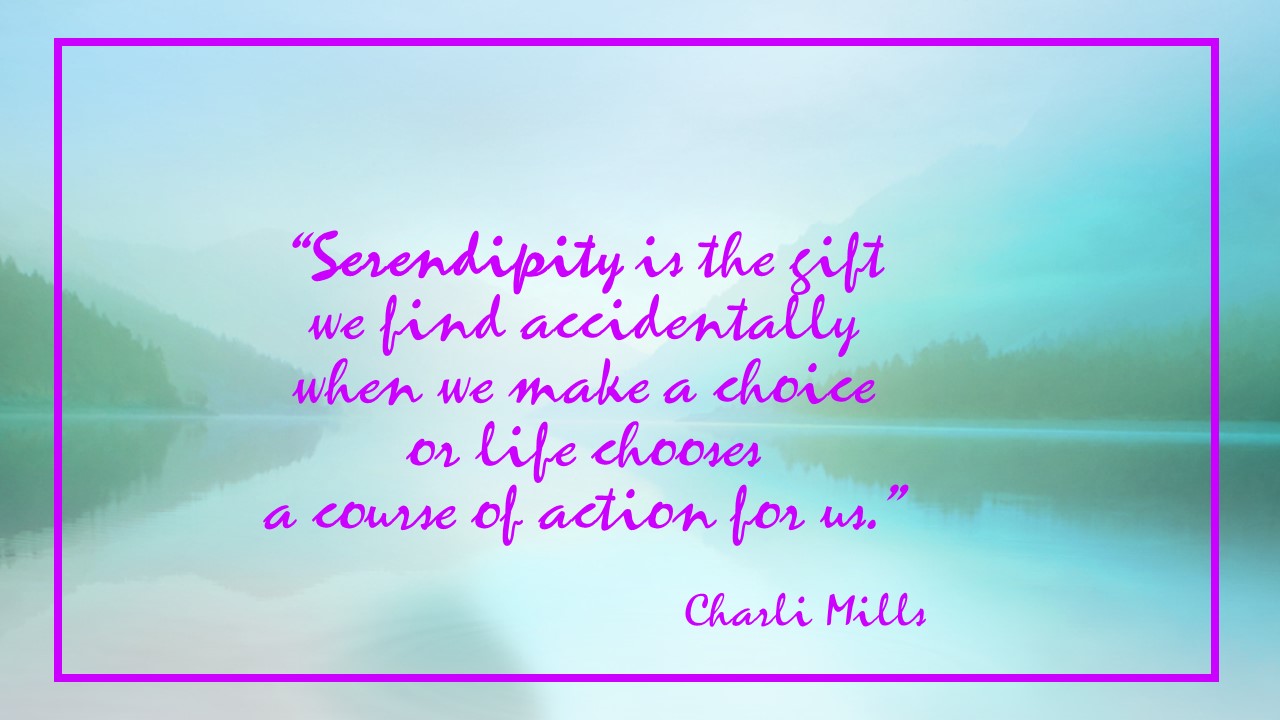
    This week at the Carrot Ranch Charli Mills is talking about serendipity and describes it this way:

    “Serendipity is the gift we find accidentally when we make a choice or life chooses a course of action for us.”

    I often think of serendipity as being in the right place at the right time. There are many occasions in my life where that has occurred, and probably millions more when I’ve missed by a millisecond, but many of those I’ll never know.

    www.morguefile.com
    http://www.morguefile.com

    Our lives have been improved by many discoveries made through serendipity. This article on NOVA lists seven Accidental Discoveries  in medical science that have changed health outcomes people around the world:

    • Quinine
    • Smallpox vaccination
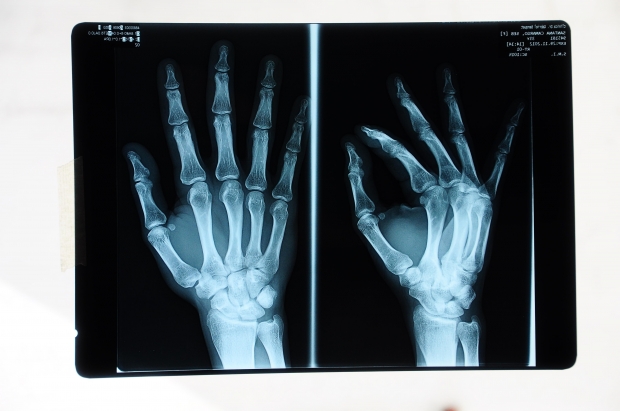
    • X-rays
    • Allergy
    • Insulin
    • Pap Smear
    • Penicillin

    Joseph Henry - seeds of discovery

    Lexi Krock, author of the article reminds us that, though some elements of serendipity, of chance, may have been involved in the discoveries, there was also a great degree of hard work, preparedness, creative thinking and an openness to possibilities. In fact Krock says that having an open mind is the most important ingredient. She quotes the words American physicist Joseph Henry:

     “The seeds of great discoveries are constantly floating around us, but they only take root in minds well prepared to receive them.”

    I came to that article through The story of serendipity on Understanding Science, which also talks about lucky coincidences, such as the story of Newton and the apple. This article states there is more than being in the right place at the right time to make a serendipitous discovery, including:

    • Background knowledge
    • An inquisitive mind
    • Creative thinking
    • The right tools, and
    • Good timing
    www.morguefile.com
    http://www.morguefile.com

    Another who attributes success in part, to serendipity, to being in the right place at the right time, is Malcolm Gladwell. Thanks to a serendipitous recommendation by Rowena, who blogs at Beyond the Flow, I have just finished listening to Gladwell read his book “The Outliers, The Story of Success”.

    Gladwell argues that there is more to success than just intelligence and hard work. Yes both are important: intelligence to a certain level and hard work to a greater degree. Through “The Outliers” Gladwell popularised the idea of 10 thousand being the “magic” number of hours to practice for success to occur, citing sporting heroes, The Beatles and Bill Gates, amongst others..

    However there is much dispute to this “rule”; and I must admit that, although I thoroughly enjoyed listening to and thinking about this book, it raised as many questions as it provided “answers” and I found myself wondering how much manipulation had gone into the figures to make them match his ideas, rather than the other way round. I am not saying there was any manipulation, I just wondered.

    www.openclipart.com
    http://www.openclipart.com

    However, one point he was making, that I think has value and fits with the theme this post, is that one’s circumstances; one’s family, environment and time, including birth year and month, play an enormous role in one’s success. These are things over which we have no control.

    According to Gladwell’s discussion of timing, I am correct in describing myself as “born too soon” in my Twitter bio. I was born just a few, but too many, years before the twelve month period that saw the births of Bill Joy, Steve Jobs and Bill Gates. I didn’t have the opportunities they had either.  Gladwell explains the importance of their timing, environment and opportunities in his book.

    In this Q and A Malcolm explains what an outlier is, what he thinks of as success, and how he thinks we should think of success. As well as the coincidence of Joy, Jobs and Gates, Gladwell says that “a surprising number of New York’s most powerful and successful corporate lawyers have almost the exact same biography: “they are Jewish men, born in the Bronx or Brooklyn in the mid-1930′s to immigrant parents who worked in the garment industry. “ He also says that “a hugely disproportionate number of professional hockey and soccer players are born in January, February and March.” Coincidence? He explains why.

    rg 1024, gift https://openclipart.org/detail/31159/gift
    rg 1024, gift https://openclipart.org/detail/31159/gift

    In her post Charli Mills states that

    “Serendipity holds no guarantees, but we can take the gifts it offers.”

    The gifts were there for the hockey and soccer players born in the first quarter of the year, but stacked against anyone born in the final months of the year. Likewise, serendipity held false promises for me when I was working towards establishing an alternative school.  Meeting the expectations of the Education Department proved no barrier. Meeting town planning requirements was much more elusive.

    The first property with any real potential we investigated was in Skew Street. Not surprisingly the odds were skewed against us and we couldn’t proceed there.

    Shortly after we located a much better property: more central, with ample indoor and outdoor space and a large playground. The arrangements seemed ideal, and the street names were much more promising. It was on the corner of Water and Love Street. Surely that had to bode better for us than Skew Street. Serendipity.

    Unfortunately, though it was definitely the right place, the timing was wrong. At the final moment, when leases were to be signed, a member of the organisation, who had been absent from previous meetings and discussions, turned up, objected and put an end to our plans.

    While some of us did continue to search for another location, it was like trying to find a needle in a haystack; there were few that met town planning requirements, and even fewer that met ours. Parents who had expected their children to start with us decided they could wait no longer and made other arrangements for their children’s education. The last minute loss of the ideal property rocked us to the core. With much heartbreak we finally admitted defeat and disbanded. Having read Gladwell’s book I am now willing to accept that it was not because I didn’t work hard enough but because there were other factors working against us.

    I decided that, in response to Charli’s flash fiction challenge to In 99 words (no more, no less) write a story that reveals or explores a moment of serendipity, this time I would provide Marnie with a positive experience, the beginning of a new phase in her life; serendipity working it’s magic.

    doors

    The wrong place at the right time

    Marnie was puzzled. The card definitely said 225; but there wasn’t any 225. There was 223, and 227, but no 225. She peered at the crack between the apartments as if willing 225 to materialise. Exhausted and confused, unsure of what to do next, she slumped on the step.

    “Can I help you?”

    The question interrupted her muddled thoughts. Seeing kindness in the eyes, Marnie explained her predicament.

    The woman read the card.

    “Street, not Avenue,” she said, pointing to the sign. “Are you Marnie? Lucky I got the wrong bus today. I’m Josephine. Come on. It’s not far.”

    Thank you

    Thank you for reading. I appreciate your feedback. Please share your thoughts about any aspect of this post or flash fiction.


  • A Celebration of Australian picture books #5 — Jeannie Baker

    Jeannie Baker - planet changing

    This post is the fifth in a series celebrating picture books by Australian authors. If you missed earlier posts, please follow these links to the introduction, Mem Fox, Kim Michelle Toft and Narelle Oliver.

    In this post I introduce you to Jeannie Baker, a collage artist and author. Jeannie was born in the UK but has lived most of her adult life in Australia, and most of her books, though having universal themes, are set in Australia.

    2015-09-19 11.09.45

    Jeannie had already published a number of books prior to 1992 when I first became aware of her work through “Window”, winner of the Australian Picture Book of the Year Award.

    Window tells, in beautifully detailed collage, of the transformation of a landscape from natural bush to city-scape. The changes are observed through a window by a boy as he celebrates alternate birthdays from birth to 24 years. Like many of Jeannie’s books, “Window” carries a strong environmental message. In her note at the end of the book, she says,

    “Our planet is changing before our eyes. However, by understanding and changing the way we personally affect the environment, we can make a difference.”

    The intricate details in this textless picture book provide many opportunities for discussion. Children and adults are enticed to study and compare the changes that take place in each successive picture. The carefully constructed collages give a sense of being able to almost step into the scene and experience the sights, sounds and smells of each landscape.

    Jeannie Baker - time

    I was fortunate to attend an exhibition of Jeannie’s artwork for “Window” as it toured the country in 1992. What surprised me most was the size of the collages. With all their detail I had expected them to be quite large; but they weren’t. They are miniature, much smaller than a page of the picture book on which they appear. The collection and arrangement of a mix of natural and artificial materials is amazing. Jeannie describes the process of constructing her collages here.

    2015-09-19 11.11.04

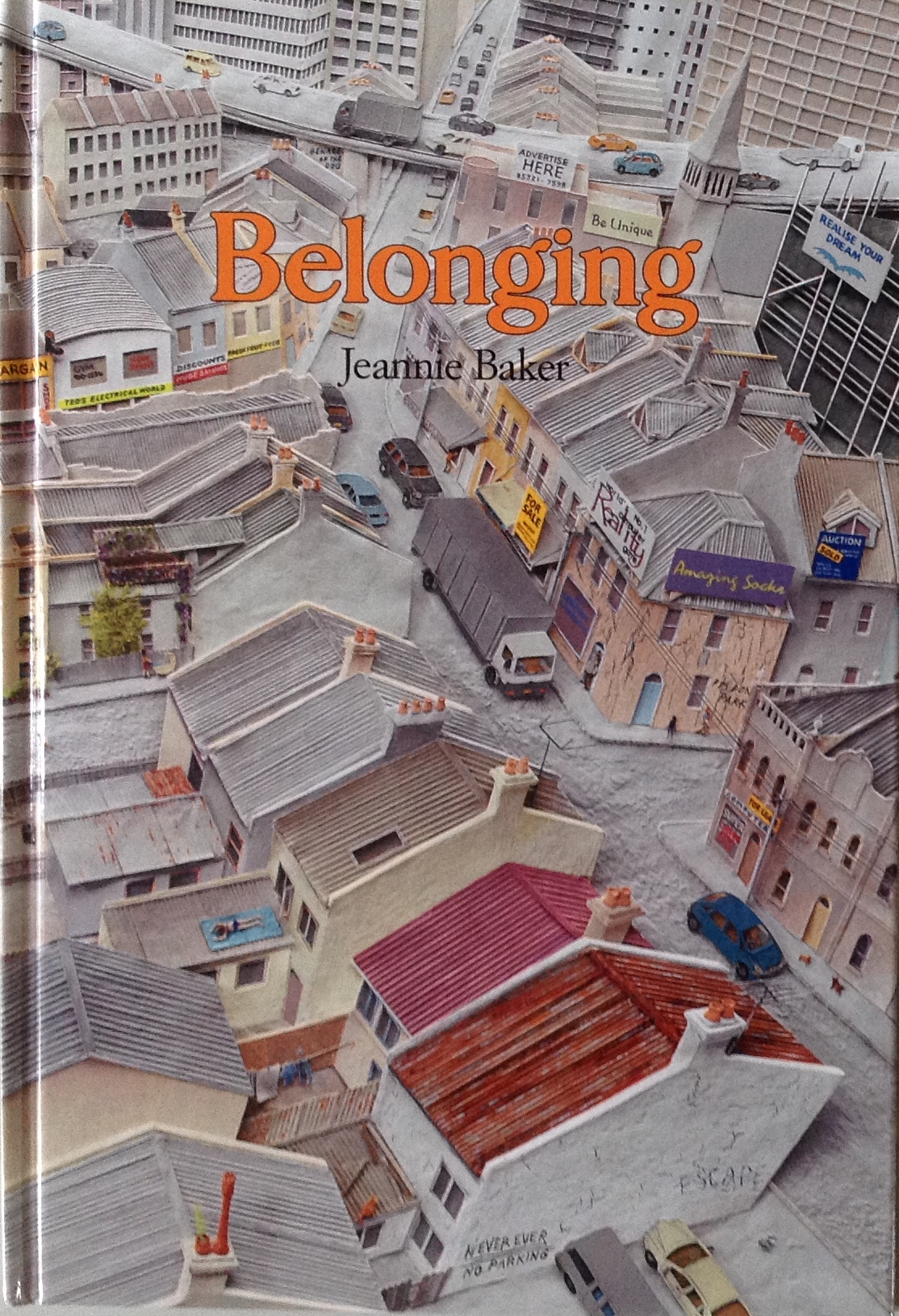
    In 2004 Jeannie published a companion book to “Window” called “Belonging, which, in 2005, also received a number of awards, including one from the Wilderness Society. This textless picture book tells a story of a changing landscape over a number of years as a city is transformed with plants and welcoming spaces for children and families. In a note at the end of this book, Jeannie says,

    “It takes time … But by understanding the land on which we live and by caring for it we can choose between just having a place to live or belonging to a living home.”

    2015-09-19 11.10.25

    One Hungry Spideris the third of Jeannie’s books I own. Unlike “Window” andBelonging, the illustrations in this one are accompanied by text. One Hungry Spideris a counting book, but a counting book with a difference: it includes information about the spider. For example when one of seven ladybirds gets caught in the web we find out that “the spider took no notice (because) spiders don’t like the taste of ladybirds.” And when nine wasps fly by the spider left the web and hid because wasps catch spiders. Additional details about the spider are provided at the back of the book. Once again the illustrations throughout the book are magnificent.

    Surprisingly I own only these three of Jeannie’s books. However I am familiar with others. At school I had access to many of her titles in big book format (approximately 50 x 40 cm) which were perfect for sharing with a class of children.

    4 of Jeannie Baker's books

    These are other favourites:

    Where the Forest Meets the Sea”, “The Hidden Forest”, “Mirrorand The Story of Rosy Dock”.

    Are you familiar with Jeannie’s work? If so, which ones and what do you think of them?

    Please check out these and other titles of Jeannie’s if you have a chance. Their illustrations will intrigue you and their positive messages will inspire you.

    As a writer, I found inspiration in Jeannie’s response to the question,

    “Of all the books you have made, which is your favourite?”

    She answered,

    “When a book is finally finished, I find it hard to think about it anymore …I want to fill my
    head with something totally different, with a new book.  My favourite book is the
    ‘new’ book I’m working on, still working out and trying to make better than the books I
    made before it!”

    I think that indicates a strong growth mindset and Jeannie’s joy in the “continual challenges this medium gives … to invent techniques and explore and experiment with materials and their textures.”

    Jeannie Baker - favourite book

    It affirms the quest for improvement and a reason to embrace the challenges we both set for ourselves and meet along the way.

    Thank you

    Thank you for reading. I appreciate your feedback. Please share your thoughts.

  • I’m new here

    Australia is a land of immigrants. The first Australians arrived, it seems, about 65 000 to 40 000 years ago, after the second migration out of Africa. The second group arrived only little more than 200 years ago. Some think of Australia as a young country with a history beginning with arrival of Europeans in 1788. But Australia is not only the oldest continent, it is also home to the oldest living culture and was inhabited long before many other parts of the world. It is a tragedy that little recognition and respect is given to this culture and its peoples.

    Disharmony and conflict, on a scale from the personal to global, often occurs because of perceived differences: “He’s not like me. She doesn’t think like me. They don’t believe what we believe. I am right and you are wrong.” The realisation that what we share in common far outweighs the differences, and the appreciation of those similarities and differences, would go a long way to soothing that discord.

    The National Geographic Genographic Project aims to find out more of our collective human history; where we originated and how we came to populate the world. Projects such as this may help to strengthen the focus on what we share rather than ways in which we differ.

    Young children are generally accepting of differences they may notice in each other and are usually more concerned about having someone to play with than about visible differences.  Fear of and discomfort with differences is often learned.

    https://openclipart.org/image/800px/svg_to_png/192642/Children_holding_hands.png
    https://openclipart.org/image/800px/svg_to_png/192642/Children_holding_hands.png

    Mostly my classrooms were a microcosm reflecting the rich diversity of cultural heritages represented in Australia. Learning about those heritages from the children and their families, as well as through literature and other media, helped us all develop an appreciation for our differences as well as our commonalities.

    The celebrations of International Days when children would wear traditional clothing, bring items from home to display and discuss, contribute cultural food to a shared lunch, teach how to play traditional games or share traditional stories were always appreciated by the children and families; including those who considered themselves to have a cultural background and those who didn’t.


    http://pixabay.com/en/diversity-ethnic-global-literature-154704/
    http://pixabay.com/en/diversity-ethnic-global-literature-154704/

    Units of work, such as my Getting to know you — Early childhood history unit, learning to greet each other in the languages represented in the class, reading traditional tales and discovering each other’s favourites of anything also contribute to developing understanding and empathy.

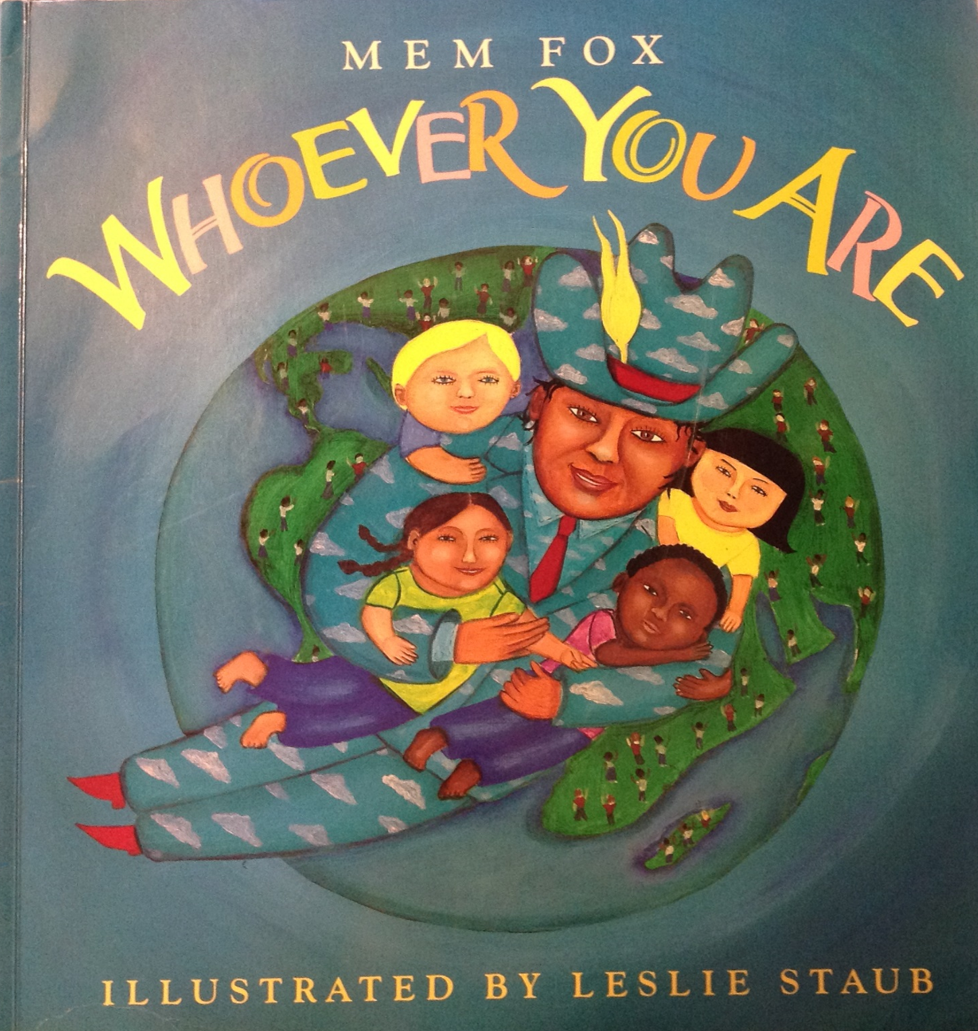
    Whoever you are.

    Whoever You Are by Mem Fox is a wonderful picture book which can be used to discuss similar themes. It explains in a simple and beautiful way that although children around the world may live in different houses, wear different clothes or eat different foods, for example ‘inside, their hearts are just like yours.’ Mem Fox explains the story on her website.

    I have drawn upon the ideas discussed above for my flash fiction response to this week’s challenge by Charli Mills at the Carrot Ranch to In 99 words (no more, no less) write a story that shows the interaction of a migrant culture on the place of migration.

    Playground connections

    The adults dotted the perimeter, holding tight to their own; bound by the security of sameness reflected in their own eyes, excluded by fear felt for differences perceived in others: different dress and hair, unintelligible words and unfamiliar scents.

    In the centre the children romped together, united in the secret language of smiles and laughter, funny looks and gentle patting hands; no words needed.

    The children smiled, waving promises of future plays, as one by one the adults called them home, delighting in their children’s easy ways, wishing for their own nonprejudicial days. A nod. A smile. A beginning.

    Recently I found this quote on Yvonne Spence’s post in 1000 Voices for Compassion. I think it sums up the intentions of this post  beautifully.

    we are together


    Thank you

    Thank you for reading. I appreciate your feedback. Please share your thoughts about any aspect of this post or flash fiction.


  • What is failure?

    rough-writers-web-comp

    Regular readers of my blog know that for the last eighteen months I have been participating in the flash fiction challenges set by Charli Mills at the Carrot Ranch. Each week Charli posts a prompt and invites readers to submit a response in exactly 99 words. I have participated since the first prompt and have missed only a few, maybe one or two.

    I enjoy the way the prompt stretches both my thinking and my writing. I appreciate the opportunity to engage in fiction as a diversion from the mainly expository writing (and reading) I do; and to engage in a supportive and encouraging group of Rough Writers.

    Since education is the focus of my blog I have given myself the added challenge of targeting an aspect of education in my response to Charli’s prompt. Mostly I have succeeded, though sometimes the posts may be a bit convoluted and the links rather tenuous, but nevertheless, I have been mostly pleased with my ability to find a link.

    This time I didn’t think I was going to do it. While I grappled for a suitable link, none was forthcoming and I thought it was going to be an F, a no-show, this time.

    F

    You see, this week Charli is talking about the destruction caused by forest fires and other catastrophic weather events. Though Australia suffers its share of natural disasters, I am fortunate that I have never been more than inconvenienced by them. I haven’t suffered the loss of family, property and livelihood that others have; nor have I worked in a school where loss was experienced on a large scale. You could say I have lived a sheltered life, and I am grateful for it.

    So without a personal experience to share, my next thoughts were to the curriculum. But I am an early childhood teacher, and young children don’t learn about catastrophic events unless they have a personal experience of them. The Australian Curriculum introduces learning about natural disasters in year six.

    Another dead end. The F was looming. Would it engulf me?

    warszawianka, tango face crying https://openclipart.org/detail/30295/tango-face-crying
    warszawianka, tango face crying https://openclipart.org/detail/30295/tango-face-crying

    Then inspiration! I remembered watching a video in which the possibility of an F being the new A was mooted.  I’m sure you’ve all heard about 60 being the new 40, for example; generally put forward by the 60s rather than the 40s I conjecture. But this was a new twist.

    The article on Mind/Shift How we will learn entitled When Educators Make Space For Play and Passion, Students Develop Purpose introduced me to a Harvard education specialist named Tony Wagner who, like Ken Robinson, advocates for a reinvention of the education system.

    In the video Wagner says that “What the world cares about is not what you know, but what you can do with what you know.” Content is now available through a quick internet search. We don’t need to have instant recall of numerous facts.

    Instead of content, Wagner lists a set of core competencies he considers important. He says that to be lifelong learners and active and informed citizens, the following abilities are required:

    1. To ask questions through critical thinking and problem solving
    2. To work collaboratively
    3. To be flexible and adaptable
    4. To show initiative and be entrepreneurial
    5. To communicate effectively in both oral and written modalities
    6. To access and analyse information
    7. To be curious and imaginative

    I agree that each of these attributes is important. I think I have mentioned many of them in previous posts.

    Wagner goes on to say that what is needed is innovation: the ability to generate new and better ideas that can be used to solve the problems facing us today. He questions whether America’s reputation as a leader in innovation is as a result of or despite the education system. He then asks the audience to identify what the following four people have in common.

    Bill Gates (Microsoft)

    Edwin Land (Polaroid camera)

    Mark Zuckerberg (Facebook)

    Bonnie Raitt (folk singer)

    Did you, like the audience, think them to be dropouts? Wagner identified them as not just dropouts; they were Harvard College dropouts! Steve Jobs (Apple) and Michael Dell (Dell computers) were dropouts.

    This fact about innovative dropouts inspired Wagner to investigate conditions that encourage the development of innovators. He interviewed many young innovators, asking if there had been an influential teacher or mentor in their lives. While not many could name one, those identified were outliers, engaging students in teamwork and interdisciplinary work involving problem solving and risk taking.

    Wagner also interviewed people from innovative organisations such as IDEO, whose motto he quoted: “Fail early and fail often.” (“That’s because there is no innovation without trial and error.”) It was from a think tank at Stanford that the idea that an “F is the new A” came.

    F is the new A

    There are iterations, not failure, Wagner says, and he questions the way parents and teachers try to protect children from making mistakes saying that real self-confidence was only to be gained from learning that you could recover and learn from mistakes.

    Tony Wagner - iterations

    So perhaps in thinking about failure, I haven’t really failed. I’m learning. It is only to be hoped that the failures in fire management that Charli talks about in her post lead to improved management practices in the future.

    For my response to Charli’s prompt, to  in 99 words (no more, no less) write a story about the need for help in an extreme weather event, I have chosen a weaker BOTS (based on a true story) from my childhood. The link may be tenuous but hopefully not entirely non-existent. I hope you enjoy it.

    Storm

    A big storm was coming. Two older ones were put in charge of two younger ones. They sat at the fence, watching. Soon other neighbourhood kids gathered, sharing storm stories, waiting.

    Green clouds swirled as dark clouds played leapfrog races above. The children watched the storm rush closer; mesmerised by its beauty, mindful of its power.

    Soon the winds whipped up, chasing the other kids home. The older two called to the younger, but they were nowhere to be seen. Mortified they hurried inside to alert their parents.

    What relief. They were already in, telling of the storm’s approach.

    Thank you

    Thank you for reading. I appreciate your feedback. Please share your thoughts about any aspect of this post or flash fiction.

  • The expectation of labels


    1 (5)

    In some circles labels can be used as an attempt to define who you are, either to yourself or to others; for example the car you drive, the clothes you wear, the foods you eat, the technology you use, even the books you read. The use of labels can lead to stereotyping and expectations based upon particular characteristics while other, and equally salient, qualities specific to the individual are ignored.

    Applying labels to children can serve similar purposes: to define and explain particular behaviours or characteristics. Labels can range from an informal “naughty” through to medical diagnoses such as ADHD (Attention Deficit Hyperactivity Disorder) or ODD (Oppositional Defiant Disorder).

    Whether the result of an informal observation or a professional assessment, labels can have a profound effect upon a child and family members. The label sets up expectations that may limit the way the child is viewed; so that only those characteristics specific to the label are noticed and responded to. The child is viewed as being “the label” rather than an individual who displays those particular behaviours or characteristics, at this moment.

    People tend to see what they want to see and ignore evidence that doesn’t support their thinking. So if a child is labelled disruptive, it is the disruptive behaviour which is noticed and acted upon. Similar behaviour in a child not bearing the label may be overlooked or excused. While the focus is on one, usually negative or limiting, behaviour other positive characteristics and strengths may be ignored.

    pygmalion effect

    Unfortunately, once a label is applied it is often difficult to remove and it may be used as an excuse for a child’s failure to learn or progress; after all the “fault” is considered to be with the child, not with any methods used or not used. Sadly too, labels can be misapplied or not fully understood. This may accentuate differences that are non-existent or less serious than the label implies.

    However not all effects are negative. There are many positive effects of labelling a child’s condition or behaviour; including:

    • increased opportunities for the child, family and teachers to receive support through funding of programs, assistance of trained personnel and professional development
    • enhanced understanding through discussions using a common language with specific meanings and applications
    • increased awareness in the community with further opportunities for advocacy as well as greater acceptance and tolerance
    • the development of programs aimed specifically to support individuals with the condition.
    rg 1024, gift https://openclipart.org/detail/31159/gift
    rg 1024, gift https://openclipart.org/detail/31159/gift

    But are all labels negative? What about giftedness?

    Previously on this blog there has been some discussion about praise and the effects of different types of praise. The discussions were initiated in response to The Examined Life by Stephen Grosz and can be found here and here. Grosz suggested that praising a child could cause a loss of competence. Why would you continue to try if you were already “the best”?

    Claudia M. Mueller and Carol S. Dweck support the notion that Praise for Intelligence Can Undermine Children’s Motivation and Performance. They suggest that labels such as “smart”, “clever” and “intelligent” can be just as damaging as those with deficit connotations.

    Dweck explains her ideas more fully in Mindset: The New Psychology of Success, my current audiobook “read”. I have previously mentioned Dweck’s theory of ‘yethere and here.

    In the book Dweck talks about how praise creates mindset. If one is praised for being smart or clever, then one develops a fixed mindset: “I am smart. I can achieve because I am smart.” If effort is required then one is not smart. Those with a fixed mindset avoid challenges that might jeopardise the view of themselves as smart.

    On the other hand, praise for effort encourages a ‘yet’ or growth mindset: if I try it again, try harder, try it a different way, then I will do better. “I can learn”. There is no risk of becoming ‘not clever’. A growth mindset recognises the importance of effort, persistence and motivation.

    fixed - growth mindset

    Dweck says “don’t praise the genius – praise the process”.

    Giftedness” is a label that was once applied after achieving a high result on an intelligence test, and was just as sticky as any other: there for life.  Giftedness was considered stable and unchangeable. It is obvious that many “gifted” students could fall into the fixed mindset trap. Thanks to Dweck’s work on mindset, attitudes to IQ scores and the concept of “giftedness” are now changing.

    Teachers with a growth mindset appreciate the incremental

    Students can be encouraged to develop a growth mindset by learning about how the brain works. When they understand that labels aren’t fixed and that learning can be improved, they will become more confident and may find more enjoyment in some of the challenges that school offers. Encouraging students to recognise how they view themselves as learners and to substitute “growth” for “fixed” thinking will have a remarkable effect upon their confidence and success.

    Encouraging this growth mindset may be one way we can look out for each other, one way of “getting your back”.

    To write a story (in 99 words, no more no less) about a character who is called to have the back of another was the challenge set by Charli Mills at the Carrot Ranch this week. In her post Charli is talking about labels of another kind, labels that can be just as damaging or just as useful. She talks about having another’s back, being there to offer support when needed.  A parent, a teacher, a friend can be there at any time to offer support for a learner on their path to discovery. My response captures one such moment.

    Growth: a mindset

    Marnie propped her head on one hand while the pencil in the other faintly scratched the paper. She hoped it wasn’t too obvious that she didn’t get it. But she didn’t get it. She didn’t get last year, or the year before. Why should she get it now? What was the point? Her brain just didn’t work that way. She was dumb. They had always said she was dumb. No point in trying.

    Then the teacher was there, encouraging, supporting, accepting. “Let me help you,” she said. “You can do this. Let’s break it down into steps. First …”

    Thank you

    Thank you for reading. I appreciate your feedback. Please share your thoughts about any aspect of this post or flash fiction.

  • Separating fact from myth

    The Very Hungry Caterpillar

    In a number of previous posts I questioned the importance of getting the facts right in fiction, especially for young children. Obviously there is a lot of fiction that is pure make-believe and fantasy and the facts don’t have to match those of the “real” world. However they do need to hold true for that imagined world.

    The posts (links provided at the end if you wish to read) incited a great deal of discussion. A variety of opinions were expressed ranging from it doesn’t matter at all to it matters a lot. It seems many are willing to forgive inaccuracies in fiction if the book’s positive qualities make it more appealing. If the book as a whole is good, what is a little inaccuracy?

    On the other hand, a book that “fails” for other reasons such as inadequacies or inconsistencies in plot, poor sentence structure, incorrect punctuation and spelling errors would fail regardless of the accuracy of the “facts”. Perhaps it is easier to accept one fault in an otherwise worthy product than it is to accept a faulty product with one redeeming feature?

    benoitpetit, Silhouette of brain activity https://openclipart.org/detail/193152/brain-activity-metacognition
    benoitpetit, Silhouette of brain activity https://openclipart.org/detail/193152/brain-activity-metacognition

    The number of posts I have written on this topic indicates how much energy I have expended thinking about this topic. It is no surprise that my interest should be piqued by the post entitled The Irony of Believing Humans Use Only 10% of Their Brains, written by Paul Thomas and shared on his blog the becoming radical.

    Thomas begins the post with a quote by Barbara Kingsolver from her book High Tide in Tucson.

    “Write a nonfiction book, and be prepared for the legion of readers who are going to doubt your facts. But write a novel, and get ready for the world to assume every word is true.”

    In the post Thomas refers to the movie Lucy, released in July 2014, which explored the effects of using more than 10% of our brains. Of course we do use more than 10% (100% in fact) but there is a commonly held myth that we don’t, and the movie served to perpetuate it.

    In his post Thomas questions “when is fact, fact, and when is fiction merely fiction?” similar to the discussion in my posts. He says that the 10% of our brains myth is still widely accepted despite advances in neuroscience and understandings of how our brains work. He refers to the way “we” seek out information that supports our beliefs and ignore that which doesn’t. Mind you, in his article he mentions some myths related to education which I am going to ignore for now. I’ll leave those for another time.

    Working towards his conclusion Thomas states:

    “How much of our brains we use seems pointless if we remain a species characterized by closed minds, unable or unwilling to build on evidence to form new ideas, unable or unwilling to check our existing ideas against evidence.”

    I’m inclined to agree.

    What do you think? Do you accept the 10% myth or do you know it to be untrue?

    Did you watch the movie Lucy? If so, how did your understanding of the 10% premise affect your enjoyment?

    I’d love to know what you think.

    Thank you

    Thank you for reading. I do appreciate your feedback. Please share your thoughts.

    Links to my posts exploring false “facts” in fiction:

    Revisiting the Very Hungry Caterpillar

    Which came first — the chicken or the duckling?

    Empowerment — the importance of having a voice

    Finding power in a picture book — the main event

    Searching for truth in a picture book — Part C

    Searching for purpose in a picture book — Part B

    Searching for meaning in a picture book — Part A