Live Love Laugh Learn … Create the possibilities

Category: Quotes

  • Starting with one

    © Charli Mills
    © Charli Mills

    There’s an event worth celebrating at the Carrot Ranch this week. Two years after posting her first prompt encouraging writers to hone their writing skills by joining the 99-word flash fiction posse, Charli Mills has posted her 99th.

    I’m proud to say that I’ve been there since the first, riding the range of story prompts with others who have gathered around the campfire to share stories, wise words and writing tips in response to the nurturing offered by Charli’s warm, honest and generous spirit. It is she who is the hub around which has formed a community that is welcoming, supportive and encouraging. She is the one who keeps the wheels turning, the imaginations stirring and the words flowing.
    rough-writers-web-comp
    © Charli Mills

    It is fitting, therefore, that her 99th challenge is to in 99 words (no more, no less) write about the idea of “just one.” If all it takes is just one, what is the story? Explore what comes to mind and go where the prompt takes you. Bonus challenge: eat cake while you write, or include cake in your flash. She is the “just one” who, week after week, writes an inspiring post, sets a thought-provoking challenge, ropes in the writers and compiles the stories into a collection as diverse as the readers. It would be interesting to know how many writers have answered every prompt. I don’t think the number would be large as even I didn’t manage to ride every muster.

    I take this opportunity to congratulate Charli on her initiative. In this recent post she restates that “the original intent of Carrot Ranch as of March 5, 2014 was to create a bully-free zone where writers could learn to access creativity through problem solving (the constraint); write from a unique perspective (diversity); read and discuss the process or prompt (engagement).”  There is no question that she has achieved that and more. I have met many wonderful writers, bloggers and friends through my visits to the Carrot Ranch. If you are not yet a visitor, I suggest you pop on over. You’ll be warmly welcomed.

    one

    Recently I received as a gift a book called “One: How many people does it take to make a difference?” The book is filled with many wonderful quotes, stories and suggestions; too many to share, in one post anyway. I decided to open the book to a random page and share what I found. This is it:

    “If someone listens, or stretches out a hand, or whispers a kind word of encouragement, or attempts to understand, extraordinary things begin to happen.” Loretta Gizartis

    Loretta Gizartis

    That’s a pretty powerful quote. The effects of Charli’s “just one” contributions are easy to see. The quote is equally applicable to teachers and the effects that they may have upon the lives of others.

    Readilearn bookmark

    It is lovely when teachers are publicly (or privately) acknowledged for the positive influence they have had upon a life. Charli did this recently when she acknowledged a high school teacher who had encouraged her to achieve more than she thought she could.

    stephen hawking - teacher

    Last month when announcing the Top Ten Finalists for the Global Teacher Prize Stephen Hawking acknowledged one who had had a powerful effect upon his life. He said,

    “Thanks to Mr Tahta, I became a professor of Mathematics at Cambridge, in a position once held by Issac Newton. I have spent my life attempting to unlock the mysteries of the universe. When each of us thinks about what we can do in life, chances are we can do it because of a teacher.”

    Even teachers need mentors and many can name one who has made a difference to their lives.  As if in response to Charli’s challenge, this week Vicki Davis, the Cool Cat Teacher, nominated “just one” personal mentor who had taught her the most about teaching. Of Maryfriend Carter, Vicki says,

    “I’m grateful for her mentorship and encouragement in my life. She changed my thinking about teaching as she taught me about teaching. She single-handedly convinced me that testing doesn’t work and what does.”

    But not all who teach the most important lessons in life are “professional” teachers. There is a great saying that goes something like, “When the student is ready the teacher appears.” I often say that my own children have been my best teachers. But I have also been inspired by other wonderful teachers too. I have mentioned many of them in previous posts including here, here and here.

    However, my response to Charli’s flash fiction challenge aims to demonstrate that even the smallest, seemingly inconsequential, action can have a powerful effect upon the life of another. Sometimes we learn of the effects, sometimes we don’t; but when we do, the effect can be magnified. I hope it works.

    The Power of One

    Only much later, through a chance meeting with mutual friends, did she discover her power of one.

    “I know you,” said the other, pointing her cake fork. “You’re the one.”

    The old fear gripped, twisting tight. Her cake lost its appeal.

    Which one?” another asked.

    “In the foyer. On the first day. You spoke to me.”

    “Oh,” she reddened, shrinking to nothingness inside.

    “I was so nervous. You made me feel welcome, at ease. I’ve been wanting to thank you.”

    “Oh,” she lifted her fork, smiling. “You’re welcome.”

    “If only you knew,” she thought. “I did it for me.”

    Thank you

    Thank you for reading. I appreciate your feedback. Please share your thoughts.


  • Wild spaces

    wilderness

    This week at the Carrot Ranch Charli Mills is talking about the importance of preserving natural wilderness areas. She says,

    “Wild places matter, even to those who are not active hikers or hunters. It’s important to our psyche to know that wild places exist.”

    To say it is important for our wellbeing acknowledges its anthropocentric value. However, I believe, as I know Charli does too, that its value is intrinsic with significance beyond its importance specifically to humans. Wilderness areas are the lifeblood of our planet, of all species. They are just as beautiful and just as necessary whether any human lays an eye on them or not.

    if a wilderness

    I am not a hiker, definitely not a hunter, and have never been one to spend a great deal of time in the wilderness. However, I have a deep appreciation for the beauty and value of wilderness areas. I strongly believe in the importance of protecting them to ensure the health of our planet and the survival of our, and every other, species. Sometimes I wonder if our survival is deserved with the seeming disregard many of us have for our Earth, but I am a meliorist and place my hope with future generations.

    To ensure this meliorism is well-founded, we need to nurture in young children their innate interest in and love of nature. There is probably no better way of doing this than through first hand experiences observing nature in wild spaces. Share with children their wonder, be intrigued with their explorations and extend your own understanding through their discoveries. At the same time develop in them an appreciation of and respect for our earth and its gifts.

    Encounters with nature don’t always have to occur in large nature reserves in distant places. In fact, a real appreciation of nature is an attitude, a way of thinking about the world and can be fostered as a part of daily life with observations in the backyard, in wild places along the roadside, or in a pot on the window sill.

    © Bec Colvin
    Ladybirds in my backyard © Bec Colvin

    Books also serve a purpose in nurturing an interest in the world around us. In addition to books of beautiful photographs, fiction can also be used.

    4 of Jeannie Baker's books

    Last year in a series celebrating Australian picture books I wrote a post about collage-artist and author Jeannie Baker who shares her passion for the environment through her picture books.

    2015-09-19 11.09.45

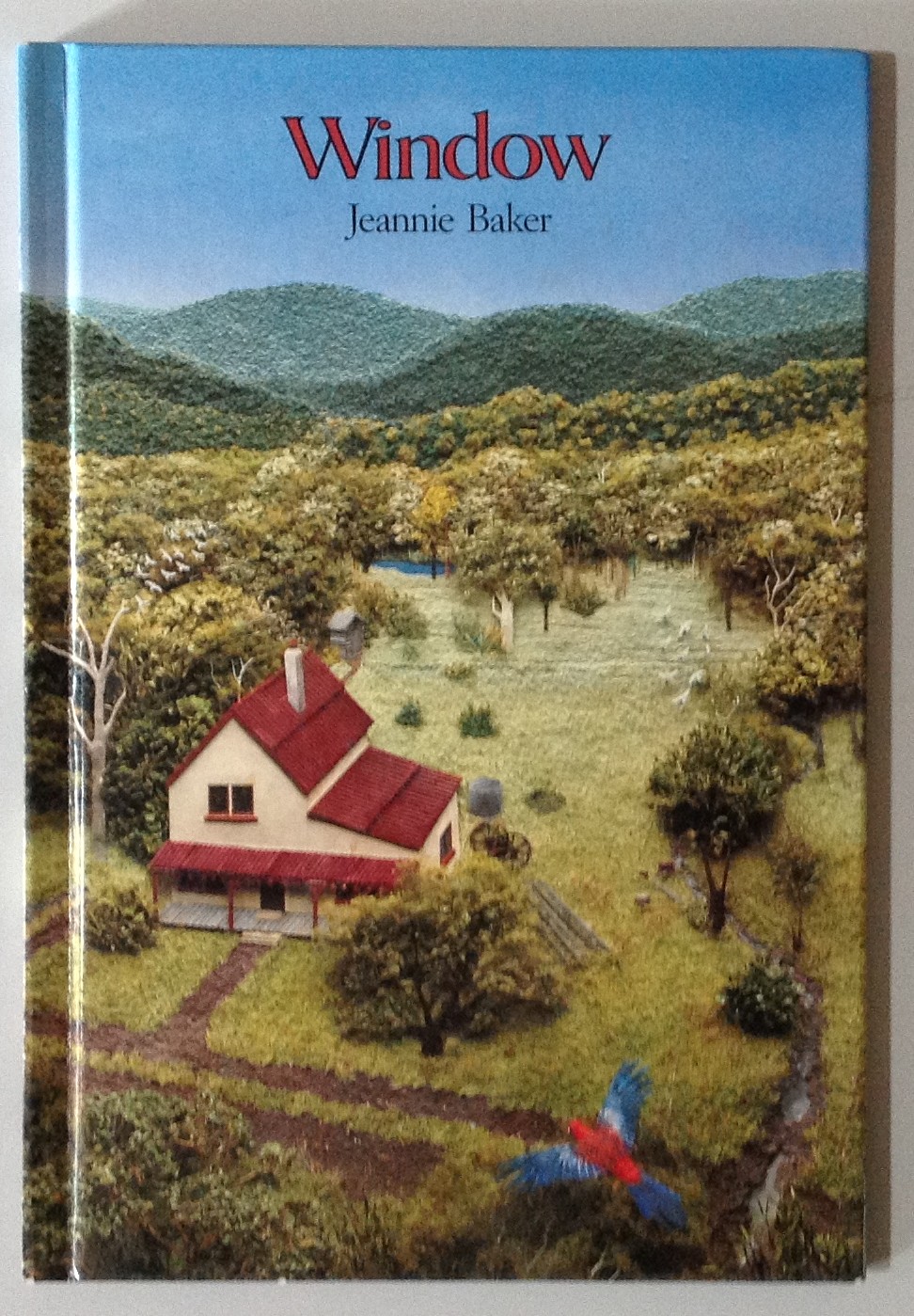
    Window tells, in beautifully detailed collage, of the transformation of a landscape from natural bush to city-scape. The changes are observed through a window by a boy as he celebrates alternate birthdays from birth to 24 years. Jeannie shares an important environmental message in a note at the end of the book with these words:

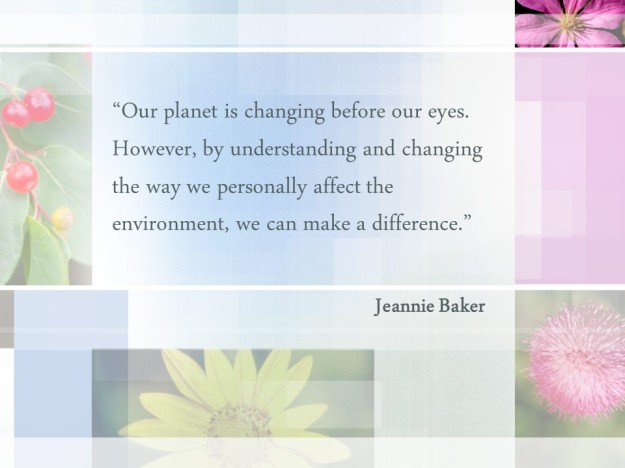
    Jeannie Baker - planet changing

    In 2004 Jeannie published a companion book to Window called Belonging, which, in 2005, also received a number of awards, including one from the Wilderness Society.

    2015-09-19 11.11.04

    This textless picture book tells the story of a changing landscape over a number of years as a city is transformed with plants and welcoming spaces for children and families. In a note at the end of this book, Jeannie says,

    Jeannie Baker - time

    I think these messages, together with those shared in Charli’s post, are important for children to not only hear, but to see modelled by adults in their everyday lives. I am happy to say that members of my family are proactive in the ways they care, and advocate, for the environment. I have much to learn from them.

    For my flash I drew upon a recollection of a place visited in my much-younger years, a favourite place for calming mind travel, and Charli’s recognition of the benefits of wilderness areas to our psyche, to our very essence.

    Charli’s challenge was to In 99 words (no more, no less) write a story about wild spaces. Is it a wilderness or a patch of weeds in a vacant lot that attract songbirds. What is vital to the human psyche about wild spaces? Bonus points for inducing something cute and furry. I’ve also tried for the extra points. I’d love to know what you think.

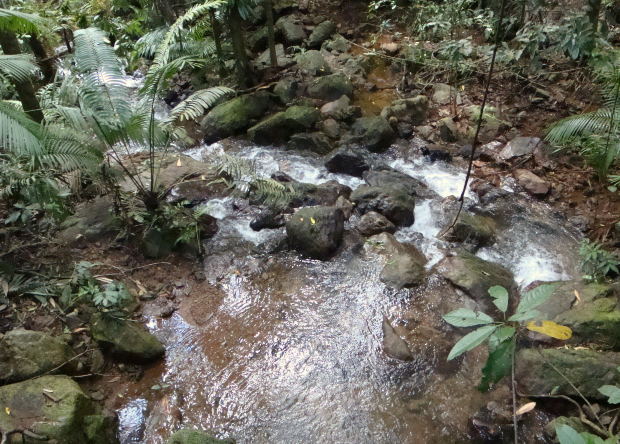
    stream

    Renewal

    Cocooned in shadows of tall forest trees, clear spring water soothing tired feet, she sighed. Speckles of sunlight dancing from rock to ripple were unnoticed as she envied a leaf escaping downstream.

    “Why?” she asked of the stream, more of herself. “Why are you here?”

    The stream whispered,

    “We all have our purpose’

    We’re all meant to be,

    We’re connected, we’re one,

    Not just you or me.”

    A birdsong repeating the chorus lifted her gaze towards a flutter of rare blue butterflies. A possum yawned and winked. She breathed in awe. Refreshed, with lighter heart, she was whole again.

    Thank you

    Thank you for reading. I appreciate your feedback. Please share your thoughts.


  • Plant the seeds of literacy

    About this time last year, I shared my excitement when Jackie French was recognised for her “long and distinguished career as a beloved children’s author” as Senior Australian of the Year. At the time she was halfway through her two-year role as Australian’s Children’s Laureate with the task of promoting the importance and transformational power of reading, creativity and story in the lives of young Australians.

    If-you-want-intelligent children

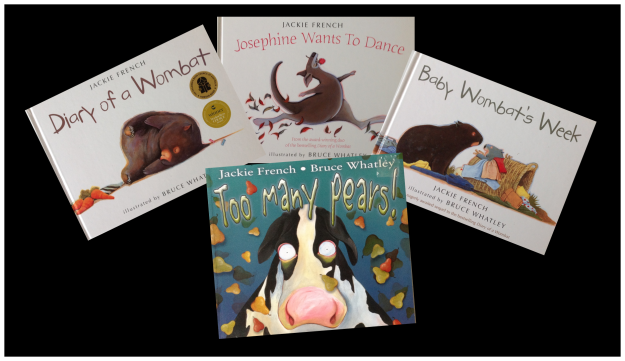
    Later in the year, in a series of posts celebrating Australian picture books, I shared more of Jackie’s work.

    jackie french's books

    Now the roles of Children’s Laureate and Senior Australian of the Year have been passed to others. Jackie has obviously been asked what she is now going to do with all her “free” time. In her newsletter she says, “if one more person says ‘now you can relax’ if (sic) will bite them like a wombat, the snappish kind” because it means that work is finished, which it isn’t. I feel exactly the same way when people ask me about my retirement, though I fear Jackie and I work at a very different pace and the occupation of my time may seem like retirement in comparison to hers.

    While an author may not have received the top recognition as Australian of the Year 2016, three advocates of children’s literature each became a Member of the Order of Australia:

    Jackie French for significant service to literature as an author of children’s books, and as an advocate for improved youth literacy’.

    Ann James for ‘significant service to children’s literature as an author and illustrator and through advocacy roles with literacy and professional bodies’.

    Ann Haddon for significant services to children’s literature, as a fundraiser and supporter of Indigenous literacy, and to professional organisations’.

    It is wonderful to see the recognition given to authors, and to the importance of reading.

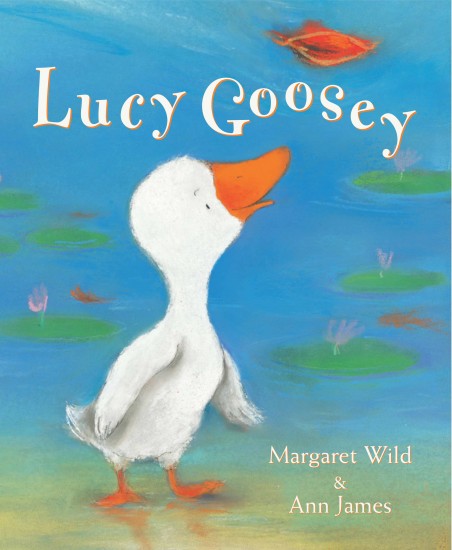
    lucy_goosey_cover_lowres

    One of my favourite books, illustrated by Ann James is Lucy Goosey. It is a beautiful story, written by Margaret Wild, about the love between mother and child. I can’t read it all the way through without crying. But in a good way. It is very touching.

    Ann talks about illustrating the story here:

    I’m also pleased to say that I have an original Ann James, done for Bec at a literary festival many years ago, hanging on my wall.

    Ann James

    In her Senior Australian of the Year Valedictory Speech, Jackie French says,

    “You never know what seeds you plant will grow; if they will keep growing; who will take them and tend them. But there is one thing I have learned in my 62 years: keep planting seeds.

    Jackie French - keep planting seeds

     Never think: I am 62 and still have not achieved world peace, universal tolerance and justice, or even an Australia where every single child is given the chance to learn to read.

    Change is never fast enough for any person of goodwill.

    A rain drop is just a rain drop. But together we are a flood.  Together we have changed the world.

    Jackie french - raindrops

    She concludes her speech with these words:

    “Let us give our children role models who do not, will not despair, no matter how long it takes to change the world. And let us never surrender, no matter how tired we are, or how long it takes. Because with these weapons we shape the future of our planet.”

    I like her words of hope. She is a meliorist. But even more than that, she is an active meliorist. She puts her words into action. She may no longer carry the title of Children’s Laureate or Australian of the Year, but her advocacy doesn’t stop.

    Thank you

    Thank you for reading. I appreciate your feedback. Please share your thoughts.

  • You’ve got the power


    Super s

    If I had the ability to bestow upon each of you a super power of your choosing, what would you choose?

    I’m sure you’d be eager to accept with a suggestion immediately. I am not an exception. I would love to be able to control time, to make it go faster or slower when I want, and basically to just have more of it.

    But the reality is that each of us reading this post, myself included, already has one of the most amazing super powers available: the ability to read. Living in a print saturated world as we do, the ability to read is essential for full participation. Not surprisingly, but perhaps also a little sadly, those of us who can, tend to take it for granted.

    The love of reading is gift

    I am a compulsive reader. I read everything everywhere. I wish I could stop myself reading the signs on the back of the toilet doors for the umpteenth time, but it’s virtually impossible. This is not my genre of choice. Many of us bemoan the fact that we do not have enough time to read all the wonderful material available to us.

    studentbooks

    Time is not my only reading frustration. As I age my eyesight is changing and even with the assistance of reading glasses I struggle (and often fail) to read the fine print on labels or in instructions. Not only that, my eyes tire more quickly now than ever before and the physical act of reading is not as pleasurable as it once was.

    However, even with these frustrations, I am one of the lucky ones.  Not everyone in the world is as fortunate as I with my lack of time and failing sight. While the literacy rates around the world are improving, there are still too many suffering the disadvantages that result from inadequate opportunities to acquire an education in general, and specifically, the ability to read. Even in our midst there are those who, for various reasons, have failed to become literate.

    The empowering effect of the ability to read and of acquiring a quality education is never far from my mind or my blog. If you were to type the word “power” into the search button at the top right of my blog you would find at least ten posts with the word “power” or “empowerment” in the title, including

    The power of reading

    The power of imagination

    The power of words, and

    Empowerment – the importance of having a voice.

    This week at the Carrot Ranch Communications Charli Mills is talking about power and has challenged writer to in 99 words (no more, no less) write a story that explores the question, “What good is power?”  What choice did I have but to discuss the empowering effect of reading, an ability that is a right of everyone.

    reading

    Super Power

    Bored with responses as repetitious as their store-bought costumes, he scanned the room of superheros, wondering how many more interviews to fulfil his quota. Spying a child sans costume, he winked at the camera crew and moved in, the opportunity to highlight another’s inadequacies all too alluring.

    “And what superhero are you?” he smirked.

    The child held out a book, drawing artefacts from within its pages. “I am a reader. I can soar on dragon wings, explore the Earth, and the farthest galaxy. I can fill my head with imaginings, or discoveries new and old. Reading: my Super Power.”

    Thank you

    Thank you for using your Super Power. I appreciate your feedback. Please share your thoughts.

  • Thankful and inspired: schools and education

    In recent posts there was some discussion about the importance of education, the value of schools and the role of teachers. I thought it timely to re-share this post, first published in July 2015.

    Earlier this week I read a post by Kimmie of Stuck In Scared about Ten Things of Thankful. I have also read many other posts about things to be thankful for. These posts prompted me to share something for which I am thankful: schools and education.

    I know that I often write about what I consider the shortcomings of traditional schooling and make suggestions of how schools could be improved. However I live in a country that values education and in which every child has a right to a free education. For that I am thankful. Those of us who have access to schools and education are the lucky ones.

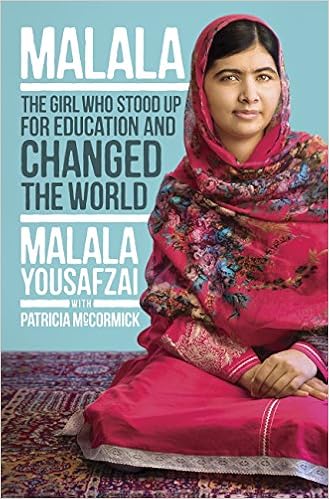
    This week I have been listening to Malala The Girl Who Stood Up for Education and Changed the World by Malala Yousafzia with Patricia McCormick (Indigo).

    Malala-The-Girl-Who-Stood-Up

    Malala’s is an inspirational story of courage, and how one person can change the world. In this trailer for the movie of her story to be released later this year, she says,

    “One child, one teacher, one book and one pen can change the world.”

    (Note: I haven’t seen the movie yet. I’d love to know if any readers have.)

    In her speech accepting the Nobel Peace Prize in 2014, Malala says,

    “I am just a committed and even stubborn person who wants to see every child getting quality education, who wants to see women having equal rights and who wants peace in every corner of the world.”

    The Malala Fund, of which she and her father are co-founders and to which she donated her prize, “empowers girls through quality secondary education to achieve their potential and inspire positive change in their communities.”

    She calls world leaders and people everywhere to take action and make education their top priority, for all the children of the world, not just their own children.

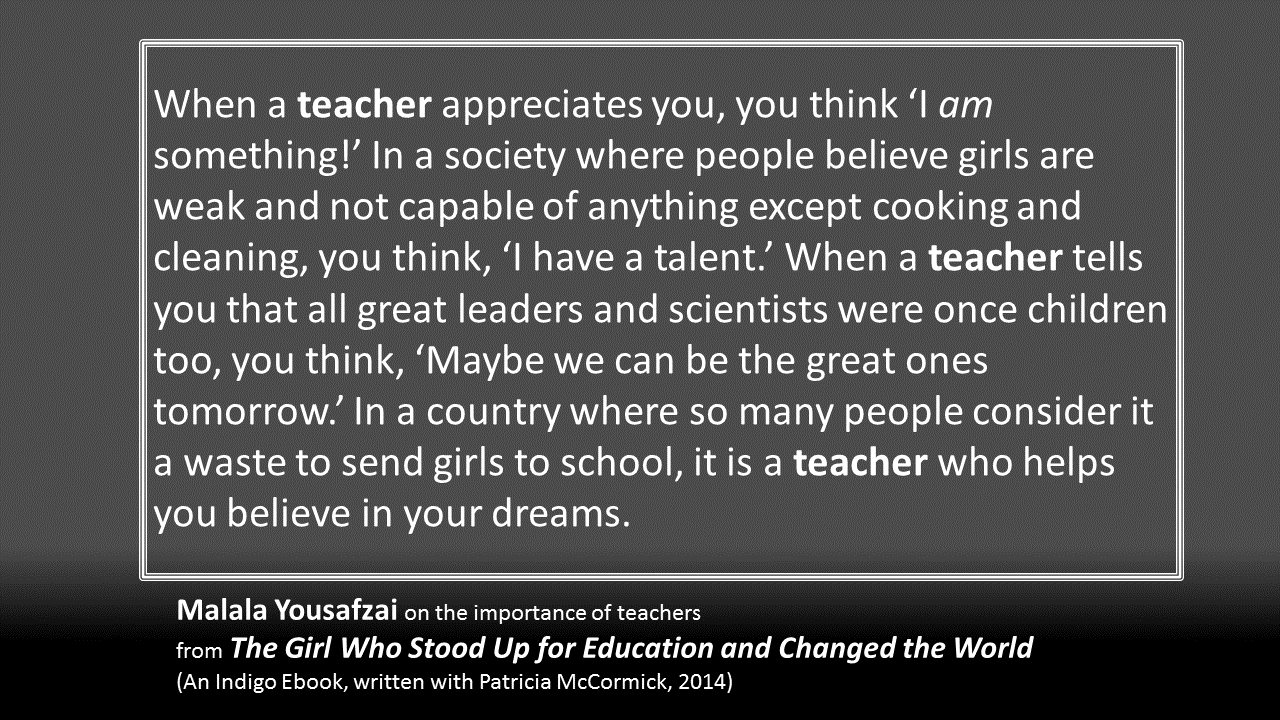
    This is one of my favourite quotes from the book:

    Malala - teachers

    I think one of her most influential teachers must be her father.

    Thank you

    Thank you for reading. I’m sure you have found Malala’s story just as inspirational as I have.

    I appreciate your feedback. Please share your thoughts.

  • On children and parents – more from the Contented Crafter

    In a previous guest post Pauline King, The Contented Crafter shared her Reflections on living a contented life, teaching and school. The richness of the discussion that ensued, including additional clarifying comments from Pauline, made for interesting reading. One thing I have found consistent throughout life is that everyone has an opinion about education and schools. However, there is great diversity in the opinions held. I love to hear them all for the opportunity they provide for clarifying my own thinking.

    In this second guest post Pauline shares some of her wisdom about children and parenting. Pauline and I share much of the same philosophy and background knowledge and are aware that some statements may require clarification out of that shared context. We therefore welcome your responses and look forward to the discussion that these thoughts may instigate.

    What do you think is the most important thing for parents to understand about their children? What advice would you love to give every new parent?

    I seriously think every parent should read and study Khalil Gibran’s chapter about Children in his poem ‘The Prophet’.  Children are not just short adults; they are not there to fulfil a parents dreams [though they may]. 

    Kahlil Gibran Children(Note: This is just a short extract of Gibran’s words about children. You can read them in full here)

    Children need to be allowed to enjoy their childhood, let them play, let them dream, let them imagine.  Very little ones learn through imitation and play so be careful what you model for them. 

    1 (8)

    Send them into formal learning when they reach their seventh year.  But let that learning proceed through imagination, through practical practise and first-hand experience.  Let the education content grow and deepen as the child matures.  Don’t just stuff stuff into their heads because you think it’s a good idea or something awful has happened in the world. 

    1 (2)

    Don’t discuss adult issues with young children.  Keep them safe and secure while their bodies and brains mature.  Give them time to grow up. 

    Parents study your child and all other children.  Raising children is not a competition.  It is not a case of keeping your child safe and clean and out of your way while you are busy.  Think more of ‘The Waltons’ and let each child have a task to perform to help the family.  Teach them all how to help prepare meals, set tables, make beds and other chores that need to be done. 

    105

    Start to think less about how clever [or not] your child is, but what talents and attributes your child is exhibiting.  Don’t stream, let them all do everything and let everyone have something they are good at and see there is something that someone else is better at – because that is the way of the world and we all have contribution to make and our lessons to learn.  Understand that just as your child is special, all children are special. Understanding this is the first step in making a wholesome community.

    Don’t be fearful of your child hurting themselves.  As a wise man recently said ‘the purpose of our lives is not to arrive safely at our death!’ 

    147

    My personal opinion is that the increase in a society that reveres ‘health and safety’ has been responsible for the rise of lost teenagers, those aimless, disinterested kids who suffer from low self-esteem, drinking and drug taking and mindless vandalism.  Take your older kids camping, hiking, abseiling.  Do it with them and have lots of fun.  Give them physical challenges and the ability and skills to succeed in them.  It really is true that the family who plays together, stays together.

    3

    But mostly love and respect your child.  Keep them safe when they are small and slowly teach and release them as they grow older.  Feed them good food, positivity and encouragement and watch them blossom into the people they were born to be.

    Give them time and lots of your time.  They don’t need stuff and they don’t need to keep up with the Joneses.  They just need you.

    In responding to a previous post you said that you could write a post-length comment about the wisdom of children. Could you share a few ideas about that here. We might come back to that longer post in the future, if you are willing.

    Observe your children, listen to them, know they are their own little being and as such bring their own personality and gifts into the world.  Watch how they approach life and activities and you will see they have come with a wisdom about themselves and their purpose that we, the adults, may not be privy to.  This is the wisdom of childhood and we, as parents and teachers, are really beholden to respect this and not try to ‘change’ the child to suit us, society or anything else. 

    Most teachers know that most children reach similar developmental points at around the same time.  There is a great wisdom in this and when we become aware of it, it can help us understand what they are ready for in terms of learning, activities and life in general. 

    1 (3)

    All of this Norah, is part and parcel of the training of a Steiner Teacher – understanding child development is the open secret that drives the curriculum. 

    Wow! Thank you, Pauline, for sharing your wisdom. Kahlil Gibran’s The Prophet is one of my favourite books and his passage about children is never far from my mind. Your words in this post reflect very much the words and intent of his. You have given us much to think upon, and I appreciate it, as I’m sure the readers do too.

    Connect with Pauline on Twitter or on her blog The Contented Crafter where you can also check out her delightful Gift Shop

     Thank you

    Thank you for reading. I appreciate your feedback. Please share your thoughts.
     

  • Which school? I found one!

    school cropped

    Most parents want to provide what is best for their children. However, they don’t always know what that best is, where it is available or how to get it. This is just as true of schooling as it is of anything else. Fortunately, most children are adequately schooled locally, be it at a state or privately run facility.

    I attended a Catholic school and have taught in both the Catholic and State systems. I see little real difference between what is offered in local private and local public schools as far as philosophy, pedagogy and quality of teaching goes. The differences, as I see them, are more due to the inequities in funding for facilities and resources, the restriction to accessibility by the imposition of fees, and the ability of privately run organisations to decline students as opposed to the state’s willingness to cater for all.

    While I think most schools do an excellent job of schooling, there are aspects I don’t like.

    © Norah Colvin
    © Norah Colvin

    Fortunately, most children survive school and graduate adequately prepared for life in the adult world. But the scarring carried by many, whether visible or hidden, emotional or intellectual, is a cost that should not be accepted.

    In this TED talk Sir Ken Robinson asks “Do Schools Kill Creativity? He explains why he thinks they do and the manner in which they do it. He ends the talk saying,

    “our task is to educate their whole being, so they can face this future. … we may not see this future, but they will. And our job is to help them make something of it. “

    By the time Bec was born I had already decided that I wanted more than schooling for her. I had read voraciously about learning and education. I had observed the magic of learning as my son wondered, questioned, explored and reignited my own curiosity, during his before school years. I saw those same traits inhibited by uninspiring teachers. I have written about this before here and in an article published in a teachers’ magazine when Bec was of school starting age. At that time, it was necessary to make decisions about her ongoing education.

    To school or not to school

    www.openclipart.org
    http://www.openclipart.org

    I had already explored local (and not-so local) alternatives. I attended information sessions, read their publications (no Google back then), and visited schools to observe their practices and speak with teachers, children and parents. Disappointingly I found none that met all of my criteria.

    Some “schools” provided little stimulus or input to extend or challenge children’s thinking. Some were very structured and without flexibility in their approach. Some that claimed to be alternative appeared to be not so with uniforms and strict rules and timetables. Some that claimed to be mainstream were more child-focused with an organic curriculum matched to children’s interests, but lacked other things I sought.

    When the pluses and minuses of each were considered, there wasn’t one with a compelling scoresheet. There was nothing for it but to found my own, a possibility I had been contemplating for some time and a “dream” shared by many teachers. The Centre of Learning Opportunities was born. These are some of the original documents drawn up by the team back then.

    Vision

    Symbol

    outside

    COLO brochure inside

    While working to establish this alternative to school, I began an MPhil research project “Educational Diversity: Why school? What school?” which, as well as exploring educational alternatives, was to record the first year of an (my) alternative school. As part of the project I conducted a survey of local alternative schools with the aim of recording the diversity of approaches available in order to demonstrate that there is more than one way to obtain a quality education.

    Although the degree went down the same dead end path as the school, I was able to (self) publish and distribute the results of my research to participating schools in a document titled “Diversity in Schooling: Discovering educational alternatives in South-East Queensland.” (Surprise, surprise, I have just discovered it in a Google search. How weird is that!)

    Diversity

    I was reminded of my research and this document by a recent discussion with Pauline King, The Contented Crafter in response to my post Life — A “choose your own” adventure. When I alluded to the wisdom of young children and “our” efforts to obliterate it, Pauline agreed and suggested that she could do a post-long comment on the topic.  I jumped at the chance and immediately invited her to do so. Pauline again agreed but suggested I refine a set of questions as she could fill a book with her ideas. I”m working on it.

    Responding to The Industrious Child Pauline wrote,

    “Teachers need to be SO flexible in their ability to see their world, their work, their class as a whole and their individual students – it is never a one step process and different expectations and challenges can be laid down for different abilities. Almost every child will shine somewhere within the curriculum and many struggle somewhere else. After all, we all have our different talents and abilities. Schools are structured to meet the needs of a certain academic ability and those who fall above or below that parameter are, in my opinion, so often mis-educated.”

    It is obvious that Pauline, Ken Robinson, and I, along with many others, are part of the same revolution.

    In another comment on my post I found it first Pauline shared that she had spent many years trying to establish a school of her own but had found “an already working alternative system and never regretted it.”

    I think I have questions enough for Pauline to fill a book’s worth of posts and look forward to sharing some of these in the future. If you have questions of your own, please pop them into a comment and we’ll see what we can do.

    Thank you

    Thank you for reading. I appreciate your feedback. Please share your thoughts.
  • Not lost but found

    12

    I am struggling with a writing task at the moment. Part of the reason is that is has been at the back, rather than the forefront, of my mind as I worked on other tasks, and part of the reason is that it involves self-promotion in a marketing kind of way. It confuses me a little, because haven’t I been self-promoting all the time I have been writing a blog? Surely putting my ideas out there is at least presentation, if not promotion, of said ideas.

    With the goal of sharing original early childhood teaching resources and stories for children on a website of my own, I began writing a blog and engaging in social media about two and a half years ago. This was in responses to advice received from attending writing seminars and reading books about website development. Preparation of resources for my website took a back seat for a while as I engaged with other writers in the blogosphere.

    Now it is time to turn the focus back onto the website, the launch of which is fast approaching. With an extra effort over the past couple of weeks, I now have sufficient resources to begin. Additional resources will be uploaded at relatively frequent, if irregular, intervals, not unlike adding to my blog.

    80

    I have no issue with ideas for additional resources or blog posts. My stumbling block is the content for my bio and promotional information about the website. It should be easy, I know, but I am struggling to find the answers to these questions:

    • What do people want or need to know about me?
    • How can I promote my resources in an honest way that entices people to sign up to a paid subscription?
    • What is a fair price for subscription?
    • How can I persuade potential subscribers that they will get value for money?
    • How can I ensure that subscribers do not feel let down by the available resources or ripped off by misleading promotion?

    These questions arise even before I begin to tackle the really difficult one:

    • How do I connect with my target audience: early childhood teachers?

    I know I am not alone with these concerns.

    Recently Sarah Brentyn, who blogs at Lemon Shark, questioned the validity of her profile, enflaming my anxiety by stating that “It’s seen by far too many people who judge you by those 10 – 20 words.” The thought to change my blog’s About page, with far more than 10-20 words, hasn’t yet moved beyond that guilt-ridden thought. And while I know it is not suitable as is for my website, perhaps editing or rewriting it is a place to start.

    90

    Throughout the year Anne Goodwin, who blogs at Annecdotal, shared the process of stepping out from under the covers of introversion to promote her debut novel Sugar and Snails.  In her post One huge leap for Anne, one teeny tiny step for womankind, she questioned how to balance celebrating her achievement with the suspicion that many would be unimpressed. In another post on Book pricing: a cautionary tale Anne questioned pricing and value and shared the hope that people wouldn’t feel ripped off. I am fairly confident that Anne’s concern on each of these issues turned out to be unwarranted. Will mine be the same?

    Charli Mills of Carrot Ranch Communications also frequently writes about marketing and the importance of finding one’s niche. In September she declared her position saying,

    “My intention … (is) to write and publish novels. My intention is to be a successful author. Success to me is publishing books I want to write for readers who want to read them. My secondary goal is to market well enough to eat more than hand-picked dandelions from my yard. Many will say it’s a fool’s dream.”

    Charli has expressed it well. Substitute “early childhood teaching resources and stories for children” for novels and it could be me. I hope that neither Charli nor I are dreaming the impossible. Charli at least has a long list of credentials.

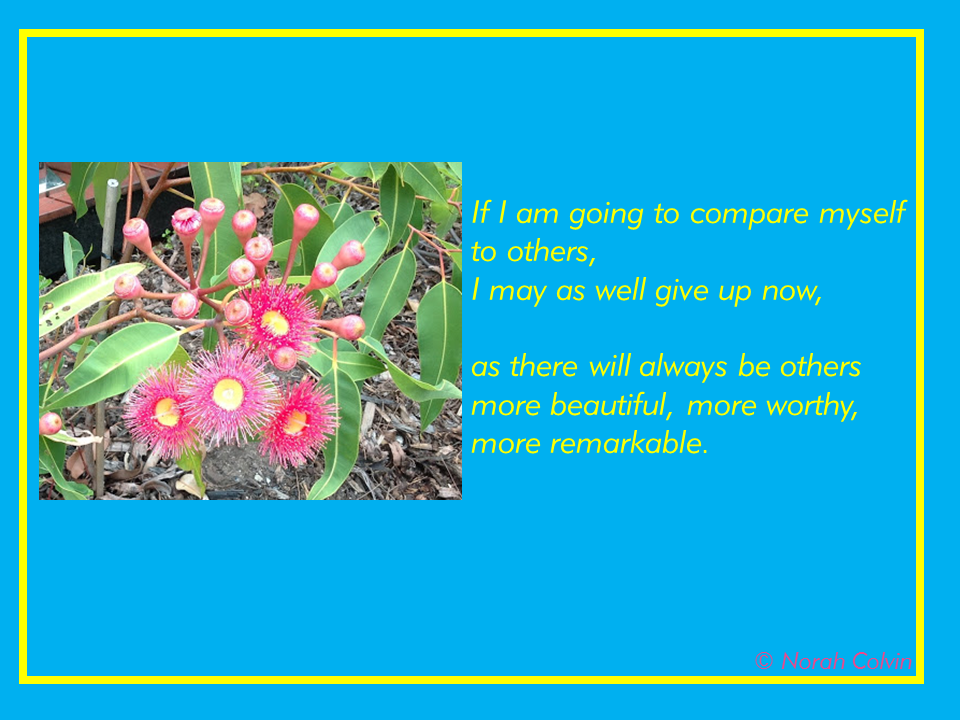
    I have spent some time looking at other websites which may be considered competitors and looking at bios on others. If there’s one thing I have discovered it is this:

    compare - give up

    There is a multitude of websites offering early childhood teaching resources. Some websites offer all resources free. Teachers love freebies. There are also many websites with resources available to subscribers. Why would anyone want mine?

    However, I’m not going to give up now.

    compare - none

    I hope there are many early childhood teachers who will see sufficient value in my website to pay the annual subscription. As far as I explored, I have not found anyone offering interactive resources similar to mine. It is possible that they exist and I just haven’t found them. However, I am hoping that teachers see value enough in these alone, and consider the other resources a bonus. Time will tell. If it returns nothing but the pleasure of achievement, then I will consider it my jetski. If it does more than that I will be well pleased.

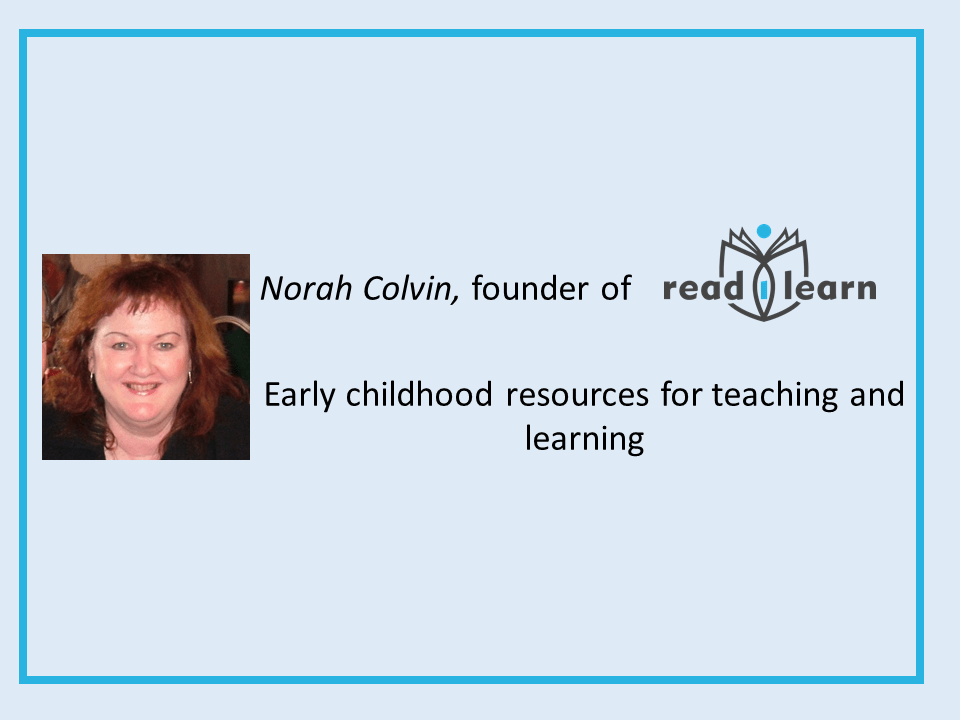
    So, if I am not going to give up, maybe I just need to get on with the task of writing my bio and promotion paragraph. The other day I read a bio that described the website owner as its founder. Hmm. I thought. Maybe that’s a title I could use.

    founder of readilearn

    I was amused at the thought that I would found something that hadn’t been lost. It just hadn’t been before. I thought about other things, briefly mentioned in other posts, that I had founded:

    Create-A-Way, educational sessions for children of before-school-age and their parents.

    Centre of Learning Opportunities, envisioning an alternative way of educating.

    Perhaps I can now add another to my list. I just need to get the bio written.

    What advice do you have for me? What should I include? What should I leave out? What is the most important thing of which I need to be mindful?

    Thank you

    Thank you for reading. I appreciate your feedback. Please share your thoughts.


  • The industrious child

    http://www.morguefile.com/archive/display/902642
    http://www.morguefile.com/archive/display/902642

    The advice to go to school, work hard, get a good job seems to be often repeated, as if it is advice given to all young people as they are growing up. Funnily enough, I don’t remember receiving it when I was in school, though I may have been given it. With or without it, I think I was fairly industrious, for the final year anyway, studying six hours long into the evening each day after school. I devoted one hour to each of my six subjects. I needed to work hard to get the job of my dreams: all I wanted to be was a teacher.

    SnipsandClips, Teacher and Child https://openclipart.org/detail/205589/teacher-and-child
    SnipsandClips, Teacher and Child https://openclipart.org/detail/205589/teacher-and-child

    I think I have probably always worked fairly hard, even when I wasn’t ‘working’. Maybe I should rephrase that, and say that I consistently put in a good effort, as long as low marks for exercise and housework are not put into the aggregate.  Effort doesn’t always produce the hoped-for results, and sometimes the results can be achieved without any apparent effort. I have not yet found that in relation to exercise or housework, though. I’ll let you know when I do.

    This week at the Carrot Ranch Charli Mills is talking about being industrious. She says that

    “Making a living as a writer is not exactly the career path any school counselor would promote, but any industrious writer can make it work.”

    Tony Wagner - iterations

    I hope she’s right. In the current iteration, of which there have been a few, of my teaching career, I am combining my passion for education with my love of writing.

    Charli says that

    “You have to find a niche … an outlet and fair payment.”

    I’m working on those and I’m hoping that this time my effort will produce the desired result.

    My niche: early childhood educational resources with a point of difference being interactivity in some

    My outlet: a website readilearn, soon to be launched

    Fair payment: while some resources will be available free of charge, others, including the interactive resources will be available only to subscribers

    The relationship between effort and result is relevant when thinking about growth mindset and praise, both of which have previously been discussed on this blog, here and here for example.

    fixed - growth mindset

    Growth mindset is a way of thinking about learning proposed by Carol Dweck; of viewing learning as occurring on a continuum of possibilities that may not yet be, but have the potential to be, achieved. It differs from thinking about the ability to learn as being fixed or limited in various unalterable ways.

    Much of the discussion about praise, see here, here, and here, referred to how the effect of praising for effort, “I can see you worked hard on this” differed from that of praising achievement ‘Great job!”. Personally, I’m hoping for a bit of both once my website launches. I’d like some praise for the product, but also recognition of the effort. I just have to hope others find it worthy. I definitely don’t want to receive any hollow praise, which I think is a major criticism of the comment “Good job!”.

    ryanlerch_thinkingboy_outline

    Needless to say my interest was piqued by a statement in the opening paragraph of the post Mindset, abundance by Mary Dooms on Curiouser and Curiouser this week:

    “a colleague … and I continue to commiserate on the implementation of Carol Dweck’s growth mindset research.”

    Dooms goes on to say that “nurturing a growth mindset is a daunting task” and explains that their fear “that growth mindset has been reduced to the grit mentality of telling the students to work harder” is shared by Dweck.

    I followed the link provided to an article published in September 2015 in which Carol Dweck revisits the ‘Growth Mindset’. In this article Dweck says that one of the biggest misconceptions about a growth mindset is equating it with effort. She says there is more to achievement than just effort and reminds us that effort has a goal: learning, improvement or achievement. Effort is not made simply for effort’s sake and there is no point if it is not achieving something. She cautioned that we need to be aware of when effort is not productive and to provide students with a range of strategies to use when they get stuck.

    She says

    “Too often nowadays, praise is given to students who are putting forth effort, but not learning, in order to make them feel good in the moment: “Great effort! You tried your best!” It’s good that the students tried, but it’s not good that they’re not learning.”

    She explains that

    “The growth-mindset approach helps children feel good in the short and long terms, by helping them thrive on challenges and setbacks on their way to learning. When they’re stuck, teachers can appreciate their work so far, but add: ‘Let’s talk about what you’ve tried, and what you can try next.’”

    She goes on to say that having a growth mindset is not a destination, it is a journey. We all have some thoughts and responses that are more akin to a growth mindset and some akin to a fixed mindset. It is important to recognise both and continue to grow in growth mindset thinking. I know I still have a lot of learning and growing to do, but with Dweck’s acknowledgment of the same, I know I am in good company.

    Dooms also links to an article by Peter DeWitt published in Education Week Why a ‘Growth Mindset’ Won’t Work. DeWitt states that according to John Hattie, whose work I have previously mentioned here, a growth mindset has little effect on classroom results. Now that’s putting the cat among the pigeons.

    www.morguefile.com
    http://www.morguefile.com

    However, DeWitt explains that the reason for the low effect is that most adults have fixed mindsets which they transfer to students. He says that, for the growth mindset to be more effective, we need to do things differently.

    First of all, he says, ditch the fixed mentality. Don’t see the problem as being with the student, see it in how or what is being taught. Adjust the teaching. (I’ve also mentioned this before here.)

    • Test less for grades and more to inform teaching
    • Provide feedback that supports student learning
    • Avoid grouping students by ability
    • Ask questions that require deep thinking
    • Stop talking!

    In fact, what he is saying is that we need to practice the growth mindset, not just preach it.

    Teachers with a growth mindset appreciate the incremental

    Which brings me back to being industrious, putting in the effort, and responding to Charli’s flash fiction challenge to “In 99 words (no more, no less) write an industrious story.

    I’m thinking of putting in the effort as being industrious. I’m thinking of our impression of it and responses to it in others, particularly of the need to recognise where difficulties lie for students and how to praise to assist learning.

    “Could do better”

    The words blared from the page.

    “Needs to try harder.”

    Down through the years the judgement repeated.

    “More effort required.”

    No one tried to understand his unique way of seeing, his particular point of view.

    “Doesn’t apply himself.”

    He struggled to repeat their pointless words and perform their meaningless tasks.

    “Needs to concentrate in class.”

    Inside his head the images danced in brilliant choreography.

    “He’ll never amount to anything.”

    Outside their white noise words crackled a cacophony of dissonance.

    Finally, school days done, they clamoured for the inspired works of the overnight success.

    “Brilliant!” “Talented” “Exceptional!”

    Thank you

    Thank you for reading. I appreciate your feedback. Please share your thoughts.


  • Life — A “choose your own” adventure?

    This morning Hub mentioned a book he had read about and asked if I had heard of the author Wayne Dyer. “Of course,” I replied and proceeded to explain that I had read many of Dyer’s books, had gone to a seminar to hear him speak and had been swept off my feet by accompanying speaker Deepak Chopra. I mentioned that a favourite book of his was marked now by a gap on my shelves, a phenomena recently mentioned by both Caroline Lodge, who blogs at book word and talked about missing books, and Anne Goodwin, who blogs at annethology and talked about the dilemma of lending books.

    Wayne Dyer
    I think there may be more than one missing from my self!
    Deepak Chopra
    I think. looking at these titles, its time for some re-reading!

    This favourite book, read and lent many times, What Do You Really Want for Your Children? was very influential in shaping the way I parented and taught. It is one of a few books that I read and re-read with a highlighter and sticky notes. There was much in it for me to get my head around. While I am unable to now refer to it for its wisdom, one of the things that I remember most was a hypothetical letter from a child thanking parents for the way they had parented. I considered it a letter any parent would love to receive, personalised of course.

    As often happens, Hub got the long (love) story as it tumbled out in a torrent of reminiscences and of joys in discovering inspiring minds. When I paused long enough to take a breath, I remembered to ask about the book to which he referred. He said it was about the recollections of past lives as told by young children, of children choosing their parents and of being in heaven.  Later research informs me that the book is Memories of Heaven, subtitledChildren’s astounding recollections of the time before they came to Earth.

    I had previously, many years ago, heard the suggestion that children choose their parents. I like to think (though don’t believe) that my children chose me, and often thank them for doing so. They have taught me a lot about life. I am a strong believer in the wisdom of young children: if we are attentive and take the time to observe and listen, we can learn much from them. Sometimes it seems they enter the world with wisdom but “we” do our best to obliterate it as quickly as we can.

    www.openclipart.com
    http://www.openclipart.com

    As it is wont to do, my thinking followed a circuitous path with if, buts, maybes and questions. Children choosing parents may be a nice idea; but what of the children living in poverty, with famine, and in war-torn areas? Why would anyone choose those conditions?

    That question led me through my basic understanding of the Buddhist philosophy in relation to karma and rebirth. I have read a few books on the subject but don’t profess to have any real knowledge. I don’t like to think that these situations may be endured as the result of bad karma from a previous life, and am not even sure if they would be viewed that way in Buddhist thinking. Perhaps these situations could be an improvement on the previous, a step to the next? Maybe that’s not so unpleasant a thought.

    Dalai LamaTibetan book of living and dying

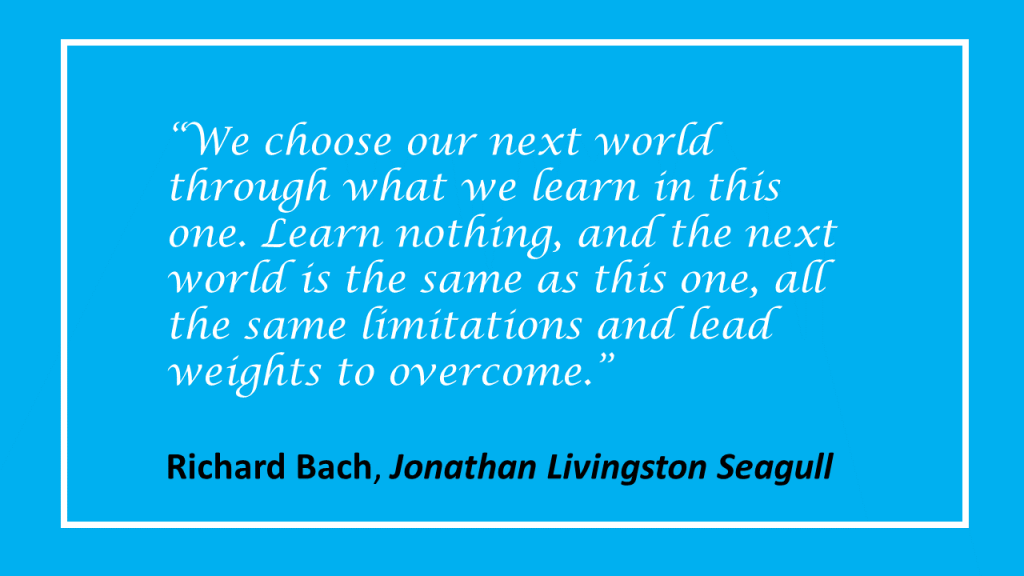
    I like the idea of improvement, of always learning, of striving for perfection and enlightenment. It is probably one of the reasons that the “yet” thinking of a growth mindset fits nicely into my philosophy. It explains why one of my favourite books (I almost wrote “of all time” – what would that say about me and my past lives?) is Jonathan Livingston Seagull by Richard Bach, who dedicated the book “To the real Jonathan Seagull, who lives within us all”.

    Jonathan Livingston Seagull

    Slide2

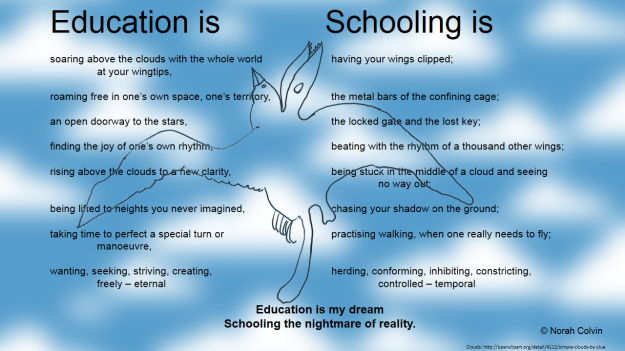
    I had always thought that being a bird would be pretty amazing with the freedom to fly above the world and look down upon its beauty. Maybe this is one reason Jonathan’s story appealed to me. Perhaps it explains the analogy of flight in my poem about education. Maybe it’s why I love to sit at an airplane’s window and marvel at the scenes below.
    education-is-2

    And so my thoughts meandered, drifting through clouds and pockets of time, until they were suddenly interrupted by the voice of the child next door singing, “Let it go”.

    I think those three words “Let it go” may be the only ones that anyone sings along with, but the message of the song is powerful: to let go of insecurities and realise the potential within; don’t care “what they’re going to say” and acknowledge that “It’s time to see what I can do”.

    Slide1

    The message is not unlike that of Jonathan Seagull: to stretch beyond the limits imposed by others and their labels and to attain self-realisation. It is a journey undertaken by most thinking people, as demonstrated by the identity crisis that has befallen Sarah Brentyn who blogs at Lemon Shark. What is that if not a call for release from chains that may bind to enable the freedom for flight?

    The end of a year is generally a time for reflecting on what has been achieved and what is yet to be. Perhaps it is also a time for letting go in preparation for what lies ahead.

    Slide3

    I hope that, as you reflect, you are happy with what you have achieved, with where you are, and with the path that lies ahead. I wish you a safe, fun and fruitful journey along the “road to find out”.

    I have enjoyed your company this year and appreciate your feedback. The conversations are what keep me going, growing and learning. Thank you. I look forward to the journey continuing.

    Thank you

    Thank you for reading. I appreciate your feedback. Please share your thoughts.