Live Love Laugh Learn … Create the possibilities

Category: Picture books

  • Searching for truth in a picture book – Part C

    Cocoon or chrysalis – what’s in a name?

    In my previous post Searching for purpose in a picture book – Part B  I conducted this poll:

    If you didn’t participate in the poll, but would like to, have a go now.

    What did you answer?

    If you are familiar with this book

    The Very Hungry Caterpillar

    you may have chosen both statements as correct along with one third of respondents in the poll.

    In his book Eric Carle writes that

    “He (the caterpillar) built a small house, called a cocoon, around himself. He stayed inside for more than two weeks. Then he nibbled a hole in the cocoon, pushed his way out and . . . he was a beautiful butterfly!”

    If you either read or wrote one of the hundreds of thousands of articles about “The Very Hungry Caterpillar”, or about butterflies and caterpillars in general, published on the internet, you probably also identified those two statements as correct.
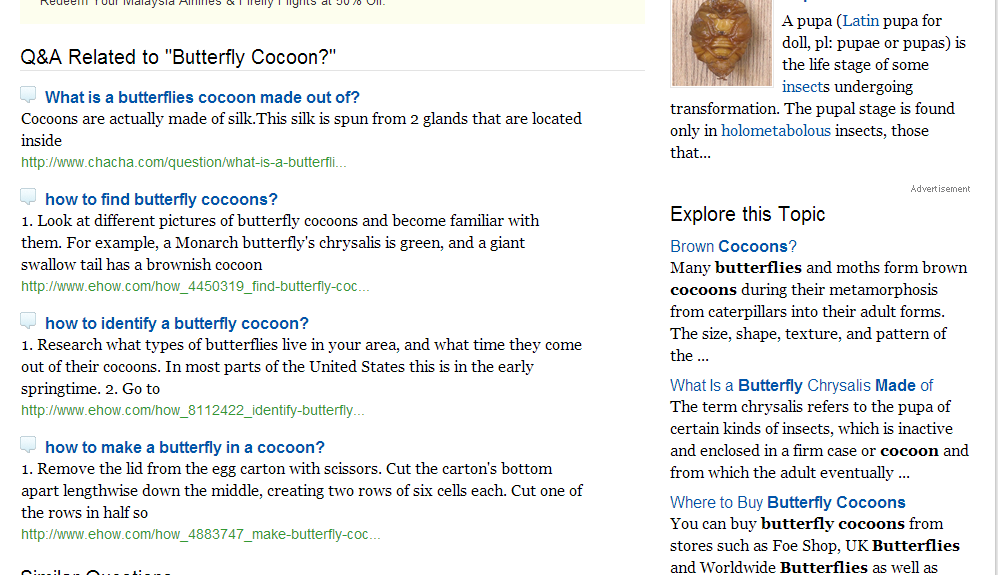
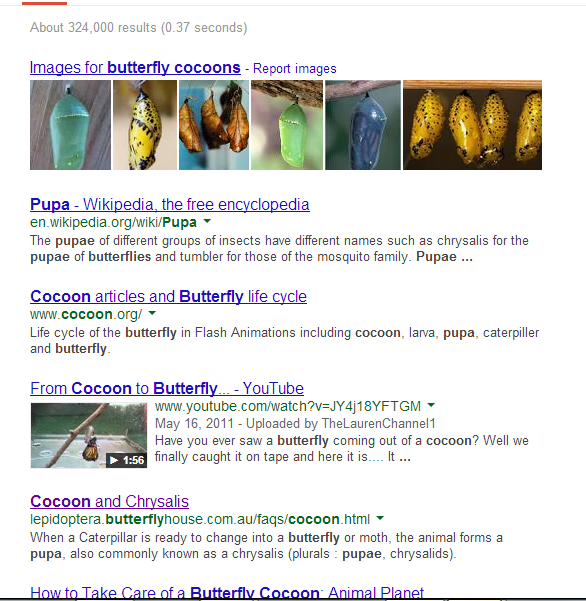
    butterfly cocoons Cocoon to butterfly

    But if you did, just like Eric Carle, you’d be wrong!

    A caterpillar that undergoes metamorphosis to become a butterfly does not spin a cocoon and does not nibble its way out. The fully grown caterpillar moults into a chrysalis and, when ready, it splits the chrysalis to emerge as a butterfly.

    Monarch butterfly

    For a series of beautiful photos showing the last moult of a caterpillar as it becomes a chrysalis, and another series showing a butterfly emerging from its chrysalis, click here.

    Or watch this video by Strang Entertainment showing the caterpillar becoming a chrysalis

    or this one by Neil Bromhall showing a butterfly emerging

    A moth’s caterpillar does spin a cocoon and does nibble its way out (think of a silkworm cocoon and moth).

    silkworms24a

    This video shows silkworm caterpillars nibbling hungrily away at the mulberry leaves. Then when a caterpillar is fully grown (about 2 mins in) it spins it cocoon.

    Compare the process with that of a monarch caterpillar forming a chrysalis. It is a very different thing.

    It is impossible to rely on the information provided by many of the websites to guide one’s use of “The Very Hungry Caterpillar” when working with children.

    For example, on the website Math & Reading Help, these suggestions are made:

    “Many Teaching Moments

    Though it’s a very brief picture book with sparse and simple language, The Very Hungry Caterpillar conveys an impressive array of wisdom and lessons for children. Most prominent among these is the life cycle of a caterpillar. The caterpillar in the story begins his life as an egg, then progresses through the larva stage. The time in his cocoon is his chrysalis stage, followed by his adult appearance as a butterfly.

    This is a factually accurate portrayal of how lepidopterans (sic), an order of insects including butterflies and moths, grow and change. It teaches your child to understand this biological process. When you encounter a caterpillar, you can refer to The Very Hungry Caterpillar and ask your child about what it’s doing, since it’s likely to be looking for food. Likewise, you can reference the book when you see a butterfly, noting how it’s a caterpillar that has emerged from its cocoon after its transformation.”

    You have already picked out the inaccuracies in that statement, haven’t you?

    Another website, Primary upd8 also suggests using the book for teaching children about the butterfly’s life cycle, and look how it promotes itself!

    Uks most exciting science resource

    This misinformation is so common and insidious that Jacqui, writing on the Monarch Butterfly New Zealand Trust website, said

    “When speaking to teachers I often find raised eyebrows when I explain that butterflies’ larvae do not make cocoons. The teachers refer to Eric Carle’s book, The Very Hungry Caterpillar, where he refers to a ‘cocoon’.

    Why does this misinformation persist, and why did Eric Carle use misleading statements in his book?

    Does it matter if children (and adults) think that butterflies hatch out of cocoons?

    Eric Carle didn’t seem to think it did.

    Unfortunately I was unable to locate for confirmation an article I’d read years ago. This article, if I recall correctly, reported a response of Carle’s to children enquiring why he had used “cocoon” rather than “chrysalis”. His response was one of disdain. What did it matter?

    If you search Eric Carle’s current website for cocoon, this is the response you will receive:

    Why a cocoon

    While Carle concedes that most butterflies come from a chrysalis, he triumphantly states that one rare genus pupates in a cocoon! I confirmed this with the Encyclopaedia Britannica .

    Does that one rare instance let Carle off the hook?

    I think not.

    In her article on the Monarch Butterfly New Zealand Trust website in response to Carle’s statement, Jacqui says

    “Actually, the Parnassians pupate inside cocoon-like webs usually constructed among leaves or in rubbish piles.” (my underlining)

    So not quite true and not quite off the hook Eric Carle.

    In addition, although I couldn’t find the article I was searching for, I found this from Scholastic which shows that Eric was aware of the error and declined to change it.

    “By the way, Eric already knows that a caterpillar emerges from a chrysalis, not a cocoon! So don’t bother writing to tell him. Eric explains how the famous “mistake” crept into the book:

    “My editor contacted a scientist, who said that it was permissible to use the word cocoon. Poetry over science. It simply would not have worked to say, ‘Come out of your chrysalis!’ If we can accept giants tied down by dwarfs, genies in bottles, and knights who attack windmills, why can’t a caterpillar come out of a cocoon?”

    There are many points for discussion in that statement:

    • His editor contacted a scientist – What sort of scientist? I would say one with questionable credentials or entomological knowledge.
    • Permissible to use the word “cocoon” – Why? For what purpose?
    • Poetry over science!!!!!!! Chrysalis is a beautiful word, specific to the butterfly. What could be more poetic than that? Poetic and scientific! What a great combination!
    • Why wouldn’t it have worked to say “Come out of your chrysalis”?
    • A caterpillar doesn’t come out of a cocoon. A caterpillar spins a cocoon; then a moth comes out of it; not a butterfly! (Except for the rare Parnassian butterfly.)

    Is this issue, as Carle suggests, the same as giants and dwarfs, genies in bottles and knights who attack windmills?

    What do you think?

    Do picture book authors have a responsibility in imparting factual information to children?

    Is it okay to choose “poetry over science”?

    In his talk Reading and obligation (reviewed in an earlier post) Neil Gaiman said that

    “We writers – and especially writers for children, but all writers – have an obligation to our readers: it’s the obligation to write true things, especially important when we are creating tales of people who do not exist in places that never were – to understand that truth is not in what happens but what it tells us about who we are. Fiction is the lie that tells the truth”

    Not quite the same thing I know, but an obligation nonetheless?

    Though not there now, when I first looked at the Reading Rockets interview with Eric Carle this quote was prominently displayed beside it:

     “The more that you read, the more things you will know. The more you learn, the more places you’ll go.”

    — Dr. Seuss

    A bit ironic, don’t you think?

    How much of the responsibility should remain with the reader to verify the correctness/accuracy of what is read? How does one go about that?

    I have always been a believer in the “question everything” approach. “Don’t believe everything you read,” I say. But sometimes knowing what to accept and what to question can be a difficult thing.

    I’d love to know what you think. Please leave a comment in the comment box.

    Here are links to some of the articles I referred to in this post:

    Monarch Butterfly Website

    Reading Rockets

    Eric Carle

    Encyclopaedia Britannica

    Scholastic

    Ask.com

    Google.com

    Neil Gaiman lecture in full: Reading and obligation

    This post is the third in a series

    Searching for meaning in a picture book – Part A

    Searching for purpose in a picture book – Part B


  • Searching for purpose in a picture book – Part B

    Searching for purpose in a picture book – Part B

    What is the purpose of picture books? Is their purpose simply to entertain with an interesting story and rhythmical language that is fun to read and recite? Is it simply, as I said in my previous post Searching for meaning in a picture book – Part A, “. . . a special time of togetherness, of bonding; of sharing stories and ideas . . . “ Could the purposes of picture books extend beyond entertainment alone? I think most people would acknowledge that reading picture books to young children has a profound effect upon children’s learning and development. In addition to entertainment, picture books can be used for a multitude of purposes, including:

    • to encourage a love of reading and books
    • to develop vocabulary and knowledge of language (through immersion and engagement rather than direct instruction)
    • to provide a link between the language of home and the language used in the wider community and in education
    • to support children embarking on their own journeys into reading
    • to inspire imaginations
    • to provide opportunities for discussing feelings, emotions, ideas, responses
    • to develop feelings of empathy, identification, recognition, hope
    • to instill an appreciation of art by presentation of a wide variety of styles, mediums and techniques

    I’m sure you can think of many more than I have listed here. But what of knowledge, information and facts?

    yves_guillou_question
    http://www.openclipart.org

    How, and when, do children learn to distinguish fiction from fact, or fact from fiction? At the moment that question is too big for me to even think about answering, but it is a question that I ponder frequently and may return to in future posts.

    ryanlerch_thinkingboy_outline
    http://www.openclipart.org

    Children seem to realise early on that animals don’t really behave like humans and wear clothing.

    mouse dressed up
    http://www.openclipart.org

    They don’t expect their toys to come to life and start talking.

    teddy_bear_and_doll
    http://www.openclipart.org

    They quickly understand, when it is explained to them, that unicorns and dragons are mythical creatures and, to our knowledge, don’t exist.

    toy unicorn
    http://www.openclipart.org
    dragon_on_a_leash
    http://www.openclipart.org

    But what happens when the lines between fact and fiction blur and content, though presented in fiction, has the appearance of being based in fact? For example: The lion is often referred to as “King of the jungle” and appears in that setting in many stories. However, lions don’t live in jungles. According to Buzzle, they live in a variety of habitats and jungle isn’t one of them. You knew that didn’t you? But what about the children? When will children learn that lions are not really kings of the jungle? Do you think it matters if children grow up thinking that lions live in jungles?

    Lion_Cartoon
    http://www.openclipart.org

    What about when animals that don’t co-exist appear in stories together? For example: Penguins often share a storyline alongside polar bears. Does this encourage children to think that penguins and polar bears co-exist? When do adults explain to children that penguins and polar bears live at opposite ends of the planet? At what age do you think children will happen upon that information? Does it matter?

    tauch_pinguin_ocal
    http://www.openclipart.org
    lemmling_Cartoon_polarbear
    http://www.openclipart.org

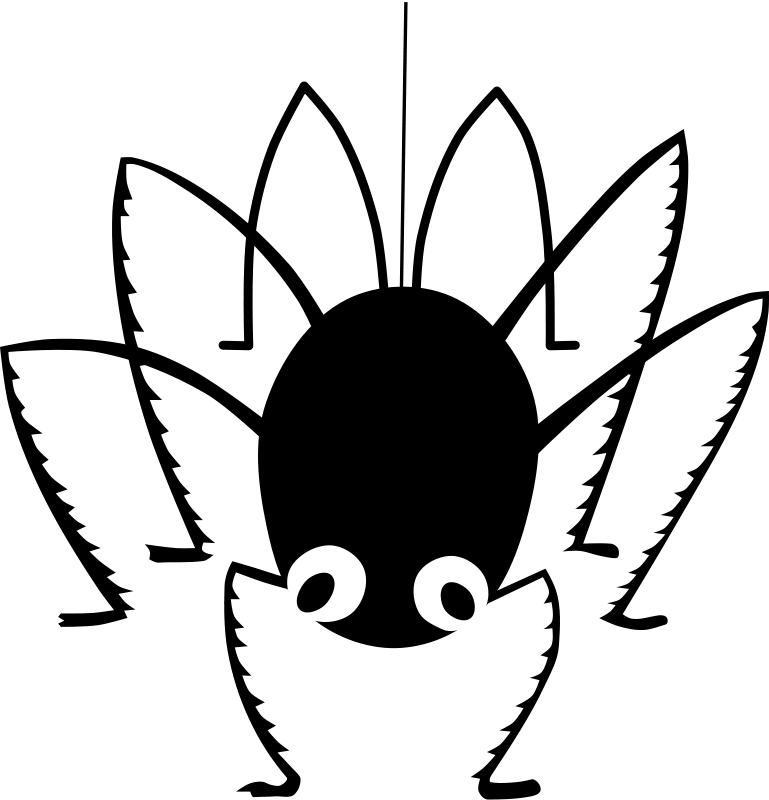
    What about the way animals are visually portrayed in stories? Must the illustrations be anatomically correct? For example: We all know that spiders have eight legs. Right? If I was to ask you to draw a picture of a spider, how would you do it? Have a go. It will only take a second or two. I can wait.

    whistle
    http://www.openclipart.org

    Now compare your drawing with these:

    spiderswirl2
    http://www.clipart.org
    Little_Miss_Muffet_Spider
    http://www.openclipart.org
    spider
    http://www.openclipart.org

    How did you go?

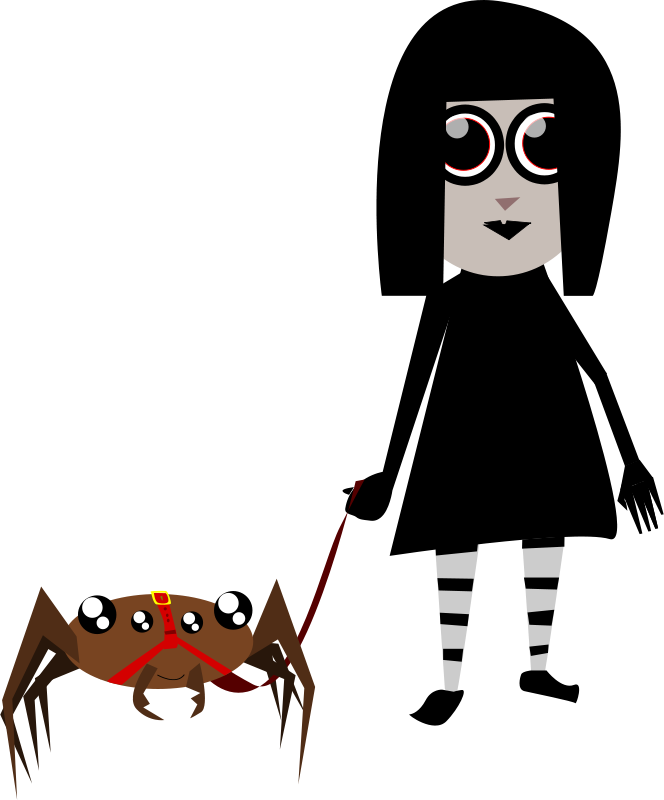
    While children easily realise that this picture is fictional:

    pet_spider_girl
    http://www.openclipart.org

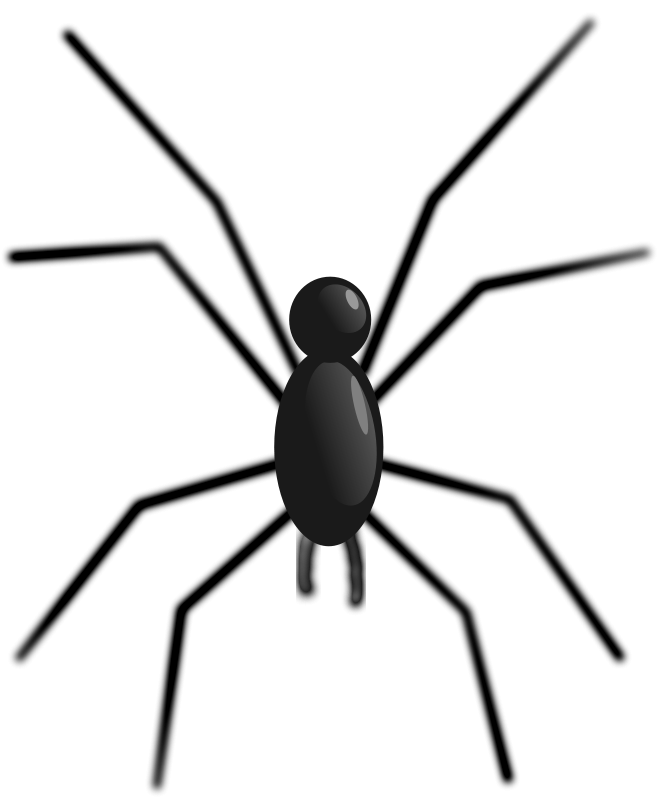
    They have less success is understanding what is wrong with the previous images. Spiders have eight legs. Those drawings show eight legged furry creatures. The story says they are spiders. That must be what spiders look like. Right? Unfortunately, real spiders look more like this one:

    johnny_automatic_spider
    http://www.openclipart.org

    All eight legs are attached to the cephalothorax, not the abdomen (or even one body part) as shown in most picture books. While I am sure you drew a spider correctly (didn’t you?), most children and many adults draw them more as they are depicted in children’s stories. Is this a problem?

    LOVE_2
    http://www.openclipart.org

    I am not for one moment suggesting that we get rid of fictional picture books and stories. I love them! And as I have said, and will continue to say, many times: they are essential to a child’s learning and development. There is no such thing as too many or too often with picture books. Instead, I would like you to consider the misconceptions that may be developed when the content of picture (and other) books may be misleading, and how we adults should handle that when sharing books with children. One of the books that gets me thinking most about this topic is “The Very Hungry Caterpillar” by Eric Carle.

    The Very Hungry Caterpillar

    As I said in a previous post, it has been published in over 50 languages and more than 33 million copies have been sold worldwide. I am almost certain that you will be familiar with it, and upon that assumption, I have one final task for you in this post. Please share your response to the question in this poll:

    To be continued . . .

    I would love to receive any other comments you would like to share regarding the content in this post.

    I do apologize that I have been unable to get the text and pictures in the layout I desire. I obviously have more investigations to carry out and learning to do.  🙂

    Maybe next time I’ll have it mastered, says she, hopefully!

  • One for the children . . . A “Who’s hiding?” picture book

    On Christmas Eve, my post is one for the children, especially my two gorgeous little grandchildren, Artie and Anna.

    I hope they, and children everywhere, will enjoy this little guessing game.

    Next year my skills may have developed enough to make it interactive, or even an app!!! Now, let’s not get too excited!

    I am very grateful to Bernadette Drent who created the illustrations for me with very little notice.

    Here it is for you:

    Happy Christmas everyone!

  • Counting on the holidays!

    algebra

    When the topic “Maths” is mentioned in conversation among adults, including teachers, many of them moan, “I hate maths. It’s too abstract. I could never understand it. I can’t see the point in it.”

    I think it is a sad situation that many such adults were turned off maths in school by teachers who didn’t introduce them to the beauty of maths, who didn’t teach maths in the context of real-life purposes and whose pedagogical kit bag was entirely filled with worksheets of meaningless and endless algorithms to complete.

    I am one of those adults too. In my final years of high school I had a “teacher” who could do the math but couldn’t teach the math; couldn’t explain the why or the how, or any of the steps required to achieve understanding. Maths became an impenetrable forest of meaningless algorithms, formulae and theorems.

    As both a parent and teacher of young children, I was determined to not be an instrument of math torture. Granted this may be easier with young children than it is with older students, but I’m sure there are still ways of making maths fun and meaningful in high school classrooms.

    The suggestions in this article provide parents of young children with ways of finding maths in everyday contexts and incorporating mathematical learning effortlessly into holiday activities. Of course, the activities are of benefit at any time, not just during the holidays!

    If you don’t have young children to inspire, or inspire you, please move on to the end of the article for some suggestions to excite your own interest in maths!

    Although the word “counting” appears in the title, it is important to remember that maths is not just counting.

    The strands of maths as described by The Australian Curriculum include:

    • Number and place value
    • Patterns and algebra
    • Measurement and geometry
    • Probability and statistics

    My list includes just a few suggestions for each of those strands to get you started. Need I say there is an infinite number of possibilities?

    25 ways to keep children thinking mathematically during the holidays:

    Number and place value

    1. Count items e.g. birds in the sky, shells collected from the beach, people for lunch, steps in a staircase, windows on a house, seats in a bus . . .
    2. Count out the cutlery required for each person at dinner
    3. Include your child in shopping activities by helping them to:
      • Recognise the coins and notes
      • Count the value of coins and notes
      • Predict whether they have enough money to purchase an item, and whether there will be change
      • Tender the money in payment for an item
    4. When your child is sharing e.g. the biscuits, balloons or slices of fruit, ask them to:
      • Predict if there will be enough for everyone to have one, or more than one each
      • Share out the items, allocating the same number to each
      • Determine if there are any left over and what to do with them
    5. Use terms like half and quarter correctly, e.g. when cutting apples, oranges, sandwiches, pizza, to indicate pieces of equal size
    6. Play games that involve counting, e.g. counting the number of skips, balls in hoops, pins knocked down or dice games like snakes and ladders that require adding as well as number recognition and counting
    7. Make up number stories e.g. “We had five apples in the bowl. I ate one, and you ate one, how many are left?” “
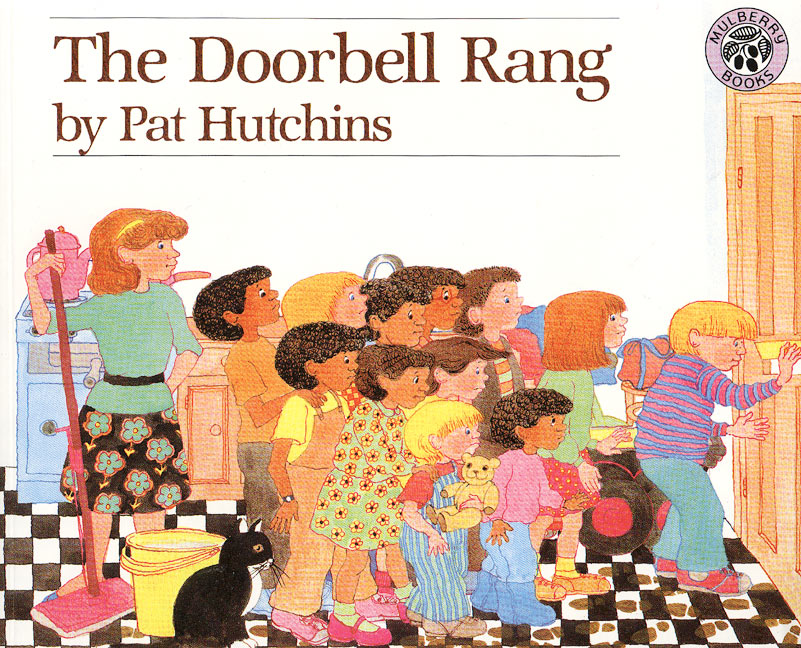
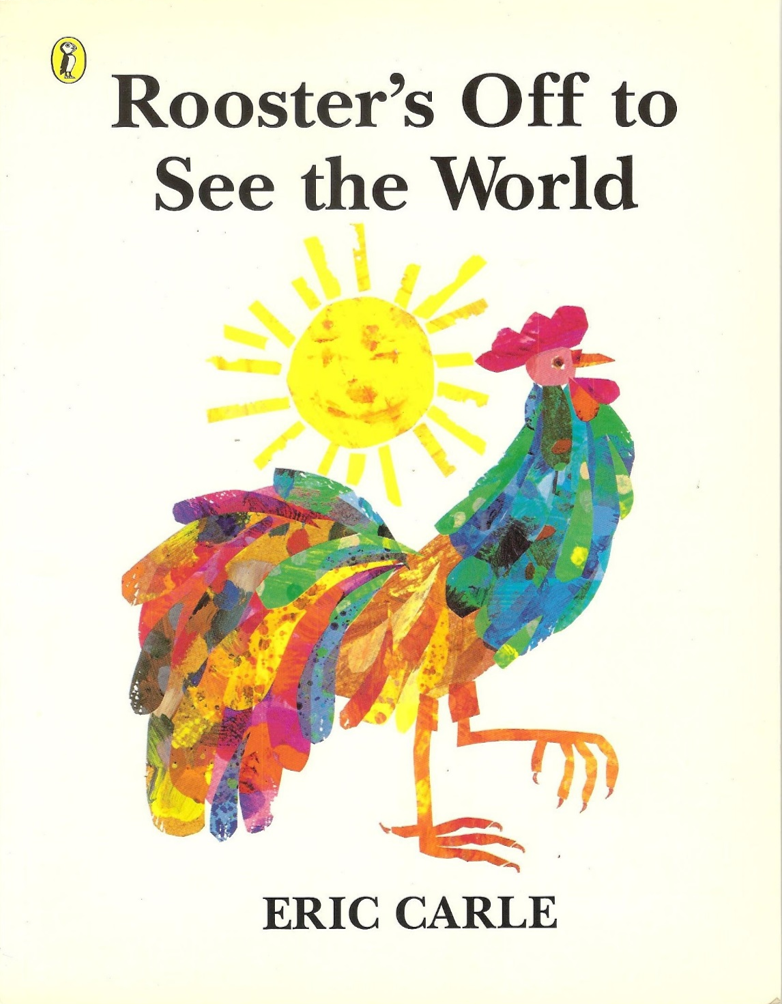
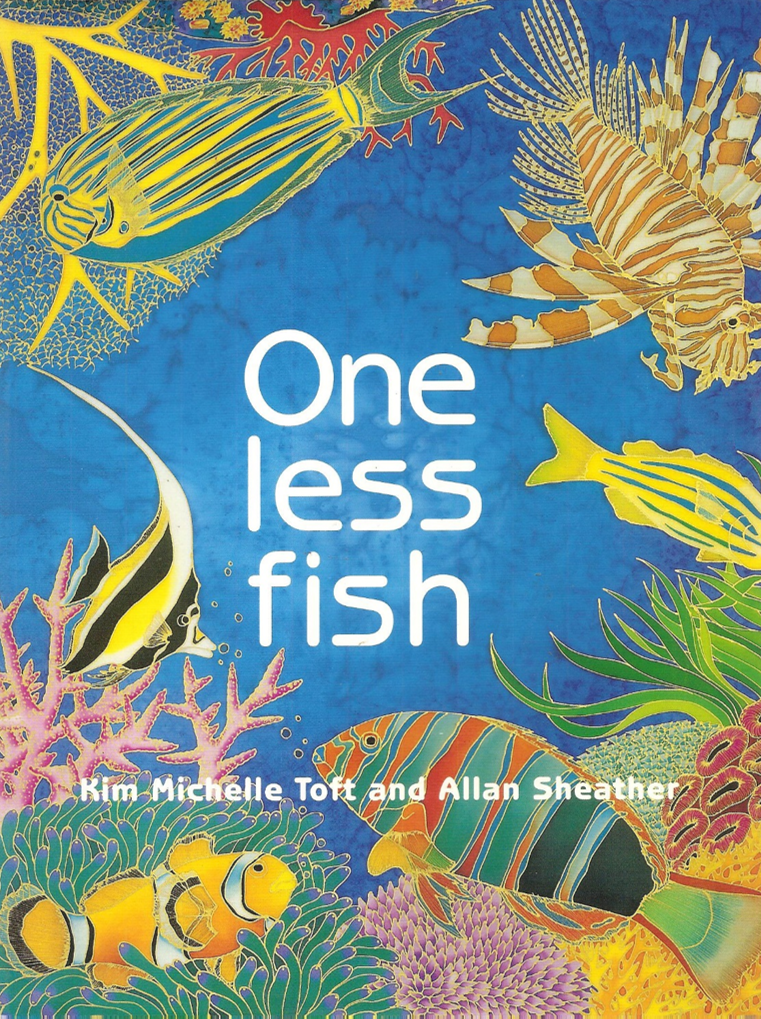
    8. Read books with number concepts e.g. Pat Hutchins The Doorbell Rang, Eric Carle Rooster’s off to see the world  or Kim Michelle Toft One Less Fish

    doorbell rang

    Rooster's off to see world

    One less fish

    Patterns and algebra

    1. Use items to make patterns e.g. sort and create a pattern from shells collected at the beach, building blocks or toy cars
    2. Look for patterns in the environment e.g. fences, tiles, walls and window, zebra crossings
    3. Decorate cards and drawings with a patterned frame
    4. Make gift wrapping paper by decorating with potato prints or stamp patterns

    Measurement and geometry

    1. Include your child in cooking activities and allow or support them to:
    • measure the ingredientscooking-man
    • set the temperature on the oven
    • work out the cooking finish time

    2.  A child’s understanding of volume and capacity can be developed when they:

    • pour glasses of water from the jug and discuss terms such as enough, full, empty, half or part full, more, less
    • pour from one container into another of a different shape to compare which holds more and which holds less

    3.  Scales can be used to compare the mass of different items or quantities e.g. compare an apple and an orange, measure the mass of butter required for a recipe

    4.  Measuring length can be included by:

    • measuring and comparing height
    • cutting a length of string to tie a package
    • measuring who is closest to the jack in a backyard game of lawn bowls

    5.  Use the calendar to

    • Learn the names and sequence of days in the week or months in the year
    • count the passing days or the number of days until an event

    6.  Identify shapes in the home and environment e.g.

    • 2D shapes: tiles on floor and walls, shapes of windows, sections of footpath
    • 3D shapes: cereal boxes (rectangular prism), balls (sphere), bottles or cans (cylinder), dice (cube)

    7.  Play games that involve shapes e.g. jigsaw puzzles, tangrams

    8.  Talk about directions e.g. left, right, forwards, backwards and follow directions on a grid

    9.  Play games that involve directions and movement in space e.g. battleship, Hokey Pokey, Simon Says, snakes and ladders, ludo

    10.  Read and discuss books that include measurement concepts e.g. Pamela Allen: Who Sank the Boat? (volume); Eric Carle: The Very Hungry Caterpillar (days of the week) and The Bad Tempered Ladybird (time); Penny Matthews and Andrew McLean A Year on our Farm (months and seasons); and for looking at places on a map Mem Fox Sail Away The ballad of Skip and Nell or Annette Langen & Constanza Droop Letters from Felix

    who sank the boat

    The Very Hungry Caterpillar

    A year on our farm

    sail awayLetters from Felix

    Probability and statistics

    spite_sun_rain

    1. When discussing the weather or desired activities include the language of probability e.g. possible, certain, likely, unlikely, impossible
    2. Encourage children to collect data about family or friends by asking yes/no questions e.g. do you like swimming, or making a graph of the family’s favourite colour or meal.
    3. Play games with spinners and dice and talk about the likelihood of spinning or throwing a particular number

    This list is really just a beginning. I’m sure you will add many more suggestions of your own.

    For your convenience, the list is available to download FREE in my TEACHERSpayTEACHERS store.

    As promised I will leave you with a few suggestions to spark your own interest in and love of maths. Be sure to check them out:

    These are must listen TED talks by Arthur Benjamin:

    The magic of Fibonacci numbers

    and A performance of “Mathemagic”

     And a fascinating one for the Christmas season “The 12 days of Pascal’s triangular Christmas” by Michael Rose on The Conversation.

    If you want to delve a bit deeper, here are some interesting reads to get you started:

    Charles Seife Zero: The Biography of a Dangerous Idea

    Mario Livio The Golden Ratio: The Story of PHI, The World’s Most Astonishing Number

    Rozsa Peter Playing with Infinity: Mathematical Explorations and Excursions

    I listened to the biography of zero on audiobooks this year. It was a fascinating listen.

    What do you think of maths? Do you love it or hate it?

    I hope you enjoy your adventures in maths! A world of possibilities awaits!

  • 20 suggestions for maintaining reading momentum during the school holidays

    20 suggestions for maintaining reading momentum during the school holidays

    happy_sun_gm
    http://www.openclipart.org

    The school year in Australia is over and the long summer holidays have begun.

    Parents often wonder how they will keep their children entertained during the long days with few structured or timetabled activities.

    When returning to school after many weeks without the formal practice of skills taught during the previous year, teachers often lament that children’s reading fluency and level has fallen.

    What is one way of addressing both these issues?

    The answer might just be in a book!

    Well in reading anyway.

    19180-Text-Book-Graphic
    http://www.openclipart.org

    Here are 20 suggestions for keeping your children entertained while maintaining their reading skills.

    I’m sure you can think of many more!

    Please keep in mind, as you read the list, that the amount of support given, or independence allowed, in each activity will need to be adjusted to the individual child’s age and reading ability. Even young children who are not yet reading independently can be included in most activities.

    1.  Read to and with your child every day – continue the practice established throughout the year with special sharing times during the day or at bed-time — or both!
    2. Demonstrate that you value reading by making time for your own reading, or setting aside a special quiet time when everyone in the family reads.
    3. Visit the library and borrow to read, read, read!
    4. Read poetry books, song books, picture books, joke and riddle books, crossword books, information books, chapter books (these can be read to younger children, or with older children – taking turns to read a page or a chapter each) — what are your favourites?
    5. Trade books no longer read for others at a second-hand book store.
    6.  When dining out, have your children read the menu and choose their own meal.
    7. Include your child in holiday cooking and have them read the recipe – ingredients and method. Perhaps they could read the recipe book to select the meal for the day.
    8. Suggest your child read the TV guide to find when favourite programs are showing and establish a timetable for viewing, rather than haphazard watching with random flicking through channels.
    9. Provide your child with bookstore catalogues and encourage them to read book descriptions to guide their next selection. 
    10. Bestow upon your child the title of ‘Family weather watcher’ and have them consult weather forecasts in the newspaper or online to select the most suitable days for planned outings and activities. 
    11. Include your child in making decisions about holiday activities. Give them the guide, or read the guide together and jointly choose the activities. 
    12. Make the library, museums and art galleries high on the list of must-dos. Many of these offer a wonderful assortment of free holiday entertainment for children, and reading is an essential part of getting the most from each visit! 
    13. Engage your child in some craft activities which require them to follow written instructions. The ability to understand and follow procedures is empowering and requires the ability to read written, as well as visual, instructions. 
    14. Encourage your child to ask questions about every day events and phenomena. Help them to research in books at home, in the library or on the internet. 
    15. Provide eBooks as well as books in print. Good ones bring a new dimension to the reading experience. 
    16. When going out for the day, or journeying further away on a holiday, support your child in locating destinations on a map and in selecting an appropriate route. Engage your child in giving directions while en route. 
    17. Include your child when reading bus or train timetables. 
    18. When doing the family grocery shop, give your child their own list of items to look for. 
    19. Listen to recorded books on long car journeys, or have books for listening to or reading along with in bed. 
    20. Make the most of every reading opportunity that occurs throughout the day!

    What are your favourite ways of incorporating reading into everyday activities?

    When I was a child, I loved receiving books as gifts. I still do! Books are among my most treasured possessions.

    www.openclipart.org
    http://www.openclipart.org

    I remember the delight when, on awaking in the dark of an early Christmas morning, I would reach down to end of my bed and discover a book there. I couldn’t see it, but I could feel the smooth glossy cover and the familiar roughness of the pages. I would lift the book up and breathe in the rich, delicious smell which promised so much pleasure I almost wanted to devour it. I knew that something delightful was in-store for me, and as the dawn’s soft glow began light the room, I watched the colours, pictures and words slowly take form and reveal themselves to me. What joy!

    I am forever grateful to my parents for encouraging my love of reading.

    The love of reading is one of the greatest gifts a parent can give a child.

    So, here is #21, it probably should have been #1!

    21. Give books as gifts!

    Read! Read! Read!

    You are welcome to download and distribute the 21 suggestions FREE from my TEACHERSpayTEACHERS store.

    You can read another post on this topic by Nanny SHECANDO by clicking here.

  • Searching for meaning in a picture book — Part A

    Searching for meaning in a picture book — Part A

    Do you recognise this book?

    The Very Hungry Caterpillar

    Chances are you do.

    According to the website of the author Eric Carle, since its publication in 1969 it has been published in over 50 languages and more than 33 million copies have been sold worldwide. It ranks highly in the Wikipedia List of best-selling books.

    Most primary schools, preschools and kindergartens would have numerous copies in their libraries with a copy in most classrooms as well as in teachers’ private collections. Most homes with young children would have a copy in their storybook collection.

    reading

    In addition to the books, many of those schools, classrooms and homes would have some of the associated merchandise; including toys, games, puzzles, posters and colouring books, which are now available.

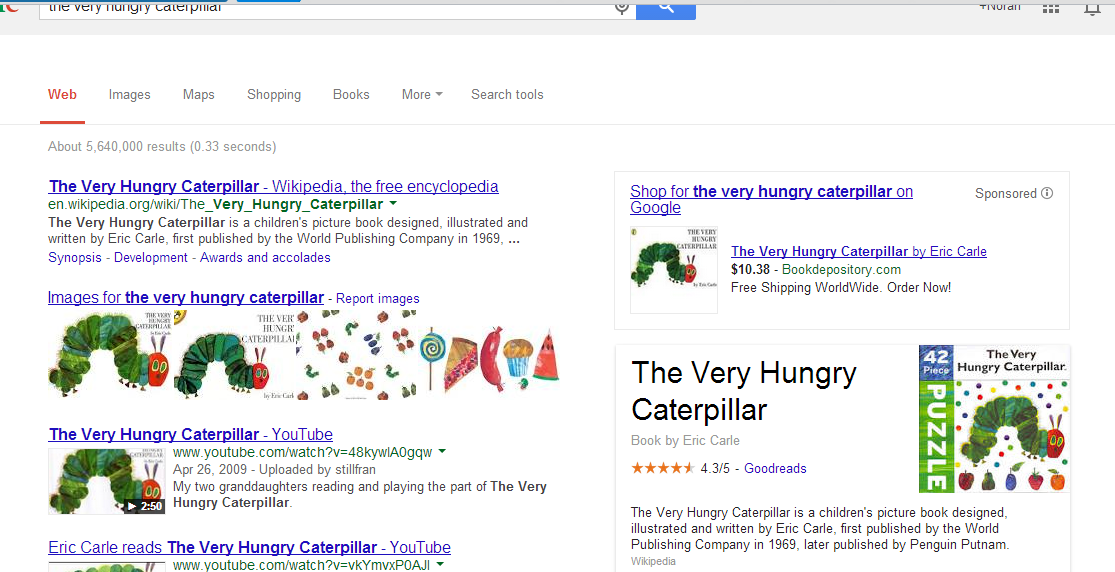
    When I typed ‘the very hungry caterpillar’ into the Google search bar about 5,640,000 results were listed in 0.33 seconds!

     Google search the very hungry caterpillar

    There are activities, lesson plans, printables, videos, and advertisements for merchandise. There is a plethora of suggestions for using the book as a teaching resource, including counting, days of the week and sequencing.

    I think you would be hard pressed to find someone that hasn’t at least heard of the book. That is quite an impact, wouldn’t you say?

    For a book to have done so well, it must have a lot going for it. And it does.

    There are many things I like about this book, including:

    • The bright, colourful, collages with immediate appeal
    • The natural flow and rhythm of the language making it easy to read, dramatize and recall
    • The sequence of numbers and days encouraging children to predict and join in with the reading and retelling
    • The match between the illustrations and the text supporting beginning readers as they set out upon their journey into print
    • The simple narrative structure with an identifiable beginning, a complication in the middle with which most children can empathise (being ill from overeating) and a “happy” resolution with the caterpillar turning into a beautiful butterfly.

    Reading to children

     Nor and Bec reading

    Sharing of picture books with children from a very young age has a very powerful effect upon their learning.

    There are many benefits to both parent and child of a daily shared reading session.

    clock

    It can be seen as a special time of togetherness, of bonding; of sharing stories and ideas. It can be a quiet and calming time; a time to soothe rough edges and hurt feelings; a time for boisterous fun and laughter; or a time for curiosity, inquiry, imagination and wonder.


    Whatever the time, it is always a special time for a book
    ; and all the while, children are learning language.

    8-12-2013 7-38-33 PM
    © Bernadette Drent. Used with permission.

    They are hearing the sounds and rhythm of their language. They are being exposed to new vocabulary, sentence structures, concepts and ideas. They are learning important understandings that will support them on their journey into literacy e.g. they are learning that the language of a book differs from oral language and that the words in a book always stay the same.

    They begin to realise that it is the little black squiggly marks that carry the message, and they may even start to recognise some words.

    Robert 2

    Many of these, and other, features make “The Very Hungry Caterpillar” suitable for incorporation in an early childhood curriculum, for example:

    The Very Hungry Caterpillar

    • Literature appreciation – love of language, knowledge of story, interest in books
    • Reading – the clear, simple and predictable text make it an easy first reader
    • Maths – counting and sequencing the numbers, sequencing the days of the week
    • Visual arts – learning about collage and composition of a picture
    • Philosophical inquiry —sharing interpretations and discussing feelings about the story, asking questions raised including the ‘big questions’ of life

    ryanlerch_thinkingboy_outline

    Eric Carle, in an interview with Reading rockets, describes it as a book of hope. He says:

    You little, ugly, little, insignificant bug: you, too, can grow up to be a beautiful, big butterfly and fly into the world, and unfold your talents.”

    He goes on to explain that,

    I didn’t think of this when I did the book, but I think that is the appeal of the book.”

    But I’m not going to let him have the last word!

    While “The Very Hungry Caterpillar” has always been one of my very favourite picture books, I do have some misgivings about the impact that this book has had.

    In future posts I will share what I consider to be some limitations of the text, and what I consider to be the most powerful use of all.

    What do you think?

    What appeals to you about this book?

    What questions does it raise for you?

    Please share your ideas. I look forward to hearing what you think.

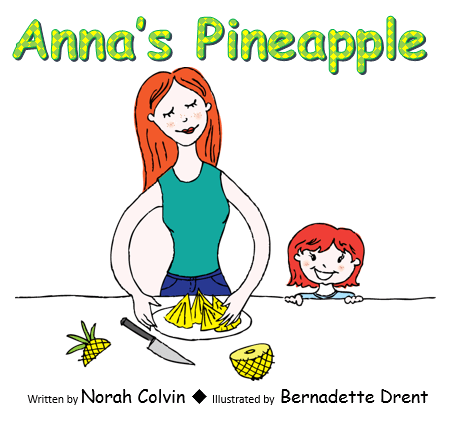
  • Anna’s pineapple

    Anna’s pineapple

    My gorgeous little granddaughter, Anna, turned two last Sunday.

    This is a story I wrote for her in celebration of her big day.

    It is based on a real event that occurred a week or two earlier. She just could not understand why her grandfather Bob had scoffed all the pineapple and left no more for her. He, of course, didn’t realise that the pineapple had been left for later, and thought that he was merely finishing off the leftovers.

    Anna’s Aunty Beckii was most amused, as was the rest of the family,  that Bob had eaten it all as he had already earned the title of “Bob the scoffer” by Anna’s big brother Artie. I must add that Aunty Beckii and Uncle Glenn had both given Artie considerable encouragement in bestowing this title!

    I am very grateful to Bernadette Drent who illustrated the story so well with only 2 days notice. I think she did a fantastic job and really captured the humour of the story.

    Have a read and let me know what you think. I’d love to know if it deserves a readership wider than that of family members.