Live Love Laugh Learn … Create the possibilities

Category: Picture books

  • Learning environment


    gardeningIn last week’s post I shared information about research projects students could become involved in to be scientists in real life. Some of the projects such as Project BudBurst and BudBurst Buddies encourage junior scientists to observe and record changes in plants throughout the changing seasons. Many commenting on the post agreed that projects such as these would make the learning of science come alive. Pauline King the Contented Crafter even commented that she may have to reconsider her opinion of schools if children were involved in projects such as these.

    © Norah Colvin
    © Norah Colvin

    Shortly after posting I read an article on Co.Exist describing a preschool that doubles as urban farm where Kids learn among the plants and animals in this design for a radically different education environment.”  A bit like my concept of an early learning caravan, the school does not actually exist. The design was entered into and won an architecture competition. It is an interesting concept and I especially like the suggestion that children spend more time learning about nature through experiencing it in wild spaces in the outdoors rather than only through classroom activities and books, both of which do have their role.

    Jeannie Baker - planet changing

    I have previously shared the wonderful books of Jeannie Baker which have strong environmental themes encouraging children to care for nature and appreciate the natural wonders and beauty of the world around them.

    2015-09-19 11.09.45 2015-09-19 11.11.04

    This morning, thanks to a recommendation from Sarah Brentyn who blogs at Lemon Shark, I received another lovely book in the post that will sit among my favourites. The Curious Garden by Peter Brown tells the story of how a curious boy helps transform a city from a drab grey concrete jungle to a one filled with gardens and gardeners. The story affirms the belief that the actions of one person can make a difference.

    Never-doubt-that-a-small - Margaret Mead

    I am currently listening to Earth in Mind: On Education, Environment and the Human Prospect, an interesting and thought-provoking book by environmentalist David W. Orr who challenges the focus of schools and advocates for learning outdoors in the natural environment. He may approve of the preschool farm, but he’d probably be more in favour of a forest preschool.

    This, however, is only a small part of his position and I do not wish to misrepresent it. In an article, which reads like a chapter from the book, Orr describes “Six myths about the foundations of modern education, and six new principles to replace them”. The part of me that strives towards meliorism is seriously challenged by the picture Orr paints. The picture books, stories, and research projects are fine; but there’s much more to be done if we want to do more than simply wish for a greener future.

    I agree with Orr wholeheartedly that education for, with and through the environment is essential; and that many of our problems are caused by miseducation. However, I had not thought about education in the way that Orr explains. I think I’ll be sharing more of his work in future posts.

    Thank you

    Thank you for reading. I appreciate your feedback. Please share your thoughts.


  • It’s classic!

    By UnknownMarie-Lan Nguyen (Own work) [CC BY 3.0 (http://creativecommons.org/licenses/by/3.0)], via Wikimedia Commons
    By UnknownMarie-Lan Nguyen (Own work) [CC BY 3.0 (http://creativecommons.org/licenses/by/3.0)%5D, via Wikimedia Commons
    This week at the Carrot Ranch Charli Mills is talking about the classics and libraries. I was a bit intrigued by the coincidence, for my current audiobook is A Classical Education The stuff you wish you were taught in school, written by Caroline Taggart and narrated by Bill Wallis. Maybe the words would reflect my situation better if they read “The stuff you wish you retained from what you learned in school”. I did study ancient history and even retained enough of it to get a passing grade in my final year of school, but most of what I learned dissipated once the exam was done.

    http://www.morguefile.com/
    http://www.morguefile.com/

    Although I am enjoying the audiobook, I think I will be none the wiser at its conclusion and retain little more than in earlier days. It is a reflection on my retention rather than the worthiness of the book.  At the top of Taggart’s webpage is a statement from the Yorkshire Post that I think is probably no idle boast:

    Caroline Taggart…has carved out a niche for herself in user-friendly, wittily written factual books which capture the imagination and quickly find their way to the top of the bestseller lists. 

    Prior to reading this statement I had thought that it was perhaps the narration that had brought the book alive in a most entertaining way. I was surprised that the narrator was not the author for the wonderful meanings and interest he evokes. If not the author then, I thought, he must be a wonderful character actor. Indeed, I was not surprised to find, he was.

    According to the Yorkshire Post, the writing itself is worthy too, though it seems to me, in many ways to be little more than a list of names, dates and snippets of events brought to life by an expert narrator. I’m not sure that I would read it cover to cover as I have listened to it, but it would definitely make a useful resource for checking out who and when, which is more or less impossible to do with an audiobook.

    ausines headphones

    One thing I have not liked about the book is the repeated opinion that maths and science in school are boring, and that most of us would only groan when thinking of what mathematicians like Archimedes and Pythagoras have burdened us with. If you’ve read many of my posts you would probably accuse me of being inconsistent, for haven’t I often agreed with that opinion of maths at school?

    algebra

    However, learning in mathematics should not be that way. I wish that everything we learned in school would be alive with interest, purpose and meaning. Then there’d be no need to groan. We’d be amazed and inspired by these great thinkers who have enlightened our lives.

    Arthur Benjamin, Mathemagician, would agree.

    He summarises his talk with these words:

    “Mathematics is not just solving for x, it’s also figuring out why.”

    But I digress a little. Charli’s main point was about the joy to be found in libraries. In my younger years I spent many hours in libraries. And if I wasn’t in a library, I was reading a book I’d borrowed from a library. Our home was filled with books but there were never enough to read and my parents and many of my siblings were frequent library book borrowers. On many Saturday afternoons throughout my teenage years I would walk the 5½ kilometre journey to the local library and back. I can’t remember how many books I was allowed to borrow, but I borrowed as many as I could.

    So many things about libraries have changed from those days of enforced silence, carded catalogues, and microfiche readers. But I don’t feel nostalgic for it. The systems are much more efficient now, and libraries have much more to offer the changing needs of a changing society.

    library
    http://www.morguefile.com/

    What does sadden me is that many local councils and schools are doing away with their libraries, and many schools are choosing administrators over teacher librarians when organising their staffing. A teacher librarian should be first enlisted. Nobody knows books and readers better than a teacher librarian.

    While I have not frequented my local library in recent years, I would be very distressed if it were to close. Not everyone has the luxury of being able to choose ownership over borrowing as I do. Libraries are important to communities and should be accessible to everyone; and not only for their books. Libraries play a significant role in developing a sense of community by providing meeting spaces for books clubs and groups of all sorts, activities for children including storytelling and reading, craft activities, films, games and puzzles, visits by authors and illustrators …

    They are also a great place to brush up on the classics that you may have missed out on in school, or find a book about mathematics that may inspire you to ask a big question and figure out why.

    The idea for my flash in response to Charli’s challenge, to In 99 words (no more, no less) write a story that includes a library, comes from the idea of taking books to the people, in their own neighbourhoods, and connects with my thoughts for an early childhood caravan.

    © Norah Colvin
    © Norah Colvin

    Another life, another dream, another possibility …

     The Book Lady

    She pulled the trailer from the shed, cleaned off the grime, gave it a lick of paint and hitched it to its once permanent position behind her bicycle. A trial ride around the yard confirmed all, including her knees, were still in working order. She propped the bike against the stairs and trundled back to her library where books lay scattered, spewed from shelves no longer able to hold them. She bundled them lovingly, tied them with memories, and wished them new hands to hold and hearts to love. It was time to share, and she knew just where.

    Thank you

    Thank you for reading. I appreciate your feedback. Please share your thoughts.

  • Writing poetry with children

    Horses go galloping

    This week at the Carrot Ranch Charli Mills has challenged writers to write about galloping. What keeps replaying in my head is the phrase “The horses go galloping, galloping, galloping” interspersed with the lines from “The Highwayman” by Alfred Noyes, a poem I learned at school.

    The Highwayman came riding, riding, riding,

    The Highwayman came riding, up to the old inn-door.

    tomas_arad_heart

    Learning poems at school was a joy. I love poetry and, in younger years, used to read a lot of it, less currently. Perhaps I should say I loved poetry, but that would unfair, just as it would be unfair to say that I no longer love an old friend that I haven’t seen for years, for at the moment we meet up again the connection is just as strong as ever, the ties never broken.

    Oftentimes when I read Charli’s challenges I know how I will respond immediately. Other times I need to massage the idea until I hit just the right spot. This time the horse has bolted and the paddock is left empty without a horse in sight. All I’m left with are my thoughts of poetry.

    Fortunately, as an early childhood teacher with a love of picture books, recent years haven’t been completely devoid of the poetic form. While not necessarily written in what might be considered “poetic language”, many are written in rhythmic rhyming verse. Others contain verses within the story, such as the refrain in The Gingerbread Man or the song in Love You Forever by Robert Munsch.

    The gingerbread man

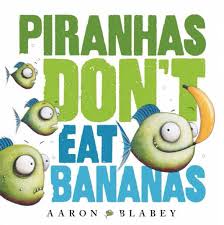
    A title recently added to my list of favourites, through repeated readings and recitations by my grandchildren, is Piranhas Don’t Eat Bananas by Australian author Aaron Blabey. Its rhythm, rhyme and sense of fun is an absolute joy. We laughed together at every reading by G1, and every recitation by G2. It begs to be read and re-read, recited and recited again. Sadly, I got to read it aloud only once, and even then not all the way through! “Hey,” I protested in vain. “I like to read picture books too!

    piranhas don't eat bananas

    Of course there are also many books of poems and rhymes written for children, including Nursery Rhymes, though many of those weren’t written with children in mind. There are also some that fit into a horsey theme such as

    In addition to reading poems and stories to my class I also enjoyed writing poems with them. At this early childhood stage the poems would be more rhythmical verse, sometimes rhyming and sometimes not, with only the hint of an introduction to poetic language.  I have previously written about writing our versions of I Love the Mountains, a traditional camping song.

    I have also written some resources for supporting teachers when Writing Christmas poems with early childhood students. These are available in my Teachers Pay Teachers store and soon to be included in readilearn resources. With easy-to-follow structures, writing these poems give children immediate boosts to their writing confidence.

    I had been thinking for a while that I should write some new versions suited to other times of the year, but hadn’t prioritised it. However, when I read Rowena Dreamer’s post Mr’s Poem: Through My Window on her blog beyondtheflow, another idea sprang to mind. Rowena discussed the writing of a poem “Through my window” that had been set as homework for her son.  I immediately thought of the sound poems that I had taught my students and wondered if the structure could be adapted for sight poems.

    The structure of a sound poem

    This is what I came up with:

    I saw as I looked through my window

    You’ll notice that I haven’t exactly maintained the structure. This is what happens, particularly when young children are writing their versions. It is to be expected and accepted. The purpose of the structure is to support, not restrict.

    I then wondered if it could be used with the other senses and, at the same time, realised that four verses, four senses, would just about reach the target of Charli’s challenge to In 99 words (no more, no less) write a story about galloping. With no other ideas galloping into view, how could I resist giving it a go?

    Disappointingly, I found the structure less accommodating for smell and taste, and had difficulty in conjuring different words to use for each. For example, I wanted to smell and taste the freshness of bread and the sweetness of apples. I had thought touch would be more difficult but have realised that’s not the case. The repetition of the word “felt” for both touch and emotion is perhaps not ideal though.

    I would love to say more here about the necessity for teachers to experiment before setting tasks for children, and of the value of learning from the process rather than the product, but I think I’ve probably said enough in this post.  I will just share what I’ve written which, though responding to Charli’s challenge, doesn’t actually fit the criteria of flash fiction. However, if you’d be kind enough, I’d still love to know what you think.

    Market Day

    I heard

    as I sat curled with a book

    the thundering of hooves

    the snorting of nostrils

    the jangle of stirrups.

    I felt anxious.

    I saw

    as I looked through the window

    the horse at the gate

    the rider on the path

    the bag in his hand.

    I felt excited.

    I smelled

    As I opened the bag

    The freshness of bread

    The sweetness of apples

    The promise of coffee.

    I felt famished.

    I felt

    As I savoured my lunch

    The crunchiness of crusts

    The crispness of apple

    The warming of coffee.

    I felt satisfied.

    Yum! Fresh produce.

    Thank you

    Thank you for reading. I appreciate your feedback. Please share your thoughts.


  • A tooth for a tooth

    lost tooth - Artie Feb 13 16

    My gorgeous grandson has just lost his first tooth, an event much anticipated and causing a great deal of excitement. In the months leading up to the event I had wondered how the family might mark the occasion and if the Tooth Fairy might visit. Though I shared the myths of Santa Claus, the Easter Bunny and the Tooth Fairy with my children when young, as adults they have debated the ethics of perpetuating these myths with their own.

    As a teacher of 5 – 7 year olds it was not uncommon for me to encounter gappy grins and lost teeth through the course of the year. Mostly children would arrive at school proudly displaying a new gap, or a new tooth peeking through. Sometimes the tooth would dislodge at school and there would be great excitement. I would carefully place the tooth in the centre of a tissue, fold the edges down around it and sticky tape below the tooth to make a little “tooth fairy” to keep the tooth safe for the return home.
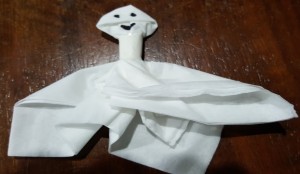
    tooth fairy

    Sometimes the children would discuss how their families marked the occasion of a lost tooth. Although there were children from diverse backgrounds in the classes I taught, I don’t remember any great divergence from the, to me, traditional tooth fairy story.

    When I was a child, I put my tooth in a glass of water and placed it on the kitchen windowsill. The following morning, if I was lucky (for sometimes she’d forget), the Tooth Fairy would have been and left me a shiny silver threepence.

    Some children I taught put their teeth under their pillows, some in a special box by their bedside, but what most had in common was the fact that the tooth had been taken and replaced with a shiny coin. Sometimes, when a child lost a tooth, we would read a story such as What do the fairies do with all those teeth? or Moose’s Loose Tooth.
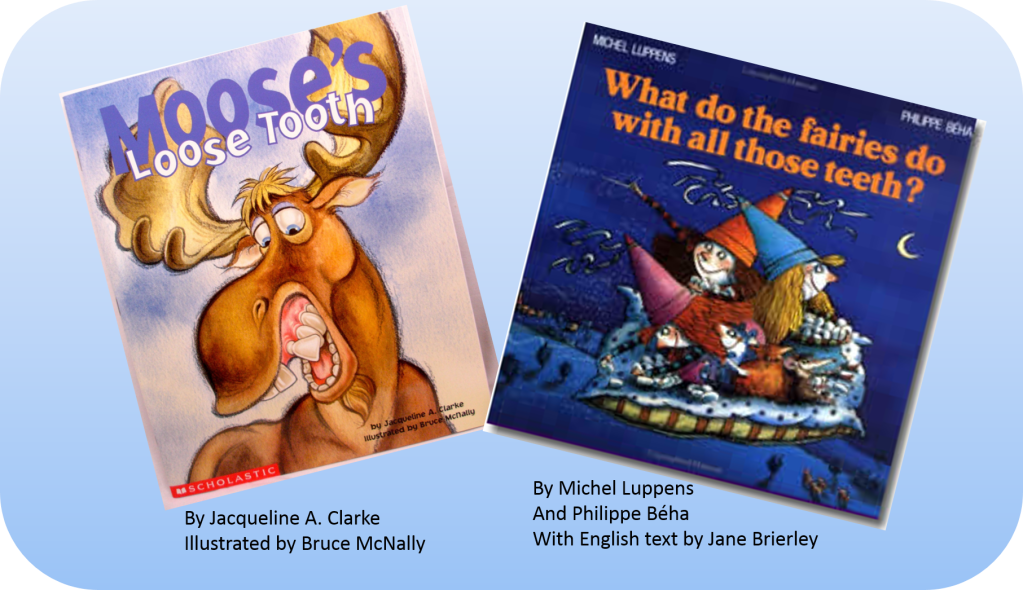
    tooth books

    While I was contemplating what the response might be to my grandson’s lost tooth, I read about a book called Throw Your Tooth on the Roof: Tooth Traditions from Around the World by Selby Beeler with illustrations by G. Brian Karas.
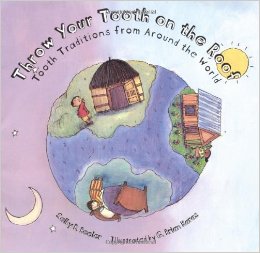
    throw your tooth on the roof

    I wondered if it would be a suitable gift to mark the occasion and went ahead and ordered it. I wasn’t disappointed. The book briefly describes traditions from many cultures and countries around the world. While the Tooth Fairy’s visit and gift of a coin is familiar to those of us living in the UK, US, Canada and Australia, it is not so familiar to all. In Mexico and Venezuela a mouse replaces the tooth with money. In El Salvador a rabbit does the same. In Guatemala it is El Ratόn.

    The title of the book comes from the tooth traditions of Botswana and the Dominican Republic. In some countries children receive coins, as described above, or a gift in exchange for the tooth. In other countries they ask for a new tooth. In Costa Rica and Chile the tooth is made into an item of jewellery. What surprised me was the great variety of traditions, of which I have mentioned only a few.

    In her Author’s Note at the end of the book Selby Beeler explains the chance discussion, with a friend from Brazil who hadn’t heard of the Tooth Fairly, that piqued her interest and lead to the writing of the book. She says,

    “I quickly discovered that the best way to learn what people do with their baby teeth is simply to ask them. While collecting customs for this book I stopped people wherever I went. I smiled, introduced myself, and asked them the question I had asked my friend, ‘What did you do with your baby teeth when you lost them?’”

    The result is fascinating. Thank you Selby for being curious and asking a question that elicited so many interesting responses. Thank you also for selecting some of the hundreds of traditions and compiling them into this lovely book that enables us to find out a little more about each other; some things that are the same and some that are different. I’d be delighted too if you, esteemed readers, shared your traditions in the comments.

    In the introduction to the book Beeler says,

    “Has this ever happened to you?

    You find a loose tooth in your mouth.

    It happens to everyone, everywhere, all over the world.”

    I am disappointed that, in all the years I was teaching children in the “loose tooth” age group I hadn’t ever thought to investigate different traditions. Although I took many opportunities to celebrate the diversity in the classroom (I’ve shared some of those here), I wonder what other opportunities I missed. If I was still working with year one children this book would be essential to my collection and sit alongside another favourite for discussing diversity and acceptance, Whoever You Are by Mem Fox. I am pleased I found it in time to gift to my grandson to mark his first missing tooth.

    Whoever you are.

    This week at the Carrot Ranch Charli Mills is also talking about diversity and has challenged writers to In 99 words (no more, no less) write a story of a character who is diverse. Who is this person? Does this character know, accept or reject being perceived as different? As writers, consider how we break stereotypes. Tell you own story of “otherness” if you feel compelled. Or, select a story of diversity, such as rainbows revealing gold. How is diversity needed? How is your character needed?

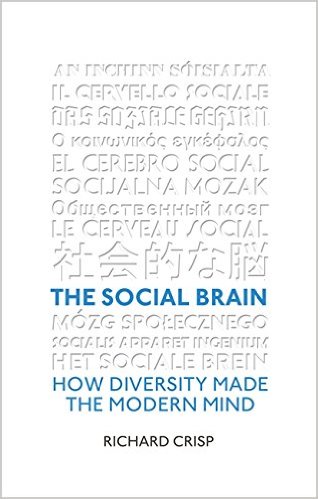
    Coincidentally I am reading a book about diversity at the moment. The book, The Social Brain: How Diversity Made the Modern Mind by Richard Crisp was reviewed by Anne Goodwin who blogs at Annecdotal. In her review Anne says,

    “I’m pleased to say that Richard Crisp’s highly accessible overview of recent research into cultural diversity has not only revitalised my interest in social psychology but is highly relevant to how we all live today. I touched on one of his papers in my recent post on Looking at difference, embracing diversityThe Social Brain develops those ideas in more depth and detail.

    social brain

    I am compelled to add my voice to Anne’s recommendation. It is a fascinating, challenging and enlightening read.

    In a comment on her post, Charli stated that diversity is in the small things, not just the big. I believe she is right. It is the attitudes and actions we incorporate into our everyday lives that can make the big difference in another’s world. I’m sticking to my tooth theme for my flash with a wish for recognition of commonality, acceptance and respect. Richard Crisp’s book goes a long way towards helping understand what drives us, and why.

    A friendship born

    The invisible wall was a fortress built of fear and prejudice. On either side a child played alone. The rules were accepted without question.

    Then they saw each other, and a challenge was born.

    At first they kept their distance, staring across the divide, until scolding adults bustled them away.

    Curiosity and loneliness won over fear as they mirrored each other in play.

    One day they drew close enough to touch, but hesitated. Simultaneously they bared their teeth, each proudly displaying a gap, in the middle on the bottom, a first. Surprised, they laughed together: more same than different.

    Thank you

    Thank you for reading. I appreciate your feedback. Please share your thoughts about any aspect of this post or flash fiction.

  • Wild spaces

    wilderness

    This week at the Carrot Ranch Charli Mills is talking about the importance of preserving natural wilderness areas. She says,

    “Wild places matter, even to those who are not active hikers or hunters. It’s important to our psyche to know that wild places exist.”

    To say it is important for our wellbeing acknowledges its anthropocentric value. However, I believe, as I know Charli does too, that its value is intrinsic with significance beyond its importance specifically to humans. Wilderness areas are the lifeblood of our planet, of all species. They are just as beautiful and just as necessary whether any human lays an eye on them or not.

    if a wilderness

    I am not a hiker, definitely not a hunter, and have never been one to spend a great deal of time in the wilderness. However, I have a deep appreciation for the beauty and value of wilderness areas. I strongly believe in the importance of protecting them to ensure the health of our planet and the survival of our, and every other, species. Sometimes I wonder if our survival is deserved with the seeming disregard many of us have for our Earth, but I am a meliorist and place my hope with future generations.

    To ensure this meliorism is well-founded, we need to nurture in young children their innate interest in and love of nature. There is probably no better way of doing this than through first hand experiences observing nature in wild spaces. Share with children their wonder, be intrigued with their explorations and extend your own understanding through their discoveries. At the same time develop in them an appreciation of and respect for our earth and its gifts.

    Encounters with nature don’t always have to occur in large nature reserves in distant places. In fact, a real appreciation of nature is an attitude, a way of thinking about the world and can be fostered as a part of daily life with observations in the backyard, in wild places along the roadside, or in a pot on the window sill.

    © Bec Colvin
    Ladybirds in my backyard © Bec Colvin

    Books also serve a purpose in nurturing an interest in the world around us. In addition to books of beautiful photographs, fiction can also be used.

    4 of Jeannie Baker's books

    Last year in a series celebrating Australian picture books I wrote a post about collage-artist and author Jeannie Baker who shares her passion for the environment through her picture books.

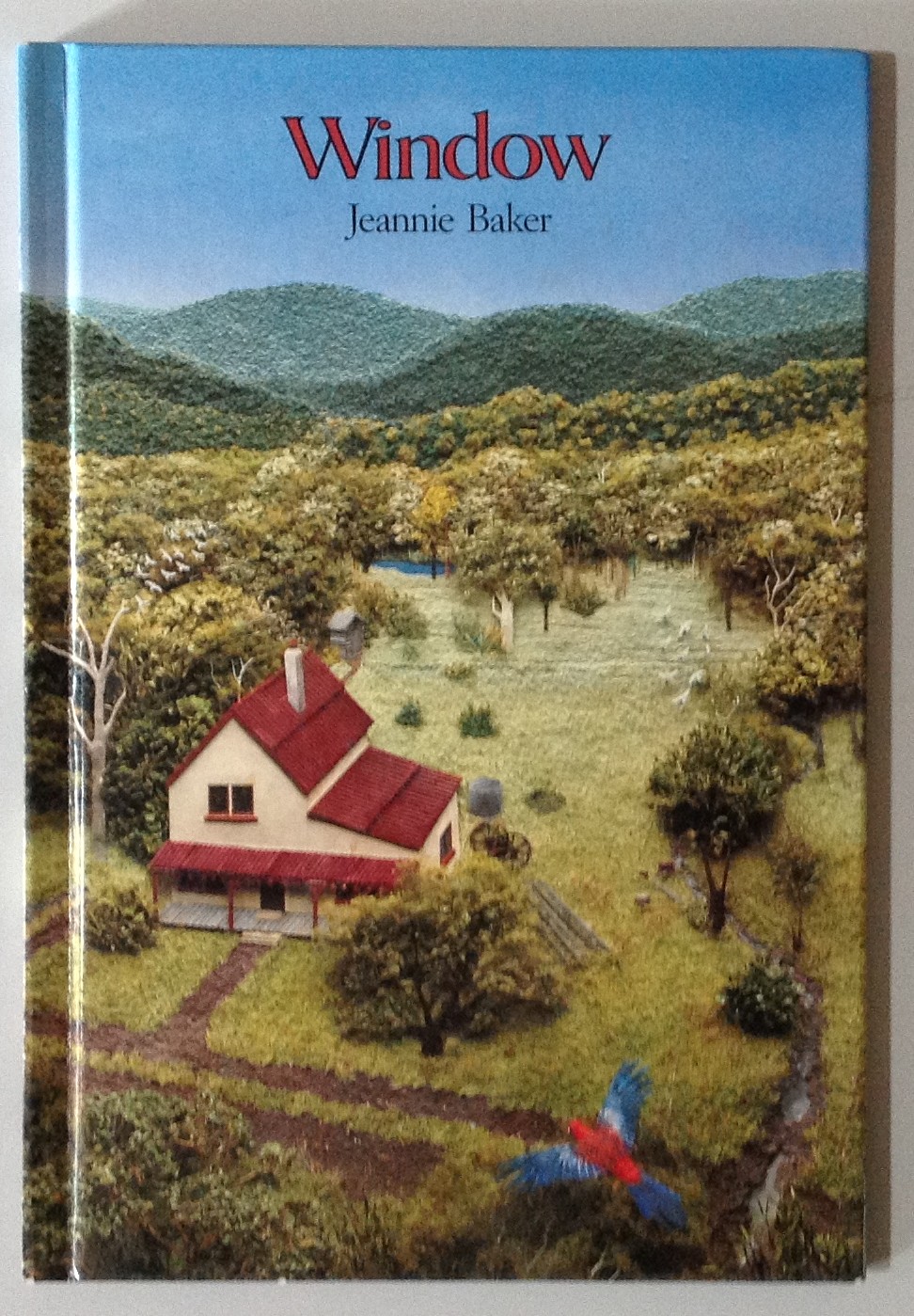
    2015-09-19 11.09.45

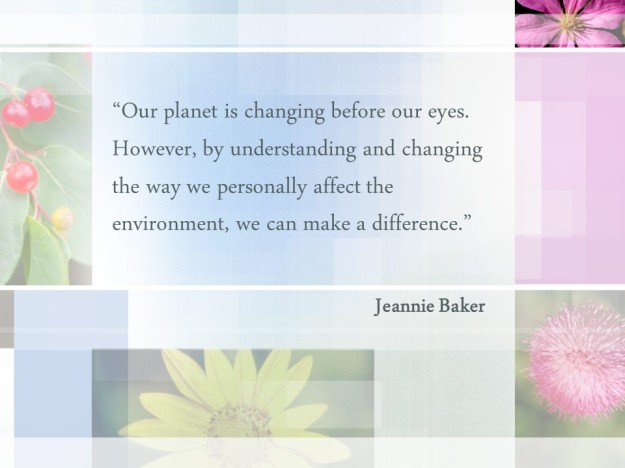
    Window tells, in beautifully detailed collage, of the transformation of a landscape from natural bush to city-scape. The changes are observed through a window by a boy as he celebrates alternate birthdays from birth to 24 years. Jeannie shares an important environmental message in a note at the end of the book with these words:

    Jeannie Baker - planet changing

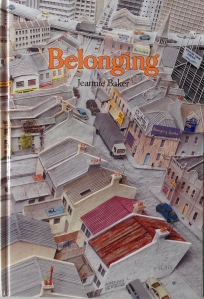
    In 2004 Jeannie published a companion book to Window called Belonging, which, in 2005, also received a number of awards, including one from the Wilderness Society.

    2015-09-19 11.11.04

    This textless picture book tells the story of a changing landscape over a number of years as a city is transformed with plants and welcoming spaces for children and families. In a note at the end of this book, Jeannie says,

    Jeannie Baker - time

    I think these messages, together with those shared in Charli’s post, are important for children to not only hear, but to see modelled by adults in their everyday lives. I am happy to say that members of my family are proactive in the ways they care, and advocate, for the environment. I have much to learn from them.

    For my flash I drew upon a recollection of a place visited in my much-younger years, a favourite place for calming mind travel, and Charli’s recognition of the benefits of wilderness areas to our psyche, to our very essence.

    Charli’s challenge was to In 99 words (no more, no less) write a story about wild spaces. Is it a wilderness or a patch of weeds in a vacant lot that attract songbirds. What is vital to the human psyche about wild spaces? Bonus points for inducing something cute and furry. I’ve also tried for the extra points. I’d love to know what you think.

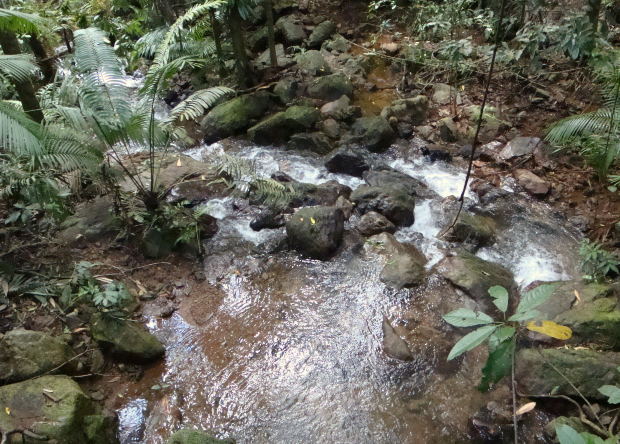
    stream

    Renewal

    Cocooned in shadows of tall forest trees, clear spring water soothing tired feet, she sighed. Speckles of sunlight dancing from rock to ripple were unnoticed as she envied a leaf escaping downstream.

    “Why?” she asked of the stream, more of herself. “Why are you here?”

    The stream whispered,

    “We all have our purpose’

    We’re all meant to be,

    We’re connected, we’re one,

    Not just you or me.”

    A birdsong repeating the chorus lifted her gaze towards a flutter of rare blue butterflies. A possum yawned and winked. She breathed in awe. Refreshed, with lighter heart, she was whole again.

    Thank you

    Thank you for reading. I appreciate your feedback. Please share your thoughts.


  • Plant the seeds of literacy

    About this time last year, I shared my excitement when Jackie French was recognised for her “long and distinguished career as a beloved children’s author” as Senior Australian of the Year. At the time she was halfway through her two-year role as Australian’s Children’s Laureate with the task of promoting the importance and transformational power of reading, creativity and story in the lives of young Australians.

    If-you-want-intelligent children

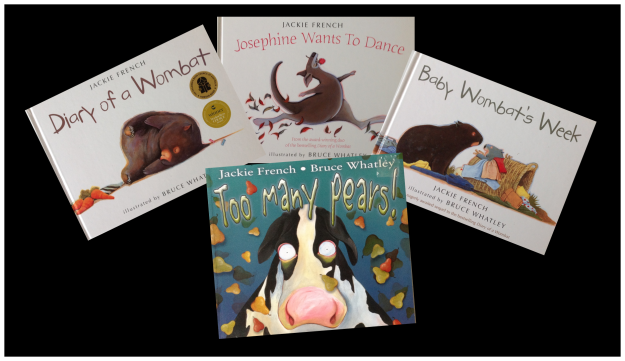
    Later in the year, in a series of posts celebrating Australian picture books, I shared more of Jackie’s work.

    jackie french's books

    Now the roles of Children’s Laureate and Senior Australian of the Year have been passed to others. Jackie has obviously been asked what she is now going to do with all her “free” time. In her newsletter she says, “if one more person says ‘now you can relax’ if (sic) will bite them like a wombat, the snappish kind” because it means that work is finished, which it isn’t. I feel exactly the same way when people ask me about my retirement, though I fear Jackie and I work at a very different pace and the occupation of my time may seem like retirement in comparison to hers.

    While an author may not have received the top recognition as Australian of the Year 2016, three advocates of children’s literature each became a Member of the Order of Australia:

    Jackie French for significant service to literature as an author of children’s books, and as an advocate for improved youth literacy’.

    Ann James for ‘significant service to children’s literature as an author and illustrator and through advocacy roles with literacy and professional bodies’.

    Ann Haddon for significant services to children’s literature, as a fundraiser and supporter of Indigenous literacy, and to professional organisations’.

    It is wonderful to see the recognition given to authors, and to the importance of reading.

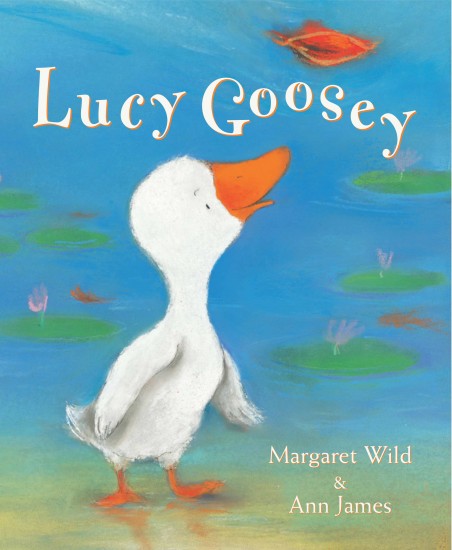
    lucy_goosey_cover_lowres

    One of my favourite books, illustrated by Ann James is Lucy Goosey. It is a beautiful story, written by Margaret Wild, about the love between mother and child. I can’t read it all the way through without crying. But in a good way. It is very touching.

    Ann talks about illustrating the story here:

    I’m also pleased to say that I have an original Ann James, done for Bec at a literary festival many years ago, hanging on my wall.

    Ann James

    In her Senior Australian of the Year Valedictory Speech, Jackie French says,

    “You never know what seeds you plant will grow; if they will keep growing; who will take them and tend them. But there is one thing I have learned in my 62 years: keep planting seeds.

    Jackie French - keep planting seeds

     Never think: I am 62 and still have not achieved world peace, universal tolerance and justice, or even an Australia where every single child is given the chance to learn to read.

    Change is never fast enough for any person of goodwill.

    A rain drop is just a rain drop. But together we are a flood.  Together we have changed the world.

    Jackie french - raindrops

    She concludes her speech with these words:

    “Let us give our children role models who do not, will not despair, no matter how long it takes to change the world. And let us never surrender, no matter how tired we are, or how long it takes. Because with these weapons we shape the future of our planet.”

    I like her words of hope. She is a meliorist. But even more than that, she is an active meliorist. She puts her words into action. She may no longer carry the title of Children’s Laureate or Australian of the Year, but her advocacy doesn’t stop.

    Thank you

    Thank you for reading. I appreciate your feedback. Please share your thoughts.

  • Once upon a time … the power of story


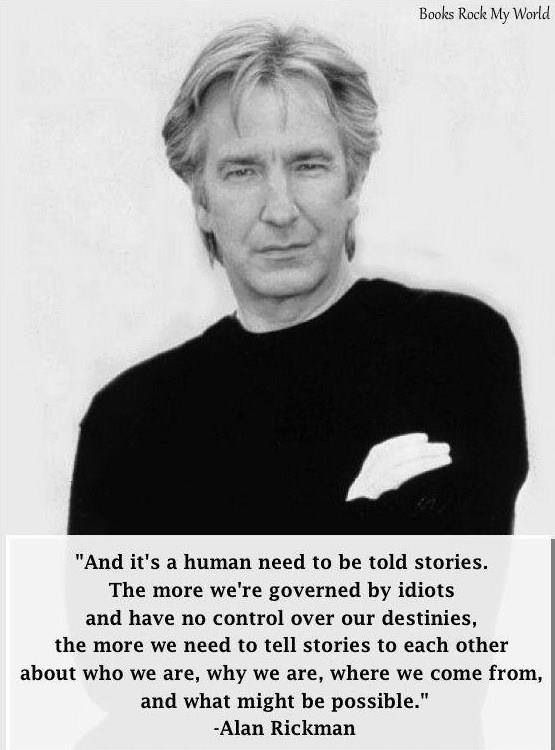
    Alan Rickman

    In stories we find our hopes, our dreams, our inspirations, and our fears.  In stories our imaginations take flight as we contemplate ideas never before encountered.  Stories help us figure out the world and our place in it. We come to understand the stories of others and develop compassion and empathy. We find ways of confronting our fears in safety. We escape the ordinariness of the everyday with dreams as much of the impossible as the possible.

    The love of reading is gift

    Stories can be shared orally, in print, or through a variety of media. All are valid and valuable sources, but sharing the stories presented in books is especially important to the development of young children, and anything that can put books into the hearts and hands of children is to be encouraged. The ability to read is empowering and the love of books is one of the greatest gifts a parent can give a child. Not only can reading change the life of an individual, it can improve the lives of many through education.

    This week I read a post by Paul Thomas  on his blog the becoming radical. In this post, entitled “Please—a little less love, and a little more common decency. Paul said,

    “If we cannot change the world (and I suspect we can’t), we can provide all children the sorts of environments all children deserve in their school day—environments of kindness, compassion, safety, and challenges.”

    I think Paul meant that we can’t change the whole world, that would be a rather daunting task, but the provisions mentioned are vital and change the lives of individuals in important ways, just as reading does. I like to think of changing the world with one thought, one word, one action at a time, or as Mem Fox says, also quoted in my post The magic effect – why children need books,

    “. . . let’s get on and change the world, one page at a time.”

    malala

    Another post I read this week was by Michelle Eastman Calling all Book Lovers and Authors to make a Difference to a Child in Need on her blog Michelle Eastman’s Books. In that post Michelle explains that, last year, she initiated a project “MARCHing books to Kids”. The purpose of this project is to raise awareness of and provide books for children of incarcerated parents. Michelle goes on to say,

    “I believe that every child’s Bill of Rights should be indelibly inked with the right to have picture books read to him/her and to own their very own books. “

    I agree with her of course and consider her project to be very worthwhile. It reminds me of another very worthwhile program mentioned by Caroline Lodge, who blogs at Book Word, about providing books to prisoners. Both of these projects have the ability to change lives, to empower people and by so doing, change the world, not only their world.

    https://openclipart.org/detail/226141/princess-and-prince-illustration
    https://openclipart.org/detail/226141/princess-and-prince-illustration

    As well as changing lives, stories influence our attitudes. If they encourage feelings of kindness and compassion, as Paul Thomas says, that may be a good thing.  But what of the stereotypes that seem so pervasive? How many stories have you read about princesses in dire circumstances waiting to be rescued by handsome princes or knights in shining armour who must slay a dragon in doing so? What effect do these stories have upon the developing self-image of a young girl or boy? It is important to teach children to think critically about the stories they read, and about the portrayal of characters and their attitudes, especially stereotypes.

    © Norah Colvin
    © Norah Colvin

    But that is in reading stories. What of writing stories? Writing stories, whether factual accounts or imagined events, is also empowering. In writing stories children, and adults, can express and explore their hopes, dreams, inspirations, and fears.  In writing stories their imaginations take flight as they contemplate ideas never before encountered.  Writing stories helps us figure out the world and our place in it.

    In her post Storytelling as Personal Metaphor Anne Goodwin who blogs at Annecdotal raised the question of how much of the self is revealed in fiction.

    Paula Reed Nancarrow, whose blog tagline is Essays, Stories, Ephemera, talked about working towards an understanding of contentment: what it is and how it is experienced; in her post Enough Already: Exploring the Art of Contentment,

    Contentment is something that I too wonder about, and am especially perplexed by the need to push myself into new territory and new learning when others are content to sit back and watch the clouds pass by. Why are there so many things I feel I must do? Pretty soon I’ll be gone and it won’t matter a hoot. I have sometimes thought that if I were to write a fictionalised account of my life I would begin with the words She was an unremarkable woman”.

    I have connected these thoughts: about the power of story to change lives, the revelation of self in fiction and the quest for contentment; to write my response to the one who initiated my thinking about stories this week, Charli Mills at Carrot Ranch Communications with her flash fiction challenge to in 99 words (no more, no less) begin a story with, “Once upon a time …”  I’d love to know what you think.

    Contentment

    Once upon a time there was an ordinary girl who lived an ordinary life with her ordinary family. She did all the ordinary things that others did and dreamed of nothing else. Each day followed one after the other with little difference. There was no magic. There were no fairies, and there were no dragons to slay. She just did what she had to do and took little notice of others doing the same. Strangely enough she was content for, from somewhere deep within, she knew that this ordinary life was but preparation for the extraordinariness of the next.

    Monarch butterfly

    Thank you

    Thank you for reading. I appreciate your feedback. Please share your thoughts.

  • Guess what you’re getting for Christmas!

    The love of reading is gift

    I went Christmas shopping yesterday, and guess what I bought!

    © Norah Colvin The titles of these books are hidden to maintain the “surprise” for the recipients.
    © Norah Colvin
    The titles of these books are hidden to maintain the “surprise” for the recipients.

    Books! It wasn’t difficult to guess was it? I have written in previous posts about both giving and receiving books as gifts.  I’ll let you in on a little secret though. I did buy a few others things as well. That’s probably a good thing, otherwise the memory game My grandmother went shopping and she bought … would not do anything to develop memory and would be rather boring:

    “My grandmother went shopping and she bought … a book … and a book … and a book … and a book …:

    one

    I have already received one beautiful book for Christmas this year: One: How many people does it take to make a difference?, and the recommendation of many others, some of which I have purchased for myself or as gifts. Books received as gifts often take a very special place in a collection.

    HeidiHeidi inside

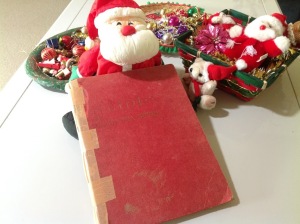
    One of my strongest memories is of waking before sunrise one Christmas morning, checking to see if Santa had been, and discovering a book at the end of my bed. While there was not enough light at first to see the illustrations or read the words, I delighted in the smoothness of the cover and the smell of the pages. Slowly as the sun rose the title revealed itself: Heidi by Johanna Spyri, and I started to read. I loved that story and read it many times. After more than fifty years I still have the book in my possession, rather tattered and worn, not unlike its owner, but still loved.

    In a recent post I shared some Australian Christmas picture books.   In a comment on that post Sherri Matthews, who blogs at A View from My Summerhouse,  reminded me of the Janet and Allan Ahlberg book, The Jolly Christmas Postman.   Although it was given to Bec for Christmas exactly thirty years after I received Heidi, I still have it in my possession. Shh! Don’t tell Bec. Of course the reason it was not included in my list of Christmas books is that the authors were British. (Allan is now aged 77. Janet passed away in 1994.)

    cover

    The Jolly Christmas Postman was published in 1991 and followed the success of the original Jolly Postman story. It is a delightful interactive book in which the postman delivers Christmas mail to storybook characters, including:

    • A Christmas card for Baby Bear from Goldilocks and her sister
    • A game about being safe in the woods for Red Riding Hood from Mr Wolf, who declares he is a “changed wolf”
    • A Humpty Dumpty jigsaw puzzle for Humpty Dumpty from all the king’s men
    • A Christmas annual and book in a book for the Gingerbread Man from Pat O’Cake Bakers
    • A Wolf Spotter’s Guide for Mr Wolf from Red Riding Hood , and
    • A special concertina “peep-show” for the postman from Santa and Mrs Santa.

    activities

    After the postman delivers the children’s letters to Santa, has a cup of tea and receives his gift, he hitches a ride back home on Santa’s sleigh. What a delightful conclusion to the story.

    There is much to explore in this little book for both young and old; far too much for just one sitting. With books to read, games to play and puzzles to do it could entertain for hours. A full appreciation of the cleverness and humour in the story requires an understanding of fairy stories such as Goldilocks and the Three Bears, Red Riding Hood, The Gingerbread Man, The Three Little Pigs; and nursery rhymes such as Humpty Dumpty, Doctor Foster, and Pat-a-cake, amongst others. Reading the book is a literary adventure.

    I wonder how soon before it will also be an adventure in history. It was published in 1991 before email became popular and social media was invented. The number of items sent by “snail mail” is decreasing. It may not be long before children also need a history lesson to understand what is mean by “a postman”.

    Books make special memories. What special memories will you create for someone with a book this year? What books have made a special memory for you?

    Thank you

    Thank you for reading. I appreciate your feedback. Please share your thoughts.


  •  A celebration of Australian picture books #7 — celebrating Christmas


    With Christmas just around the corner it is appropriate to continue my series in Celebration of Australian Picture Books with some Australian Christmas picture books. This post is the seventh in a series celebrating picture books by Australian authors. If you missed earlier posts, please follow these links to the introductionMem FoxKim Michelle ToftNarelle OliverJeannie Baker and Jackie French.

    www.openclipart.org
    http://www.openclipart.org

    Christmas in Australia is unlike that in most other parts of the world that celebrate the holiday. In Australia, Christmas falls in summer and people generally head for the beach or somewhere with air conditioning to cool down. While many still follow the traditions of the Northern Hemisphere with baked dinner and plum puddings, many opt for seafood  and salad, and outdoor barbecues and picnics. Whatever the weather Christmas is a great time for catching up with family and friends (or not, depending on your family!)

    www.morguefile.com
    http://www.morguefile.com

    I shared some thoughts about Christmas in Australia last year when I posted I’m (not) dreaming of a white Christmas. This year the post is specific to picture books.

    Some Australian Christmas picture books
    Some Australian Christmas picture books

    Because our climate is so different and we have such a small population down here, most of what is available for us to read, sing or view deals with situations very different from our warm sunny days. I’m pleased to say, though, that there is an increasing number of songs and books with an Australian flavour available. However, many are merely innovations on the traditional such, as The Australian Twelve Days of ChristmasAussie Jingle Bells or An Aussie Night before Christmas.

    12 underwater days of Christmas

    One innovation I particularly like is The Twelve Underwater Days of Christmas by Kim Michelle Toft. I celebrated Kim’s work previously in this series. Kim is an Australian who uses her talents as author and illustrator to educate children about things for which she is passionate: ocean life and coastal habitats. The stunning illustrations in this book, as in others, are hand-painted on silk; providing a richness of information through visual as well as textual features. In addition to the information about the animals, Kim includes a stunning six-page foldout poster, and information about the original carol.

    Christmas Wombat

    Jackie French, another whose work I have previously shared in this series, also has a Christmas picture book in the Wombat series, Christmas Wombat. It is just as delightful as the other wombat stories and tells of Wombat’s Christmas Day with sleep, adventure, sleep, and treats.

    Wombat Divine

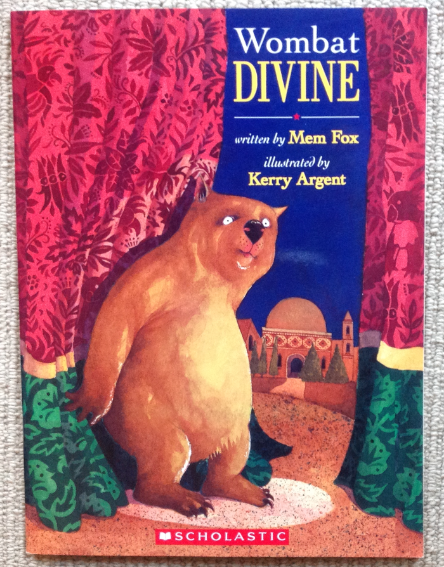
    Using the traditional Nativity play as the setting, Mem Fox, another whose work I shared in this series created an original and fresh story in Wombat Divine. It is a delightful tale of Wombat who loved everything Christmas. When finally he was old enough to be in the Nativity Play he rushed along to the auditions. Unfortunately, it was difficult to find a role that was just right for Wombat. Can you guess which one he got? You’ll have to read the book to find out! Children all over the world will identify with Wombat and his predicament, and enjoy the heart-warming tale.

    PS who stole santa's mail

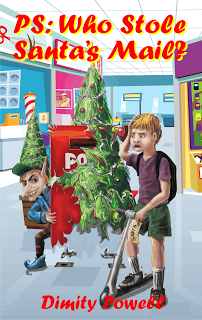
    For slightly older children there is the first chapter book PS: Who Stole Santa’s Mail by Dimity Powell, who is very active in the local SCBWI group. She blogs at  Dim’s Write Stuff. This is a fun story filled with mystery, magic and humour and a great first step into chapter books. I thoroughly enjoyed reading it.

    We do have a few original Christmas songs to listen to as well. One that I enjoyed listening to on the radio as a child, and delight in now hearing my grandchildren sing, is Six White Boomers. It is a lovely tale of a joey kangaroo who is lost and alone in a zoo. Santa rescues Joey and reunites him with his mother on Christmas Day. Of course to get there, Joey is treated to a ride on Santa’s sleigh pulled by six huge white kangaroos.

    Peter Combe has written two albums of original, but with a traditional rather than specifically Australian flavour, Christmas songs for children, including this one:

    Children around Australia are finishing their last few days of the school year within the next week. They will then have five to six weeks of holidays before starting back for a new school year. I have shared previously about the importance of keeping children’s love of learning alive and described easy ways of incorporating learning into everyday family activities. If you know of any families in need of suggestions, please give them a copy of:

    20 suggestions for maintaining reading momentum during the school holidays

    Let the children write! 20 suggestions to get children writing during the school holidays

    Counting on the holidays!

    These are available free download in my Teachers Pay Teachers and Teach in a Box stores. Soon they will also available free on my website.

    rg 1024, gift https://openclipart.org/detail/31159/gift
    rg 1024, gift https://openclipart.org/detail/31159/gift

    Of course books always make wonderful gifts and any of the books mentioned here would be a great addition to anyone’s collection.

    Thank you

    Thank you for reading. I appreciate your feedback. Please share your thoughts about any aspect of this post.


  • Storybook pirates and early childhood learning

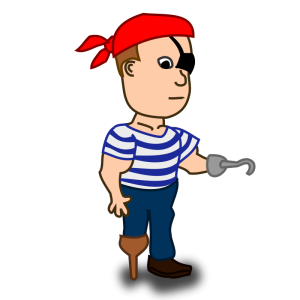
    nicubunu, Comic Characters: Pirate https://openclipart.org/detail/21919/comic-characters-pirate
    nicubunu, Comic Characters: Pirate https://openclipart.org/detail/21919/comic-characters-pirate

    Would you believe that with the hundreds of picture books I have in my possession I do not have one about pirates! That surprises me. There must be oodles of books about pirates on the market.

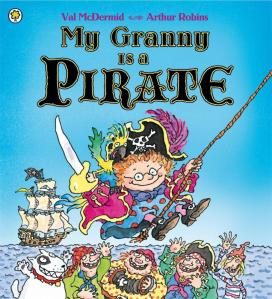
    my granny is a pirate

    When I was in London last year I did buy a delightful book for my grandchildren called My Granny is a Pirate by Val McDermid.  We had enormous fun reading it and laughing at the wonderful illustrations by Arthur Robins.

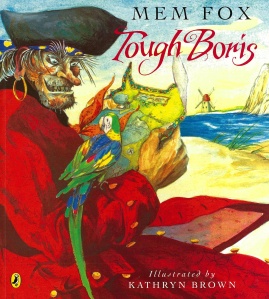
    Although I own many titles by Mem Fox, I don’t own her “all time classic and long-lasting bestselling” pirate book, Tough Boris . In the information about the story on her website, Mem explains how the story came to be and raises issues of sexism, particularly regarding the over-representation of male characters, in picture books. This is a topic that is very familiar to me.

    Tough boris

    In addition to not owning books about pirates, I can remember using a pirate theme for teaching on only one occasion. This surprises me too as pirates seems to be a perennial theme for birthday and fancy dress parties. Children and adults find the idea of pirates fun. You have only to look at the success of the Pirates of the Caribbean series to know that.

    Of course, in this post I am referring only to the pirates of picture books and movies such as these, that were no more real than other fanciful characters such as giants, fairies, elves and dragons.

    The occasion for my using a pirate theme was over twenty years ago when I was running early childhood classes as part of my home-based business Create-A-Way, and the inspiration for it was of a practical rather than literary nature. I was required to wear a patch over an eye after having a pterygium removed. A pirate day seemed like a great way to avoid upsetting the children and to have a bit of fun as well. Perfect!

    https://pixabay.com/
    https://pixabay.com/

    But why am I thinking about pirates you may wonder. Well, it’s in response to the post by Charli Mills at the Carrot Ranch and her challenge to writers to In 99 words (no more, no less) write a pirate story. As always Charli gets me thinking about different things with her prompts. She is talking about the piracy from her internet data service and drinking rum before 10 am, which is apparently something pirates do.

    As usual I take the prompt to the early childhood education setting, and I’m excited by doing so. Ever since reading Charli’s prompt I have had ideas for teaching and learning experiences based on a pirate theme swirling around in my head. I may be late coming to the party, but I’m not coming underdressed.

    https://pixabay.com/
    https://pixabay.com/

    One of the things I have always loved about teaching is the opportunity to be creative: to write and prepare fun educational resources to use with my children. What wonderful things could be done with a pirate theme. I can’t believe I have never done it. And while I am no longer in the classroom and the opportunity is not there for me to use them with my own class, I can make them for my website to share with other teachers. The fun of thinking, writing, and creating is still mine!

    I’m pleased to announce that my website is underway. I have signed with a web designer and developer. It should be ready to go live by the end of January, ready for the start of the new school year in Australia. I can’t wait. Well, I can wait. I still have so much work to do in the meantime. I have resources to finish and new ones to write. There are many “in progress”. While I won’t be rushing into making pirate themed resources, I am putting them on my list. I have lots of ideas.

    Actually now that I think about it, the mix of feelings I have now that the website is imminent may be similar to those experienced by someone walking the plank: there is no way back and the choice for the future is to either sink or swim. If I do manage to hold my head high and above water level, I hope I don’t get eaten by sharks!

    wsnaccad, shark https://openclipart.org/detail/19732/shark
    wsnaccad, shark https://openclipart.org/detail/19732/shark

    On my website subscribers will be invited to suggest or request resources to match their requirements. I love thinking of resources to suit particular topics or to teach particular skills or processes. I would love a request for pirate materials so that I could get started on making them sooner rather than later.

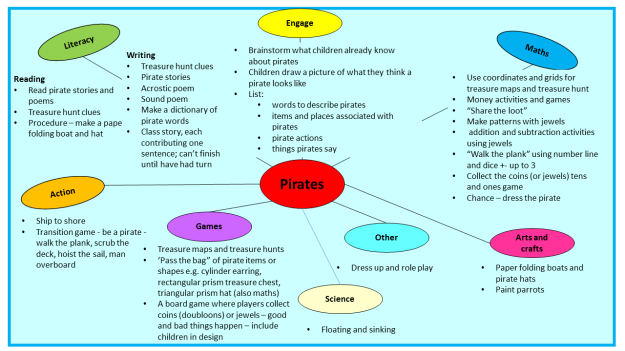
    Here are a few ideas I have to start with. I’m sure I would come up with many more given a little longer.

    © Norah Colvin 2015
    © Norah Colvin 2015

    But now here is what got me thinking about pirates in the first place: my flash fiction response to Charli’s prompt. I’m definitely sticking with my early childhood theme and a bit of fun for this one.

    https://pixabay.com/
    https://pixabay.com/

    If I was …

     If I was a pirate

    I would sail the ocean blue,

    In a boat made out of cardboard

    With my parrot Libby-Lou.


    I would wear a red bandana

    And purple polished boots.

    I would flash my pearls and silver sword

    And plunder pirate loot. 


    I would dig for buried treasure

    In the spot marked with an X,

    And all I’d find I’d stow inside

    My handy wooden chest.


    I would have no one to boss me

    I could do just as I please,

    Until my dad would call me

    “Anna, come, it’s time for tea!”

    Thank you

    Thank you for reading. I appreciate your feedback. Please share your thoughts about any aspect of this post or flash fiction.