Live Love Laugh Learn … Create the possibilities

Category: Picture books

  • Classroom activities for celebrating Mother’s Day – readilearn

    Classroom activities for celebrating Mother’s Day – readilearn

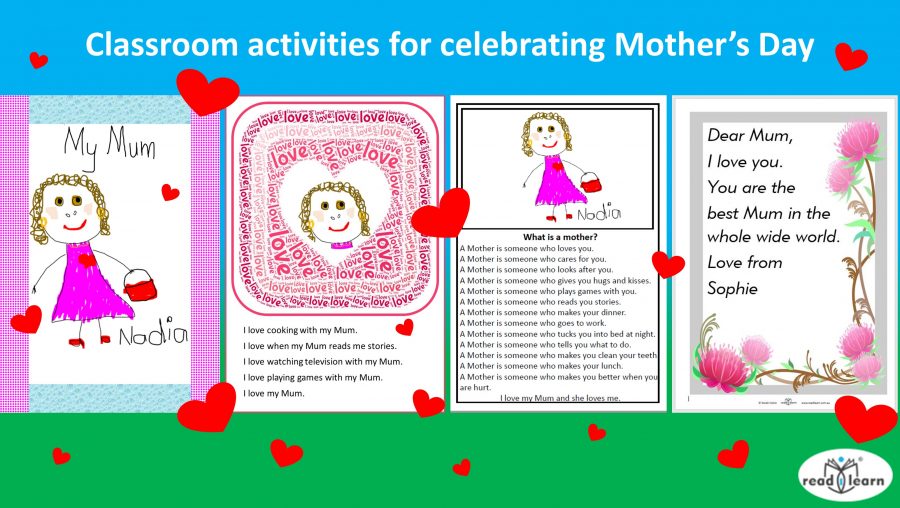
    With Mother’s Day just a little over a week away on Sunday 12 May, teachers are looking for classroom activities that are easy to implement but foster learning while making something special for the children’s mums to treasure. readilearn Mother’s Day suggestions help you do just that.

    Benefits of written gifts

    Writing letters, cards and books for mothers is one of the best ways of fulfilling all these requirements.

    Written gifts:

    • are easily slotted into the class writing program
    • provide opportunities for teaching and learning writing skills
    • encourage creativity
    • are gifts from the heart
    • are unique and personalised for each mother or carer
    • become treasures that never wear out and are easy to keep
    • require little to no additional purchases or expenditure on the part of the teacher

    Start with discussion

    The best preparation for writing is discussion.

    Discussion provides children with an opportunity to:

    • share ideas
    • be inspired by others’ ideas
    • decide what they wish to write and how they might express it
    • consider alternative recipients for their writing

    Read books for inspiration

    Many beautiful picture books celebrate mothers.

    Reading aloud to children helps to:

    • Foster a love of books and language
    • Develop language and vocabulary
    • Stimulate ideas
    • Inspire creativity

    A few of my favourite picture books about mothers are:

    Continue reading: Classroom activities for celebrating Mother’s Day – readilearn

  • Interview with Jacqui Halpin author of Where’s Lucky? – readilearn

    Interview with Jacqui Halpin author of Where’s Lucky? – readilearn

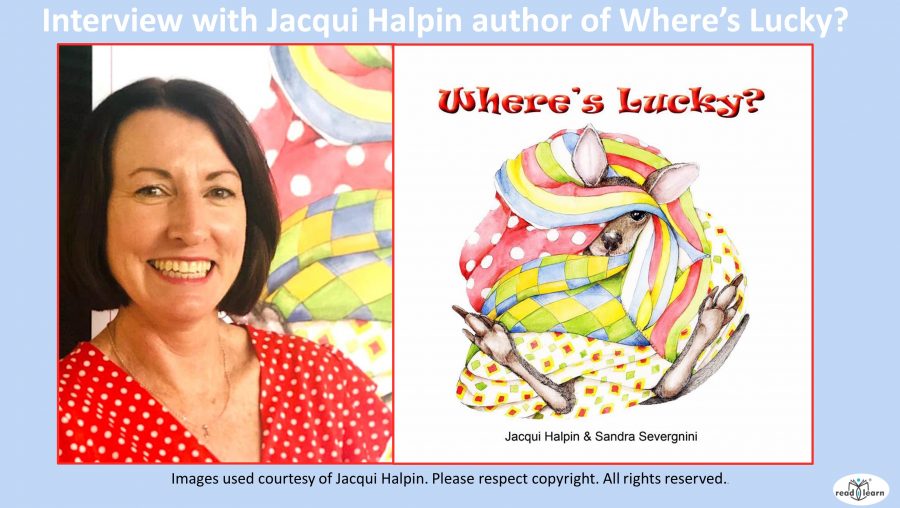
    This week it is my great pleasure to welcome author Jacqui Halpin back to the blog. In this interview, Jacqui talks with us about her recently published picture book Where’s Lucky, the story of an orphaned joey and his road to recovery and release.

    We previously met Jacqui in 2018 when she discussed her first picture book Parmesan, the Reluctant Racehorse. As we talked with Jacqui in that interview about her writing process, today we focus our discussion on her new book Where’s Lucky?

    About Jacqui

    Jacqui Halpin’s passion for children’s literature started when reading bedtime stories to her children. They outgrew their childhood books, but Jacqui never did. Jacqui writes picture books, junior fiction and middle-grade fiction. Her short stories appear in anthologies by Stringybark Publishing, Creative Kids Tales, and The School Magazine.

    Her first picture book, Parmesan, the Reluctant Racehorse, illustrated by John Phillips, was published by Little Pink Dog Books in October 2017.

    Where’s Lucky?, illustrated by Sandra Severgnini and published in April 2019, is her second picture book with Little Pink Dog Books.

    While writing and editing, Jacqui loves to sip tea from fine china and eat copious amounts of chocolate. She also has a love of bookshops and should never be allowed to enter the children’s book section with a credit card in her possession.

    About Lucky

    Lucky, the orphaned swamp wallaby, has a knack for getting into mischief at the wildlife rescue shelter where he lives.

    Continue reading: Interview with Jacqui Halpin author of Where’s Lucky? – readilearn

  • Remembering: Anzac Day in the classroom – readilearn

    Remembering: Anzac Day in the classroom – readilearn

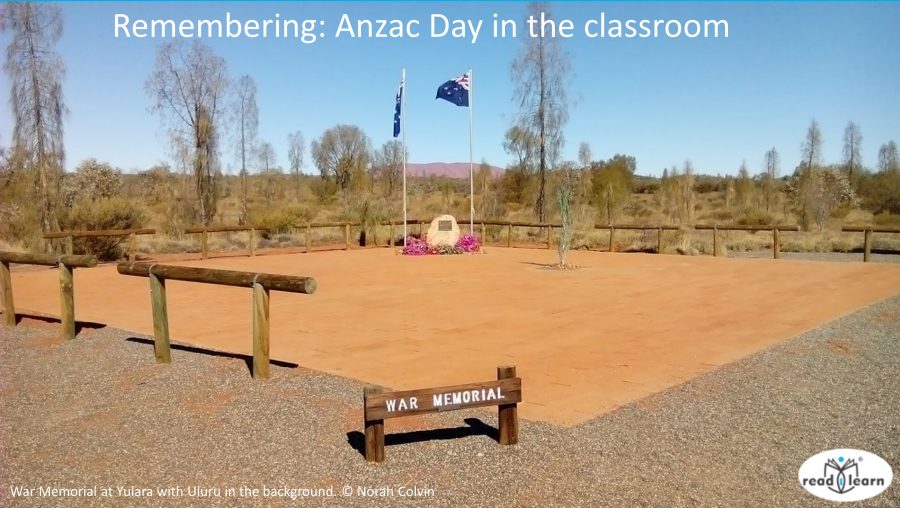
    Tomorrow, 25 April is Anzac Day, a day of national significance and a public holiday in both Australia and New Zealand. The day is the anniversary of the first major military campaign fought by Australian and New Zealand forces in World War I, but now commemorates all who have served in any military campaign or operation since. The acronym stands for Australian and New Zealand Army Corps. Ceremonies are held around the country and well-attended by past and present servicemen and women, their families and friends, and the general public.

    While most children and teachers in both Australia and New Zealand are still on school holidays, they will undoubtedly discuss, and conduct ceremonies in recognition of ANZAC Day when school returns.

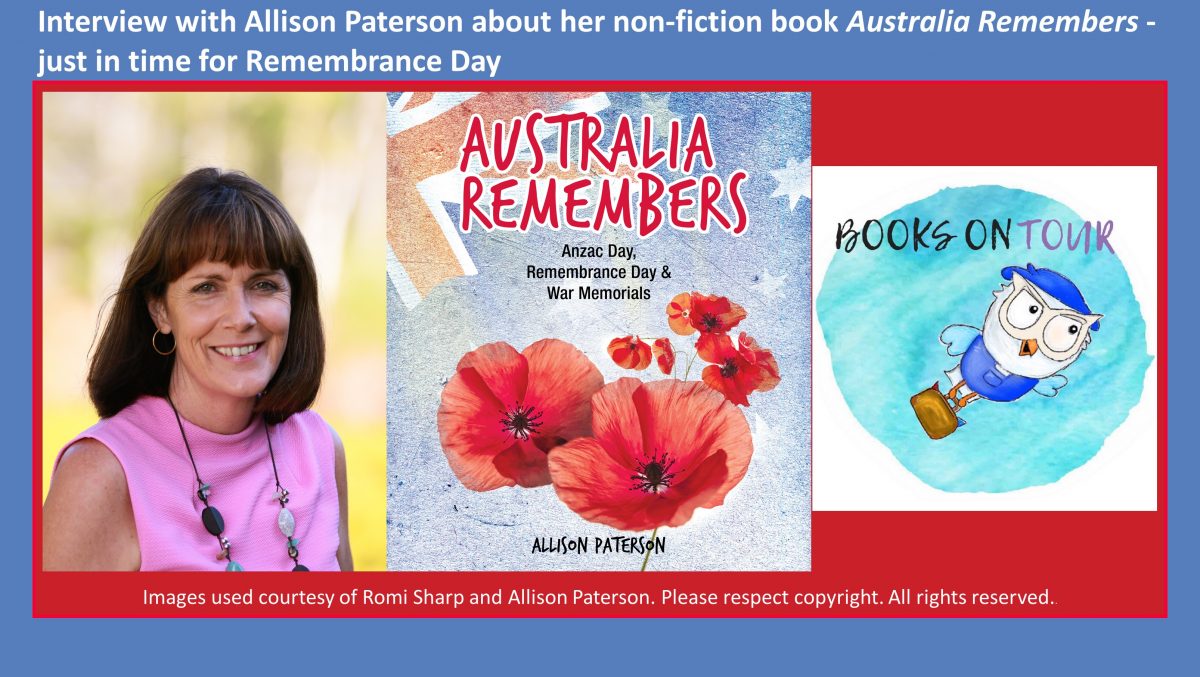
    To assist your discussions, I remind you of Allison Paterson’s wonderful book Australia Remembers: Anzac Day, Remembrance Day and War Memorials, about which I interviewed Allison in November last year as part of the Books on Tour promotion.

    About the book

    The book explains, in a way that is detailed but accessible for a young audience, the origins and significance of both Anzac Day and Remembrance Day. Explanations of the traditions and symbols ensure that children understand why it is important to observe these historical events and why we should never forget those who fought for our country and those who keep us safe today.

    Here are some reminders of Allison’s book:

    Continue reading: Remembering: Anzac Day in the classroom – readilearn

  • What’s a mouse got to do with it?

    What’s a mouse got to do with it?

    A furry mouse or a magic mouse? Which do you prefer?

    This week, Charli Mills at the Carrot Ranch got herself a new computer with a new mouse. She thinks it’s a magic mouse. I hope it is.

    Carrot Ranch flash fiction challenge - mouse

    In her excitement, she put out the challenge to writers to In 99 words (no more, no less) write a story about a mouse. It can be real, imagined, electronic or whiskered. Go where the prompt leads!

    Mice feature prominently in stories, poems and songs for children.

    Very young children learn the nursery rhymes Hickory Dickory Dock and Three Blind Mice.

    Rose Fyleman’s poem about Mice is always popular for children to learn and recite in school.

    There is the fable about The Lion and the Mouse, the story of The Town Mouse and the Country Mouse and the more recent The Little Mouse, the Red Ripe Strawberry, and the Big Hungry Bear.

    As a child, I enjoyed the song Windmill in Old Amsterdam. Perhaps you remember it too?

    But I think my favourite mouse story is that of Possum Magic, the classic picture book by Mem Fox. I’m not referring to the picture book itself, but the story of how it came to be.

    Possum Magic by Mem Fox

    Mem shares some of the goss on her site. You see, Hush started life as an invisible mouse in an assignment Mem produced as part of a course in children’s literature. She was awarded a high distinction for the story and, over the next five years, sent it off to nine different publishers. Each time the story came back.

    While Mem found the rejections disheartening, she was encouraged by family and friends who believed in her story. So, she sent it off again, and the tenth publisher asked her to “cut the story by two thirds, re-write it more lyrically, make it even more Australian and change the mice to a cuddly Australian animal. “

    Mem did as requested, changed the mice to possums, and so Possum Magic was born. The book was published in 1983 and remains one of the most popular and best-selling picture books in Australia. (While not mentioned on the site, I seem to remember reading that the book had almost 30 rewrites!)

    When I first heard this story of Possum Magic, I was younger than Mem was when the book was published. The story inspired me and encouraged me to hope. I loved Mem’s yet attitude (though I didn’t yet know it as that), her belief in her story, persistence in pursuing its publication and willingness to learn from others. Without those marvellous qualities, Possum Magic may never have seen the light of day. It may have languished in the bottom of a drawer somewhere with other forgotten manuscripts.

    How many manuscripts do you need to take out, dust off, and send on their way?

    Here’s my little story in response to Charli’s challenge this week. I hope you like it.

    A Mouse Backfires

    “Eek!“ shrieked Granny, toppling back on the chair, arms and legs flailing.

    “Thwunk!” Her head struck the wall, silencing the children’s sniggers.

    Granny slumped motionless, eyes closed, tongue lolling from her slack jaw.

    Barney gaped. “D’ya, d’ya think she’s dead?”

    “Don’t be silly,” admonished Eliza, older and wiser. “She couldn’t be. Could she?”

    The children tiptoed closer.

    “What if she wakes up?”

    “What if she doesn’t?”

    “I’ll check her pulse,” mouthed Eliza.

    Suddenly, Granny jolted upright, eyes staring blankly.

    The children gasped.

    “Gotcha!” laughed Granny. “But that is a clever mouse.”

    “How did you —?”

    Granny winked. “Granny knows.”

    Thank you blog post

    Thank you for reading. I appreciate your feedback. Please share your thoughts.


  • Interview with author Wenda Shurety – Readilearn

    Interview with author Wenda Shurety – Readilearn

    This week, it is my pleasure to introduce you to author Wenda Shurety as she discusses her new picture book Eva’s Imagination. I especially enjoy Wenda’s book for its focus on imagination, something I consider very important to encourage in young children. Without imagination, we are unable to see beyond what is and have little chance of progress being made.

    About Wenda

    Wenda grew up in the beautiful county of Norfolk in England and now resides in Brisbane with her supportive husband, cheeky daughter and two rescue dogs. Wenda loves to write children’s stories with heart; whether it involves diversity, science or the magical world of the imagination.

    About Eva’s Imagination

    Eva doesn’t know what an imagination is. With the help of her dog Chops, Eva goes on a hunt to find it. Eva’s Imagination is a delightful story about the power of the imagination that aims to inspire young children to find adventure in their surroundings rather than from screens.

    Now let’s meet Wenda.

    The interview

    Continue reading: Interview with author Wenda Shurety – Readilearn

  • Beach adventures and sea mist

    Beach adventures and sea mist

    Growing up near the beach

    Beach adventures were a big part of my childhood. I spent many long days swimming, sunbaking and exploring with friends and siblings at the beach no more than 500 metres from home. Generally, the instruction was to be home by tea time so, on our long summer holidays, we could spend as much time on the beach as we liked.

    It wasn’t the most beautiful of beaches. The sand was coarse and yellow and the shore rocky in places. The water was often filled with jellyfish and seaweed. The narrow beach was edged by tall red cliffs which prompted Captain James Cook to name the area Redcliffe when he passed by in 1770. But we loved it anyway.

    There were huge cotton trees, as perfect for climbing as the red cliffs were for scaling, and a playground with swings and slides, many of which are no longer considered child-safe. But we survived.

    We’d explore the rocks for sea life, avoiding the jellyfish and seaweed as best we could, both in and out of the water. We’d play in the water and on the sand and lie on our towels talking, laughing and dreaming of whatever we did as children back then.

    Sun safety

    It may sound idyllic and perhaps it was, though to us, it just was. Most of us are now paying for those long days at the beach with sun damaged skin. If anyone was aware of the dangers of being too long in the sun back then, we certainly weren’t. We considered a bad dose of sunburn as nothing more than inconvenient and we took turns to peel layers of skin off each other’s backs when the blisters burst.

    Nowadays, my beach adventures are mostly confined to observations of sparkling white sands and perfect blue water from a shady deck with a cool drink in hand. However, I may venture out for a stroll in the late afternoon when the sun’s light has dimmed, leaving the water and sky to meet and greet in shades of pink and lilac.

    Our Australian culture has a love-hate relationship with the beach and sunshine. At the first hint of warm summer weather, we’ll be told it’s a great day for the beach and we’ll be presented with images of beaches crowded with sunbathers. On another occasion, we’ll be advised to stay out of the sun and avoid the damage to our skin. Queensland is, after all, the skin cancer capital of the world. I’ve never figured out why we don’t get a more sensible approach that combines enjoyment with safety.

    But let’s not dwell too long on the negatives. Hopefully now with better education and the availability of protective products, the younger generation will not be so nonchalant about time spent in the sun.

    A beach excursion

    A beach excursion, whether with school or family, presents as many opportunities for learning as it does for fun. There are phenomena to inspire wonder and stimulate curiosity, and countless questions to ask and answers to discover; for example,

    Ten beach-inspired questions

    • What makes the waves?
    • Why does the tide come in and out?
    • How is sand made?
    • Where do the shells come from?
    • Why does the sand squeak when we walk on it?
    • What lives in the ocean?
    • Why should we take our rubbish home with us or put it in a bin?
    • How do fish breathe?
    • What made these tracks on the sand?
    • My sandcastle was here this morning. What happened to it?

    Some answers can be discovered through investigation and exploration at the beach. Others require research.

    Three fun beach activities that involve learning

    Shells are not only fun to collect, they are great for sorting and counting, measuring and making, creating patterns and trading.

    Fish might be fun to catch (for some); but they can also be identified, measured and weighed. Children can research the different types of fish and regulations for catching them.

    Photographs provide a great record of beach adventures. Children can be encouraged to compile them and write a recount or report about the outing.

    And of course, there are always wonderful books to read about the beach; such as:

    Ten beach or ocean themed picture books

    The Magic Beach by Alison Lester

    Where the Forest Meets the Sea by Jeannie Baker

    Circle by Jeannie Baker

    The Hidden Forest by Jeannie Baker

    The Rainbow Fish by Marcus Pfister

    Mister Seahorse by Eric Carle

    One Less Fish by Kim Michelle Toft

    Coral Sea Dreaming by Kim Michelle Toft

    Neptune’s Nursery by Kim Michelle Toft

    Swimmy by Leo Lionni

    Beach-inspired flash fiction
    Charli Mills's flash fiction challenge at the Carrot Ranch

    I was taken back to the beach this week by the challenge set by Charli Mills at the Carrot Ranch to  In 99 words (no more, no less) write a story about sea mist. How does it create an environment for a story? It can set the stage or take the stage. Go where the prompt leads.

    This is my response. I hope you like it.

    Canned Sea Mist

    No more than a hint of sea spray and she was flown back on wings of joy to carefree childhood days frolicking in the shallows, basking on golden sands, fossicking for hints of life in rockpools and amassing precious collections of shells and other treasures arranged for her pleasure by the tide. Lulled by a gentle breeze and waves whispering a heart’s rhythm, she dozed, uninterrupted by seagulls squawking, murmured conversations, hushed laughter, or the shuffle of approaching and receding footsteps. As the sun glowed bright above, she sighed her last, now and forever one with the sea’s mist.
    Thank you blog post

    Thank you for reading. I appreciate your feedback. Please share your thoughts.

  • First week of February celebrations – Readilearn

    First week of February celebrations – Readilearn

    In the first week of February, celebrations include World Read Aloud Day, Children’s Mental Health Week and Chinese New Year.

    Readilearn has lessons ready to assist you with each of these celebrations.

    World Read Aloud Day

    First up is World Read Aloud Day on 1 February—today! The day aims to encourage people everywhere to “read aloud together and share stories to advocate for literacy as a human right that belongs to all people“.

    Perhaps no one knows better than teachers of young children the importance of reading aloud. Children who come to school having been read to at home have the advantage of more extensive vocabularies and proficiency with language, greater general knowledge and interest in the world around them, and an interest in books and learning. These advantages contribute to success in school and life.

    Making time for reading aloud in a busy class program is a priority for teachers of children in their first three years of school. Opportunities occur in every subject area, and it is not difficult to find ways of working a few extra stories into the program. Why not use World Read Aloud Day as an excuse to read a few more books than usual (as if an excuse is needed).

    If you are unsure where to start selecting, visit the library and ask the librarian for suggestions, or take the class with you and ask them to each choose a book they’d like to hear.

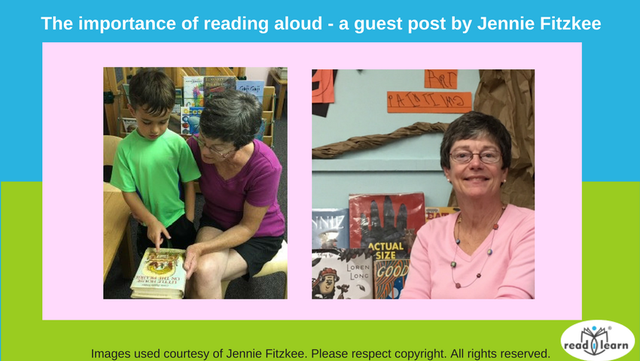
    The guest post by teacher Jennie Fitzkee on the importance of reading aloud is also full of suggestions.

    Five of my favourite picture books (of which there are hundreds so impossible to list) are:

    Continue reading: First week of February celebrations – Readilearn

  • From my bookshelf — 22 Multicultural picture books – Readilearn

    From my bookshelf — 22 Multicultural picture books – Readilearn

    In last week’s post, Multicultural Children’s Book Day: Book Review, I suggested that the day “provides us with an opportunity to examine the collections of books in our classrooms and libraries to determine if they reflect the lives our children.”

    I decided that perhaps I should examine my own personal picture book collection too. While I am happy with the collection, there are gaps and I’m sure more could be added. However, I know that a visit to my local or school library will provide me with access to many more.

    readilearn’s multicultural teaching resources

    As well as investigating my book collection, I had a look at readilearn teaching resources to see how they stacked up.

    The establishment of a supportive classroom, one that is welcoming to all, is a recurrent theme on readilearn; as are activities for getting to know one another and establishing friendship skills.

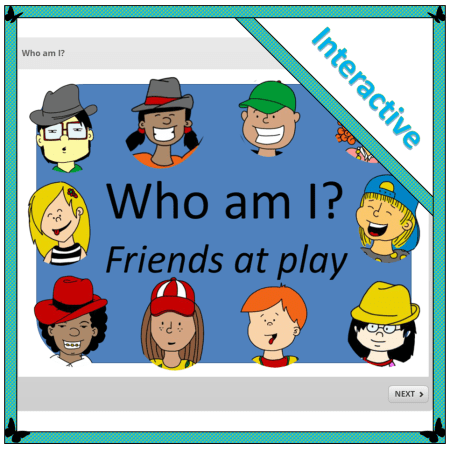
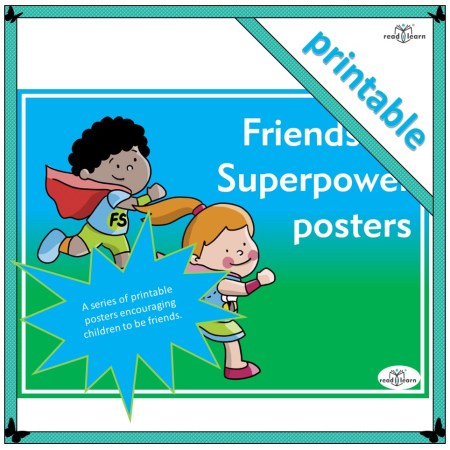
    I am proud to say that, when children are included in illustrations, children from diverse backgrounds, even if not in traditional costume, are portrayed. This is intentional. You can see evidence of this on the Home page and in the Literacy and History banners as well as in teaching resources such as Friendship superpower posters and Who am I? Friends at play.

    Resources that encourage children to get to know each other rank highly in the readilearn collection. The reason for this is my belief that with knowledge comes understanding, respect and friendship.

    Continue reading: From my bookshelf — 22 Multicultural picture books – Readilearn


  • Multicultural Children’s Book Day: Book Review – Readilearn

    Multicultural Children’s Book Day: Book Review – Readilearn

    Now in its sixth year and held on the last Friday in January, Multicultural Children’s Book Day (MCBD) celebrates books that celebrate diversity. As classrooms are increasingly filled with children from a diversity of backgrounds, it is important to provide them with books that reflect their lives, books in which they can find themselves.

    The purpose of Multicultural Children’s Book Day is to create awareness of books that celebrate diversity and to get more of them into classrooms and libraries.

    Valarie Budayr and Mia Wenjen, co-founders of MCBD, define multicultural books as:

    • Books that contain characters of color as well as main characters that represent a minority point of view.
    • Books written by an author of diversity or color from their perspective. Search #ownvoices to discover diverse books written by diverse authors.
    • Books that share ideas, stories, and information about cultures, race, religion, language, and traditions. These books can be non-fiction, but still written in a way that kids will find entertaining and informative.
    • Books that embrace special needs or even “hidden disabilities” like ADHD, ADD, and anxiety.

    Multicultural Children’s Book Day provides us with an opportunity to examine the collections of books in our classrooms and libraries to determine if they reflect the lives our children.

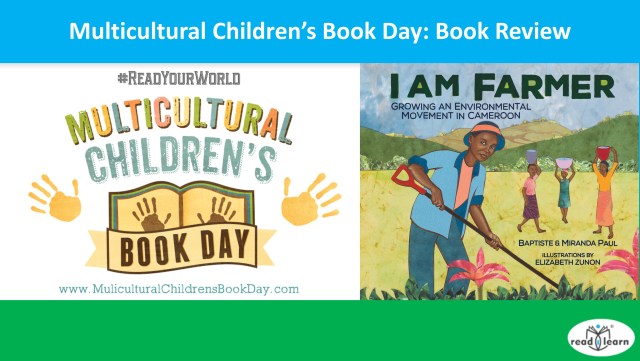
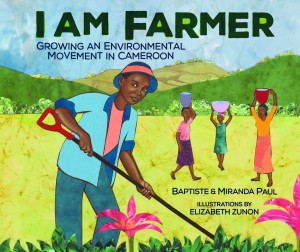
    This year, for the first time, I am participating in the MCBD celebrations with a review of I am Farmer, a picture book written by Miranda and Baptiste Paul and illustrated by Elizabeth Zunon. I am grateful to Miranda and Paul and publisher Millbrook Press for providing me with a link to access the book on NetGallery prior to its publication in early February.

    I am Farmer - the story of a farmer in Cameroon who became an environmental hero

    Continue reading: Multicultural Children’s Book Day: Book Review – Readilearn

  • Wrapping up a year of books — 2018 – Readilearn

    Wrapping up a year of books — 2018 – Readilearn

    Wrap up a book for a gift that gives more

    Reading and books combine to form one of life’s greatest pleasures and one of life’s best avenues for advancement and empowerment.

    Giving books gifts much more than simply the words on the page. We may never know just what joy, wisdom or inspiration a reader receives when gifted a book; and, of course, the love of reading is one of the most valuable gifts a parent or teacher can give a child.

    the love of reading is one of the greatest gifts a parent can give a child

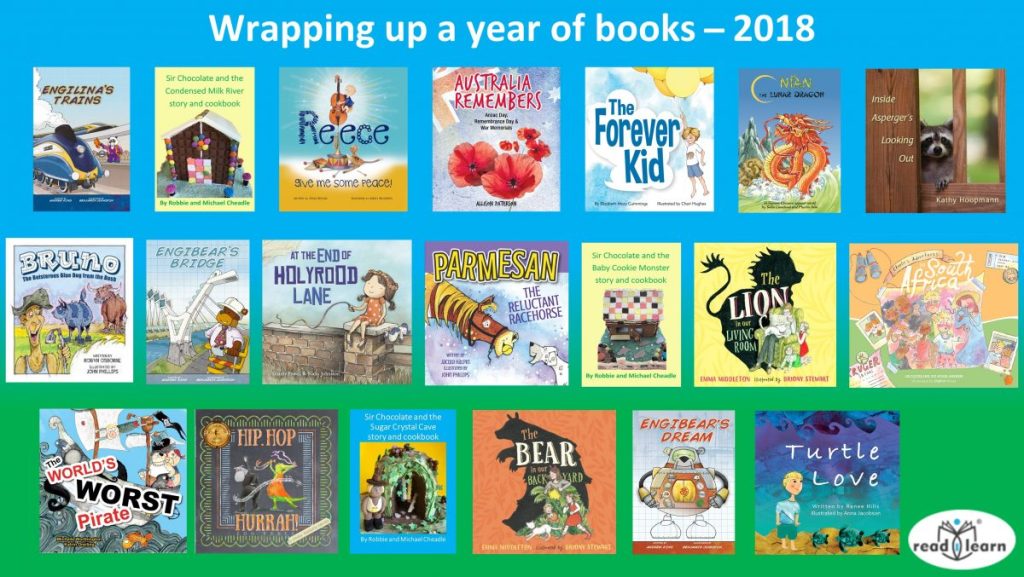
    Throughout the year, I have been privileged with the opportunity of interviewing many talented authors and illustrators about their picture books. However, these books are but a few of the wonderful picture books that are available for children to read.

    Books, books, books

    Last December, I presented you with a list of books by authors and illustrators I’d interviewed throughout 2017. In this post, I present a list of books by authors and illustrators I interviewed this year. I hope you will find the list useful when choosing books to gift your young readers. Be sure to read back over last year’s list for additional suggestions.

    As with last year’s list, for each author or illustrator I interviewed, I include links to

    • the interview on the blog
    • the interview in the Author or Illustrator Spotlight
    • the creative’s website
    • a place where the book may be purchased.

    Continue reading: Wrapping up a year of books — 2018 – Readilearn