Live Love Laugh Learn … Create the possibilities

Category: Flash fiction

  • A sprinkling of semicolons

    wordle semicolons

    This week at the Carrot Ranch Charli Mills is talking about semicolons; but not the little squiggles on a page, the semicolons that are sprinkled liberally through life as new beginnings. Sometimes we see them and grasp the opportunity for renewal, other times we ignore them and miss the chance to revitalize. Sometimes we get pushed down and it takes all our strength to pull back up, grasping onto the semicolon as if it was a dragon’s tail.

    mystica, A remix of dragonart  https://openclipart.org/detail/132805/rainbow-dragon
    mystica, A remix of dragonart https://openclipart.org/detail/132805/rainbow-dragon

    Charli was inspired by Project Semicolon that provides this explanation:

    “A semicolon is used when an author could’ve chosen to end their sentence, but chose not to. The author is you and the sentence if your life.  Project Semicolon exists to encourage, love and inspire.”

    Every day can be a new beginning in some way. With our thoughts, words and actions we can change our own lives, or the lives of others. The impact may be deliberate or unintentional. We may be aware of the effects, or we may never know the consequences.

    Without wishing to diminish the importance of helping those “who are struggling with depression, suicide, addiction and self-injury”, which is the focus of Project Semicolon, my focus as always is on education and the importance of maintaining curiosity and an interest in and love of learning.

    jimmiet, A colourful monarch butterfly   https://openclipart.org/detail/19002/monarch-butterfly
    jimmiet, A colourful monarch butterfly https://openclipart.org/detail/19002/monarch-butterfly

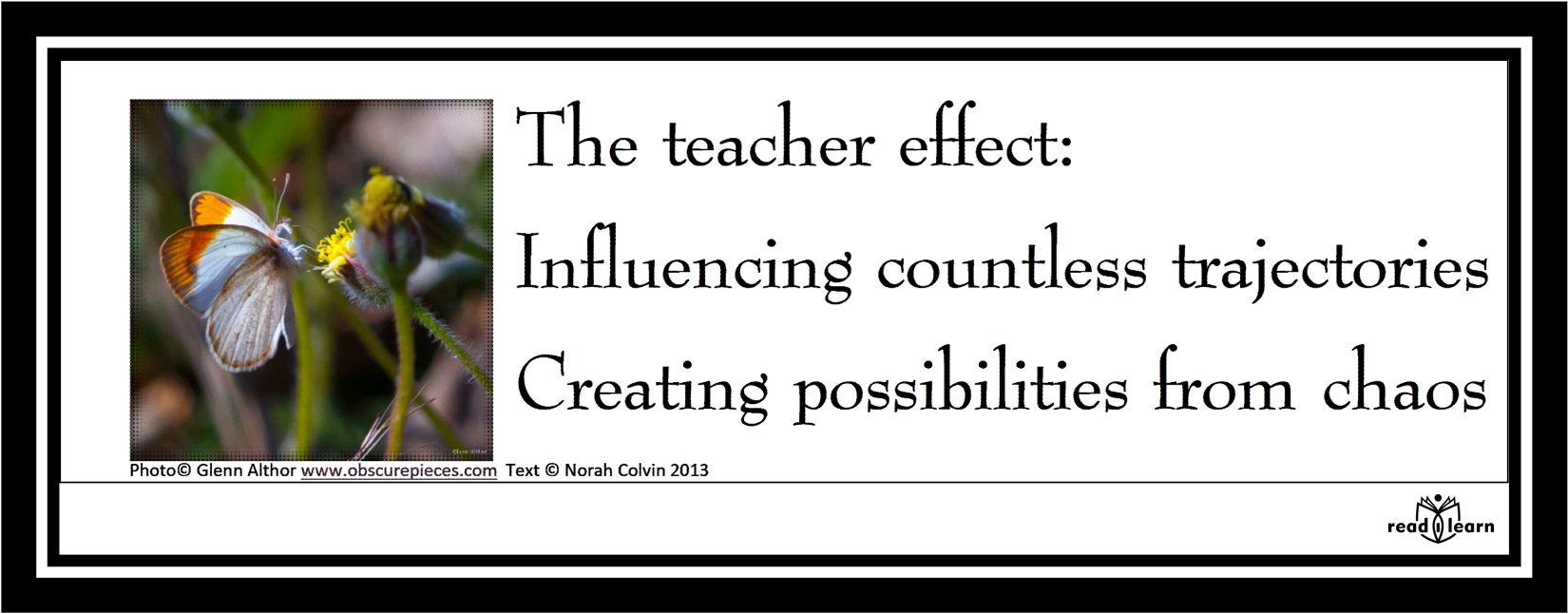
    What better analogy of a semicolon of life than the transformation from a caterpillar in a pupa to the beauty and flight of a butterfly. An inspiring teacher can mean the difference between full stops and semicolons in learning.

    To illustrate this I refer a post called Deeper Learning: Highlighting Student Work written by Ron Berger and shared on Edutopia.

    In the article Berger discusses his obsession with “collecting student work of remarkable quality and value . . . the work of regular students in typical schools around the country . . . (whose) teachers have helped them develop the skills and mindsets necessary to produce work of exceptional quality, and have built classroom and school cultures in which exceptional work is the norm”.

    Berger discusses ways of engaging students in authentic work, work that can have an impact on their communities and on the way they see themselves as learners. I remember Charli Mills telling me about similar work that her children were engaged in when they attended The School of Environmental Studies in Minnesota; and I shared some of Chris Lehmann’s work at the Science Leadership Academy in Philadelphia here.

    Berger says,

    “Once a student creates work of value for an authentic audience beyond the classroom — work that is sophisticated, accurate, important and beautiful — that student is never the same. When you have done quality work, deeper work, you know you are always capable of doing more.”

    Semicolons in teaching and learning, all.

    As with the three cited above, the situations referred to are often of teenagers in high schools. I am an early childhood teacher and, while I find the work exciting, I sometimes struggle to see the relevance to my situation. However, in this article Berger shares the work of Austin, a year one student from Boise, Idaho doing a project about a tiger swallowtail butterfly.

    Austin was to illustrate his project with a detailed scientific drawing of the butterfly. His initial drawing was what I would consider to be fairly typical of a year one child. However he received feedback that was specific and not mean from follow students; and through a series of six drafts finished with a drawing that was much more sophisticated and demonstrated more careful ‘scientific’ observation.

    Berger also shared work by year two students at another school, demonstrating what can be achieved “when students are allowed, compelled and supported to do great things”.


    Last week Charli’s flash fiction challenge “the day the earth turned brown” prompted me to write about a student mixing all the colours together to make one muddy brown. The teacher paused before responding. There are many such pauses, (semicolons) in a teacher’s day. The teacher knows the power of every remark and must consider the impact that a response may have.

    If you had provided each child with a palette of primary colours and black and white expecting them to mix a variety of colours and shades and tones to create an interesting picture; then found that one child had mixed them all together to make one muddy brown, how would you respond?

    There were a number of comments on the flash including one from Geoff Le Pard  who said that there were “So many questions as to why the little girl is making muddy browns and lathering them everywhere.”

    So true. The teacher’s response would be influenced by knowledge of the child’s background, interest in art, and behaviour that day, among other things.

    Charli Mills said that “It could mean many things and nothing!” She recalled, “mixing paints as a child hoping to create a vivid new color and (being) disappointed to end up with mud.Anne Goodwin agreed, saying that “mixing paints to make a muddy brown, (was) a distinctive childhood memory”.

    In my experience there was usually one child who ended up mixing all the colours together, often for no other reason than to see what happened. Sometimes the process of discovery gave as much pleasure as would a colourful painting of a house a tree and a sun.

    house and sun

    However, there might be more to it than that. Charli Mills sympathesised with the teacher, saying that “So much is put on the teacher to figure it out.” She thought that the child “might be disturbed, highly imaginative or confident enough to experiment”.  Sherri Matthews suggested that perhaps the child was “troubled . . . living in a dark, mixed up world, but . . . trying to find their way”.

    So much to consider. So powerful the response. Will it be a full stop, or a semicolon?

    This is my response to Charli’s challenge to In 99 words (no more, no less) write a renewal story that proclaims, “This isn’t the end; I will go on.

    muddy brown

    She paused. The muddy brown extended beyond the paper virtually cementing it to the desktop. The palette too was brown with little trace of the beautiful primary colours she had prepared. Looking from desk to child she observed two large smears adorning the shirt. A bruise-like smudge on the cheek showed where an intruding hair had been brushed away. “Oh!”

    She breathed; she counted to ten; and back again; “Breathe,” she told herself. “Why?”

    She moved on, observing the assortment of smiling suns, houses and garden paths, but her mind was on the mud; the child . . .

    What would be the appropriate response?

    Thank you

    Thank you for reading. I appreciate your feedback. Please share your thoughts about any aspect of this post or flash fiction.


  • A palette of colours

    Moini, Painter penguin https://openclipart.org/image/800px/svg_to_png/174634/painter_penguin.png
    Moini, Painter penguin https://openclipart.org/image/800px/svg_to_png/174634/painter_penguin.png

    I think few of us would deny that each of us is unique, or question the importance of an individual’s interests and abilities to learning. Much has been written about learning styles, multiple intelligences and differentiation of instruction.

    Most teachers try to incorporate a variety of experiences into their programs in order to maximise learning opportunities in the hope that, if students don’t “get” it one way, they will “get” it in another. The imposition of national standardised assessment makes doing this a challenge for teachers. The increased requirement for the implementation of particular approaches to teaching makes it even more so.

    To say that I hold fairly strong views about learning, and the differences I consider there to be between education and schooling is perhaps an understatement, but it wasn’t always so.

    My memory tells me that, while I probably didn’t “love” school, I probably didn’t “hate” it either. It was simply something that I had to do. I didn’t question it. I did my best to be a “good” girl, do what was expected of me, and conform. All of which I think I did pretty well.

    The questioning came later and had more impact upon my teaching and parenting than it did on my own schooling. I came to view schooling as something that is “done” to us, and education as something that we do for ourselves. That is not to say that no worthwhile learning takes place in school, for it does, but education is a whole-of-life experience and schooling is but one small part of that.

    Education is a whole of life experience

    However, if the importance of schooling, and here I mean learning of particular content by particular ages, is inflated and rated more highly than children’s natural curiosity, interests and abilities, then the consequences to individuals and the community in general can be more negative than positive. One consequence may be that children don’t enjoy school; another may be the view that only school knowledge is important; and yet another may be that children are turned off learning all together.

    My first conscious discomfort with what, for convenience, I’ll call a factory model of schooling (children go in one end, have things “done” to them, and come out the other end all the same) was as a young teacher when all five year two teachers were expected to be doing the same thing at the same time. That imposition, along with other inadequacies that were beginning to become apparent, set me on a quest to learn more about learning and education. My quest has never ceased and I am still searching for answers.

    Recently I read a book by Daniel T. Willingham entitled Why Don’t Students Like School? The title had instant appeal, of course, and I thought I’d recognise a few of the reasons at least. My initial expectation was of reading views similar to those of authors like John Holt, Ivan Illich, A.S. Neill and John Dewey whose books I had read in the 70s and 80s; but a closer look at the subtitle told me I was in for more: “A Cognitive Scientist Answers Questions About How The Mind Works and What It Means For The Classroom”.

    The book is a wonderful read and I’m certain to share many of Willingham’s ideas with you in future posts. I enjoyed it because, in almost equal measure it reinforced, challenged and extended my thinking about many aspects of learning and how best to provide for and stimulate it in a classroom setting.

    Sometimes Willingham would make a statement with which I agreed, and then go on to explain the faulty thinking behind it. Sometimes his statement would seem to completely contradict what I think but his explanation would show that we simply had different ways (mine perhaps inadequate) in explaining it.

    What I really appreciate about the book is that Willingham carefully translates what has been learned from research into practices that can be implemented in the classroom to enhance student learning. Often research seems only to tell teachers what they already know from experience and observations, or provides information in such an abstract way that nothing of practical use can be gleaned.

    The section of Willingham’s book that I refer to today is “Chapter 7 – How Should I Adjust My Teaching for Different Types of Learners?” Willingham opens the chapter with the words “All children are different.” He says that some learn visually, some auditorily; that some are linear thinkers and some holistic, for example, and that

    “It seems that tailoring instruction to each student’s cognitive style is potentially of enormous significance”.

    The important word in that sentence is “seems”. He talks about the differences in the way that hypothetical Sam and Donna might learn and says that “An enormous amount of research exploring this idea has been conducted in the last fifty years, and finding the differences between Sam and Donna that would fit this pattern has been the holy grail of educational research, but no one has found consistent evidence supporting a theory describing such a difference.”

    He states that the “cognitive principle guiding this chapter is:

    “Children are more alike than different in terms of how they think and learn.”

    That statement really made me sit up and take notice: “Children are more alike than different”. But it turns out, those words are not the most important ones in the sentence. The most important ones are: “in terms of how they think and learn.

    He goes on to say that, “the claim is not that all children are alike, nor that teachers should treat children as interchangeable. Naturally some kids like math whereas other are better at English. Some children are shy and some are outgoing. Teachers interact with each student differently, just as they interact with friends differently; but teachers should be aware that, as far as scientists have been able to determine, there are not categorically different types of learners.”

    He also talks about it in this video:

    Willingham acknowledges that students differ in their cognitive abilities and styles. What he does in the chapter is “try to reconcile the differences among students with the conclusion that these differences don’t mean much for teachers.” In reading these words one might expect that Willingham is proposing that differentiation is not an important part of classroom practice. But such is not the case, as stated in this video:

    In the book he writes, “I am not saying that teachers should not differentiate instruction. I hope and expect that they will. But when they do so, they should know that scientists cannot offer any help.” According to Willingham, scientists have not identified any types of learners or styles of learning.  He says, “I would advise teachers to treat students differently on the basis of the teacher’s experience with each student and to remain alert for what works. When differentiating among students, craft knowledge trumps science.

    What Willingham says is of most importance for a learner to learn is background knowledge. If a student does not have sufficient background knowledge to understand the content or concepts which are presented, learning will not take place. This supports the advice that I repeatedly give to parents: read to your children, talk with them, and provide them with a wide range of experiences and activities. The same is true for teachers: ensure the students have sufficient knowledge on which to build the new work you are expecting them to grasp.

    This week at the Carrot Ranch Charli Mills has thrown a prompt with which I have struggled: In 99 words (no more, no less) write about the day the earth turned brown. I always like to tie my responses to the educational focus of my blog and this one had me stumped for a while. A mind journey following various twists and turns, retracing well-worn paths, and hitting many dead ends, finally led me to an oasis in the parched brown earth: the uniqueness of each of us; the amazing potential of each new child to create possibilities beyond our imagining; and the contrasting effect of a narrow test-driven school system that attempts to reduce each to the sameness of minimum standards and age (in-)appropriate benchmarks. A paint palette seemed a suitable medium for the story.

    For those of you who have been following Marnie’s story, I apologise. She makes no appearance this time, though I have not ruled out the possibility with student M. I’d be pleased to know what you think.

    palette

    Palette potential

    She walked between the desks admiring their work. From the same small palette of primary colours, and a little black and white for shades and tones, what they produced was as individual as they: J’s fierce green dinosaur and exploding volcanoes; T’s bright blue sea with sailing boat and smiling yellow sun; B’s football match . . . At least in this they had some small opportunity for self-expression. She paused at M’s. M had mixed all the colours into one muddy brown and was using hands to smear palette, paper, desk and self . . .

    Thank you

    Thank you for reading. I appreciate your feedback. Please share your thoughts about any aspect of this post or flash fiction.


  • Making choices

    http://www.morguefile.com/archive/display/227510
    http://www.morguefile.com/archive/display/227510

    In my most recent post I discussed my goals and the steps I was taking towards, and away from achieving them. Writing that post, and receiving your wonderful comments, advice and suggestions, provided me the opportunity of really assessing how I spend my time and of deciding where to from here; at least until I meet the next juncture anyway.

    https://openclipart.org/detail/117199/Friendship
    https://openclipart.org/detail/117199/Friendship

    My most important realisation is that

    I love the writing community that welcomed me so warmly and of which I feel very much a part:

    • The friendship and sharing
    • The open communication and exchange of ideas
    • The feedback and encouragement
    • The writing practice
    • The opportunity to be doing something with my time – it does a good job of keeping me off the streets!

    The impact that being a part of this community may have on my ability to reach other goals may never be known. But for now it meets other needs in many wonderful ways that I am not prepared to forgo just yet. I may need to reassess the content of my posts in view of my writerly, as opposed to teacherly, audience; but since you have all accepted and responded so well to them thus far, maybe not. I can’t think what else I know about anyway!

    However, I must prioritise my other work as well.

    To do this I have refined my record of comments:

    • to include the twenty bloggers I engage with most frequently (reduced from the approximately thirty I showed on the infographics in that previous post, and seventy plus I had in the table when I began the record!)
    • by arranging the bloggers alphabetically to make them easier to locate and record
    • to match the Monday to Sunday week used in WordPress stats (I was using Sunday to Saturday previously)
    ytknick, email icon https://openclipart.org/detail/17371/email
    ytknick, email icon https://openclipart.org/detail/17371/email

    While I have not unfollowed any bloggers, I have requested to not be notified of new posts of bloggers who have not engaged with me. This will reduce the number of emails I receive and therefore the time taken in dealing with the burgeoning inbox. I won’t be distracted by their content; and, if I have any spare time, I can always check out their posts in my reader.

    Reducing the number of emails I receive each day is one of the things I am looking most forward to! It has always been a bugbear.

    I have also decided that I will not actively seek new blogs to follow at this stage but will continue to maintain existing relationships. However if someone new engages with me, I will be more than happy to respond.

    These changes should help me devote more time to other projects.

    Moini, Painter penguin https://openclipart.org/image/800px/svg_to_png/174634/painter_penguin.png
    Moini, Painter penguin https://openclipart.org/image/800px/svg_to_png/174634/painter_penguin.png

    I have already written a lot of teaching resources. Unfortunately I am no more of an artist than I am a singer and, since my resources are mainly for use in early childhood settings, most of them need to be illustrated. My niece has illustrated some for me but she has her own life and busy work schedule as well so I need to look further afield.

    Last week I decided to take action.

    I signed up to 99 designs and ran a contest to see if it was possible to get some illustrations for one of my stories. It has been a steep learning curve and very interesting; even a bit harrowing at times. Many artists submitted work in the contest and I have narrowed it down to four finalists. I am running a poll to get some advice on the illustrations. I’d appreciate your thoughts if you have time to check it out.

    monsterbraingames, golden trophy with glaze (remix)  https://openclipart.org/detail/202115/golden-trophy-with-glaze-remix
    monsterbraingames, golden trophy with glaze (remix) https://openclipart.org/detail/202115/golden-trophy-with-glaze-remix

    I feel a bit uncomfortable with all the work the artists have done, in the hope of winning the contest (these are 99designs’ terms), but it seems to be the way it is done so I guess they are aware of and expect it. I am already looking towards future contests and getting more work illustrated. I may also look at other options, so if you have other suggestions I’d be pleased to hear them.

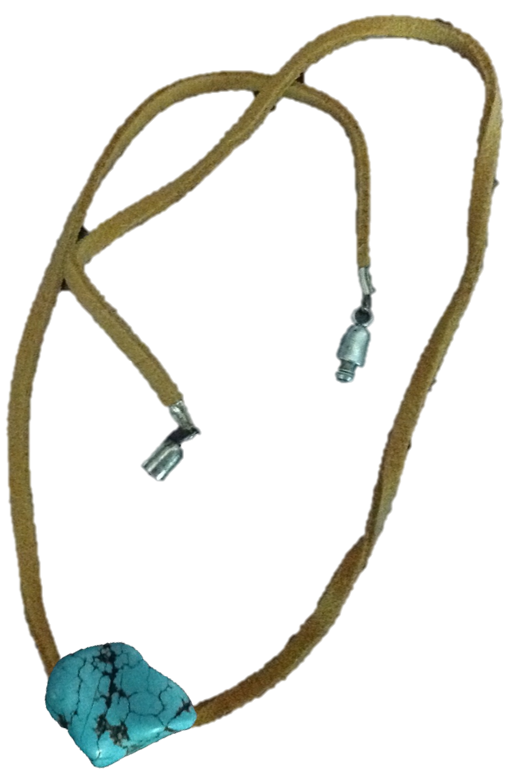
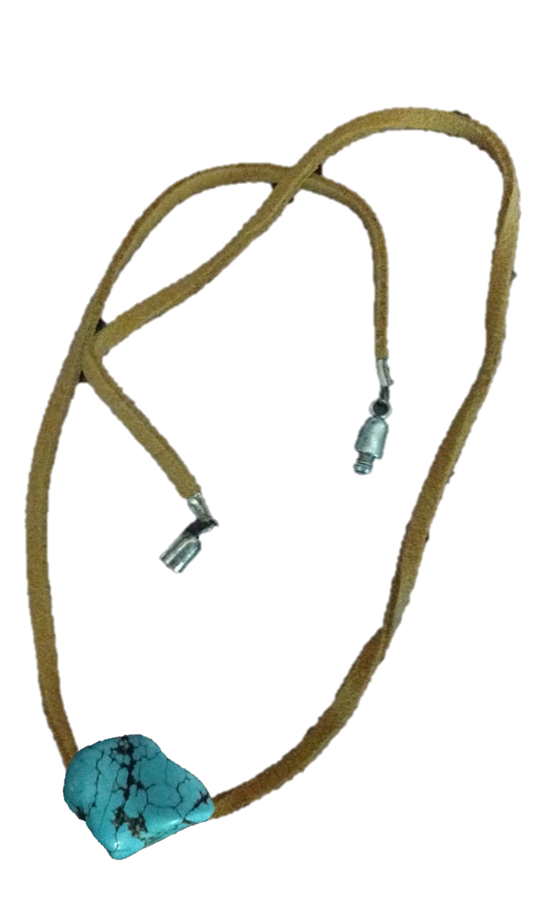
    I’ve been trying to think of a segue from there into my flash fiction response to the challenge set by Charli Mills at the Carrot Ranch this week. Charli’s prompt is to In 99 words (no more, no less) include a juxtaposition between the ordinary and natural worlds. Now that I look at it again, I’m not so sure my response quite fits, so perhaps that is fitting in itself. It seemed like a good idea at the time: matching the turquoise stone to the colour of Marnie’s eyes, which I didn’t even include!

    turquoie necklace

    Here it is anyway, the next little revelation of Marnie’s story that continues on from this one:

    Juxtaposition

    She paused her dusting, as often she did, scanning the fading faces. Her gaze lingered, as always, on one. She gave it an extra rub as if to wipe away a tear, erase the pain.

    She lifted the postcard wedged into the frame to read the words she knew so well but wished had more to tell: “Thank you, Miss. Remember me.”

    “Where are you? How are you doing?” she’d never stopped wondering, hoping.

    She fingered the smoothness of the turquoise stone, its partner given long ago . . .

    A quiet knock on the door interrupted her thoughts.

    Thank you

    Thank you for reading. I appreciate your feedback. Please share your thoughts about any aspect of this post or flash fiction.


  • Displaying symptoms or true colours

    For just over a year now I have been participating in the weekly flash fiction challenge set by Charli Mills of the Carrot Ranch. I enjoy participating for a variety of reasons, including:

    Challenge: I enjoy the challenge of

    • thinking of something to write
    • telling in story or scene in the 99 word total
    • applying it in some way to my blog’s focus on education

    Variety: I enjoy writing in various forms and genres and the fiction is a pleasant change from the informational writing that I am primarily engaged with at the moment

    Practice: The requirement to tell a story in just 99 words means that I need to:

    • choose my words carefully to make my meaning explicit
    • decide what can be told, what can be implied, and what can be omitted
    • think of alternate ways of expressing an idea or describing a situation or character

    rough-writers-web-compCommunity: The Congress of Rough Writers: I have made connections and online friendships with a wonderfully supportive and encouraging group of bloggers, whose numbers are constantly growing.


    Feedback: The feedback that I receive in response to my flash fiction pieces and the posts in which I embed them gives meaning and purpose to the writing. I enjoy the in-depth discussions which quite often occur in response to the blog’s content and the additional thinking that I often need to do as a result. While it does distract me somewhat from my longer-term writing goals, the immediacy of the feedback is encouragement to continue and I am always appreciative of it.

    There are many other reasons and benefits of participating in the challenges. The above are just a few. If you have not yet considered joining in the fun, now might be the time to do so.

    www.openclipart.org
    http://www.openclipart.org

    This week Charli Mills wrote about a vivid dream that compelled her from her bed in order to capture it on paper before it escaped. She says that

    “Characters sneak into our dreams, our waking moments and tease us. We write to find out who they are.”

    Thinking about the character from her dream led her to consider symptoms, and the way that symptoms reveal more of who they are.  She challenged the Rough Writers to In 99 words (no more, no less) write a story to reveal a character’s symptoms. 

    Many of my responses to Charli’s challenges have been written to find out more about Marnie, who reveals snippets of her life, as if in flashbacks or dreams, at various ages. You can read what we already know about Marnie here.

    “Symptoms” seemed perfect for revealing a little more about Marnie. A child such as she would display a great variety, an important one of which would be her attempt to hide those symptoms from others.

    Here then is the next part of Marnie’s story, which follows on from the bullying episode shared last week.


     Symptoms

    The children suddenly appeared: one bedraggled and muddied, the other exuding authority.

    “Brucie tripped her. On purpose!” declared Jasmine.

    “Come on, Marnie. Let’s get you cleaned up,” said Mrs Tomkins. ”Then we’ll see about Brucie.  Is your mum home today?”

    Marnie looked down and shook her head.

    “Will I help you with that jumper?”

    A jumper? It’s too warm . . .” Her thoughts raced.

    Marnie turned away. As she pulled up her jumper, her shirt lifted revealing large discolorations on her back.

    Over the years Mrs Tomkins had seen too many Marnies; too many Brucies; never enough Jasmines.


    Sadly, children like Marnie and Brucie are very real and very familiar to many teachers.

    A few weeks ago I shared a post by Julieanne Harmatz on her blog To Read To Write To Be. I always enjoy reading Julieanne’s blog because it helps me walk right back into the classroom, in my mind. The Student Z she described in that post has many “symptoms” in common with other students I have worked with over the years.

    This week Julieanne shares ways she provides authentic opportunities for using digital technologies in her classroom. One of the ways is student blogging, and Julieanne linked to a post written by one of her students, Zoe. I was very impressed. I’m sure you will be too.

    In the post Zoe shares information about, and links to, her favourite song and singer. She says it is her “favorite song because it teaches you why not to bully.”

    The song is a rap version of “True Colours” with additional original anti-bullying content written by 12 year old MattyB to support his younger sister who is excluded and bullied because of her “symptoms”. I have not linked to the song here because I would like you to read Zoe’s blog and listen to the song there.

    I was so impressed by Zoe and MattyB, both showing traits of strength and of being an “upstander”, as described by Mrs Varsalona in the comments on Zoe’s post,  that I decided to find out a bit more about MattyB.

    Here is the story of how MattyB and his family wrote the song to support MattyB’s sister Sarah.

    I love to hear positive stories like this, don’t you?

    Thank you

    Thank you for reading. I appreciate your feedback. Please share your thoughts about any aspect of this post or flash fiction.

  • Stop bullying now!

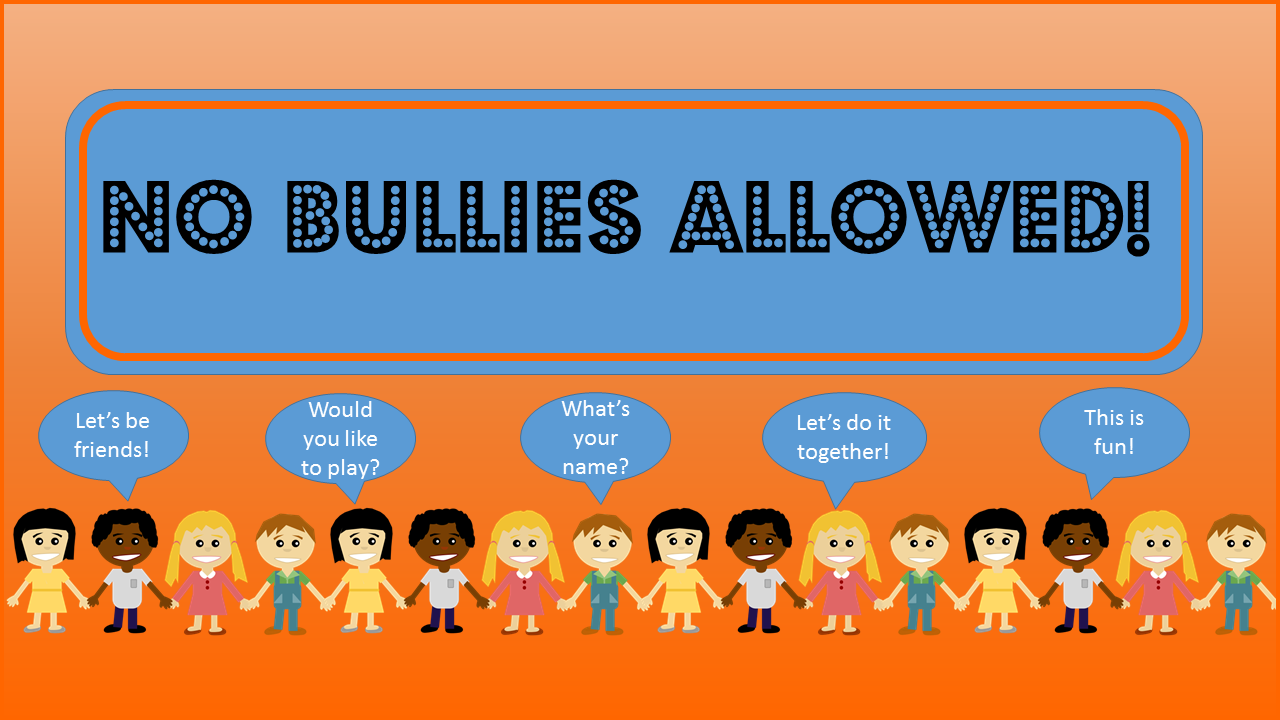
    No bullies allowed2

    Today all across Australia children, teachers and other school personnel are dressing in orange to mark the National Day of Action against Bullying and Violence. The Bullying No Way! Program aims to

    “create learning environments where every student and school community member is safe, supported, respected and valued”

    A very worthwhile goal, I’m sure you’ll agree.

    The Bullying No Way website has resources for parents, teachers and students, including this video for young children:

    The Prime Minister Tony Abbott delivered a message to children telling them that there is no place for bullying in Australia, that bullying is wrong.  I definitely agree!

    Picture1

    Last month Yvonne Spence organized a very successful #1000 Speak for Compassion campaign. This month she has placed the focus on bullying and requested bloggers to unite their voices against bullying. You can join in by visiting the Facebook page. I have already linked my most recent post Bully for you! as well as this one. There are many others there to read.

    Last week Charli Mills extended a challenge to write a flash fiction story about bullies. She has compiled the wonderful stories in her post Circling the Bullies.

    My previous post, Bully for you! received many comments, some sharing experiences of bullying, either of themselves or someone close to them. One comment was from a new visitor to my blog Sherrill S Cannon who shared information about her books dealing with bullying for children, and also explained her involvement with I’m bully free.org to which she donates 50% of the revenue from her books purchased through that page.

    There are many other organizations that promote information about and actions against bullying worldwide.  Hopefully as more voices unite in making others aware of, and in speaking out against bullying, we can come close to eradicating it from our society.

    As Michelle James commented on my previous post

    “More needs to be done to prevent bullying. I really believe that there should be more intensive courses for teachers and administrators to learn to deal with the bully issue. We will never eradicate bullying completely. It is a tactic used by despots and terrorists, and sadly, they seem to thrive.”

    Many of the comments on the post last week were in relation to the bullying incident involving Marnie. I share her story again here in case you missed it:

    Not funny at all!

    Jasmine and Georgie rushed towards the cluster of children who were laughing hysterically at something unseen. They expected to see an entertainer performing magic tricks. Instead they saw Marnie, face down in a puddle, reaching for her unicorn; sobbing.

    “Good one, Brucie!” Two boys high-5ed. Another called, “Way to go!”

    The children stood transfixed by the spectacle. Jasmine pushed through. She picked up the muddied unicorn, stretched out a hand to help Marnie up, then put an arm around her waist,

    As she led Marnie away Jasmine glared at the group of disbelieving faces.

    “Shame on you,” she said*.

    *Thanks to Donna Marie for suggesting I change “mouthed” to “said”.

    In this piece I tried to show that there may be many participants in bullying, not just the obvious “victim” and “bully”.

    Marnie is the obvious victim. But there were many onlookers. None, except Jasmine, spoke up against the bully. By their silence were they condoning it? Or were they fearful that they would be the next targets if they said anything? Does that also make them victims? How does that affect their confidence and self-image?

    Brucie was the obvious bully, causing Marnie’s embarrassment. But what of the boys who applauded with their high-5s and words of encouragement? Were they joining in because they too were mean; part of a gang of bullies? Or like the other onlookers, did they feel threatened about what may happen to them if they didn’t join in?

    But is Brucie also a victim? What makes a bully a bully? Why did he pick on the vulnerable? What in his life caused him to act this way?

    And what of Georgie who stood back in the crowd and did nothing while her friend Jasmine went to Marnie’s rescue? Why was she reticent to support her friend?

    I wonder, too, what they all said when they turned away. Did they speak out in private about the bullies? Geoff Le Pard commented on a similar lack of support for him when he was bullied at school.

    Jasmine was the only one who came to her rescue? Why did she? How was she feeling? Had she been the victim of bullying and so felt empathy with Marnie? Did she just know it was wrong and that it was important for someone to take a stand? What had happened in her life to make her so strong?

    Donna Marie of Writer’s Side Up commented how being bullied had ruined her boyfriend’s life and suggested that more needs to be done to change the bully’s behaviour. Perhaps some bullies need protection from bullies themselves. Did they need to learn the behaviour somewhere?

    https://openclipart.org/detail/205654/Angry%20Smiley
    https://openclipart.org/detail/205654/Angry%20Smiley
    https://openclipart.org/detail/213515/Emoticon%20-%20tongue
    https://openclipart.org/detail/213515/Emoticon%20-%20tongue

    The word bullying is sometimes used to describe a one-off unpleasant incident, like poking out a tongue or showing the “rude” finger. However bullying usually refers to something more ongoing, where there is an imbalance of power, the “stronger” picking on the “weaker”.

    To avoid becoming the weaker, I think children need to develop resilience. They need to realise that just because somebody says it doesn’t make it true. They need to learn to take responsibility for their feelings, realise that they can choose to feel upset or choose to ignore it. I am in no way saying they should ignore aggressive, violent, intimidating behaviour, but learning to be resilient about the little things helps to develop strength of character.

    I think we would probably all agree that bullying is a complex issue with many facets. That education is required to reduce its incidence is a given. What do you think?

    Thank you

    Thank you for reading. I appreciate your feedback. Please share your thoughts about any aspect of this post.


  • Bully for you!

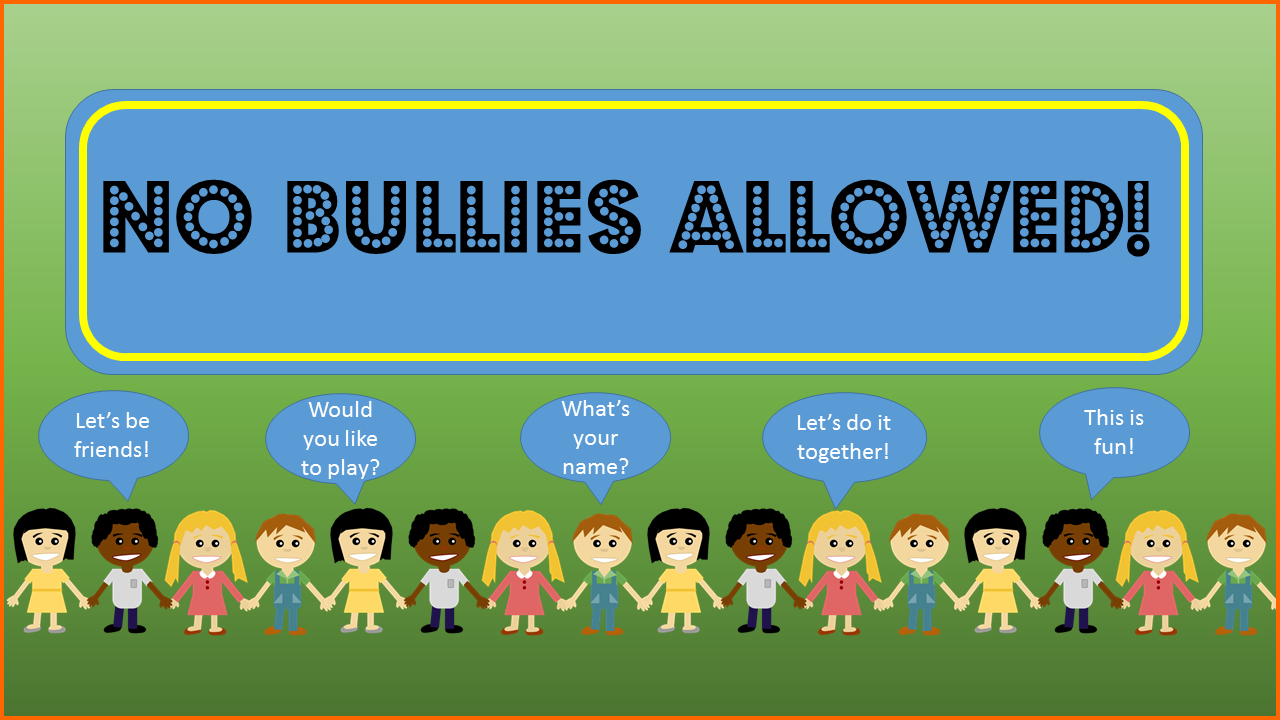
    No bullies allowed

    Everybody knows what a bully is. If you have never experienced bullying of some kind on a personal level, then you are probably pretty lucky. But you have possibly witnessed, or were at least aware of, bullying at school, in the community, or in the workplace, maybe even at home.

    https://openclipart.org/detail/27915/Thug
    https://openclipart.org/detail/27915/Thug

    Bullies feature strongly in traditional fairy tales such as the stepmother and stepsisters in Cinderella and the mean Rumpelstiltskin in the story of the same name. Roald Dahl also introduced us to bullies through Veruca Salt in Charlie and the Chocolate Factory and Mr and Mrs Twit in The Twits.

    The first picture books I think of when the topic of bullying is raised are Anthony Browne’s Willy the Wimp and Willy and Hugh. They are great to read and use to stimulate discussion of bullying with young children. In this video author Anthony Browne explains that most children recognize a little of themselves in Willy. The transformation from timidity to self-confidence appears achievable and encouraging to all.

    The opposite of being a bully is being kind. This article by Kari Kubiszyn Kampakis, Raising a Kind Daughter tells a heart-warming story of selfless kindness shown by a daughter and her mother. As was commented on in many posts about compassion, including this one, modelling is the best way of teaching children attitudes and behaviours we wish them to learn.

    This week at the Carrot Ranch, Charli Mills has challenged writers to In 99 words (no more, no less) write a story that shows the bully mentality countered with a different, unexpected or kind action.

    Over the past year while I have been engaging with Charli’s flash fiction challenges, I have been developing a character, Marnie, who is definitely no stranger to bullying. Each of Charli’s prompts encourages me to think a little more about Marnie, what may have occurred in her life, and what her responses would be. While I sometimes write about other things, I could not ignore Marnie with this prompt.

    This is what we already know about Marnie,

    as a child:

    • she has a dysfunctional family
    • she suffers physical and emotional abuse, including neglect, from both parents
    • she has a toy unicorn as a comforter
    • she finds the expectations of school challenging
    • she feels alone and excluded at school with few friends
    • she gains the support of one teacher who helps her to develop more self-confidence

    as a teenager:

    • the teacher continues to support her
    • she leaves home and breaks contact with her family

    as an adult:

    • when both her parents have passed she is contacted and returns to the family home, which she sells, relieved that there is no longer any chance of abuse such as occurred in her childhood

    There are still many gaps and unknowns which I am hoping to explore in more detail in the future. In a recent discussion with Charli, I commented that each time I write about Marnie she reveals a little more, in much the same way as she would reveal herself to a new friend or a therapist. I’m thinking she may need to talk to a therapist at some stage. I might need to see who, and what, Anne Goodwin would recommend!

    I hope that somewhere in her life, Marnie has a friend like Annie, described in the article by Kari Kubiszyn Kampakis. Maybe it is Jasmine who we have already met in a previous episode, which also touched on a situation which may have involved bullying. Please let me know what you think.


    https://openclipart.org/detail/117199/Friendship
    https://openclipart.org/detail/117199/Friendship

    Not funny at all!

    Jasmine and Georgie rushed towards the cluster of children who were laughing hysterically at something unseen. They expected to see an entertainer performing magic tricks. Instead they saw Marnie, face down in a puddle, reaching for her unicorn; sobbing.

    “Good one, Brucie!” Two boys high-5ed. Another called, “Way to go!”

    The children stood transfixed by the spectacle. Jasmine pushed through. She picked up the muddied unicorn, stretched out a hand to help Marnie up, then put an arm around her waist,

    As she led Marnie away Jasmine glared at the group of disbelieving faces.

    “Shame on you,” she mouthed.


    Thank you

    Thank you for reading. I appreciate your feedback. Please share your thoughts about any aspect of this post or flash fiction.



  • Empowering women – International Women’s Day

    international women's day


    Yesterday, 8th March 2015, was celebrated as International Women’s Day around the world. While the day has a history (or herstory) of over one hundred years, yesterday marked the 40th anniversary of the date being claimed for this celebration by the United Nations and the 20th anniversary of the signing of the Beijing Declaration and Platform for Action.

     “The Platform for Action covers 12 critical areas of concern that are as relevant today as 20 years ago: poverty; education and training; health; violence; armed conflict; economy; power and decision-making; institutional mechanisms; human rights; media; environment; and the girl child.”

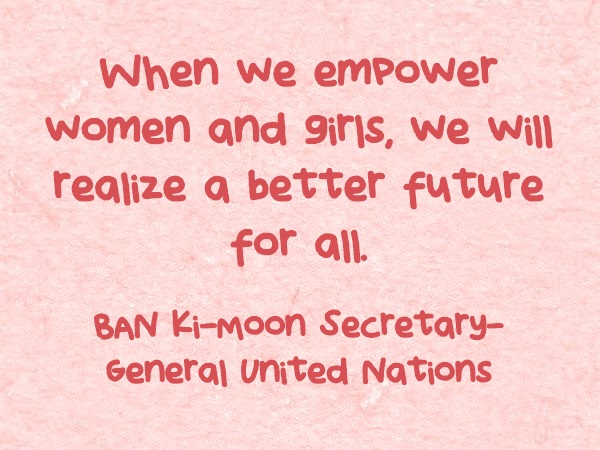
    The Secretary-General of the United Nations concludes the foreword to the 2015 paper with these words:

    When-we-empower-women

    The paper states that

     “Nearly 20 years after the adoption of the Platform for Action, no country has achieved equality for women and girls and significant levels of inequality between women and men persist.”

     This article in Time Magazine recognises that, while some gains have been made, there is still much more to be done to eliminate inequality. It repeats the call to action made by the UN Women Executive Director Phumzile Mlambo-Ngcuka:

    In line with the general achievements that have been made towards gender equality, and the gaps that still exist, is the situation for girls in schools, especially with regard to maths and science education. While more girls are moving into those areas than did when I was at school, there are still not enough.

    Ainissa Ramirez, who describes herself as a “Science Evangelist” says in her article Girls and Science: A Dream Deferred, that it is important to nurture girls’ interest in science and maths.

    She says that “the data . . . shows that the difference among graduates is not due to girls’ ability to do math and science; instead, the gender gap is caused by attitudes and behaviors toward girls and women, especially in the classroom.”

    This article by Claire Cain Miller in The New York Times reinforces this, saying that the attitude of elementary teachers is even more influential that attitudes in the home. Miller says that

    “Reversing bias among teachers could increase the number of women who enter fields like computer science and engineering, which are some of the fastest growing and highest paying.”

    This article by Sue Wilson cites research confirming the bias of teachers against girls showing that boys often received higher marks than did girls of equal ability. While the girls were discouraged from continuing their studies of maths and science subjects, the boys (whose teachers had over-assessed their ability) went on to be successful in those subjects.

    For the past three years during which time I have been writing science curriculum documents, I have had the extreme good fortune of working with one of Australia’s top science teachers. In fact Deb Smith has won many awards for her science teaching including the Prime Minister’s Prize for Excellence in Science Teaching in Secondary Schools in 2010. Throughout her career Deb has been an advocate for girls in science and has encouraged many girls, who otherwise would not have, to pursue careers in science.

    I haven’t yet considered whether Marnie, a character I have been developing through my flash fiction stories, would have, let alone pursue, an interest in maths and science subjects. I think it would be all she could do to survive.  You see, Marnie’s childhood had little to recommend it: a dysfunctional family in which she suffered neglect and abuse, and difficulties at school and with friendships as a result. However a teacher like Deb Smith or Ainissa Ramirez could make a difference to her engagement with those subjects. Marnie was fortunate that a teacher saw in her something special and provided support and guidance at a time that was crucial to her survival.

    This week, in response to the prompting by Charli Mills at the Carrot Ranch to In 99 words (no more, no less) color your story turquoise, I take Marnie one step closer to empowerment. Charli says that turquoise blue evokes trust and strength. I have also heard that it signifies protection, friendship and peace. What wonderful qualities to aspire to for Marnie, and for all women. Coincidentally, it is my favourite colour.

    Here is my flash fiction response to Charli’s challenge, with a Marnie who has found a new inner strength and sense of peace, and recalls the trust that was given in friendship along with a charm for protection.

    I hope you enjoy it.

    turquoie necklace

    Turquoise dreaming

    Marnie paused at the gate. The house looked the same: roses by the steps, bell by the door, windows open and curtains tied back; just as she remembered.

    She shuddered as the memory of her last visit flashed momentarily: she was running, almost blinded by tears, stumbling with fear, up the steps, to the open door and open heart. She rubbed the turquoise pendant Miss had given her then, for “protection and peace”. She had worn it always.

    Now, Marnie walked the path with an unfamiliar lightness. It was over. Really over!

    She knocked at the door.

    Thank you

    Thank you for reading.

    I appreciate your feedback. Please share your thoughts about any aspect of this post and flash fiction.


  • Ripples through time

    http://www.morguefile.com/archive/display/219606
    http://www.morguefile.com/archive/display/219606


    This week at The Carrot Ranch Charli Mills has challenged writers to in 99 words (no more, no less) write a story that includes a river and a person (or people). 

    A river? That brought to mind two ideas:

    ripples, and

    that you never step into the same river twice (from the Heraclitus quote).

    You are probably familiar with the terms “the ripple effect” and “the butterfly effect”. Both terms refer to the effects, which can be far-reaching and unintended, of small changes or events which may seem insignificant or even go unnoticed at the time.

    In his book The Ripple Effect Tony Ryan shares many stories about small actions having a positive effect on the lives of others. He has a firm belief that each of us makes a difference with our everyday actions be it through a smile, a kind word or a helping hand. He says,

    “you must believe in your personal power to create ripples that spread out and change the world. In fact, if it is not you who is going to do it, then who else do you think is likely to make the effort? Remember that every change on this planet begins with a human being somewhere, somehow. It may as well be you.”

    None of us can ever know the full impact of words and actions.  The potential for teachers to create ripples is powerful and this knowledge, for them, can induce as much anxiety as it does joy. While I am always the first to acknowledge my shortcomings, I hope that positive effects far outweigh the negative.

    Readilearn bookmark

    Sometimes expressing an opinion that differs from the status quo can be considered ‘making ripples’ or even ‘making waves’. On his blog Theory and Practice, Matt Renwick is making waves this week talking about assessment and standardised testing. (I have expressed my thoughts on the subject here and here, for example.) I wish Matt’s waves a long journey with school-changing effects.

    Matt summarises five articles about testing, including one by Noam Chomsky from which he quotes,

    “All of the mechanisms – testing, assessing, evaluating, measuring – that force people to develop those characteristics… These ideas and concepts have consequences…”

    The consequences, the ripples, are not always the ones we want: stressed and anxious students afraid of trying and of failure are just part of it. The effects reach further: inappropriateness of tasks, reduced equity, mis-placed funding, teacher dissatisfaction . . .

    Matt’s voice is not alone. He expresses what most teachers know. Unfortunately teachers are not the ones writing policies and setting procedures about what happens in schools. Often they are not even consulted. The companies who have most to gain by sales of their testing programs can be very influential.

    Matt concludes his article saying,

    “I think this information needs to be shared over and over again.  . . . To not advocate is to concede our authority as the experts in our profession. We are in the right on this one. There is nothing to be afraid of.”

    I agree with Matt. We must advocate for the children, the students, their education and their teachers. So many administrators are talking about data, proclaiming that data is what is important. Now there is even “data mining”, big data mining, as explained in this article by the Australian Council for Educational Research. Check out this great new tool for use in mining data! Don’t they realise the children, their curiosity, wonder and creativity, are the treasure!

    http://www.morguefile.com/archive/display/941659
    http://www.morguefile.com/archive/display/941659

    And as for the quote that you can never step into the same river twice because you will have changed and the river will have changed. Well I think it’s possible that that situation doesn’t apply to schools. What happens in many schools probably doesn’t look all that different from what has happened for at least the last two hundred years: children sitting in rows chanting meaningless lists. Harsh? Maybe. Reality? Pretty much.

    http://www.morguefile.com/archive/display/902642
    http://www.morguefile.com/archive/display/902642

    And now to finish in a more positive way with my flash which combines both ideas: the life-changing consequences of a seemingly insignificant event at precisely the appropriate moment, and the difference in the person and the river on two separate occasions. And the person? None else but Marnie.

    Richmond Bridge 1825

    Ripples in the river

    Marnie paused on the bridge and gazed into river.

    “My life began here,” she thought.

    . . .

    More than twenty years before she’d stood there, begging for release from torments she could no longer endure; when a gentle voice beside her said, “Beautiful, isn’t it?” and stood there with her in silence a while before asking, “Care to walk a little?”

    . . .

    Marnie flicked the agent’s card into the water and watched momentarily as it carried away the last remnants of that other existence.

    “I wonder if Miss still lives there,” she smiled. “Must say hello.”


    Thank you

    Thank you for reading. I value your feedback. Please share your thoughts about any aspect of this post or flash fiction.

  • I feel good!

    https://openclipart.org/image/800px/svg_to_png/59389/happy_sun_gm.png
    https://openclipart.org/image/800px/svg_to_png/59389/happy_sun_gm.png

    A lot of good feelings and thoughts have been passing around the blogosphere in recent weeks including the #1000Speak for Compassion project and, closer to (my blogosphere) home, the Carrot Ranch with  Charli’s Mills’ flash fiction challenge and the responses by the Congress of Rough Writers.

    Hearing these good things is good for my soul which could otherwise become burdened down by the cruelty that is experienced on a personal, local and global level.

    Areas of Queensland and the Northern Territory were, over the weekend, devastated by severe weather, other states by fires, parts of the northern hemisphere by cold and snow. Nature itself is so destructive, why do humans think we have to add to it?

    Many homes in Central Queensland were destroyed by damaging winds when the cyclone hit. In the early morning news the following day there were already reports of looting. It seems incomprehensible to me that people would do that to each other. Stealing from homes of those left vulnerable and sheltering in a community evacuation centre!

    In the same bulletin there was a report about people receiving payments from the government while training to fight overseas for terrorist groups. The list goes on. The news media are not the best places for seeking uplifting stories or developing a habit of meliorism.

    applications-internet

    I turn back to my blogger friends for their stories of compassion and inspiration, and thoughts of how we can raise children to be kind, caring and compassionate.

    My two most recent posts, Who cares anyway? and #1000Speak for Compassion, addressed the issue of compassion and received a number of comments which added more interest and value to the topic. Most of those who responded have also shared their thoughts about compassion on their own blogs, each post as individual as they. Here are a few links to get your reading started:

    Charli Mills writes about Literary Compassion

    Anne Goodwin about Compassion: Something we all need

    Geoff Le Pard: Me, me, me; You, you, you #1000Speak

    Sarah Brentyn: 1000 Voices for Compassion

    Irene Waters: 1000 Voices Speak for Compassion – mine is but 1

    Sherri Matthews: How to save a life

    Christy Birmingham: To Writers Who Struggle with Self-compassion #1000Speak

    Lori Schafer: #1000Speak about Compassion: Through the Eyes of a Rat

    I am very happy to belong to a community that values kindness and compassion. As at least one  blogger commented though, it may be difficult for someone who has not experienced compassion to express compassion for others. Compassion may be a natural feeling, but it also may need to be learned. It reminds me of those famous words, “Father forgive them for they do not know what they are doing.” and also of a story shared by Lata on Hot Cup of Kaapi as part of the #1000Speak for Compassion project. (Note to self: Remember this!)

    In my last post I shared two ways of showing compassion suggested by Daniel Goleman in his video Why aren’t we more compassionate?:

    Pay attention

    Consume ethically

    https://openclipart.org/image/800px/svg_to_png/192642/Children_holding_hands.png
    https://openclipart.org/image/800px/svg_to_png/192642/Children_holding_hands.png

    At about the same time as I was reading these posts about compassion, I also read a post on one of my favourite educational sites Edutopia about Creating More Compassionate Classrooms.

    The author of this article, Joshua Block teaches at The Science Leadership Academy in Philadelphia, which you may recall I mentioned in a post about Chris Lehmann and Visioning a better school, a better way of educating. I was certainly impressed by Chris Lehmann, so I expected to be impressed by this article and its suggestions, and I wasn’t disappointed.

    In the article Block talks about the Academy establishing an Ethics of Care as described by Nel Noddings. I am both embarrassed and disappointed to admit that I hadn’t previously heard of Noddings but I will be looking more in depth at her work in the future. So much of her work is pertinent to these discussions we have been having about compassion, including her understanding of the terms sympathy and empathy, for example. The article about Nel Noddings, the ethics of care and education states that

    “We learn first what it means to be cared-for. ‘Then, gradually, we learn both to care for and, by extension, to care about others’ (Noddings 2002: 22). This caring-about, Noddings argues, is almost certainly the foundation for our sense of justice.”

    It sounds familiar, doesn’t it?

    Block questions how he can create a more compassionate classroom without adding to the demands already placed upon him as a teacher. He wonders what a compassionate classroom would look like and suggests

    “A compassionate classroom environment is not an environment that lacks academic rigor. In this environment, students are understood to be complex people. Here, young people feel that they belong. Here, they meet challenge and encouragement while we ask them to be the best versions of themselves. Compassionate classrooms are places where student voices and student ideas are prioritized.”

    I do like the sound of that classroom environment.

    https://openclipart.org/image/800px/svg_to_png/148843/1310261210.png
    https://openclipart.org/image/800px/svg_to_png/148843/1310261210.png

    Block goes on to suggest six practices that help to develop that environment:

    1. Remembering to Check-in
    2. Informal Conferencing
    3. Increasing Personal Connections with Content
    4. Asking Better Questions
    5. Expressing Belief in Student Abilities
    6. Being Flexible and Accepting Failure When It Happens

    I think each of these practices could fit under the banner of being attentive, of really tuning in to the needs of the students. They are all great practices that should form the basis of establishing any classroom environment.

    Joshua Block has his own blog: Mr J Block: Reimaging Education and his article can also be accessed there, along with many other interesting posts and information.

    Now back to the title of this post and my flash fiction response to the challenge set by Charli Mills at the Carrot Ranch this week to: In 99 words (no more, no less) write a story about feeling good.

    I trust that somewhere in Marnie’s life she had a teacher (or more) as compassionate as Mr J Block.

    I feel good!

    She stood at the door for one final glance. Not much had changed, but it felt, oh, so different. They were gone. Gone!

    Almost twenty years had passed since she’d stood in this spot; since she’d fled their cruel ways. Twenty years of dodging shadows, double-locking doors, and fearing the phone’s ring.

    But no more. They were gone. Gone! And for more than five years! Five years to track her down! All that remained was the house. She’d sell of course.

    With the door closed behind her she almost skipped down the stairs, her heart singing, “I feel good!”

    Thank you

    Thank you for reading. I appreciate your feedback. Please share your thoughts about any aspect of this post or flash fiction.

  • Who cares anyway?

    sad

    There are a lot of things to care about in this world, and not least of these is each other.

    What do you care about?

    Your family?

    The environment?

    World peace?

    Justice?

    Equity?

    Disadvantaged children?

    The dolphins?

    Climate change?

    The Great Barrier Reef?

    Plastic in the oceans

    Sustainable seafood

    Ethical shopping

    This week I am joining in with the #1000Speak for Compassion project which calls on “Bloggers from all over the world (to come) together to talk about compassion, in one epic event on February 20, 2015.”

    Charli Mills of the Carrot Ranch is also promoting the project through her flash fiction prompt which challenges writers to: In 99 words (no more, no less) write a story that demonstrates compassion. In her post Charli refers to two words which have been raised and discussed by our blogging community recently.

    These two words are:

    Weltschmerz which was discussed on Anne Goodwin’s blog in a post entitled 20th-century lives: The End of Days by Jenny Erpenbeck

    and

    Meliorism which was discussed in my post entitled How much of a meliorist are you?

    Thanks Charli for explaining that Weltschmerz refers to “world pain” or the grief we feel at how the world keeps falling short of our expectations and meliorism to a belief that the world can be improved by the actions of humans.

    Some of the items listed above are definitely cause for both weltschmerz and meliorism, but most send us a call to action. What action we take depends very much upon our beliefs and our circumstances. In an article in The Guardian earlier this year, Oliver Burkeman states that “World pain is bad – but numbness to world pain would be worse.

    However compassion is more than weltschmertz (seeing the pain) and more than meliorism (believing that something can be done about it).

    In this TED talk, Joan Halifax explains that

    “compassion is comprised of that capacity to see clearly into the nature of suffering. It is the ability to really stand strong and to recognize that I’m not separate from this suffering … (and that) we actually aspire to transform suffering. And if we’re so blessed, we engage in activities that transform suffering. But … we cannot be attached to the outcome.”

    In the talk Halifax explains that compassion is good for us, it enlivens us and makes us resilient, it also develops our immunity.

    She asks

    “if compassion is so good for us, I have a question. Why don’t we train our children in compassion?”

    In my next post, to coincide with #1000Speak for Compassion on Friday 20th I will be looking at some ways that have been suggested to answer that question. If you wish to add your voice to the call follow this link for suggestions of how you can be involved.

    For now I will leave you with my response to Charli’s challenge. I have not tried to address compassion on a global scale but have thought smaller.

    In her talk Halifax said that “compassion is actually an inherent human quality. It is there within every human being. But the conditions for compassion to be activated, to be aroused, are particular conditions.”

    I wondered how feelings of compassion might be activated in the life of a young woman from an impoverished and abusive background.

    Understanding

    In the ‘smart’ outfit carefully selected by the charity shop attendant, Marnie was surprised how well the confident exterior masked the whirlpool of fear, anxiety and insecurity.

    Without looking up, the receptionist handed Marnie a number and waved her to the waiting area.

    “9”. Her heart sank. “That many?”

    Avoiding contact and ‘contamination’, she squeezed into the only available space: between a boy slouching awkwardly and a girl picking her fingernails.

    The girl started crying. Marnie stiffened, but glanced sideways. The girl cried into her sleeve.

    Marnie breathed, proffered her unopened purse packet of ‘just-in-case’ tissues, and smiled, “Here.”

    Thank you


    Thank you for reading. I appreciate your feedback. Please share your thoughts about any aspect of this post or flash fiction.