If I had the ability to bestow upon each of you a super power of your choosing, what would you choose?
I’m sure you’d be eager to accept with a suggestion immediately. I am not an exception. I would love to be able to control time, to make it go faster or slower when I want, and basically to just have more of it.
But the reality is that each of us reading this post, myself included, already has one of the most amazing super powers available: the ability to read. Living in a print saturated world as we do, the ability to read is essential for full participation. Not surprisingly, but perhaps also a little sadly, those of us who can, tend to take it for granted.
I am a compulsive reader. I read everything everywhere. I wish I could stop myself reading the signs on the back of the toilet doors for the umpteenth time, but it’s virtually impossible. This is not my genre of choice. Many of us bemoan the fact that we do not have enough time to read all the wonderful material available to us.
Time is not my only reading frustration. As I age my eyesight is changing and even with the assistance of reading glasses I struggle (and often fail) to read the fine print on labels or in instructions. Not only that, my eyes tire more quickly now than ever before and the physical act of reading is not as pleasurable as it once was.
However, even with these frustrations, I am one of the lucky ones. Not everyone in the world is as fortunate as I with my lack of time and failing sight. While the literacy rates around the world are improving, there are still too many suffering the disadvantages that result from inadequate opportunities to acquire an education in general, and specifically, the ability to read. Even in our midst there are those who, for various reasons, have failed to become literate.
The empowering effect of the ability to read and of acquiring a quality education is never far from my mind or my blog. If you were to type the word “power” into the search button at the top right of my blog you would find at least ten posts with the word “power” or “empowerment” in the title, including
Bored with responses as repetitious as their store-bought costumes, he scanned the room of superheros, wondering how many more interviews to fulfil his quota. Spying a child sans costume, he winked at the camera crew and moved in, the opportunity to highlight another’s inadequacies all too alluring.
“And what superhero are you?” he smirked.
The child held out a book, drawing artefacts from within its pages. “I am a reader. I can soar on dragon wings, explore the Earth, and the farthest galaxy. I can fill my head with imaginings, or discoveries new and old. Reading: my Super Power.”
Thank you for using your Super Power. I appreciate your feedback. Please share your thoughts.
This week at the Carrot RanchCharli Mills is talking about the importance of belonging to and having the support of a community. Charli is talking about the supportive rural community where she lives and describes the way everyone rallies around to help in times of need. No asking is required. Everyone responds and pitches in, like spokes on a well-oiled wheel.
Charli also talks about the importance of the online community, reminding writers that spending time on social media is not a bad thing but an essential part of building community. For many of us introverted writers it is the easiest way of linking up with like-minded people. We gravitate like moths to the flame for our weekly meet-ups around the Carrot Ranch camp fire where Charli stokes the flames to inspire writers and build community.
Charli says that,
“Community is my foundation. All else pushes out from that hub like spokes on a wagon wheel.
Community is the hub; it’s our core. From the community, spokes of opportunity open up to reach the wheel that drives us in the writing market — readers.
An organic community is one that occurs naturally. It’s the kindred-spirits, the shared-values bloggers, the like-minded who gather to write, read and discuss. We might be from varied backgrounds, genres and experiences, but we find common ground in our process, ideas and words.”
People are social creatures, and that sense of belonging to a community, whether large or small, is something most desire. The type of community in which I have spent most of my life is the classroom community, typically an early childhood classroom. As with any other, it is essential that all members of a classroom community have a sense of belonging and feel valued and respected.
Creating a welcoming classroom with those essential ingredients: having a sense of belonging and feeling valued and respected were always high on my list of priorities as a teacher. I tend to mention this frequently and have done so here, here and here, to list just a few.
That these ingredients, along with the other essentials, learning and fun, were thoroughly mixed through everything I did is what characterised my classroom. In my classroom, the community knew that everyone, whether child, parent, support staff, or volunteer, was welcomed and valued for the contribution each made.
Routines and expectations enabled the classroom to function effectively and I tried to add a little fun to lighten up even the dullest of routines expected of us. One routine that will be familiar to many is the daily roll call. The teacher sits or stands at the front of the room calling, in a repetitive monotone and in alphabetical order, the name of each child who responds with a half-hearted, “Present, Miss”. Meanwhile the other children wriggle and fidget waiting for the tedium to finish.
But not in my classroom. Within a matter of days my children knew their position, and probably that of many others, in the roll. While I marked attendance on the roll each day as required, I didn’t call the children’s names. Each child in turn stood and greeted the class warmly, “Good morning, everyone!” The class and I responded by returning the greeting to the child. Everyone was involved all of the time, a community in action.
This five minutes of the day was always fun and filled with smiles and laughter. Some children jumped up with arms outstretched and called out loudly. Some popped up quickly and back down with a quick greeting. Some did a little dance and sang the greeting. Others greeted us with a new language they were learning, or their own first language.
When the children were confident with the order, we would sometimes do it in reverse order. This gave them a little more to think about, but it didn’t take them long to get the hang of it. The children who were usually last on the list enjoyed being first for a change.
When new children joined our class, their names weren’t always immediately added to the roll in their permanent alphabetical location as the rolls were printed fortnightly. This gave us a great opportunity to discuss where in the roll the child’s name would be. Sometimes we had to discuss more than the first letter in family names to determine the correct placement. Oftentimes this would be one of the first things children would insist upon. They wanted everyone to feel welcome and fit in to our warm classroom community.
Adding a little bit of fun to an otherwise tedious task had other benefits:
Building community,
Recognising individuals.
Being engaged,
An opportunity for activity
Learning alphabetical order
Developing memory
We could also have a bit of fun seeing how quickly we could line up in alphabetical order, each time improving on the last. It was a quick way of making sure everyone was there after an activity or break.
He waited quietly as yet another teacher heard his life story; a story without hope of redemption or the expectation of a happy ending. With each familiar incriminating snippet, “more schools than years”, “single parent”, “transient”, “neglect and abuse”, he’d instinctively glance towards the teacher. Instead of the usual furrowed brow and flat-mouthed grimace, he found sparkling eyes and a turned-up smile. He peered into the room. When the children saw him looking, they waved him in. He hesitated. Then the teacher said, “Welcome to our class, David. We’ve been waiting to meet you. Come and join us.”
Thank you for reading. I appreciate your feedback. Please share your thoughts.
I have never really been a pet owner. I have had one or two goldfish and Siamese fighting fish over the years, but nothing for any length of time or anything that could be considered a pet in the real sense of the word. If required to, I could rattle off all the benefits of pet ownership for children and adults but none of these have ever been a strong enough inducement for me to take on the responsibility.
I don’t remember Son ever requesting a pet but maybe I’ve simply eradicated those memories. Or maybe we gave him a little sister when he was twelve instead. Bec, on the other hand did request pets and she had a few at various times. These ones were closer to real pets: guinea pigs, mice and rats; but not the puppy she so longed for. Fortunately, I was required to do little for them other than listen to her joyful stories of their antics and adventures.
I am more than happy for people to enjoy their pets but feel no envy of their special relationship nor any great desire for one of my own. I am happy to enjoy the wildlife that visits my garden: insects, birds, lizards and possums. They can look after themselves and require no effort on my part; a rather nice relationship, I think.
However sometimes I hear a story that indicates a value much greater than the companionship often described, and I view the role of a pet in a new way. One such story is that of Noah, a nine-year old boy who suffers from autism, and his need for a service dog. In order to help Noah get his dog Charli Mills has organised a flash fiction competition. This time the stories may be told in greater length, from 100 to 500 words. While I might struggle with the 99-word limit of most of Charli’s challenges, I am unable to enter the contest as I am on the panel of judges. There are just a few days left to get your entries in with January 31 2016 the closing date. Why not enter the contest, which has great prizes, as well as Charli’s 99-word challenge?
To find out more about Noah, his need for a service dog, and his family, visit The Honeyed Quill, the blog written by his mother Shawna Ayoub Ainslie. You can read about what things Shawna has been up to recently in this post.
Although I am not eligible to enter the contest, I am permitted to submit a 99-word response to Charli’s weekly challenge. Here goes.
The two young males sat on the step. They couldn’t see over the hedge to the park across the road but, from squeals and barks, they knew the neighbourhood children and their pets were at play. Each, with visions of their own participation, smiled as if the reality had come to be. Another life perhaps, but not this one, not now anyway. To an outsider both appeared damaged, confined more by mobility than garden walls. On the inside their hearts were filled with love, acceptance and compassion, happy with who they were, and with each other. Boy, dog; friends.
Thank you for reading. I appreciate your feedback. Please share your thoughts about any aspect of this post or flash fiction.
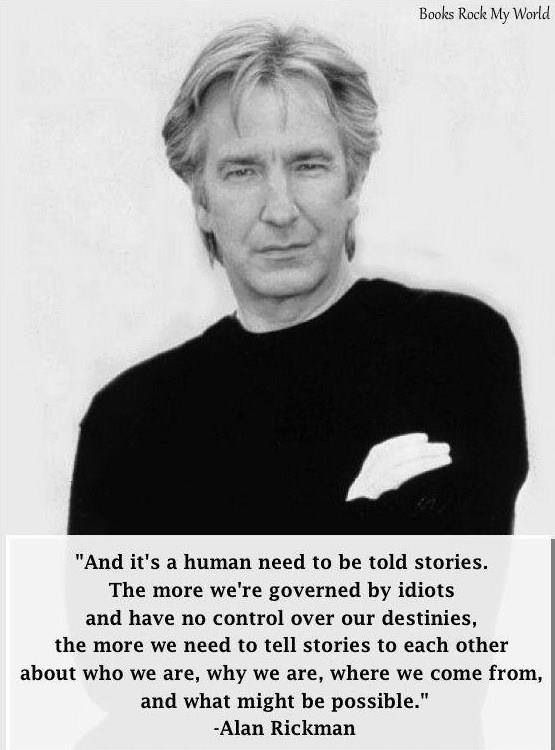
In stories we find our hopes, our dreams, our inspirations, and our fears. In stories our imaginations take flight as we contemplate ideas never before encountered. Stories help us figure out the world and our place in it. We come to understand the stories of others and develop compassion and empathy. We find ways of confronting our fears in safety. We escape the ordinariness of the everyday with dreams as much of the impossible as the possible.
Stories can be shared orally, in print, or through a variety of media. All are valid and valuable sources, but sharing the stories presented in books is especially important to the development of young children, and anything that can put books into the hearts and hands of children is to be encouraged. The ability to read is empowering and the love of books is one of the greatest gifts a parent can give a child. Not only can reading change the life of an individual, it can improve the lives of many through education.
“If we cannot change the world (and I suspect we can’t), we can provide all children the sorts of environments all children deserve in their school day—environments of kindness, compassion, safety, and challenges.”
I think Paul meant that we can’t change the whole world, that would be a rather daunting task, but the provisions mentioned are vital and change the lives of individuals in important ways, just as reading does. I like to think of changing the world with one thought, one word, one action at a time, or as Mem Fox says, also quoted in my post The magic effect – why children need books,
“. . . let’s get on and change the world, one page at a time.”
“I believe that every child’s Bill of Rights should be indelibly inked with the right to have picture books read to him/her and to own their very own books. “
I agree with her of course and consider her project to be very worthwhile. It reminds me of another very worthwhile program mentioned by Caroline Lodge, who blogs at Book Word, about providing books to prisoners. Both of these projects have the ability to change lives, to empower people and by so doing, change the world, not only their world.
As well as changing lives, stories influence our attitudes. If they encourage feelings of kindness and compassion, as Paul Thomas says, that may be a good thing. But what of the stereotypes that seem so pervasive? How many stories have you read about princesses in dire circumstances waiting to be rescued by handsome princes or knights in shining armour who must slay a dragon in doing so? What effect do these stories have upon the developing self-image of a young girl or boy? It is important to teach children to think critically about the stories they read, and about the portrayal of characters and their attitudes, especially stereotypes.
But that is in reading stories. What of writing stories? Writing stories, whether factual accounts or imagined events, is also empowering. In writing stories children, and adults, can express and explore their hopes, dreams, inspirations, and fears. In writing stories their imaginations take flight as they contemplate ideas never before encountered. Writing stories helps us figure out the world and our place in it.
Contentment is something that I too wonder about, and am especially perplexed by the need to push myself into new territory and new learning when others are content to sit back and watch the clouds pass by. Why are there so many things I feel I must do? Pretty soon I’ll be gone and it won’t matter a hoot. I have sometimes thought that if I were to write a fictionalised account of my life I would begin with the words “She was an unremarkable woman”.
Once upon a time there was an ordinary girl who lived an ordinary life with her ordinary family. She did all the ordinary things that others did and dreamed of nothing else. Each day followed one after the other with little difference. There was no magic. There were no fairies, and there were no dragons to slay. She just did what she had to do and took little notice of others doing the same. Strangely enough she was content for, from somewhere deep within, she knew that this ordinary life was but preparation for the extraordinariness of the next.
Thank you for reading. I appreciate your feedback. Please share your thoughts.
In my previous post Not lost but found I discussed the notion of adopting the title “Founder” when describing my relationship to readilearn my soon-to-launch website of early childhood teaching resources. The title both bemused and amused me at first but I have now accepted its appropriateness. In fact, I realise that readilearn is not the first thing I have founded.
Create-a-Way was perhaps the first that I founded. It was a home-based business offering educational sessions for children of before school-age and their parents. The impetuses for founding Create-a-Way included:
The decision, made before Bec was born, that I would parent and educate her (The alternative to keep teaching the children of others while entrusting her education to another didn’t make sense to me.)
A dissatisfaction with playgroups that were simply bitch and coffee mornings for mums and squabble sessions for children left to their own devices
A realisation that parents didn’t stimulate or foster their children’s intellectual growth because they didn’t know how, not because they didn’t care
I saw a niche that would honour:
My passion for education and need to be doing something in that area
My firm belief in the importance of early years learning
My appreciation of children’s innate curiosity and need to learn coupled with the joy of sharing their sense of wonder and creativity
My certainty in the power of reading and education to improve the lives of individuals and society
A conviction that there are better ways of educating than simply accepting the status quo.
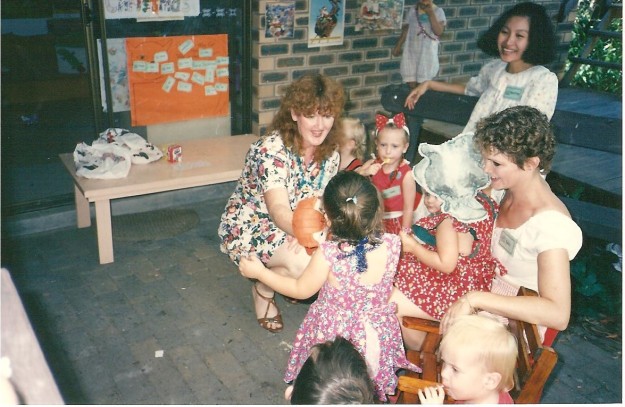
And best of all, I could do it with Bec! (Although she is not in this photo.)
Guiding parents in play sessions for parents and children.
I express this passion and these basic beliefs repeatedly. They are what make me. They are my driving force; the threads that weave their way through everything I do, holding them and me together. They were the basis for my attempt at founding an alternative school; they guided my classroom pedagogy and now the preparation of resources for readilearn.
It’s funny looking back now at the documents I wrote, it seems almost a lifetime ago (well almost all of Bec’s lifetime and more than half of mine), on an Apple IIE computer. I’m still proud of what I offered and truly believe in the value of sessions such as these. However, I can see that, while there has been little change to my passion and beliefs over the years, if I were to do the same thing now I may update some statements to more closely match my current understanding of a growth mindset.
The thought of doing the same again now is not far from my imaginings. The format of Create-A-Way sessions forms the model of another project I would love to found The Early Learning Caravan. Maybe Steven’s suggestion of crowdfunding would be appropriate for getting it started, but that’s not a project for the immediate future.
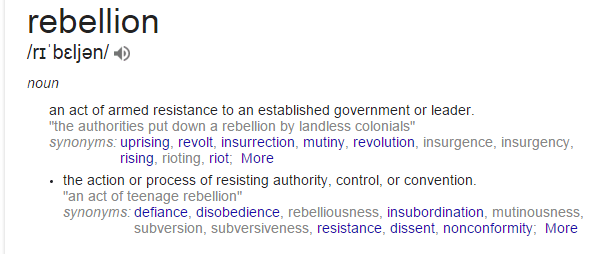
The rebellions of which Charli writes are of a larger scale, more in keeping with the first definition.
In this TED Talk Ken Robinson urges us to Bring on the Learning Revolution making “the case for a radical shift from standardized schools to personalized learning — creating conditions where kids’ natural talents can flourish.” I’m proud to be a rebel fighting in the same revolution as Sir Ken.
In addition to these larger scale rebellions and revolutions there are many that take place on an individual and daily basis in our families and classrooms, and on our streets. Some of the battles, such as teenage rebellion are fought for justice, independence and identity, a natural and necessary part of growing up. But the need to establish one’s individuality, one’s separateness as a person begins years before that, as anyone who has ever had anything to do with a two-year old can testify.
Sometimes the same battles are played out over and over and parents wonder why the children just don’t accept that they need to clean their teeth, wash their hands, put on their shoes or whatever, rather than battle over it each and every time. It is this early childhood rebellion that has inspired my flash fiction response to Charli’s challenge this week. I hope you enjoy it.
You’re not the boss of me!
Eyes blazed defiance, daring a struggle which could end only in tears and frustration, or a standoff with no real winner. She was ready to flee the moment there was a hint of movement. Our eyes met. I contemplated my options. Did we have to do this now?
Again the challenge: “You’re not the boss of me!”
I pretended to read.
Another volley, quieter: “You’re not the boss of me.”
No response.
Soon she was snuggling beside, pointing to pictures.
I read aloud.
We laughed at the antics.
As I closed the book I said, “Ready? Let’s do this.”
Thank you for reading. I appreciate your feedback. Please share your thoughts.
The advice to go to school, work hard, get a good job seems to be often repeated, as if it is advice given to all young people as they are growing up. Funnily enough, I don’t remember receiving it when I was in school, though I may have been given it. With or without it, I think I was fairly industrious, for the final year anyway, studying six hours long into the evening each day after school. I devoted one hour to each of my six subjects. I needed to work hard to get the job of my dreams: all I wanted to be was a teacher.
I think I have probably always worked fairly hard, even when I wasn’t ‘working’. Maybe I should rephrase that, and say that I consistently put in a good effort, as long as low marks for exercise and housework are not put into the aggregate. Effort doesn’t always produce the hoped-for results, and sometimes the results can be achieved without any apparent effort. I have not yet found that in relation to exercise or housework, though. I’ll let you know when I do.
“Making a living as a writer is not exactly the career path any school counselor would promote, but any industrious writer can make it work.”
I hope she’s right. In the current iteration, of which there have been a few, of my teaching career, I am combining my passion for education with my love of writing.
Charli says that
“You have to find a niche … an outlet and fair payment.”
I’m working on those and I’m hoping that this time my effort will produce the desired result.
My niche: early childhood educational resources with a point of difference being interactivity in some
My outlet: a website readilearn, soon to be launched
Fair payment: while some resources will be available free of charge, others, including the interactive resources will be available only to subscribers
The relationship between effort and result is relevant when thinking about growth mindset and praise, both of which have previously been discussed on this blog, here and here for example.
Growth mindset is a way of thinking about learning proposed by Carol Dweck; of viewing learning as occurring on a continuum of possibilities that may not yet be, but have the potential to be, achieved. It differs from thinking about the ability to learn as being fixed or limited in various unalterable ways.
Much of the discussion about praise, see here, here, and here, referred to how the effect of praising for effort, “I can see you worked hard on this” differed from that of praising achievement ‘Great job!”. Personally, I’m hoping for a bit of both once my website launches. I’d like some praise for the product, but also recognition of the effort. I just have to hope others find it worthy. I definitely don’t want to receive any hollow praise, which I think is a major criticism of the comment “Good job!”.
“a colleague … and I continue to commiserate on the implementation of Carol Dweck’s growth mindset research.”
Dooms goes on to say that “nurturing a growth mindset is a daunting task” and explains that their fear “that growth mindset has been reduced to the grit mentality of telling the students to work harder” is shared by Dweck.
I followed the link provided to an article published in September 2015 in which “Carol Dweck revisits the ‘Growth Mindset’”. In this article Dweck says that one of the biggest misconceptions about a growth mindset is equating it with effort. She says there is more to achievement than just effort and reminds us that effort has a goal: learning, improvement or achievement. Effort is not made simply for effort’s sake and there is no point if it is not achieving something. She cautioned that we need to be aware of when effort is not productive and to provide students with a range of strategies to use when they get stuck.
She says
“Too often nowadays, praise is given to students who are putting forth effort, but not learning, in order to make them feel good in the moment: “Great effort! You tried your best!” It’s good that the students tried, but it’s not good that they’re not learning.”
She explains that
“The growth-mindset approach helps children feel good in the short and long terms, by helping them thrive on challenges and setbacks on their way to learning. When they’re stuck, teachers can appreciate their work so far, but add: ‘Let’s talk about what you’ve tried, and what you can try next.’”
She goes on to say that having a growth mindset is not a destination, it is a journey. We all have some thoughts and responses that are more akin to a growth mindset and some akin to a fixed mindset. It is important to recognise both and continue to grow in growth mindset thinking. I know I still have a lot of learning and growing to do, but with Dweck’s acknowledgment of the same, I know I am in good company.
Dooms also links to an article by Peter DeWitt published in Education WeekWhy a ‘Growth Mindset’ Won’t Work. DeWitt states that according to John Hattie, whose work I have previously mentioned here, a growth mindset has little effect on classroom results. Now that’s putting the cat among the pigeons.
However, DeWitt explains that the reason for the low effect is that most adults have fixed mindsets which they transfer to students. He says that, for the growth mindset to be more effective, we need to do things differently.
First of all, he says, ditch the fixed mentality. Don’t see the problem as being with the student, see it in how or what is being taught. Adjust the teaching. (I’ve also mentioned this before here.)
Test less for grades and more to inform teaching
Provide feedback that supports student learning
Avoid grouping students by ability
Ask questions that require deep thinking
Stop talking!
In fact, what he is saying is that we need to practice the growth mindset, not just preach it.
I’m thinking of putting in the effort as being industrious. I’m thinking of our impression of it and responses to it in others, particularly of the need to recognise where difficulties lie for students and how to praise to assist learning.
“Could do better”
The words blared from the page.
“Needs to try harder.”
Down through the years the judgement repeated.
“More effort required.”
No one tried to understand his unique way of seeing, his particular point of view.
“Doesn’t apply himself.”
He struggled to repeat their pointless words and perform their meaningless tasks.
“Needs to concentrate in class.”
Inside his head the images danced in brilliant choreography.
“He’ll never amount to anything.”
Outside their white noise words crackled a cacophony of dissonance.
Finally, school days done, they clamoured for the inspired works of the overnight success.
“Brilliant!” “Talented” “Exceptional!”
Thank you for reading. I appreciate your feedback. Please share your thoughts.
At this time of year in many places around the world there are children excited about the magic of Christmas. I don’t know the numbers to compare but there are a good few, mainly adults I suspect, who say “Bah humbug!” While I was once a firm believer in the magic and did my best to keep it alive, I now tread warily, unsure of how best to approach this topic. As a parent I didn’t get it right so can offer no wisdom of my own.
After many years of seeming to go along with the story, long after I thought it should have been abandoned, Daughter finally questioned why, if the stories weren’t true, would parents lie to their children. She preceded her question with the request to not say if it was true or not, she just wanted to know why parents would lie.
I let her down on both counts. I told her the truth of the story and couldn’t explain why parents would lie. I’m not sure that I’ve been forgiven for either failing, and I have never stopped thinking about what may have been a better way of handling the situation if I was ever offered the opportunity for a do-over.
Interestingly I don’t recall having any similar concerns about my parents lying or disillusionment on finding out the truth. Daughter’s older brother voiced no concerns either, but I cannot be certain whether or not he had any. Until now when, with children of his own, the issue again is raised.
At first Son’s intention was to not engage in Santa stories; but with one child at school and the other in kindy the situation becomes more complex. The children are more exposed to the stories through friends and organized events and there is the concern about “spoiling” things for other families. Caught between the pressures of a shared popular culture and the questions of intelligent, critical thinking children, the parents must make a decision. I sympathize and wish them better success than I experienced. I have suggested to Son that he consult his sister. She knows better than I about this one and can maybe help him avoid making the mistakes with his children that I made with her.
There is a lot of well-intentioned advice on the internet, but the value of some is debatable. Many explain the Santa story as being about love, kindness and generosity, and the magic as the assistance given by many helpers, including parents, throughout the world. Many explanations are likely based on the famous response, Yes Virginia, There is a Santa Claus, to an 8-year old’s letter, the authenticity of which has been questioned.
Some of the explanations and stories encountered recently include:
As much as I love the sentiments of these stories, they don’t really help me with my truth or lie dilemma. So I returned to a post by philosopher Michelle SoweyHO HO HO! (Q.E.D.) in which she questioned the ethics of the Santa lie. I shared this post previously in April 2014. Michelle agrees that the attempt at compromise in many of the explanations, “It’s Santa, Jim, but not as we know him”, is unsatisfactory because:
the historical figure St Nicholas is omitted
Christmas for most children is more about receiving than giving
of a conviction that children should be encouraged to believe in things that are real (visible or invisible, tangible or intangible) and to disbelieve in things that aren’t (all of which are invisible), and
it is better to develop critical thinking than to believe in intangible things.
She says,
“Parents can be powerful advocates for their children’s intellectual autonomy. They can help their kids to draw their own well-reasoned conclusions; to value coherence and logical consistency (among other things) in the construction of their worldviews; and to cleave to their beliefs with a level of confidence proportional to the amount and quality of evidence available.
With a little analysis and reflection – perfectly accessible to an eight-year-old – it’s clear that believing in things without good evidence often means believing in things that aren’t true.”
Okay. We agree on that, but how would a parent extricate themselves from the myth once they have become entangled?
David says that parents who lie to their children by supporting the myth are not necessarily bad parents (thank you!) but they would be better parents if they didn’t.
He adds to Michelle’s list with these:
Children should thank their parents, who have purchased and sacrificed, not Santa; “gifts are the giver’s way of showing the recipient that he or she has worth and is loved. Children need assurance their parents see them as worthwhile and valuable – not Santa Claus.”
Santa shouldn’t be used as a threat e.g. stop doing that (bad behaviour) or Santa won’t come
It stifles imagination because you can’t pretend if you believe: “By tricking children into actually believing Santa exists we rob them of the opportunity to imagine he does.”
And the big one: the loss of trust“Finding out their parents have lied to them about Santa Claus can cause children to think their parents are lying to them about a great many other things.” He says it is probably a bigger risk than most parents realize.
David says that the tradition of Santa and gift giving is relatively recent and “sold” to consumers primarily for financial reasons. He urges parents to stop tricking their children into believing the myth. My experience supports that, and I wonder how I would go about it if I had the opportunity again.
This week at the Carrot RanchCharli Mills challenges writers to In 99 words (no more, no less) write a story about “spreading the light.” While she suggests it could be used it to honor or memorialize a loved one, I thought I would attempt to shed light on the Santa myth and its potential for harm. Hopefully it’s not too far off the mark as I always loved, and protected, this myth; but perhaps a decision to protect the intelligence and critical thinking of my loved ones, and children in general, is even more important.
Jimmy searched the shelf for something he hadn’t heard before. There weren’t many. Suddenly he found one, slid it off the shelf and nestled into Dad’s lap.
“Twas the night before Christmas …” began Dad.
“Who…, what…, where…, why…, how…,?” began Jim, marveling at flying reindeer and pondering possible destinations.
As Dad closed the book Jimmy was ready with his usual question, “Is it true?”
“What think you?”
“As true as a fire-breathing dragon, a flower-petal fairy, and a talking animal,” laughed Jim; then added, “But you know, parrots really can talk!”
For whichever December festival you celebrate, and in whichever way you celebrate it, I wish you peace, joy and love enough to light up your world.
Thank you for reading. I appreciate your feedback. Please share your thoughts.
By nature, young children are explorers and discovers. Their purpose is to investigate the world around them and figure out what’s in it, how it works, and how they can get it to work for themselves. It takes little effort on the part of parents and early childhood teachers to nurture this innate curiosity and stimulate an interest in the natural world.
Sharing in the excitement of children’s discoveries is a marvellous experience and something I loved about having my own young children and working in early childhood classrooms, I now have the additional privilege of sharing in the wonder with my grandchildren. I feel very proud watching my two children, their dad and aunt, as together they explore the flora and fauna in our backyard. I know I have done something right.
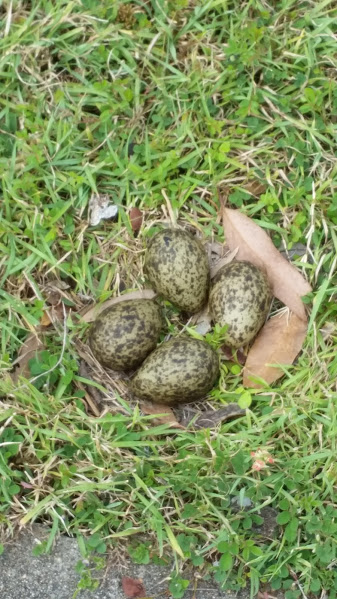
These are just a few of the wonders we found this year:
The ladybird life cycle on our beautiful wattle tree.
This week at the Carrot RanchCharli Mills was talking about having a “looky-loo”, I’d probably call it a “sticky-beak”, at the effects of a river in flood, and described the way that neighbours help each other out, even if they’ve never met before. But Charli dives deep into the analogy of a flooded river, feeling washed out and overwhelmed by the rising tide of fear fuelled by a lack of understanding and appreciation of difference. She pleads for all of us to find our common ground, to realise that, while we are complex and contradictory, we share the same needs and wants. She says that if we don’t understand we should, “Ask, don’t judge. Learn, don’t isolate.”
Charli got me thinking about these issues, as she always does. I wondered, if we value, appreciate and marvel at diversity in the natural world, why don’t we appreciate it in other humans? After all, we are merely part of the natural world. That we have done more than any other species in manipulating it doesn’t alter that fact. Why can’t we all just agree to live and let live? Why do some think otherwise?
This particular TED talk is fascinating, funny, disgusting and very informative, with a little of something for everyone. He throws in terms like “mind control”, “eaten alive”, and “bursts out of body”. Science fiction has nothing on science fact.
He begins the talk by questioning whether animals choose their behaviour such as gathering in large flocks or herds for safety. He then talks about the popular children’s science “pet” brine shrimp, or sea monkey, and the ways in which a parasitic tapeworm influences the shrimp’s behaviour to enable its own reproductive cycle. He says, “The tapeworm hijacks their brains and their bodies, turning them into vehicles for getting itself into a flamingo.”
But that is just the first of his stories of animals behaving in ways as a result of the mind-control of parasites. He describes others and says that “Manipulation is not an oddity. It is a critical and common part of the world around us, and scientists have now found hundreds of examples of such manipulators, and more excitingly, they’re starting to understand exactly how these creatures control their hosts.”
He describes a wasp that attacks a cockroach and “un-checks the escape-from-danger box in the roach’s operating system”. I wondered if this same box could be un-checked in humans. Not surprisingly, Ed went on to discuss humans but said that our methods of mind control were fairly primitive compared to the techniques of parasites. He said that this is what makes the study of parasites so compelling. We value our free will and fear having our minds controlled by others, but this situation occurs all the time in nature.
Yong then asks what he considers an obvious and disquieting question:
“Are there dark, sinister parasites that are influencing our behaviour without us knowing about it …?”
He talks about a parasite that manipulates cats, a parasite that many people have in their brains. While there is no conclusive evidence of parasitic manipulation of human behaviour, Yong suggests that “it would be completely implausible for humans to be the only species that weren’t similarly affected.” I urge you to have a looky-loo at the now not-so-secret behaviour of these parasites. I’m certain you will be as entertained as you are informed and challenged.
High in the branches Maggie practised her repertoire. She watched people scurrying: erecting tents and marking long white lines. She absorbed the rhythm of new songs: thump-thump, clink-clink.
She breakfasted on scarab beetles and was ready when the children arrived. But they didn’t notice her playful mimicry. Instead they flooded the field with colourful shirts and excited chatter.
Maggie watched silently. Soon she heard an unfamiliar song: “Go team, go team, go!” She flew to the top of the biggest tent and joined in. The children listened, then cheered. Maggie felt she’d almost burst. Instead she sang, and sang.
Perhaps we could learn from the magpie, one who looks, listens and learns and shows appreciation for others in the most sincere form of flattery: singing their song.
I love awakening to the beautiful songs of the magpie every morning. I chose to share this particular video, as yesterday we were also visited by a beautiful king parrot such as the one featured in this video. Awesome.
Thank you for reading. I appreciate your feedback. Please share your thoughts about any aspect of this post or flash fiction.
Would you believe that with the hundreds of picture books I have in my possession I do not have one about pirates! That surprises me. There must be oodles of books about pirates on the market.
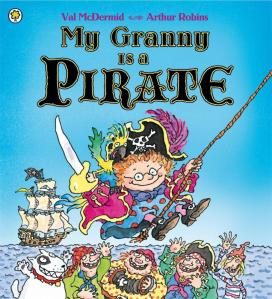
When I was in London last year I did buy a delightful book for my grandchildren called My Granny is a Pirate by Val McDermid. We had enormous fun reading it and laughing at the wonderful illustrations by Arthur Robins.
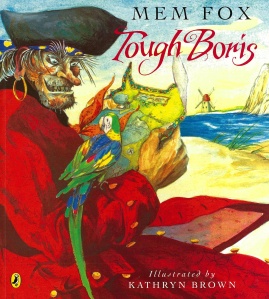
Although I own many titles by Mem Fox, I don’t own her “all time classic and long-lasting bestselling” pirate book, Tough Boris . In the information about the story on her website, Mem explains how the story came to be and raises issues of sexism, particularly regarding the over-representation of male characters, in picture books. This is a topic that is very familiar to me.
In addition to not owning books about pirates, I can remember using a pirate theme for teaching on only one occasion. This surprises me too as pirates seems to be a perennial theme for birthday and fancy dress parties. Children and adults find the idea of pirates fun. You have only to look at the success of the Pirates of the Caribbean series to know that.
Of course, in this post I am referring only to the pirates of picture books and movies such as these, that were no more real than other fanciful characters such as giants, fairies, elves and dragons.
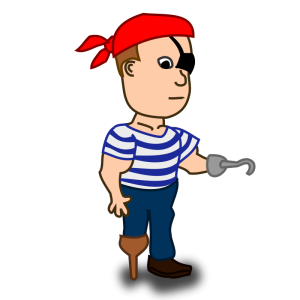
The occasion for my using a pirate theme was over twenty years ago when I was running early childhood classes as part of my home-based business Create-A-Way, and the inspiration for it was of a practical rather than literary nature. I was required to wear a patch over an eye after having a pterygium removed. A pirate day seemed like a great way to avoid upsetting the children and to have a bit of fun as well. Perfect!
But why am I thinking about pirates you may wonder. Well, it’s in response to the post by Charli Mills at the Carrot Ranch and her challenge to writers to In 99 words (no more, no less) write a pirate story. As always Charli gets me thinking about different things with her prompts. She is talking about the piracy from her internet data service and drinking rum before 10 am, which is apparently something pirates do.
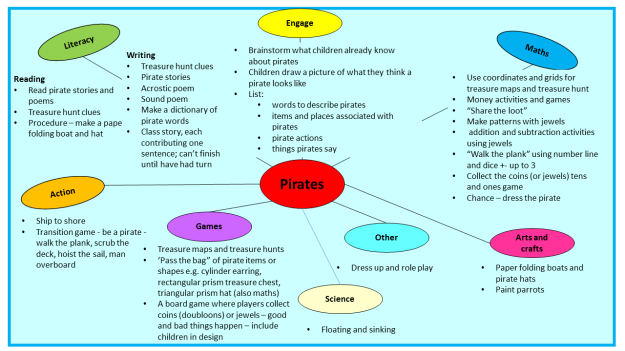
As usual I take the prompt to the early childhood education setting, and I’m excited by doing so. Ever since reading Charli’s prompt I have had ideas for teaching and learning experiences based on a pirate theme swirling around in my head. I may be late coming to the party, but I’m not coming underdressed.
One of the things I have always loved about teaching is the opportunity to be creative: to write and prepare fun educational resources to use with my children. What wonderful things could be done with a pirate theme. I can’t believe I have never done it. And while I am no longer in the classroom and the opportunity is not there for me to use them with my own class, I can make them for my website to share with other teachers. The fun of thinking, writing, and creating is still mine!
I’m pleased to announce that my website is underway. I have signed with a web designer and developer. It should be ready to go live by the end of January, ready for the start of the new school year in Australia. I can’t wait. Well, I can wait. I still have so much work to do in the meantime. I have resources to finish and new ones to write. There are many “in progress”. While I won’t be rushing into making pirate themed resources, I am putting them on my list. I have lots of ideas.
Actually now that I think about it, the mix of feelings I have now that the website is imminent may be similar to those experienced by someone walking the plank: there is no way back and the choice for the future is to either sink or swim. If I do manage to hold my head high and above water level, I hope I don’t get eaten by sharks!
On my website subscribers will be invited to suggest or request resources to match their requirements. I love thinking of resources to suit particular topics or to teach particular skills or processes. I would love a request for pirate materials so that I could get started on making them sooner rather than later.
Here are a few ideas I have to start with. I’m sure I would come up with many more given a little longer.
But now here is what got me thinking about pirates in the first place: my flash fiction response to Charli’s prompt. I’m definitely sticking with my early childhood theme and a bit of fun for this one.
I have always enjoyed working in early childhood classrooms. Being able to share and assist children’s pathways into literacy is as much a privilege as it is exciting. To keep alive their innate curiosity, wonder and joy of learning is an aspiration that rewards me as much as it does them.
However the role can be rather daunting at times. It requires that one be a generalist, able to move comfortably through and teach effectively in the full range of subjects: English, mathematics, sciences, the humanities and social sciences, technology, health and physical education, and the arts. But the diversity can also provide opportunities for fun.
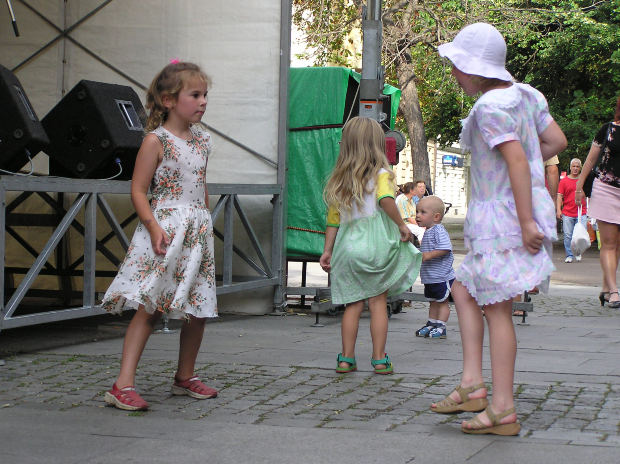
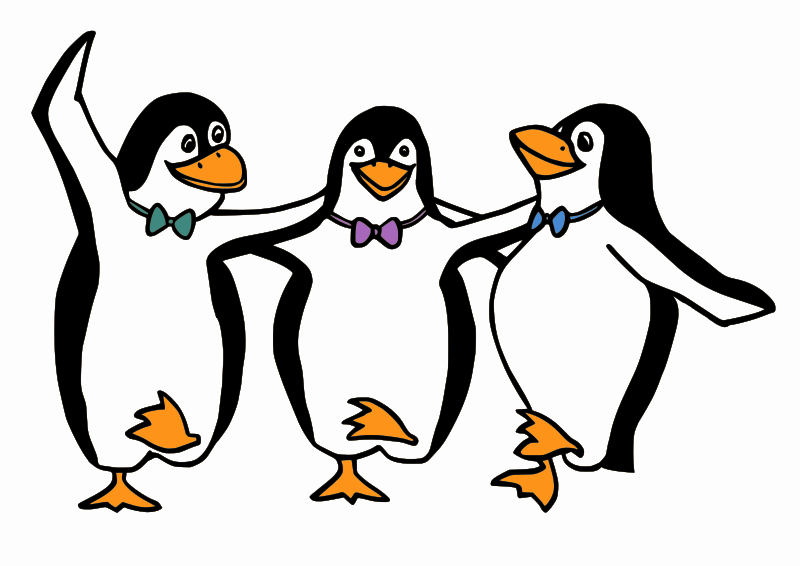
Take dance, for example. Dance can fit into both the arts and physical education programs. While the formal subject areas require some progression of learning in skills and understanding, some form of movement or dance can be incorporated into daily routines such as transition times. I touched on this briefly in a recent post about using the game Freeze, which involves moving to music.
These are some other ways I incorporated movement and dance into daily routines:
At the beginning of each day, after giving the children a few minutes to organise their belongings, I would play a video of music and dance moves. This would signify to the children that it was time to join in and be ready for our day’s work together. By the end of the dance everyone was ready.
During our morning sessions children shared items related to their interests or our units of work. Sometimes I asked them to bring in a favourite piece of music to share, with the proviso that they teach us some dance moves to it. The children enjoyed showing their moves as much as they enjoyed following the moves of others.
In addition to using the game Freeze, I had other CDs of music with patterns of moves that could be used to transition from a noisy to quiet activity, to regain children’s attention after independent or group work, or to complete the tidying of the room at the end of the day.
Sometimes I used music that had set dance routines.
Other times we moved to the music freely, or responded to the tempo, pitch or volume with large, small, high, low, fast, slow, loud or quiet movements.
Sometimes dance routines were performed independently but in unison such as The Hokey Pokey. The Chicken Dance and The Macarena.
Sometimes they required participation as a group, for example learning simple square dances.
Whichever way we did it was always fun and the children loved to participate. They had no need of being told to “Dance like there is nobody watching.”
I wonder at what age that becomes a necessity. Perhaps the phrase, “and if they are watching, dance anyway” needs to be added.
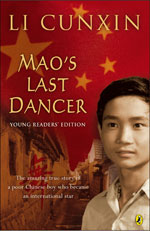
Of course my thoughts turn to the classroom (as explained above) and to books about dance.
In a previous post about Australian picture books by Jackie French I wrote about Josephine Wants to Dance. This book, illustrated by Bruce Whatley, is a delightful story of a kangaroo who loved to dance but dreamed of dancing another way. One day the ballet came to town and Josephine decided that was how she wanted to dance. Though others discouraged her, Josephine was determined to give it a try. It is a lovely story of believing in yourself and following your dreams.
Another delightful picture book about dance is Giraffe’s Can’t Dance by Giles Andreae, illustrated by Guy Parker-Rees. While I have read this book many times, it took the recent reading of a post To Thine Own Self Be True by Sarah Brentyn on her blog Lemon Shark to remind me of it. The title of Sarah’s post beautifully sums up the theme which is expressed in the book this way: “We all can dance when we find music that we love.”
The audience hushed as the lights dimmed. Marnie shuffled. Darkness was not to her liking. Josephine patted her hand reassuringly. The girls on her other side twittered with anticipation. They’d been to theatre before. Observing their confidence earlier had Marnie feeling even more conspicuous as she balanced on unfamiliar heels and clutched a borrowed evening bag so tightly it left imprints on her hand. At least now the darkness hid her from view.
Soon the darkness was banished by a brightly lit stage and enormous Christmas tree surrounded by happy children dancing. Marnie was mesmerised. So this was ballet!
Thank you for reading. I appreciate your feedback. Please share your thoughts about any aspect of this post or flash fiction.




























 Norah Colvin