This week I had the honour of writing a guest post and flash fiction prompt at the Carrot Ranch. I was writing around in circles.
If you haven’t already popped over to see, I’d be thrilled if you did!
Here is a taster and link.
If I was to ask a group of six year olds what a friend is, I would receive responses such as:
A friend is someone who plays with you
A friend is someone who likes you
A friend is someone who helps you
A friend is someone who looks after you when you’re hurt
For just over two years now a group of writers have formed a bond of friendship by playing together each week, responding to a flash fiction prompt set by Charli Mills at the Carrot Ranch. You couldn’t get a more supportive group of writers. In fact, a while ago I coined the term S.M.A.G. (Society of Mutual Admiration and Gratitude) to express the relationship many of us feel.
This week Lisa Reiter, who blogs at Sharing the Story, showed that the ability to lend a hand is not restricted to friends who live close by. Although they live at opposite sides of the Atlantic and half the world away from each other; and despite the fact that no request for help had been made, like the true friend that she is, Lisa saw a need and immediately assisted Charli by writing this week’s flash fiction prompt and post. You won’t be surprised to know that the theme is helping out.
“Global Citizen is a community of people like you. People who want to learn about and take action on the world’s biggest challenges—and use their power to get other people involved too.
We bring you stories and actions that make a difference. That help fight extreme poverty and inequality around the world, and support approaches that will make life more sustainable for people and the planet.”
These are some of the points I have brought away from Hugh’s talk:
A global citizen is “someone who self-identifies first and foremost not as a member of a state, a tribe or a nation, but as a member of the human race, and someone who is prepared to act on that belief, to tackle our world’s greatest challenges.”
Hugh describes himself as “one of those seriously irritating little kids that never, ever stopped asking, “Why?” He went from asking questions like, “Why can’t I dress up and play with puppets all day?” to why couldn’t he change the world?
He had already been raising large amounts of money for communities in the developing world when, at age fourteen, he spent a night in a slum in Manila and thought, “Why should anyone have to live like this when I have so much?”
“that of the total population who even care about global issues, only 18 percent have done anything about it. It’s not that people don’t want to act. It’s often that they don’t know how to take action, or that they believe that their actions will have no effect.”
Hugh initiated the Global Citizen Festival in New York’s Central Park. Tickets for the festival couldn’t be bought, They had to be earned by taking action for a global cause. He said, “Activism is the currency”.
By becoming a global citizen one person can achieve a lot because they are not alone – there are now hundreds of thousands of global citizens in more than 150 countries
“We, as global citizens, now have a unique opportunity to accelerate large-scale positive change around the world. “
“Global citizens who stand together, who ask the question “Why?,” who reject the naysayers, and embrace the amazing possibilities of the world we share.”
He finishes his talk with the challenge:
“I’m a global citizen. Are you?”
Hugh’s contribution to the world is a great recommendation for encouraging children to ask questions, isn’t it?
Here is his talk if you would like to be inspired by his own words. You may find other points that speak more clearly to you.
This brings me back to Lisa’s helping hand which, while not on the same scale, clearly demonstrates the opportunities that exist to help if we take the focus from ourselves and place it on others in an attempt to understand their situations and how we might be able to assist.
For my flash, I’m bringing you back even closer to home, to a situation with young children that will be familiar to many. Little ones love to help and hate to be helped in almost equal measure. “Let me do it!” and “I can do it myself!” are two frequently heard phrases in households with little ones. Opportunities for both are essential for their developing sense of self, independence and confidence. Both require a great deal of patience on the part of parents and a larger allocation of time than one would normally feel necessary. I think I must have been in a rush and didn’t have time to wait in the queue when patience was being dished out. Fortunately, my children shared some of theirs with me. Sadly, not always soon enough for their benefit. (Sorry, Kids.)
A playdate at Bella’s
Mummy checked the calendar. Oops! Her turn for cake. Dulcie was engrossed playing. Great! Just enough time, if ….
Scarcely was everything out when up popped Dulcie. “Let me do it!”
Too pressed for winnerless battles, Mum kept one eye watching Dulcie, the other on the clock.
With the cake finally baking, Mummy suggested clothes to wear.
“No! I want this one,” pouted Dulcie.
“Let me help with the buttons.”
“No! I can!” objected Dulcie.
Only thirty minutes late, with warm cake and buttons all askew, they arrived.
“Come in,” greeted Bella’s mum, “Looks like you need a hand.”
Thank you for reading. I appreciate your feedback. Please share your thoughts.
This week at the Carrot RanchCharli Mills is talking about anxiety, panic attacks and agoraphobia.
The following statements taken from the Mayo Clinic website explain agoraphobia as:
“a type of anxiety disorder in which you fear and often avoid places or situations that might cause you to panic and make you feel trapped, helpless or embarrassed.”
“The anxiety is caused by fear that there’s no easy way to escape or seek help if intense anxiety develops.”
“Most people who have agoraphobia develop it after having one or more panic attacks, causing them to fear another attack and avoid the place where it occurred.”
“Agoraphobia treatment can be challenging because it usually means confronting your fears.”
Sometimes, as Charli says, we can face our fears head on and defeat them with the choices we make. Other times we may need support to help us overcome them. Sometimes therapy and medication may be needed to help those suffering the debilitating effects of anxiety. I will not be discussing those paths in this post. Nor am I going to talk about the anxieties of children with Asperger’s or Autism. There are others who do a much better job of it and are much more knowledgeable than I, such as Sherri Matthews and Shawna Ainslie.
However, it is not uncommon for a child to occasionally feel anxious and stressed by situations that occur at school. The incidence increases when children are placed in situations that are inappropriate to their development and don’t respect their needs. Sometimes the anxiety and stress is manageable and alleviated by more appropriate circumstances outside of the school environment. But sometimes the distress to the child and family can increase to a level at which more help and support is required.
A school environment more suited to children’s needs would reduce the number of anxious and stressed students, parents, and teachers. Creating a nurturing and supportive school environment requires a firm understanding of child development and a belief in their ability to learn. It also requires that children are respected and appreciated for who they are, and that they receive timely and appropriate feedback, encouragement, and support.
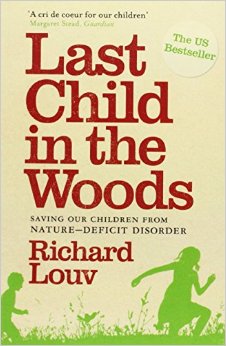
In recent posts I have mentioned the importance of play, and of time spent in, and learning outdoors, in nature. In his book Last Child in the Woods, Richard Louv espouses the importance of nature to the development of healthy children, as well as to the physical health and well-being of adults. Perhaps more time in nature would provide the calm that is needed to combat the hustle and bustle of modern life and pressures of formal, test-driven classrooms.
In fact, it is not just “perhaps”. In his article The School of Nature Louv provides evidence of benefits to learning that nature-based and place-based education can bring. He says, “greening schools may be one of the most cost-effective ways to raise student test scores.”
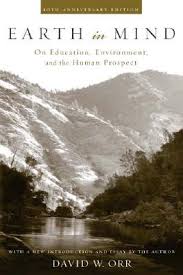
David Orr agrees. In his book Earth in Mind: On Education, Environment and the Human Prospect, he also stresses the importance of learning about, from, and in nature. He says, that, “all education is environmental education. By what is included or excluded we teach students that they are part of or apart from the natural world.”
It is easy to talk about the failings of the school system and suggest ways it could be improved. It is more difficult to make the desired changes happen. While the majority of teachers work hard to create warm, supportive, nurturing environments for children, there are many situations over which they have no control. It is important then to have strategies for dealing with anxiety and stress if they occur.
I recently came across a book that may be useful if your child tends towards anxiety. Stress Can Really Get on Your Nerves aims to provide children with strategies for coping with stress. Written by Trevor Romain and Elizabeth Verdick, it is published by free spirit Publishing as one of a series aimed at helping 8 – 13 year-olds “get through life rough spots”. With Trevor’s fun, cartoon-like illustrations on every page, the book promises to turn stressed out kids into “panic mechanics” with a toolkit of suggestions for reducing their own stress levels. I’d have to say, they’re not bad strategies for anyone’s toolkit.
I think time outdoors, breathing the fresh air, and enjoying the natural world is a great antidote to stress. I may no longer gambol in the grass, but I can sit in stillness and quiet, appreciating the beauty around me as I unplug from technology and reconnect by grounding myself in nature. I’m not sure how that works for agoraphobics with a fear of open places though. Perhaps having more time in nature as a child and learning techniques for coping with anxiety and stress could work as a preventative. But it’s only a thought. I am no expert.
This brings me back to Charli Mills and her flash fiction prompt to In 99 words (no more, no less) write a response to an agoraphobic moment. I have used the Mayo Clinic’s broader interpretation rather than the “narrow” definition of “fear of open spaces”. (I’d rather not be fenced in!) I hope my story portrays a recognisable response that could occur in a variety of circumstances. Please let me know what situation you think of as you read, and whether you consider my attempt successful.
Confrontation
She could hardly manage to chew, let alone swallow, the morsel of cereal occupying her mouth.
Her vacant stare and stifled moans alerted him.
“Are you okay?”
“I’m trying,” she mumbled, and squeezed her hands between her quivering knees.
“You’ll be fine. You haven’t had an attack for months. And, you’re prepared.”
“I know.” She pressed her arms against her gurgling belly. “But …”
He waited.
Finally, she looked at him. “But …”
He sponged her clammy forehead.
She looked away. “What if they don’t like me?”
“They won’t like you. They’ll love you. Come on. I’ll take you.”
What did you think of as you read? I wrote the piece about young teacher about to meet her first class. Did you pick it?
While anxiety about school is more commonly thought of as presenting in children, it is not uncommon for teachers to suffer from school anxiety as well. We accept that teaching is a stressful role, but for some it can also cause anxiety.
I think there are few who are immune from anxiety. We need to be more open in talking about mental health in general. Recognition, acknowledgment and supportive discussion are important factors in helping to overcome the effects of anxiety.
Thank you for reading. I appreciate your feedback. Please share your thoughts.
I have never been physically adventurous; never dived off a high cliff, surfed a rolling wave or bungeed into an abyss; I don’t like heights and get no thrill from the thought of a roller-coaster ride. I don’t believe it’s fear that holds me back. It’s lack of interest and opportunity: I never sought it and it never sought me.
When I was very little I earned the nickname “Possum” because, apparently, I was a climber and constantly getting into mischief. I soon had that knocked out of me by a combination of physical and verbal admonitions. Perhaps this contributed to my dislike of heights, but I think my disinclination for the adrenalin rush of physical activities was inborn.
Fear probably does contribute to my reluctance to participate in other height related activities such as parasailing, hang gliding, gliding and hot air ballooning. Each of these does have a certain amount of appeal and I think I would love the experience, if I was brave enough to take the leap. One day perhaps.
Not only were my explorations through climbing curtailed, I was also discouraged from conducting my own investigations and from asking questions. While my parents encouraged reading through library membership and giving books as gifts, my father was often heard to say, “What you don’t know won’t do you any harm.” Though I read avidly, self-selected material was almost exclusively fiction. Non-fiction was the realm of textbooks set for study in boring school subjects with enforced memorisation for regurgitation in exams and then promptly forgotten.
Fortunately, I gained some sense of the limitations of my own experiences and thinking and endeavoured to avoid limiting my own children in similar ways. Only they will be able to say how much their experiences and learning were restricted. Neither is into extreme physical challenges and I certainly didn’t provide them with opportunities that may have encouraged such activities. However, I did encourage them to be curious, to ask questions and to investigate. I closed the door on thinking that revered ignorance and opened the one for adventures into learning.
It is important for parents and teachers to realise the impact of their attitudes, expressed and otherwise, on the developing attitudes of their children. There is a lovely poem Children Learn What They Liveby Dorothy Law Noltethat expresses it rather well.
Below is a list of a few further ingredients that I consider essential for maintaining the fun and adventure in learning throughout life. I’m sure you will think of many more.
Children learn best when they have time to:
play,
choose,
grow and develop,
think,
problem solve,
make many attempts,
develop independence,
create,
be,
question,
wonder,
imagine,
explore, and
discover
in an environment of respect and encouragement that is unhurried and non-competitive.
While I often say that children are born scientists, constantly exploring the world and conducting experiments to find out what works, we can sometimes take their discoveries for granted as their investigations confirm for them something it seems that we have always known; for example, that something dropped will fall. However, any question that a child asks can be a springboard into further learning. It is the questions asked that have driven science discoveries and understandings: questioning, wondering and imagining.
As she reached for the unicorn-shaped balloon the man smiled and winked. She hesitated, accepted the balloon, and pushed back through the small audience. Something made her turn. The bystanders, the man, and the balloons were gone. Puzzled, she scanned the crowd for her mum. A sudden gust puffed out her skirt and, as she clutched the unicorn, lifted her high and away: across the city, over the fields, beyond the horizon; and back. She gazed at the patchwork unfolding: beautiful, connected, serene; and recognised herself a part. As she descended all was as before. Only she had changed.
And if you are wondering about a unicorn-shaped balloon, it is possible:
Thank you for reading. I appreciate your feedback. Please share your thoughts.
There’s an event worth celebrating at the Carrot Ranch this week. Two years after posting her first prompt encouraging writers to hone their writing skills by joining the 99-word flash fiction posse, Charli Mills has posted her 99th.
I’m proud to say that I’ve been there since the first, riding the range of story prompts with others who have gathered around the campfire to share stories, wise words and writing tips in response to the nurturing offered by Charli’s warm, honest and generous spirit. It is she who is the hub around which has formed a community that is welcoming, supportive and encouraging. She is the one who keeps the wheels turning, the imaginations stirring and the words flowing.
I take this opportunity to congratulate Charli on her initiative. In this recent post she restates that “the original intent ofCarrot Ranch as of March 5, 2014 was to create a bully-free zone where writers could learn to access creativity through problem solving (the constraint); write from a unique perspective (diversity); read and discuss the process or prompt (engagement).” There is no question that she has achieved that and more. I have met many wonderful writers, bloggers and friends through my visits to the Carrot Ranch. If you are not yet a visitor, I suggest you pop on over. You’ll be warmly welcomed.
Recently I received as a gift a book called “One: How many people does it take to make a difference?” The book is filled with many wonderful quotes, stories and suggestions; too many to share, in one post anyway. I decided to open the book to a random page and share what I found. This is it:
“If someone listens, or stretches out a hand, or whispers a kind word of encouragement, or attempts to understand, extraordinary things begin to happen.” Loretta Gizartis
That’s a pretty powerful quote. The effects of Charli’s “just one” contributions are easy to see. The quote is equally applicable to teachers and the effects that they may have upon the lives of others.
It is lovely when teachers are publicly (or privately) acknowledged for the positive influence they have had upon a life. Charli did this recently when she acknowledged a high school teacher who had encouraged her to achieve more than she thought she could.
“Thanks to Mr Tahta, I became a professor of Mathematics at Cambridge, in a position once held by Issac Newton. I have spent my life attempting to unlock the mysteries of the universe. When each of us thinks about what we can do in life, chances are we can do it because of a teacher.”
Even teachers need mentors and many can name one who has made a difference to their lives. As if in response to Charli’s challenge, this week Vicki Davis, the Cool Cat Teacher, nominated “just one” personal mentor who had taught her the most about teaching. Of Maryfriend Carter, Vicki says,
“I’m grateful for her mentorship and encouragement in my life. She changed my thinking about teaching as she taught me about teaching. She single-handedly convinced me that testing doesn’t work and what does.”
But not all who teach the most important lessons in life are “professional” teachers. There is a great saying that goes something like, “When the student is ready the teacher appears.” I often say that my own children have been my best teachers. But I have also been inspired by other wonderful teachers too. I have mentioned many of them in previous posts including here, here and here.
However, my response to Charli’s flash fiction challenge aims to demonstrate that even the smallest, seemingly inconsequential, action can have a powerful effect upon the life of another. Sometimes we learn of the effects, sometimes we don’t; but when we do, the effect can be magnified. I hope it works.
The Power of One
Only much later, through a chance meeting with mutual friends, did she discover her power of one.
“I know you,” said the other, pointing her cake fork. “You’re the one.”
The old fear gripped, twisting tight. Her cake lost its appeal.
“Which one?” another asked.
“In the foyer. On the first day. You spoke to me.”
“Oh,” she reddened, shrinking to nothingness inside.
“I was so nervous. You made me feel welcome, at ease. I’ve been wanting to thank you.”
“Oh,” she lifted her fork, smiling. “You’re welcome.”
“If only you knew,” she thought. “I did it for me.”
Thank you for reading. I appreciate your feedback. Please share your thoughts.
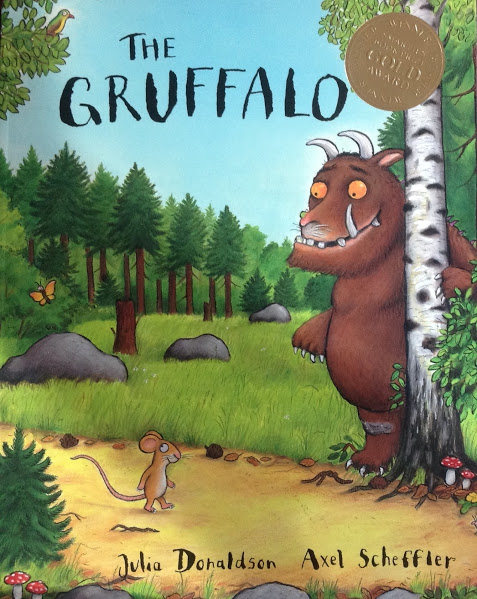
The Gruffalo is as fearsome as any monster you are likely to meet with its “terrible tusks, and terrible claws, And terrible teeth in his terrible jaws”; “a poisonous wart at the end of his nose” and “purple prickles all over his back”. The quick witted mouse, who imagines the Gruffalo into storybook “reality”, must find a way of ridding himself of the monster’s inherent danger and once again uses his ingenuity to escape.
I’m not sure if it was Donaldson’s intention, but I think this is a great analogy for the monsters we create for ourselves such as self-doubt, unrealistic expectations, and (you can add your own monster here). Not that I’d be sharing that thought with young children.
In this video Axel Scheffler explains his concept of the Gruffalo and even hints, a couple of times, that he too may be troubled by that all too common of personal monsters, self-doubt.
Throughout The Monster at the end of this BookGrover, from Sesame Street, pleads with the reader to not turn the page as there is a monster at the end of the book. You could almost say he is immobilised by this fear, or that he tries to immobilise the reader. Of course it is a lot of fun and provides much laughter. When we (reader and Grover) do get to the end of the book, he is rather embarrassed to find that he, “lovable, furry, old Grover” is the Monster. He tries to assure us that we, and not he, were the scared ones.
Of course Grover wasn’t the monster only at the end of the book. He was always the “lovable, furry” harmless monster. It was his fear that was the real monster. How often are we immobilised by our fear, and how often when we take that jump despite it, do we find our fears to be groundless? Sometimes I think, or is it only me, we are our own worst monsters setting ourselves impossible targets with too-high expectations that lead us only to disappointment if we don’t achieve them.
But if we view ourselves as works in progress, in the process of working out where we want to be and how to get there, we can find contentment in what we achieve along the way, in where we are and how far we have come, rather than ignoring those milestones and looking only at how much further we must (in our own minds) go.
It is all too easy to contribute to the development of children’s personal monsters by doing to them what we do to ourselves: setting unrealistic targets, expecting too much, insisting on error-free work, measuring them against external benchmarks … To avoid this, we need to view them also as works in progress and encourage them, through a growth mindset, to reach their own milestones and goals in the time that is right for them.
Like the mindset of the mouse in The Gruffalo who was able to think on his feet and overcome the obstacles, or that of Grover who realised there was really nothing to be worried about at all.
We need to be not afraid of the monsters under the bed or in the cupboard, most of which we have created in our imaginations and stuffed there, sometimes with the assistance of others, allowing them to multiply like wire coat hangers until there is no room left for anything good. I have taken the theme of internal monsters for my response to Charli’s challenge.
Open, close them, open anew
The picture was clear. Taken with wide open shutters and long exposure, then developed in black and white for extra clarity, the result was undeniable and exactly what would be expected.
“You’ll never amount to anything.”
“That’s rubbish.”
“Pathetic.”
“You’re always the troublemaker.”
“Because I said.”
“Shut up!”
“Stop asking questions.”
An existence devoid of value was drilled with reminders hurled unrelentingly from birth. Well-schooled in self-loathing, the lessons were regurgitated without effort or question. The monsters without had created the monster within. How could one escape from what was recognised only as truth?
And now for something a little lighter:
The Monster Mash
Thank you for reading. I appreciate your feedback. Please share your thoughts.
Although I am enjoying the audiobook, I think I will be none the wiser at its conclusion and retain little more than in earlier days. It is a reflection on my retention rather than the worthiness of the book. At the top of Taggart’s webpage is a statement from the Yorkshire Post that I think is probably no idle boast:
Caroline Taggart…has carved out a niche for herself in user-friendly, wittily written factual books which capture the imagination and quickly find their way to the top of the bestseller lists.
Prior to reading this statement I had thought that it was perhaps the narration that had brought the book alive in a most entertaining way. I was surprised that the narrator was not the author for the wonderful meanings and interest he evokes. If not the author then, I thought, he must be a wonderful character actor. Indeed, I was not surprised to find, he was.
According to the Yorkshire Post, the writing itself is worthy too, though it seems to me, in many ways to be little more than a list of names, dates and snippets of events brought to life by an expert narrator. I’m not sure that I would read it cover to cover as I have listened to it, but it would definitely make a useful resource for checking out who and when, which is more or less impossible to do with an audiobook.
One thing I have not liked about the book is the repeated opinion that maths and science in school are boring, and that most of us would only groan when thinking of what mathematicians like Archimedes and Pythagoras have burdened us with. If you’ve read many of my posts you would probably accuse me of being inconsistent, for haven’t I often agreed with that opinion of maths at school?
However, learning in mathematics should not be that way. I wish that everything we learned in school would be alive with interest, purpose and meaning. Then there’d be no need to groan. We’d be amazed and inspired by these great thinkers who have enlightened our lives.
“Mathematics is not just solving for x, it’s also figuring out why.”
But I digress a little. Charli’s main point was about the joy to be found in libraries. In my younger years I spent many hours in libraries. And if I wasn’t in a library, I was reading a book I’d borrowed from a library. Our home was filled with books but there were never enough to read and my parents and many of my siblings were frequent library book borrowers. On many Saturday afternoons throughout my teenage years I would walk the 5½ kilometre journey to the local library and back. I can’t remember how many books I was allowed to borrow, but I borrowed as many as I could.
So many things about libraries have changed from those days of enforced silence, carded catalogues, and microfiche readers. But I don’t feel nostalgic for it. The systems are much more efficient now, and libraries have much more to offer the changing needs of a changing society.
What does sadden me is that many local councils and schools are doing away with their libraries, and many schools are choosing administrators over teacher librarians when organising their staffing. A teacher librarian should be first enlisted. Nobody knows books and readers better than a teacher librarian.
While I have not frequented my local library in recent years, I would be very distressed if it were to close. Not everyone has the luxury of being able to choose ownership over borrowing as I do. Libraries are important to communities and should be accessible to everyone; and not only for their books. Libraries play a significant role in developing a sense of community by providing meeting spaces for books clubs and groups of all sorts, activities for children including storytelling and reading, craft activities, films, games and puzzles, visits by authors and illustrators …
They are also a great place to brush up on the classics that you may have missed out on in school, or find a book about mathematics that may inspire you to ask a big question and figure out why.
Another life, another dream, another possibility …
The Book Lady
She pulled the trailer from the shed, cleaned off the grime, gave it a lick of paint and hitched it to its once permanent position behind her bicycle. A trial ride around the yard confirmed all, including her knees, were still in working order. She propped the bike against the stairs and trundled back to her library where books lay scattered, spewed from shelves no longer able to hold them. She bundled them lovingly, tied them with memories, and wished them new hands to hold and hearts to love. It was time to share, and she knew just where.
Thank you for reading. I appreciate your feedback. Please share your thoughts.
This week at the Carrot RanchCharli Mills has challenged writers to write about galloping. What keeps replaying in my head is the phrase “The horses go galloping, galloping, galloping”interspersed with the lines from “The Highwayman” by Alfred Noyes, a poem I learned at school.
The Highwayman came riding, riding, riding,
The Highwayman came riding, up to the old inn-door.
Learning poems at school was a joy. I love poetry and, in younger years, used to read a lot of it, less currently. Perhaps I should say I loved poetry, but that would unfair, just as it would be unfair to say that I no longer love an old friend that I haven’t seen for years, for at the moment we meet up again the connection is just as strong as ever, the ties never broken.
Oftentimes when I read Charli’s challenges I know how I will respond immediately. Other times I need to massage the idea until I hit just the right spot. This time the horse has bolted and the paddock is left empty without a horse in sight. All I’m left with are my thoughts of poetry.
Fortunately, as an early childhood teacher with a love of picture books, recent years haven’t been completely devoid of the poetic form. While not necessarily written in what might be considered “poetic language”, many are written in rhythmic rhyming verse. Others contain verses within the story, such as the refrain in The Gingerbread Man or the song in Love You Forever by Robert Munsch.
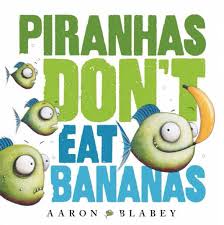
A title recently added to my list of favourites, through repeated readings and recitations by my grandchildren, is Piranhas Don’t Eat Bananas by Australian author Aaron Blabey. Its rhythm, rhyme and sense of fun is an absolute joy. We laughed together at every reading by G1, and every recitation by G2. It begs to be read and re-read, recited and recited again. Sadly, I got to read it aloud only once, and even then not all the way through! “Hey,” I protested in vain. “I like to read picture books too!”
Of course there are also many books of poems and rhymes written for children, including Nursery Rhymes, though many of those weren’t written with children in mind. There are also some that fit into a horsey theme such as
In addition to reading poems and stories to my class I also enjoyed writing poems with them. At this early childhood stage the poems would be more rhythmical verse, sometimes rhyming and sometimes not, with only the hint of an introduction to poetic language. I have previously written about writing our versions of I Love the Mountains, a traditional camping song.
I had been thinking for a while that I should write some new versions suited to other times of the year, but hadn’t prioritised it. However, when I read Rowena Dreamer’s post Mr’s Poem: Through My Window on her blog beyondtheflow, another idea sprang to mind. Rowena discussed the writing of a poem “Through my window” that had been set as homework for her son. I immediately thought of the sound poems that I had taught my students and wondered if the structure could be adapted for sight poems.
This is what I came up with:
You’ll notice that I haven’t exactly maintained the structure. This is what happens, particularly when young children are writing their versions. It is to be expected and accepted. The purpose of the structure is to support, not restrict.
I then wondered if it could be used with the other senses and, at the same time, realised that four verses, four senses, would just about reach the target of Charli’s challenge to In 99 words (no more, no less) write a story about galloping. With no other ideas galloping into view, how could I resist giving it a go?
Disappointingly, I found the structure less accommodating for smell and taste, and had difficulty in conjuring different words to use for each. For example, I wanted to smell and taste the freshness of bread and the sweetness of apples. I had thought touch would be more difficult but have realised that’s not the case. The repetition of the word “felt” for both touch and emotion is perhaps not ideal though.
I would love to say more here about the necessity for teachers to experiment before setting tasks for children, and of the value of learning from the process rather than the product, but I think I’ve probably said enough in this post. I will just share what I’ve written which, though responding to Charli’s challenge, doesn’t actually fit the criteria of flash fiction. However, if you’d be kind enough, I’d still love to know what you think.
Market Day
I heard
as I sat curled with a book
the thundering of hooves
the snorting of nostrils
the jangle of stirrups.
I felt anxious.
I saw
as I looked through the window
the horse at the gate
the rider on the path
the bag in his hand.
I felt excited.
I smelled
As I opened the bag
The freshness of bread
The sweetness of apples
The promise of coffee.
I felt famished.
I felt
As I savoured my lunch
The crunchiness of crusts
The crispness of apple
The warming of coffee.
I felt satisfied.
Yum! Fresh produce.
Thank you for reading. I appreciate your feedback. Please share your thoughts.
My gorgeous grandson has just lost his first tooth, an event much anticipated and causing a great deal of excitement. In the months leading up to the event I had wondered how the family might mark the occasion and if the Tooth Fairy might visit. Though I shared the myths of Santa Claus, the Easter Bunny and the Tooth Fairy with my children when young, as adults they have debated the ethics of perpetuating these myths with their own.
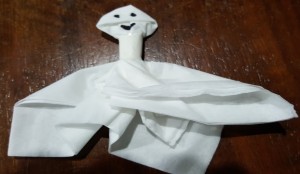
As a teacher of 5 – 7 year olds it was not uncommon for me to encounter gappy grins and lost teeth through the course of the year. Mostly children would arrive at school proudly displaying a new gap, or a new tooth peeking through. Sometimes the tooth would dislodge at school and there would be great excitement. I would carefully place the tooth in the centre of a tissue, fold the edges down around it and sticky tape below the tooth to make a little “tooth fairy” to keep the tooth safe for the return home.
Sometimes the children would discuss how their families marked the occasion of a lost tooth. Although there were children from diverse backgrounds in the classes I taught, I don’t remember any great divergence from the, to me, traditional tooth fairy story.
When I was a child, I put my tooth in a glass of water and placed it on the kitchen windowsill. The following morning, if I was lucky (for sometimes she’d forget), the Tooth Fairy would have been and left me a shiny silver threepence.
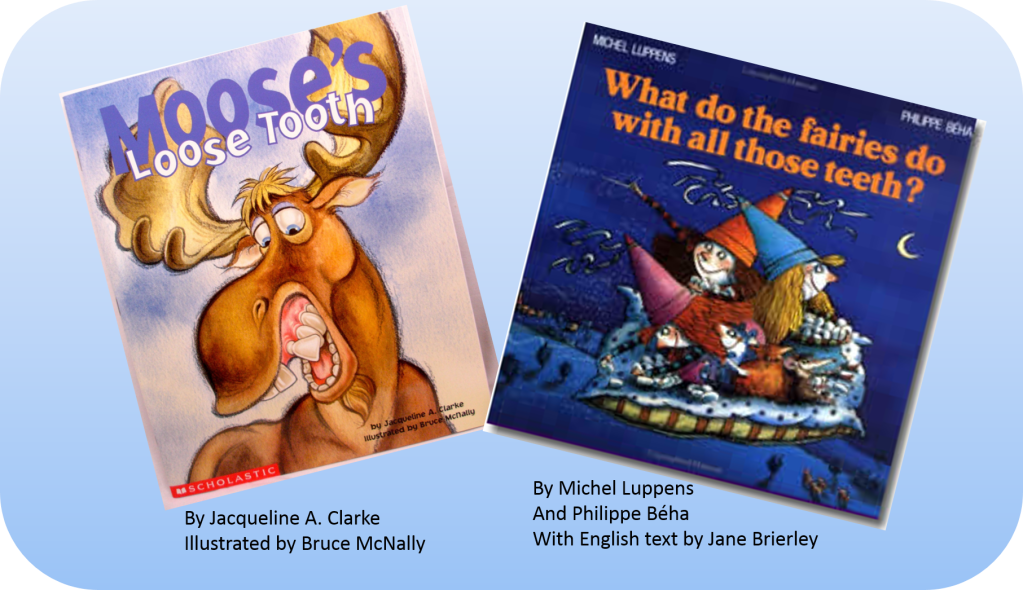
Some children I taught put their teeth under their pillows, some in a special box by their bedside, but what most had in common was the fact that the tooth had been taken and replaced with a shiny coin. Sometimes, when a child lost a tooth, we would read a story such as What do the fairies do with all those teeth? or Moose’s Loose Tooth.
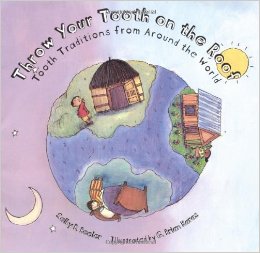
I wondered if it would be a suitable gift to mark the occasion and went ahead and ordered it. I wasn’t disappointed. The book briefly describes traditions from many cultures and countries around the world. While the Tooth Fairy’s visit and gift of a coin is familiar to those of us living in the UK, US, Canada and Australia, it is not so familiar to all. In Mexico and Venezuela a mouse replaces the tooth with money. In El Salvador a rabbit does the same. In Guatemala it is El Ratόn.
The title of the book comes from the tooth traditions of Botswana and the Dominican Republic. In some countries children receive coins, as described above, or a gift in exchange for the tooth. In other countries they ask for a new tooth. In Costa Rica and Chile the tooth is made into an item of jewellery. What surprised me was the great variety of traditions, of which I have mentioned only a few.
In her Author’s Note at the end of the book Selby Beeler explains the chance discussion, with a friend from Brazil who hadn’t heard of the Tooth Fairly, that piqued her interest and lead to the writing of the book. She says,
“I quickly discovered that the best way to learn what people do with their baby teeth is simply to ask them. While collecting customs for this book I stopped people wherever I went. I smiled, introduced myself, and asked them the question I had asked my friend, ‘What did you do with your baby teeth when you lost them?’”
The result is fascinating. Thank you Selby for being curious and asking a question that elicited so many interesting responses. Thank you also for selecting some of the hundreds of traditions and compiling them into this lovely book that enables us to find out a little more about each other; some things that are the same and some that are different. I’d be delighted too if you, esteemed readers, shared your traditions in the comments.
In the introduction to the book Beeler says,
“Has this ever happened to you?
You find a loose tooth in your mouth.
It happens to everyone, everywhere, all over the world.”
I am disappointed that, in all the years I was teaching children in the “loose tooth” age group I hadn’t ever thought to investigate different traditions. Although I took many opportunities to celebrate the diversity in the classroom (I’ve shared some of those here), I wonder what other opportunities I missed. If I was still working with year one children this book would be essential to my collection and sit alongside another favourite for discussing diversity and acceptance, Whoever You Are by Mem Fox. I am pleased I found it in time to gift to my grandson to mark his first missing tooth.
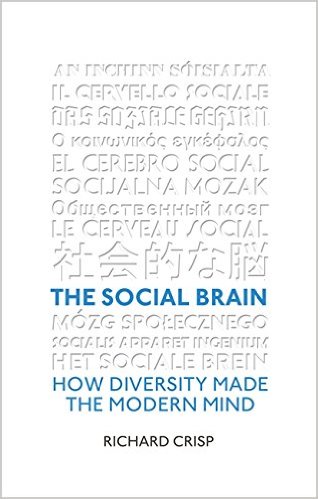
“I’m pleased to say that Richard Crisp’s highly accessible overview of recent research into cultural diversity has not only revitalised my interest in social psychology but is highly relevant to how we all live today. I touched on one of his papers in my recent post on Looking at difference, embracing diversity. The Social Brain develops those ideas in more depth and detail.”
I am compelled to add my voice to Anne’s recommendation. It is a fascinating, challenging and enlightening read.
In a comment on her post, Charli stated that diversity is in the small things, not just the big. I believe she is right. It is the attitudes and actions we incorporate into our everyday lives that can make the big difference in another’s world. I’m sticking to my tooth theme for my flash with a wish for recognition of commonality, acceptance and respect. Richard Crisp’s book goes a long way towards helping understand what drives us, and why.
A friendship born
The invisible wall was a fortress built of fear and prejudice. On either side a child played alone. The rules were accepted without question.
Then they saw each other, and a challenge was born.
At first they kept their distance, staring across the divide, until scolding adults bustled them away.
Curiosity and loneliness won over fear as they mirrored each other in play.
One day they drew close enough to touch, but hesitated. Simultaneously they bared their teeth, each proudly displaying a gap, in the middle on the bottom, a first. Surprised, they laughed together: more same than different.
Thank you for reading. I appreciate your feedback. Please share your thoughts about any aspect of this post or flash fiction.
This week at the Carrot RanchCharli Mills is talking about the importance of preserving natural wilderness areas. She says,
“Wild places matter, even to those who are not active hikers or hunters. It’s important to our psyche to know that wild places exist.”
To say it is important for our wellbeing acknowledges its anthropocentric value. However, I believe, as I know Charli does too, that its value is intrinsic with significance beyond its importance specifically to humans. Wilderness areas are the lifeblood of our planet, of all species. They are just as beautiful and just as necessary whether any human lays an eye on them or not.
I am not a hiker, definitely not a hunter, and have never been one to spend a great deal of time in the wilderness. However, I have a deep appreciation for the beauty and value of wilderness areas. I strongly believe in the importance of protecting them to ensure the health of our planet and the survival of our, and every other, species. Sometimes I wonder if our survival is deserved with the seeming disregard many of us have for our Earth, but I am a meliorist and place my hope with future generations.
To ensure this meliorism is well-founded, we need to nurture in young children their innate interest in and love of nature. There is probably no better way of doing this than through first hand experiences observing nature in wild spaces. Share with children their wonder, be intrigued with their explorations and extend your own understanding through their discoveries. At the same time develop in them an appreciation of and respect for our earth and its gifts.
Encounters with nature don’t always have to occur in large nature reserves in distant places. In fact, a real appreciation of nature is an attitude, a way of thinking about the world and can be fostered as a part of daily life with observations in the backyard, in wild places along the roadside, or in a pot on the window sill.
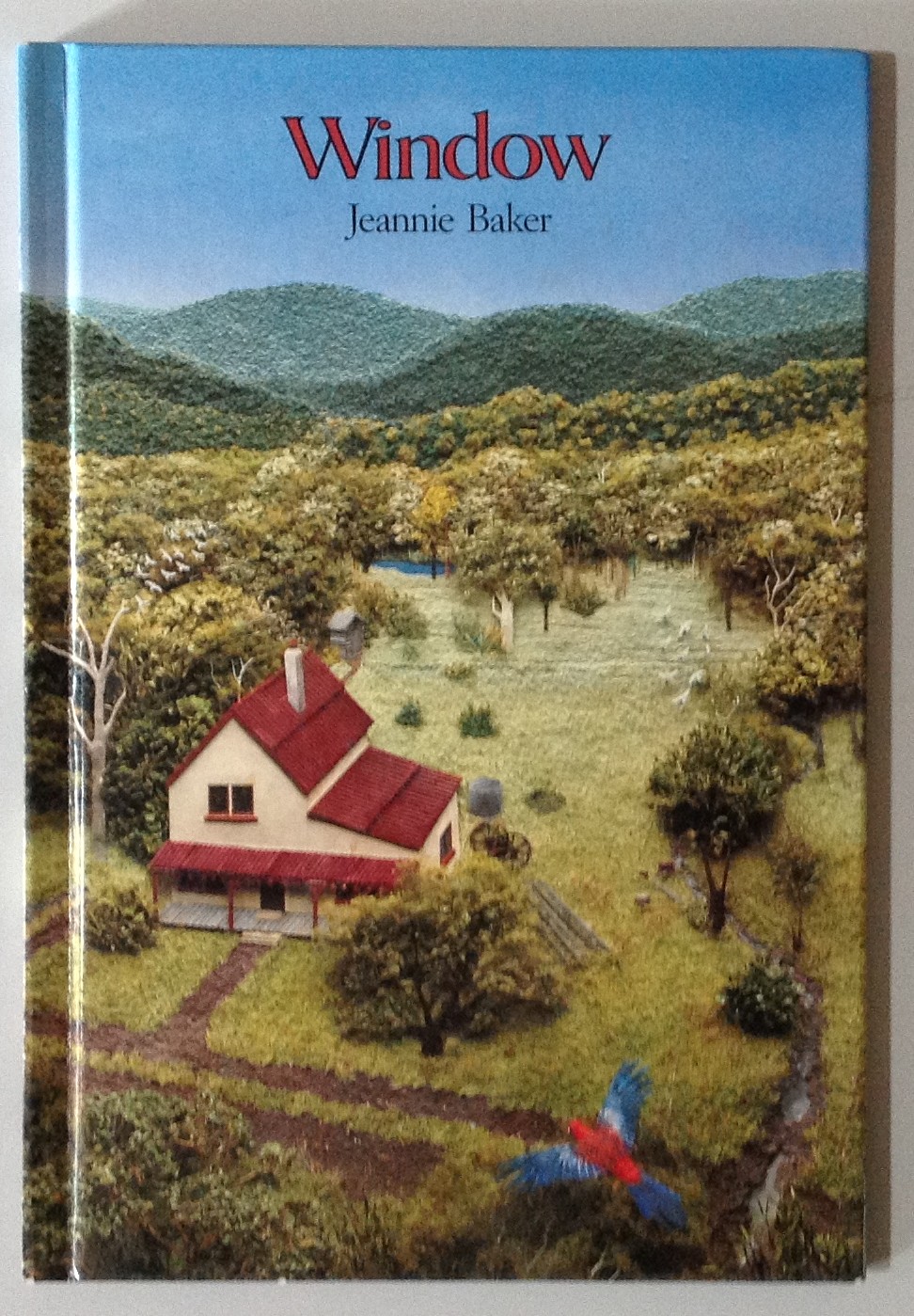
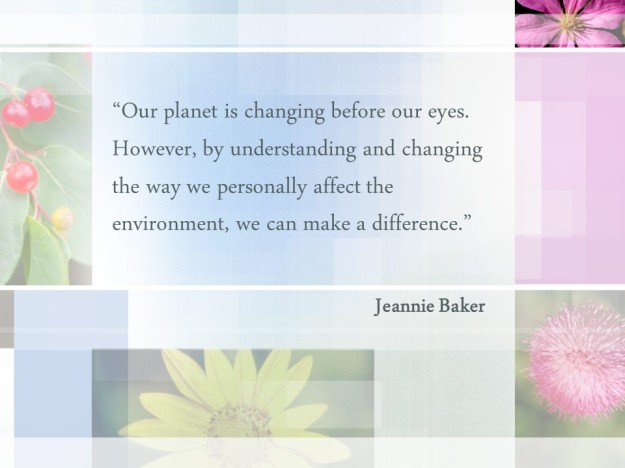
Window tells, in beautifully detailed collage, of the transformation of a landscape from natural bush to city-scape. The changes are observed through a window by a boy as he celebrates alternate birthdays from birth to 24 years. Jeannie shares an important environmental message in a note at the end of the book with these words:
In 2004 Jeannie published a companion book to Window called Belonging, which, in 2005, also received a number of awards, including one from the Wilderness Society.
This textless picture book tells the story of a changing landscape over a number of years as a city is transformed with plants and welcoming spaces for children and families. In a note at the end of this book, Jeannie says,
I think these messages, together with those shared in Charli’s post, are important for children to not only hear, but to see modelled by adults in their everyday lives. I am happy to say that members of my family are proactive in the ways they care, and advocate, for the environment. I have much to learn from them.
For my flash I drew upon a recollection of a place visited in my much-younger years, a favourite place for calming mind travel, and Charli’s recognition of the benefits of wilderness areas to our psyche, to our very essence.
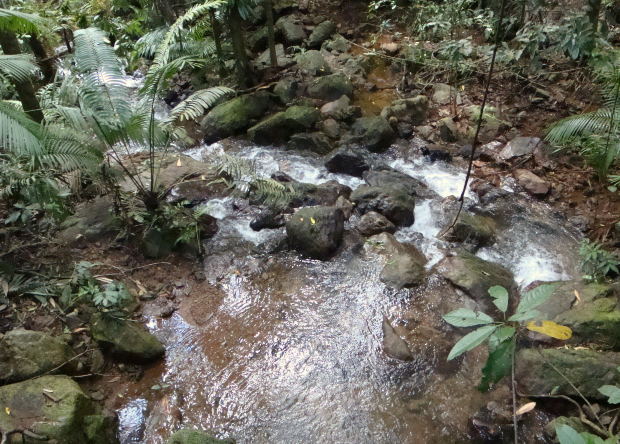
Cocooned in shadows of tall forest trees, clear spring water soothing tired feet, she sighed. Speckles of sunlight dancing from rock to ripple were unnoticed as she envied a leaf escaping downstream.
“Why?” she asked of the stream, more of herself. “Why are you here?”
The stream whispered,
“We all have our purpose’
We’re all meant to be,
We’re connected, we’re one,
Not just you or me.”
A birdsong repeating the chorus lifted her gaze towards a flutter of rare blue butterflies. A possum yawned and winked. She breathed in awe. Refreshed, with lighter heart, she was whole again.
Thank you for reading. I appreciate your feedback. Please share your thoughts.










![By UnknownMarie-Lan Nguyen (Own work) [CC BY 3.0 (http://creativecommons.org/licenses/by/3.0)], via Wikimedia Commons](https://norahcolvin.com/wp-content/uploads/2016/03/330px-homeros_caetani_louvre_ma440_n2-must-be-attributed.jpg?w=330&h=480)














 Norah Colvin