Live Love Laugh Learn … Create the possibilities

Category: Flash fiction

  • The importance of feedback


    39

    Feedback, whether inherent in the task itself or supplied by another, is essential to learning. This is true whether figuring out what happens when an item is dropped from a high chair (will it always land on the floor; will a carer always retrieve it?), how hard and at what angle to kick a ball to send it over the goalpost; how much a sibling can be antagonised before retaliation ensues; or whether your performance meets expectations.

    In almost all of these cases, the tasks are self-selected and the feedback is integral and immediate, enabling the learner to adjust what happens next accordingly. While those conditions may also be true when considering the success of performance; such as our own assessment of our output, it is not always so.

    F

    Students and employees may be engaged in tasks that are not of their choosing, which provide little inherent feedback, and are reliant upon feedback from others that may be neither timely nor specific to the learners’ needs. Sometimes the feedback can be unhelpful and hinder, rather than encourage, learning, without any real explanation of how improvement could be made.

    As a teacher, I found it necessary for an exchange of feedback between me and my students. This was sometimes supplemented with feedback from carers and other school personnel. How well the students engaged in the classroom, participated in class activities and performed tasks provided me with feedback on my performance as a teacher and provided important information about what to do next, which in turn involved feedback to students.

    While feedback is an essential ingredient in any classroom task, one of the most enjoyable for me was the daily journal. Each morning the children would write to me and every afternoon after they had gone home I would read and respond to their messages. The children loved writing these diaries as much as I loved reading and responding to them. Responding was time consuming but I believe it was worth it:

    • The children had a purpose for writing
    • Their writing had an audience
    • They saw writing as a tool for communication

    When responding to their writing, I would make neither corrections nor changes. However, I would model correct grammar, spelling and punctuation as I responded to the content of their messages. The children were then able to refer to my comment when writing their next message.

    Sometimes the children would tell me about something different each day. Sometimes we would have conversations that could extend over weeks. I always felt it a privilege to have this window into the children’s lives. At the same time, it provided a record of their development as writers.

    At the end of the year I would bundle up all of the journals that had been filled during the year and present them to the children to take home. Recently when I was talking to the mother of a child I taught in the eighties, she told me how they had been looking at those journals with his young children who are now at a similar age to his when he wrote them. How gratifying it is to know that they were treasured by at least one family.

    thank you - rose

    When I started blogging, unbelievably, almost three years ago, I had no idea of what to expect. I am a little more knowledgeable now, with thanks to those who provide feedback by reading and commenting. I am very grateful to all who have joined me along the way. The conversations here or on your own blogs are what have made the journey enjoyable and worthwhile.

    yves_guillou_question

    Now I have a decision to make and I would appreciate your feedback in helping reach it.

    At the same time as I have been blogging, I have been preparing early childhood teaching resources for my website readilearn. I always expected readilearn to include a blog and a newsletter. I knew I couldn’t write that additional content alongside posting twice weekly here and preparing new readilearn resources as well. I thought to:

    • post once a week on this original blog by continuing to participate in the flash fiction challenges set by Charli Mills at the Carrot Ranch, as I have done for more than two years; and
    • post once a week on the readilearn blog with content written specifically for early childhood teachers rather than general readership.

    However, it has recently come to my attention that it may not be possible for readers to leave comments on the readilearn blog, which leads to my quandary.

    I enjoy the discussions in response to posts almost as much as writing them; and

    I am disappointed when I am unable to “like”, leave a comment on, or share another’s blog post I have enjoyed.

    megaphone

    It seems some bloggers are more interested in broadcasting than engaging with a community, but that is not my way.

    Newsletters differ from blogs, though, and the readilearn newsletter, which will provide information about new resources, teaching suggestions and other educational content, will “broadcast” and not invite feedback.

    How important, then, is it to have a blog that doesn’t invite feedback. I’m thinking that, without feedback, I’ll quickly lose motivation.

    What do you think?

    When you read blogs, do you look for an opportunity to add your voice through a “like” button, leaving a comment, or sharing content on social media? Is the ability to engage with the writer important to you, or do you simply read?

    As a blogger, do you welcome comments and discussion, or is it more important just to get your ideas out there?

    Thank you

    Thank you for reading. I am very interested to know what you think and appreciate your feedback. Please share your thoughts.


  • Desert surprise

    When you hear the word “desert”, what image does your mind conjure up?

    Is it of endless sand dunes such as those of  Rub’ al Khali (“Empty quarter”) of Saudi Arabia?

    https://commons.wikimedia.org/wiki/File:Rub_al_Khali_002.JPG
    https://commons.wikimedia.org/wiki/File:Rub_al_Khali_002.JPG

    Or is if of something a little less desolate?

    This week at Carrot Ranch Communications, Charli Mills writes about a desert close to where she is staying in her temporary, though seemingly endless, state of imposed homelessness.

    The desert Charli describes, in eastern Washington, is “flat and prickly” with “trees (that) are better described as shrubs and any ground cover growing out of the black sand has thorns.” She describes the “sagebrush with soft leaves of silvery blue and twisting trunks of brittle gray bark.” The images created by these descriptions is vastly different from those of endless sand dunes.

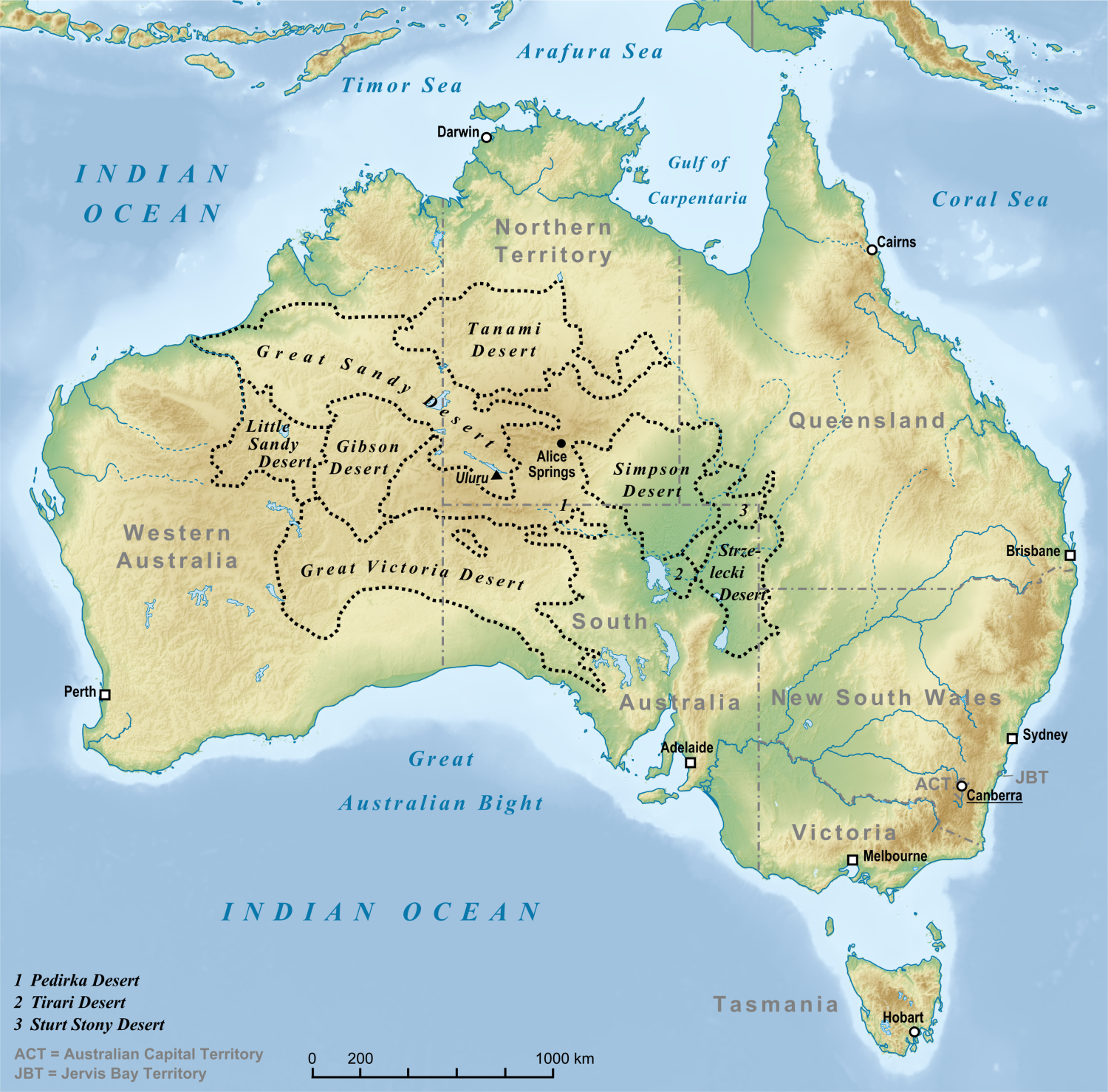
    A desert is usually described as an arid area where there is little rainfall and conditions do not favour  plant and animal life. As much as one third of the earth’s land surface is arid or semi-arid. This is also true of mainland Australia with its ten named deserts which mostly lie in the centre.

    Deserts of Australia
    https://upload.wikimedia.org/wikipedia/commons/0/08/Deserts_in_Australia_en.png

    Last year I was fortunate to visit Uluru and Kata Tjuta which are in semi-arid areas surrounded by desert in Central Australia. I have put together some images of the area to show the variation that occurs in the semi-arid landscape.

    Thinking of the word “desert” (noun – arid area) also brings to mind its heteronym “desert” (verb – leave), which has its own homonym meaning deserved e.g.” just deserts” and homophone “dessert”. These words are often confused by both readers and writers with pronunciation and spelling indistinguishable out of context.

    I have combined these different meanings to respond to Charli’s flash fiction challenge to in 99 words (no more, no less) write about a surprise from a desert. While not specifically about education, I also acknowledge the power of a teacher’s influence.

    Deserts

    They reminded her constantly what an inconvenience she was; that she’d never be anything; that she was simply trash like the one who birthed, and dumped her. Somehow she’d never believed them: their truth was not hers. She’d shielded her inner core with a shell over which their words flowed but could not penetrate. Not caring whether they ever knew, she’d prove them wrong. A favourite teacher inspired an interest in food science. As soon as possible she escaped to apprentice with master chef Jules. After years of determination and hard work, she opened her own patisserie “Just Desserts”.

    Thank you

    Thank you for reading. I appreciate your feedback. Please share your thoughts.
     

  • What the world needs now

    This week at the Carrot Ranch Charli Mills is talking about needs. She questions why necessities sometimes feel like luxuries and why basic necessities, such as drinking water and access to a bathroom, incur a fee. While she is temporarily homeless, she is seeing first hand some of the ongoing difficulties of others faced with long-term homelessness. Surely to be treated with some compassion and afforded the dignity of respect is equally a basic human need and a right.

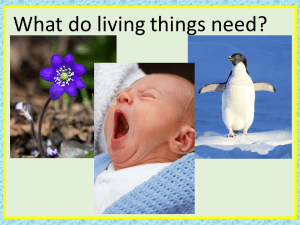
    what do living things need

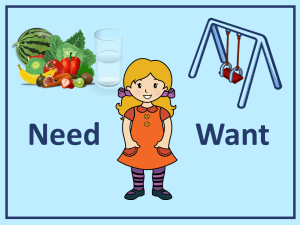
    Young children begin to learn about needs when they start caring for plants and animals. In science they learn about the needs of living things and how those needs are met. It is not long before they start to learn about the differences between a need and a want. This understanding, and acceptance, can take a long time to develop. Some never develop it.

    need want

    Perhaps if there was a greater understanding of the difference between a need and a want, the gap between those who have much and those who have little would decrease. But perhaps not. While there is little increase to basic needs over time, the wants increase exponentially; and the more one has, the more one wants.

    If it is difficult for adults to distinguish between needs, wants and must haves, imagine how much more difficult it is for young children. It is possibly even more difficult for young children in an age with frequent replacement of one model for another, one gadget and one gimmick for another; the latest is always the best.

    This difficulty is the focus of my flash fiction response to Charli’s challenge to in 99 words (no more, no less) write a story that explores human needs.

    The latest thingamajig

    “But Mum, I need it. Everyone’s got one.”

    “Who?”

    “Marco; and Christopher; and … everybody!”

    Mum pictured their big houses and flashy cars.

    “Has Yin got one?”

    “No.”

    “Amir?”

    “No.”

    “Why do you want it?”

    “They won’t play with me if I don’t have one.”

    “Who?”

    “Marco and Christopher.

    “I thought Yin and Amir were your friends.”

    “But Marco and Christopher are cool.”

    “And you want to be cool like Marco and Christopher?”

    His eyes flickered.

    “Will you still be cool when they get the next best thing? What about Yin and Amir? Will they still be your friends?”

    ####

    In a recent post Home is where the start is, I wrote about the importance of the early years to a child’s development. I suggested that it is difficult to regain what is missed in those early years. However, as Sarah Brentyn who blogs at Lemon Shark said: it may be difficult, but not impossible to make improvements. Sarah was concerned that parents may not make an effort if they thought it was too late. I agree with Sarah that it is never too late to make improvements. However, it is much more difficult to change established patterns and to make up for lost learning time. Not impossible. Difficult. It is even more difficult for those who have not had their basic needs met.

    An article in the Huffington Post on June 30 compares two boys who were born on the same day in the same town, but will have dramatically different lives. The boys are now five years old. One boy who received a diet of nutrient-rich foods is now at school, making good progress, and has many friends.

    The parents of the other boy were too poor to do the same for their child. He now suffers from chronic malnutrition, or “stunting”, which affects growth, strength of the immune system, and brain function. According to the article, 1 in 4 children worldwide suffer from chronic malnutrition. The statistics reported in the article are quite confronting, and challenge a privileged view of needs and wants.

    After reading the article, it is with some embarrassment that I now admit to a need to be away from the blogosphere for the next few weeks. I will be back intermittently to read and respond to your comments. I apologise in advance for any delay in doing so. Please know that I do enjoy our conversations and appreciate your comments. I will be back to respond to you as soon as I can.

    Thank you

    Thank you for reading. I appreciate your feedback. Please share your thoughts.

  • Home is where the start is

    © Norah Colvin
    © Norah Colvin

    Early childhood years, from 0-8, are the formative years. It is during these years that most is learned. Children learn about the world through their explorations. They learn about themselves through the responses they receive from others, and learn about others through these responses also. Attitudes to most things begin in the home.

    Children require warm, nurturing, positive relationships that demonstrate the way life should be lived, in actions, not just words. As Anne Goodwin, former psychologist says, the interactions with significant adults will greatly influence the adult that the child becomes.

    If home is where it starts, then we can’t wait until the children are of school age. By then it’s too late. It is relatively undisputed that it is difficult for children to catch up what may have been missed in those early years. Sadly, much of the intense formal work in school does more to alienate these children further, rather than improve their opportunities for learning.

    Therefore, we must begin in the home, and I don’t mean with formal structured programs. I mean with fun activities that validate parents and children and provide them with opportunities and suggestions for participation and learning.

    Guiding parents in play sessions for parents and children.
    Guiding parents in play sessions for parents and children. © Norah Colvin

    It is these beliefs that informed my home-based business Create-a-way,

    © Norah Colvin
    © Norah Colvin

    and my idea for an early learning caravan that, staffed with an early childhood educator, would

    •  go to the parents and children in their neighbourhoods, meeting in a local park or community greenspace, on regular weekly occasions;
    • invite parents to talk with, read to and play with their children using provided books, games and toys;
    • model positive parenting behaviour, explaining to parents the benefits to their children of engaging with them in activities and discussions;
    • provide suggestions for inexpensive and easy activities to do at home;
    • encourage borrowing from a book and toy library.

    Of course, for many parents, such as those reading this post, nurturing a child’s development is almost second nature. They have the education and resources, and a belief in the benefits, to empower them to nurture their children’s development. They require little additional support.

    Requiring most support are those without the benefits of education, resources or a belief that life could be improved. If all they have experienced through school systems is failure and rejection, they will have difficulty in perceiving any purpose in trying. It is these parents and their children that we need to reach. If they feel valued, they in turn may find value in others. If we improve the lives of those marginalised by poverty or lack of education, it must contribute to improving our society, and our world, in general. This will help us to feel safe in our homes, in our localities and in the wider world.

    This week at the Carrot Ranch, Charli Mills is talking about homes and the importance of having a roof over our heads. The way we treat each other, especially those hurting, indicates there is a greater need for compassion and for those in need to receive a helping a hand.

    In my response to Charli’s flash fiction challenge to In 99 words (no more, no less) write a story about home, I attempt to show that the situation in which one is raised is not always a self-fulfilling prophecy. Out of the cruellest situations, hope can be born. We, as a society, need to do what we can to give hope to many more, to help break the cycle of despair.

    81

    The birth of Hope

    Startled by the blueness of eyes and the intensity of unfamiliar feelings, she suddenly relaxed, as if finally, home.

    She’d not known home before: not locked in a room with hunger the only companion; not shivering through winters, barefoot and coatless; not showered with harsh words and punishments.

    She’d sought it elsewhere, mistaking attention for something more. When pregnancy ensued; he absconded. They kicked her out.

    Somehow she’d found a place to endure the inconvenience. Once it was out, she’d be gone.

    But now, feeling unexpectedly connected and purposeful, she glimpsed something different —a new start, lives entwined: home.

    Thank you

    Thank you for reading. I appreciate your feedback. Please share your thoughts.
  • Carrot Ranch in Crisis

    For more than two years now I have been participating in the weekly flash fiction challenge set by Charli Mills at the Carrot Ranch. As well as the challenge, I enjoy the camaraderie and support from other writers, especially Charli who ropes us in with her prompts and encouragement.
    For the last little while I have been posting my flash fiction responses on Tuesday evenings, just scraping in before Charli’s deadline. But not tonight. Tonight I am sharing Charli’s post, the post that would normally include a flash fiction prompt, but instead this time included a plea for help. Charli is in crisis mode, kicked out of home and in transit.
    Often when friends are in need we can lend a hand by cooking a meal, offering a bed for the night, assisting with chores, and listening. But when that friend is over 12,000 kilometres away, helping out is not such an easy thing. For that reason, this evening I am sharing Charli’s post. Maybe one of you is able to help her out in her time of need.
    Thank you for reading. As always, I appreciate your feedback.

  • Room for one more

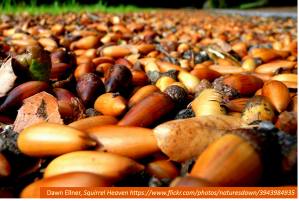
    Squirrel Heaven

    Have you ever squirreled anything away? I have.

    In the year prior to my 50th birthday I squirreled away every $5 note I received. By the time my birthday arrived I had stored over $1000: enough to purchase a charm bracelet to mark the achievement of a half-century. Now, almost a decade and a half later, it would be impossible for me to repeat the process. From using cash for most purchases at the dawn of this century, I now use mainly card and rarely carry cash. How quickly and, unless giving thought to it, almost imperceptibly the changes occur.

    To some, the differences in the seasons in the part of Australia in which I live are subtle, with the changes almost imperceptible, at least when compared to the four distinct seasons occurring in many other places. However, changes do occur and are obvious to those who are attuned to them, especially the Indigenous Peoples of Australia.

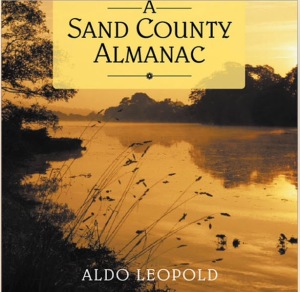
    I was reminded of this when listening to A Sand County Almanac by Aldo Leopold, a book recommended and referred to numerous times by Charli Mills. I second her recommendation.

    A Sand County Almanac

    The book is divided into twelve chapters. In each chapter Leopold describes the subtle differences that occur from month to month in the environment around his home. I marvel at the detail of his observations and the knowledge that he gleans from subtle changes. In March he says,

    “A March morning is only as drab as he who walks in it without a glance skyward, ear cocked for geese.”

    He then goes on to say,

    “I once knew an educated lady, banded by Phi Beta Kappa, who told me that she had never heard or seen the geese that twice a year proclaim the revolving season to her well-insulated roof”,

    and asks,

    “Is education possibly a process of trading awareness for things of lesser worth?”

    Sadly, I think many of us, myself included, are aware of the fluctuations in temperature and the coming of the storm season, but not so attuned to the habits of animals and seasonal variations in plants. The majority of our native trees are evergreen and, in our insulated and insular cities, changes in the natural world are less obvious. Indeed, many seasonal changes are obscured by artificial means.

    In cooler climates animals have adapted to the changing seasons in various ways. Some migrate; some, such as squirrels, store food for the winter; and some hibernate.

    While some Australian birds, moths and other animals migrate, I am not aware of any squirreling away large stockpiles of food to see them through the cooler seasons (please inform me if there are any I should know about); there is but one native Australian mammal hibernator, the mountain pygmy possum.

    I have been thinking of this in relation to the flash fiction challenge set by Charli Mills at the Carrot Ranch this week. While Anne Goodwin, blogging at Annecdotal may have instigated her thinking about squirrels, Charli included the metaphorical as well as rodent  variety.

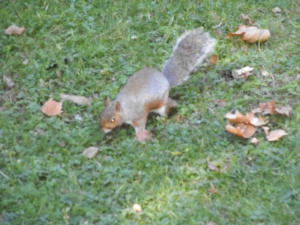
    Until visiting in London in 2014 I had not seen a squirrel as they are not native to Australia and, until checking just now and finding this article, was not aware that any had been introduced here. I saw many cute grey squirrels in parks and gardens in London and I was quite fascinated by the tiny creatures.

    © Norah Colvin 2014
    © Norah Colvin 2014

    However, I was disappointed to find that they are not natives to the UK either, but introduced from North America in the 19th Century, and are doing just as much damage to the native fauna as are many introduced species here. At least when I visited Hamley’s, the most amazing toy store, the only toy squirrels I could find were red, the native kind.

    © Norah Colvin 2016
    © Norah Colvin 2016

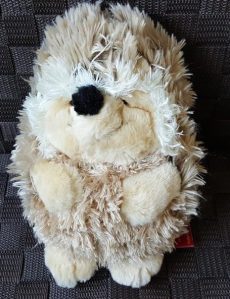
    The squirrel toy was purchased to add to others collected as mementoes of countries visited; and joined my panda from Beijing and hedgehog from Belfast.

    © Norah Colvin 2016
    © Norah Colvin 2016
    © Norah Colvin 2016
    © Norah Colvin 2016

    In a couple of months, I am accompanying my grandchildren and their parents on a quick visit to Los Angeles and New York. I am determined to expand my soft toy collection, but am wondering which animal might be an appropriate choice. If you have a suggestion, I’d love to hear it please.

    Meanwhile, back to Charli’s challenge to In 99 words (no more, no less) write a story that features a squirrel. It can be about a squirrel, for a squirrel or by a squirrel. Think nutty, naturalistic, dinner or ironic. Go where the prompt leads and don’t forget to twirl with imagination.

    I decided to go with the theme and make my own toy story.

    toy box

    One more?

    They knew when she left – airplane tickets in one hand, luggage in the other – that it meant only one thing.

    “Time to plan,” announced Kanga, the original and self-proclaimed leader.

    “It’s too crowded!” moaned Little Koala.

    All stuffed in the box inhibited thought.

    “Right. Everybody out,” said Rabbit, taking over.

    Squirrel, last in, was first out, twirling her tail.

    Soon everyone was out, exchanging opinions. Inevitably disagreements erupted. Ever patient Kanga quietened them.

    “We always make room. We will adjust. We will welcome the newcomer. Once we all were different. We still are. But we learn to get along.”

    Thank you

    Thank you for reading. I appreciate your feedback. Please share your thoughts.
     

  • Eroding thoughts

    Uluru © Norah Colvin 2015
    Uluru © Norah Colvin 2015

    This week at the Carrot Ranch Charli Mills is talking about erosion, but not just the literal kind. She says “It can be natural, cultural or something different.” Of course I must answer my usual call to tackle the “something different”.

    Generally, erosion refers to the wearing away of the earth. Sometimes it signifies the disintegration of our resolve, our self-image, or of our spirit. Just as various strategies can be employed to prevent erosion or to repair damage incurred by the land, there are strategies that can be used to shore up one’s resolve, build self-esteem, and mend a sagging spirit.

    rejection slip

    Perhaps nobody knows this better than writers with their stashes of rejection slips rated from encouraging to just plain rude, or non-existent. Few have achieved success without first receiving a downpour of those slips, who haven’t had to work at their skills and accept the edits without eroding their intended message. Sometimes it seems that, with every move, one lands on the “Go back to start” square; and that, while it feels like things are in motion, the end doesn’t appear any closer.

    go back to start

    Or maybe nobody understands the fragility of the spirit and self-esteem more than does a teacher; and of the importance of building on prior learning to take children from where they are to places they haven’t thought possible; to ensure their esteem stays strong and is not eroded by unrealistic expectations and the tedium of a repetitive diet of something meaningful only to others.

    Welcome pack
    Welcome pack

    I have written many times previously about the importance of establishing a supportive classroom environment, and of using affirmations in growing children’s confidence and self-image.

    This doesn’t mean a diet of empty praise, but it does mean that all individuals are recognised for what they can do, and are valued for the contribution they make to the classroom community. Included in these writings was a series, inspired by a Twitter discussion with Anne Goodwin, on praise culminating in Seeking praise – Stephen Grosz revisited and including a guest post by Anne.

    The Clever Children Resource

    I have also developed resources to support children’s growing confidence and self-image for inclusion on my in-progress website readilearn. One of these resources is a story called The Clever Children which teachers can personalise for use with their own class.

    The Clever Children printable

    Children write about and illustrate something they can do. The pages are then added to the story which is printed and collated into a book which can be placed in the reading corner or taken home to read to parents and siblings.  My children always loved being a part of this story. I am looking forward to other children being a part of it too. The story aims to build, rather than erode, self-esteem and a love of books and reading.

    Which brings me back to Charli’s challenge to In 99 words (no more, no less) write a story, using the power of erosion.

    The Nature Principle

    For my flash I combine two ideas:

    • Richard Louv’s suggestion in The Nature Principle that, for physical and mental health, we need to be more attuned with nature
    • the need for resolve and inner strength when faced with issues that would erode it.

    It’s not really a story, perhaps, but a moment in time. I hope you enjoy it.

    1 (7)

    The rock

    The rock, promising permanence, beckoned: perfect for contemplating expanses beyond while pondering life and one’s significance. She sighed, and succumbed. The waves, licking repetitively at the base, soothed somehow; as if each grain of sand stolen from beneath her feet loosened her tension. Becoming one with the rhythm, her heart sang the melody as her mind slowed, releasing all thought. Feeling whole again, as solid as the rock, and with renewed strength, she prepared to face those who sought to erode her. Though tides would rearrange and redecorate, and often do their best to annihilate, they could not obliterate.

    Thank you

    Thank you for reading. I appreciate your feedback. Please share your thoughts.

  • Bug me, please!

    Monarch butterfly

    That I have an appreciation of and fascination with insects is no secret as I have written about it many times previously.

    The Very Hungry Caterpillar

    Some of my earliest posts formed a series in which I suggested using Eric Carle‘s Very Hungry Caterpillar story for developing critical literary, encouraging children to question the authenticity of what they read and the qualifications and intentions of the author.

    Carle’s purpose with the story was to entertain, not to teach, and he was therefore unconcerned about inaccuracies in the butterfly life cycle.

    The book, popular for its bright colourful illustrations and inspiring story of an ordinary caterpillar who becomes a beautiful butterfly achieves the author’s goal to entertain.

    In a more recent post Revisiting The Very Hungry Caterpillar I provided a summary of, and links to, each of the four original posts which explained my recommendation that this very popular book was more relevant to teaching critical literacy than science.

    © Bec Colvin
    © Bec Colvin

    Acknowledging the importance of maintaining Wondering in the everyday and an attachment with nature in wild spaces, I described my excitement at being able to observe every stage of the ladybird’s life cycle up close in my own backyard; an excitement that had perhaps exceeded observing the butterfly life cycle in the classroom with our live butterfly kits which had allowed us to Breathe – a sense of wonder!  I even shared a section of a television interview in this post about Talking Interviews.

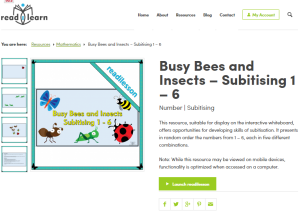
    I talked about some insect themed classroom and teaching resources in The comfort zone. Others are listed on my page Early Childhood Teaching Resources and are available in my Teachers Pay Teachers and Teach in a Box stores. These, and many more, will be available on my readilearn website when it launches later in the year. Here is a sneak peek at some that will be included:

    9 square insect puzzle Busy Bees 100 chart Busy Bees and Insects subitising Busy Bees birthday chart Busy Bees Celebrate 100 days of school One Lonely Ladybird

    But the truth is I don’t really love all insects. I’m not too keen on cockroaches, though the native Australian giant burrowing cockroaches are pretty cool. And although I am aware of vital roles of insects in the environment

    • as a food source for many animals
    • as pollinators for flowering plants
    • as decomposers

    and I know that without them we’d basically not have an environment, in fact, we wouldn’t be; I often wonder whether we would be all that worse off without disease-spreading mosquitoes and flies. However, it seems that they too are vital to the health of our planet, whether we like them or not. It’s a bit of a “can’t live with them and can’t live without them” situation.

    This brings me to the flash fiction prompt set by Charli Mills of The Carrot Ranch this week. She has challenged writers to In 99 words (no more, no less) include insects in a story. How could I resist? In fact, the real challenge was choosing what to put in and what to leave out of the post, and how to not be predictable in my response.

    Surprise!

    It took just one, then the word was out. The streets were abuzz with the news – a triumph of social media.

    “Kyle’s having a barbecue. Tell everyone. Don’t bring anything. There’s always plenty.”

    The excitement was palpable as guests swarmed towards Kyle’s. Some, initially unsure, flapped about nervously. Others, more experienced, felt they were dancing on the ceiling. Eventually all were on their way.  The waft of seared flesh left no doubt about the location.

    Kyle was ready when they arrived. “Who invited you?” he grinned and waved, as he knocked them out with the can of spray.

    Well, what would you do?

    #9 on this list of Ten thing about flies you may not know says,

    “The use of pesticides on crops to try to kill flies and insects is actually causing more damage to the ecosystem than the flies themselves.”

    It’s something to think about next time you reach for that fly swat or can of insect spray.

    I’ll leave you with a bit of nostalgia with a television advertisement, starring Louie,  from my childhood days.

    Thank you

    Thank you for reading. I appreciate your feedback. Please share your thoughts.
  • Welcome to my world

    www.openclipart.org
    http://www.openclipart.org

    When children enter school for the first time it takes a while for them to adjust to the unfamiliar culture and environment which pertains only to school. They need to settle in, get used to the new routines, and understand what is and is not allowed.  A supportive classroom environment with established procedures for welcoming new students makes for a smoother transition.

    Children also need to be familiarised with the physical surroundings so that they are able to confidently navigate their way to, from and between their classroom and places like the amenities block, the office, the canteen, the library, and the playground.

    Students moving from one school, or even one class within the same school, to another, also require a period of adjustment. While some understandings of the culture from the previous situation may be transferrable, there will be some aspects which are unfamiliar. No two classes or schools are identical or have the same set of rules and expectations.

    school rules

    I saw the difficulty experienced by each of my children when the newcomer in an established group. While both were confident and resilient children, verbally able to express themselves, both struggled initially to find their place within already established friendship groups that were comfortable and confident in their familiar surroundings.

    My son changed schools at the beginning of his second year at school and was the only addition to an existing class. A more sensitive teacher with established procedures for welcoming new students may have eased his transition. Although, due to delivery delays, he was wearing his previous school’s uniform, his teacher failed to realise that he was new to the school and class and did nothing to help him integrate into the group or to familiarise him with school procedures and facilities.

    ist day of school
    Bec’s first day of school © Norah Colvin

    The situation for my daughter was a little different. Her first experience of school was at age nine when she entered year four. Although I had explained what she might expect, everything about the culture and the environment was unfamiliar. While her teacher was a little more sensitive and did what she could to help her settle in, there was much about the established culture and environment that others took for granted.

    When we are familiar with and comfortable in a situation it can be easy to forgot how unfamiliar and daunting it can be to someone new to an environment in which nothing can be taken for granted, nothing is known for sure.

    I always established a welcoming classroom but the experiences of my own children confirmed its importance. If they, as members of the majority culture, found it difficult, how much more difficult would it be for those from minority groups.  I suggest that every teacher should have in place procedures for welcoming new students.

    image courtesy of www.openclipart.org
    image courtesy of http://www.openclipart.org

    Here are just a few suggestions:

    Welcoming a new class of students at the beginning of the year:

    • Provide many opportunities for students to get to know each other through group activities, discussion circles and paired work with many different combinations of children
    • Explain expectations and rules. It is no fun being chastised for a misdemeanour that resulted from lack of knowledge as opposed to poor choice
    • Take students on a walk around the school showing them places they will need to visit (as well as any places they are not allowed); for example:
      • Toilets
      • The office
      • The library
      • The playground
      • The canteen
      • Where to eat lunch, and to dispose of their rubbish
      • Where to line up
      • Where to place bags and other belongings

    school directions

    Procedures for welcoming new students throughout the year may differ slightly. It is not always practical to repeat the same procedures that were used when familiarising an entire class.

    However, students still need to have the expectations explained to them, as some may differ from what has already been experienced, for example: are they required to put up their hands for individual release when the play bell rings or are they dismissed for play en masse; do they keep their water bottles on their desks or are they stored somewhere else; do they line up with a row of boys and a row of girls or are the rows mixed?

    I always found it a useful practice to include newcomers when messages were sent to the office, the canteen or the library, for example. This would help children get to know and be known by other school personnel, as well as get to know their way around the school.

    https://openclipart.org/image/800px/svg_to_png/192642/Children_holding_hands.png
    https://openclipart.org/image/800px/svg_to_png/192642/Children_holding_hands.png

    Until their own friendship groups were established I ensured there was a friend to “look after” them at break time, showing them where to sit, where to play, where to line up and, especially, to play with them. There were always plenty of willing friends.

    I have been thinking about the importance of showing students around the classroom and school this week in response to the flash fiction challenge at the Carrot Ranch. Anne Goodwin, author of Sugar and Snails, took over the reins from Charli Mills this week, prompting writers to compose a 99-word flash on the theme of showing someone around a property As usual the prompt allows for a variety of interpretations and Anne suggests that we not let out imaginations be confined by four walls.

    I never like to think of imaginations being confined and in recent posts I have talked about the importance of imaginative play, even introducing many to a new term: loose parts play.

    I decided to play with loose parts this week, and include a welcoming environment. It occurs in a home, rather than a school. I hope you enjoy it.

    New world

    Thinking it much too quiet, Sally excused herself from the conversation.

    She peeked through the door. A sheet was draped from the top bunk to the curtain rail. The drawers were stacked staircase-like, their contents piled high in the corner. Emily, adorned in crown and cape, watched Jessica, in cowboy boots, fossick in the overturned toy box. Max sat nearby reading to assorted stuffed animals. All three sensed Sally’s presence simultaneously.

    “Mum! Look what we made!” beamed Jessica. Sally suppressed her initial reaction: mess.

    “Come in. We’ll show you! This is our cave. This is our mountain …”

    Thank you

    Thank you for reading. I appreciate your feedback. Please share your thoughts.

  • Sharing circles

    http://www.morguefile.com/
    http://www.morguefile.com/

    On Tuesdays I have regularly published a post and response to the flash fiction challenge set by Charli Mills at the Carrot Ranch. Today I am breaking with tradition as I wrote the prompt this week and included my flash with it.

    In that post I mentioned classroom sharing circles where everyone comes together to share their work, thoughts and ideas, not unlike the sharing of stories and ideas at the Carrot Ranch. In the classroom everyone in the circle is equal, with equal opportunity to see and hear, and to be seen and heard. The focus is lifted from the teacher and shared equally among class members, creating a democracy.

    In this post I describe some of the sharing circles I used in my classroom and show how these processes are not all that dissimilar from our own blogging circles.

    reading

    D.E.A.R. (Drop Everything and Read) is a daily quiet reading session lasting about 15 minutes. In these sessions everyone, including the teacher, chooses a book and finds a comfortable space for reading. Some children sit at desks, some on cushions in the reading corner, others prop themselves up against the wall, and others lie on the floor.

    The one rule is:

    • Everybody reads without interruption.

    This means:

    • Nobody talks
    • Everybody chooses enough reading material for the session
    • No outside interruptions are permitted (unless it’s an emergency)

    It is essential for the teacher to engage in personal reading, along with the children, to show that reading is valued and to provide a model of “expert reader” behaviour. Inviting other school personnel to join the session is also valuable. It is particularly important for children, who may not see adults engaged in regular sustained recreational reading at home, to see adults enjoying reading.

    I always concluded my D.E.A.R. sessions with a Reader’s circle. Children would bring their books to the circle and share what they had read. While there wasn’t time for every child to share every day, I ensured each child had an opportunity of doing so at least once a week. Children would:

    • Tell the book’s title and author
    • What it was about
    • What they liked about it, and
    • Read a small section to the class

    I loved the way children would look to each other’s book responses to guide their own selection, often asking others to help them find a book that had previously been talked about. We do the same in sharing and reading book reviews on our blogs.

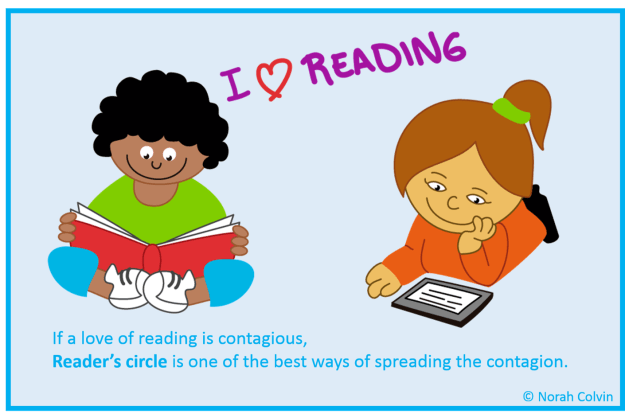
    If a love of reading is contagious, Reader’s circle is one of the best ways of spreading the contagion.

    love of reading

    A love of writing can be equally contagious. One of the things children enjoyed most about writing, other than the actual writing, was sharing it with others. Children would have opportunities to discuss and read their writing to each other in pairs and small groups as well as in the Writer’s circle.

    Sometimes we would have a pre-writing circle to share ideas and inspiration. It was rare that anyone would leave the circle without an idea. Surprisingly perhaps, it was even rarer that two would write about the same thing. Bouncing ideas off each other seemed to encourage a diversity, rather than similarity, of ideas. I guess the responses to Charli’s flash fiction prompt demonstrate the same principle.

    Post-writing circles provided opportunities to discuss what had been written and to read sections to others. Writers might share what they liked about their writing, or what they were having trouble with. Others might ask questions for clarification, to understand character motivations, or to find out what will happen next. Sometimes, with the writer’s permission, I would use a piece of writing to discuss an aspect of the writing process that would have application for many. If any children were reluctant to read their own writing, I would be more than happy to read it with them.

    If a love of writing is contagious, Writer’s circle is one of the best ways of spreading the contagion.

    love of writing

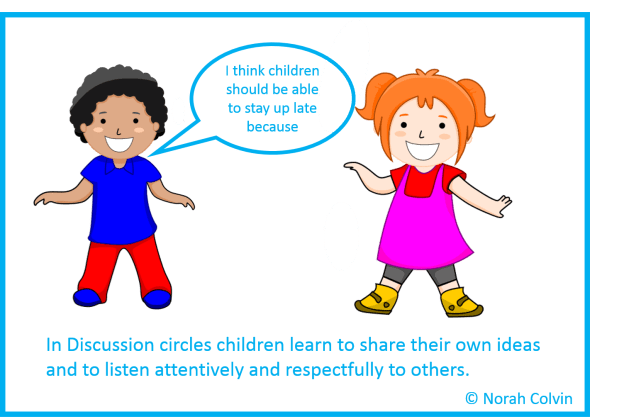
    Discussion circles could occur at any time, in any subject on any topic where a sharing of ideas was required. I had a lovely smiley face ball that children would sometimes pass around, or across the circle, to each other, to indicate whose turn it was to talk. This ensured that everyone had an opportunity to share their ideas and thoughts, as well as to hear the ideas and thoughts of others. Topics could be as diverse as:

    • “I feel happy when …”
    • “When I lose a tooth …”
    • “On the holidays, I …”
    • “I think children should be able to … because …”

    discussion circles

    Each of these sharing circles gives children a voice, demonstrating that they, their thoughts, their ideas and their opinions are accepted and valued. Each encourages children to listen attentively and respectfully to others by providing a supportive environment in which they can test out ideas, then reflect and reassess in response to the reactions of others.

    These discussions are not unlike those we engage in on our blogs; sharing books and articles read, and videos watched, along with our ideas and opinions and, most of all, our writing.

    Thank you

    Thank you for the opportunity of sharing mine. I appreciate your feedback. Please share your thoughts.