Live Love Laugh Learn … Create the possibilities

Category: Flash fiction

  • The significance of number

    It’s not always wise to follow the crowd.

    Remember the story of The Emperor’s New Clothes by Hans Christian Andersen?
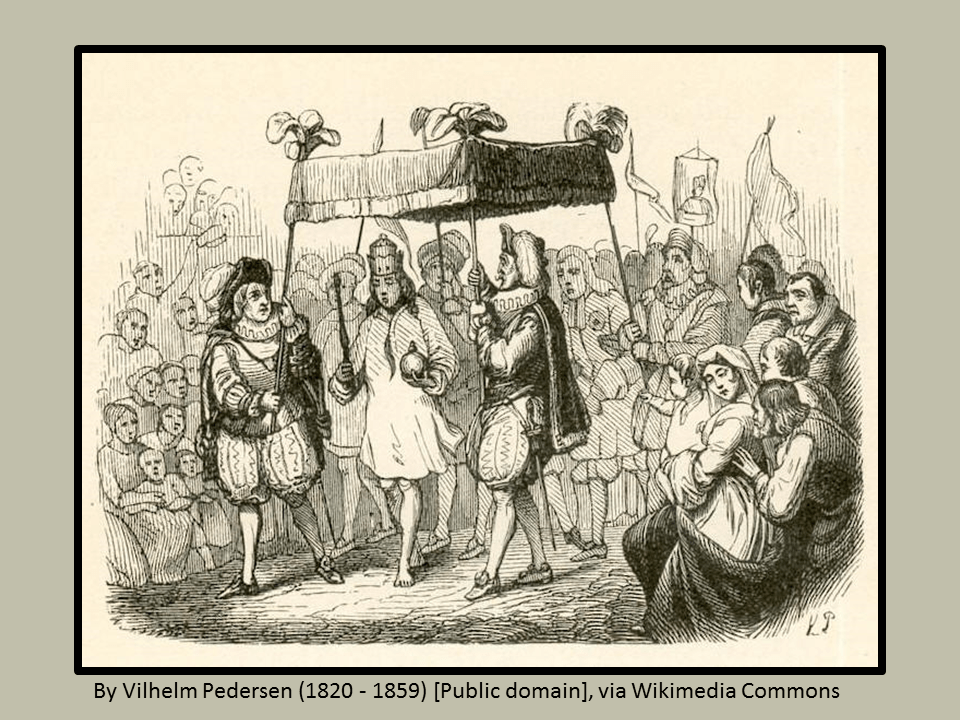
    A pair of weavers tricked the conceited Emperor into believing they had made him a fine set of clothes; clothes so fine, they would be visible only to those worthy of their position, and invisible to anyone lacking intelligence. Not wanting to appear stupid, his subjects were quick to join in the admiration of his (invisible) clothes. It took a young child to see through the claims and announce the deception.

    Honesty is a trait often admired, even found refreshing, in children. However, the same kind of honesty is not always endearing in an adult. As we grow, many of us learn to use a little more finesse when telling someone what we think of them or their work. It is sometimes wiser to take the side road, rather than the direct route.

    I have always loved the story of the Emperor and his invisible clothes. I found the people’s dishonesty frustrating. I just wanted to shake them, “Can’t you see?” But I loved that it was a child who told it like it was.

    The story is a wonderful allegory for so much that is going on in the world today, and probably always has. (The story was published 180 years ago.) Someone comes up with a bright new idea. It is promoted; and before long everyone is following the trend, proclaiming its, often-questionable, value. It happens in education too. Those who see through the hype are often ridiculed.

    The importance of interrogating ideas to determine their worth cannot be overstated. The ability to question and to think critically is essential for an intelligent society. Just because everyone is doing it, doesn’t make it wise, right, or best.

    This week at the Carrot Ranch, Charli Mills has challenged writers to In 99 words (no more, no less) write a wise story. It can be about wisdom, expressing wisdom or advice for turning 50! It can be a wise-cracking story, too. Go where wisdom leads you.

    The reason for the prompt including the suggestion of “advice for turning 50” is that Charli celebrated her significant 50th birthday on the weekend.

    I remember turning 50. I had a big party that I spent months organising. A magician helped break the ice early in the evening and prepared everyone for joining in games that were interspersed throughout the evening. People danced and were entertained by a musical duo who also liked to tell jokes. It was a memorable occasion for me, if not for anyone else. I’m pleased I did it then, as I wouldn’t be bothered now, though the numbers do seem to get significantly bigger each year.

    It was about that time that I realised I wasn’t as mature and wise as I’d expected to be. Didn’t adults give the appearance of wisdom when I was a child? They’d certainly seemed convinced of what they were telling me, and rarely displayed hesitation in decision making. I figured, if I wasn’t mature and wise by then, I was never going to be. So what the hell. I’d just stay a six-year-old for life!

    Remember the A. A. Milne poem?

    “When I was One,
    I had just begun.
    When I was Two,
    I was nearly new.
    When I was Three
    I was hardly me.
    When I was Four,
    I was not much more.
    When I was Five, I was just alive.
    But now I am Six, I’m as clever as clever,
    So I think I’ll be six now for ever and ever.”

    Anyway, I would like to wish Charli a very happy fiftieth birthday, and welcome her to the second half-century. I’ve been there a while and it’s not too bad. I’d hazard a guess that it’s better than the alternative. There are still plenty of new discoveries to be made. But you must make the most those years. They can just fly away.

    Coinciding with her birthday, Charli has announced a new project on her website. Charli is a wonderful source of support and inspiration to writers all over the globe and, as you know, the instigator of the flash fiction I, and many others, write each week.

    Charli says, “If I can raise the funds, I will start an imprint for Carrot Ranch, expand our platform to benefit those who write in this community and seek new ways to inspire and inform other writers beyond the ranch hands.” She is developing a Patreon. If you would like to help Charli get this work started, please ride on over to her website and donate to the project.

    In the meantime, here is my response to her challenge to write a “wise” story. I hope you enjoy it.

    Growing into wisdom.

    “My Dad knows everything!” bragged six-year-old Billy.

    “Parents,” grumbled Will E., at surly sixteen, “They know nothing.”

    For thirty-year-old William, at the top of his game, conversations were strained. One more “In our day…” he’d surely explode.

    By forty-five, with kids of his own, “But kids are different these days,” Will would state.

    Dad would wink and suggest, “Not that different.”

    Throughout the fifties, his recalcitrant teens mirrored those years of his own.

    Into his sixties, with kids gone and more time for chatting with Dad, he discovered, almost too late, they shared more than he had ever appreciated.
    Thank you for reading. I appreciate your feedback. Please share your thoughts.

  • Fair trade – what’s it to you?

    What do you think of when you hear the word “trading”?

    International trade? Stock market trading? Trading one item for another? Perhaps a Trade Fair, or selling items at a market stall? Trading as your *business name*? Maybe you are committed to purchasing “Fair Trade” in support of the  World Fair Trade Organisation’s aim of making international trade more equitable?

    As an early childhood teacher, I think of trading games that we use in maths lessons to help children understand place value. In our decimal system, we use ten digits in various combinations to represent numbers. Placement of each digit is vital; for example, 290 is very different from 902.

    Without a firm understanding of place value, it is difficult to work with numbers efficiently. I believe that many difficulties with number stem from insufficient understanding of place value. Children need to experience numbers in a variety of contexts to fully understand the decimal system.

    For younger children just beginning to learn about two-digit numbers, we may connect interlocking blocks or bundle popsticks to form groups of ten.


    When children have a firm understanding of the grouping process, and the way the numbers are represented with two digits, they move to a similar process with numbers over one hundred. It is at this time that we introduce trading.

    Instead of using interlocking cubes or other items that can be linked or bundled, ten individual cubes are traded for one ten, and ten tens are traded for a one hundred flat, and so on.

    I feel so strongly about the importance of children learning place value, that I have made a variety of resources for teaching it. The resources, available from readilearn; include:

    Beginning place value – the train game

    Race to 99 – A place value game for maths groups

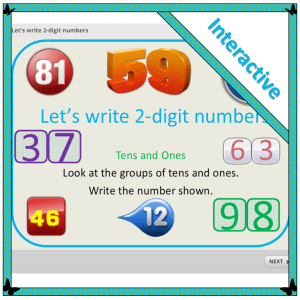
    The interactive resources

    Let’s read 2-digit numbers

    and Let’s write 2-digit numbers

    Playing games has always been a favourite activity for me, and always popular for family gatherings. We’d quite often we’d spend holidays, like Christmas and Easter, when the children were growing up, playing board games or card games. One of our favourite games, especially if there were larger numbers of people (up to ten) was a trading game called “Billionaire”. It is a raucous game. Everyone is engaged all the time. Play involves trading cards (commodities) with each other, and this involves much shouting (over the top of each other) and laughter. If you have never played it, but enjoy games, and have a group of four or more to play, I highly recommend it. (Sorry, I couldn’t find it to add a photo. It’s hidden away in the games cupboard somewhere.)

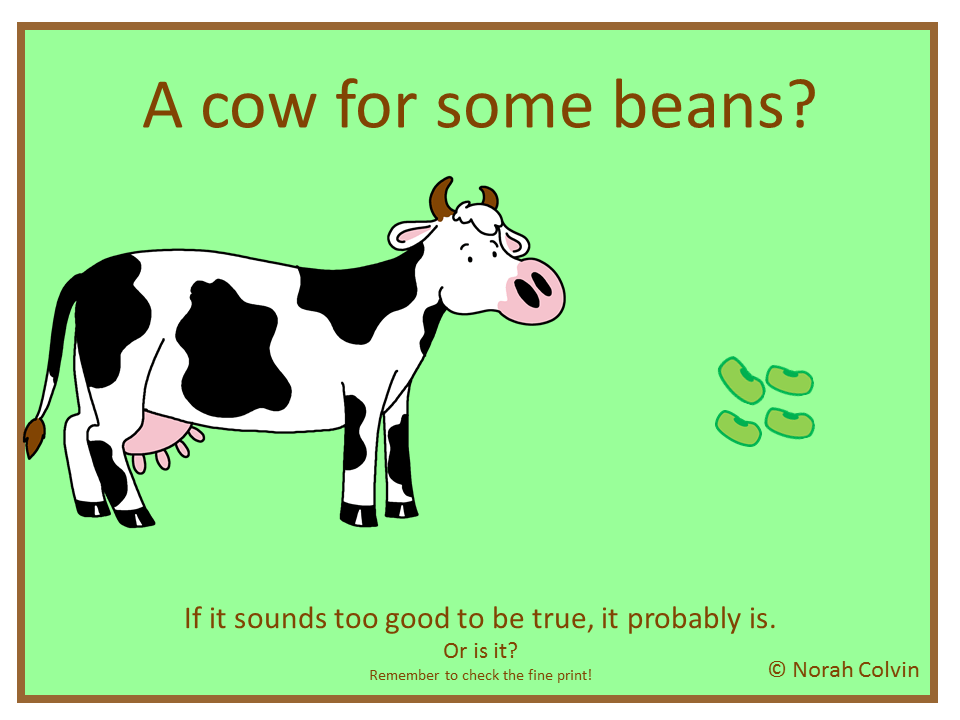
    I couldn’t write about trading without mentioning Jack and the Beanstalk. Mother sends Jack off to the market to sell the cow. Along the way, he meets a man with a handful of “magic” beans which he offers to trade for the cow. Not having heard the saying, if it sounds too good to be true, it probably is, Jack agrees. Of course, Mother is none too pleased and throws the seeds out the window. But, as the story shows, Jack was right to trade and rewarded for his ignorance of the oft-touted adage. (The story also raises other issues regarding trespass, theft, and causing fatal injuries. But we won’t go there this time.)

    This week at the Carrot Ranch Charli Mills has challenged writers to In 99 words (no more, no less) write a story about trading. It can be the profession of old or of modern day traders on Wall Street. It can be trading places or lunches at school. What is traded? Is it a fair deal or a dupe? Trade away and go where the prompt leads you.

    For my response I’ve ended up in the playground yet again. It involves a little trading of cards, but more a trading of power. I hope it works.

    Trade fair

    Cards, were coveted like gold. To belong, one was enough; more better. Each lunchtime the boys showed off new acquisitions, compared intelligence and strength points, and traded duplicates. Fair and friendly battles pitted minds, the winner claiming card supremacy. Then bully Boris won, and none dared challenge. Until Justin, tired of Boris’s tactics, dared.  The group gasped. It seemed Justin would be crushed. But clever cardless Frank slipped in and showed the winning move.  Boris growled, “Inadmissible” and threatened repercussions. Defiant, Justin handed Frank a card, bestowing membership. Empowered, each boy followed, declaring Frank the Master, and trading opened.

    Thank you for reading. I appreciate your feedback. Please share your thoughts.
     

  • Stone fruit salad

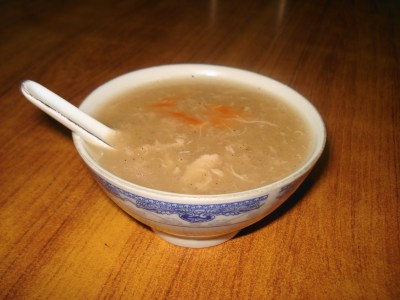
    Soup, especially chicken soup is one of those foods considered good for the soul, mind, and body, and often suggested to speed recovery after an illness. There may be more to the belief than simple folklore. It’s healing properties are what inspired the popular series of Chicken Soup for the Soul books. As Jack Canfield and Mark Victor Hansen saidthey wanted it to soothe and provide comfort, just like their grandmothers’ cooking.

    I was reminded of this when Charli Mills at the Carrot Ranch dished up her flash fiction prompt this week, challenging writers to In 99 words (no more, no less) write a story about comfort food.

    How could I go past soup? But what soup? Chicken soup? Pumpkin soup? Tomato soup? No, stone soup.

    I’m sure you are familiar with at least one of the versions of the story Stone Soup. Basically, some hungry travellers come to a village. They cannot afford to buy food and, although they ask, the townspeople refuse to share with them. Undaunted, the travellers heat up a pot of hot water with a stone in it. They explain to the curious villagers that their “soup” would taste better with the addition of certain ingredients. Intrigued, the villagers happily provide the ingredients. When the soup is ready, the stone is removed and the travellers share the delicious and nutritious soup with the villagers.

    With its messages about sharing, working together, and improving things by combined participation, it is a great story to read to and discuss with young children. It could be used to introduce a class cooking activity, such as making soup or stew, to which each child contributes an ingredient.

    Although English can be confusing with its multi-meaning words and phrases that have little apparent connection to the individual words used, I think children would understand the story and realise that the stone was not eaten but removed from the soup once it had served its purpose.

    Wouldn’t they?

    I wondered how it might be interpreted if children were asked to contribute a piece of fruit to a class fruit salad.

    Fruit salad

    Billy barely paused to say, “Hi, Mum,” as he tossed her a piece of paper and kept going.

    The back door slammed, startling Baby. ‘In one door and out the other,” Mum said, as Dad appeared. “What’s he up to?”

    Dad watched from the window as Billy took pebbles from the garden, inspected them carefully, then arranged them in neat piles.

    “Strange,” said Dad. “I don’t know. He seems to be looking for something. Said they’re making fruit salad at school tomorrow.”

    Mum read the note he’d tossed at her, then smiled.

    “He’s to take stone fruit,” she said.


    I guess if Billy contributes a stone, and the other children contribute fruit, they’ll have a delicious, nutritious, and refreshing snack to comfort them on a warm summer’s day. What do you think?

    Thank you for reading. I appreciate your feedback. Please share your thoughts.


  • An oily problem

    It would be difficult to imagine our daily lives without access to oil and oil products. Transportation is one of the most obvious uses of oil, but did you know that many items we use every day are made from oil or its by-products?

    Some of these products include:

    • Plastics such as food containers, toys, computers and printers, white goods, CD cases
    • Synthetics used in items such as clothing, curtains, furniture upholstery, carpets
    • Cosmetics such lipsticks, moisturisers, deodorants and antiperspirants
    • Nylons used in stockings, ropes, tents, parachutes
    • Polystyrene used in cups, coolers, packaging
    • Toothpaste, chewing gum, dentures, contact lenses

    The list, unlike oil, is almost inexhaustible.

    But there is a downside to oil too. Oil spills in the ocean are an enormous issue for marine life. In this Ted talk The Great Penguin Rescue, “the penguin lady” Dyan deNapoli talks about an oil spill that occurred when a ship sank off the coast of South Africa in the year 2000, oiling nearly 20,000 (almost half) of the total population of African penguins, and the efforts made to rescue them.

    deNapoli explains that a degreaser used to remove the oil from the pelicans was invented by a 17-year-old boy. How cool is that. She says that more than 1,000 volunteers turned up each day to help with the rescue, and continues

    “After half a million hours of grueling volunteer labor, more than 90 percent of those oiled penguins were successfully returned to the wild. And we know from follow-up studies that they have lived just as long as never-oiled penguins, and bred nearly as successfully.”

    It is an inspiring story, not only for the penguin rescue, but for the learning deNapoli credits to the rescue. She says,

    “Personally, I learned that I am capable of handling so much more than I ever dreamed possible. And I learned that one person can make a huge difference. Just look at that 17-year-old. And when we come together and work as one, we can achieve extraordinary things. And truly, to be a part of something so much larger than yourself is the most rewarding experience you can possibly have.”

    deNapoli finishes her talk with the words,

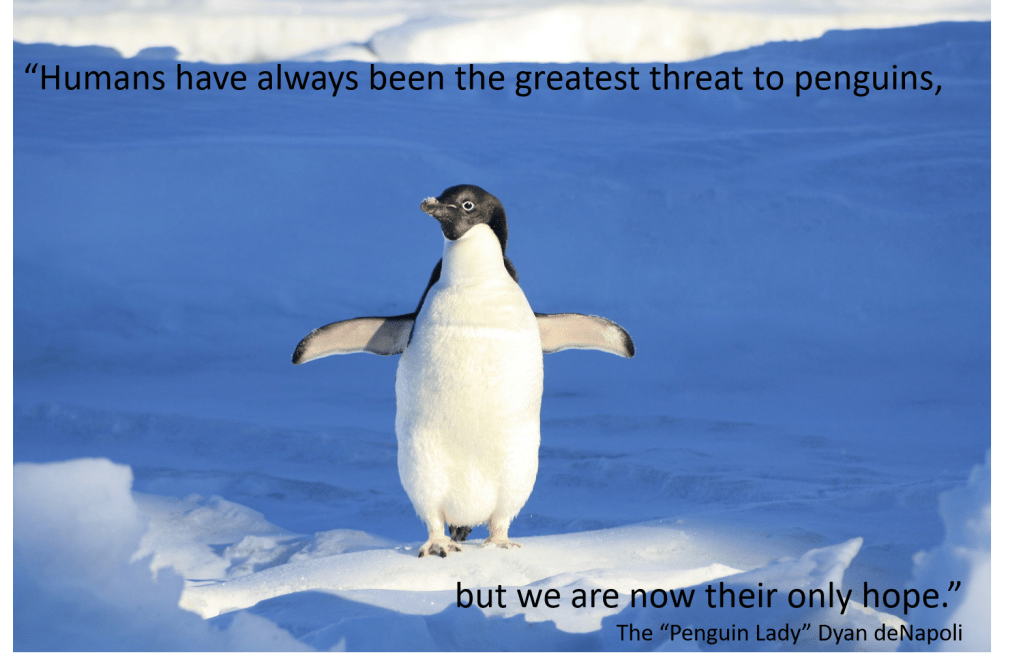
    “Humans have always been the greatest threat to penguins, but we are now their only hope.”

    I hope you find time to listen to the entire talk. It is what inspired my flash fiction story in response to the prompt set by Charli Mills this week at the Carrot Ranch. Charli challenged writers to In 99 words (no more, no less) write a story that includes oil. It can be an oil refinery, the raw product or used as a commodity. How does oil fit into a plot or a genre? Go where the prompt leads.

    Child citizen to scientist

    Familiar sounds heralded his arrival: feet scraped stairs, bag thudded deck, screen door crashed.

    Shouts of “Mum! Mum!” preceded him as he charged down the hallway, arms flailing, holding something aloft.

    His words exploded in a jumble.  She deciphered few. Baby stopped suckling, curious.

    “Slow down,” she said, patting the sofa with her free hand.

    He thrust the brochure at her.

    “I wanna adopt a penguin. Please, Mum. Can I?”

    “Penguins can’t live here. It’s too hot,” Mum teased.

    “Mu-um!” The words tumbled again. “Scientist… school… oil… penguins dying… ‘dangered… We have to save them from going extinct! Please!”

    The title Child citizen to scientist refers to the now welcome involvement of citizens in the collection of scientific data, as described, for example, in this article on Fast Company about the collection of pollution data around the BP oil spill in the Gulf of Mexico in 2010.

    About 18 months ago, I published a post about a project led by science teacher Cesar Harada who encouraged his students to innovate and problem solve through science. He explained his project in this Ted Talk.

    I particularly appreciated Harada’s conclusion about children and their involvement:

    Who knows, if my young penguin adopter is encouraged, he may grow up to be scientist too.

    For a picture book that introduces children to the concept of caring for our oceans, One Less Fish by Kim Michelle Toft and Allan Sheather is a great starting point. With its beautiful silk paintings, the book helps to educate children about the oceans, the way we pollute them, and what we need to do to protect them and their inhabitants.

    If you are interested, there are a number of organisations through which you can adopt a penguin. These are just a few. I’ll leave it to you to investigate your best option. Just remember: you can’t take it home. 😊

    Seabirds. Adopt a penguin

    The Penguin Foundation

    The World Wildlife Fund

    Wildlife Adoption and Gift Centre

    Thank you for reading. I appreciate your feedback. Please share your thoughts.

  • Navel contemplation

    In a recent post But Why? I wrote about the importance of curiosity, imagination, and creativity. I included all three in a flash fiction story that included an imaginary friend.

    This week at the Carrot Ranch, Charli Mills has challenged writers to In 99 words (no more, no less) write a navel story. It can include a belly-button, feature an omphalos (geological or cultural), or extend to navel-gazing (used in meditation or to describe excessive self-contemplation). Go where this oddity leads you.

    I thought I’d try for all three again.

    Navel contemplation

    Billy watched Mother bathe Baby.

    “What’s that?”

    “The last bit of his umbilical cord. Soon it will fall off, and he’ll have a belly button, just like you.”

    Billy lifted his shirt to inspect.

    “What’s billy cor?”

    “Umbilical cord – it’s where Baby was joined to me before he was born. Everyone has one.”

    “Everyone?”

    “Everyone with a mother.”

    “So, Silas don’t have belly button.”

    “Silas would have a belly button. Everyone has.”

    “But Silas don’t have a mum.”

    “Oh. But he would have had a mum. When he was born.”

    “Nope. Not born. I made him up.”

    What do you think? Did or do friends, born of imagination, have mothers if we choose to not give them one? Does the answer to this question impact the existence of belly buttons in imaginary friends?

    At the conclusion of the previous story, I suggested that “Perhaps there are some things for which we may never know the answers; for example, Can imaginary friends die?”

    I thank you for your responses, especially one questioning whether I have ever killed an imaginary character in a story. Something for me to ponder. I don’t think I have. Would I do that?

    In her post, Charli also writes about dying, or what happens afterwards anyway, especially with cremation and “wildcat scattering”. I often, occasionally, sometimes, contemplate what may happen to my body when I’m finished with it, or it’s finished with me, whichever comes first. Or is it the same thing?

    I would like an environmentally friendly disposal of my remains and hope that, by the time action needs to be taken, there are many such options available. At the moment, there seem to be few, so I was interested to listen to this TED talk. I thought you might enjoy it too.

    Thank you for reading. I appreciate your feedback. Please share your thoughts.

  • But why?

    Just like scientists, children are curious, constantly asking questions, wanting to know why or how. Parents and teachers don’t always know the answers. In fact, there may not even be an answer – yet. The need to know is strong and “just because” won’t do. Coupled with creativity, thinking up new ideas and possibilities, curiosity has taken us beyond the imagination of myths and legends to knowing and understanding.

    This week at the Carrot Ranch, Charli Mills has challenged writers to “In 99 words (no more, no less) write about a creation myth. You can write your own, use one in a story or create tension (or comparability) between science and culture on the topic of creation.” As usual, she tells us to “Go where the prompt leads.”

    Every culture has its own creation stories, told from the beginning of time when humans first walked the earth. Through stories, people attempted to explain their own existence and that of everything observable.

    With only the skies for night-time entertainment, people found stories in the stars. As Duane W. Hamacher says in Kindred skies: ancient Greeks and Aboriginal Australians saw constellations in common in the Conversation, What we don’t yet know is why different cultures have such similar views about constellations. Does it relate to particular ways we humans perceive the world around us? Is it due to our similar origins? Or is it something else? The quest for answers continues.

    As with stories told of the stars, there are some threads common to many creation myths, including stories of the first man and woman, stories explaining the existence of the animals and why they behave the way they do. I have read quite a few stories of floods, which I guess is understandable as these events occur worldwide.

    What I love about the creation myths is that they testify to the innate curiosity and creativity of humans; the need to know and the sense of wonder combined with imagination and storytelling.

    It is important to keep this sense of wonder and curiosity alive in children, and adults, also. Just a few days ago, as reported by Ray Norris in the Conversation, Exoplanet discovery by an amateur astronomer shows the power of citizen science. He says this discovery will help us understand the formation of our own Earth. It’s also a step towards establishing whether we are alone in the universe, or whether there are other planets populated by other civilisations.”

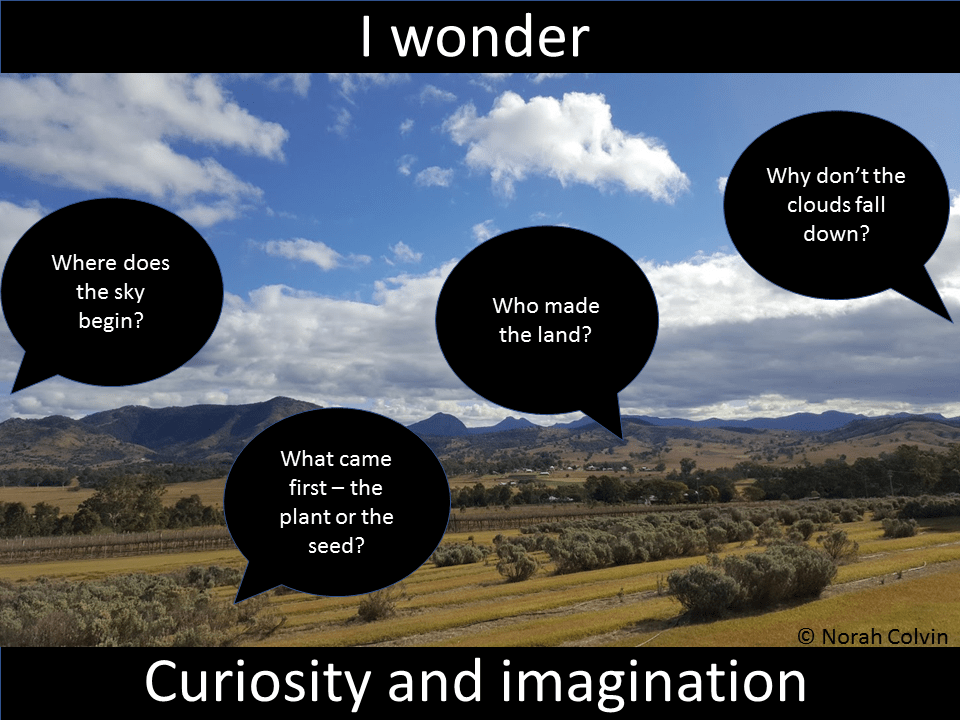
    I think of questions asked by my granddaughter; for example, “Who came first, the mother or the baby?”, “If there’s gravity, why don’t the clouds fall down?”  or “Where does the sky begin?”

    It is interesting now in this age of technology, almost everything we want to know is just a tap of a few keys or buttons away.

    The other day I visited a nature reserve with my two grandchildren. (We went especially to see three baby bilbies which had recently emerged from their mother’s pouch, but saw other things too.)

    We were looking at some black swans, which are native to Western Australia. GD informed me that white swans are not native to Australia. When I admitted that I’d never thought about that, she said, “Look it up. Look it up now. You’ve got your phone in your hand. Just look it up.” She was insistent and I did as told. She was right, of course.

    How different this experience is from that of the first humans. Young children expect to be given answers based upon science or collective knowledge, not stories. But we still do not have answers to everything.  As Duane W. Hamacher says, “The quest for answers continues.”

    In response to Charli’s challenge, I have not written a creation story. However, I have included the same ingredients that contributed to their creation: wondering, questioning, and imagination.

    Unanswered questions

    “What are you doing?”

    “Pulling out weeds.”

    “Why?”

    “So the carrots have more room.”

    “Why?”

    “So they can grow big and juicy.”

    “Why?”

    “So they are good to eat for our dinner.”

    “Why?”

    “To keep us healthy?”

    “I want to be healthy.”

    “It’s good to be healthy.”

    “I don’t want to die.”

    “You won’t die. Not for a long time.”

    “How do you know?”

    Silence. How does anyone know?

    “Silas died.”

    “Who?”

    “Silas.”

    “Who is Silas?”

    “Was. Silas was my friend.”

    “I don’t remember Silas.”

    “He was my imaginary friend.”

    “Oh. How did he die?”

    “I killed him.”

    “Why?”


    Perhaps there are some things for which we may never know the answers; for example, Can imaginary friends die?

    Thank you for reading. I appreciate your feedback. Please share your thoughts.


  • Are you coming or going?

    © Norah Colvin

    My mother used to sometimes say that she didn’t know whether she was coming or going, meaning that she was a bit frazzled with too much to do and too little time. With a small house filled ten children, is it any wonder?

    Sometimes when asked “How are you going?” meaning “How are you going in life?” or simply, “How are you?” people respond, “Getting there”. Sometimes I wonder where they are getting, and wonder if they know too.

    But does it matter? Is it important to know where we are getting? Is not there joy in the journey itself? What if the “there” turns out to be totally unexpected, a surprise? I have no idea where I’ll be after the door on this life’s journey closes. I hope it’s a pleasant surprise, but I’m more inclined to think it will be no surprise at all. This convinces me that it is important to enjoy the journey whether we’re coming or going or anywhere in between.

    One of the purposes of education is to support people along their life’s journey, regardless of where they came from or where they are going.  I previously wrote about some issues affecting itinerant families in This too will pass. Saying goodbye to friends, if indeed there has been time to establish friendships can be difficult; so too the establishment of new friendships at each next place.

    Robbie Cheadle, who blogs at Robbie’s Inspiration, recently shared her experiences in a comment on the readilearn blog. She said, “I changed schools 14 times during my primary school years and it was very hard. I was always the new girl and always having to start over. It does teach you to get on with people and to be resilient.” Robbie obviously learned to do so, but it doesn’t happen that way for all.

    Sherri Matthews, another friend from the S.M.A.G. community, who blogs at A View from my Summerhouse recently shared her excitement at the publication of her essay Promise of a Rose Garden in Lady by the River: Stories of Perseverance, “a collection of  personal stories about facing everyday challenges”. This is a wonderful book and I have no hesitation in recommending it to you.

    In her moving story, Sherri describes “having her heart ripped out” at ten years of age when she realises that the goodbyes exchanged between herself and her father as she left for school were more permanent than she expected. She says she kept her feelings inside, telling no one how she felt about her mother leaving her father. She says, “I cried alone at night, missing my dad so much that I thought my heart would break”.

    These two experiences alone demonstrate that we may never know just what the children in our classrooms are experiencing. They may keep their feelings inside, not wanting to share. This is particularly so when the time that could be used for getting to know each other is pushed out to accommodate more drill and practice and standardised testing.

    No child’s situation is the same as any other. There is no standard experience that puts everyone in the same spot on the graph at the same time. We need to make the effort to get to know individuals and to tailor the situation to their needs. This means providing opportunities for them to share their experiences, discuss their feelings, and follow their interests.

    Of course, children should never be pressured to share more than they are comfortable with, but an open, welcoming, supportive classroom will provide them with a refuge from other issues that may confront them. I seem to keep returning to this point: the importance of a warm, welcoming, supportive classroom. I’m like a broken record, stuck in that groove. But it is the relationships that are vital and of greatest influence to a child’s ability to learn.

    There are many simple activities which can be incorporated into the school day to help build community. I’ve talked before about the way I used to do the roll, with each child standing in turn to greet classmates. How much more effective it may have been had children said “good morning” in their mother tongue, teaching others the greeting, and receiving it in response. Children enjoy learning words from other languages.  What a great celebration of diversity this would be.

    It was these thoughts that went around and around in my head this week when Charli Mills of the Carrot Ranch challenged writers to In 99 words (no more, no less) write a hello or a goodbye. You can pick any greeting that grabs you from howdy to fare thee well. It will be interesting to see how the collection intertwines the opposite greetings. Charli herself has experienced a series of hellos and goodbyes in recent times, with another goodbye imminent.

    For my goodbye story, I have taken another turn and gone full circle. I hope you like it.

    Round and round

    He felt tall, grown up, sitting in the saddle, holding the reins, feet in the stirrups.

    Mum was watching.

    “Hold tight,” she whispered. “Love you.”

    He smiled.  Then they were off. He turned, letting go quickly to wave one hand.

    “Goodbye,” he called. His lip quivered. How soon before he’d see her again? He turned, but she’d disappeared.

    Suddenly she was in front of him.

    “Hello,” she called.

    “Hello,” he smiled.

    Again, she was gone. “Goodbye,” he heard; then “Hello again!” He giggled.

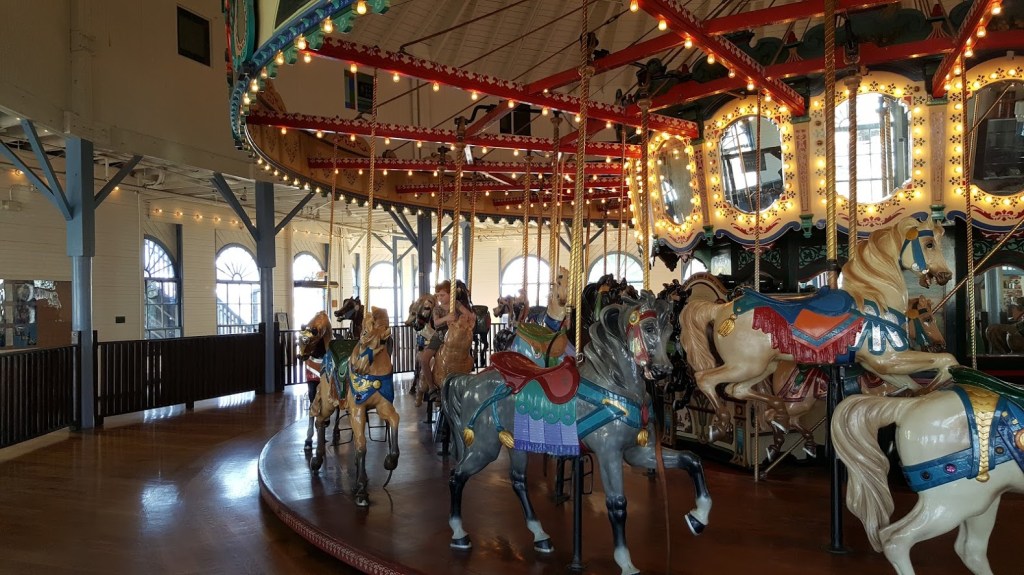
    “Going around in circles,” she thought. “Life’s like a carousel. You’ve got to enjoy the ride.”

    Thank you for reading. I appreciate your feedback. Please share your thoughts.

  • Is anybody watching?

    This week at the Carrot Ranch Charli Mills challenged writers to consider audience, and to In 99 words (no more, no less) write about an audience. It can be broad or small, and gathered for any reason. How does your character react to an audience? Is the audience itself a character.

    I have always considered audience important for children’s writing. Too often in school, writing is done simply for the teacher, to complete an exercise. It is read and marked (corrected) without any real concern for the writer and the writer’s purpose. That’s if, in fact, there was a purpose other than to complete the task set by the teacher.

    However, it is possible to give children in school a sense of audience. They can write for the class as an audience, “publishing” their work to place in the book corner for independent self-selected reading. They can write for parents or other relatives and friends to mark special occasions such as Mother’s Day and Father’s Day, Christmas and Easter. They can write for younger siblings or buddies. Letters can be written to residents in nursing homes, characters in books, the principal, politicians, and the local newspaper. Diaries can be written and shared with teachers. Audiences can be found everywhere.

    But an audience is not essential for every piece of writing. Sometimes we write just for ourselves. Sometimes even we are not an audience for our writing; when it is simply the act of writing, of expressing our thoughts that is important. Express, understand, release.  That can be all there is.

    While I think this is less so for young children, as they move towards double figures they may like to have a private lockable diary in which to confide. As you would wish your privacy to be respected, so should theirs. This is not true for their online communication though.

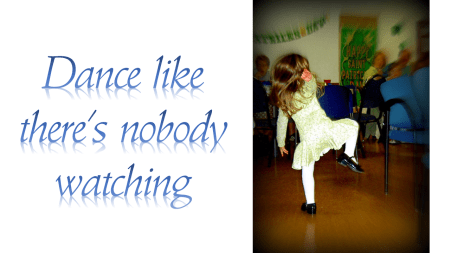
    There is the lovely saying  that includes the words “Dance like there’s nobody watching” and “Sing like there’s nobody listening”. The words are meant to be encouraging: “It doesn’t matter if you suck at it, just do it anyway.” I wonder why it doesn’t include the words:  “Write like there’s nobody reading.” Would you? Do you?

    Recently I admired and envied my 5-year-old granddaughter’s uninhibited self-expression as she sang and danced her way through the shopping centre. She didn’t care if anyone was watching or not. She was in the moment, in flow, sharing her joy in simply being. This is not a characteristic unique to my granddaughter. I have observed the same exuberance in other children.

    Most often the children’s behaviour draws smiles from passing adults; but what would the reaction be if it were an adult singing and dancing through the shopping centre? The occurrence, at least with such enthusiasm, is much less common. Breaking into song and dance may seem normal in musicals but doesn’t generally happen in real life.

    How would you respond? Would you smile, ignore, or hasten away?

    I was fascinated by some videos I came across when I Googled “Dance like nobody’s watching”. Here’s one:

    Children seem to vacillate through stages of “Watch me!” and “Don’t look at me!”, from pride to embarrassment.

    I think it is that embarrassment that kicks in with writing, as it does with most other things. We learn to compare ourselves with others, and generally find ourselves lacking,  If only we realised those “more confident” others probably feel the same.

    Or we might be reluctant to share out of fear of what others may think? Elizabeth Gilbert makes a good point in her book Big Magic: Creative Living Beyond Fear. She says,

    “Recognizing that people’s reactions don’t belong to you is the only sane way to create. If people enjoy what you’ve created, terrific. If people ignore what you’ve created, too bad. If people misunderstand what you’ve created, don’t sweat it. And what if people absolutely hate what you’ve created? What if people attack you with savage vitriol, and insult your intelligence, and malign your motives, and drag your good name through the mud? Just smile sweetly and suggest – as politely as you possibly can – that they go make their own fucking art. Then stubbornly continue making yours.” 

    Gilbert says that we shouldn’t take “art” too seriously and quotes Tom Waits who once told her:

     “You know, artists—we take it so seriously. And we get so freaked out about it, and we think that what we’re doing is so deadly important. But really, as a songwriter, the only thing I do is make jewelry for the inside of people’s minds. That’s it.”


    I shared Elizabeth Gilbert’s TED Talk Your elusive creative genius in a previous post Whose idea is it anyway? over three years ago, but it is worth sharing again. With over 12 million views, I know I’m not the only one to find it worthy.


    So, I’ve gone from audience to creativity. But what is creativity for, if not for audience? If your writing or artwork is not created to share with an audience; is the lack of an audience still uppermost in your mind as you create? Audience or no audience, self or other, how does it influence the process and product? Can you sing or dance without an audience, at least of self?

    For my flash story, I’m going back to the carefree days of childhood when life was fun and there was not a care in the world, and you danced and sang, whether anyone was watching or not. Really?

    The joy of childhood

    The cool grass teased her toes and the breeze tugged at her skirt, begging her to dance. She flung wide her arms to embrace the world as she lifted her face to the skies.  They smiled approval and she began to sway. Her fingertips tingled with expectation as her gentle hum intensified, summoning the music of the spheres to play for her. And play they did. She twirled and swirled to their rhythm singing her own melody in perfect harmony. Suddenly she was done. She clapped her hands to silence the orchestra and went back to her sandpit friends.

    Thank you for being my audience. I appreciate your feedback. Please share your thoughts.
  • Can you imagine a world without The Arts?

    Salvador Dalí [Public domain], via Wikimedia Commons
    How much time do you think should be devoted to the creative arts in school? How much time do you think is spent on creative arts in school? Is it a match?

    The arts include such things as:

    • Visual Arts
    • Drama
    • Music
    • Dance

    Educational policies promote The Arts for their potential to develop creativity and critical thinking. For example, the rationale for The Arts in the Australian Curriculum states that

    “The arts have the capacity to engage, inspire and enrich all students, exciting the imagination and encouraging them to reach their creative and expressive potential.”

    Creativity and critical thinking are mentioned first in the aims.

    How do The Arts contribute to our world?

    If nothing else, they add beauty to uplift and inspire. In many ways, they are time capsules, carrying stories from the past through our present and into the future. While I am neither artist nor art connoisseur, I see the value in each form and the importance of sharing them with younger generations.  I also consider it important for young children to have freedom to explore each of the arts as a medium of self-expression.

    I have shared some thoughts about each of the arts in previous posts, including

    Let’s Dance!

    image courtesy of openclipart.org

    I’ve got the music in me!

    Imagine that!

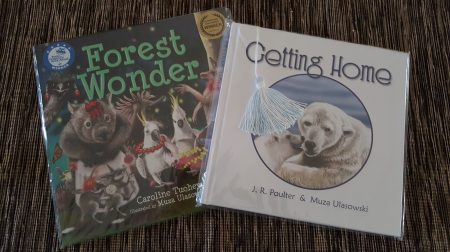
    and introduced you to some amazing illustrators including Jeannie Baker, Kim Michelle Toft, Narelle Oliver, Helene Magisson. Today I have received two beautiful picture books illustrated by the very talented Muza Ulasowski who I’ll be interviewing later this year.

    At the Carrot Ranch this week Charli Mills challenges us to consider what a nation may be like if art was gone. The picture she creates of a possible “post-truth era dystopian” future is not pretty. I’m not into dystopian futures where “everything is unpleasant or bad”. Tell me, we’re not there yet, are we?

    Although The Arts get a good rap in the Australian Curriculum, and other curricula too I’m sure, many teachers grumble that time for creativity and the arts is pushed out as schools focus on the formal tests that pit school against school, state against state, and country against country.

    Hopefully that situation is not as dire in early childhood situations. Fortunately, young children are constantly exposed to some aspects of the visual arts through beautifully illustrated picture books. Hopefully they also enjoy copious amounts of music, song, and movement each day, and lots of time for imaginative play. How much more than that, and how much time for self-expression, may vary from school to school and teacher to teacher.

    Involvement in art programs can also be therapeutic, giving children opportunities for quiet, almost meditative times, in which they can turn off their brains for a little while, relax, and express themselves.

    For Marnie, a character I have been developing through responses to Charli’s flash fiction prompts, art is more than just a release. Art classes with her favourite teacher Miss R., who sees and encourages the possibilities and potential that lie within, offer her welcome respites from the harshness of her reality.

    I introduced this notion in a flash piece Safety, and extended the idea in a longer piece The story behind brown paint.

    In this response to Charli’s prompt to In 99 words (no more, no less) go down the rabbit hole to a place where art is not allowed. It could be a small story or a dystopian vision. Is there a power struggle over art? Would the general public miss it? Is the end of art a natural evolution? I have considered what it might be like for Marnie should her should she be robbed of her treasured art class. I hope you enjoy it.

    No Art

    She’d survived! In just minutes, art class with Miss R. Without Art today, she’d be somewhere else; anywhere. Or nowhere. Breathing deeply, imagining sunshine and calm waters, as Miss R. taught, helped quell the warmth rising from her feet, threatening to explode her heart and head. Somehow she’d avoided Brucie and his bully mates, escaping their lunchtime taunts. Now Art: sanctuary. Suddenly, tears obliterated hope as she read: “No Art today. Classes cancelled.” Where was that white rabbit with a hole down which she could disappear?

    Later, during class, Miss R. asked, “Has anyone seen Marnie?” Brucie just smirked.

    Thank you for reading. I appreciate your feedback. Please share your thoughts.

  • Safety in friendship

    https://openclipart.org/detail/117199/Friendship

    With Australia’s National Day of Action against Bullying and Violence occurring  this Friday 17 March and Harmony Day next Tuesday 21 March, it is timely to consider what we can do to ensure our schools and communities are safe places; places where everyone is included, diversity is appreciated, and others are treated with compassion and respect.

    I recently wrote about the importance of teaching children strategies for making friends and getting along with others.  As for children in any class, these strategies would be very useful for Marnie and others in her class. Marnie, a girl who is abused at home and bullied at school, is a character I have been developing intermittently over the past few years in response to Charli’s flash fiction challenges at the Carrot Ranch. I haven’t written about her recently as the gaps widened and the inconsistencies grew and I felt I needed to give her more attention than time allowed.

    You may wonder how I got here from the current flash fiction prompt by Charli Mills to In 99 words (no more, no less) write a honeymoon story. But my mind will wander.

    Sometimes, when children are having difficulty settling in and making friends at school, are being bullied, or are bullying, it is easier to point the finger, allocate blame, and attempt to place the responsibility for a solution on others. Firstly, I think we, as a society, need to realise that we share responsibility. Secondly, we need to be the type of person we want others to be: compassionate, kind, accepting, welcoming, respectful. Thirdly, we need to teach the attitudes and behaviours we wish to encourage and make it very clear what is and is not acceptable; including “Bullying.No Way!”

    We are not always aware of the circumstances in which children are living or the situations to which they are exposed which may impact upon their ability to learn or to fit in. I wondered why Marnie might be abused at home. Although I knew her parents were abusive, I hadn’t before considered why they might be so. Charli’s honeymoon prompt led me to thinking about young teenage parents, who “had” to get married and take on the responsibility of caring for a child when they were hardly more than children themselves. I thought about broken dreams, lost opportunities, and definitely no honeymoon. Such was life for many in years not long ago.

    Blaming is easy. Mending is more difficult. Safety and respect are essential. I’d love to know what you think.

    Honeymoon dreams

    Marnie sat on the bed, legs drawn up, chin pressed into her knees, hands over her ears. “Stop it! Stop it!” she screamed inside. Why was it always like this? Why couldn’t they just get over it? Or leave? She’d leave; if only she had somewhere to go. She quivered as the familiar scenario played out. Hurts and accusations unleashed: “Fault”. “Tricked”. “Honeymoon”. “Bastard”. Marnie knew: she was their bastard problem. He’d storm out. She’d sob into her wine on the couch. Quiet would reign, but briefly.  Marnie knew he’d be into her later, and she? She’d do nothing.

    Thank you for reading. I appreciate your feedback. Please share your thoughts.
    Remember to catch up with Karen Tyrrell who writes about empowerment in my interview on the readilearn blog this Friday.