Live Love Laugh Learn … Create the possibilities

Category: Favourite reads

  • It’s no surprise! Talking education

    https://openclipart.org/image/800px/svg_to_png/185077/creepyjackinthebox.png
    https://openclipart.org/image/800px/svg_to_png/185077/creepyjackinthebox.png

    We all like a surprise, right?

    Well, you might say, that all depends on whether the surprise is a good surprise or a bad surprise.

    A surprise is simply something unexpected, and everyday life is full of surprises; some so little they go almost unnoticed, others of larger more life-changing proportions. Some are pleasant and others far less so.

    What got me thinking about surprises this week is the flash fiction prompt posted by Charli Mills at Carrot Ranch Communications.

    Charli’s challenge this week is to

    In 99 words (no more, no less) write a story that shows surprise without using the word. 

    I have been thinking of all sorts of surprises I could write about but decided to maintain my focus on education.

    There are many opportunities for surprises to occur throughout one’s education, which is not limited to (but probably, dare I say, by) one’s schooling experiences.

    For example:

    • Discovering you can read a book, all by yourself
    • Discovering an author whose work you just can’t put down
    • Finding a solution to a problem that had seemed insurmountable
    • Achieving a favourable result in a dreaded test
    • Being offered a place in the course you were wanting
    • Having work accepted, valued and receiving payment


    There are many situations in which the surprise could go either way.

    For example:

    • Being called to the principal’s office
    • Having a parent-teacher interview about your own child, or student
    • Receiving exam results or course placement offer
    • Meeting a new teacher
    • Working in a group to solve a problem


    Being a lover of stories, especially picture books, it is rare that a situation doesn’t trigger a thought connection to a story or book I have read.

    Thinking about the good surprises and bad surprises that could happen in some of these situations made me think of a book I had read to my own, and classes of, children years ago. Maybe you will remember it also.
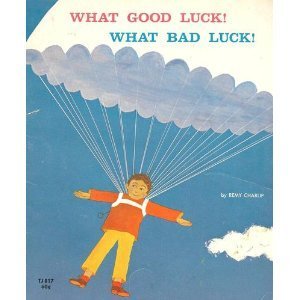
    what good luck what bad luckThe book is What Good Luck! What Bad Luck! by Remy Charlip and relates a sequence of events alternating between good and bad.

    It appears, from what I can find out, that it was first published by Ashton Scholastic in 1964 and sold for 60 cents.

    Today Amazon has used copies on offer for $34.99 or $122 and a collectible as high as $157.70.

    What good luck, I used to have a copy.

    What bad luck, it is no longer in my possession.

    I was at the stage of mentally composing my story with my fingers itching to get to the keyboard to translate it into print when I glanced at the morning paper1 and came across this headline:

    Lesson 1: Bad teachers = bad results

    As a teacher who is passionate about education but also critical of top-down force-fed schooling institutions, headlines/comments like these have me vacillating between defiant self- (and professional-) protection and agreement with the criticisms.

    Teachers come in for a lot of criticism, some of it deservedly so, other of it not so much.

    One quote I love is “Teaching is the one profession that creates all other professions”.

    On the flip-side of this is “Those who can, do. Those who can’t, teach.”

    While I take offense at this one, sometimes I am inclined to think it alludes to an important quality in a teacher. Frequently those who are expert at something, find it difficult to break a process into a series of steps that would enable an explanation to be easily understood by others. If one has struggled to master a task, the process can seem clearer and easier to explain. However there does come a point below which knowledge and experience must not fall or effective teaching cannot exist.

    In her article Bad teachers = bad results, Kylie Lang says that

    “C-grade teachers will not produce A-grade results”.

    She says,

    “Too many mediocre minds are becoming teachers. Universities usher them in, these academic underperformers who fail to qualify for courses with higher entry requirements.”

    She says that

    “A federal education department report shows a rise in the number of school leavers with poor grades being offered places on teaching courses. This year, 55 percent of Year 12 students that were allowed to undertake teaching degrees had an Australian Tertiary Admission Rank below the average . . .”

    It is a bit scary, isn’t it?

    She also says that,

    “If we are a nation that values education . . . we must attract brighter, more creative thinkers to classrooms.”

    I couldn’t agree more. However I wonder where they will get those creative thinkers if higher order thinking skills, creativity and innovation are sacrificed in the relentless quest for scores on academic tests which require students to spit back information forced upon them in hours of didactic instruction and rote learning.

    It’s no surprise that anyone who maintains the ability to think outside the square would rather not return to it!

    And so to my flash piece for this week, which comes with a warning – there’s no rhyme because there is no reason:


    What luck!

    No books, no talk were in the home.

    What luck!

    He was happy to play on his own.


    School began when he was five.

    What luck!

    Learning from flash cards, how hard he tried.


    “My boy can’t do it!” his Mum once wailed.

    What luck!

    With ‘forged’ test scores no child would fail.


    Leaving school, the options were few.

    What luck!

    Teaching was the one he could do.


    Uni years flashed by so fast.

    What luck!

    Number requirements meant he passed.


    Then into the classroom he unprepared went.

    No future joy for any student.

    What bad luck!


    I always enjoy reading your comments. I invite you to share your thoughts.


    1 Courier-Mail, Sunday May 25 2014


    If you enjoyed this post, you may enjoy others. Please click the button at the top on the right to receive future posts by email.

  • Going on a treasure hunt!

    we're going on a bear hunt

    A few weeks ago I had the great pleasure of taking my two gorgeous grandchildren to a performance of Michael Rosen’s “We’re Going on a Bear Hunt”. To say we enjoyed it would be an understatement. We had a rollicking good time.

    The performance involved a lot of audience participation including spraying the entire audience with water from the “deep cold river”; an event which left everyone slightly wet, screaming with anticipation and laughter, and genuinely having a wonderful time interacting with this fabulous text.

    We were already familiar with the text, of course, and had read it, recited it, acted it out and played a board game which has been made to accompany the text. None of this really prepared us for the delightful stage performance; but these pale in comparison with a telling by the master storyteller himself, Michael Rosen.

    Michael Rosen’s website is a veritable treasure chest with much to explore and delight.  From his home page you can visit his blog which he describes a as a place where he’ll

    “post up some thoughts and ideas – especially on literature in education, children’s literature in general, poetry, reading, writing, teaching and thoughts on current affairs.”

    You can also check out a full list of his publications. He’s very prolific!

    After attending the performance of “We’re Going on a Bear Hunt” I shared with my grandchildren the video of Michael Rosen performing the story, which is also available from his home page. They loved it and we watched it “Again!”

    Then I showed them the video of Rosen performing his fabulous poem Chocolate Cake. We watched it four times! Artie, who is four (and a half) was joining in with the telling the second time, and by the fourth time was copying many of Michael’s actions as well as facial and vocal expressions. Artie laughed along with the story and excitedly called other members of the family to watch it with him.

    The next time Artie came to visit he was performing his own version, “Lollipop”, with similar actions and both facial and vocal expressions. His younger sister also had to have her turn telling the story. It was delightful and convinced me, though I needed no convincing, of the power of a great performer to turn children onto the fun of language, of playing with words, of performing, and of composing writing of their own. Creativity ignited!

    If you haven’t yet watched Michael perform Chocolate Cake, I urge you to do so. You are in for a treat. I’m certain you will not be able to watch it without a smile on your face.

    Michael is so passionate about making poetry come alive for children, he has made many videos on his website freely available to teachers for use in their classrooms.

    In his article “Teachers write to me saying, ‘What about poetry?’”, Michael begins by saying,

    The-best-thing-you-can

    He then goes on to present many fun ways of engaging children with poetry, none of which involve word study or comprehension exercises. He makes suggestions for performing, writing and talking about poems; and says that

    “The best and most important thing you can do with any poem that a child writes is either get it performed or ‘published.”

    and offers suggestions of how to do just that.

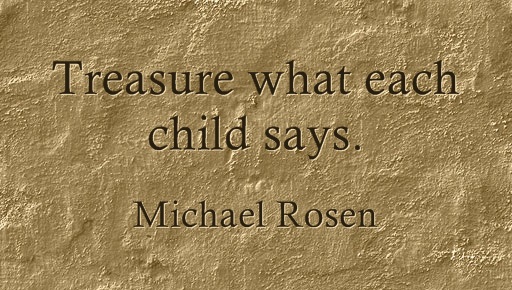
    Another thing he says in that article, which was the inspiration for the title of this post, is

    Treasure-what-each-child

    I couldn’t agree more.

    This is just a brief sample of the riches to be found on the Michael Rosen website. There are so many videos of Michael’s performances available that I have not yet watched them all. Please let me know your favourites and I will make sure I watch those too.

    Thanks Michael Rosen. We can learn so much from you while we are having fun!

  • The magic effect – why children need books

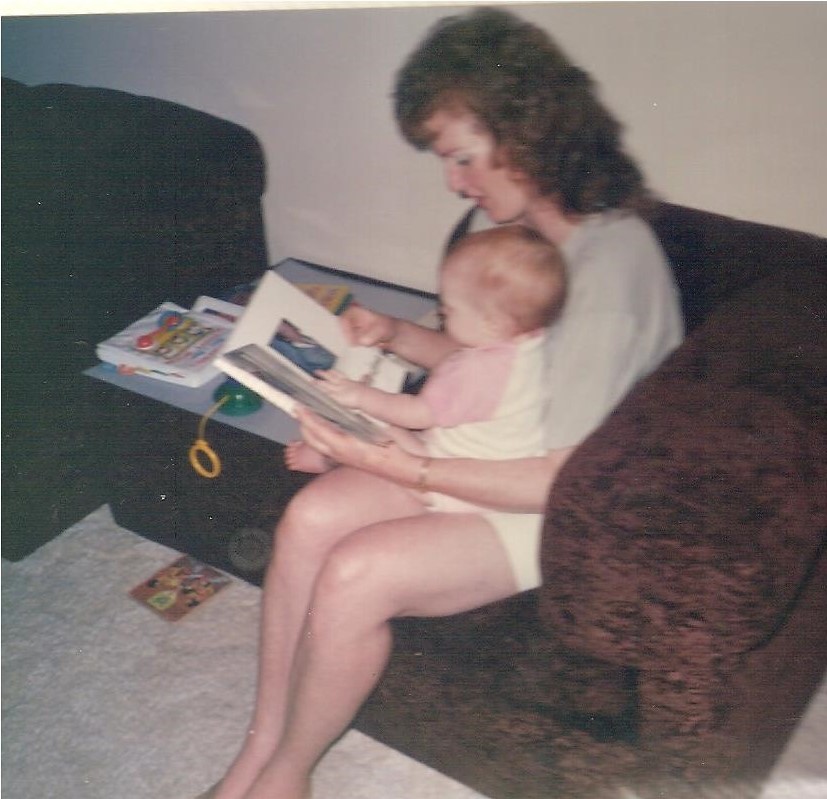
    Nor and Bec reading


    Children can be read to from the moment they are born, if not earlier. Preferably earlier!

    One of my favourite picture book authors and passionate advocate for reading to children is Mem Fox. I own, and have given as gifts, many of her wonderful books. I have attended her seminars and been mesmerised by her reading from her selection of stories. “Read more!” the adults beg. There are no children at these literacy seminars. This time it is a treat for only us: parents and teachers, literacy educators all.

    Currently Prince William, Kate and baby Prince George are visiting Australia. I was delighted to hear that they were given a gift of books by Australian authors, including some by Mem Fox. Over the years I have given many of Mem’s books as gifts; and kept just as many for myself!

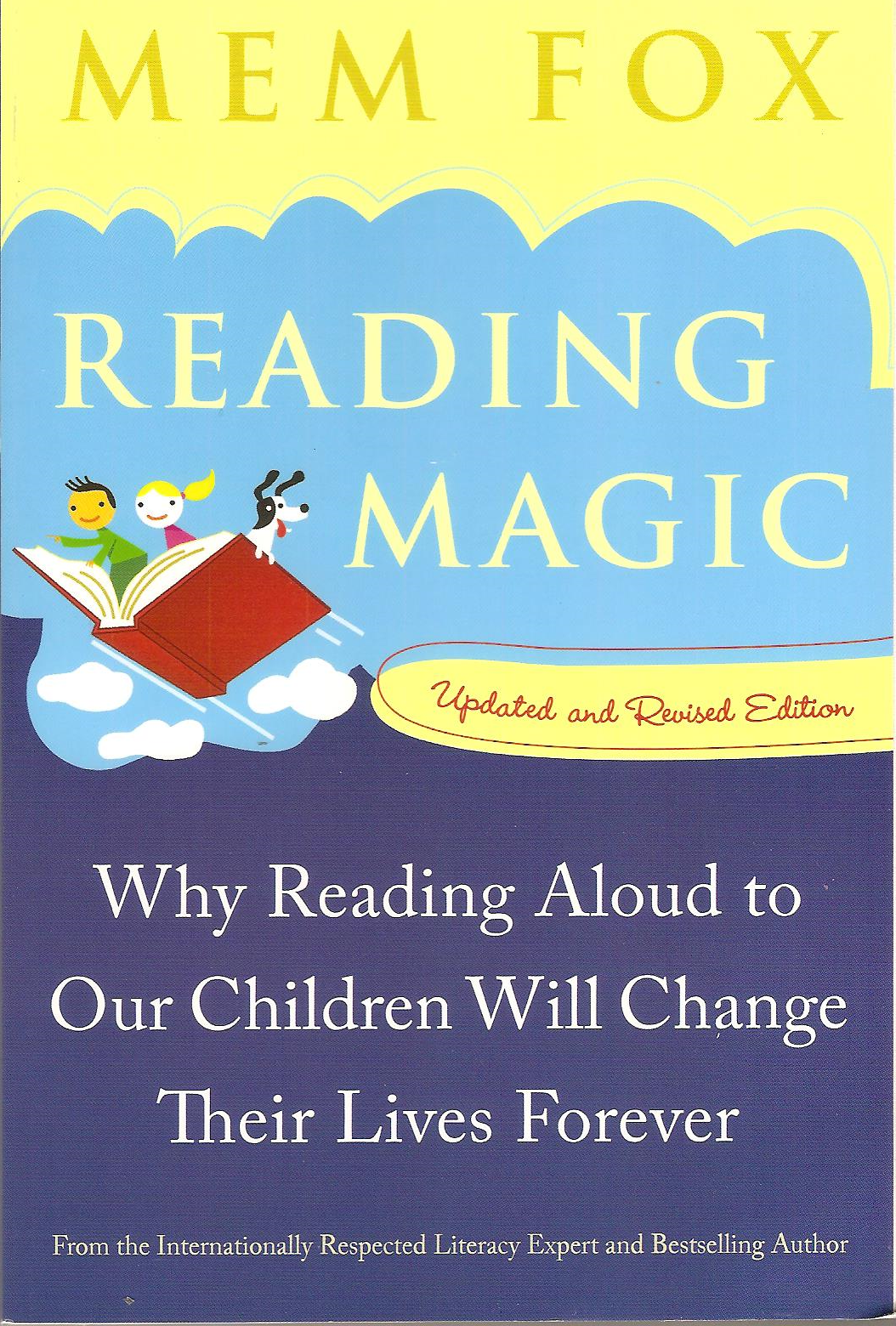
     Reading magic

    One that I have given to many new or expectant parents, as I consider it a “must read”, is Mem’s book “Reading Magic – Why Reading Aloud to Our Children Will Change Their Lives Forever”.

    I would love to quote the entire book for you, but it is better you read it for yourself. I will provide you with this quote from the foreword as a taster for the richness to be found inside.

    “It stands to reason that if we’re able to raise happier, brighter children by reading aloud to them, the well-being of the entire country will ramp up a notch. Children who realize in their first few weeks and months of life that listening to stories is the purest heaven; who understand that books are filled with delights, facts, fun, and food for thought; who fall in love with their parents, and their parents with them, while stores are being shared; and who are read aloud to for ten minutes a day in their first five years, usually learn to read quickly, happily and easily. And a whole lot of goodness follows for the entire community.”

    Mem's website


    Mem’s website, too, is a treasure trove just waiting to be explored by writers, teachers, parents, children and children-at-heart.

    You can listen to Mem read from her selection of books on the Current Read Aloud page. She reads three different books each month. Currently the books are Possum Magic, Harriet, You’ll Drive Me Wild! and Goodnight, Sleep Tight. Be quick to listen to these, though, as they will change at the end of the month. But never mind, there’ll be another three to enjoy next month!

    Mem even gives a read-aloud lesson! Now there’s no excuse! As she says,

    “. . . let’s get on and change the world, one page at a time.”

    Yes, Mem, let’s!


    What are your favourite read-aloud books? What did you enjoy as a child? What do you enjoy now?

  • Happy birthday Dr Seuss!

    Happy birthday Dr Seuss!

    Theodor Seuss Geisel: March 2, 1904 – September 24, 1991

    Picture1

    Today, March 2nd is the birthday of Theodor Seuss Geisel, better known as Dr Seuss, author of over 40 children’s books.

    While several of the Dr Seuss books were published before I was born, and many others published during my childhood, I have no recollection of meeting them prior to my years as teacher and parent. Fortunately those two roles provided me ample opportunity to catch up on the delights that I had previously missed.

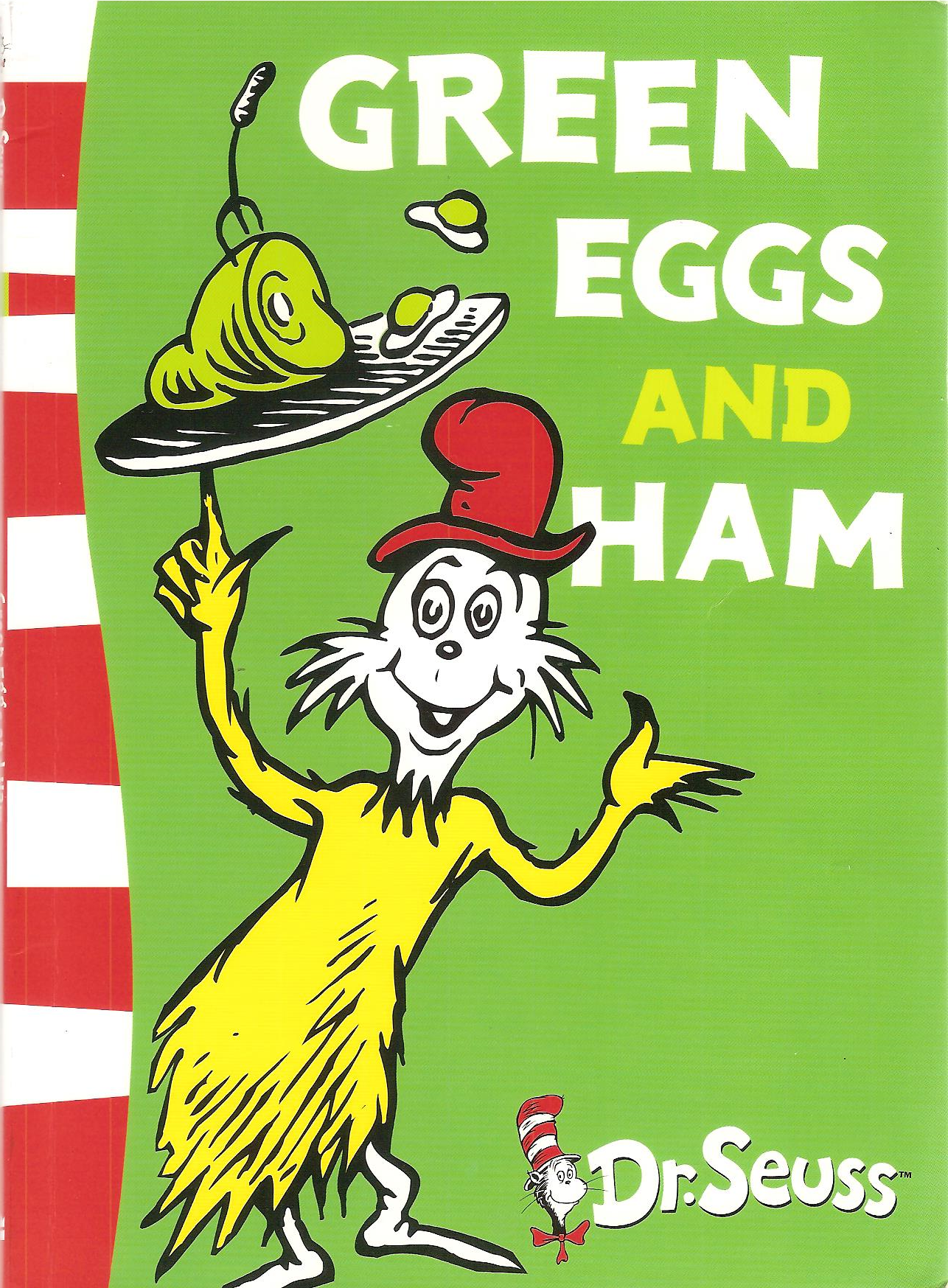
    Green Eggs and Ham

    I even apologised to Dr. Seuss in a previous post for leaning heavily on his book Green Eggs and Ham when writing about my relationship with exercise.  Click on Ode to Exercise to read my poem.

    You could celebrate his birthday by checking out the fun stuff and information on his author site seussville.com

    or pop over to Gail Terp’s Best Blog for Kids Who Hate to Read for lots of other suggestions:

    Celebrate Dr. Seuss’s Birthday with Books

    Dr. Seuss The Perfect Source for Literacy!

    Fun Dr Seuss games for the whole family

    How have the books of Dr. Seuss influenced your life?

    I invite you to share your thoughts.

  • Examining praise: Stephen Grosz – the third instalment!

    Guest post by Anne Goodwin (Annethology)

    Earlier this year, after reading 7 Reasons Why Lovers of Fiction Should Read The Examined Life by Stephen Grosz on Anne Goodwin’s writing blog, I decided the book sounded too good to resist and promptly listened to it as an audiobook on my commute to and from work.

    I was delighted with Anne’s recommendation, and like her, found the book compelling reading and thought provoking. So much so that I wrote a post about it: A book worth reading: Stephen Grosz “The Examined Life”.

    However the chapter that captured my attention and challenged my thinking more than any other was the one about praise. I also blogged about this: Seeking praise: Stephen Grosz revisited.

    My post about praise got Anne Goodwin thinking further about this issue and she was able to delve into it more deeply with her background in psychology. She has very generously written this guest post to share her thoughts.

    Thanks Anne – over to you:

    Although I was enchanted by The Examined Life from the first page, I glossed over the chapter on praise. Reading primarily for the parallels between these therapeutic case studies and reading and writing fiction, I didn’t stop to analyse my reaction, to acknowledge I was challenged by the suggestion that praise could be detrimental. Perhaps I dismissed this chapter as a reaction to the rarefied atmosphere of that cosy part of North London that is the hub of British psychoanalysis. In my neck of the woods, as reflected in my flash fiction piece, Peace-and-Quiet Pancake, I’m more concerned about a shortage of praise and encouragement than an excess.

    I was initially disappointed when Norah mentioned on Twitter that, with over thirty chapters to choose from, she’d decided to blog about the chapter on praise. Yet her wonderful post showed me what I’d missed in my initial (defensive) reading and inspired me to go back to the book and ponder the depths of wisdom within those four and a half pages for myself.

    “Stephen Grosz calls into question where our ideas of good practice originate.”

    In suggesting we rethink what’s best for our children, Stephen Grosz calls into question where our ideas of good practice originate. We tend to respond to the mistakes of our forebears by striving to do the opposite, so those of us who suffered from a dearth of praise ourselves might be inclined to lavish praise on the next generation. Yet we can become so fixated on turning our backs on the approaches we know from experience to be unhelpful, we’re blinded to the potential pitfalls of the alternative path. Cutting back on praise feels treacherous, like siding with the harsh disciplinarians of days gone by. Stephen Grosz points us towards a third way.

    “Behavioural strategies are invaluable for introducing the necessary structures and routines in which children can prosper and learn.”

    Behavioural psychology shows that targeted rewards, either tangible, or intangible like praise, increase the frequency of desired behaviours. Rewards are actually most effective when they’re doled out intermittently, which might be one argument (although not the author’s) for soft-pedalling on the praise. Behavioural strategies are invaluable for introducing the necessary structures and routines in which children can prosper and learn. However, they can also result in the over-controlled and compliant child, one who is well versed in pleasing adults but struggles to think for him or herself.

    “Stephen Grosz suggests that parents and educators can become as addicted to praise as these children.”

    Stephen Grosz suggests that parents and educators can become as addicted to praise as these children. The mother who continually tells her child she is good might be vicariously praising herself. Underlying this might be a lack of confidence in her own parenting skills and a difficulty accepting her child as a separate person, with potentially different values and preferences. This is unlikely to enhance the child’s confidence and self-esteem.

    “He also cautions us to be wary of praising children for what they are rather than for what they do.”

    He also cautions us to be wary of praising children for what they are rather than for what they do. He cites a study in which, consistent with attribution theory, children praised for their effort rather than their intelligence, developed a more positive approach to problem solving. We can always put in more effort, but if we believe success is down to stable and unchangeable factors we might be less resilient in the face of the failure we will all, however talented, meet at some point in our lives.

    “a third position where the adult is benignly attentive to the child and curious about what he/she is doing.”

    What the author recommends is not a return to a pedagogy of threat and punishment, but a third position where the adult is benignly attentive to the child and curious about what he/she is doing. The child who believes that an adult is genuinely interested in their ideas, thoughts and feelings, is likely to develop a strong sense of agency and self-worth. While this might seem a radical approach, it’s not dissimilar to the behaviour of a tuned-in mother who watches over and mirrors her baby’s moves. It’s also the stance taken by the psychoanalytically orientated psychotherapist.

    This is familiar ground for me, but I didn’t recognise it on an initial reading. Having already decided I loved the book from hearing snippets on the radio, I was reading it for what I could praise. I hope it wasn’t empty praise, but I was unwilling to engage with parts that were hard to swallow. On the second reading, my stance flipped to critical, almost punitive, focusing more on what was missing from the chapter than what was actually there. Now this process of putting my thoughts into words has brought me towards the position of curiosity and attentiveness I wish I’d had first time round. Whilst other readers might be less defensive, it does make me wonder, if it’s a struggle to reach this position in relation to a text, how difficult might it be to apply this learning in the real world and on a larger scale?

    “While parents, politicians and educationalists might all claim to value individual expression and personal growth, this has to be weighed against an equally strong pressure for the achievement of standardised performance goals.”

    On a sociopolitical level, we might resist this understanding because of conflicting views as to what education is for. While parents, politicians and educationalists might all claim to value individual expression and personal growth, this has to be weighed against an equally strong pressure for the achievement of standardised performance goals.

    On the individual level, as Stephen Grosz says in his final paragraph, being present with others is hard work. Therapists have their own therapy in addition to training and supervision; parents striving to do a similar job with only their experience of their own parenting to draw on could struggle to find the position of attentiveness beyond both praise and chastisement.

    “Children who have never been praised, even for attributes outside their control, might have no concept of their own ability to impact on their environment.”

    Furthermore, for the child entering school knowing only neglect and criticism, a teacher’s benign curiosity could be experienced as threatening, just as the neutrality of therapist can provoke anxiety in his or her client. Children who have never been praised, even for attributes outside their control, might have no concept of their own ability to impact on their environment. Does the busy classroom teacher have the resources to be truly present with them in the way they require?

    Thanks, Norah, for challenging me to revisit this chapter and for the invitation to rework my comment into a guest post. For those who’ve had the patience to stay present this far, I look forward to your reactions.

    Thank you Anne for the insight and challenge you have offered with much for us to think about.

    I reiterate Anne’s invitation for you, the reader, to share your thoughts on this topic, and suggest you head on over to Anne Goodwin’s writing blog (Annethology) for a great assortment of interesting fare.

  • A book worth reading: Stephen Grosz “The Examined Life”

    CoD_fsfe_Books_icon

    What appeals to a reader about a book, or what a reader takes away from a book is as individual and personal as the reader. What is of most significant to one, may be of lesser importance, or even insignificant to another. The fact that many different readers can read the same book and take away a very different impression, understanding and emotional connection is testament to the power of the written word, the value of reading and the ability of an author to reach readers on many different levels.

    Recently I read Anne Goodwin’s review of the book “The Examined Life: How We Lose and Find Ourselves” by Stephen Grosz. Anne described the book as a “must read for any thoughtful individual.”

    I was already familiar with the quote attributed to Socrates:

    “An unexamined life is not worth living.”

    and recently read an article by Simon Longstaff in the NewPhilosopher magazine examining the quote.

    Simon suggested that

    “one can make sense of Socrates’ claim if it is understood to mean something like – those who do not examine their lives (make conscious ethical decisions) fail to live a life that allows them to experience being fully human.”

    He goes on to say that

    “In a world of abiding uncertainty and complexity one can recognise a certain attraction in not examining too much, for too long in life. Thus the allure of those who offer to provide clear answers, simple directions, precise instructions (whatever) so that you may set aside examination and merely comply, or unthinkingly follow custom and practice – perhaps living a conventionally moral life rather than an examined ethical life. One can easily imagine how pleasant an unexamined life might be.” 

    I like to think of myself as a thinker often engaging in a bit of self- or other-reflection, living a somewhat examined life, not blindly complying or following customs and practice and always open to a challenge of my beliefs and ideas.

    Anne’s review intrigued me.  By fortunate coincidence I was finishing one audiobook and ready for another, and was delighted to find that “The Examined Life” was available in audio format.

    Anne’s review gives 7 reasons why readers and writers of fiction should read “The Examined Life”. You can read them here.

    As Anne suggested, I found it compelling “reading” throughout and agree with her description of the stories as

    “especially exquisite. Beautiful prose, tightly structured, these are moral stories without being moralistic, gentle fables . . . that leave us pondering the big questions of how to live.”

    Alex Clark on Vintage Books was also complimentary, saying that

    “what The Examined Life shows above all else is that we should not fear looking deeply into ourselves, because it is more likely that the effort of holding our feelings at bay will render them far more damaging.”

    In search of a succinct synopsis, I found this on the Book Depository:

    “We are all storytellers we create stories to make sense of our lives. But it is not enough to tell tales. There must be someone to listen. In his work as a practicing psychoanalyst, Stephen Grosz has spent the last twenty-five years uncovering the hidden feelings behind our most baffling behavior. The Examined Life distils more than 50,000 hours of conversation into pure psychological insight without the jargon. This extraordinary book is about one ordinary process: talking, listening, and understanding. Its aphoristic and elegant stories teach us a new kind of attentiveness. They also unveil a delicate self-portrait of the analyst at work and show how lessons learned in the consulting room can reveal as much to the analyst as to the patient. These are stories about our everyday lives: they are about the people we love and the lies we tell, the changes we bear and the grief. Ultimately, they show us not only how we lose ourselves but also how we might find ourselves.”

    Each of these reviews focused upon the importance of examining life, of delving into our own stories and emotions.

    At the commencement of this article I suggested that what we each take away from a book is as individual as we are; because what each of us brings to a book is very different, and what we need to take away is also different.

    The part of this book that had the greatest impact upon my thinking will the subject of my next post. I hope you will join me for it.

    If you have read or read “The Examined Life” by Stephen Grosz I would love to know what you think of it and which of it resonates mostly with you.

    Please share your thoughts.

    Quick links to articles mentioned in this post:

    Anne Goodwin (Annethology)

    New Philosopher

    Vintage Books

    Book Depository

  • Must read: Neil Gaiman – “Reading and obligation”

    When I first stepped, rather tentatively, into the world of blogging and tweeting I had no idea of the pleasures I would find. I found a whole community of others who share my passion for education, learning, literacy and writing. I found a comfortable niche, discussion group, and a place for sharing ideas like I hadn’t for a long time. I’ve “come home” on the internet.

    In these few short months I have come across some bloggers with very powerful messages that I wish everyone could read and act upon in the ways described. What a wonderful world we would have!

    Over the coming months I will let you know about some  articles I consider  ‘must reads’.

    Please let me know of others you think I should also be reading!

    Thanks for sharing and supporting me on my learning journey thus far.

    The story has just begun!

    This first in the series is a lecture given by Neil Gaiman entitled “Reading and obligation”

    Neil Gaiman lecture in full: Reading and obligation

    Neil captivates me with his opening statement:

    “It’s important for people to tell you what side they are on and why, and whether they might be biased.”

    If you have read any other articles on my blog, you will know that I am biased; biased towards a child-centered, hands-on, creative and innovative approach to education. I believe that children are capable of far more than a structured didactic approach to schooling gives them credit for; and that big changes in the way education is delivered are necessary if we are to make best use of our most valuable resource – human potential.

    As a reader, writer and literacy educator I am biased towards approaches which foster a love of reading and writing. The pleasures to be gained from a literate existence are immeasurable. But more than that, being literate is not only personally empowering, it is a basic human right.

    Obviously the articles on my must read list will be those that share my biases.

    Please follow the link to watch the video or read the complete transcript of Neil’s lecture.

    I offer a few teasers below to incite your interest.

    “everything changes when we read”

    Wow! How powerful is that statement!

    “The simplest way to make sure that we raise literate children is to teach them to read, and to show them that reading is a pleasurable activity. And that means, at its simplest, finding books that they enjoy giving them access to those books and letting them read them.”

    “Fiction has two uses. Firstly, it’s a gateway drug to reading. . .

    And the second thing fiction does is to build empathy.”

    “Fiction can show you a different world. It can take you somewhere you’ve never been. Once you’ve visited other worlds, like those who ate fairy fruit, you can never be entirely content with the world that you grew up in. Discontent is a good thing: people can modify and improve their worlds, leave them better, leave them different.”

    Don’t you love that last statement? I do. If we are always “happy” with the way things are, why would we ever try to improve or change them? A little discontent can be a good thing!

    “We need to read and write, we need global citizens who can read comfortably, comprehend what they are reading, understand nuance, and make themselves understood.”

    Neil goes on to talk about our obligations as readers, writers and citizens of the world.

    He lists the following (read or listen for his explanation)

    • Read for pleasure
    • Support libraries
    • Read aloud to our children
    • To use the language
    • We writers – and especially writers for children, but all writers – have an obligation to our readers: it’s the obligation to write true things, especially important when we are creating tales of people who do not exist in places that never were – to understand that truth is not in what happens but what it tells us about who we are. Fiction is the lie that tells the truth (underlining is mine)
    • not to bore our readers
    • not to preach, not to lecture, not to force 
    • never, ever, under any circumstances, to write anything for children to read that we would not want to read ourselves.
    • to understand and to acknowledge that as writers for children we are doing important work,
    • to daydream We have an obligation to imagine. . . . individuals change their world over and over, individuals make the future, and they do it by imagining that things can be different.
    • to make things beautiful.
    • to tell our politicians what we want

    Neil reminds us that

    Albert Einstein was asked once how we could make our children intelligent. His reply was both simple and wise.

    If you want your children to be intelligent,” he said, “read them fairy tales. If you want them to be more intelligent, read them more fairy tales.

    I couldn’t agree more.

    What about you? What do you think of Neil’s list of obligations? Are there any you would omit, or any you would add?

  • Searching for meaning in a picture book — Part A

    Searching for meaning in a picture book — Part A

    Do you recognise this book?

    The Very Hungry Caterpillar

    Chances are you do.

    According to the website of the author Eric Carle, since its publication in 1969 it has been published in over 50 languages and more than 33 million copies have been sold worldwide. It ranks highly in the Wikipedia List of best-selling books.

    Most primary schools, preschools and kindergartens would have numerous copies in their libraries with a copy in most classrooms as well as in teachers’ private collections. Most homes with young children would have a copy in their storybook collection.

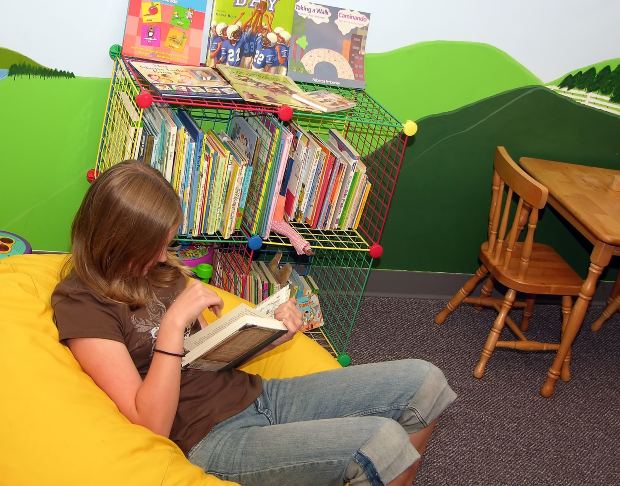
    reading

    In addition to the books, many of those schools, classrooms and homes would have some of the associated merchandise; including toys, games, puzzles, posters and colouring books, which are now available.

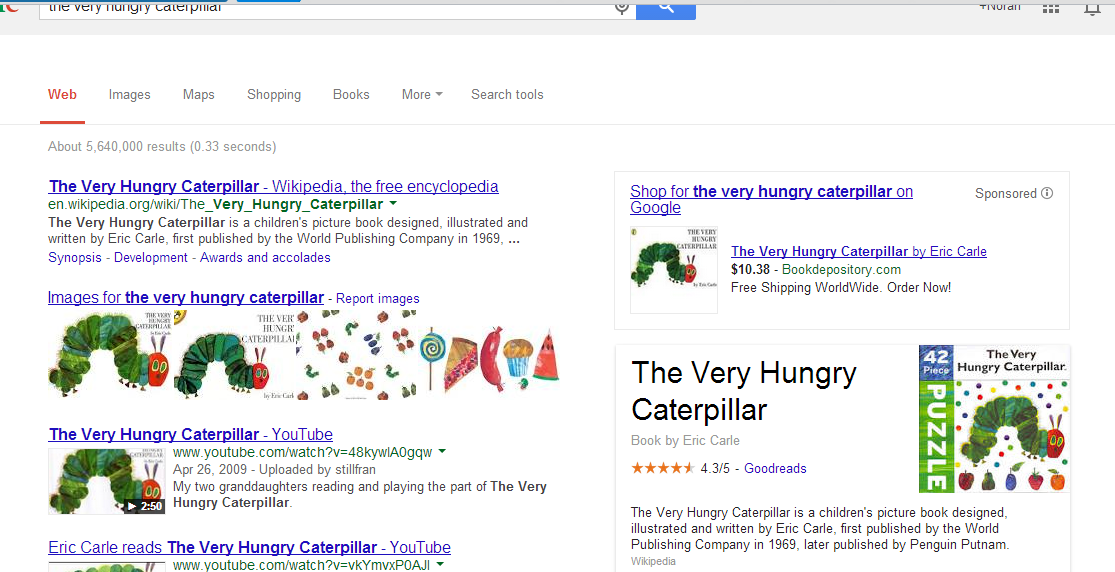
    When I typed ‘the very hungry caterpillar’ into the Google search bar about 5,640,000 results were listed in 0.33 seconds!

     Google search the very hungry caterpillar

    There are activities, lesson plans, printables, videos, and advertisements for merchandise. There is a plethora of suggestions for using the book as a teaching resource, including counting, days of the week and sequencing.

    I think you would be hard pressed to find someone that hasn’t at least heard of the book. That is quite an impact, wouldn’t you say?

    For a book to have done so well, it must have a lot going for it. And it does.

    There are many things I like about this book, including:

    • The bright, colourful, collages with immediate appeal
    • The natural flow and rhythm of the language making it easy to read, dramatize and recall
    • The sequence of numbers and days encouraging children to predict and join in with the reading and retelling
    • The match between the illustrations and the text supporting beginning readers as they set out upon their journey into print
    • The simple narrative structure with an identifiable beginning, a complication in the middle with which most children can empathise (being ill from overeating) and a “happy” resolution with the caterpillar turning into a beautiful butterfly.

    Reading to children

     Nor and Bec reading

    Sharing of picture books with children from a very young age has a very powerful effect upon their learning.

    There are many benefits to both parent and child of a daily shared reading session.

    clock

    It can be seen as a special time of togetherness, of bonding; of sharing stories and ideas. It can be a quiet and calming time; a time to soothe rough edges and hurt feelings; a time for boisterous fun and laughter; or a time for curiosity, inquiry, imagination and wonder.


    Whatever the time, it is always a special time for a book
    ; and all the while, children are learning language.

    8-12-2013 7-38-33 PM
    © Bernadette Drent. Used with permission.

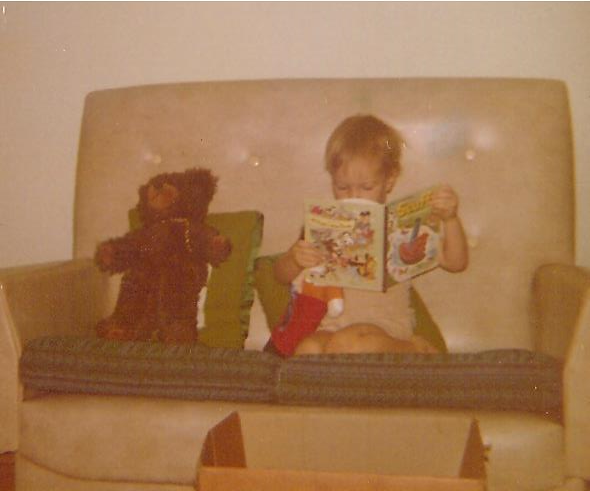
    They are hearing the sounds and rhythm of their language. They are being exposed to new vocabulary, sentence structures, concepts and ideas. They are learning important understandings that will support them on their journey into literacy e.g. they are learning that the language of a book differs from oral language and that the words in a book always stay the same.

    They begin to realise that it is the little black squiggly marks that carry the message, and they may even start to recognise some words.

    Robert 2

    Many of these, and other, features make “The Very Hungry Caterpillar” suitable for incorporation in an early childhood curriculum, for example:

    The Very Hungry Caterpillar

    • Literature appreciation – love of language, knowledge of story, interest in books
    • Reading – the clear, simple and predictable text make it an easy first reader
    • Maths – counting and sequencing the numbers, sequencing the days of the week
    • Visual arts – learning about collage and composition of a picture
    • Philosophical inquiry —sharing interpretations and discussing feelings about the story, asking questions raised including the ‘big questions’ of life

    ryanlerch_thinkingboy_outline

    Eric Carle, in an interview with Reading rockets, describes it as a book of hope. He says:

    You little, ugly, little, insignificant bug: you, too, can grow up to be a beautiful, big butterfly and fly into the world, and unfold your talents.”

    He goes on to explain that,

    I didn’t think of this when I did the book, but I think that is the appeal of the book.”

    But I’m not going to let him have the last word!

    While “The Very Hungry Caterpillar” has always been one of my very favourite picture books, I do have some misgivings about the impact that this book has had.

    In future posts I will share what I consider to be some limitations of the text, and what I consider to be the most powerful use of all.

    What do you think?

    What appeals to you about this book?

    What questions does it raise for you?

    Please share your ideas. I look forward to hearing what you think.

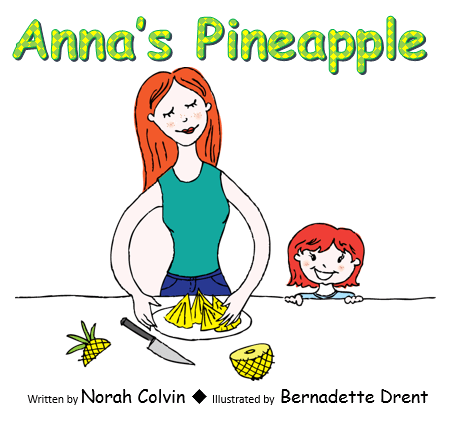
  • Anna’s pineapple

    Anna’s pineapple

    My gorgeous little granddaughter, Anna, turned two last Sunday.

    This is a story I wrote for her in celebration of her big day.

    It is based on a real event that occurred a week or two earlier. She just could not understand why her grandfather Bob had scoffed all the pineapple and left no more for her. He, of course, didn’t realise that the pineapple had been left for later, and thought that he was merely finishing off the leftovers.

    Anna’s Aunty Beckii was most amused, as was the rest of the family,  that Bob had eaten it all as he had already earned the title of “Bob the scoffer” by Anna’s big brother Artie. I must add that Aunty Beckii and Uncle Glenn had both given Artie considerable encouragement in bestowing this title!

    I am very grateful to Bernadette Drent who illustrated the story so well with only 2 days notice. I think she did a fantastic job and really captured the humour of the story.

    Have a read and let me know what you think. I’d love to know if it deserves a readership wider than that of family members.

  • John Dewey’s dream

    http://openclipart.org/image/800px/svg_to_png/101707/happy_pencil.png
    http://openclipart.org/image/800px/svg_to_png/101707/happy_pencil.png

    John Dewey’s dream

    “John Dewey dreamed of the teacher as a guide helping children formulate questions and devise solutions. Dewey saw the pupil’s own experience, not information imparted by the teacher, as the critical path to understanding. Dewey also contended that democracy must be the main value in each school just as it is in any free society. The education system in Finland is . . . shaped by these ideas of Dewey and flavored with the Finnish principles of practicality, creativity, and common sense. What the world can learn from educational change in Finland is that accomplishing the dream of a good and equitable education system for all children is possible. But it takes the right mix of ingenuity, time, patience and determination.

    The Finnish Way of educational change should be encouraging to those who have found the path of competition, choice, test-based accountability, and performance-based pay to be a dead end. . . . the Finnish way reveals that creative curricula, autonomous teachers, courageous leadership and high performance go together.”  (Sahlberg, Pasi 2011 Finnish Lessons, What can the world learn from educational change in Finland?)

    John Dewey (1859 – 1952) was an American philosopher and educator. Dissatisfied with traditional practices for what he saw as their inability to keep pace with changing needs of learners and society, opened his Laboratory School in Chicago, proposing a more child-centred approach focusing upon individual needs of the children who would be engaged in a variety of activities of interest and meaning to them. The term “progressive education” refers to the movement against formal traditional practices which, following Dewey’s lead, began in America in the late 19th Century.

    Pasi Sahlberg’s book “Finnish Lessons” is “about Finland and how the Finns transformed their educational system from mediocre in the 1980s to one of the models of excellence today. International indicators show that Finland has one of the most educated citizenries in the world”.

    In the introduction Ann Lieberman writes, “In the Finnish context, teaching is a high-status profession, akin to being a doctor. Those who enter not only stay in teaching, but many continue their studies, not to leave, but to learn more and contribute more to their profession. This heightened sense of professionalism makes teaching a sought-after position and one obtained only by those who are fortunate enough to be chosen for candidacy.”

    The debate about the value of a traditional versus a child-centred approach to education has waged for centuries. It seems that Finland has incorporated many of Dewey’s progressive ideals into their educational philosophy and pedagogical practice. I can’t help but get excited when I read of what happens in schools in Finland.

    Which other countries will follow Finland’s lead to transform their educational system into one of excellence? For me, it can’t happen soon enough!

    What do you think?