Live Love Laugh Learn … Create the possibilities

Category: Favourite reads

  • A celebration of Australian picture books #1

    Recently my friend Sarah Brentyn, who blogs at Lemon Shark: Navigating the Unchartered Waters of Parenting and Life, shared a series of posts about first lines (paragraphs, sentences and pages). She discussed the importance of hooking the reader and shared some of her favourite first lines from a variety of genres. When she shared picture books I was inspired to share some by our many wonderful Australian authors and illustrators.

    These are just some of the Australian picture books I quickly located on my shelves:
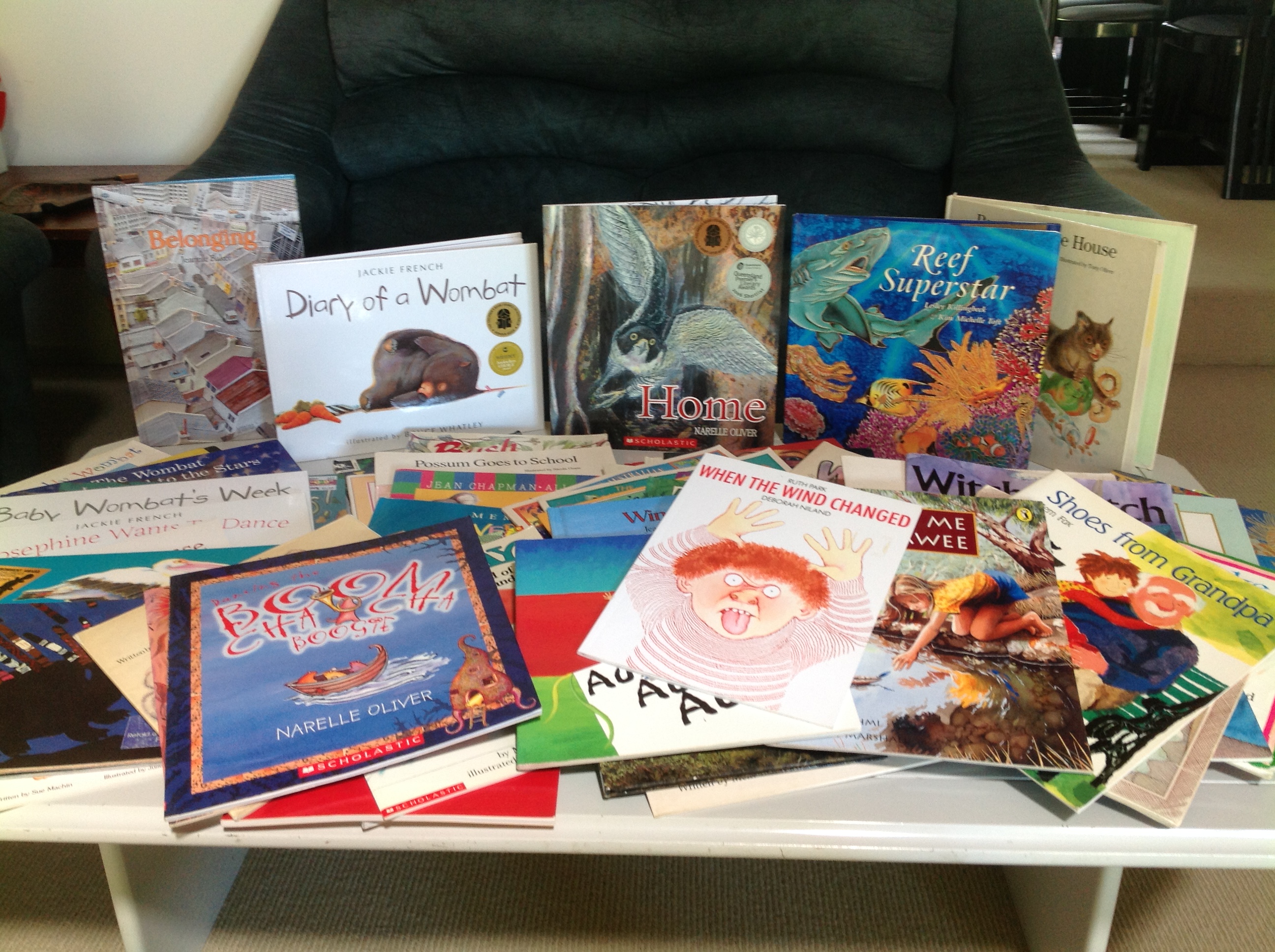
    Australian picture books

    I own multiple titles of some authors’ work, and of others’ I own but one or two. Sadly, there are many whose work I don’t own. There are too many wonderful books to share in just one post so I have decided to write a series with a post dedicated to each author of whose work I own multiple titles, including Mem Fox, Narelle Oliver, Jeannie Baker and Kim Michelle Toft (and I might sneak in New Zealander Pamela Allen).

    In this post I share some lovely books, their first lines (according to Sarah’s definition) and tell you a little about why they are on my shelves.

    For this series I have commandeered “celebration” as a collective noun for Australian picture books so it is fitting that the first I share is A Compendium of Collective Nouns by Jennifer Skelly.

    A Compendium of Collective Nouns

    This delightful little book was a gift from my grandchildren (chosen by their mother). In the introduction Jennifer asks, “Do you remember laughing when you first learned that a group of crows is called a murder? Or a group of owls is called a parliament?” Like me, Jennifer has always been interested in collective nouns but, unlike me, she has published a collection of them. Her beautiful drawings illustrate collections such as “a crash of rhinoceroses”, “a flamboyance of flamingos” and “a wisdom of wombats”, but who ever heard of “a rabble of butterflies”?

    While there are a number of Hippopotamus on the Roof books I have only the original, There’s a Hippopotamus on our Roof Eating Cake by Hazel Edwards (illustrated by Deborah Niland).
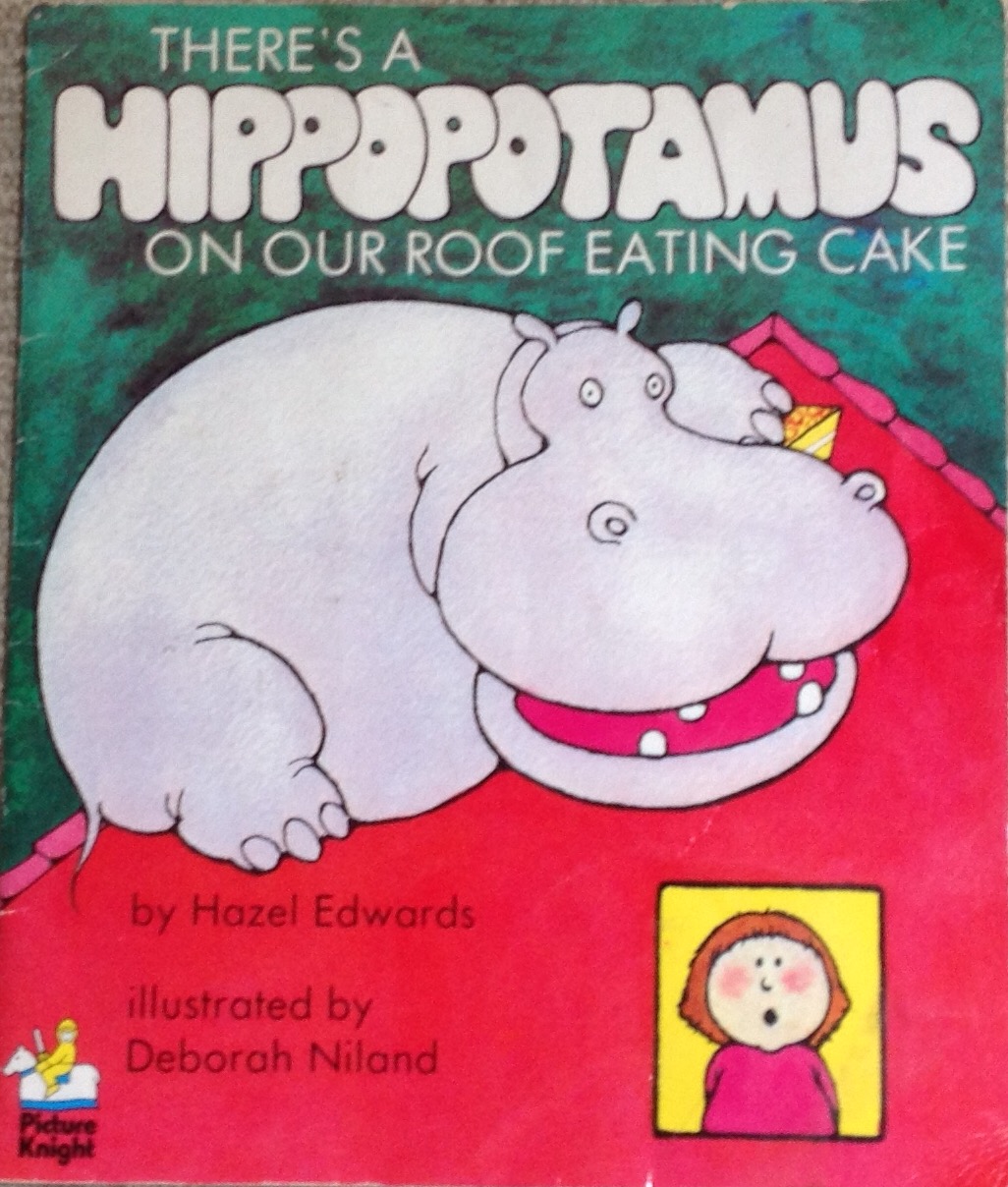
    There's a Hippopotamus on the Roof Eating Cake

    It begins,

    “Our roof leaks.

    Drip!

    Drip!

    Drip!

    My Daddy says there’s a hole in our roof.

    I know why there’s a hole.

    There’s a hippopotamus on our roof eating cake.”

    The copy on my shelf actually belongs to Bec. Her dad bought it for her on a trip back home to Belfast in 1990. He went all the way to Belfast and brought her back an Australian picture book! A good one though.

    In this video Hazel Edward talks about the original idea for the book, other contributing ideas and changes as well as the the important relationship between author and reader. She also reads the book.

    Wombat Stew by Marcia K. Vaughan (illustrated by Pamela Lofts) is a favourite.
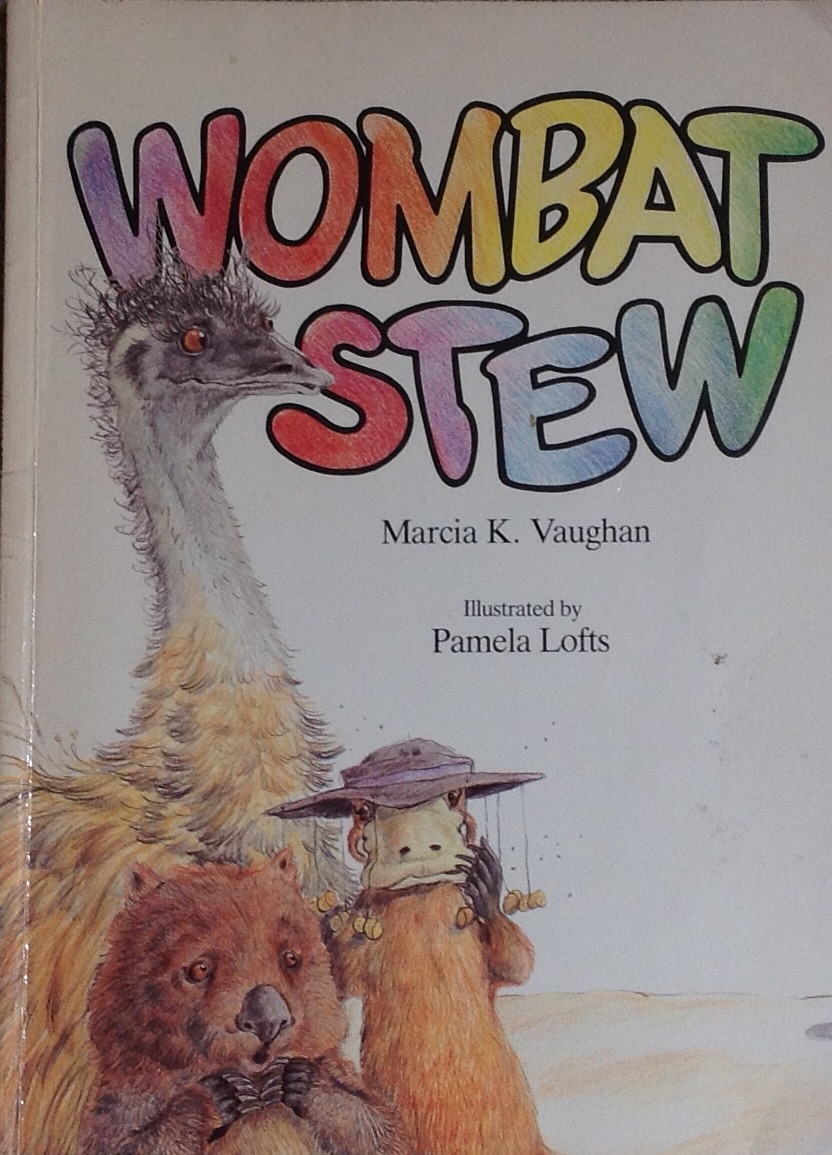
    Wombat Stew

    It begins,

    “One day, on the banks of a billabong, a very clever dingo caught a wombat …

    and decided to make  …

    Wombat stew,

    Wombat stew,

    Gooey, brewy,

    Yummy, chewy,

    Wombat stew!”

    The amusing story tells how the animals trick the dingo and save wombat from his fate. It is a great book to read aloud with its rhythmic language and repetition of the song “Wombat stew” with slight word changes each time. Children enthusiastically join in with the reading and love acting it out. One year I wrote a play with my year one class and they performed it for the school and their parents. It was a lot of fun.
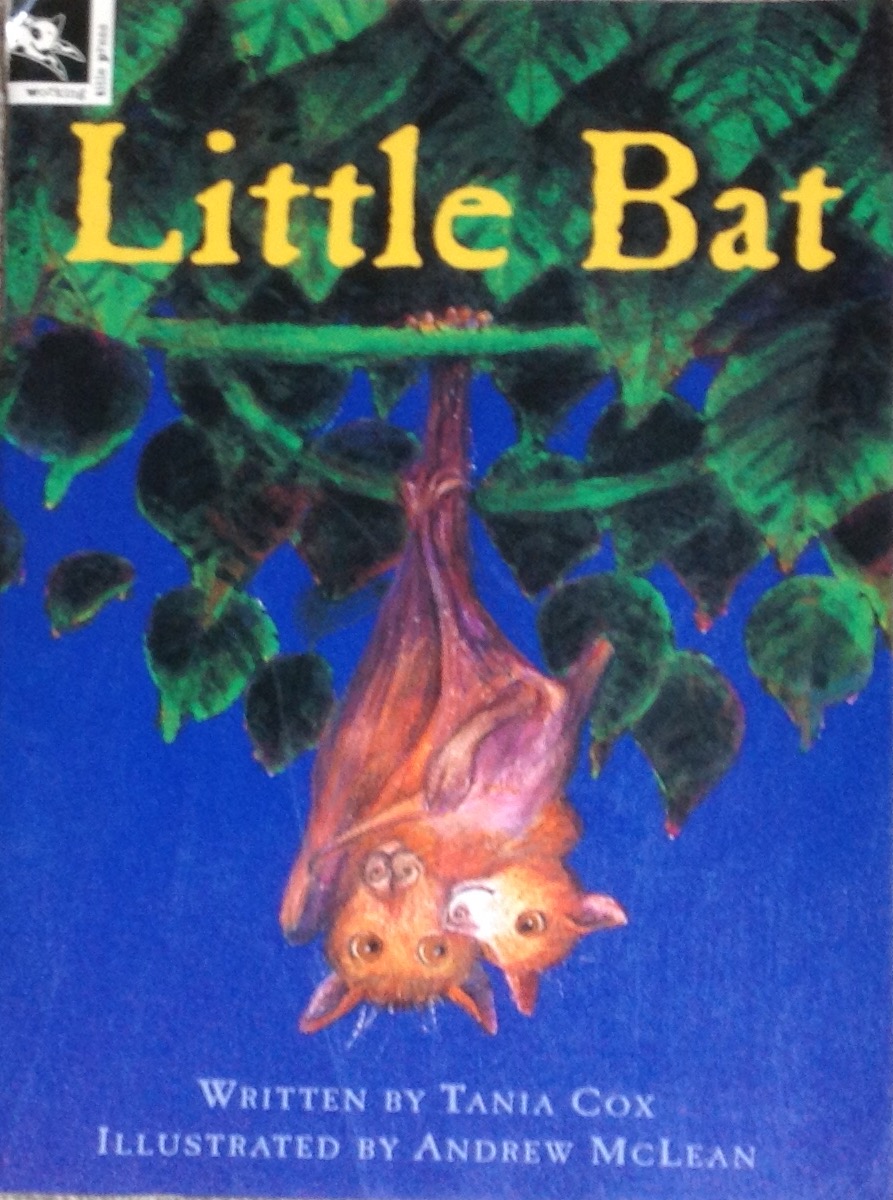
    Little Bat

    Little Bat by Tania Cox (illustrated by Andrew McLean) begins

    “Little Bat was nervous.

    She’d never done this before.”

    With the encouragement of her mother and other animal friends, Little Bat discovers that she can fly. I like the story’s positive message that if you try you can succeed. Books with this theme were always popular and inspired lots of discussion in my classroom.

    When I saw When the Wind Changed by Ruth Park (illustrated by Deborah Niland) in a bookstore, I had to have it for my bookshelf! When I was a child I, like Josh, must have been good at making faces, because my mother was always telling me that if the wind changed I’d stay like that. Well, I don’t think that happened to me, but it did to Josh! The book begins

    “There was this boy named Josh.

    He could do lots of things.

    There was one thing he could do best of all.

    He could make faces.”

    Of course one day the inevitable happens! Fortunately the story has a happy ending, for Josh anyway – I’m not so sure about Dad!

    Are you familiar with any of these books? Have you seen them in bookstores near you? What books by Australian authors have you read?

    Thank you

    Thank you for reading. I appreciate your feedback. Please share your thoughts.


  • Five Photos Five Stories – Day one

    For the love of books

    This week I was surprised to be nominated by, writer extraordinaire, Geoff Le Pard in a Five Photos Five Stories challenge. Geoff blogs at TanGental where he shares numerous and beautiful photos of his garden, family, travels and adventures. He writes an eclectic assortment of prose and poetry, memoir and fiction, with content both challenging and humorous. He also posts at the speed of light with at least one post each day. I can understand why the challenge would appeal to Geoff.

    I’m not like that. I tend to stick to my routine of two posts each week and write mainly expository text about education with a response to a flash fiction prompt by Charli Mills thrown in. I rarely write explanations of or stories about photos and mostly use photos to support and add interest to the page. Why would Geoff nominate me?

    Well it seems Geoff must have known something about me that I didn’t, as I have decided to throw caution to the wind and join in the challenge.

    The rules of the Five Photos, Five Stories Challenge are:

    1) Post a photo each day for five consecutive days.
    2) Attach a story to the photo. It can be fiction, non-fiction, poetry, or a short paragraph. It’s entirely up to the individual.
    3) Nominate another blogger to carry on the challenge. Your nominee is free to accept or decline the invitation. This is fun, not a command performance!

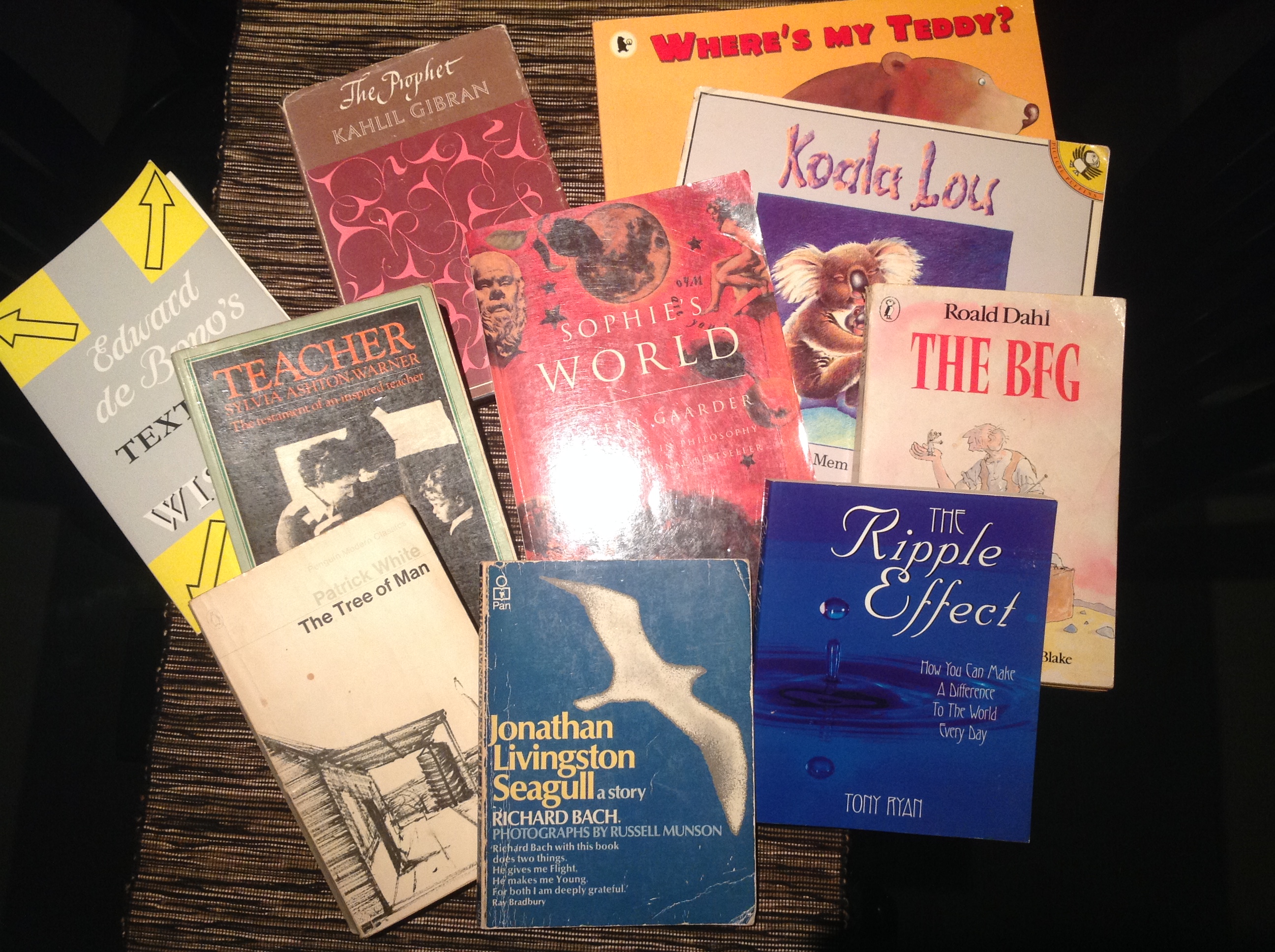
    For my first photo I have chosen, and you won’t be surprised, books:

    books

    These are just a few of my favourites. As you can see I have chosen a range including picture books and chapter books for children and both fiction and non-fiction titles for adults. There are others that should have been there but I could not fit my entire collection into one photo!

    Books have always been an important part of my life and I think a love of reading is one of life’s greatest pleasures. My love of books and reading is one of the reasons, if not THE reason I feel so passionately about education and the teaching of literacy. Sharing a learner’s excitement at becoming literate is both an honour and a joy. I have been privileged to share that excitement with many children during my teaching career, and of course with my own two children who both learned to read well before starting school.

    I have written about the importance of reading many times before, including here, here, and here.

    For this post, and for this photo, I will share ten totally random recollections of books and reading from my younger years.

    I remember:

    • books as gifts for Christmas and birthdays
    • an expedition to the council library, a six-kilometre walk there and back, each Saturday afternoon for an armful of books to read during the week
    • being deaf to the world when totally absorbed in a book for hours on end (particularly so when there were jobs to be done)
    • the eagerness of wanting to get to the end of a book and the sadness and reaching the last page
    • the excitement of finding the next book in a series or by a favourite author
    • marvelling at words and phrases for the imagery or feelings they evoked
    • enjoying an author’s style and trying to emulate it by writing and writing and writing, and wishing to one day be an author too
    • the smell of new books
    • tracing the embossed lettering on the hardcover when the jacket was removed
    • being fiercely protective of my books and having a great dislike of seeing them torn or marked
    • the joy of ownership

    And now I nominate the lovely Michelle James who blogs at Book Chat to take up this challenge if she so wishes. Her love of books is at least as great as my own!

    Thank you


    Thank you for reading. I appreciate your feedback. Please share your thoughts about any aspect of this post.

  • Why do you read?

    CoD_fsfe_Books_icon

    I read every day.

    I read:

    • Blog posts
    • Emails
    • Tweets
    • Articles
    • News reports
    • Notifications
    • Comments on blogs
    • Road signs
    • Menus
    • Labels on products
    • Receipts
    • Bills
    • Bank statements
    • Letters
    • Instructions

    The list could go on …

    At the moment my reading of full-length books is limited, though recently I read a novel (Dead Flies and Sherry Trifle by Geoff Le Pard) and a memoir (On Hearing of My Mother’s Death Six Years after it Happened by Lori Schafer), both of which I read as ebooks. I also read a non-fiction paper book (Retiring with Attitude by Caroline Lodge and Eileen Carnell) and am part-way through a number of other non-fiction titles.

    Most of the full-length book reading I currently do is in audiobook format. My in-car time on the way to work is usually from about 45-60 minutes and I use this time to listen to audiobooks. During the past year I have listened to quite a variety including both fiction and non-fiction. I particularly enjoy it when the author reads the book, as with my current “read” Alphabetical: How Every Letter Tells a Story by Michael Rosen.

    Blog posts are probably my number one source of reading material at the moment. I read a variety of blogs; some about writing for writers, some about teaching for teachers, some with a variety of information about a range of subjects, lots about books! Picture books, young adult novels, fiction and non-fiction. I am always on the lookout for something new to read or to give as a gift for someone else to read.

    I always enjoy Anne Goodwin’s reviews on her blog Annecdotal. Not all of the books that Anne reviews appeal to me, and few of them will I read. Last year I did read one of her suggestions (The Examined Life by Stephen Grosz) and we had quite a discussion about his chapter on praise. I also read Stephen Pinker’s Better Angels of Our Nature, that was recommended to me by Geoff Le Pard, and Stephen King’s On Writing that was recommended by Lisa Reiter.

    Sometimes when I read reviews or think of all the wonderful books I could be reading, I chastise myself for the little “reading” I do. But then I remind myself that the reading I choose/need to do at the moment is different. One day soon I’ll be back to more fiction rather than informational texts.

    I was reminded of this when I re-read an article written by Charlotte Zolotow and published in The Horn Book: Writing for the Very Young: An Emotional Déjà Vu.

    In the article Zolotow says,

    “I have so much left to read and reread and so little time left in which to do it that I want to select what fills my emotional needs — needs which are often different from, or unknown to, even my closest friends.”

    Zolotow goes on to explain that

    “It was not this way when I was an adolescent or in my middle years, when I had a wide, all encompassing, devouring, greedy desire to read everything. But if I think back, I do remember as a child wanting certain books over and over again and others not at all. Very young children, like older people, want to read or hear read books that help them sort out their own most acute needs, their own inquiries about life.”

    I thought how true it is. Throughout life our reading habits and choices change. I have always been a reader. As a child and teenager I read fiction, and lots of it. Even as a young adult I continued to read fiction and poetry, but my reading of non-fiction, mainly but not exclusively to do with education, began to exceed those choices. At that time there were only paper books, and I loved them, thinking that nothing could come between me and my books.

    How wrong I was and how times change. Now I read online, ebooks and audiobooks. There is a much greater variety of material available for readers and, I think, the demands are greater. In days gone by if you weren’t reading books you weren’t reading. Now the distinction is not so clear. Because I am not reading full-length paper books as frequently as before, I think of myself as a non-reader. But that is unfair and untrue. I spend most of my day reading, and when I am not reading, I am writing. But these days reading is a huge part of my writing. I am constantly researching and reading online to give extra credence or support to what I am writing.

    What about you? How do you view yourself as a reader? Does one need to read books to be considered a reader?

    Thank you

    Thank you for reading. I appreciate your feedback. Please share your thoughts.
  • “If you want intelligent children, give them a book …”

    If-you-want-intelligent children

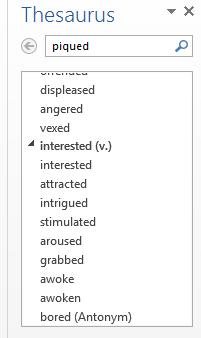
    These words piqued* my interest as they wafted to my ears from the TV set in the other room.

    Who is that?” I called out.

    Jackie French,” he replied.

    I jumped up, eager to see and hear more.

    Jackie French is a well-known Australian author and advocate for literacy and the environment. She is currently the Australian Children’s Laureate with the task of promoting “the importance and transformational power of reading, creativity and story in the lives of young Australians”.

    I was delighted to find that Jackie’s speech was in acceptance of an Australian of the Year Award.

    The media announcement released by the Minister for Social Services explains that Jackie was recognised for her “long and distinguished career as a beloved children’s writer, earning more than 60 literary prizes for her books.”

     “Jackie embodies this commitment (to changing lives in our community) and I’d like thank her for the work she continues to do sharing the power of reading and story-telling for young Australians, and her work in conservation.” 

    Here is Jackie, Senior Australian of the Year 2015, accepting her award.

    Failure-is-not-an-optionA-book-can-change-theThere-is-no-such-thing


    In this next video Jackie talks about her book “Hitler’s Daughter”. You don’t have to have read the book to glean much of interest from the interview. In the discussion Jackie shares her thoughts about reading and writing. She questions how the ‘world’ in which one is, influences thoughts about good and evil and decisions that are made. She discusses how the need for evil to be resolved in a work of fiction differs between children and adults. She talks about whether it is necessary for a child to apologise for the sins of the previous generation, and how still controversial issues can be dealt with in an historical situation. It is worth listening to if you simply want something to ponder over.

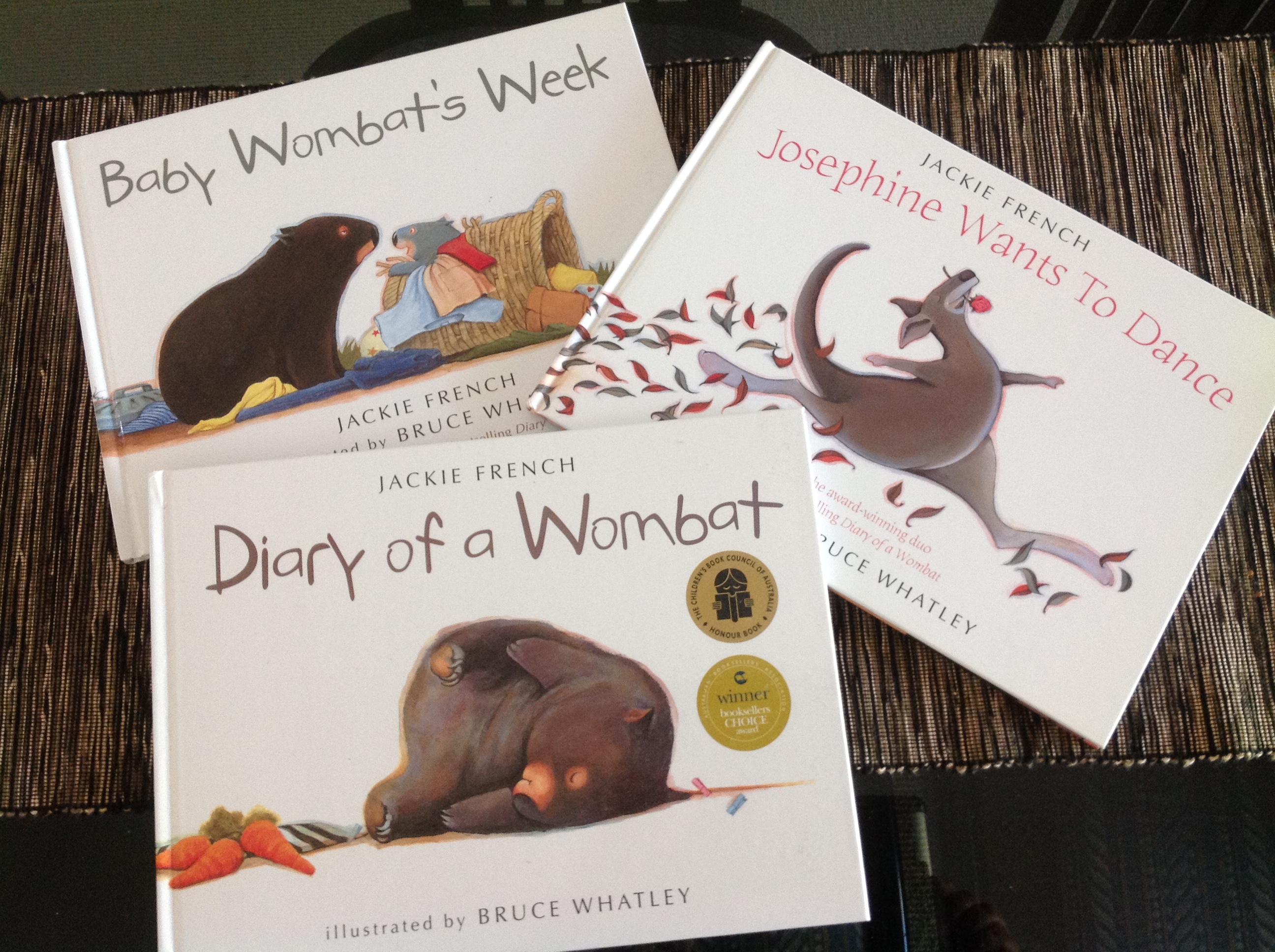
    Being an early childhood teacher I am more familiar with Jackie’s picture books such as

    Diary of a Wombat, Baby Wombat’s Week, and Josephine Wants to Dance, which are delightful.

    IMG_4302

    Here is a video of Jackie reading Diary of a Wombat.

    I have just discovered that Hitler’s Daughter is available as an audiobook, so it is going onto my list!

    https://openclipart.org/image/800px/svg_to_png/148843/1310261210.png
    https://openclipart.org/image/800px/svg_to_png/148843/1310261210.png


    I congratulate Jackie on her award and thank her for the contribution she is making to the lives of so many and the future of our planet.


    *piqued

    In this sentence, I am using the word “piqued” to mean “stimulated or aroused my interest”.

    How can one word be used to express opposite meanings? I don’t know how anyone is expected to learn or understand the nuances of this language we call English!

    When I checked with my thesaurus to ensure I had chosen the correct word, this is what I found:

    piqued 1         piqued 2

    How many other words do you know that could almost be listed as its antonym?

    Thank you

    Thank you for reading. I appreciate your feedback. Please share your thoughts about any aspect of this post.

  • The True Story of Rudolph (The Red Nosed Reindeer)

    The True Story of Rudolph (The Red Nosed Reindeer)

    What a heartwarming and inspiring story, just right for this time of year. I found it via Book Chat by Michelle James.
    I hope you enjoy it as much as I do.

    Chris The Story Reading Ape's avatarChris The Story Reading Ape's Blog

    This was emailed to me by a friend:

    A man named Bob May, depressed and brokenhearted, stared out his drafty apartment window into the chilling December night. His 4-year-old daughter Barbara sat on his lap quietly sobbing. Bob’s wife, Evelyn, was dying of cancer.

    Little Barbara couldn’t understand why her mommy could never come home. Barbara looked up into her dad’s eyes and asked, “Why isn’t Mommy just like everybody else’s Mommy?”

    Bob’s jaw tightened and his eyes welled with tears. Her question brought waves of grief, but also of anger. It had been the story of Bob’s life. Life always had to be different for Bob. Small when he was a kid, Bob was often bullied by other boys. He was too little at the time to compete in sports. He was often called names he’d rather not remember.

    From childhood, Bob was different and never seemed to fit…

    View original post 473 more words

  • How much of a meliorist are you?

    https://openclipart.org/image/800px/svg_to_png/103549/old_man01.png
    https://openclipart.org/image/800px/svg_to_png/103549/old_man01.png

    Recently I was sent a link to an article titled Cheer up, it’s not all doom and gloom published by the Australian Broadcasting Commission’s The Drum.

    This article mentioned a book by Steven Pinker called Better Angels of Our Nature which had been recommended to me by Geoff Le Pard in a comment on my post about childhood illness. The premise of this book is that humanity, over the ages, has become less violent. After to listening to Pinker’s history of violence, I’m pleased that I live these relatively peaceful times.


    The article also introduced me to a new term ‘meliorism’ which means having a belief that the world can be improved by the actions of humans. While the term may have been unfamiliar to me, the attitude is not and I attest that I am a meliorist.

    I have a very strong belief in the power of education to improve the world. Education empowers individuals, and educated individuals empower societies to build improved futures. It becomes very difficult to sustain negative practices in the face of overwhelming evidence and information.

    What better place is there for education to begin than in the home?

    In a recent post I referred to a new book by Michael Rosen called Good Ideas: How to Be Your Child’s (And Your Own) Best Teacher. At the time I had not read the book but now I can say, with great delight, that I have listened to most of it. With messages such as those contained in Michael’s book, it is easy to be a meliorist.

    I think Rosen’s book should be available to, perhaps compulsory reading for, every parent; I consider its message to be that important. In fact, I am off to the shops today to purchase copies to give to parents of young children I know.  It will become part of my gift to new parents that also includes Reading Magic by Mem Fox and a selection of picture books. I have previously blogged about that here and here.

    The “Good Ideas” contained in Rosen’s book, if implemented, will keep alive the natural curiosity of one’s children and oneself. They will encourage the development of thought, creativity and responsiveness.

    In the next few weeks I will post a more detailed review of the book and some of Michael’s ideas for stimulating curiosity, whoever and wherever you are.

    What about you? Are you a meliorist?

    I welcome your feedback. Please share your thoughts about any aspect of this post.

    Thank you

  • Who’s the best teacher?

    Two recurring themes, amongst others on my blog, are ways of encouraging a love of literacy and of questioning in young children.

    If you read my post Going on a treasure hunt! you will know that I greatly admire the work of Michael Rosen and its contribution to literacy development. You may have followed the links and checked out the riches in store on his website.

    My post Child’s play – the science of asking questions introduces my thoughts about ensuring that children’s inborn curiosity is maintained through the encouragement of their questions.

    You can imagine my delight, then, when I read a review of new book by Michael Rosen. (Thank you, Anne Goodwin, for alerting me to it.) The review, posted by Sabine Durrant in The Guardian on 6 September 2014, discusses Rosen’s new book How to be Your Child’s (and Your Own) Best Teacher. I confess that I have not read the book but I am very excited to see that it is now available as an audiobook, so it is next on my listening list. So much about the book appeals to me.

    Rather than review the review I will simply leave with you the links to the review:

    Michael Rosen: Why curiosity is the key to life

    and Michael’s website.

    I’m sure you will find much to enjoy.

    Thanks for reading.

    Thank you

  • I’m too busy to be tired!

    www.openclipart.org http://goo.gl/zkTCJO
    http://www.openclipart.org http://goo.gl/zkTCJO

    This week’s flash fiction prompt posted by Charli Mills posed a challenge for me.

    How do I respond to her prompt to:

    In 99 words (no more, no less) write a story about exhaustion.

    and maintain my focus on education?

    Do I ignore the prompt and post about education?

    Do I respond to the flash fiction prompt in isolation?

    Neither of these alternatives appealed as I have been enjoying the camaraderie and support of the flash fiction tribe as well as the opportunity to experiment in a genre that, while not an immediate writing priority, I may move towards in the future. On the other hand, as my intent with this blog is to share ideas and thoughts primarily about education, I don’t want to become distracted from my focus.

    As do many, the idea for this prompt attached itself to me when I wasn’t thinking about it. Ideas tend to pop into my head when I first awaken in the morning, when I am showering, or during any other moment when my thoughts are free to flit and fly without the constraints of achieving a particular outcome.

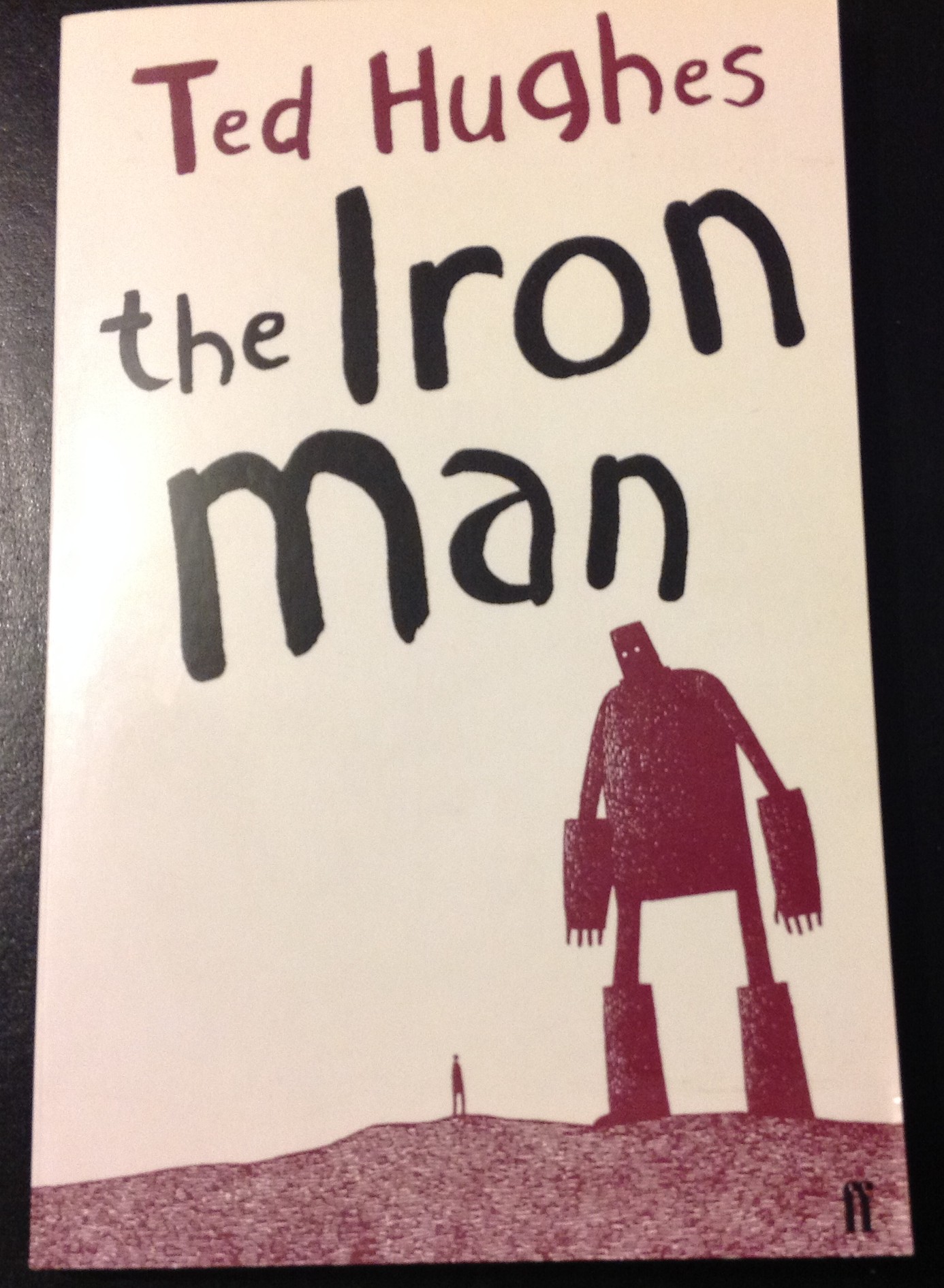
    This one descended when I was out for a drive appreciating the beauty of the pure white clouds, like puffballs, on the bright blue sky of a glorious winter day. It plopped down, ‘Barrrump!’ just as the space-bat-angel-dragon from The Iron Man by Ted Hughes had plopped down on Australia.

    book 2As mentioned in a previous post, The Iron Man is one of my favourite books. It is a great story told in beautiful language. On the back of my copy a quote from the Observer declares that it isReckoned one of the greatest modern fairy tales.’ The rhythm and poetry of the language begs for it to be read aloud. Because it has just five short chapters, ‘a story in five nights’, it is perfect as a first chapter book to share with younger children, and can be read to a class in a week, a chapter a day.

    The chapter I wish to share with you in this post is #4 ‘The Space-Being and the Iron Man’.

    The previous chapter has seen The Iron Man happily ensconced in a huge scrap-metal yard. It could have finished there with a happily ever after ending. But no. It was only chapter 3. There were two more chapters to come! What excitement was in store?

    The chapter begins

    One day there came strange news. Everybody was talking about it. Round eyes, busy mouths, frightened voices – everybody was talking about it.

    One of the stars of the night had begun to change.’

    We are immediately reeled back into the story – What is going to happen? What will the Iron Man do? – and propelled along by the giant star that grew ‘not just bigger. But bigger and Bigger and BIGger as it came

    rushing towards the world.

    Faster than a bullet.

    Faster than any rocket.

    Faster even than a meteorite.’

    Thankfully it stopped before it hit Earth. But wait – it’s not over yet, for ‘a dreadful silhouette, (came) flying out of the centre of that giant star, straight towards the earth.

    After several days it (‘a terrific dragon) landed, with its body ‘covering the whole of Australia’ and it ‘wanted to be fed. And what it wanted to eat was – living things.

    The people of the world decided they would not feed this space-bat-angel-dragon … they would fight it.” But all the forces of the world were no match for the dragon.

    As you may have guessed, this is where the heroic Iron Man devises his plan ‘to go out, as the champion of the earth, against this monster from space’. The dragon was very surprised to be challenged to a test of strength.

    The Iron Man, you may remember, is taller than a house, but the space-bat-angel-dragon is bigger than Australia.  The dragon thought that, when the Iron Man had finished, he’d ‘just lick him up.’ He didn’t figure on the ingenuity of the Iron Man. The Iron Man’s challenge was for the dragon to ‘go and lie on the sun till (he was) red-hot. (The Iron Man was small enough to be made red-hot on Earth.)

    After the second journey to the sun the dragon again ‘landed on Australia. This time the bump was so heavy, it knocked down certain sky-scrapers, sent tidal waves sweeping into harbours, and threw herds of cows on their backs. All over the world, anybody who happened to be riding a bicycle at that moment instantly fell off. The space-bat-angel-dragon landed so ponderously because he was exhausted.

    Have you ever felt that exhausted you just wanted to flop down and never move again? An article in my local newspaper1 recently declared that We belong to the Spent Generation – the most overcommitted, overscheduled, overconnected, and therefore overtired, in modern times.The journalist Frances Whiting listed a number of professions including ‘doctors, scientists, social commentators (who) the statistics tell us (are) working longer, sleeping less, not resting enough and taking on too much.’

    Teachers weren’t on this list, but they could have been at the top. Anyone who lives with, or has a friend who is, a teacher knows the long hours they work. Because it is a caring profession it is impossible to leave work at the gate and pick it up the following day. Content-driven curricula and unrealistic expectations imposed upon both teachers and learners place extra stress upon all stakeholders. Long before a school terms end teachers are tired, stressed and in need of time to recuperate and recharge in preparation for the next one.

    At the moment most teachers in Australia are conducting assessments, evaluating their own work and student learning, preparing report cards and conducting teacher-parent interviews. This is in addition to their ongoing tasks of preparing and teaching lessons and is mostly expected to be completed in out-of-scheduled work hours.

    When I was teaching I worked between 50 and 70 hours most weeks. I used to say that even with our ‘enviable’ holidays we were still owed time. In my current out-of-the-classroom role as writer of curriculum materials, I now feel the difference as I don’t have to think about it away from my desk.

    I still get tired, but not the same heavy exhaustion that comes from giving all; physically, mentally and emotionally, to a class of 25 active learners while trying to stay afloat amidst ever increasing expectations.

    So my flash this week recognises the teachers who, buried under a pile of paperwork and lost in a maze of data collecting spreadsheets, still struggle to be everything to everyone, endeavouring to make every child feel special and valued, while often feeling that their own work fails to achieve any real recognition. Enjoy the break, teachers. You deserve it!


    A Unicorn at School

    ‘Miss. Marnie has a toy in her bag.’

    ‘Uh-uh,’ I responded.

    ‘You’re not allowed to have toys at school,’ he insisted.

    ‘Uh-uh.’

    Trust him! Always dobbing.

    ‘Miss,’ he persisted, tugging my sleeve.

    ‘What is it?’ I sighed, dragging myself out of the confusion of marks and percentages that now seemed more important to telling a child’s story than their own words and actions.

    I looked at the little fellow pleading for my attention. They were all so needy; so demanding; but time . . .

    ‘It’s a unicorn, Miss.’

    ‘Unicorn! Let’s see!’ I was back. A child in need!

    flag on twitter

    I welcome your feedback. Please share your thoughts about any aspect of the article or my flash fiction piece.


    1 QWeekend 14-15 June, 2014

  • Of rainbows and unicorns – Part 2 – Do fairy tales and fantasy still have a place for children?

    https://openclipart.org/http://goo.gl/zzNhFF
    https://openclipart.org/http://goo.gl/zzNhFF

    I have many discussions with parents about whether they should read fairy tales and stories with magical elements to their children. These parents raise a number of issues, for example:

    • Horrible things happen – Hansel and Gretel are abandoned in the woods (by their parents) and are captured by a wicked witch – the wolf tries to trick the seven little kids left at home alone
    • Parents are often dead or absent – Cinderella, Beauty and the Beast, Rapunzel, Red Riding Hood, Jack and the Beanstalk
    • Stepmothers are mean – Cinderella, Snow White
    • Sexism, especially the need for a female to be rescued by a handsome prince – Cinderella, Sleeping Beauty
    • They contain “magical” creatures such as fairy godmothers (Cinderella, Sleeping Beauty), witches (Snow White), giants (Jack and the Beanstalk), trolls (Three Billy Goats)
    • Myth of happily ever after
    • Stereotypes – beauty is good, ugly is bad
    • The presence of magic – good magic of fairies and bad magic of witches – Sleeping Beauty; magical bean seeds and geese (Jack and the Beanstalk)
    • Bullying – Cinderella

    Maria L. Hughes, writing for The Little Prickle Press sums up the concerns this way:

    “many of the older tales incorporated rather dark themes devoted to death, suffering and children being murdered. But then there is also a second incorporation that has to do with later Disney movies of these fairy tales and them being too happy and can result in parents thinking their child will be deluded with ideas that the world will just work for them and things will be good.”

    While I acknowledge these elements occur, I am not prepared to abandon fairy tales because of it.

    While I may consider a diet of only fairy tales problematic, I think something would be lacking if a child was refused access to the richness of their stories and tradition. Like most fiction, they offer an avenue for escapism. In addition, the stories can be used as a tool for initiating non-threatening discussions of the issues listed above.

    In Once upon an if The Storythinking Handbook Peter Worley writes

    “Stories are just one way that we are able to sharpen our own character in order to prepare for the narratives we will one day find ourselves in as the story of our life unfolds before, around and within us.” 

    Following a comment by Richard Dawkins, a recent discussion on The Guardian considered whether fairy tales are harmful to children. So far the consensus seems to be that they are not.

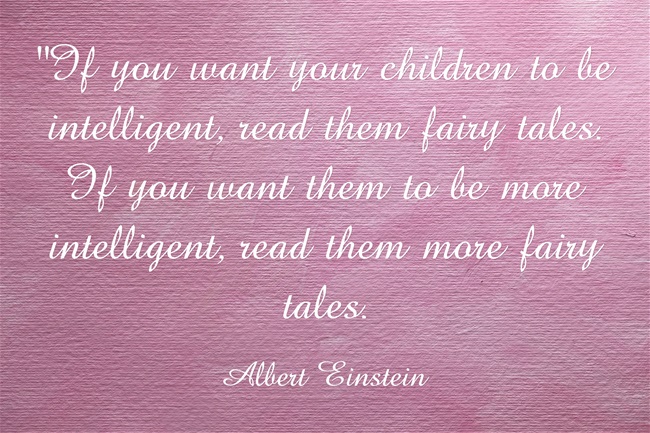
    Albert Einstein was a supporter of fairy tales and is often attributed with the following quote, discussed in more detail by Maria Popova on brain pickings.

    https://quozio.com/
    https://quozio.com/

    Anne Fine, in the Foreword to Once upon an if The Storythinking Handbook explains

    “In an increasingly complicated world, we more than ever want our children to be able to think with clarity, rather than lead lives hampered or derailed by all those false assumptions and unexamined prejudices that seem as easily inherited as freckles or brown eyes.

    How can we go about teaching them to peel back the surface of their first thoughts on a matter, or even their strongest beliefs, and look at them with more care? . . . fiction has always fostered the moral, intellectual and emotional development of the growing child. (‘Should she have done that?’ ‘Would I?’ ‘What else could have been done?’ ‘How would it feel?’) Good stories highlight the sheer complexity of things. They furnish a far greater understanding of the world and everyone in it. For most of us, fiction has always been the earliest – and many would argue the best – instrument we have had for ethical enquiry.”

    Think of the ethical inquiry that could occur when discussing Goldilocks and her break and enter, Jack’s theft of the giant’s belongings and the constant portrayal of the wolf as the bad guy; just to get you started.

    Melissa Taylor on her blog “Imagination Soup” suggests the following 8 reasons why fairy tales are essential to childhood:

    1. Show kids how to handle problems
    2. Build emotional resilience
    3. Give us a common language (Cultural literacy and canon)
    4. Cross cultural boundaries
    5. Teach story
    6. Develop imagination
    7. Can be used to teach critical thinking skills
    8. Teach lessons

    In a previous post about fairy tales, written in response to a flash fiction challenge set by Charli Mills  I mentioned that I was not a keen reader of adult fantasy. In a comment on that post Charli mentioned that she knew others with similar feelings. I will leave you with a link to another article on brain pickings in which Maria Popova discusses the thoughts of one of the masters of fantasy, J.R.R. Tolkien on Fairy Tales, Language, the Psychology of Fantasy, and Why There’s No Such Thing as Writing “For Children”

    What do you think? Should we read fairy tales to children? Why/why not?

    What are your favourite fairy tales and what lessons have you learned from them?

    Please share your thoughts.
  • Of rainbows and unicorns – Part 1 – Fantastic creatures and magical realms

    I am not a reader of adult fantasy novels. I have never read Lord of the Rings, The Hobbit or Watership Down. I just couldn’t buy into it. I’m sorry I have to admit it – it is true.

    However, I don’t mind a bit of fantasy in children’s books and, in fact, really enjoy it. I didn’t mind the rats’ use of language in Robert C. O’Brien’s The Rats of Nimh while I couldn’t handle the talking rabbits in Watership Down by Richard Adams. I cannot explain why my response is different but I’m sure it has something to do with the ability to suspend disbelief. I am obviously more able to do that when encountering fantasy in children’s stories than in adult fiction.

    As both parent and teacher (and now grandparent) I love sharing stories with children. In addition to all the good things I know it is doing for them, it is doing lots of good things for me as well. Reading children’s stories written by masterful authors is one of life’s greatest pleasures and I love having excuses for doing so.

    This week the flash challenge issued by Charli Mills at the Carrot Ranch was to

    In 99 words (no more, no less) write a story that includes a fantastical element or creature. 

    I am taking the opportunity of sharing with you some of my favourite fantastic creatures and magical realms from children’s stories. Each of these stories is wonderful to read aloud and share with children.

    Charli mentioned rainbows, unicorns and the phoenix.

    I thought of The Iron Man by Ted Hughes (a story in five nights, suitable for children from age 5 – 104)

    book 2

    “Taller than a house, the Iron Man stood at the top of the cliff, on the very brink, in the darkness.

    The wind sang through his iron fingers. His great iron head, shaped like a dustbin but as big as a bedroom, slowly turned to the right, slowly turned to the left. His iron ears turned, this way, that way. He was hearing the sea. His eyes, like headlamps, glowed white, then red, then infra-red, searching the sea. Never before had the Iron Man seen the sea.

    He swayed in the strong wind that pressed against his back. He swayed forward, on the brink of the high cliff.

    And his right foot, his enormous iron right foot, lifted – up, out, into space, and the Iron Man stepped forward, off the cliff, into nothingness.”


    and The BFG by Roald Dahl. (a longer tale for school age, and older, children)

    book 4

    “It wasn’t a human. It couldn’t be. It was four times as tall as the tallest human. It was so tall its head was higher than the upstairs windows of the houses. Sophie opened her mouth to scream, but no sound came out. Her throat, like her whole body, was frozen with fright.

    This was the witching hour all right.

    The tall black figure was coming her way. It was keeping very close to the houses across the street, hiding in the shadowy places where there was no moonlight.

    On and on it came, nearer and nearer. But it was moving in spurts. It would stop, then it would move on, then it would stop again.

    But what on earth was it doing?”


    I thought of Joan Aiken’s wonderful collections of fairy tales like A Necklace of Raindrops (for children in early years of schooling)

    book 3

    “And when she had nine raindrops Laura found that she could make the rain stop, by clapping her hands. So there were many, many sunny days by the sea. But Laura did not always clap her hands when it rained, for she loved to see the silver drops come sliding out of the sky.

    Now it was time for Laura to go to school. You can guess how the other children loved her! They would call, “Laura, Laura, make it stop raining, please, so that we can go out to play.”

    And Laura always made the rain stop for them.

    But there was a girl called Meg who said to herself, “It isn’t fair. Why should Laura have that lovely necklace and be able to stop the rain? Why shouldn’t I have it?”

    and The Kingdom Under the Sea (for children approx. 8 -12), each beautifully illustrated by Jan Pienkowski adding another element of wonder to the tales.


    book


    Charli suggested that we “think of how (we) can use the fantastical to enrich realities” and I thought of the mouse who invented The Gruffalo in Julia Donaldson’s story and showed how imagination could be used to solve problems that arise. (The Gruffalo is suitable for children in pre-school and early years of schooling)


    While the above excerpts are short, like flash fiction, each demonstrates the skill of the author in choice of words and sentence structure. In his book On Writing Stephen King refers to these as forming the top level of the tool box. But these excerpts show a depth greater than that also.  They create a connection, forming a relationship with and a need in the reader to know what happens.

    It is the ability of the author that sweeps us away, as if on a magic carpet, to other places and other lives. It is the ability of the reader to suspend disbelief that allows the journey to occur.

    I thought about how we, as either child or adult, use fantasy to escape realities that we may not wish, or not feel strong enough, to face. This brought me back to Charli’s unicorn.

    And now I offer my own bit of flash, which is not suitable for reading to children of any age.


    www.openclipart.org http://goo.gl/Ep1vK6
    http://www.openclipart.org http://goo.gl/Ep1vK6

    Unicorn knights

    She sat on the bed and looked around. Funny how some things don’t change.

    They had left it untouched for all those years since her escape, waiting for her return. But she never did. Never could. Until now.

    “You should,” she was told. “Make peace.” “Let it go.”

    It didn’t look so scary now. They were both gone. She was grown.

    Sunlight glinted on the unicorn. It had faded but waited still, on the night-table, for their nocturnal escapades away from cruel reality.

    She fingered it for a moment, remembering. Then dumped it in the wastebasket.

    “Sell!” she said.


    I welcome your comments on any aspect of this post; the books I have suggested for sharing and my own piece of flash.

    Don’t forget to pop over to the Carrot Ranch where you can read responses to Charli’s prompt by many other writers.