I have never really been a pet owner. I have had one or two goldfish and Siamese fighting fish over the years, but nothing for any length of time or anything that could be considered a pet in the real sense of the word. If required to, I could rattle off all the benefits of pet ownership for children and adults but none of these have ever been a strong enough inducement for me to take on the responsibility.
I don’t remember Son ever requesting a pet but maybe I’ve simply eradicated those memories. Or maybe we gave him a little sister when he was twelve instead. Bec, on the other hand did request pets and she had a few at various times. These ones were closer to real pets: guinea pigs, mice and rats; but not the puppy she so longed for. Fortunately, I was required to do little for them other than listen to her joyful stories of their antics and adventures.
I am more than happy for people to enjoy their pets but feel no envy of their special relationship nor any great desire for one of my own. I am happy to enjoy the wildlife that visits my garden: insects, birds, lizards and possums. They can look after themselves and require no effort on my part; a rather nice relationship, I think.
However sometimes I hear a story that indicates a value much greater than the companionship often described, and I view the role of a pet in a new way. One such story is that of Noah, a nine-year old boy who suffers from autism, and his need for a service dog. In order to help Noah get his dog Charli Mills has organised a flash fiction competition. This time the stories may be told in greater length, from 100 to 500 words. While I might struggle with the 99-word limit of most of Charli’s challenges, I am unable to enter the contest as I am on the panel of judges. There are just a few days left to get your entries in with January 31 2016 the closing date. Why not enter the contest, which has great prizes, as well as Charli’s 99-word challenge?
To find out more about Noah, his need for a service dog, and his family, visit The Honeyed Quill, the blog written by his mother Shawna Ayoub Ainslie. You can read about what things Shawna has been up to recently in this post.
Although I am not eligible to enter the contest, I am permitted to submit a 99-word response to Charli’s weekly challenge. Here goes.
The two young males sat on the step. They couldn’t see over the hedge to the park across the road but, from squeals and barks, they knew the neighbourhood children and their pets were at play. Each, with visions of their own participation, smiled as if the reality had come to be. Another life perhaps, but not this one, not now anyway. To an outsider both appeared damaged, confined more by mobility than garden walls. On the inside their hearts were filled with love, acceptance and compassion, happy with who they were, and with each other. Boy, dog; friends.
Thank you for reading. I appreciate your feedback. Please share your thoughts about any aspect of this post or flash fiction.
In stories we find our hopes, our dreams, our inspirations, and our fears. In stories our imaginations take flight as we contemplate ideas never before encountered. Stories help us figure out the world and our place in it. We come to understand the stories of others and develop compassion and empathy. We find ways of confronting our fears in safety. We escape the ordinariness of the everyday with dreams as much of the impossible as the possible.
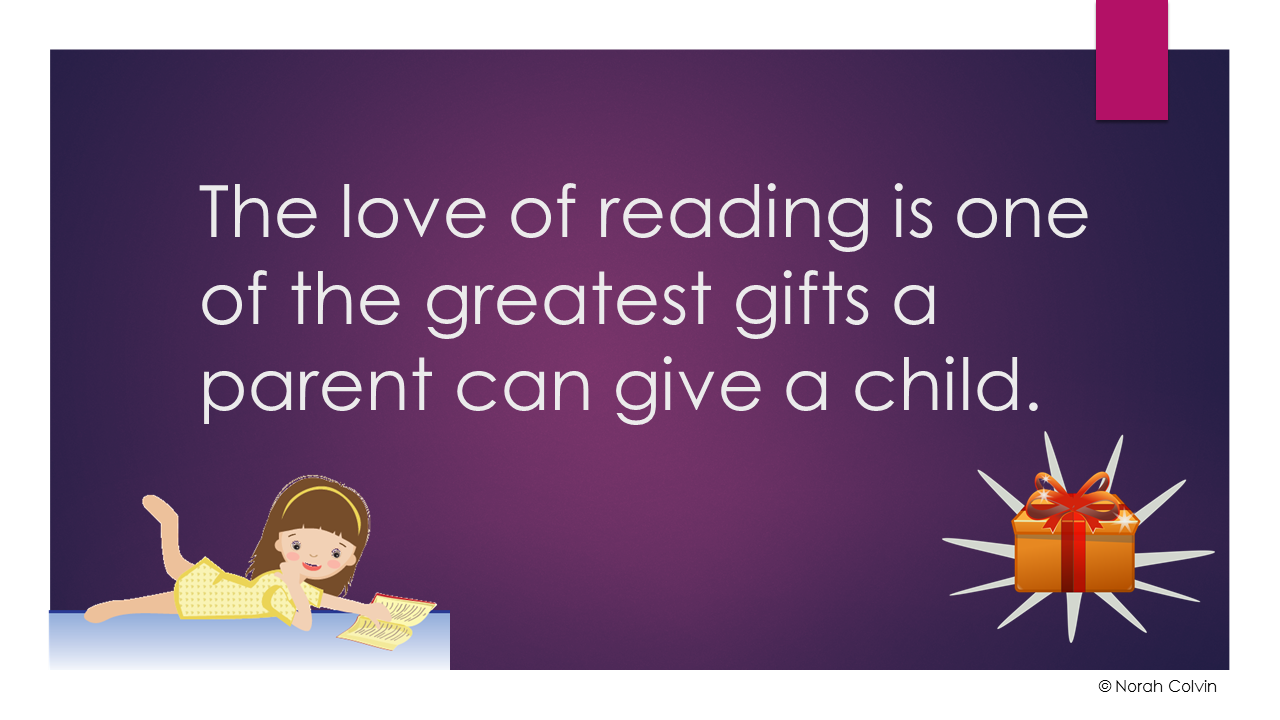
Stories can be shared orally, in print, or through a variety of media. All are valid and valuable sources, but sharing the stories presented in books is especially important to the development of young children, and anything that can put books into the hearts and hands of children is to be encouraged. The ability to read is empowering and the love of books is one of the greatest gifts a parent can give a child. Not only can reading change the life of an individual, it can improve the lives of many through education.
“If we cannot change the world (and I suspect we can’t), we can provide all children the sorts of environments all children deserve in their school day—environments of kindness, compassion, safety, and challenges.”
I think Paul meant that we can’t change the whole world, that would be a rather daunting task, but the provisions mentioned are vital and change the lives of individuals in important ways, just as reading does. I like to think of changing the world with one thought, one word, one action at a time, or as Mem Fox says, also quoted in my post The magic effect – why children need books,
“. . . let’s get on and change the world, one page at a time.”
“I believe that every child’s Bill of Rights should be indelibly inked with the right to have picture books read to him/her and to own their very own books. “
I agree with her of course and consider her project to be very worthwhile. It reminds me of another very worthwhile program mentioned by Caroline Lodge, who blogs at Book Word, about providing books to prisoners. Both of these projects have the ability to change lives, to empower people and by so doing, change the world, not only their world.
As well as changing lives, stories influence our attitudes. If they encourage feelings of kindness and compassion, as Paul Thomas says, that may be a good thing. But what of the stereotypes that seem so pervasive? How many stories have you read about princesses in dire circumstances waiting to be rescued by handsome princes or knights in shining armour who must slay a dragon in doing so? What effect do these stories have upon the developing self-image of a young girl or boy? It is important to teach children to think critically about the stories they read, and about the portrayal of characters and their attitudes, especially stereotypes.
But that is in reading stories. What of writing stories? Writing stories, whether factual accounts or imagined events, is also empowering. In writing stories children, and adults, can express and explore their hopes, dreams, inspirations, and fears. In writing stories their imaginations take flight as they contemplate ideas never before encountered. Writing stories helps us figure out the world and our place in it.
Contentment is something that I too wonder about, and am especially perplexed by the need to push myself into new territory and new learning when others are content to sit back and watch the clouds pass by. Why are there so many things I feel I must do? Pretty soon I’ll be gone and it won’t matter a hoot. I have sometimes thought that if I were to write a fictionalised account of my life I would begin with the words “She was an unremarkable woman”.
Once upon a time there was an ordinary girl who lived an ordinary life with her ordinary family. She did all the ordinary things that others did and dreamed of nothing else. Each day followed one after the other with little difference. There was no magic. There were no fairies, and there were no dragons to slay. She just did what she had to do and took little notice of others doing the same. Strangely enough she was content for, from somewhere deep within, she knew that this ordinary life was but preparation for the extraordinariness of the next.
Thank you for reading. I appreciate your feedback. Please share your thoughts.
In my previous post Not lost but found I discussed the notion of adopting the title “Founder” when describing my relationship to readilearn my soon-to-launch website of early childhood teaching resources. The title both bemused and amused me at first but I have now accepted its appropriateness. In fact, I realise that readilearn is not the first thing I have founded.
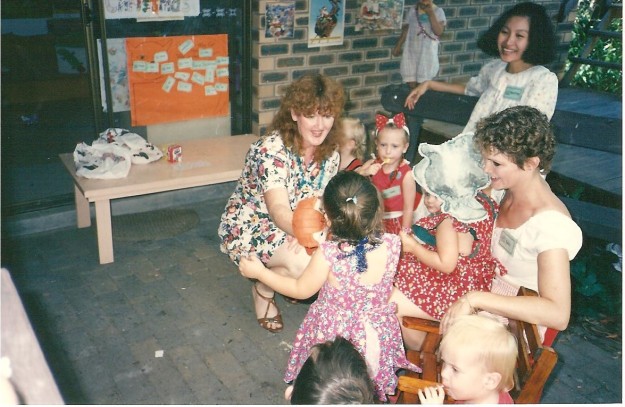
Create-a-Way was perhaps the first that I founded. It was a home-based business offering educational sessions for children of before school-age and their parents. The impetuses for founding Create-a-Way included:
The decision, made before Bec was born, that I would parent and educate her (The alternative to keep teaching the children of others while entrusting her education to another didn’t make sense to me.)
A dissatisfaction with playgroups that were simply bitch and coffee mornings for mums and squabble sessions for children left to their own devices
A realisation that parents didn’t stimulate or foster their children’s intellectual growth because they didn’t know how, not because they didn’t care
I saw a niche that would honour:
My passion for education and need to be doing something in that area
My firm belief in the importance of early years learning
My appreciation of children’s innate curiosity and need to learn coupled with the joy of sharing their sense of wonder and creativity
My certainty in the power of reading and education to improve the lives of individuals and society
A conviction that there are better ways of educating than simply accepting the status quo.
And best of all, I could do it with Bec! (Although she is not in this photo.)
Guiding parents in play sessions for parents and children.
I express this passion and these basic beliefs repeatedly. They are what make me. They are my driving force; the threads that weave their way through everything I do, holding them and me together. They were the basis for my attempt at founding an alternative school; they guided my classroom pedagogy and now the preparation of resources for readilearn.
It’s funny looking back now at the documents I wrote, it seems almost a lifetime ago (well almost all of Bec’s lifetime and more than half of mine), on an Apple IIE computer. I’m still proud of what I offered and truly believe in the value of sessions such as these. However, I can see that, while there has been little change to my passion and beliefs over the years, if I were to do the same thing now I may update some statements to more closely match my current understanding of a growth mindset.
The thought of doing the same again now is not far from my imaginings. The format of Create-A-Way sessions forms the model of another project I would love to found The Early Learning Caravan. Maybe Steven’s suggestion of crowdfunding would be appropriate for getting it started, but that’s not a project for the immediate future.
The rebellions of which Charli writes are of a larger scale, more in keeping with the first definition.
In this TED Talk Ken Robinson urges us to Bring on the Learning Revolution making “the case for a radical shift from standardized schools to personalized learning — creating conditions where kids’ natural talents can flourish.” I’m proud to be a rebel fighting in the same revolution as Sir Ken.
In addition to these larger scale rebellions and revolutions there are many that take place on an individual and daily basis in our families and classrooms, and on our streets. Some of the battles, such as teenage rebellion are fought for justice, independence and identity, a natural and necessary part of growing up. But the need to establish one’s individuality, one’s separateness as a person begins years before that, as anyone who has ever had anything to do with a two-year old can testify.
Sometimes the same battles are played out over and over and parents wonder why the children just don’t accept that they need to clean their teeth, wash their hands, put on their shoes or whatever, rather than battle over it each and every time. It is this early childhood rebellion that has inspired my flash fiction response to Charli’s challenge this week. I hope you enjoy it.
You’re not the boss of me!
Eyes blazed defiance, daring a struggle which could end only in tears and frustration, or a standoff with no real winner. She was ready to flee the moment there was a hint of movement. Our eyes met. I contemplated my options. Did we have to do this now?
Again the challenge: “You’re not the boss of me!”
I pretended to read.
Another volley, quieter: “You’re not the boss of me.”
No response.
Soon she was snuggling beside, pointing to pictures.
I read aloud.
We laughed at the antics.
As I closed the book I said, “Ready? Let’s do this.”
Thank you for reading. I appreciate your feedback. Please share your thoughts.
At this time of year in many places around the world there are children excited about the magic of Christmas. I don’t know the numbers to compare but there are a good few, mainly adults I suspect, who say “Bah humbug!” While I was once a firm believer in the magic and did my best to keep it alive, I now tread warily, unsure of how best to approach this topic. As a parent I didn’t get it right so can offer no wisdom of my own.
After many years of seeming to go along with the story, long after I thought it should have been abandoned, Daughter finally questioned why, if the stories weren’t true, would parents lie to their children. She preceded her question with the request to not say if it was true or not, she just wanted to know why parents would lie.
I let her down on both counts. I told her the truth of the story and couldn’t explain why parents would lie. I’m not sure that I’ve been forgiven for either failing, and I have never stopped thinking about what may have been a better way of handling the situation if I was ever offered the opportunity for a do-over.
Interestingly I don’t recall having any similar concerns about my parents lying or disillusionment on finding out the truth. Daughter’s older brother voiced no concerns either, but I cannot be certain whether or not he had any. Until now when, with children of his own, the issue again is raised.
At first Son’s intention was to not engage in Santa stories; but with one child at school and the other in kindy the situation becomes more complex. The children are more exposed to the stories through friends and organized events and there is the concern about “spoiling” things for other families. Caught between the pressures of a shared popular culture and the questions of intelligent, critical thinking children, the parents must make a decision. I sympathize and wish them better success than I experienced. I have suggested to Son that he consult his sister. She knows better than I about this one and can maybe help him avoid making the mistakes with his children that I made with her.
There is a lot of well-intentioned advice on the internet, but the value of some is debatable. Many explain the Santa story as being about love, kindness and generosity, and the magic as the assistance given by many helpers, including parents, throughout the world. Many explanations are likely based on the famous response, Yes Virginia, There is a Santa Claus, to an 8-year old’s letter, the authenticity of which has been questioned.
Some of the explanations and stories encountered recently include:
As much as I love the sentiments of these stories, they don’t really help me with my truth or lie dilemma. So I returned to a post by philosopher Michelle SoweyHO HO HO! (Q.E.D.) in which she questioned the ethics of the Santa lie. I shared this post previously in April 2014. Michelle agrees that the attempt at compromise in many of the explanations, “It’s Santa, Jim, but not as we know him”, is unsatisfactory because:
the historical figure St Nicholas is omitted
Christmas for most children is more about receiving than giving
of a conviction that children should be encouraged to believe in things that are real (visible or invisible, tangible or intangible) and to disbelieve in things that aren’t (all of which are invisible), and
it is better to develop critical thinking than to believe in intangible things.
She says,
“Parents can be powerful advocates for their children’s intellectual autonomy. They can help their kids to draw their own well-reasoned conclusions; to value coherence and logical consistency (among other things) in the construction of their worldviews; and to cleave to their beliefs with a level of confidence proportional to the amount and quality of evidence available.
With a little analysis and reflection – perfectly accessible to an eight-year-old – it’s clear that believing in things without good evidence often means believing in things that aren’t true.”
Okay. We agree on that, but how would a parent extricate themselves from the myth once they have become entangled?
David says that parents who lie to their children by supporting the myth are not necessarily bad parents (thank you!) but they would be better parents if they didn’t.
He adds to Michelle’s list with these:
Children should thank their parents, who have purchased and sacrificed, not Santa; “gifts are the giver’s way of showing the recipient that he or she has worth and is loved. Children need assurance their parents see them as worthwhile and valuable – not Santa Claus.”
Santa shouldn’t be used as a threat e.g. stop doing that (bad behaviour) or Santa won’t come
It stifles imagination because you can’t pretend if you believe: “By tricking children into actually believing Santa exists we rob them of the opportunity to imagine he does.”
And the big one: the loss of trust“Finding out their parents have lied to them about Santa Claus can cause children to think their parents are lying to them about a great many other things.” He says it is probably a bigger risk than most parents realize.
David says that the tradition of Santa and gift giving is relatively recent and “sold” to consumers primarily for financial reasons. He urges parents to stop tricking their children into believing the myth. My experience supports that, and I wonder how I would go about it if I had the opportunity again.
This week at the Carrot RanchCharli Mills challenges writers to In 99 words (no more, no less) write a story about “spreading the light.” While she suggests it could be used it to honor or memorialize a loved one, I thought I would attempt to shed light on the Santa myth and its potential for harm. Hopefully it’s not too far off the mark as I always loved, and protected, this myth; but perhaps a decision to protect the intelligence and critical thinking of my loved ones, and children in general, is even more important.
Jimmy searched the shelf for something he hadn’t heard before. There weren’t many. Suddenly he found one, slid it off the shelf and nestled into Dad’s lap.
“Twas the night before Christmas …” began Dad.
“Who…, what…, where…, why…, how…,?” began Jim, marveling at flying reindeer and pondering possible destinations.
As Dad closed the book Jimmy was ready with his usual question, “Is it true?”
“What think you?”
“As true as a fire-breathing dragon, a flower-petal fairy, and a talking animal,” laughed Jim; then added, “But you know, parrots really can talk!”
For whichever December festival you celebrate, and in whichever way you celebrate it, I wish you peace, joy and love enough to light up your world.
Thank you for reading. I appreciate your feedback. Please share your thoughts.
When Bec was little she would often say, “Tell me a story of when you were a little girl.” She would listen in wonder (in my dreams!) as I told her about life on a farm, holidays with relatives and funny things that happened in a large family.
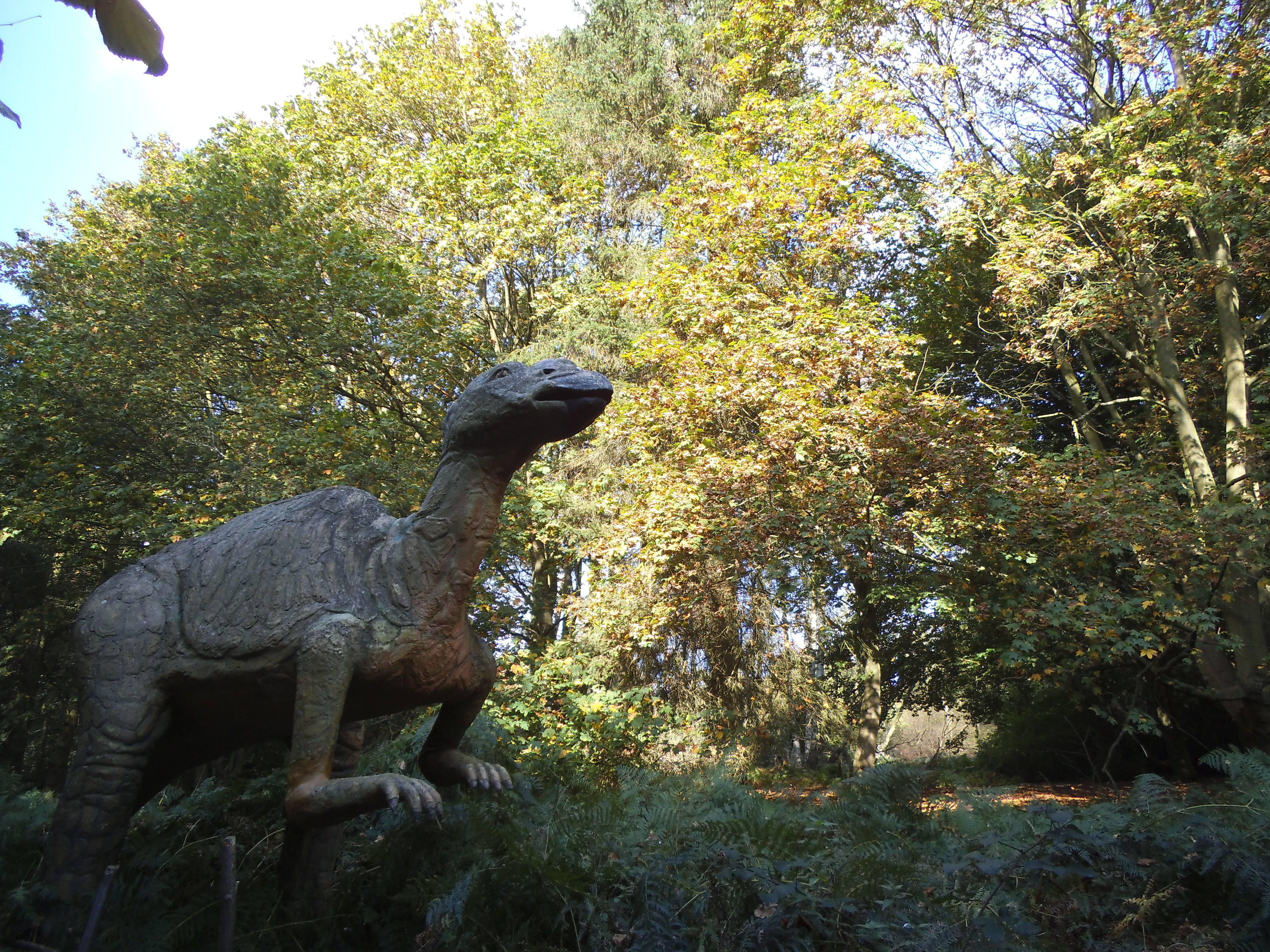
One day, with perfect comedic timing, she followed her request with the question, “What were the dinosaurs like?” We laughed at the time, and still do, but I think that question may have signalled the end of her interest in my childhood, for a time at least. Some aspects of my childhood would have been as unrecognisable to her as the world of the dinosaurs. It is even more so for the children of today.
Learning about the past from parents and grandparents is one way of piquing young children’s interest in history. When I was in primary school we learned a little of history in what was then called Social Studies. Both ancient and modern history were available as discrete subject choices in high school but seemed to be primarily a list of dates, names and wars with little relevance to my teenage experience. Historical fiction brought otherwise remote and unfamiliar situations to life.
It amuses me now when visiting museums, particularly small local historical museums as opposed to large national museums, to see artefacts from my childhood on display. Although I don’t necessarily consider myself “old”, definitely not passed my “use by” or even “best by” date, I do realise that to younger ones I am probably a relic from the past, holding as much interest for them as the objects on display. (I am not too old to remember what it was like to be young.)
This week at the Carrot RanchCharli Mills declares herself a history buff who digs “hanging out in cemeteries where history reads in the names and dates carved in stone.” I confess that I have rarely visited a cemetery other than to farewell a loved one and haven’t taken to reading gravestones to feed an interest in history.
The teaching of history in my early childhood classrooms involved helping children to discover and record their own personal histories and the more recent histories of their families and local environment. Celebration or commemoration of historical events such as Australia Day, ANZAC Day or Remembrance Day required some elaboration, without too much detail, of their significance.
Many of the experiences of children growing up now in the early part of the 21st Century are vastly different from those I experienced growing up in the mid-20th Century. Some of the differences are subtle and others more significant.
Since I grew up in the 20th Century, as part of my historical record I decided to list 20 (random) changes that have occurred during my lifetime:
I listened to music on vinyl records on turntables with manual arms. The records needed to be turned over after each side was played. There were no CDs, iPods, Youtube or streaming
I spent hours in the sun, getting burnt to a crisp, without the protection of sunscreen.
Polio was still a major threat and I knew children who suffered it. Now, thanks to immunisation, it is almost eradicated worldwide.
We could purchase fireworks and set them off in our backyards and parks. I have no memory of huge firework displays such as are now part of most community celebrations.
Shop opening hours were very different with shops closed half day Saturday and all day Sunday. No shops opened on Public Holidays and planning was required to ensure there was enough food in the cupboard to last the four day Easter Weekend.
There were no huge supermarkets selling everything, mainly smaller grocery stores and some “corner” stores that sold a few “essential” items. Air conditioning was not common and chocolate was not readily available as it melted in the heat.
There were no theme parks or water parks; just a few amusement rides such as merry-go-rounds and dodgem cars at local and state shows and fairs, and council swimming pools. Very few people had pools in their backyards.
There were no computers, tablets or smart phones. When I started school I wrote on a slate, a tablet of a different kind.
Fish and chips was the most popular and one of the few take-a-ways. There were no McDonald’s, pizza stores and few Chinese restaurants. There were no eateries in large shopping malls. In fact, there were no large shopping malls!
We had an outside dunny with a pan that was collected and replaced weekly.
Telephones were not in every home. They were attached to the wall and had a circular dial. Calls were manually connected by operators at telephone exchanges.
Televisions first became available in Australia when I was a young child but my family did not own one until after I left home. I used to visit an aunt, who lived close by, to watch on her set after school some days.
Cars ran on leaded petrol. I remember my Dad using a crank handle to start the car. The seats were hard and uncomfortable and there was no air conditioning (unless you count winding down the window).
We would go to beach or the park to swim or play all day, without adult supervision. The only requirement was to be home before dark.
Photographs were taken with a box camera and a roll of film which needed to be sent away to be developed and took weeks to be returned. It could take months to fill the roll and often the occasions were well in the past before the photos were received. It was expensive and multiple shots of the same image were not encouraged.
There was little traffic and cars were slow so children often played in the street, which were sometimes still dirt and mostly without kerbs. It seemed to take forever to get from one place to another.
To keep food cool we had ice boxes for which an ice man would deliver a large block ice daily.
We used imperial standards of measurement including pounds and ounces, inches and feet; and shopped with pounds, shillings and pence before converting to decimal currency in 1966 and other units soon after.
Smacking by parents and corporal punishment in school was the main form of discipline. If children were in trouble at school (I never was!J) then they were usually in more trouble at home.
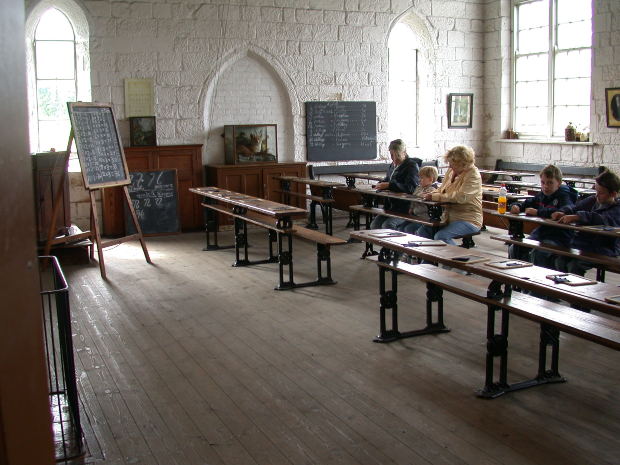
In school we sat in rows of desks nailed to the floor. We listened to the teacher and learned by rote lists of facts which were often chanted repetitively. There was definitely no talking in school and no group work.
I add one wish for another change I’d like to see in my lifetime in the 21st Century:
For friendship, understanding, tolerance, empathy and peace to rule a sustainable and equitable world!
She wasn’t sure why she was here. Miss R., Annette, had suggested she come. So she did. What struck her most, as she read the grave markers, was their ages. She’d never thought of them as young but their life spans were short; both a mere 49 years, going within a year of each other. She worked it out. They were younger than she was now when she’d left home. Who’d have thought? She felt a strange sadness, a familiar hollowness, not for the loss of their lives but for the absence of love, love which had never been.
Thank you for reading. I appreciate your feedback. Please share your thoughts about any aspect of this post or flash fiction.
Many people look forward to a holiday away from home; an opportunity to escape the routines of the everyday and enjoy new experiences. Many people look forward just as much to the return home, to familiar comforts and routines.
During the past twelve months I have enjoyed a few escapes away.
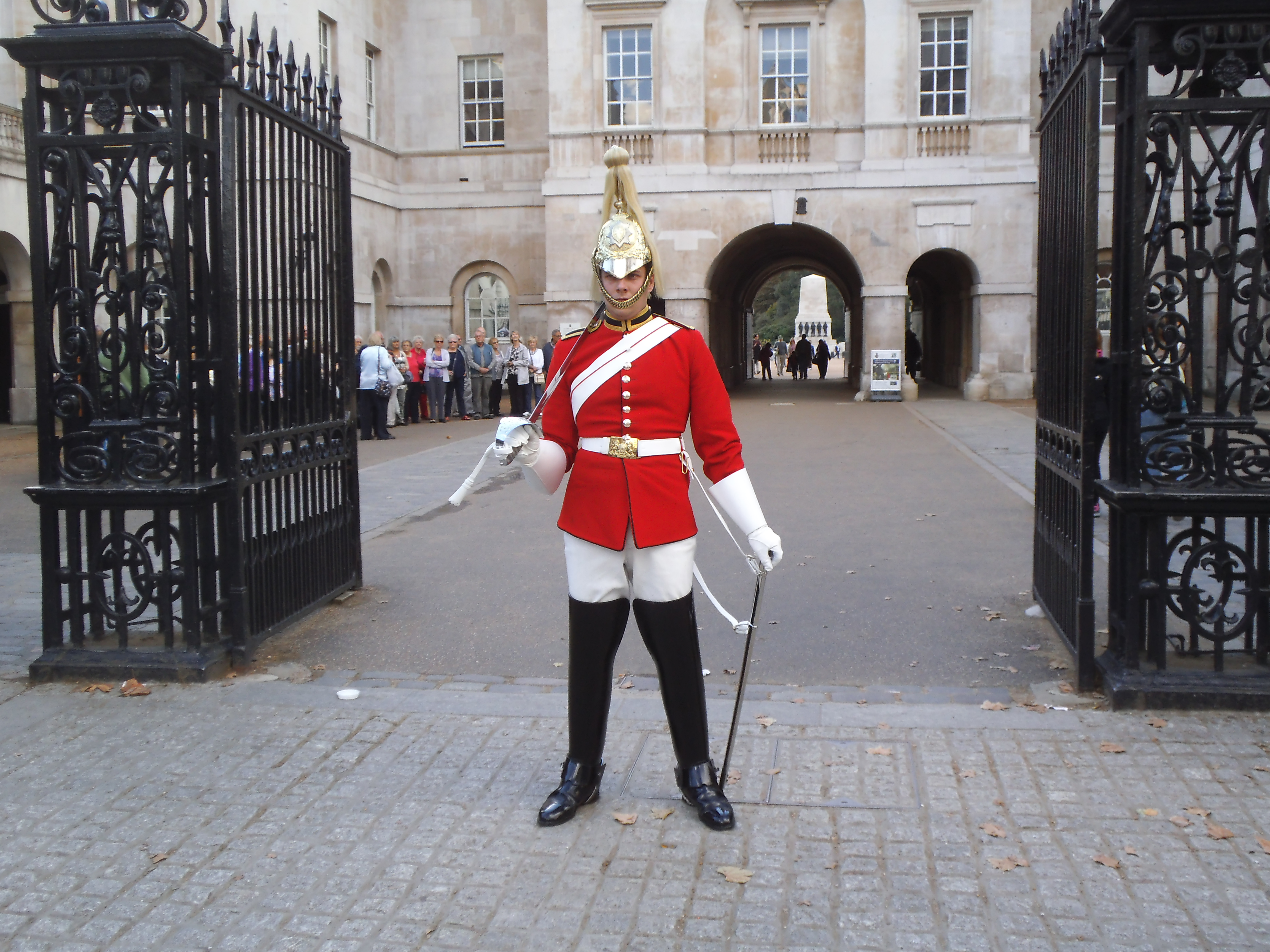
I travelled overseas and far away for my first visit to London.
Looking at that list, one might think I am never at home; but it doesn’t seem that way to me.
Visiting places away from home can be educational as well as enjoyable and fun; meeting new people, learning about different cultures and ways of life, experiencing new foods, activities and routines, and seeing different geographical features. This is true for adults and children alike. The learning is integral to the experience, not an add-on or a lesson.
However the experiences can be recorded by, with or for children to enhance learning opportunities; for example, but not restricted to:
Photo stories with accompanying text provide wonderful opportunities for reading and discussion and for keeping the memories alive over the years.
Diary or journal records that include dates, places and events provide opportunities for writing and reading. These entries can be supported with photographs, drawings, or “souvenirs” such as stickers, postcards, entry tickets and brochures.
Letters and postcards sent to family and friends provide further opportunities for sharing, writing and reading.
Emails can also be used to share highlights with family and friends and provide opportunities for using and learning about technology. I have found that including myself as a recipient for each email provides an effective alternative, or addition, to diary writing.
Marking routes and places visited on maps helps develop a sense of location and direction. Combining these with photographs or photo stories or diaries makes them even more meaningful.
Using a calendar to count down the weeks or days until departure, mark the days at each location, and the date of returning home helps to develop an understanding of the passage of time as well as the ability to read and use a calendar.
Discussion of departure and arrival times, the time until and the duration of journeys or events, and relating these to time shown in both digital and analogue format helps develop an understanding of the use of time measurement and the passage of time. Use of printed and online timetables, as well as those displayed in airports, train stations and at bus stops provides opportunities for in-context and purposeful learning.
Books, including atlases and photo books, can be used to ignite interest in places to be visited during a planned holiday or generally to arouse interest in other places. Stories can also be used.
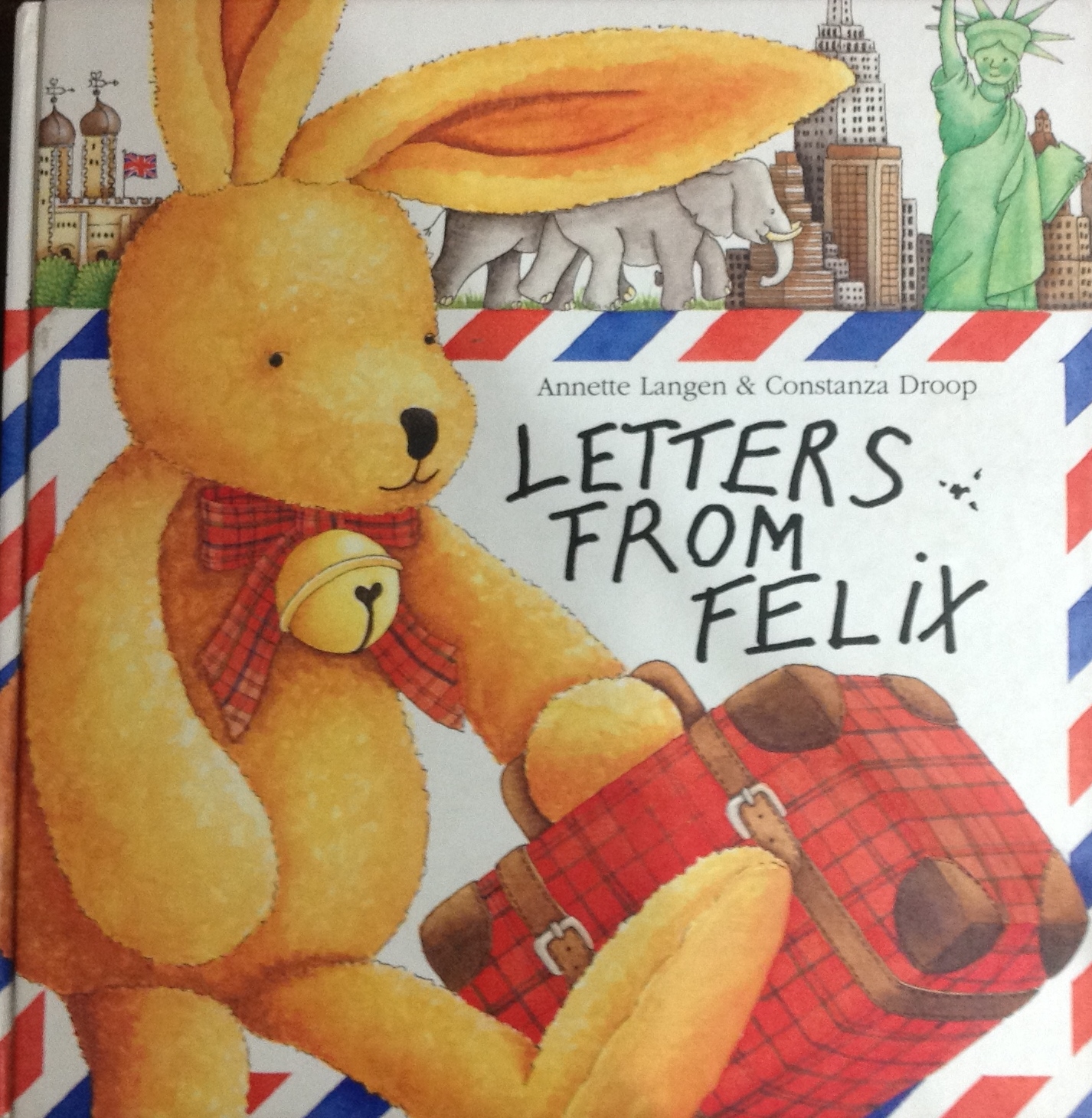
One such story is Letters from Felix by Annette Langen and Constanza Droop. It tells of Felix, a toy bunny who was lost at the airport, as he travels the world on his way home to Sophie. In my version Sophie lives in Hobart, Tasmania and she receives letters from Felix in London, Paris, Rome, Cairo, Kenya and New York. (If anyone owns a different version, I’d love to know the countries included.) In each letter, the information shared by Felix inspires Sophie to find out more about the location. When Felix finally arrives home he has a surprise gift for Sophie: a sticker from every location visited.
Letters from Felix is a great story to read at any time, but takes on extra meaning when one, or someone known, is travelling or returning from travels. It can be used to support or encourage an interest in geography in the classroom or at home. If children are not visiting locations as exotic as those visited by Felix, they may still be encouraged to record and share their experiences in the ways described above.
Of course, when children arrive home, they may be just as excited to rediscover their familiar comforts, toys and books and reconnect with friends and family left behind. As the song says, “There’s no place like home.”
What inspired me to think about holidays and home this week is the flash fiction challenge set by Charli Mills at the Carrot Ranch to In 99 words (no more, no less) write a story about a return to home. I have written about Marnie’s return to the place she had grown up but had never felt was “home”. It also provides a segue to the next post in my series celebrating Australian picture books which includes “Home” by Narelle Oliver. I hope you will join me for that post. In the meantime, here is my flash:
The return
Her eyes looked outward but her gaze was inward, trying to unravel the confusion of tumultuous emotions: anger for what had been, sadness for what wasn’t, regret she hadn’t escaped sooner, fear of her reaction, coldness at their passing. The bus carried her back; some things familiar, some as different now as she, returning “home” after so many years. Home? She’d called it home, back then, but now realised it hadn’t been home, not really; not safe and warm and loving as any home should be. She’d left vowing to never return. She returned now for finality and closure.
Thank you for reading. I appreciate your feedback. Please share your thoughts about any aspect of this post or flash fiction.
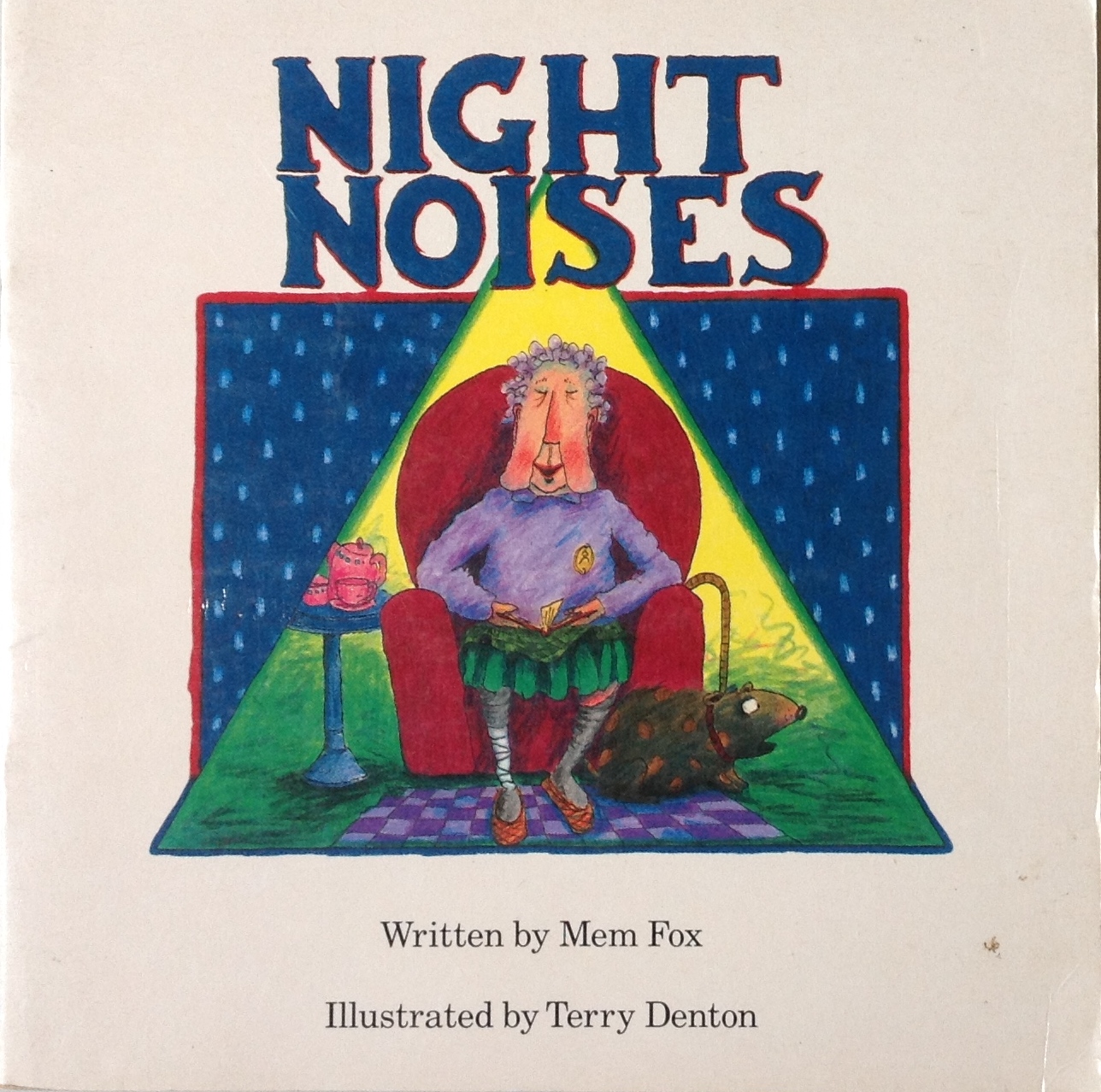
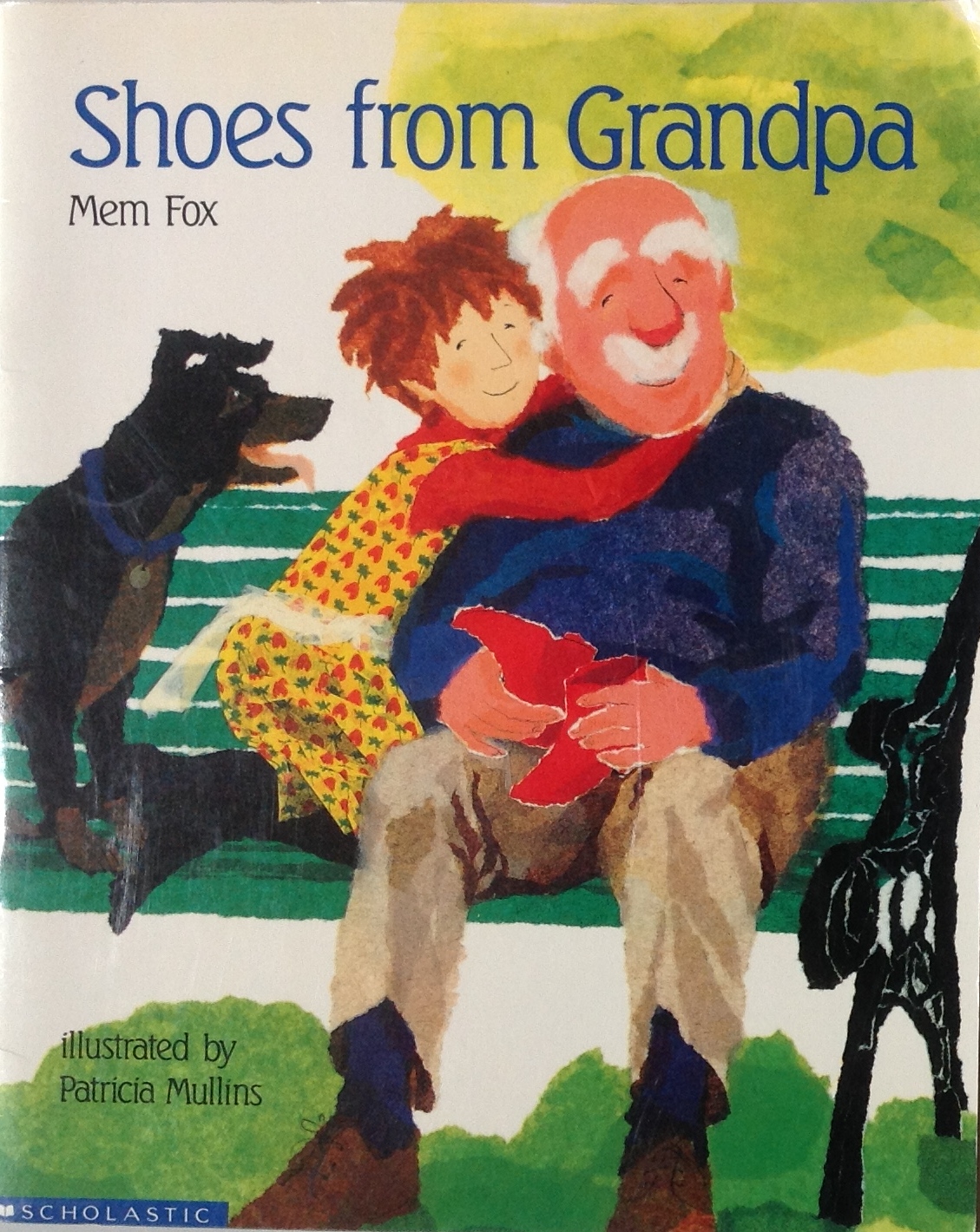
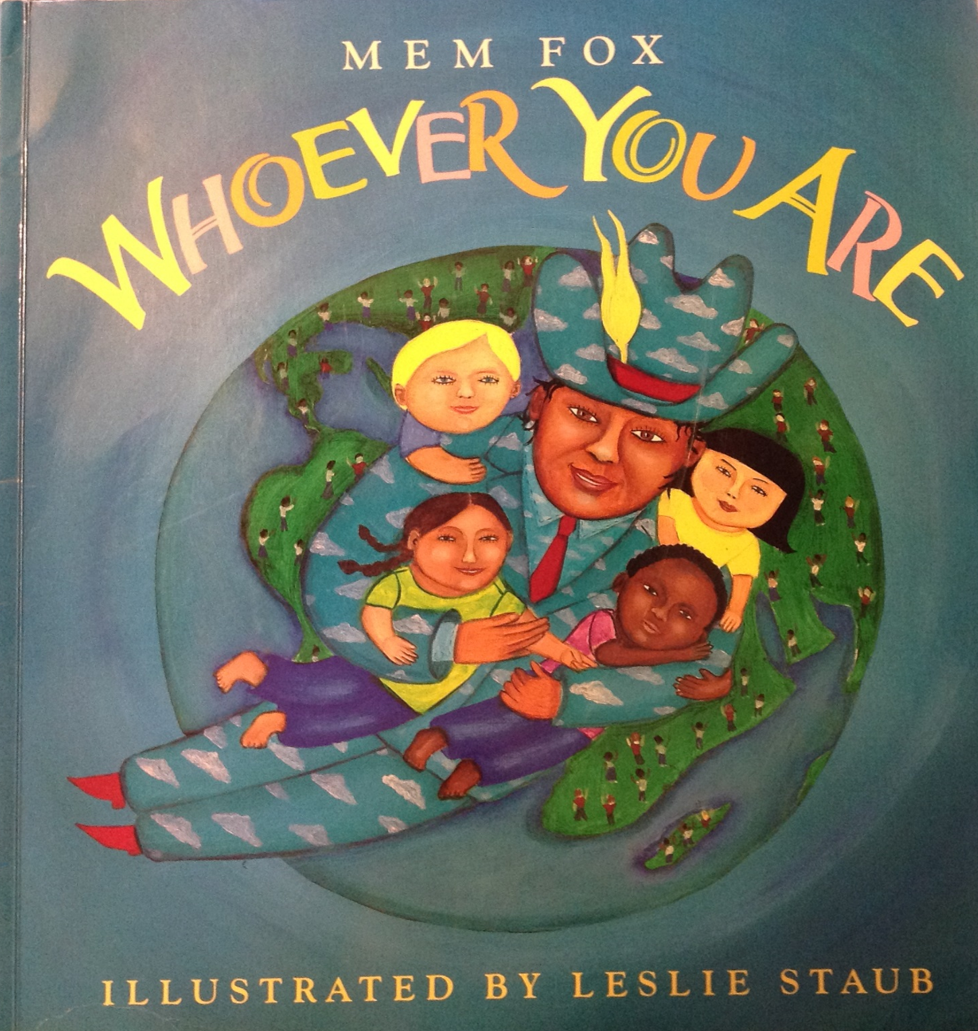
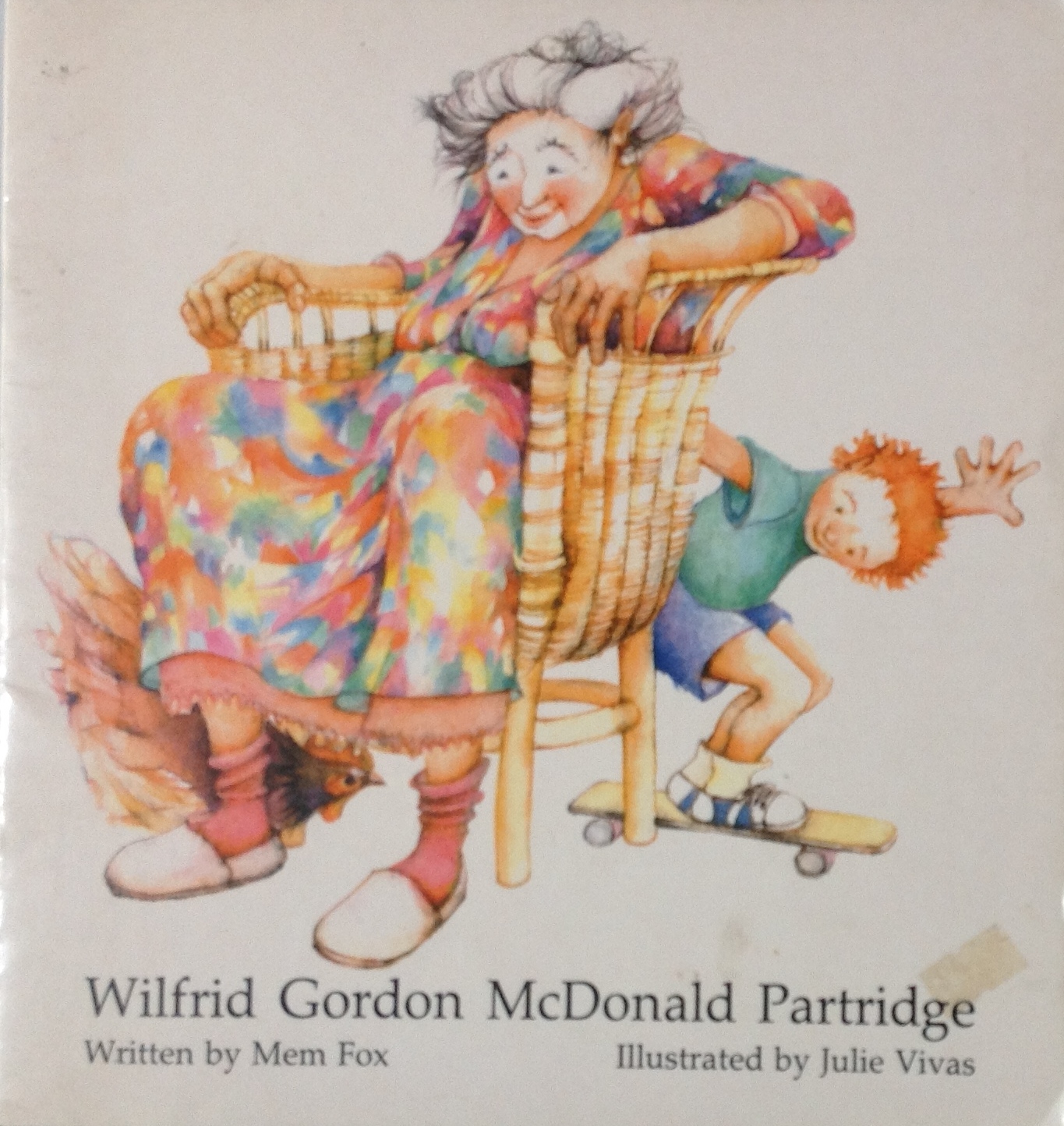
I own and have given away more picture books by Mem Fox than by any other author. To say I appreciate Mem’s work would be an understatement. I currently have on my shelves twelve of her more than thirty picture book titles and two of her eight nonfiction titles.
Her first picture book Possum Magic was published in 1983. I love the story behind this book, as much as the story itself. Mem wrote the first draft in 1978 and over the next five years it was rejected by nine publishers. When it was finally picked up by Omnibus Books she was asked to reduce it in length by two-thirds and to change the characters from mice to possums. The book is now one of Australia’s most popular with more than 3 million copies sold around the world.
You can listen to Mem read Possum Magicor some of her other books here.
In the ten years after the publication of Possum Magic Mem published almost twenty other books. I read her autobiography Mem’s the Word (released in the US as Dear Mem Fox) not long after it was published. At the time I was in my late thirties and was thrilled to find that Mem had also been in her late thirties when her first book was published. I thought there was still hope for me. I’d certainly had enough rejections by that time to fill a rather large shoebox, so maybe I just needed a few more!
Since then Mem’s output has hardly lessened and she has another new book coming out next month. In the meantime, I’m still hoping there’s time for me!
Mem is an author, not an illustrator. The twelve picture books I own were illustrated by eight different artists. Four illustrators did two of these books each. A quick glance at the list of Mem’s books confirms the number of artists who have been engaged to illustrate her work and the variety of artistic styles used. How wonderful for the artists to have that experience, and for teachers and parents the opportunity for discussing artistic styles with children.
My reason for raising this issue of author and illustrator is that I also am not an illustrator. A number of years ago when discussing picture book authors, an acquaintance scoffed at my praise for Mem’s work: how could she possibly consider herself a picture book author if she didn’t do the illustrations? This acquaintance, in the process of having her first picture book published, was author and illustrator. In the intervening years Mem has gone on to publish a number of books, and this acquaintance none. Okay, neither have I. Yet!
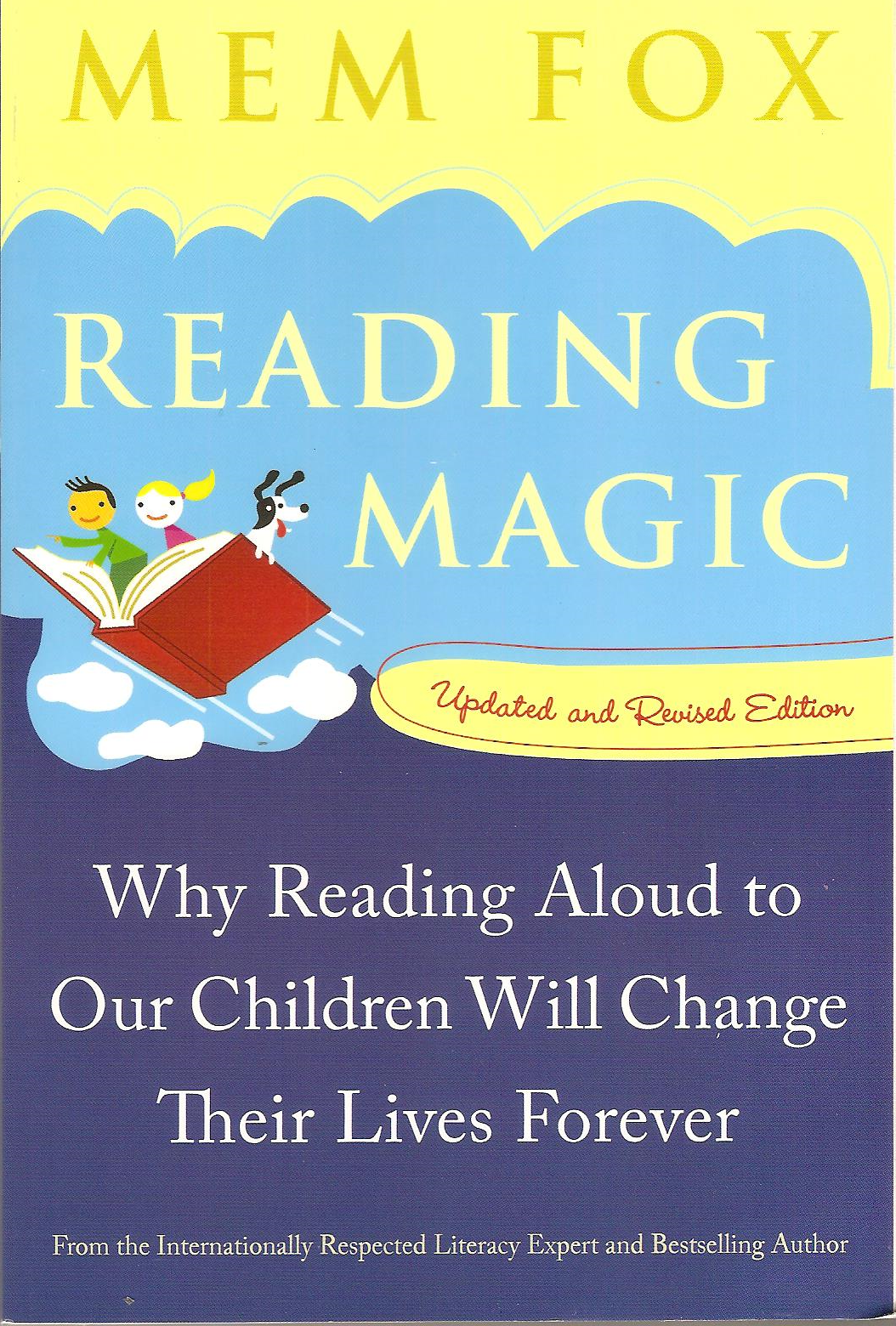
Another thing that Mem and I have in common is our passion for literacy and our advocacy of reading to children every day. Mem’s book Reading Magic should be placed in the hands of every new parent along with a collection of picture books. I practice what I preach by giving a bundle of these as gifts to friends with newborns. I have written about that here. As well as Reading Magic, the bundle generally includes Where is the Green Sheep? and Ten Little Fingers and Ten Little Toes, among others. Nurturing a love of books and reading is one of the greatest gifts a parent can give a child.
Below is a list of the Mem Fox books on my shelves at the moment (a few have mysteriously disappeared!) but the best way to check out Mem’s books is on her website here. While you are exploring her website, there is much else of value to discover, including suggestions for writers, teachers, parents, and children as well as other interesting information. Exploring Mem’s site is the best way of finding out about her wonderful books.
Here are the ones I own, in addition to the three mentioned above (in no particular order), with links to further information about each title on Mem’s site and to information about the illustrator where possible:
Of course these are about the love between parent and child, rather than romantic love, and it is from these I have drawn my inspiration. Finding a love angle that I was happy with was the first challenge and, as usual, telling a tale in 99 words was even more so. (I think I need some lessons about telling more in less.) This is my response. I’d love to know what you think.
Soon the clatter of dishes ceased. Feet padded out.
Child snuggled into warm enveloping arms. The ritual began.
They picked out stars and constellations.
“And Venus,” said Child. “Tell me about the love planet!”
“Well,” began Parent. “Long ago there were two people who loved each other …”
“More than all the stars in the sky,” interjected Child.
“That they wanted a child to love too …”
“So you got me!” said Child.
“Yes.” Parent scooped up the child. “And just as there’ll always be stars …”
”We’ll always love each other!”
Now for the books, each of which is a delight to share with young children, for reading aloud at bedtime, or any time.
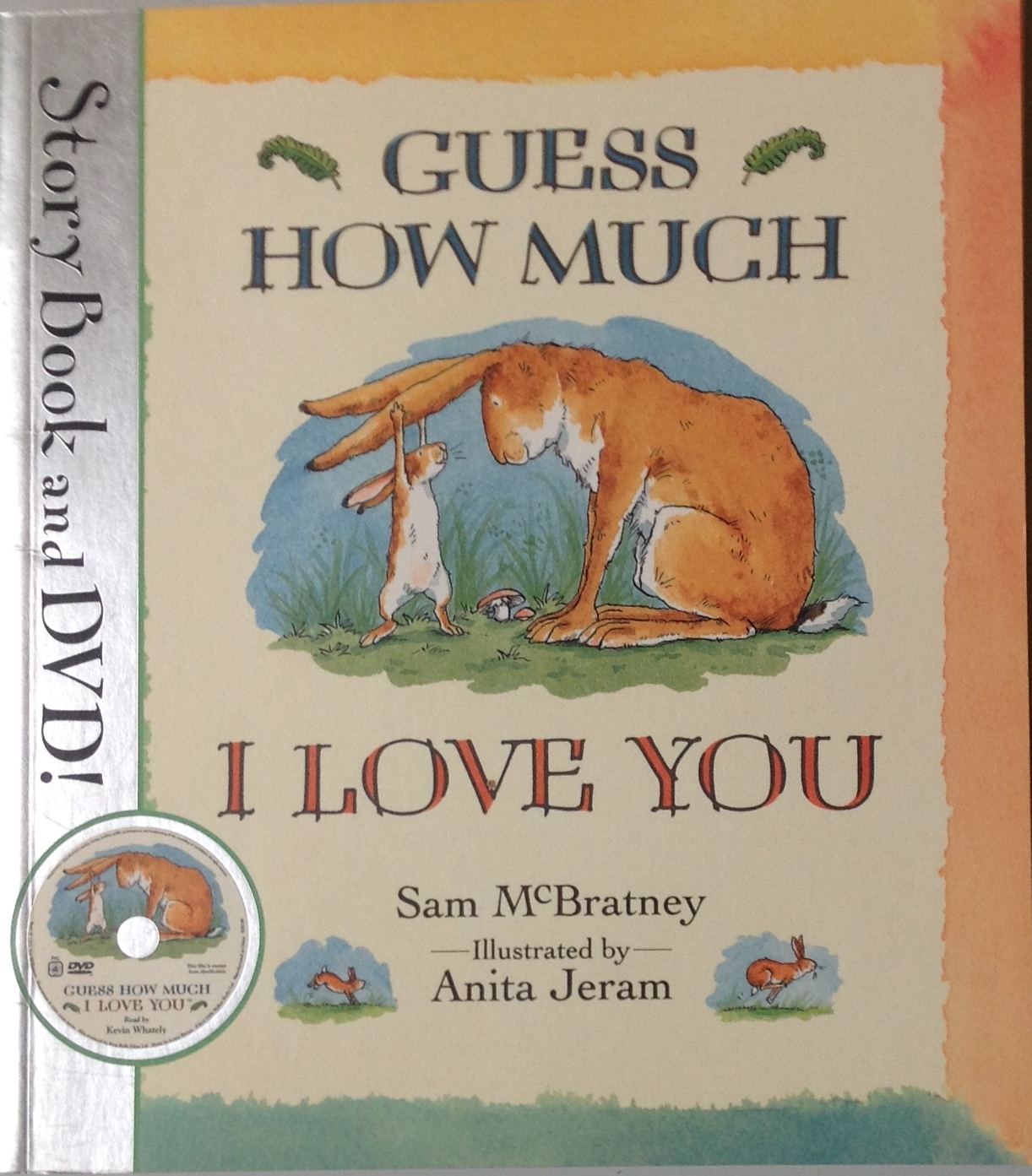
Guess How Much I Love You by Sam McBratney (Northern Ireland) and illustrated by Anita Jeram (Northern Ireland) is a beautiful tale of the love between Little Nutbrown Hare and Big Nutbrown Hare. As they try to find a way of describing their love for each other, they find that love is not easy to measure. From this beautiful story comes the classic line “I love you to the moon … and back!”
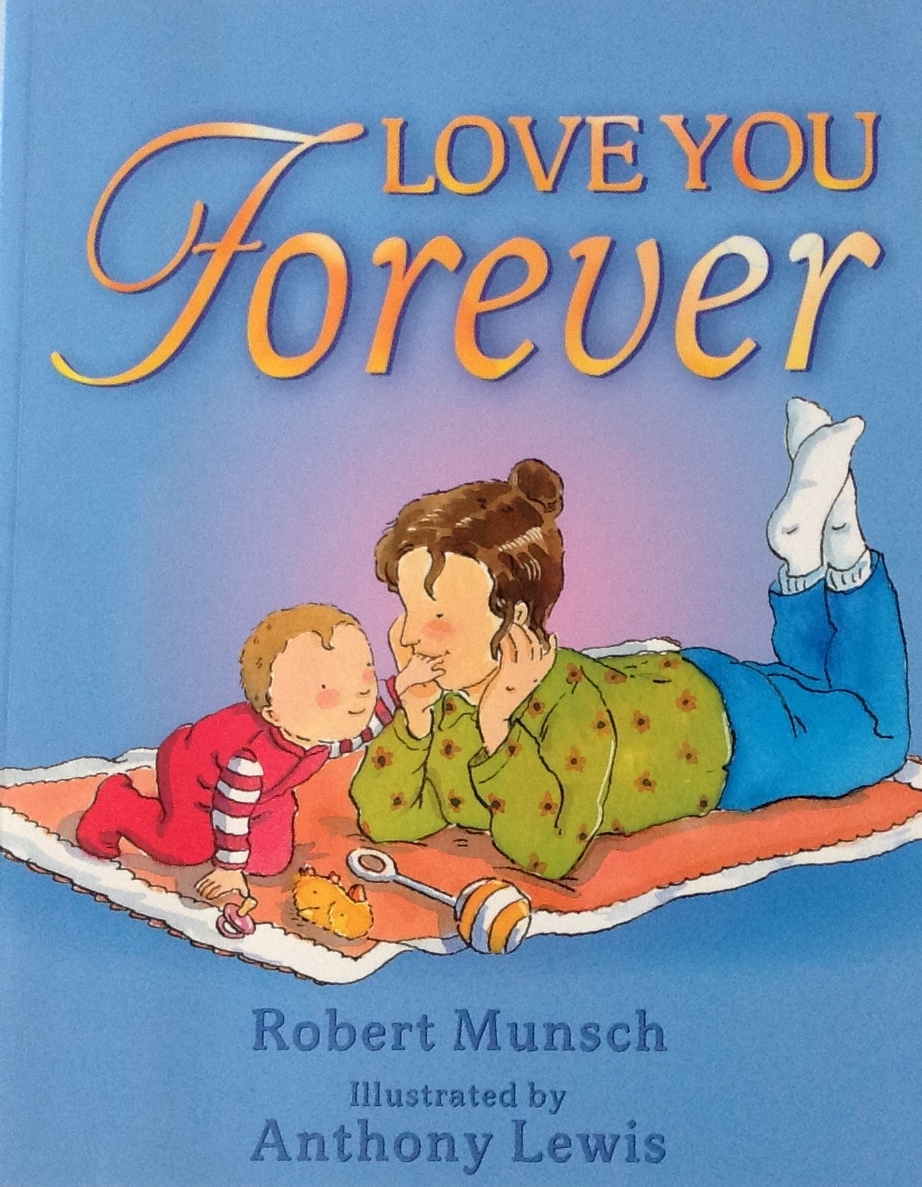
Love You Forever by Robert Munsch (Canada) and illustrated by Anthony Lewis (U.K.) tells of a mother’s love that lasts a lifetime, a love that is returned by a son and passed on to the next generation through the words of a beautiful song:
“I’ll love you forever.
I’ll like you for always.
As long as I’m living
My baby you’ll be.”
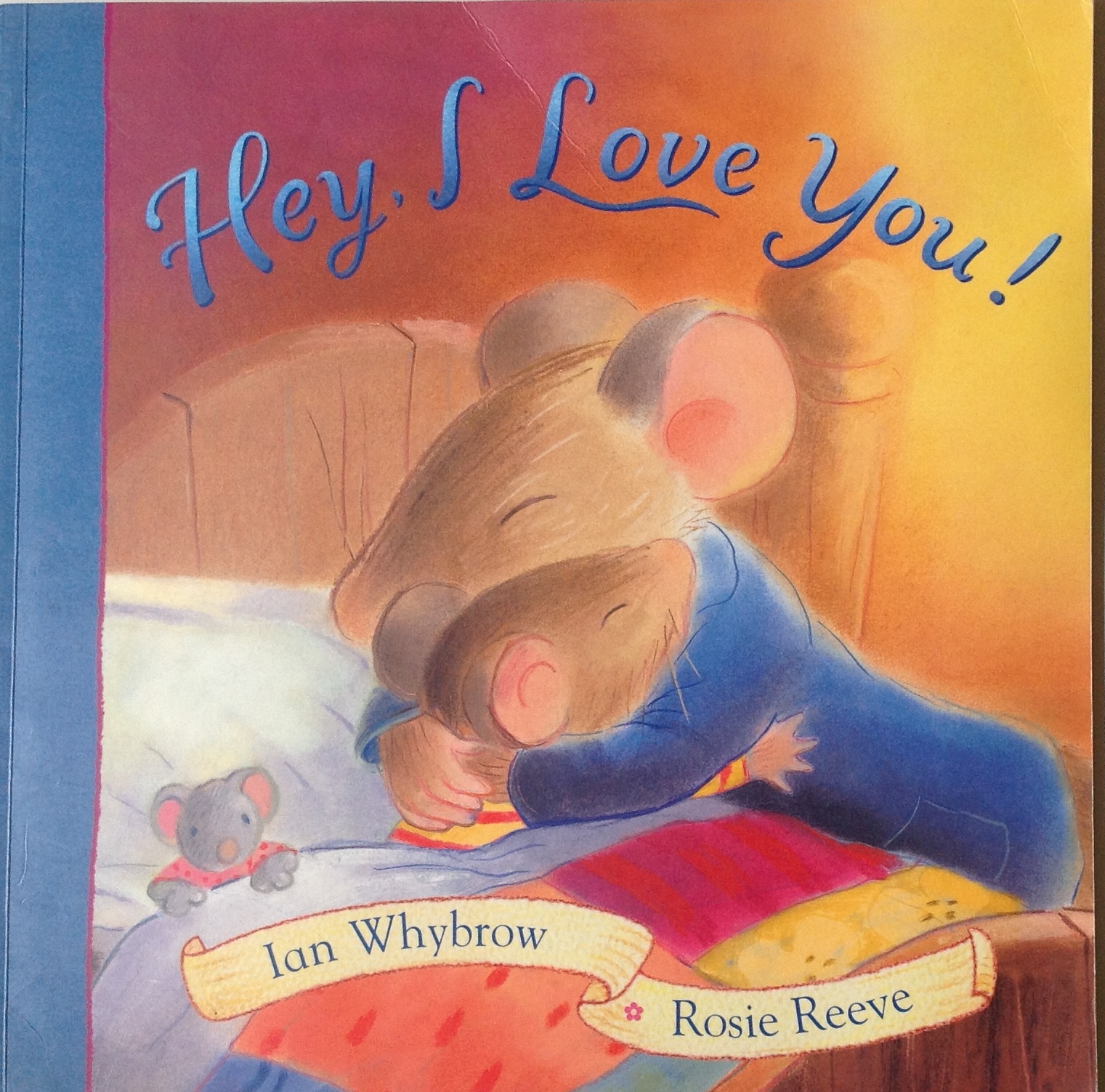
Hey, I Love You by Ian Whybrow (U.K.) and illustrated by Rosie Reeve (U.K.) is about two mice, Small and Big. Before Big goes out to get supper Small shows that he knows what to do to stay safe when Big is away. Unfortunately they forgot to say their special words and Small doesn’t follow the instructions. Fortunately Small was able to catch up to Big without incident. Attention must be paid to the illustrations to see just how lucky that was!
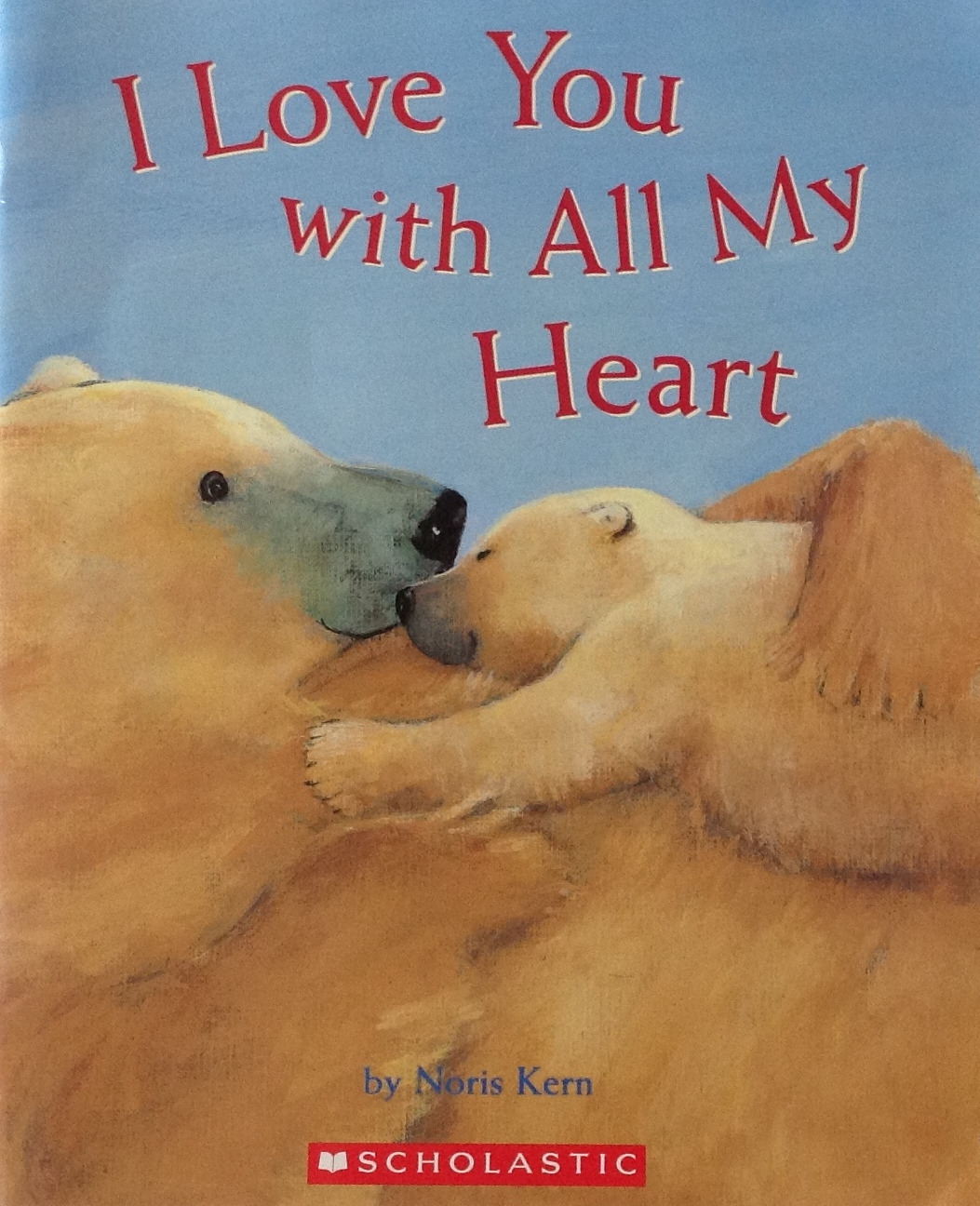
I Love You With All My Heart by Noris Kern is about Polo the Polar Bear who wants to find out the meaning of his mother loving him with all her heart. He asks the other animals how their mothers love them and finally discovers how his mother loves him and that he loves her with all his heart too. (A possible concern with this book is the mix of Arctic and Antarctic animals.)
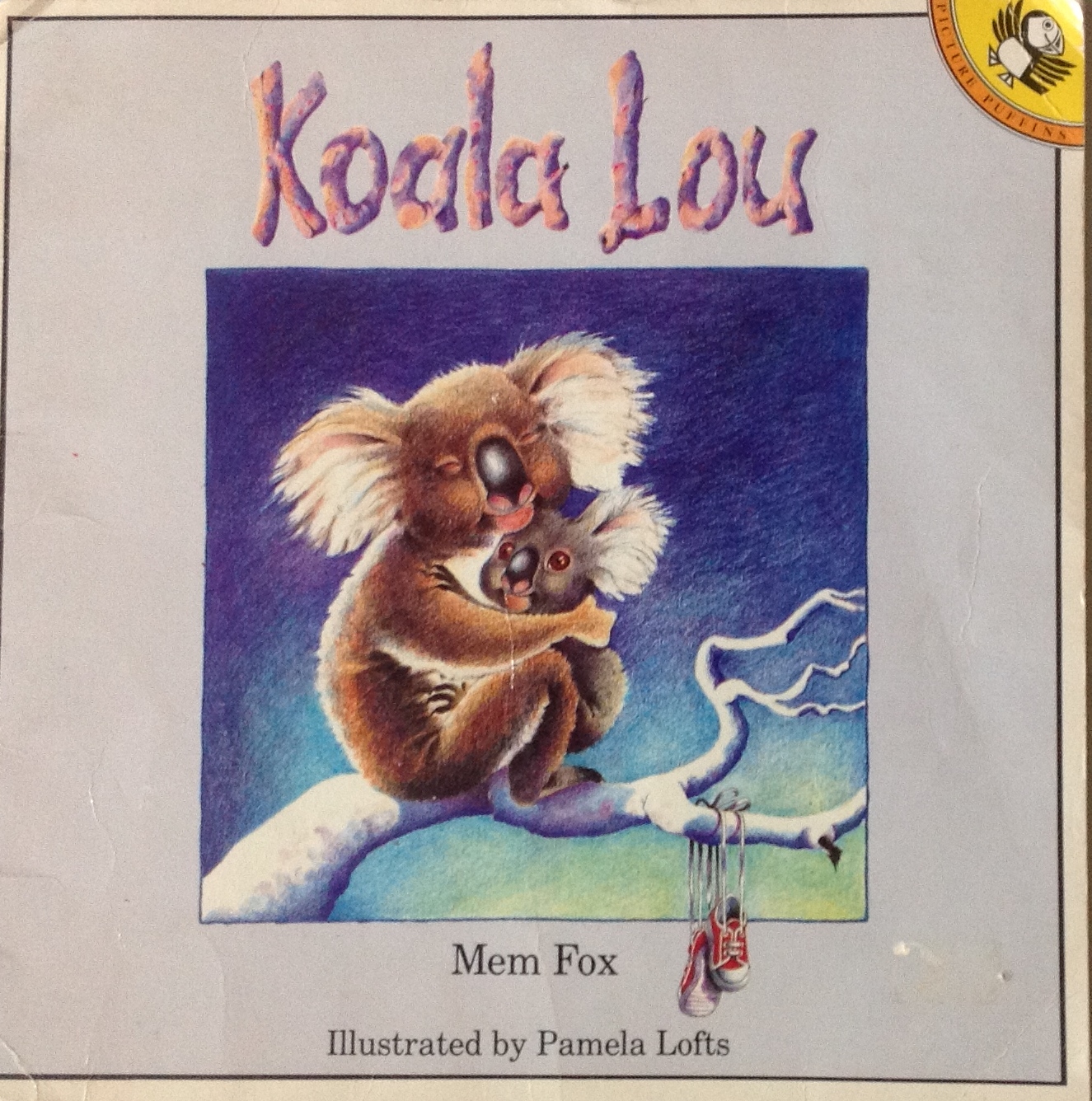
Koala Lou by Mem Fox (Australia) and illustrated by Pamela Lofts (Australia) tells of Koala Lou who is loved by everybody, especially her mother. Every day her mother would say, “Koala Lou, I DO love you!” But after other koala siblings arrive, Mother Koala doesn’t have time to give Koala Lou the attention she craves. Koala Lou comes up with a plan to hear those special words again.
Koala Lou leads beautifully into my next post which will showcase some books by Mem Fox. I hope you will join me for those.
One last thought:
I wonder what image of the Child, Parent and Family you formed from reading my flash. (I omitted some clues about other family members in the 99 word reduction.) I’d be pleased if you would share your thoughts about this.
You see, I attempted to be inclusive by avoiding specifics about things such as gender, family composition, culture and location. I wondered whether a story could be written so that each reader could interpret it to fit their own situation. Illustration could be difficult, but perhaps worth considering. This attempt to be inclusive was very different from my first thoughts to be specific to Australia, through stars observed, for example, and had nothing to do with my thoughts or opinions of the picture books shared.
However, looking back at the five books with these thoughts in mind, I notice that the relationships portrayed are:
Guess How Much I Love You – father and son
Love You Forever –mother and son
Hey, I Love You – father and son
I Love You With All My Heart – mother and son
Koala Lou – mother and daughter
What do you think? Is it worthwhile to attempt a story of the love between parent and child with an inclusive element, or is it enough that such a variety of books is already available? Do you have any other favourites, or suggestions, on this topic?
Thank you for reading. I appreciate your feedback. Please share your thoughts about any aspect of this post or flash fiction.
Australia is a land of immigrants. The first Australians arrived, it seems, about 65 000 to 40 000 years ago, after the second migration out of Africa. The second group arrived only little more than 200 years ago. Some think of Australia as a young country with a history beginning with arrival of Europeans in 1788. But Australia is not only the oldest continent, it is also home to the oldest living culture and was inhabited long before many other parts of the world. It is a tragedy that little recognition and respect is given to this culture and its peoples.
Disharmony and conflict, on a scale from the personal to global, often occurs because of perceived differences: “He’s not like me. She doesn’t think like me. They don’t believe what we believe. I am right and you are wrong.” The realisation that what we share in common far outweighs the differences, and the appreciation of those similarities and differences, would go a long way to soothing that discord.
The National Geographic Genographic Project aims to find out more of our collective human history; where we originated and how we came to populate the world. Projects such as this may help to strengthen the focus on what we share rather than ways in which we differ.
Young children are generally accepting of differences they may notice in each other and are usually more concerned about having someone to play with than about visible differences. Fear of and discomfort with differences is often learned.
Mostly my classrooms were a microcosm reflecting the rich diversity of cultural heritages represented in Australia. Learning about those heritages from the children and their families, as well as through literature and other media, helped us all develop an appreciation for our differences as well as our commonalities.
The celebrations of International Days when children would wear traditional clothing, bring items from home to display and discuss, contribute cultural food to a shared lunch, teach how to play traditional games or share traditional stories were always appreciated by the children and families; including those who considered themselves to have a cultural background and those who didn’t.
Units of work, such as my Getting to know you — Early childhood history unit, learning to greet each other in the languages represented in the class, reading traditional tales and discovering each other’s favourites of anything also contribute to developing understanding and empathy.
“Whoever You Are” by Mem Fox is a wonderful picture book which can be used to discuss similar themes. It explains in a simple and beautiful way that although children around the world may live in different houses, wear different clothes or eat different foods, for example ‘inside, their hearts are just like yours.’ Mem Fox explains the story on her website.
The adults dotted the perimeter, holding tight to their own; bound by the security of sameness reflected in their own eyes, excluded by fear felt for differences perceived in others: different dress and hair, unintelligible words and unfamiliar scents.
In the centre the children romped together, united in the secret language of smiles and laughter, funny looks and gentle patting hands; no words needed.
The children smiled, waving promises of future plays, as one by one the adults called them home, delighting in their children’s easy ways, wishing for their own nonprejudicial days. A nod. A smile. A beginning.
Now if there is one thing I have noticed about “the news” over the years, it’s that the news reported in the media is generally bad. Often the stories are meant to alarm or frighten. I think it must be easier to control a population through fear. A little scaremongering may go a long way.
Although the song is called It’s Good News Week, it doesn’t have much good news to tell.
I selected a few headlines (expressly for my purpose) from a recent Conversation:
The role of water in Australia’s uncertain future
The scariest part of climate change isn’t what we know, but what we don’t
Stop, go back, the NDIS board shake-up is going the wrong way
We’re overdosing on medicine – it’s time to embrace life’s uncertainty
Australians less likely to survive home ownership than Britons
Is your child less likely to be bullied in a private school?
Uni drop-out rates show need for more support, not capped enrolments
The slide of academic standards in Australia: a cautionary tale
The absurdity of English spelling and why we’re stuck with it
All of these headlines state the existence of a situation or condition as irrefutable, like falling standards and failing students. I’m sure most of you will be familiar with headlines such as this one from the Conversation nearly two years ago:
In this article Misty Adoniou attributes the failure of some Australian children on national and international literacy tests to their lack of exposure and experience with standard English – they do not speak standard or “school” English at home. Adoniou says that is up to teachers to improve the language used by students and to make their understanding of correct usage explicit. However she says that many teachers do not have an explicit understanding of English and, as a result, are unable to teach it to their students.
I’m not sure how true that statement is. However, what I do like about this article is the advice Adoniou gives about teaching. She says that “all our teaching about language must be done in context and in the course of achieving real outcomes.” I couldn’t agree more.
Daily news – learning in context
In fact, from their first weeks of school I was explicitly teaching students about language and literacy using a strategy I borrowed and developed from the ubiquitous “show and tell”. I called this strategy simply “News”, and found it to be a powerful tool for teaching the skills of both reading and writing.
Its strength came from the familiar context, the connection to children’s lives and the importance it placed upon them. The teaching could be adjusted to suit different stages of development, to reinforce learning for some and extend the learning of others. For me, as teacher, it was a powerful learning tool. I was able to gauge children’s developing strategies, understand their needs and identify next steps for learning.
How it worked
Talk
A few children each day would have the opportunity to share their item of interest or “news” with the class. Class mates could ask for additional information or clarification if they wished.
Compose
We (teacher and children) would collaboratively compose a report, initially just one or two sentences, of what had been shared.
Write
I would model the composition and the writing process, rehearsing what to write while involving children in thinking about what to write and how to write it. How much they were involved, and the detail of language and skills discussed could be easily adjusted to suit their development. There was always ample practice and repetition, in a meaningful context, for children who needed more time; and discussion of strategies and ideas to extend the most advanced students.
Some of the writing strategies children were learning include:
Composition or rehearsal before writing
Directionality of writing
Translating conversational language into written language
Changing first person spoken text into third person written text
Identifying letters used to spell the sounds of language
Awareness of punctuation
Tenses, past and future, depending on what the children shared
Rereading to ensure message is correct and what to write next
Proofreading and editing
Identifying the main idea through choosing a suitable headline
Read
After the news was written, we would read it together to ensure it was correct and the child was happy with the way the news had been reported.
The text could then be used for developing a number of reading skills, for example:
Recognising words by sight
Noticing similarities in spellings, or differences in spelling of words with similar sounds
Punctuation and its effect on reading
Comprehension and grammar: who, what, where, when, and (sometimes) why
Reading with expression
Share
Each day I would print up the news for the children to take home to share with their family. It was a great first reading experience – about them, their friends and their families.
While this is only a brief overview of the strategy, the learning that can take place using children’s own language is obvious. Used as one small part of a rich literacy focused and literature-based classroom environment it is a powerful teaching tool. One day I will explain the strategy in detail so that others can use it too.
Flash fiction
But back to the headlines and Charli’s challenge.
Over recent years I have noticed an increased use of ambiguity in headlines and the introduction of (attempted) literary expressions into the body of articles. I have drawn on that for my flash. I hope it works.
Bridge plans in jeopardy
She scrolled through the headlines, searching …
Minister passes over bridge in favour of tunnel
Minister fails to dig himself out of tunnel fiasco


































 Norah Colvin