Live Love Laugh Learn … Create the possibilities

Category: Family

  • You’re not allowed!

    child-1439468_1920

    How many of these did you hear when you were a child?

    • You’re too small
    • You’re too big
    • You’re too young
    • You’re too old
    • It’s too far
    • It costs too much
    • It’s too dangerous
    • Girls don’t do that
    • Boys don’t do that
    • It’s too …

    Sometimes it was difficult to find an activity that, like Baby Bear’s bed, was just right. Oftentimes it was only ‘just right’ in the eyes someone wielding the power; and not always in the eyes of the one wishing to have, do, go, or be. Setting limits is often easier than chasing possibilities.
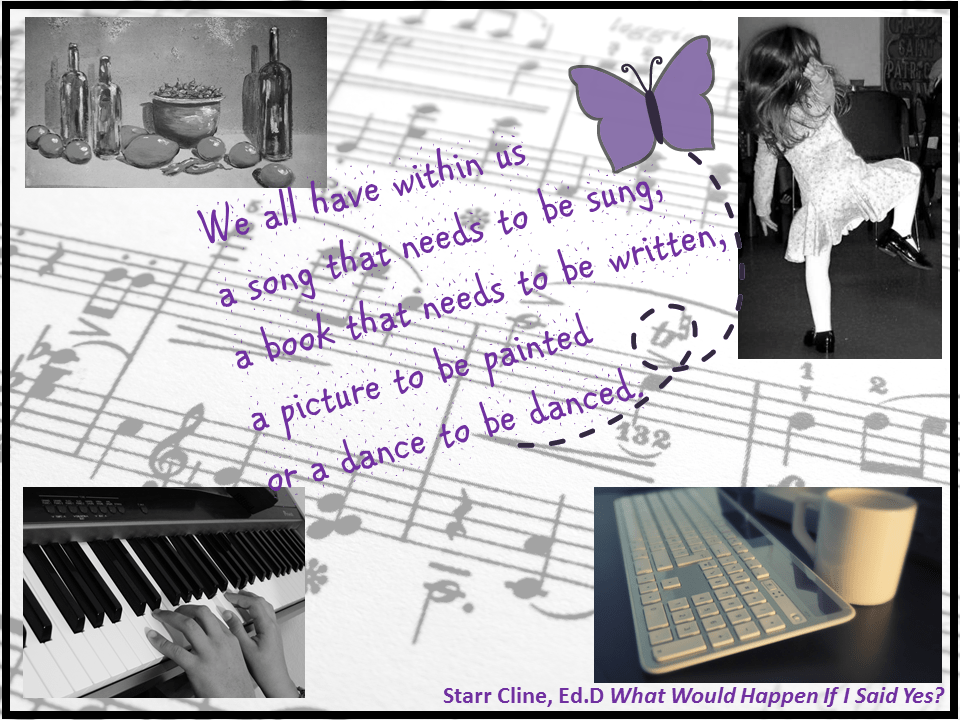
    starr-cline-creativity

    Many years ago I read What Would Happen If I Said Yes?… A Guide to Creativity for Parents and Teachers by Starr Cline.  Cline writes about creativity, emotional intelligence, giftedness, intelligences, diversity, and the power of “Yes”. On her website, she makes this statement:

    “After years of observation and research, I have drawn the following conclusions:

    • Everyone has the ability to create.
    • The external environment is critical in the development of one’s potential, whether it be in mathematics, language, the arts, etc.
    • Individuals may have one or more areas in which they excel
    • IQ scores do not reflect specific talents or abilities
    • Creativity begins diminishing at about third grade”

    I’m inclined to agree, and feel especially sad about the last point she makes.

    What Would Happen If I Said Yes? challenged me to think about ways in which I could parent (and teach) more positively and encourage, rather than inhibit, creativity; encourage a willingness to try new things; and to avoid placing unnecessary limitations upon others and myself. I can’t say I was entirely successful, but I did make some gains.

    In the book, Cline suggests that you “STOP every time you are about to say no. THINK about what might happen if you said yes!”  Consider the worst scenario that could occur if you said yes, and whether it would be really that bad, or even likely.

    She says to consider why you may say No.

    “Is it because …

    You don’t want to be bothered

    It wasn’t your idea

    It’s a habit

    Someone treated you that way

    It makes you feel powerful”

    She reminds that the messages saying “No” often sends are:

    “Your idea is stupid

    You are stupid

    You’re not capable

    You’re not worth it.”

    In the long term, are these negative messages more important than a temporary inconvenience, or than the benefits that would accrue from positive responses?

    But don’t get me wrong. Cline doesn’t suggest you just say “Yes” to everything. She says that sometimes you may need to come up with a creative way of saying no. She provides many ways of doing so in her book, which I recommend as a great read for both parents and teachers.

    Even as adults we can find ourselves in situations where certain things are not allowed and rules are imposed, such as in the workplace or in clubs and other organisations.

    Sometimes the things we are not allowed to do are self-imposed limits; we may not allow ourselves to do things because:

    • It’s scary
    • It’s unfamiliar
    • We feel uncomfortable
    • We don’t know anybody there
    • It costs too much

    camping-1289930_1920

    Sometimes, as I explained about my attitude to camping in a previous post Around the campfire, we make choices and find ways of justifying our decisions, at least to ourselves if not to anyone else. There are many reasons I choose to avoid camping, many other things I’d prefer to do, and I don’t often consider myself to be missing out.

    Although I can appreciate camping’s appeal to others, it was only when I read a late comment by Bruce Mitchell that I began to consider some of the wonders, including Antarctica, I had missed. Maybe I’ll be more adventurous next time round!

    This week at the Carrot Ranch Charli Mills has challenged writers to In 99 words (no more, no less) write a story about something or someone not allowed

    In her post, Charli speaks of many injustices, including the rules that say who is and is not allowed to vote in elections in the United States. The rules affect many, for many different reasons (or petty excuses based on power) and tend to be divisive rather than inclusive.

    charli-mills-gift

    Charli says that,

    “The greatest gift you can give is to allow another. Allow someone else to listen to their favorite music. Allow someone else to tell you their story. Allow someone to connect to you even if you feel harried. Smile back, nod, acknowledge, empathize. Be loving. Some among us have denials you can’t see stamped upon their countenances because of circumstances.”

    While deciding what we will or will not allow our children to do may seem trivial in comparison, surely bringing up our younger generations to be confident, independent, responsible, and accepting of others, allowing them to join in; creating an inclusive society, is something to strive towards. Perhaps if we allow our children, they will allow others.

    For my response to Charli’s flash, I’ve gone back to childhood. Where else? I hope you enjoy it.

    Not allowed

    She knew they were in there. She heard their chatter. Her knocks began timidly, then louder. The room hushed. There was rustling, then padding feet. She waited. The door opened a peek. Her loving sister’s smiling face appeared, then contorted unrecognisably.

    “You’re not allowed!” the monster screeched, and slammed the door.

    She froze – obliterated, erased, smashed to smithereens. She was nowhere, nothing. Why? What had she done?

    She could only shrug when Mum asked why she wasn’t playing with her sister.

    Later, at dinner, she viewed her sister’s sweet smiles cautiously. Was she real? When would the monster reappear?

    thank-you-1200x757

    Thank you for reading. I appreciate your feedback. Please share your thoughts.

  • Once was a dog

    grenny

    I am not a dog person. In fact, I am not a pet person at all. The only pets I ever owned were short-lived: goldfish, fighting fish, hermit crabs, and billabong bugs. I was successful at keeping caterpillars in the classroom and observing them grow, pupate, and emerge as butterflies. But they couldn’t really be classed as pets. I’ve written about this before here.

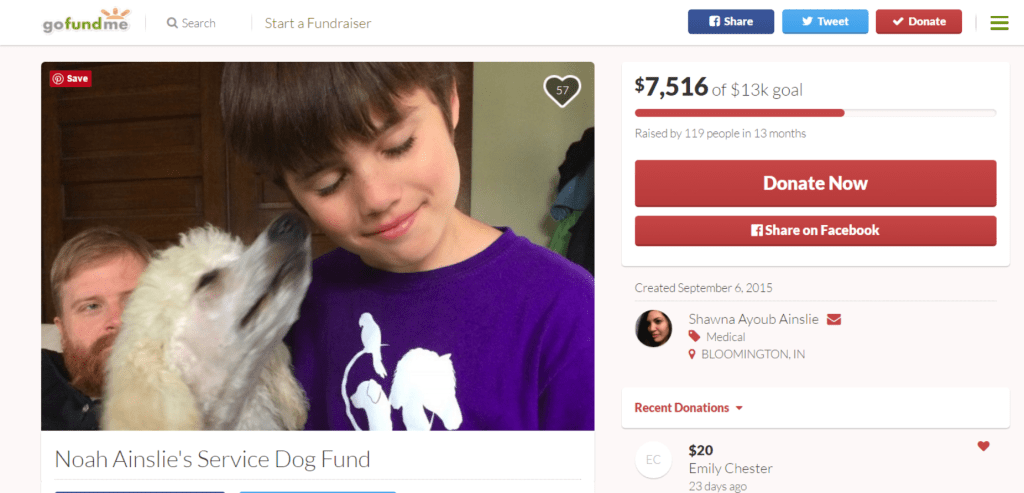
    I know all the theories about pet ownership; especially for helping children develop a sense of responsibility and care for others. I know about the contribution of pets to the physical and psychological health of their owners of all ages through the companionship and unconditional love they offer. I am touched by the heart warming story of Noah Ainslie, a little boy suffering from autism, and the difference his service dog Appa has made to his life, and the lives of his family. Please help if you can.

    screenshot-2016-10-10-19-53-42

    It would not be unrealistic, with my focus on nurturing young children, to expect that I would be a pet owner. However, I’ve never been inclined to make the commitment required

    My parents were both country people who moved to suburbia to raise their large family. There were never any pets. They said that dogs didn’t belong in towns. The dogs they were used to were working dogs, never pets. I guess there were enough mouths to feed without adding pets to the mix as well.

    Unlike for some, lack of a pet as a child did not induce me to want one on reaching adulthood. Consequently, my children also missed out. Daughter had some mice, rats, and a guinea pig at various times; but nothing to compare to a “real” pet, like a cat or a dog. As soon as she moved into a house that allowed pets, she and partner went out and got themselves a dog.

    screenshot-2016-10-11-20-21-38

    I must say, Ziggy is a gorgeous dog with a happy, friendly, easy-going nature. If I was going to have a dog, he’d be it. I’m beginning to get an inkling of the relationship between humans and their animal friends. There is definitely something very special about it. However, I’m still not interested in forming an attachment of my own.

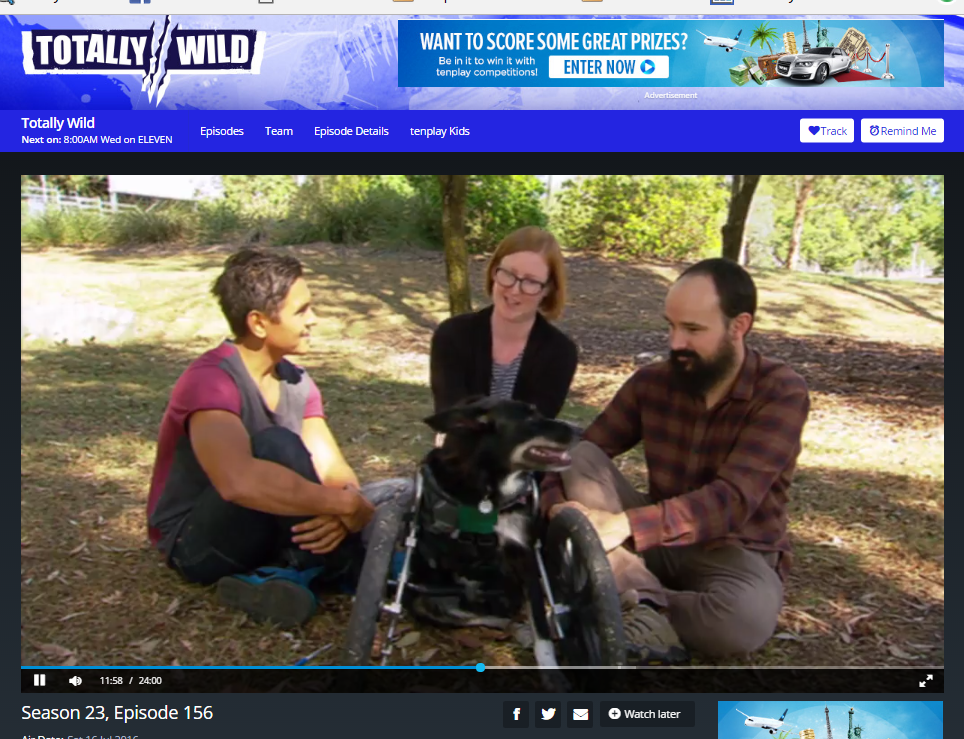
    Ziggy is a very special dog with very special owners. You can get to know the three of them in this video. (Watch from 11:.24 – 15:20.)

    Unfortunately the video may not play for those residing outside Australia. Thanks to Anne Goodwin for alerting me to the fact.

    screenshot-2016-10-11-20-21-12

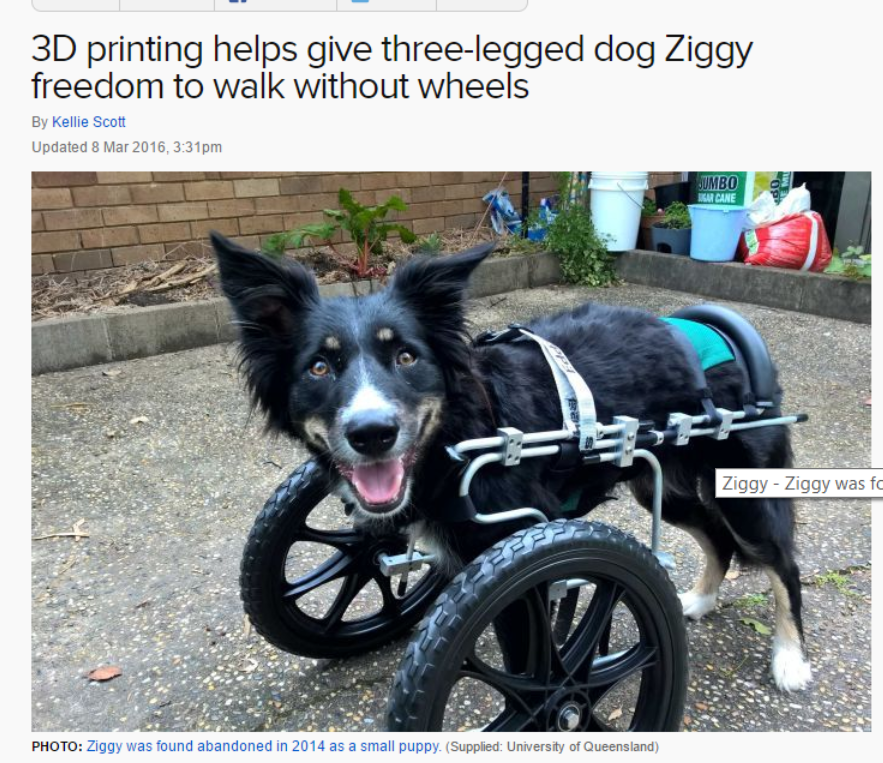
    Ziggy’s innovative surgery put him in the spotlight for a little while. His story was also featured on the Tripawds blog

    ziggy-on-tripawds-blog

    and ABC News

    screenshot-2016-10-10-19-24-20

    The importance and depth of the human-pet relationship was reinforced for me this week when Charli Mills of the Carrot Ranch reported that her big brown canine friend Grenny was gone.

    Charli was devastated by his unexpected passing and shared stories of his special abilities and the ways in which he added to their lives. Her post is a wonderful tribute to Grenny’s life and his contribution to theirs. Charli asked writers to share stories about big brown dogs this week.

    Charli said, In 99 words (no more, no less) write a story about a Big Brown Dog. I just want to read Big Brown Dog stories this week. I know dogs aren’t everyone’s cup of tea, but you can write about that, too. Keep it happy, write something funny, surprising or tender. Thank you.

    Well, Charli knows that dogs aren’t my cup of tea. She also understands that, with no personal experience on which to draw, I feel inadequate to respond appropriately to her situation, other than offer my heartfelt sympathies. As for writing, I could come up with nothing other than nonsense which I don’t consider at all appropriate.  Other writers have written beautiful brown dog stories for Charli.

    Please follow the link to read Charli’s post, the lovely comments, and the beautiful stories.

    Instead of a flash, I’ll leave you with a few picture books about pets you might like to read:

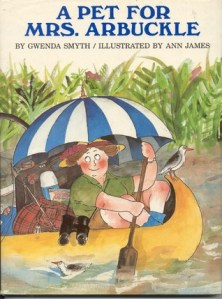
    A Pet for Mrs Arbuckle by Gwenda Smith

    a-pet-for-mrs-arbuckle-by-gwenda-smyth

    What Pet Should I Get? by Dr Seuss

    lifetimes

    Lifetimes by Bryan Mellonie is a beautiful book for explaining death to children. It’s great to read at any time to help children understand that every living thing has its own lifetime. It is also great to read when the death of a pet is imminent or occurs. Understanding that death is a part of life, helps with the grieving process.

    Breaths - life is not measured

    Thank you

    Thank you for reading. I appreciate your feedback. Please share your thoughts.


  • The first goodbye

    20

    The first goodbye between a parent and a child will elicit a range of emotions from each. The feelings, and responses, of both parent and child, are dependent upon a range of factors including who the child is being left with, how well the child and the substitute carer know each other, the feelings of all parties about each other, the circumstances, the environment, and the list goes on.

    A parent who feels empowered by the decision, and views the child’s new situation positively, will accept and adjust to the change more easily. That’s not to say a parent won’t feel some sense of loss and anxiety as well, but it is important that the child is prepared with reassurance rather than the negativity of anxiety or concerns. A more confident and secure child will view the situation with positive expectations.

    Anne Goodwin, on her blog Annecdotal, often refers to attachment theory, and the responses of children to real or imagined abandonment. In her post Compassion: Something we all need Anne shares the following video, explaining that

    “Research psychologist Mary Ainsworth developed an ingenious method of assessing whether or not an infant has developed secure attachments. In the Strange Situation, babies play in a comfortable room until, at a given signal, the mother leaves. What distinguishes securely from insecurely attached infants, is not how they behave when the mother (or other primary carer) leaves, but whether they are able to settle on her return.”

    She continues

    “Research suggests that about two thirds of the population can be categorised as securely attached. That’s a whopping one third of us who aren’t.”

    The research also suggests that how secure children feel in their infancy influences how secure they feel later in life. A sense of security influences one’s ability to adapt to change and new situations.

    It is not unusual for children, or anyone, to feel a little apprehension in a new situation. A more secure individual generally accepts and adapts more easily.  When carers drop their children at child care, kindy, or school, they may be advised to “drop and go”. Mostly the children are fine once the parents have disappeared and the children have time to settle.

    36

    If children experience more difficulty than most, or if it occurs for a prolonged period, causes may need to be investigated. Sometimes a child may suffer from anxiety. Sometimes the environment may not be welcoming or appropriate to the child’s needs. Happy, secure, confident children will always face new situations better than those who feel anxious and insecure.

    father and child

    Parents can help children prepare for that first day of kindy or school by:

    • Talking about what to expect and the fun things they will do
    • Having special items for the child to take or wear; for example, a back pack or lunch container, hat or shoes
    • Rehearsing the journey
    • Visiting the kindy or school, and meeting the carers or teachers if possible
    • Writing happy messages (in words or pictures) to be found in bags, or lunchboxes
    • Establishing routines, including the goodbye routine

    Hey I love you with quote

    While the routine doesn’t have to be as elaborate or serious as that in Ian Whybrow’s Hey, I Love You!, a signal that the parent is leaving is useful in making the break. It doesn’t have to be immediate. Depending on the practices established, parents may be able to accompany the child to the door, or into the room.

    I always welcomed parents to come in with their children in the morning. The children could show their parents around and discuss work we were doing. Parents could help children organise their belongings, and talk to other parents and children. When it was time for work to begin, I would play music that would signal children to join the song or dance, and parents to take their leave.

    This week at the Carrot Ranch Charli Mills is talking about goodbyes. She is on the move from a place to which she felt attached, to a situation unfamiliar. She is sad at leaving but is able to view with hopefulness the situation to which she is moving. Charli has challenged writers to

    In 99 words (no more, no less) write a story about a goodbye. It can be the last polka until next time; a farewell without end; a quick see ya later. How does the goodbye inform the story. What is the tone, the character’s mood, the twist? Go where the prompt leads.

    Usually I post my response as the deadline draws close. However, as she is on the move, Charli has extended the submission period. If you would like to join in with a flash fiction “goodbye”, you have another week until September 13 to do so.

    Here is my response to the challenge.

    cartoon-waving-guy
    http://morguefile.com/

    A goodbye clapping song

    (Parent and child chant the verses together or take turns, changing the pronouns to suit. They begin by clapping their own, then each other’s’ hands. On the last three beats of each line, they clap each other’s hands. The pattern for each line is “Own, other’s, own other’s, own, other’s. other’s. other’s. On the last line they smile, wave, blow a kiss, and leave! It’s meant to be a bit of nonsense and a bit of fun establishing a goodbye routine.)

    It’s time for you to go, go, go

    I’ve lots to do and can’t be slow.

    It’s time for me to fly, fly, fly

    Upon my broom into the sky.

    It’s time for you to leave, leave, leave

    I will be happy, do not grieve.

    It’s time for me to run, run, run

    And jump so high I touch the sun

    It’s time to say goodbye, bye, bye

    You’ve work to do and so have I.

    I’ll blow a kiss, and smile, smile, smile

    I’ll see you in a little while.

    Bye. Have a good day. Love you!

     Thank you

    Thank you for reading. I appreciate your feedback. Please share your thoughts.
  • Digging for dinosaur bones

    Dinosaur Adventure, Norwich © NorahColvin
    Dinosaur Adventure, Norwich
    © NorahColvin

    My family has had a love affair, some might say obsession, certainly a fascination, with dinosaurs for almost forty years. My son initiated the affair when he was about three after being undecided whether to watch or not when dinosaurs burst onto the drive-in screen in One Million Years BC. I’m not sure when I first discovered dinosaurs, but It may have been at the same time.

    By the time Rob was four, like many children, he knew the names of a great number of dinosaurs and could rattle off screeds of information about them. It had been a steep learning curve for all of us, though he remembered far more than I. A travelling encyclopedia salesman was so impressed by his knowledge that he gave him a book about dinosaurs. (I’d already purchased; it wasn’t an incentive.) Later, his little sister Bec shared his interest.

    dinosaurs at museum Jan 91
    © Norah Colvin

    Now the affair continues with Rob’s own children. Six-year-old G1 can name and identify far more dinosaurs than I realised existed.  His younger sister G2 is not far behind. Such is the power of these mighty, and not so mighty, beasts to excite the imagination. The entire family become dinosaur experts in support of the children’s quest for knowledge.

    I recently accompanied the family to the La Brea Tar Pits in Los Angeles, and the American Museum of Natural History in New York. I have mentioned this previously here. Both were wonderful learning experiences.

    © Norah Colvin
    © Norah Colvin

    La Brea Tar Pits is a museum located at a fossil site where there are ongoing excavations. In the grounds, we saw realistic sculptures of prehistoric woolly mammoths trapped in the tar. Inside, we saw fossilised skeletons removed from the tar pits; including skeletons of animals such as mammoths, sabre-toothed cats, dire wolves, and camels. Yes, camels originated in North America.

    © Norah Colvin
    © Norah Colvin

    Walking the grounds, we had to sidestep the smelly tar that still oozes in puddles around the site. It’s an amazing experience, walking on the same land where these prehistoric creatures walked, their presence almost tangible. In an enclosed area, a group of paleontologists were working with fossils recovered from the site. Scientists use these fossils to help construct our understanding of life before human history began.

    What I find interesting about the understandings derived from these fossils, is that much of it is guesswork; educated guesswork, yes, but fossils tell only part of the story. The rest must be filled in using knowledge of contemporary and recorded life. Sometimes assumptions are made, especially when only partial skeletons are found, that must be altered when, or if, complete skeletons are found.

    American Museum of Natural History © Norah Colvin
    American Museum of Natural History © Norah Colvin

    I was very impressed with the way this aspect of science was dealt with in the American Museum of Natural History. Many signs informed us that scientists don’t know for sure, but that they have substantial evidence for making their assumptions. Other signs told of claims that had been revised as new information was discovered. I appreciated being told, in essence: “This is what we know, this is what we think, and this is the evidence to support our claims.”

    This talk by palaeontologist Jack Horner, which I discovered via a link from Charli Millspost, demonstrates the process with some fascinating dinosaur discoveries and assumptions.

    This recent BBC article Meet Nanotyrannus, the dinosaur that never really existed provides additional evidence to support Horner’s claims.

    © Norah Colvin
    © Norah Colvin

    A study of dinosaurs provides many opportunities for learning across the curriculum and what a great way to incorporate children’s natural interests and curiosity when looking at topics such as scientific method, evolution and climate change.

    I’m grateful to Charli Mills at the Carrot Ranch for the incentive to write about this topic with her challenge to In 99 words (no more, no less) write a story that features a fossil or uses the word in its variant forms (fossilize, dino bones, petrification, gastroliths, ichnofossils, etc.)

    Since “discovering dinosaurs”, so to speak, I’ve always thought how wonderful it must be to unearth a great find. I haven’t made it an ambition, but I appreciate the potential for excitement. Here’s my response to Charli’s challenge. I hope you enjoy it.

    Old Bones

    She scratched at the surface tentatively at first, all senses keened, certain of imminent success. She’d uncovered bones here before. Usually one meant there’d be more. All it required was patience and persistence. Suddenly she contacted something more solid than the surrounding earth. She froze. Then exhaled. Could this be the object of her search? Frantically she scraped away the surrounding soil, exposing her find. She stepped back momentarily, assessing it, assuring herself it was real. Then with one final swoop, she removed the bone as carefully and proudly as any paleontologist would a dinosaur bone. “Woof!”

    Thank you

    Thank you for reading. I appreciate your feedback. Please share your thoughts.


  • How do you know?

    49

    Being able to verbalise the steps taken to arrive at an answer or a conclusion is a valuable skill. It is particularly important with mathematical thinking, even at beginning stages. Sometimes it feels as if the answer appears without the need for thought. Of course we aim for this with automaticity of number facts and times tables. However, I am referring to problems that may involve two or more different calculations.

    maths problem

    Unless one understands the processes involved in solving one problem, it can be difficult to apply the same strategy in other situations. Sometimes it may be difficult for a teacher who finds the answer effortlessly to understand a learner’s confusion leading to mis-steps and miscalculations.

    I generally collect my six-year-old grandson (G1) from school once or twice a week.  Now that he’s a big year one boy he thinks he doesn’t need to hold my hand to cross the road. However, there is a bit of traffic around his school and I prefer him to do so, telling him it’s for my safety too.

    holding hands to cross road

    One day I, erroneously, told him he needed to hold an adult’s hand until he was ten. (Ten is closer to the age for riding a bike unsupervised.) While this post is about mathematical thinking rather than traffic safety, if you wish to do so, you may find some information about traffic safety with young children here.

    Always on the lookout for teachable moments that encourage thinking, I then asked if he knew how many more years it would be until he was ten. It was a bit of a redundant question because, of course he did. He is an able mathematician, just like his dad who constantly extends his ability to compute and think mathematically.

    When G1 didn’t answer immediately, I assumed that he was either ignoring my question as it was too easy for him and not worth answering; or that he was thinking of the implications of my initial statement about holding an adult’s hand until he was ten.  Then again, perhaps teacher-type questions from GM are sometimes better ignored, particularly after a day in school. I was happy to accept his silence as we continued across the road and didn’t press him for an answer.

    Once safely on the footpath he said, “It’s four.”

    “Know how I know?” he continued, pre-empting my question (he knows his grandmother well).

    He held up both hands. “Because 5 and 5 are 10.” (He put down 4 fingers on one hand.) “And that’s 6. And 4 more makes 10.”

    6 + 4 = 10

    Although I hadn’t asked how he knew (on this occasion), I was pleased he was able to tell me, even though, in reality, he “knew” without having to work it out. On previous occasions when I had asked him how he worked it out, or how he knew, he hadn’t always provided an explanation. He may have shrugged, said “I don’t know” or simply ignored my question. Being able to explain his thinking demonstrates his growing mathematical knowledge and metacognition.

    The ability to think through and verbalise steps is important to understanding. How many of you talk yourself through steps of a procedure you are following? I certainly do at times. While knowing that six plus four is ten is an automatic response for most of us. It wasn’t always so and we needed a strategy to help us understand the concept and recall the “fact”.

    Opportunities for mathematical conversations occur frequently in everyday situations but are often overlooked. Recently I described some ways the children and I discussed different ways of combining five of us on an outing to show that 3 + 2 = 5.

    maths in the car

    Recently when two grandparents and two grandchildren were travelling together in the car four-year old G2, without any prompting from me, began describing how we could be combined to show that 2 + 2 = 4, for example

    2 adults in the front, 2 children in the back, that makes 4. There were many different ways that we could be combined; and just as many that would group three together and leave one out, for example

    1 driver and 3 passengers.

    We had other mathematical discussions during that car trip. I had cut an apple for each child into a different number of pieces. Each was to guess how many pieces there were. G1 went first. I’d introduced him to prime number just once previously when I’d cut his apple into seventeen pieces so I didn’t expect him to be proficient with them. He certainly wouldn’t have been introduced to them at school at this stage.

    These are the clues I gave him, the guesses he made and my responses supporting his growing understanding. I thought he did very well. He requests a guessing game each time I cut apple for him now. It’s sometimes a challenge for me to think of new clues.

    pieces of apple


    I had cut 15 pieces for G2. G1 helped her work it out when I told her that she needed to count all of her fingers and the toes on one foot.

    For an additional challenge I asked G1 if he knew how many fingers and toes there were in the car all together. He thought for a moment before giving the answer. Then proceeded to tell me how he knew as I started to ask. He explained that he had counted in twos because each of us had twenty, and counting twenties was just like counting twos but they’re tens. A quicker and more effective way that adding on twenty each time which I may have suggested he do.

    Asking how do you know or how did you work it out helps children think about their own thinking. Listening to their responses helps adults understand where they are in developing mathematical concepts. Asking questions about their thinking can challenge and extend them further, but it is important to not expect too much and to support their developing understanding.

    What maths did you engage in today? Did you even realise or was it automatic?

    Thank you

    Thank you for reading. I appreciate your feedback. Please share your thoughts.
  • Home is where the start is

    © Norah Colvin
    © Norah Colvin

    Early childhood years, from 0-8, are the formative years. It is during these years that most is learned. Children learn about the world through their explorations. They learn about themselves through the responses they receive from others, and learn about others through these responses also. Attitudes to most things begin in the home.

    Children require warm, nurturing, positive relationships that demonstrate the way life should be lived, in actions, not just words. As Anne Goodwin, former psychologist says, the interactions with significant adults will greatly influence the adult that the child becomes.

    If home is where it starts, then we can’t wait until the children are of school age. By then it’s too late. It is relatively undisputed that it is difficult for children to catch up what may have been missed in those early years. Sadly, much of the intense formal work in school does more to alienate these children further, rather than improve their opportunities for learning.

    Therefore, we must begin in the home, and I don’t mean with formal structured programs. I mean with fun activities that validate parents and children and provide them with opportunities and suggestions for participation and learning.

    Guiding parents in play sessions for parents and children.
    Guiding parents in play sessions for parents and children. © Norah Colvin

    It is these beliefs that informed my home-based business Create-a-way,

    © Norah Colvin
    © Norah Colvin

    and my idea for an early learning caravan that, staffed with an early childhood educator, would

    •  go to the parents and children in their neighbourhoods, meeting in a local park or community greenspace, on regular weekly occasions;
    • invite parents to talk with, read to and play with their children using provided books, games and toys;
    • model positive parenting behaviour, explaining to parents the benefits to their children of engaging with them in activities and discussions;
    • provide suggestions for inexpensive and easy activities to do at home;
    • encourage borrowing from a book and toy library.

    Of course, for many parents, such as those reading this post, nurturing a child’s development is almost second nature. They have the education and resources, and a belief in the benefits, to empower them to nurture their children’s development. They require little additional support.

    Requiring most support are those without the benefits of education, resources or a belief that life could be improved. If all they have experienced through school systems is failure and rejection, they will have difficulty in perceiving any purpose in trying. It is these parents and their children that we need to reach. If they feel valued, they in turn may find value in others. If we improve the lives of those marginalised by poverty or lack of education, it must contribute to improving our society, and our world, in general. This will help us to feel safe in our homes, in our localities and in the wider world.

    This week at the Carrot Ranch, Charli Mills is talking about homes and the importance of having a roof over our heads. The way we treat each other, especially those hurting, indicates there is a greater need for compassion and for those in need to receive a helping a hand.

    In my response to Charli’s flash fiction challenge to In 99 words (no more, no less) write a story about home, I attempt to show that the situation in which one is raised is not always a self-fulfilling prophecy. Out of the cruellest situations, hope can be born. We, as a society, need to do what we can to give hope to many more, to help break the cycle of despair.

    81

    The birth of Hope

    Startled by the blueness of eyes and the intensity of unfamiliar feelings, she suddenly relaxed, as if finally, home.

    She’d not known home before: not locked in a room with hunger the only companion; not shivering through winters, barefoot and coatless; not showered with harsh words and punishments.

    She’d sought it elsewhere, mistaking attention for something more. When pregnancy ensued; he absconded. They kicked her out.

    Somehow she’d found a place to endure the inconvenience. Once it was out, she’d be gone.

    But now, feeling unexpectedly connected and purposeful, she glimpsed something different —a new start, lives entwined: home.

    Thank you

    Thank you for reading. I appreciate your feedback. Please share your thoughts.

  • Can I help?

    81

    I have written a few posts recently about requesting help and the difficulty many of us experience in doing so. It’s a topic that is oft repeated. Not only do many have difficulty in asking for help, we are often unsure about when to offer help, how to help, and whether any assistance will be beneficial.

    20

    In a comment on one of those posts Anne Goodwin, who blogs at Annecdotal, said that the way our first cries for help are responded to in infancy influences our attitudes to asking for help later in life. I suggest that the way we are responded to when offering to help in those early years also influences our attitudes later.

    In an earlier post entitled Lending a helping hand, I asserted that

     “Little ones love to help and hate to be helped in almost equal measure. “Let me do it!” and “I can do it myself!” are two frequently heard phrases in households with little ones. Opportunities for both are essential for their developing sense of self, independence and confidence. Both require a great deal of patience on the part of parents and a larger allocation of time than one would normally feel necessary.”

    Sometimes, when young children ask, “Can I help?”, parents are reluctant to involve them because of the additional time required, and often the extra effort it takes to clean up the mess that may also be created. However, I recommend that the time and energy expended are more than compensated for by the benefits to the parent-child relationship, as well as to the child’s development of knowledge and skills.

    Nor and Bec reading
    © Norah Colvin

    Just as time to play together and read together is factored into the family routine, it is important to set aside time for tasks such as cooking and cleaning that help to develop independence and life skills.

    With cleaning, as with other tasks, it is important to provide guidance and encouragement, and to accept the result. Don’t expect the child’s efforts to match yours. You can always finish off the task later, if you must, when the child is out of sight. Expecting too high a standard or being too critical will discourage a child’s willingness to try again.

    As at home, in the classroom children can take responsibility for cleaning up after themselves and working together to keep the room organised and tidy on a daily basis. It may take a little longer to establish good habits initially, but the benefits are reaped throughout the year.

    When I was in the classroom I provided children with a number of strategies to help them develop organisation skills.

    • At the beginning of the year I showed them how to organise their belongings in their tidy trays so that they could easily find what they were looking for. I made a photo display to provide visual as well as verbal reminders.
    • Throughout the day I would play music or transition games to help them move from one activity to another, and to indicate how much time remained until they were to be ready for the next activity.
    • We had a wonderful programme called You Can Do it! which helped children develop personal and social skills, one of which is organisation. We had a great set of songs to support development of the skills. At the end of each day when it was time to pack up, I would play the organisation song. The children would happily sing along and have the room neat and tidy and themselves ready for home by the time the song ended.

    These simple strategies helped the day run smoothly and required a minimum of instructions and reminders.

    cooking banner
    © Norah Colvin

    Cooking, or more specifically food preparation not necessarily requiring heat, in the classroom requires additional planning which will be influenced by the facilities and support available. Whenever possible I organised cooking experiences for small groups with the assistance of an aide or parent volunteer. This gave children more opportunities for discussion and involvement.

    © Norah Colvin 2016
    © Norah Colvin 2016

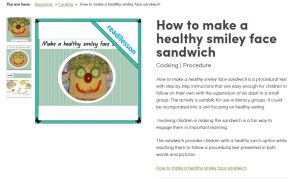
    I always organised for the healthy smiley face sandwich to be made in small groups.

    kebab 1
    © Norah Colvin

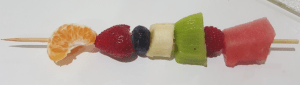
    Cutting up fruit and making fruit kebabs is suitable for small groups too. Children can be asked to bring in a serve of fruit to contribute to the choices. We used to have a daily mid-morning fruit snack so it did not require any extra effort on the part of parents, just scheduling on my part.

    © Norah Colvin
    © Norah Colvin

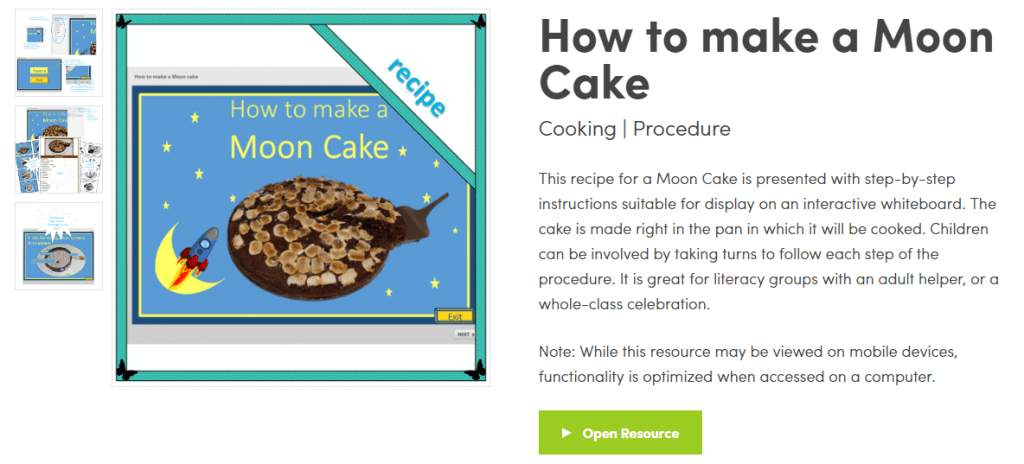
    One of my favourite cakes to cook with children is a moon cake. It is both fun to make and delicious to eat, and provides many opportunities for discussion. It is just as suitable for making in the classroom as it is for home. I have prepared a guided recipe which will be available on my readilearn website.

    © Norah Colvin
    © Norah Colvin

    I recently made the recipe with my grandchildren. They were eager to help and took turns to add and mix the ingredients. There are sufficient things to do to give everyone in a small group an opportunity of being involved. However, it is also suitable to do with the whole class observing while individual children do different tasks.

    tasks to do

    Making the cake provides great opportunities for observing, turn taking, vocabulary development, curiosity, and development of science knowledge. All of these contribute to life skills and experiences. And then there’s the treat at the end!

    © Norah Colvin
    © Norah Colvin

    Although involving children in tasks like cooking and cleaning at home or at school involves extra organisation and time, it is well worth it for the long-term, as well as immediate, benefits.

    Do you have any recollections of helping with tasks at home or at school? How did you feel about it? How has it influenced your current attitudes?

    Thank you

    Thank you for reading. I appreciate your feedback. Please share your thoughts.


  • Lending a helping hand

    johnny_automatic_playing_dress_up

    If I was to ask a group of six year olds what a friend is, I would receive responses such as:

    • A friend is someone who plays with you
    • A friend is someone who likes you
    • A friend is someone who helps you
    • A friend is someone who looks after you when you’re hurt

    For just over two years now a group of writers have formed a bond of friendship by playing together each week, responding to a flash fiction prompt set by Charli Mills at the Carrot Ranch. You couldn’t get a more supportive group of writers. In fact, a while ago I coined the term S.M.A.G. (Society of Mutual Admiration and Gratitude) to express the relationship many of us feel.

    SMAG ccbyncnd

    This week Lisa Reiter, who blogs at Sharing the Story, showed that the ability to lend a hand is not restricted to friends who live close by. Although they live at opposite sides of the Atlantic and half the world away from each other; and despite the fact that no request for help had been made, like the true friend that she is, Lisa saw a need and immediately assisted Charli by writing this week’s flash fiction prompt and post. You won’t be surprised to know that the theme is helping out.

    https://openclipart.org/detail/117199/Friendship
    https://openclipart.org/detail/117199/Friendship

    This ties in beautifully with a TED talk I listened to this week. The talk by Australian humanitarian Hugh Evans is titled What does it mean to be a citizen of the world?  Hugh talks about the organisation he co-founded: Global Citizen; which is described on the website in this way:

    Global Citizen is a community of people like you. People who want to learn about and take action on the world’s biggest challenges—and use their power to get other people involved too.

    We bring you stories and actions that make a difference. That help fight extreme poverty and inequality around the world, and support approaches that will make life more sustainable for people and the planet.”

    EarthsOtherSide

    These are some of the points I have brought away from Hugh’s talk:

    • A global citizen is “someone who self-identifies first and foremost not as a member of a state, a tribe or a nation, but as a member of the human race, and someone who is prepared to act on that belief, to tackle our world’s greatest challenges.”
    • Hugh describes himself as “one of those seriously irritating little kids that never, ever stopped asking, “Why?” He went from asking questions like, “Why can’t I dress up and play with puppets all day?” to why couldn’t he change the world?
    • He had already been raising large amounts of money for communities in the developing world when, at age fourteen, he spent a night in a slum in Manila and thought, “Why should anyone have to live like this when I have so much?
    • “that of the total population who even care about global issues, only 18 percent have done anything about it. It’s not that people don’t want to act. It’s often that they don’t know how to take action, or that they believe that their actions will have no effect.”
    • Hugh initiated the Global Citizen Festival in New York’s Central Park. Tickets for the festival couldn’t be bought, They had to be earned by taking action for a global cause. He said, “Activism is the currency”.
    • By becoming a global citizen one person can achieve a lot because they are not alone – there are now hundreds of thousands of global citizens in more than 150 countries

    “We, as global citizens, now have a unique opportunity to accelerate large-scale positive change around the world. “

    “Global citizens who stand together, who ask the question “Why?,” who reject the naysayers, and embrace the amazing possibilities of the world we share.”

    He finishes his talk with the challenge:

    “I’m a global citizen. Are you?”

    Hugh’s contribution to the world is a great recommendation for encouraging children to ask questions, isn’t it?


    Here is his talk if you would like to be inspired by his own words. You may find other points that speak more clearly to you.

    This brings me back to Lisa’s helping hand which, while not on the same scale, clearly demonstrates the opportunities that exist to help if we take the focus from ourselves and place it on others in an attempt to understand their situations and how we might be able to assist.

    Lisa’s prompt is to In 99 words (no more, no less) write about offering to help someone. What’s their situation? What’s yours? Do they think they need help? How is it received? Could you be misinterpreted?

    child helping

    For my flash, I’m bringing you back even closer to home, to a situation with young children that will be familiar to many. Little ones love to help and hate to be helped in almost equal measure. “Let me do it!” and “I can do it myself!” are two frequently heard phrases in households with little ones. Opportunities for both are essential for their developing sense of self, independence and confidence. Both require a great deal of patience on the part of parents and a larger allocation of time than one would normally feel necessary. I think I must have been in a rush and didn’t have time to wait in the queue when patience was being dished out. Fortunately, my children shared some of theirs with me. Sadly, not always soon enough for their benefit. (Sorry, Kids.)

    A playdate at Bella’s

    Mummy checked the calendar. Oops! Her turn for cake. Dulcie was engrossed playing. Great! Just enough time, if ….

    Scarcely was everything out when up popped Dulcie. “Let me do it!”

    Too pressed for winnerless battles, Mum kept one eye watching Dulcie, the other on the clock.

    With the cake finally baking, Mummy suggested clothes to wear.

    “No! I want this one,” pouted Dulcie.

     “Let me help with the buttons.”

    “No! I can!” objected Dulcie.

    Only thirty minutes late, with warm cake and buttons all askew, they arrived.

    “Come in,” greeted Bella’s mum, “Looks like you need a hand.”

    Thank you

    Thank you for reading. I appreciate your feedback. Please share your thoughts.
  • Who teaches whom?

    GDJ, Playful stick figures https://openclipart.org/detail/230070/playful-stick-figure-kids
    GDJ, Playful stick figures https://openclipart.org/detail/230070/playful-stick-figure-kids

    The importance of play to a young child’s development and learning is a recurrent theme on my blog. Equally so is the recognition of parents as their child’s first and most important teachers. Alongside this is my acknowledgement of the contribution made by my children to my own learning, especially to my understanding of how children learn.

    Although I was often reminded that I had declared, “I’ll teach him,” when a younger brother was born, I had never given a great deal of thought to the teacher-role of siblings. How much that had to do with the reminders of my promise only coming when “naughty” things were occurring, I’m not sure.

    Whatever the reason for my lack of consideration, I was quite delighted when I came across the post Siblings are a young child’s most influential teacher by Deborah Stewart on Teach Preschool. In this lovely post Deborah provides a wonderful list of lessons learned from siblings, and supports it with beautiful photographic evidence of her three gorgeous grandchildren.

    Included in her list are things like learning to:

    • be imaginative
    • trust
    • be brave
    • try new things
    • be kind
    • laugh, and
    • love.

    I have a large number of siblings from whom I’m sure I learned many things. As my younger brother could testify, probably not all of them were good. Deborah’s post challenged me to think about what those lessons might have been.

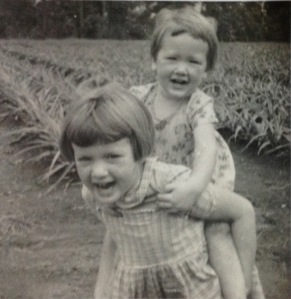
    My big sister and me © Norah Colvin
    My big sister and me © Norah Colvin


    Here are some of the (better) ones I thought of, that weren’t on Deborah’s list:

    • to share, to take turns, and to wait (unless there’s only a few more cookies or lollies on the plate, then you’d better get in quickly before someone else does!)

    marshmallow 5

    • that you can’t always be first or win, and
    • that the world doesn’t revolve around you
    • to make our own fun by creating our own games
    • to get along with children of all ages
    • to play without the constant participation or supervision of adults
    • to look out for and look after each other
    • to plan together
    • to forgive and get on with it
    • that a combined effort was more likely to get us an ice cream from the ice cream van than a succession of individual appeals.
    www.morguefile.com
    http://www.morguefile.com

    Some of these lessons weren’t easy, and some are still in progress, but important life lessons nevertheless.

    What about you? Do you have siblings, or are you an only child? If you have siblings, what have you learned from them?

    Thank you

    Thank you for reading. I appreciate your feedback. Please share your thoughts.


  • On children and parents – more from the Contented Crafter

    In a previous guest post Pauline King, The Contented Crafter shared her Reflections on living a contented life, teaching and school. The richness of the discussion that ensued, including additional clarifying comments from Pauline, made for interesting reading. One thing I have found consistent throughout life is that everyone has an opinion about education and schools. However, there is great diversity in the opinions held. I love to hear them all for the opportunity they provide for clarifying my own thinking.

    In this second guest post Pauline shares some of her wisdom about children and parenting. Pauline and I share much of the same philosophy and background knowledge and are aware that some statements may require clarification out of that shared context. We therefore welcome your responses and look forward to the discussion that these thoughts may instigate.

    What do you think is the most important thing for parents to understand about their children? What advice would you love to give every new parent?

    I seriously think every parent should read and study Khalil Gibran’s chapter about Children in his poem ‘The Prophet’.  Children are not just short adults; they are not there to fulfil a parents dreams [though they may]. 

    Kahlil Gibran Children(Note: This is just a short extract of Gibran’s words about children. You can read them in full here)
    Children need to be allowed to enjoy their childhood, let them play, let them dream, let them imagine.  Very little ones learn through imitation and play so be careful what you model for them. 

    1 (8)

    Send them into formal learning when they reach their seventh year.  But let that learning proceed through imagination, through practical practise and first-hand experience.  Let the education content grow and deepen as the child matures.  Don’t just stuff stuff into their heads because you think it’s a good idea or something awful has happened in the world. 

    1 (2)

    Don’t discuss adult issues with young children.  Keep them safe and secure while their bodies and brains mature.  Give them time to grow up. 

    Parents study your child and all other children.  Raising children is not a competition.  It is not a case of keeping your child safe and clean and out of your way while you are busy.  Think more of ‘The Waltons’ and let each child have a task to perform to help the family.  Teach them all how to help prepare meals, set tables, make beds and other chores that need to be done. 

    105

    Start to think less about how clever [or not] your child is, but what talents and attributes your child is exhibiting.  Don’t stream, let them all do everything and let everyone have something they are good at and see there is something that someone else is better at – because that is the way of the world and we all have contribution to make and our lessons to learn.  Understand that just as your child is special, all children are special. Understanding this is the first step in making a wholesome community.

    Don’t be fearful of your child hurting themselves.  As a wise man recently said ‘the purpose of our lives is not to arrive safely at our death!’ 

    147

    My personal opinion is that the increase in a society that reveres ‘health and safety’ has been responsible for the rise of lost teenagers, those aimless, disinterested kids who suffer from low self-esteem, drinking and drug taking and mindless vandalism.  Take your older kids camping, hiking, abseiling.  Do it with them and have lots of fun.  Give them physical challenges and the ability and skills to succeed in them.  It really is true that the family who plays together, stays together.

    3

    But mostly love and respect your child.  Keep them safe when they are small and slowly teach and release them as they grow older.  Feed them good food, positivity and encouragement and watch them blossom into the people they were born to be.

    Give them time and lots of your time.  They don’t need stuff and they don’t need to keep up with the Joneses.  They just need you.

    In responding to a previous post you said that you could write a post-length comment about the wisdom of children. Could you share a few ideas about that here. We might come back to that longer post in the future, if you are willing.

    Observe your children, listen to them, know they are their own little being and as such bring their own personality and gifts into the world.  Watch how they approach life and activities and you will see they have come with a wisdom about themselves and their purpose that we, the adults, may not be privy to.  This is the wisdom of childhood and we, as parents and teachers, are really beholden to respect this and not try to ‘change’ the child to suit us, society or anything else. 

    Most teachers know that most children reach similar developmental points at around the same time.  There is a great wisdom in this and when we become aware of it, it can help us understand what they are ready for in terms of learning, activities and life in general. 

    1 (3)

    All of this Norah, is part and parcel of the training of a Steiner Teacher – understanding child development is the open secret that drives the curriculum. 

    Wow! Thank you, Pauline, for sharing your wisdom. Kahlil Gibran’s The Prophet is one of my favourite books and his passage about children is never far from my mind. Your words in this post reflect very much the words and intent of his. You have given us much to think upon, and I appreciate it, as I’m sure the readers do too.

    Connect with Pauline on Twitter or on her blog The Contented Crafter where you can also check out her delightful Gift Shop

     Thank you

    Thank you for reading. I appreciate your feedback. Please share your thoughts.