At about this time of year people all around the world are finding something to celebrate. According to reindeerland.org about one third to one half of the world’s population celebrate Christmas, whether they are Christians or not. I am not sure about the authenticity of their “facts” but other sites also suggest that arriving at the number of people who celebrate Christmas is problematic.
Christmas is the holiday that I celebrate with my family and friends. I was surprised to find, by reading a guest post, written by Gordon Le Pard on Geoff Le Pard’s blog TanGental, that many of the traditions celebrated at Christmas time are more recent in origin than I would have thought. It is not surprising, though, that the way Christmas is celebrated differs from country to country, and even from household to household, around the world. Sherri Matthewswrote a beautiful post about a Christmas tree festival hosted by a church in Dorset, England. I haven’t seen anything quite like this.
In a previous post I’m (not) dreaming of a white Christmas I talked about some of my family’s Australian ways of celebrating. Sadly most “Australian” resources are simply innovations on, or adjustments to, the European traditions. There are not enough that recognise the summer celebration and “traditions” unique to Australia. I guess our small population keeps us in the minority so it is not economically worthwhile to create alternative resources.
So from my hot sunny days in Australia I wish you and your loved ones happy and safe times, whatever your celebration.
Thank you for reading. I appreciate your feedback. Please share your thoughts about any aspect of this post.
Usually I include my responses to Charli’s prompts in longer posts sharing some thoughts about education.
This week I’m going to leave it as a stand-alone, without the padding I usually provide. I am hopeful that the educational issues I have alluded to will be as obvious to you as they are to me. I’d love to know what you think.
Thanks for reading. I appreciate your feedback. Please share your thoughts about this flash and what you consider its message to be.
But it is summertime in Australia and Christmas is just around the corner.
While we enjoy warm days at the beach and in the pool, picnics in the park and barbecues in the back yard, hoping the big storm doesn’t get us this time (like the one that hit Brisbane on 27 November); those from whom we have inherited our Christmas traditions are cooling down in the Northern Hemisphere, many looking forward to a (not too) white Christmas.
Shops here are playing traditional (northern) carols with snow, sleighbells and mistletoe; decorations are tinged with fake snow and cards show snowy scenes with families huddled around the fireplace.
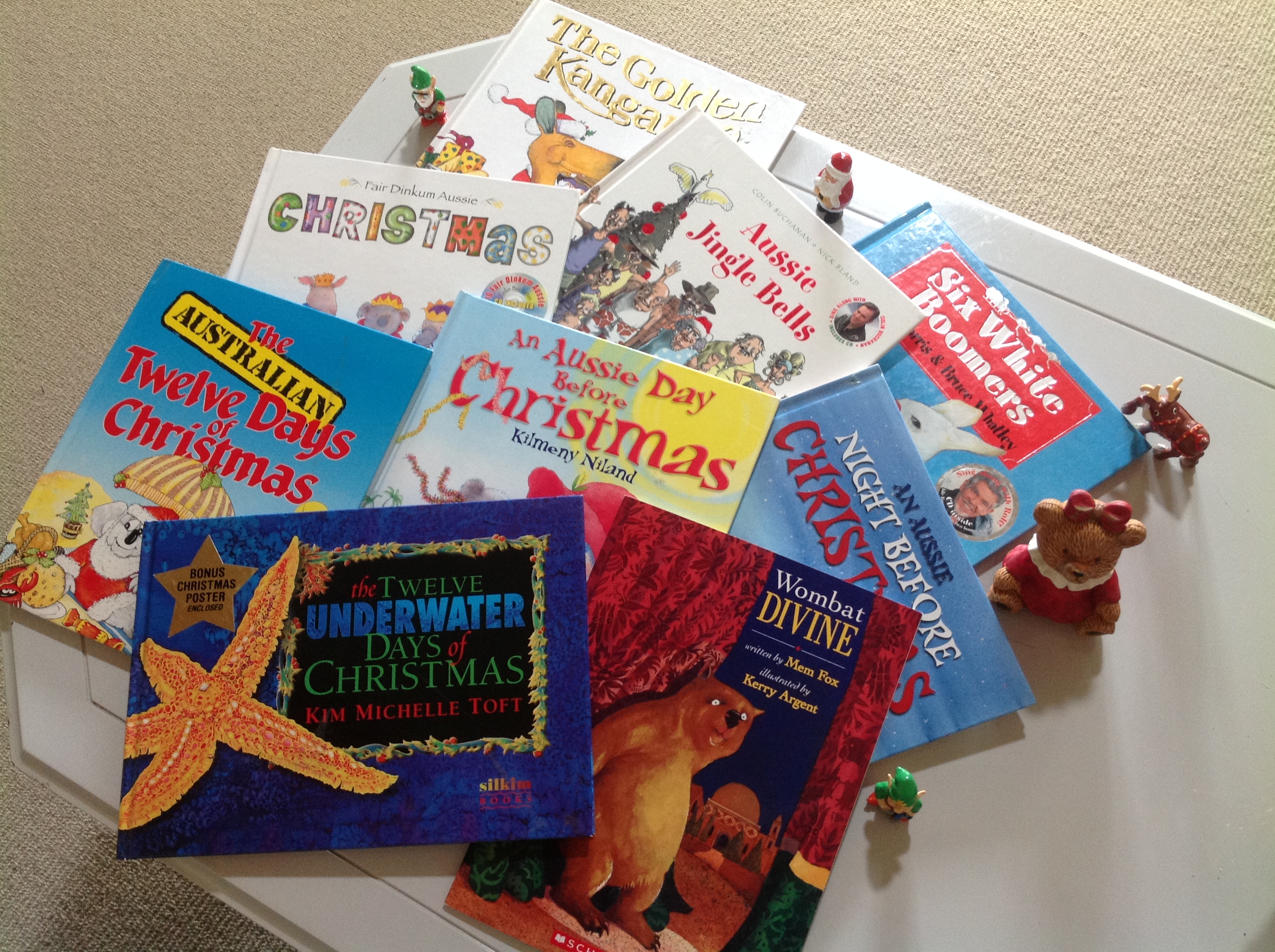
While there is an increasing number of songs and books with an Australian flavour many are merely innovations on the traditional such, as “The Australian Twelve Days of Christmas”, “Aussie Jingle Bells” or “An Aussie Night before Christmas”.
Some Australian Christmas picture books
One innovation that I particularly like is “The Twelve Underwater Days of Christmas” by Kim Michelle Toft. Kim is an Australian who uses her talents as author and illustrator to educate children about the things she feels passionate about: ocean life and coastal habitats. Her illustrations, hand-painted on silk, are absolutely stunning.
In addition to the visual beauty of the book there is great value in the supporting information through which Kim explains the importance of conserving each of the creatures included in the book. While written by an Australian, the application of the book is not limited to our shores. Creatures from all over the world adorn the pages. If you ever wished to own a book simply for the beauty of its illustrations, this is a great choice.
One original song I enjoyed listening to on the radio as a child is “Six White Boomers”. Despite the reasons that make me reluctant to mention it this year, it is a delightful tale of a joey who rides on Santa’s sleigh, pulled by six huge white kangaroos, to be reunited with his mother on Christmas Day.
Peter Combe has written two albums of original, but with a traditional rather than specifically Australian flavour, Christmas songs for children, including this one:
Some Christmas traditions popular with Australian communities are Nativity plays, carols by candlelight and Christmas parades. Many classes and schools perform their own end-of-year “break-up” concerts to which parents and the wider community are invited.
Using the traditional Nativity play as the setting, Mem Fox created an original and fresh story in “Wombat Divine”. It is a delightful tale of Wombat who loved everything Christmas. When finally he was old enough to be in the Nativity Play he rushed along to the auditions. Unfortunately it was difficult to find a part that was just right for Wombat. Can you guess which part he got? You’ll have to read the book to find out! Children all over the world will identify with Wombat and his predicament and enjoy the heart-warming tale.
Books are wonderful gifts to give or receive at any time. The titles I have mentioned here are perfect for giving, reading and sharing at this time of year. When I was growing up there was always a book for Christmas and birthdays, a tradition that I have continued with my extended family and friends. You can almost, but not always, guarantee that if it is a gift from Norah, it is a book.
After my siblings and I had grown up and swelled the family numbers with partners and children of our own, my Mum used to say, “There’ll be no presents this year.” It wasn’t that she wasn’t a giving person, for she was. It was just that there were so many of us! When she passed away this year she had about fifteen grandchildren and eight grandchildren, in addition to her remaining nine children and their partners. (I’m saying ‘about’ for grandchildren and great-grandchildren in case I’ve missed some in the count!) You can imagine how daunting a task it would be to go shopping for all these people ranging in age from six months to sixty! However it was always surprising how frequently she did not follow her own rules and had a small something wrapped up to present to many of us.
This year there will be no presents from Mum, and more sadly, we will be without her presence.
Although I have borrowed my Mum’s words, “No presents” for both flash fiction pieces included in this post, the stories do not cast aspersions on her generosity. I have simply explored how the oddness of no presents or presence at Christmas time may have impacted Marnie, a character I have been developing in my flash fiction pieces, at different times in her life. At this stage of my writing I am still investigating her character, discovering a little more with each flash piece as her once indistinct figure begins to step out of the shadows and take shape.
This first piece is written about a difficult time for teenager Marnie and a situation that may be the catalyst for her leaving home.
No presents
Marnie jerked backwards avoiding the predictable grope. In so doing she collided with her mother, sending her sprawling onto the tattered sofa.
“Aargh!” her mother screamed. “Look what you’ve done!”
Marnie watched the liquid from the upturned glass merge with the patchwork of stains collected in the carpet. If it was her blood it would not have mattered more.
“I … I’m sorry,” she stammered. But her sorry was for all the years it had been like this.
He smirked, raising his hand to strike, “No presents for you this year!”
“That’s right!” She ducked. “No presence!”
So as to not be too dismal at this time of year, I have written a second piece about a younger Marnie for whom there still seems a glimmer of hope.
No presence
With faces as bright as their Christmas wear, the children bubbled into the room, each carrying gifts for the Kindness tree, “for those less fortunate”.
Parents fussed, removing smudges and replacing wayward hair before blowing kisses and hurrying off for the parade.
And there was Marnie: no parent, no Christmas dress, no gift, no smoothed-down hair; no smile.
One last chance.
“Marnie!” I beckoned, and held out my Christmas cape and crown. “Will you be my special helper?”
Our eyes locked communicating more than any words. Her smile was my reward.
“I’m proud of you,” I whispered.
Thank you for reading. I appreciate your feedback. Please share your thoughts about any aspect of this post or flash fiction pieces.
The end of the school year in Australia has approached swiftly and silently this year, for me at least. You see, now that I am not in the classroom I am not absorbed by all the things that the end of the school year brings.
In Australia the school year coincides with the calendar year so November and early December are frantic for teachers completing the final assessment and reporting for the year, preparing their students (and themselves) for separation after spending so much of the year together, and making preparations to welcome a new class in the new year.
The classroom remains busy with learning and curriculum matters until the last day. Both teachers and students begin to tire and the warming (hot, in most parts of Australia) days in classrooms without air-conditioning add to the fraying edges of all as they anticipate the long summer holidays.
One thing I always enjoyed about the end of the year, that made all the extra work and the increasing heat tolerable, was the learning about family traditions and celebrations, including Christmas.
Some Australian Christmas picture books
Last year I wrote about some of the Christmas activities I did with my class, such as making friendship trees
I shared some suggestions for parents to support their children’s reading, writing and maths development in fun ways during the holidays. (These and other items are available in my TeachersPayTeachers store.)
I also provoked a lively discussion about whether Christmas should be included in a school program by suggesting tens reasons for its inclusion. Many readers joined in explaining their position either in support or against.
I always enjoyed this special time of year. I loved hunting through discount stores for items with which children could make cards and gifts for their families and decorations for their home. Often we talked about “free” gifts they could give and made vouchers for things like a free car wash, breakfast in bed or unlimited smiles and hugs.
As well as the gifts they made for each other in class, such as the friendship trees and Christmas crackers, I always gave each child a small gift, usually a book to read, a pencil and notebook for writing in; something to do over the holidays.
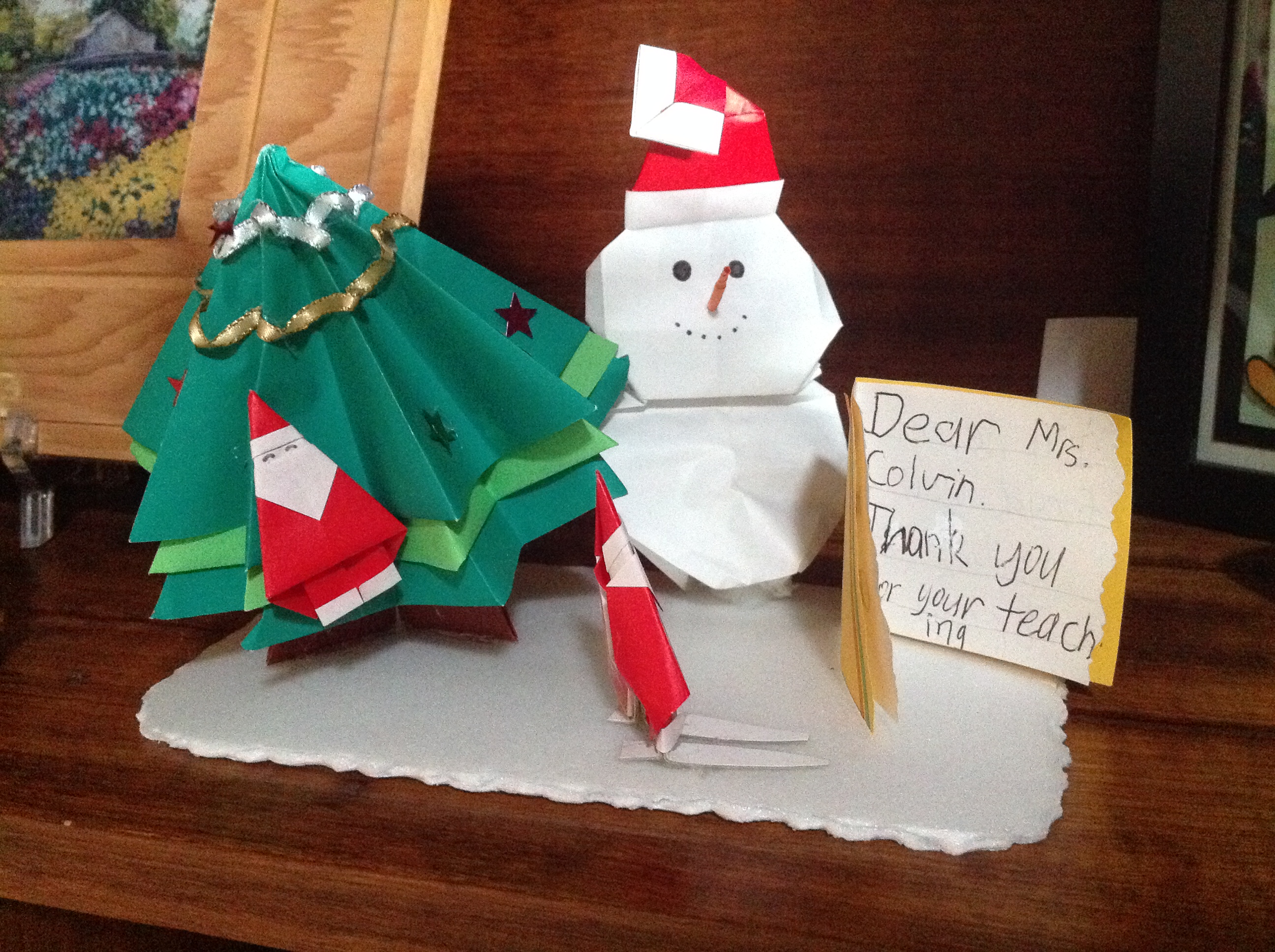
While it was never expected, but always very much appreciated, many of the parents and children presented me with lovely ‘thank you’ cards, letters and gifts, some purchased, many home-made; all treasured. While the consumables were long ago enjoyed, many other items still adorn my shelves!
A selection of gifts from over the years
Sometimes it was difficult to know what to give as a gift to recognise a special teacher. This year Bec has come up with, what I think, is the perfect gift, though she didn’t design it for that purpose. It’s the apple cozy: a special little bag for carrying an apple safely, protecting it from bumps and bruises. They are available in her Made It and Etsy stores. An apple for the teacher in its own special bag: how cute!
Apple Cozy // Joyce
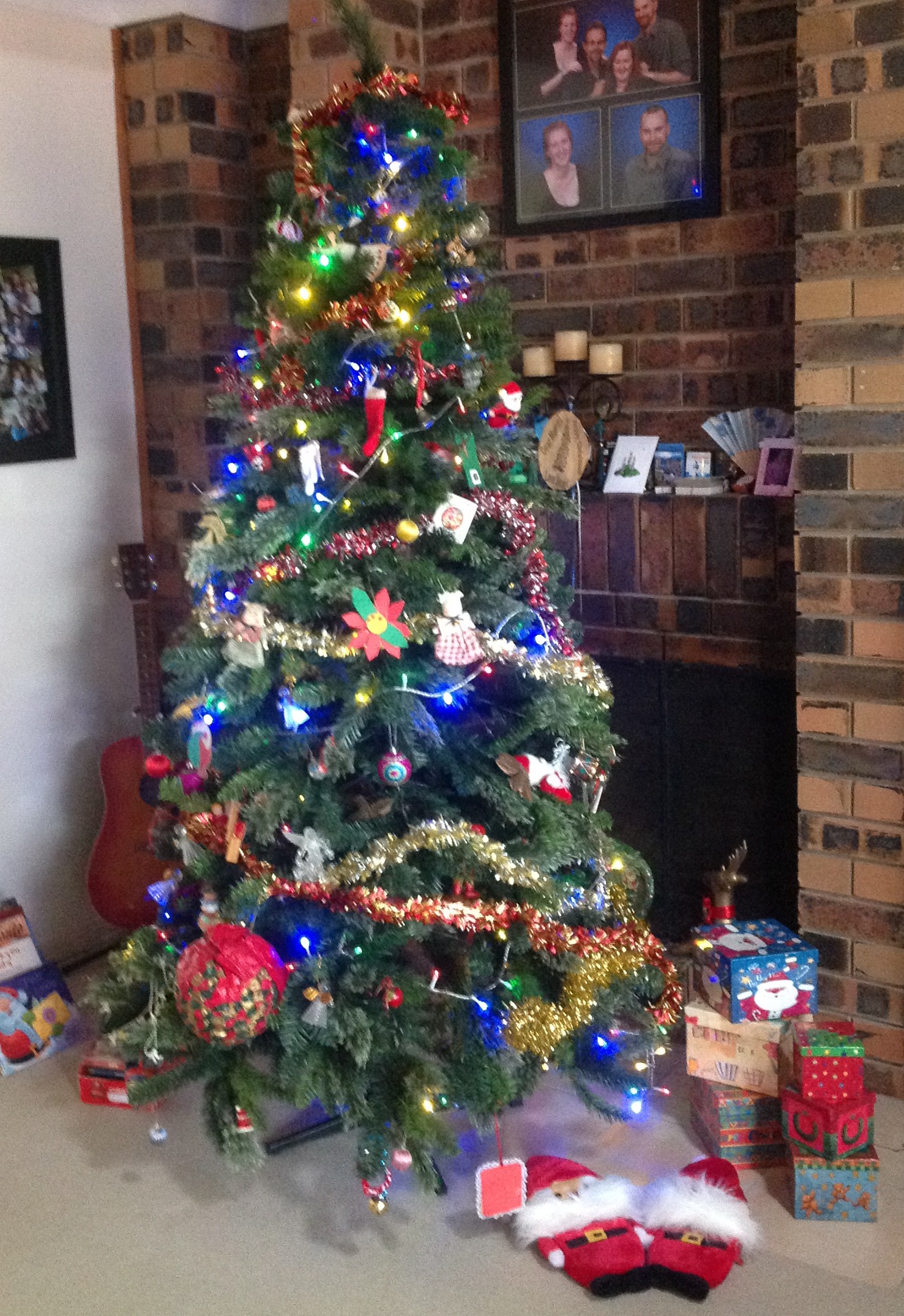
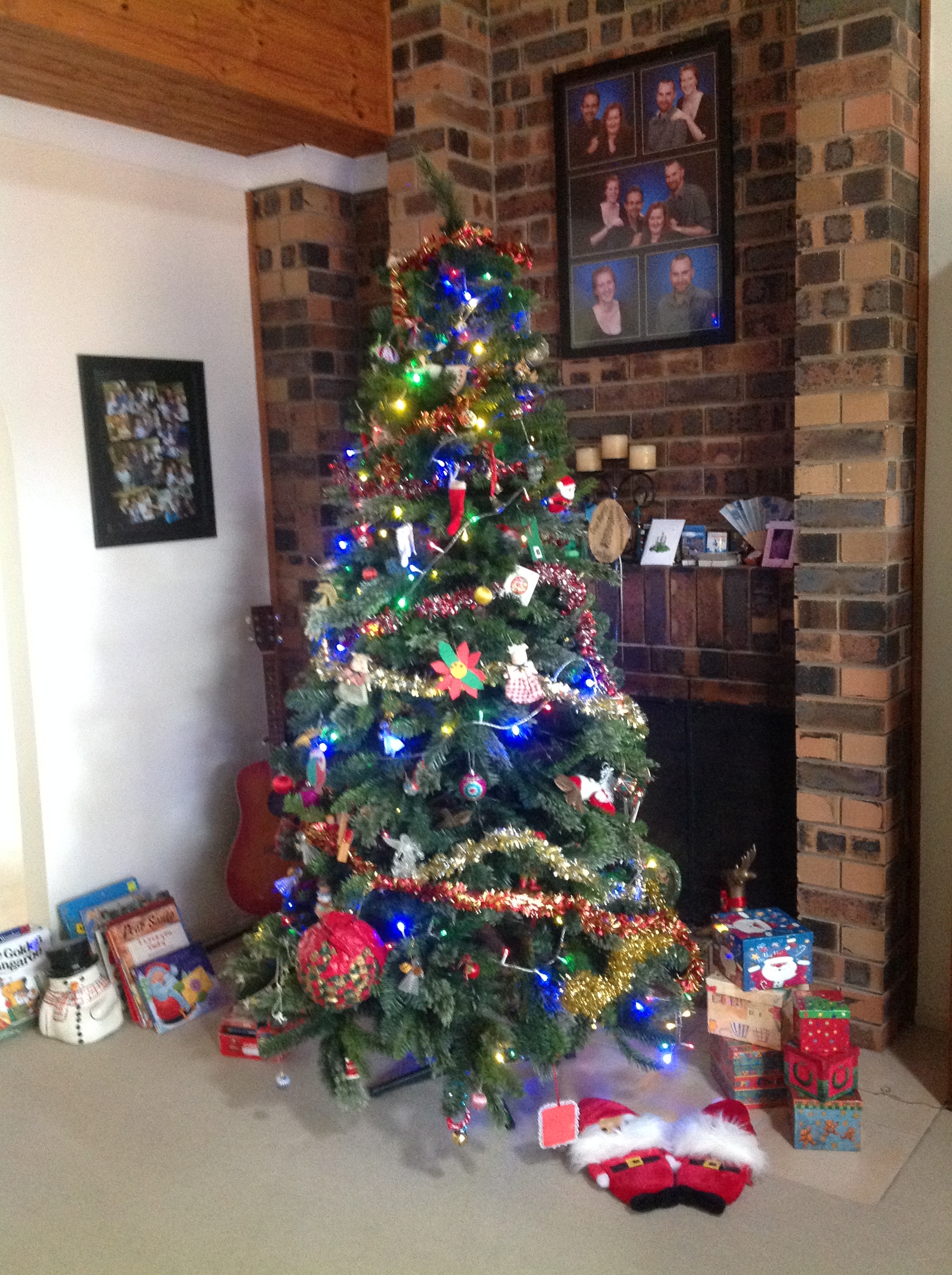
Although there are no preparations for Christmas at work this year (except for Secret Santa) there is still much to do at home. The traditional time for putting up the tree and decorations is December 1, and I usually have mine up by the end of the first week in December. Now that both my children are grown and living in homes of their own, I thought I would have the lonely experience of decorating on my own this year (Hub says he helps by not helping, but actually he gets tree and decorations down from the roof space for me!)
What a delightful surprise it was to have both my children and grandchildren (all two of each) visit on the day I was putting up the tree and help me out. The joy that the excitement of a 3- and a 5-year old bring to such activities cannot be matched. I think we did a pretty good job! When I look at it I relive the fun we had together.
Christmas 2014
Although to most it would appear simply a Christmas tree, and some may consider many decorations to be ready for the discard pile, most decorations have a story to tell. For me it is a memorytree. It holds decorations made by my own children over the years, and now some by my grandchildren. There are gifts from family and friends, and children I have taught. Each item, as it is placed on the tree, provides a time for reflecting upon the wonderful people whose lives have touched mine over the years. Each has its own story to tell of the joy that others’ kindnesses can bring. But it is more even that just a memory tree. It is a givingtree; a time for remembering and being grateful.
What are you family traditions? What and how do you celebrate?
Thank you for reading. I appreciate your feedback. Please share your thoughts about any aspect of this post.
A big thank you to all who have walked with me all, or any part, of the way as I took my first tentative steps into the world of blogging (and tweeting) earlier this year.
I appreciate every contribution, from visits and suggestions, to liking, commenting and re-blogging.
I have learned more than I probably even realise, from many different people, and the encouragement from all interactions has helped me find my voice and the strength to maintain the journey.
This post offers a break from my usual educational fare by providing a little Christmas jollity. I hope you enjoy it.
Wishing you and your loved ones much joy during this holiday season.
The school year in Australia is over and the long summer holidays have begun.
Parents often wonder how they will keep their children entertained during the long days with few structured or timetabled activities.
When returning to school after many weeks without the formal practice of skills taught during the previous year, teachers often lament that children’s reading fluency and level has fallen.
Here are 20 suggestions for keeping your children entertained while maintaining their reading skills.
I’m sure you can think of many more!
Please keep in mind, as you read the list, that the amount of support given, or independence allowed, in each activity will need to be adjusted to the individual child’s age and reading ability. Even young children who are not yet reading independently can be included in most activities.
Read to and with your child every day – continue the practice established throughout the year with special sharing times during the day or at bed-time — or both!
Demonstrate that you value reading by making time for your own reading, or setting aside a special quiet time when everyone in the family reads.
Visit the library and borrow to read, read, read!
Read poetry books, song books, picture books, joke and riddle books, crossword books, information books, chapter books (these can be read to younger children, or with older children – taking turns to read a page or a chapter each) — what are your favourites?
Trade books no longer read for others at a second-hand book store.
When dining out, have your children read the menu and choose their own meal.
Include your child in holiday cooking and have them read the recipe – ingredients and method. Perhaps they could read the recipe book to select the meal for the day.
Suggest your child read the TV guide to find when favourite programs are showing and establish a timetable for viewing, rather than haphazard watching with random flicking through channels.
Provide your child with bookstore catalogues and encourage them to read book descriptions to guide their next selection.
Bestow upon your child the title of ‘Family weather watcher’ and have them consult weather forecasts in the newspaper or online to select the most suitable days for planned outings and activities.
Include your child in making decisions about holiday activities. Give them the guide, or read the guide together and jointly choose the activities.
Make the library, museums and art galleries high on the list of must-dos. Many of these offer a wonderful assortment of free holiday entertainment for children, and reading is an essential part of getting the most from each visit!
Engage your child in some craft activities which require them to follow written instructions. The ability to understand and follow procedures is empowering and requires the ability to read written, as well as visual, instructions.
Encourage your child to ask questions about every day events and phenomena. Help them to research in books at home, in the library or on the internet.
Provide eBooks as well as books in print. Good ones bring a new dimension to the reading experience.
When going out for the day, or journeying further away on a holiday, support your child in locating destinations on a map and in selecting an appropriate route. Engage your child in giving directions while en route.
Include your child when reading bus or train timetables.
When doing the family grocery shop, give your child their own list of items to look for.
Listen to recorded books on long car journeys, or have books for listening to or reading along with in bed.
Make the most of every reading opportunity that occurs throughout the day!
What are your favourite ways of incorporating reading into everyday activities?
When I was a child, I loved receiving books as gifts. I still do! Books are among my most treasured possessions.
I remember the delight when, on awaking in the dark of an early Christmas morning, I would reach down to end of my bed and discover a book there. I couldn’t see it, but I could feel the smooth glossy cover and the familiar roughness of the pages. I would lift the book up and breathe in the rich, delicious smell which promised so much pleasure I almost wanted to devour it. I knew that something delightful was in-store for me, and as the dawn’s soft glow began light the room, I watched the colours, pictures and words slowly take form and reveal themselves to me. What joy!
I am forever grateful to my parents for encouraging my love of reading.
The love of reading is one of the greatest gifts a parent can give a child.
So, here is #21, it probably should have been #1!
21. Give books as gifts!
Read! Read! Read!
You are welcome to download and distribute the 21 suggestions FREE from my TEACHERSpayTEACHERS store.
You can read another post on this topic by Nanny SHECANDO by clicking here.
The end of the school year in Australia is fast approaching; assessment is almost done and reports completed.
After a hectic year, thoughts are turning towards Christmas and the long summer holidays.
However the teaching and learning in the classroom doesn’t stop until the final farewells on the last day of school.
These last few weeks of the school year allow a little more flexibility and time for spontaneous explorations of children’s interests after the curriculum’s imposed learnings have been achieved. Sure, skills still need to be practised and extended but the pressure is not so relentless.
As the thoughts of most children are on Christmas and what they will do during the holidays, why not harness those interests and that excitement to make classroom learning meaningful and fun while developing important social and cultural concepts and understandings as well as practising and extending literacy and numeracy skills.
Over recent years there has been some controversy over whether Christmas should be included in school programs, some arguing that it is not inclusive and excludes those students whose cultural backgrounds neither recognise nor celebrate Christmas.
I have a number of reasons to support my argument that Christmas should be learned about in school, and my reference is to secular rather than religious celebrations which are best left to organisations dedicated to that purpose.
I would like to say that the main reason is that I love Christmas (the excitement, the anticipation, the decorations, the gift-giving, the celebrations with family and friends)!
But that would not be true.
My focus is educational:
Cultural respect: Most children in Australian schools celebrate Christmas. Including Christmas in the classroom program acknowledges this and draws upon their interests and prior knowledge.
Cultural awareness: Investigation of traditions celebrated by other class members, community groups or countries develops a recognition of other perspectives, including those who do not celebrate Christmas and those who celebrate other traditions such as Hanukkah, Ramadan or Chinese New Year.
Cultural understanding: Learning about the traditions of the dominant culture in which one lives makes one more comfortable within that society, more able to converse about important events and holidays, and able to develop shared experiences i.e. helps to develop feelings of being included, rather than excluded by participating in the outward traditions. However, this knowledge does not necessitate participation or belief.
Cultural acceptance: Learning to understand that, although not everyone shares the same beliefs or traditions, we all share a common humanity and that there is good in everyone is important for creating a peaceful and nonjudgmental world.
Self-awareness: Christmas is a time for reflecting on the year’s achievements and behaviour e.g. whether you have been “naughty or nice” or whether you have worked hard are superficial questions which can lead to deeper introspection. This self-reflection can lead to celebration as well as to the setting of positive goals for improvement.
Other-awareness: Recognising one’s own strengths can help to identify, recognise and appreciate the strengths and achievements of others.
Emotional intelligence: Children learn to recognise and describe their own emotions, and the emotions of others. They understand that not everyone thinks and feels the same way about similar events and learn to respect the thoughts and feelings of others.
Social-awareness: Recognising how others think and feel about certain events can develop feelings of empathy. Children are more likely to find common ground upon which friendships can be built.
Being kind to each other: Christmas is all about sharing and giving. In a classroom these can lead to discussions about working cooperatively and collaboratively, getting along with each other, and giving the greatest gift of all: friendship.
Enjoyment, recognition and fun! I couldn’t stop at 9, and I think the inclusion of fun in the classroom is one of the most powerful ways to engage and motivate learners!
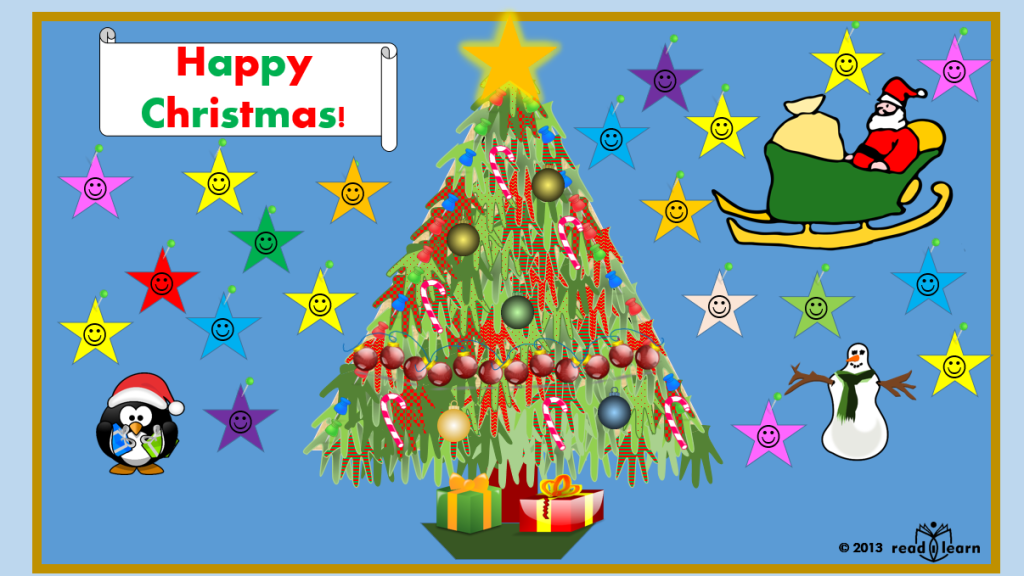
Decorating the classroom is one way of setting the scene for explorations of Christmas traditions while encouraging the children to work cooperatively, take pride in their shared achievements and talk about how Christmas is celebrated (or not) in their families.
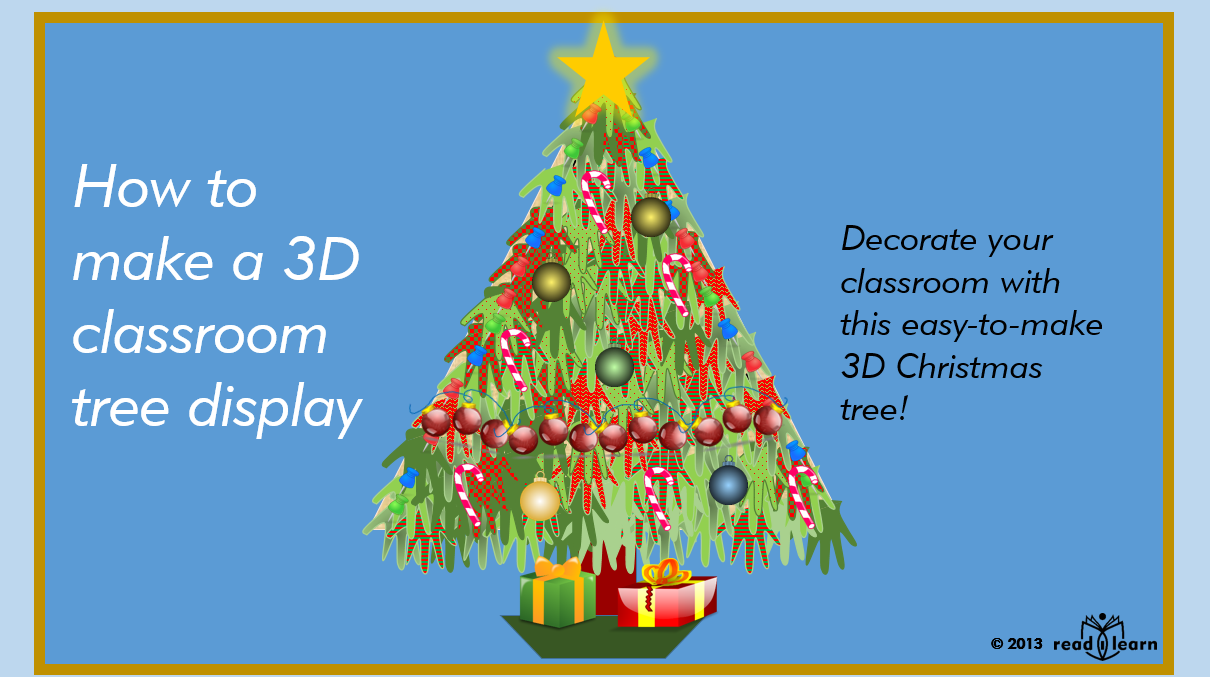
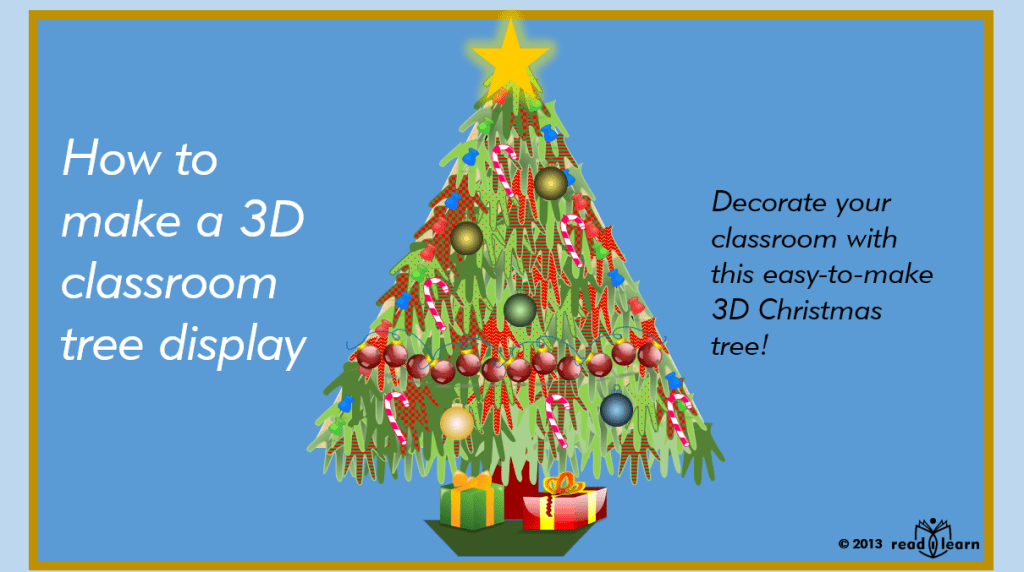
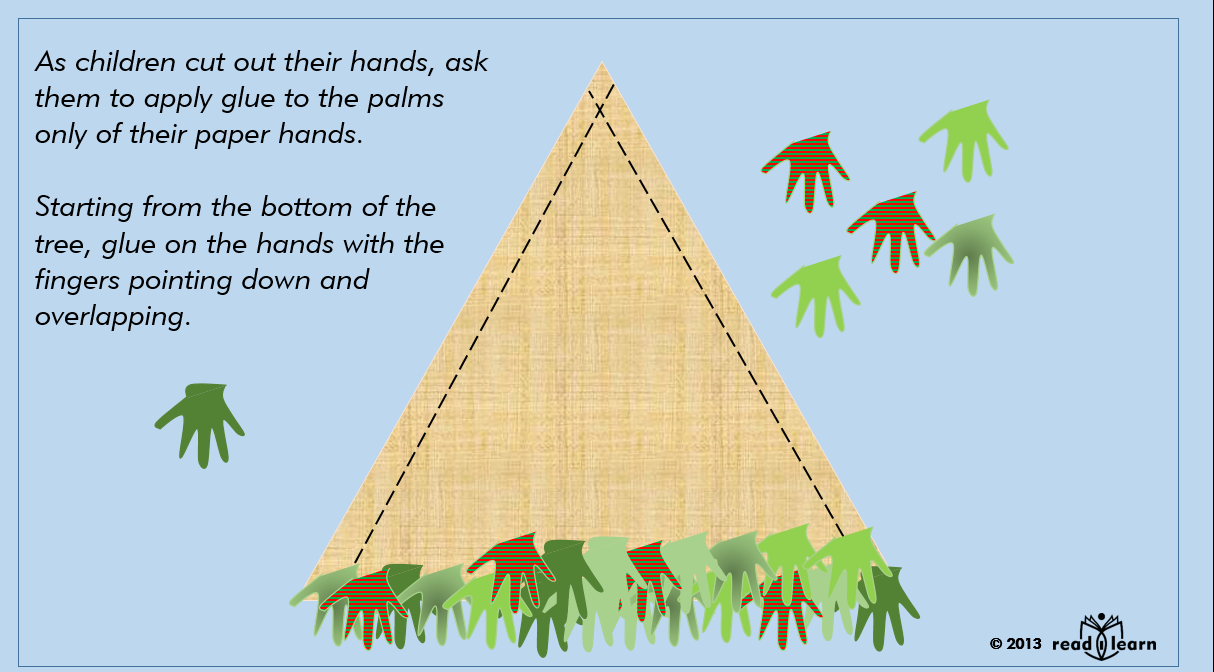
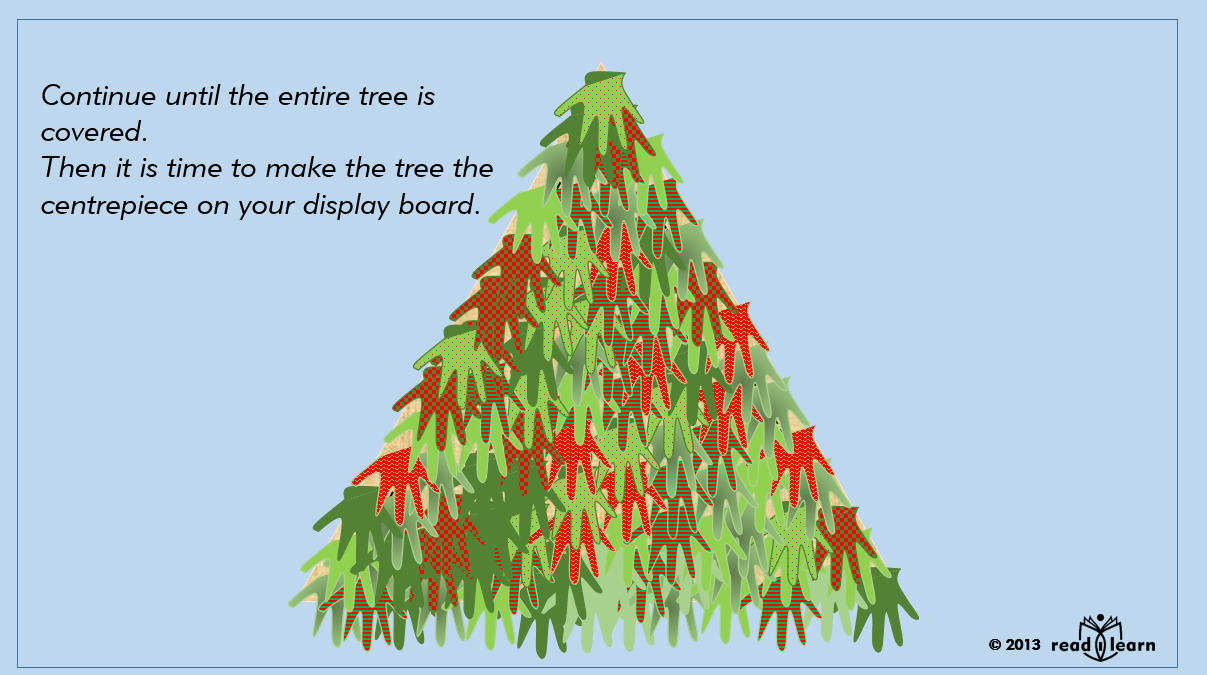
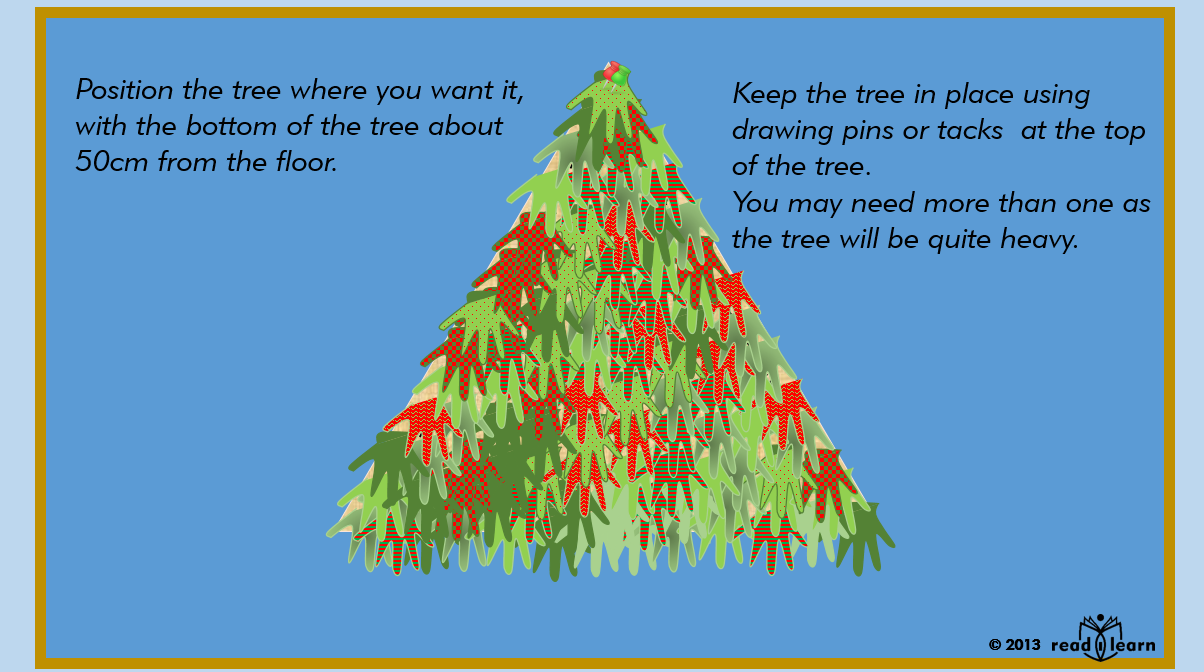
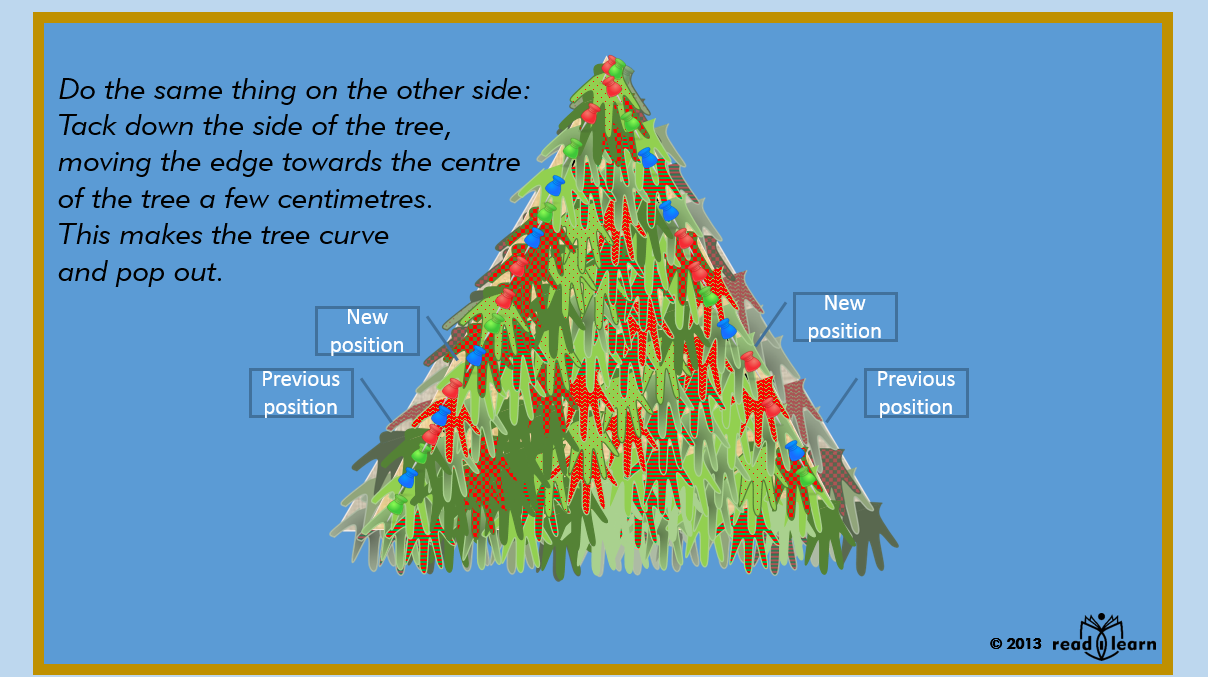
It became a tradition in my year one classroom to make a large 3D Christmas tree to adorn our classroom wall and become the focal point of our learning.
We would sit in front of it to have our discussions and read our stories.
To the display surrounding it, we would add child-made decorations, stories and poems they had written, holiday messages and gifts.
I would photograph each child in front of the tree, holding a sign with the message e.g. “Happy Christmas 2013”. These photographs would then be added to calendars which became a Christmas gift for parents.
The children loved doing the tree, partly because of the inherent excitement at the end of the school year with Christmas holidays imminent. But they also loved doing it because they were working together, making something meaningful to them; and as they worked together and saw the tree take shape, they realised that what can be achieved together is far more (as well as more fun) than they would have achieved on their own.
And while they were busily tracing and cutting, they were talking and sharing ideas and thoughts with each other and with me. We began to learn a lot about each other’s experiences, traditions and feelings.
Having made the tree together, the children had an enormous sense of collective pride in what they had achieved, especially when all those viewing it remarked upon how lovely it looked.
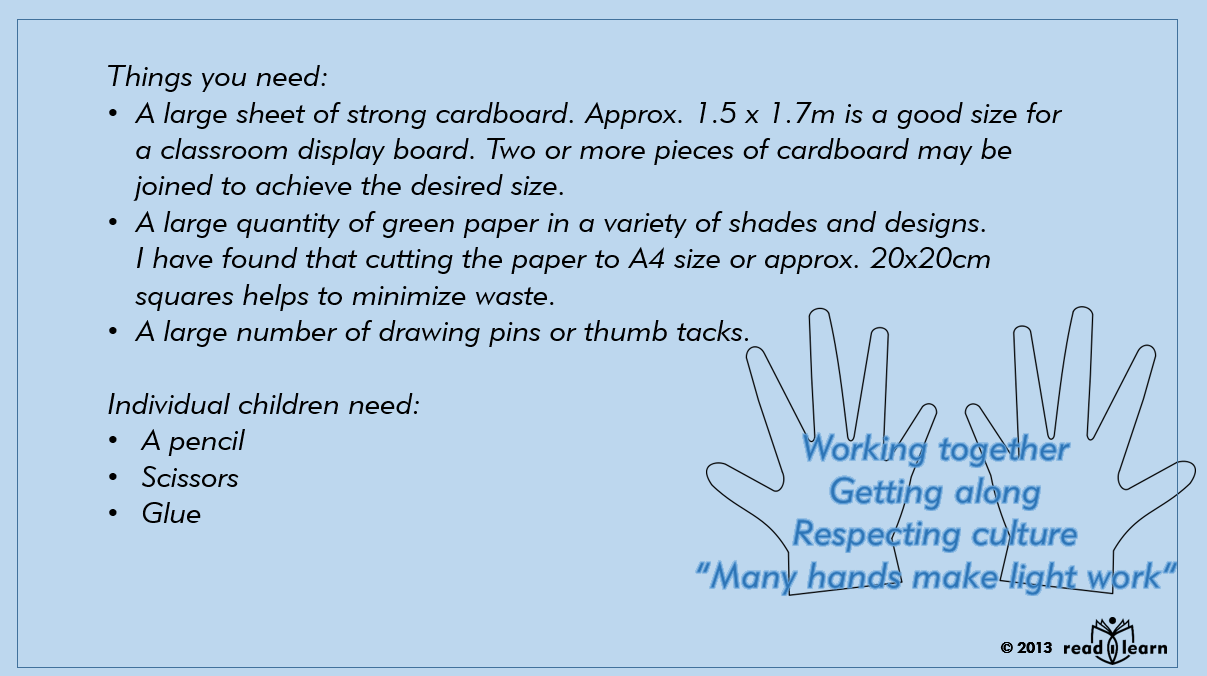
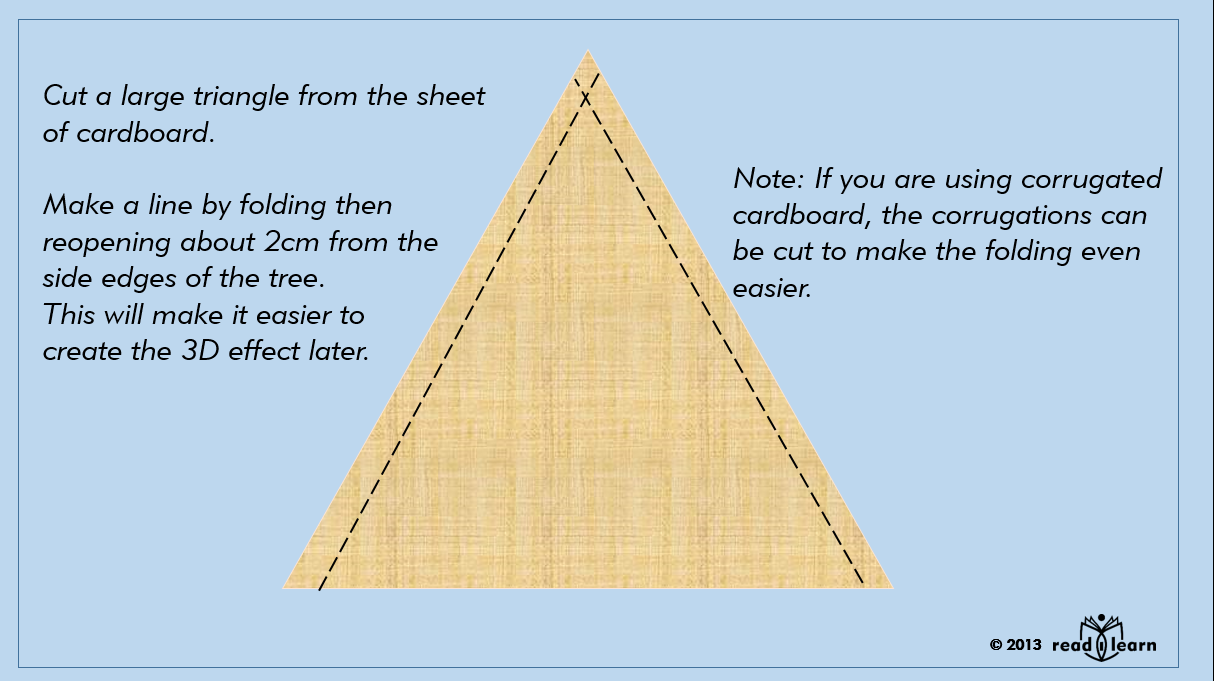
While I include instructions for making the tree here, they are also available from readilearn.
What do you think? Do you think Christmas should be celebrated in schools?
What reasons would you add to my list? What do you disagree with?





















 Norah Colvin

