Live Love Laugh Learn … Create the possibilities

Category: Affirmations

  • But I want it now! How long can you wait? The importance of emotional intelligence

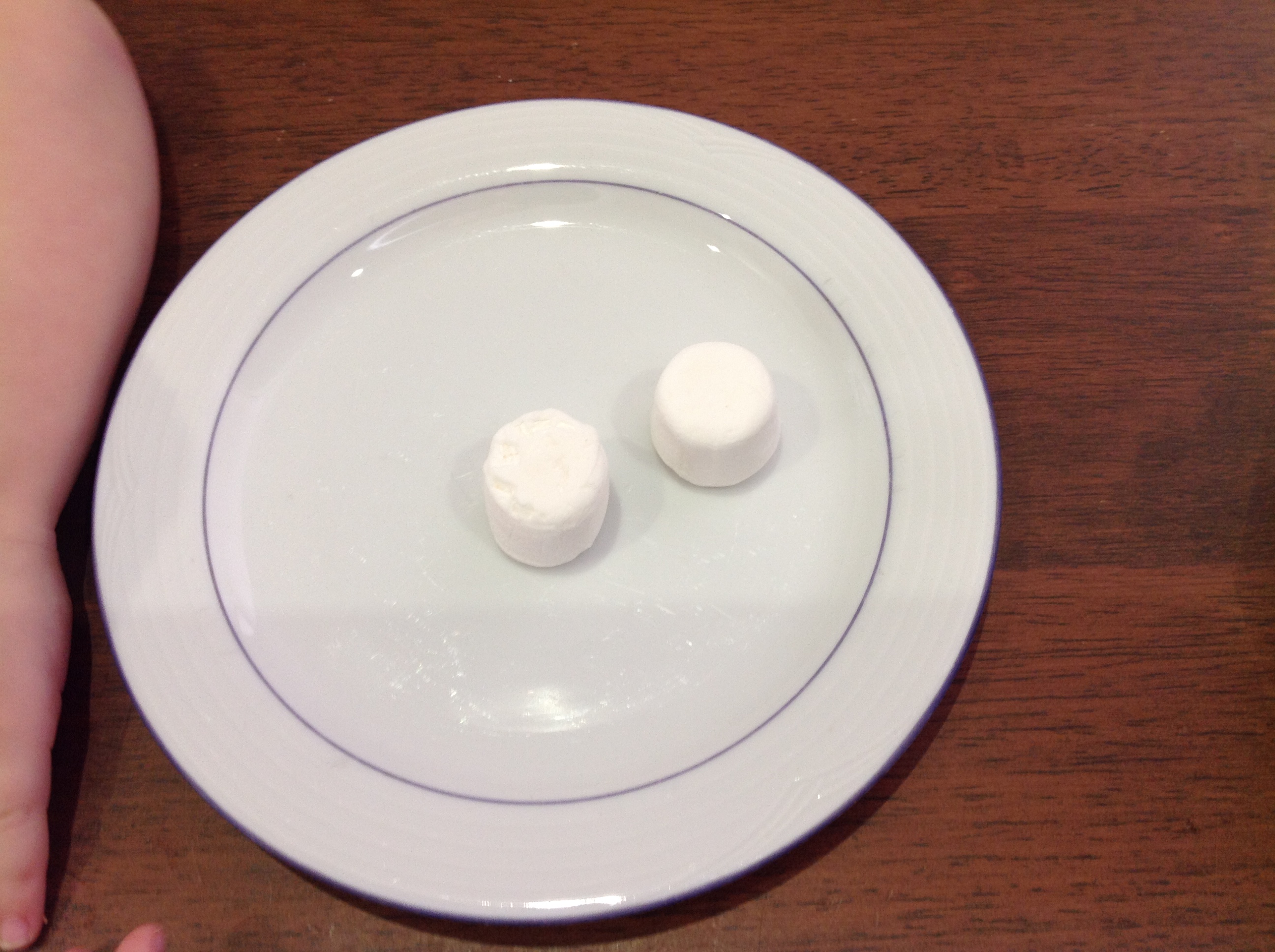
    marshmallow 5

    In my previous post Life: a choose your own adventure – how do you choose I discussed the difficulties we may experience in prioritising options and choices, and the need to be self-regulatory in performing tasks and achieving goals.

    The discussion reminded me of the marshmallow test I had heard about from Daniel Goleman in his book “Emotional Intelligence”.

    The marshmallow test was a study conducted in the 1960s by Walter Mischel .

    As described by Daniel Goleman, In this experiment four-year-olds from the Stanford University pre-school were brought to a room and sat in a chair in front of a juicy marshmallow on a table. The experimenter then told them they could eat it now, or get two if they were willing to wait until the experimenter came back from running an errand.

    You can watch a video demonstrating the experiment here:

    Some children could not wait and ate the marshmallow as soon as the examiner left the room. Others toyed with the idea of waiting, but were unable to resist the temptation. Others were able to wait and scored two marshmallows when the examiner returned.

    While this study revealed certain aspects of childhood behaviour, follow-up studies into the behaviour of these children when young adults and graduating from high school revealed that Those who waited, compared to those who grabbed, were more popular with their peers, had less trouble delaying gratification, and scored far higher on achievement tests.”

    A further study, conducted 40 years later, as reported by Sylvia R. Karasu writing for Psychology Today, found that the ability to resist temptation is fairly stable over the lifecycle and predictive of behaviors 40 years later!

    Goleman talks about the important role of parents in supporting children to develop the ability to control impulses and choose behaviour. As children learn to internalise and choose the ‘no’ imposed by others, they learn to regulate impulsive behaviour. He calls it the ‘free won’t’, the capacity to squelch an impulse.”

    Karasu supports this by saying that “The researchers also suggested that a family environment where self-imposed delay” is “encouraged and modeled” may give children “a distinct advantage” to deal with frustrations throughout life.”

    Goleman says that the ability to curb dangerous impulses is an aspect of emotional intelligence, “which refers to how you handle your own feelings, how well you empathize and get along with other people. (He says it) is just a key human skill.”

    He continues by saying that “it also turns out that kids who are better able to manage their emotions . . .  can pay attention better, take in information better, and remember better. In other words, it helps you learn better.”

    It sounds like emotional intelligence is something that all schools should be developing, don’t you think?

    www.openclipart.org http://goo.gl/XhPCyE
    http://www.openclipart.org http://goo.gl/XhPCyE

    Goleman says that the ability to delay gratification hinges on a cognitive skill: concentrating on the good feelings that will come from achieving a goal, and so ignoring tempting distractions. That ability also lets us keep going toward that goal despite frustrations, setbacks, and obstacles.”

    Without that ability it may be difficult for any of us to achieve our goals. Saving for the future, studying towards a qualification, working harder now to have time off later; none of these would be possible without the ability to delay gratification.

    But can emotional intelligence be taught? And should it be taught in schools?

    It seems to me that if emotional intelligence is able to predict “success” in later life, then it is important to develop it as early as possible. This can begin in the home with parents helping their children learn to delay gratification, build resilience and develop empathy.

    I believe it is important to make a place for programs that develop emotional intelligence in schools. Children need opportunities to internalise emotionally intelligent responses to a variety of situations. A very structured, force-fed, content driven, test based approach where almost every action is directed and monitored leaves little room for students to develop skills of self-regulation.

    Discussions of whether emotional intelligence can, or importantly should, be taught in schools can be read here and here. The theory is that children can no more “pick up” emotional intelligence than they can “pick up” maths or English. To leave it to chance seems to be denying our children the opportunity to develop skills that will help them lead happy and successful lives.

    What do you think? Would you have one marshmallow now, or double it later?

    1 marshmallow      marshmallow 2

    Please share your ideas.


    You can read more of Daniel Goleman’s work at Edutopia, and hear his talks and conversations at More Than Sound.


    If you enjoyed this post, you may enjoy others. Please click the button at the top on the right to receive future posts by email.

     

  • The magic effect – why children need books

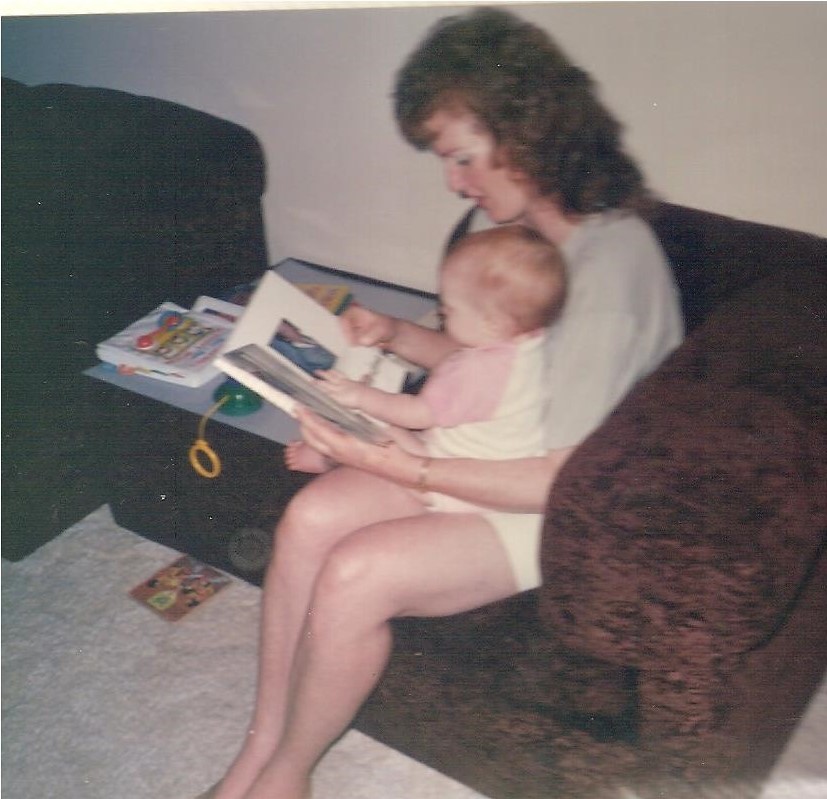
    Nor and Bec reading


    Children can be read to from the moment they are born, if not earlier. Preferably earlier!

    One of my favourite picture book authors and passionate advocate for reading to children is Mem Fox. I own, and have given as gifts, many of her wonderful books. I have attended her seminars and been mesmerised by her reading from her selection of stories. “Read more!” the adults beg. There are no children at these literacy seminars. This time it is a treat for only us: parents and teachers, literacy educators all.
    Currently Prince William, Kate and baby Prince George are visiting Australia. I was delighted to hear that they were given a gift of books by Australian authors, including some by Mem Fox. Over the years I have given many of Mem’s books as gifts; and kept just as many for myself!

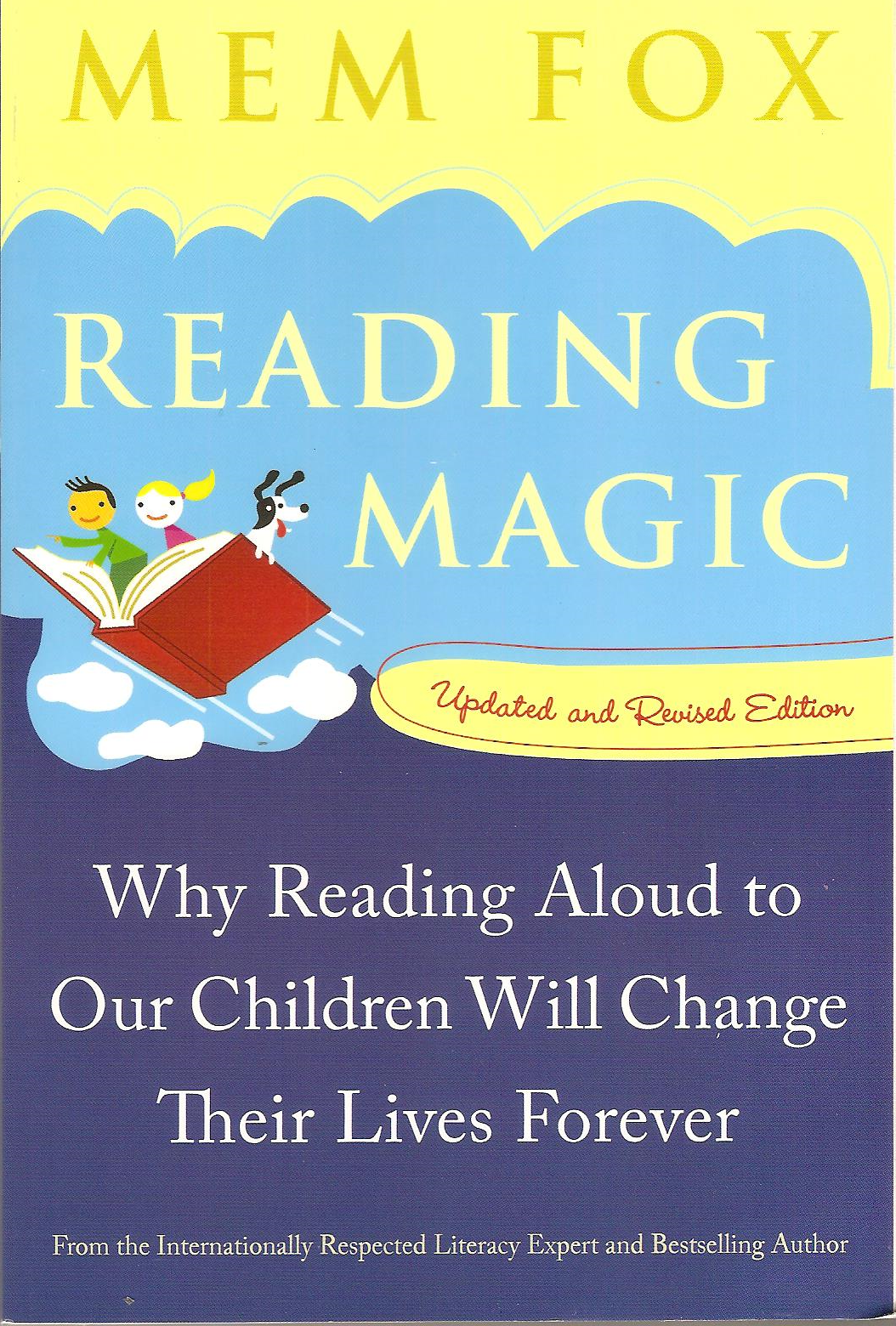
     Reading magic

    One that I have given to many new or expectant parents, as I consider it a “must read”, is Mem’s book “Reading Magic – Why Reading Aloud to Our Children Will Change Their Lives Forever”.

    I would love to quote the entire book for you, but it is better you read it for yourself. I will provide you with this quote from the foreword as a taster for the richness to be found inside.

    “It stands to reason that if we’re able to raise happier, brighter children by reading aloud to them, the well-being of the entire country will ramp up a notch. Children who realize in their first few weeks and months of life that listening to stories is the purest heaven; who understand that books are filled with delights, facts, fun, and food for thought; who fall in love with their parents, and their parents with them, while stores are being shared; and who are read aloud to for ten minutes a day in their first five years, usually learn to read quickly, happily and easily. And a whole lot of goodness follows for the entire community.”

    Mem's website


    Mem’s website, too, is a treasure trove just waiting to be explored by writers, teachers, parents, children and children-at-heart.

    You can listen to Mem read from her selection of books on the Current Read Aloud page. She reads three different books each month. Currently the books are Possum Magic, Harriet, You’ll Drive Me Wild! and Goodnight, Sleep Tight. Be quick to listen to these, though, as they will change at the end of the month. But never mind, there’ll be another three to enjoy next month!

    Mem even gives a read-aloud lesson! Now there’s no excuse! As she says,

    “. . . let’s get on and change the world, one page at a time.”

    Yes, Mem, let’s!


    What are your favourite read-aloud books? What did you enjoy as a child? What do you enjoy now?

  • “You say it long enough, it starts to be a part of you.” (Rita Pierson)

    Affirmation, encouragement, praise . . .  

    “You say it long enough, it starts to be a part of you.”

    Recently I came across this great TED talk by Rita Pierson “Every kid needs a champion”.

    Rita’s entire life centred around education. Her parents and her mother’s parents were teachers, and she was a teacher.

    She observed numerous teachers at work – some of the best and some of the worst – and believed that relationships are the key to learning.

    She said that

     “kids don’t learn from people they don’t like.”

    Rita spoke about having classes of students whose academic level was so low she wondered how she could “raise the self-esteem of a child and his academic achievement at the same time”.

    One year she told her students

    “You were chosen to be in my class because I am the best teacher and you are the best students, they put us together so we could show everybody else how to do it.”

    Affirmation, encouragement, praise . . .

    She talked about giving a student a +2 with a smiley face for getting 2 out 20 questions correct. She encouraged the student by saying

    “you’re on a roll . . . and when we review this, won’t you do better?”

    The student agreed “I can do better”.

    Affirmation, encouragement, praise . . .

    Rita told of her mother’s past students expressing their gratitude for the difference she made in their lives, saying

    “You made me feel like I was somebody, when I knew, at the bottom, I wasn’t. And I want you to just see what I’ve become.”

    Affirmation, encouragement, praise . . .

    She tells us that teachers won’t always like all the children they teach, but it’s important that the children never know it. Acting is part of the role description!

    She says that

    “Teaching and learning should bring joy. How powerful would our world be if we had kids who were not afraid to take risks, who were not afraid to think, and who had a champion? Every child deserves a champion, an adult who will never give up on them, who understands the power of connection, and insists that they become the best that they can possibly be.”

    Affirmation, encouragement, praise . . .  

    Go ahead and listen to this inspirational talk. It will take less than 8 minutes listening time but its effect will be more lasting. It has already had more than 2 600 000 views. Why not add one more to the total. I’m certain you won’t regret it.

    I can find nothing to dispute in Rita’s talk. I’d like to underline every word and make it compulsory viewing for all aspiring and practising educators in any field.

    Affirmation, encouragement, praise . . .  helpful or harmful?

    What do you think?  Please share your thoughts below.

    Refer to these previous posts for discussions on self-esteem, affirmations and praise:

    Happy being me

    Affirmations: How good are they?

    Seeking praise – Stephen Grosz revisited

    Examining praise: Stephen Grosz – the third instalment (guest post by Anne Goodwin)

    I came across this talk on a great educational website edutopia. It was included in a Five-Minute Film Festival: Videos on Kindness, Empathy, and Connection. Check the others out. You may find something else to inspire you.

    Sadly Rita Pierson passed away in June 2013. I’m grateful that we may continue to share the strength of her wisdom through her appearance with TED.

    Click here to find out more about Rita and to read a tribute posted by Tedstaff.

    “You say it long enough, it starts to be a part of you.” (Rita Pierson)

    Let’s make sure it’s the good stuff that learners everywhere are hearing!

  • Seeking praise – Stephen Grosz revisited

    Praise may be defined as an expression of approval or admiration.

    Who wouldn’t want that?

    If you write a blog, don’t you love it when others “like” a post, leave a positive comment, re-blog your article or link to it via theirs? I do. Aren’t these all expressions of approval or admiration?

    What about on Twitter when someone Re-tweets, favourites or replies positively to your comment, engaging you in conversation?

    Aren’t these also expressions of approval or admiration?

    I love to receive all these signs of encouragement and support that let me know that my efforts are appreciated and confirm that I am on the right track. If I did not receive any of this feedback I would feel quite isolated and consider my efforts to be fruitless and a waste of time. I would probably just give up.

    As a teacher I have always considered it of primary importance to create a happy and welcoming classroom environment in which children feel valued, affirmed and supported. Expressions of approval and admiration for behaviour, effort and achievement were generously given with the aim of encouraging the desired response, a happy child being foremost. I have written about this in previous posts, including:

    Happy being me

    Affirmations: How good are they?

    As a parent too I considered it important to affirm my children and display my approval and admiration for them. I still do, even now they are adults. The need for approval never ends. I know sometimes you just have to go out there and say what you know is right, even though others will disagree or ridicule you. I am not talking about those instances here.

    My strong belief in the power of affirmations and approval stems partly from the dearth of them in my childhood and school days. I have also mentioned this in a previous post: 

    Mouthing the words – the golem effect

    Recently I listened to a fabulous (audio)book, “The Examined Life: How We Lose and Find Ourselves” by Stephen Grosz. I wrote about it in my previous post A book worth reading: Stephen Grosz “The Examined Life” saying that

    “What appeals to a reader about a book, or what a reader takes away from a book is as individual and personal as the reader. What is of most significant to one, may be of lesser importance, or even insignificant to another. “

    For me the chapter of most significance is chapter 3 “How praise can cause a loss of competence”.

    To say I was startled by the title would be an understatement. I was puzzled, intrigued and challenged. How could praise cause a loss of competence? Surely negative feedback or a lack of encouragement altogether would be major contributors to diminishing competence. Was everything I had believed and practiced wrong? (Oh no –there’s my need for approval and affirmation!)

    Grosz says that during the past decade studies into self-esteem have found that praising a child as “clever” may not only inhibit school achievement, it may cause under performance. He suggests children may react to praise by quitting. Why would you try to improve or do something new if you have already done something really well or are the “best”?

    Studies showed that children who were praised for effort, rather than for being clever, were more willing to try new approaches and were more resilient. Children who were praised for being clever, tended to worry more about failure and chose unchallenging tasks, tasks they knew they could achieve or had already achieved. Being told they were clever led to a loss in self-esteem and motivation and to increased anxiety. Some children who had been praised for being clever (rather than working hard), when confronted with a more difficult task and asked to comment on it, were so unhappy with the results they lied about them, exaggerating their achievements to others.

    Grosz questions whether we may lavish praise on our children nowadays in order to demonstrate that we are different from our parents who possibly used criticism, rather than praise, on us. I hinted at something similar earlier in this article.

    While admiring our children with words like “Good boy” or “Good girl” may temporarily lift our self-esteem by showing others what wonderful parents we are or how wonderful our children are, Grosz says, it isn’t doing much for a child’s sense of self. He says that in trying to be different from our parents we end up doing the same thing: doling out empty praise where an earlier generation doled out thoughtless criticism.

    Grosz says that if we offer this empty praise without thinking about the child’s individuality and needs we are effectively showing the child indifference.

    So what do we do?

    I think the emphasis here is on the empty praise. I think support, encouragement and positive feedback are all essential. Sure, knowing in yourself that you have done well is fine but a little recognition certainly helps too. I think the difference is in recognizing what has been achieved, the learning or progress made, and the effort it took, the message communicated in a story or painting and the techniques used; not a hollow “Well done”, “Good work” or “Good boy” but “Tell be about . . .”, “Why do you think that?” “How did you work it out?” “I like the way you . . .”

    As Grosz says, this is being attentive to the child, to what the child has done and how it has been done.

    To read more on this topic:

    Sian Griffiths interviewed Stephen Grosz and reported on the interview in the article “Praise her . . . and see her fail” which adds even more clarity to my precis above.

    Maria Popova delves into the messages of this same chapter in her article “Presence, Not Praise: How to Cultivate a Healthy Relationship with Achievement

    Being attentive, being present, being really with someone, noticing what they have done and how they have done it – is it more precious than praise?

    In these days of constant distractions and must-dos to put all aside to be in the present with the child, friend or partner to talk, listen share and laugh, what better affirmation is there than that?

    What do you think?

    How has praise encouraged or discouraged you?   When has criticism hindered you?

    I’d love to hear your thoughts.

  • Mouthing the words – the golem effect

    Mouthing the words – the golem effect

    Singing is a wonderful gift. To be able to entertain oneself and others with no instrument other than one’s voice must give enormous pleasure.

    But I can only imagine the joy it must bring, for I am no singer.

    When I was at school and we were all lined up and squished in on the stairs performing for parents in our end-of-year concerts, I was told to mouth the words.

    www.openclipart.org
    http://www.openclipart.org

    Unlike the recommendation in the song written by Joe Raposo for Sesame Street and made famous by the Carpenters “Sing a Song

    “Don´t worry that it´s not good enough for anyone else to hear.
    Just sing.
    Sing a song.”

    I was told to not sing, for it was not good enough for anyone else to hear. I accepted the verdict without question, as was expected of us at school, and mouthed the words.

    Of course, my school days were long over before Joe wrote his wonderful song, and maybe no one since then has been subjected to the same humiliation.

    Over the years various family members and friends have tried to be encouraging but their words have seemed hollow, for I “knew” the truth to be otherwise. One family member even told me that, when I “sang” nursery rhymes, I sounded just like Patsy Biscoe. But that’s not true. Patsy has a beautiful voice. You can listen to her here.

    Sometimes it is difficult to not sing along for music is so inviting, often almost demanding that one join in.

    In an early childhood classroom, music is a very important part of the day; and as an early childhood teacher, I incorporate music and singing into the program, always at the beginning and end of the day, and many times in between. I have blogged about this before here and here.

    Fortunately for me, and the students, music is so readily available on CD or the internet, that finding songs for the children to sing along with is no longer a problem.  I apologise here to all the students who have had to suffer my joining in and “singing” along with them though, when I couldn’t resist the temptation. I must admit that none of them ever complained when I joined in. But I have no idea what they went home and told their parents either!

    I believe strongly in the power of positive encouragement to improve children’s self-esteem, confidence, willingness to have a go, and learning outcomes.

    I also know that a negative attitude encourages children to have a negative attitude towards themselves and their abilities, decreases self-esteem, erodes confidence and creates anxiety and a fear of trying new things or of having a go.

    According to Wikipedia

    “The Pygmalion effect, or Rosenthal effect, is the phenomenon in which the greater the expectation placed upon people, the better they perform. The effect is named after the greek myth of Pygmalion.

    A corollary of the Pygmalion effect is the golem effect, in which low expectations lead to a decrease in performance. The Pygmalion effect and the golem effect are forms of self-fulfilling prophecy. People will take the belief they have of themselves (negative in this case) and attribute traits of the belief with themselves and their work. This will lead them to perform closer to these expectations that they set for themselves. Within sociology, the effect is often cited with regard to education and social class.”

    Surprisingly I had never thought of this in relation to my singing disability, until recently.

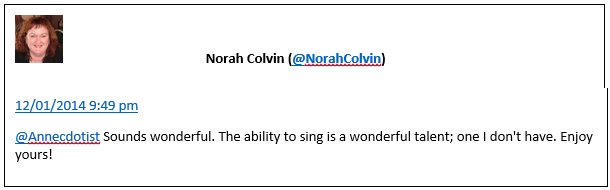
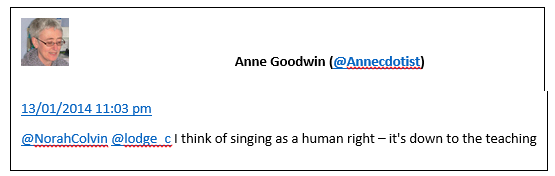
    Engaged in a Twitter discussion with Anne Goodwin (@Annecdotist) and Caroline Lodge (@lodge_c) I mentioned that I listen to audiobooks on my drive to work. Anne replied that she listens to music on long journeys, trying to “fix choral music in my head”.

    I replied, innocently enough, I thought:

    1

    To which they both responded with the type of “encouragement” I had heard many times before “Give it a go. Everyone can sing.”

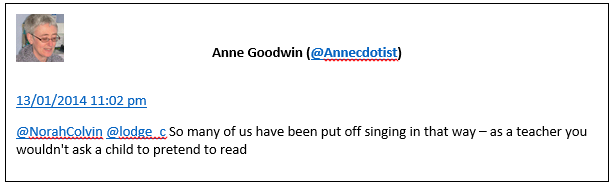
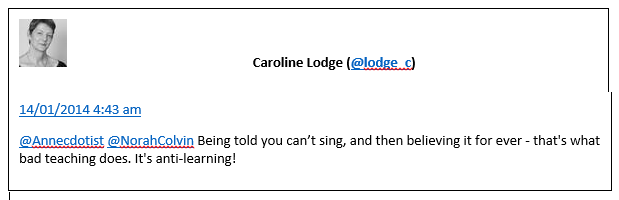
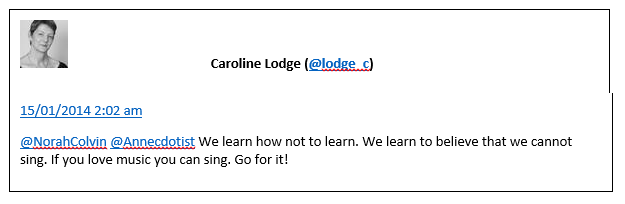
    So I told them about being told to mouth the words, and I was both surprised and challenged by their responses:

    2

    3

    4

    I had never thought of my singing disability as a learned disability. I had always thought of it being a physiology issue and, later, perhaps a hearing issue.

    I am not very good at mimicking vocal (other than speech) sounds, or at identifying which note, of two given notes, is the higher or lower. I did enrol in a brain training program which included aural exercises involving recognition of higher or lower pitch. While I did make some improvement, my scores weren’t high (I could tell that high/low difference).

    The comments of Anne and Caroline made me think about this:

    What came first: the singing disability or the disability teaching?

    Could I have learned, if given the opportunity, to sing a least a few bars in tune? Could I still be taught?

    It has sometimes crossed my mind that singing lessons could be an interesting experiment.

    Anne and Caroline are both encouraging, and Caroline commented:

    6

    I do love music and perhaps, one day, I will go for it and find out the truth about my singing ability.

    Perhaps I will learn to sing and fulfill the dream “to teach the world to sing in perfect harmony”.

    But for now, the experiment will have to wait, I have other things to learn.

    What do you think?

    Do you consider yourself a singer?

    Can everyone learn to sing?

    Is it a human right?

    Could my singing ability really be a “golem effect”?

    What disability have you learned, if any?

    As a parent or teacher, how do you ensure your children do not suffer from a learned disability?

    You can read more from Anne or Caroline by clicking on their names.

  • A positive start – back to school

    A positive start – back to school

    school cropped

    At this time of the year children, parents and teachers in Australia are thinking about the return to school which is approaching with haste. For some those thoughts are of excitement and expectation. For others they are of anxiety and dread.

    While children have enjoyed the break from imposed structure and the pressure of school days and homework, many look forward to seeing their friends again and the routine of having something to do after long, lazy summer days. Others may feel anxious about being in a new class with a new teacher and new yet-to-be-made friends. For those starting at a new school, or school for the first time, there may be a confusion of feelings and vacillation between excitement and fear.

    Parents, too, have mixed feelings about their children starting or returning to school. They may look forward to a return to routine and a relief from the pressure of providing full-time entertainment or alternative care arrangements. They may also experience feelings of loss when they hand their children over to the care of a stranger for most of the day. However, I think what parents most want for their children when they return to school, or indeed at any time, is for them to be happy.
    Teachers experience a similar range and vacillation of feelings from excitement and expectation through to anxiety and dread. Even now many of those teachers are out fossicking through the cheap shops, scouring stationery and educational supply stores, looking for items for use in their classrooms. Others will be at home trawling the internet looking for resources, or making their own resources in preparation for the new school year.
    One thing that is important to all is to begin the year positively and happily.

    http://openclipart.org/image/800px/svg_to_png/101707/happy_pencil.png

    Strategies for parents

    Some strategies parents can use to ensure their children begin the school year happily include:

    • Talk to children in positive and supportive ways that will strengthen their optimism about returning to school, allay any fears and settle anxieties.
    • Ensure children are aware of how they will travel to and from school, and of any arrangements that have been made for before or after school care.
    • Familiarize children with the route to and from school by travelling it as they will be expected to, whether by foot, cycle, bus or car. If necessary, point out landmarks along the way.
    • Make sure children know their first and last names, address and parents’ phone number/s.
    • Have children’s equipment ready with books covered and every item identified with the child’s name.
    • If possible, take the child to school on the first day and meet the teacher.

    liftarn_Adult_and_child

    The positive feelings can be continued throughout the year by:

    • Daily conversations about the school day: learning, events and friends.
    • Volunteering in the class or school, or being involved with after school activities.
    • Maintaining open and positive communication with the class teacher.

    Strategies for teachers

    Some strategies teachers can utilize to ensure that children (and parents) begin the school year happily include:

    • Create a welcoming classroom with signs, posters, items of interest and inviting reading corners and activity nooks.
    • Greet children and parents with a friendly smile.
    • Engage children in activities that help you get to know them, and them to get to know each other.
    • Display children’s work to give them a sense of ownership and belonging.
    • Explain management and behaviour expectations and include children in composing a classroom management and behaviour plan.
    • Ensure children know the school timetable; when the breaks will occur and any lessons to be taken by specialist or other teachers.
    • Explain playground behaviour expectations, including showing areas where they may / may not play.
    • Take them on a walk around the school to show them the library, office, bathrooms and any other areas they may need to know.
    • Include singing during the day and send them home with a song and a reminder of what has been learned or engaged with during the day. (In a previous post Happy being me I wrote about Anne Infante’s songs of affirmation. Any of these are great ones to sing and help to create a positive environment.)

    What other suggestions can you make?
    What helped you as a child, parent or teacher prepare for the new school year?
    Teachers, check out my new products on TEACHERSpayTEACHERS to help you set up your classroom and greet your new students with a Busy Bee theme. There are many resources to get you started, ready to download and print out.

    bee 1

    Bee courtesy of Bernadette Drent, used with permission.

    Other clipart courtesy of http://www.openclipart.org.

  • 10 reasons for including Christmas in the classroom

    10 reasons for including Christmas in the classroom

    The end of the school year in Australia is fast approaching; assessment is almost done and reports completed.

    After a hectic year, thoughts are turning towards Christmas and the long summer holidays.

    However the teaching and learning in the classroom doesn’t stop until the final farewells on the last day of school.

    These last few weeks of the school year allow a little more flexibility and time for spontaneous explorations of children’s interests after the curriculum’s imposed learnings have been achieved. Sure, skills still need to be practised and extended but the pressure is not so relentless.

    As the thoughts of most children are on Christmas and what they will do during the holidays, why not harness those interests and that excitement to make classroom learning meaningful and fun while developing important social and cultural concepts and understandings as well as practising and extending literacy and numeracy skills.

    Over recent years there has been some controversy over whether Christmas should be included in school programs, some arguing that it is not inclusive and excludes those students whose cultural backgrounds neither recognise nor celebrate Christmas.

    I have a number of reasons to support my argument that Christmas should be learned about in school, and my reference is to secular rather than religious celebrations which are best left to organisations dedicated to that purpose.

    I would like to say that the main reason is that I love Christmas (the excitement, the anticipation, the decorations, the gift-giving, the celebrations with family and friends)!

    But that would not be true.

    My focus is educational:

    1. Cultural respect: Most children in Australian schools celebrate Christmas. Including Christmas in the classroom program acknowledges this and draws upon their interests and prior knowledge.
    2. Cultural awareness: Investigation of traditions celebrated by other class members, community groups or countries develops a recognition of other perspectives, including those who do not celebrate Christmas and those who celebrate other traditions such as Hanukkah, Ramadan or Chinese New Year.
    3. Cultural understanding: Learning about the traditions of the dominant culture in which one lives makes one more comfortable within that society, more able to converse about important events and holidays, and able to develop shared experiences i.e. helps to develop feelings of being included, rather than excluded by participating in the outward traditions. However, this knowledge does not necessitate participation or belief.
    4. Cultural acceptance: Learning to understand that, although not everyone shares the same beliefs or traditions, we all share a common humanity and that there is good in everyone is important for creating a peaceful and nonjudgmental world.
    5. Self-awareness: Christmas is a time for reflecting on the year’s achievements and behaviour e.g. whether you have been “naughty or nice” or whether you have worked hard are superficial questions which can lead to deeper introspection. This self-reflection can lead to celebration as well as to the setting of positive goals for improvement.
    6. Other-awareness: Recognising one’s own strengths can help to identify, recognise and appreciate the strengths and achievements of others.
    7. Emotional intelligence: Children learn to recognise and describe their own emotions, and the emotions of others. They understand that not everyone thinks and feels the same way about similar events and learn to respect the thoughts and feelings of others.
    8. Social-awareness: Recognising how others think and feel about certain events can develop feelings of empathy. Children are more likely to find common ground upon which friendships can be built.
    9. Being kind to each other: Christmas is all about sharing and giving. In a classroom these can lead to discussions about working cooperatively and collaboratively, getting along with each other, and giving the greatest gift of all: friendship.
    10. Enjoyment, recognition and fun! I couldn’t stop at 9, and I think the inclusion of fun in the classroom is one of the most powerful ways to engage and motivate learners!

    Decorating the classroom is one way of setting the scene for explorations of Christmas traditions while encouraging the children to work cooperatively, take pride in their shared achievements and talk about how Christmas is celebrated (or not) in their families.

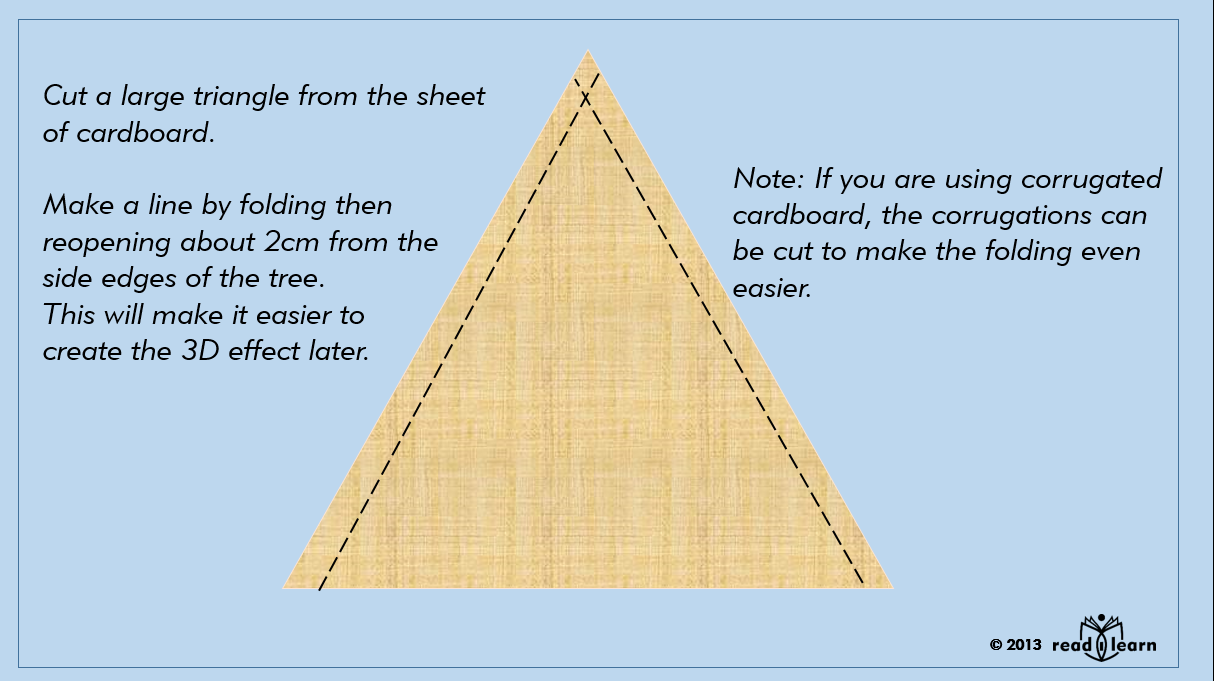
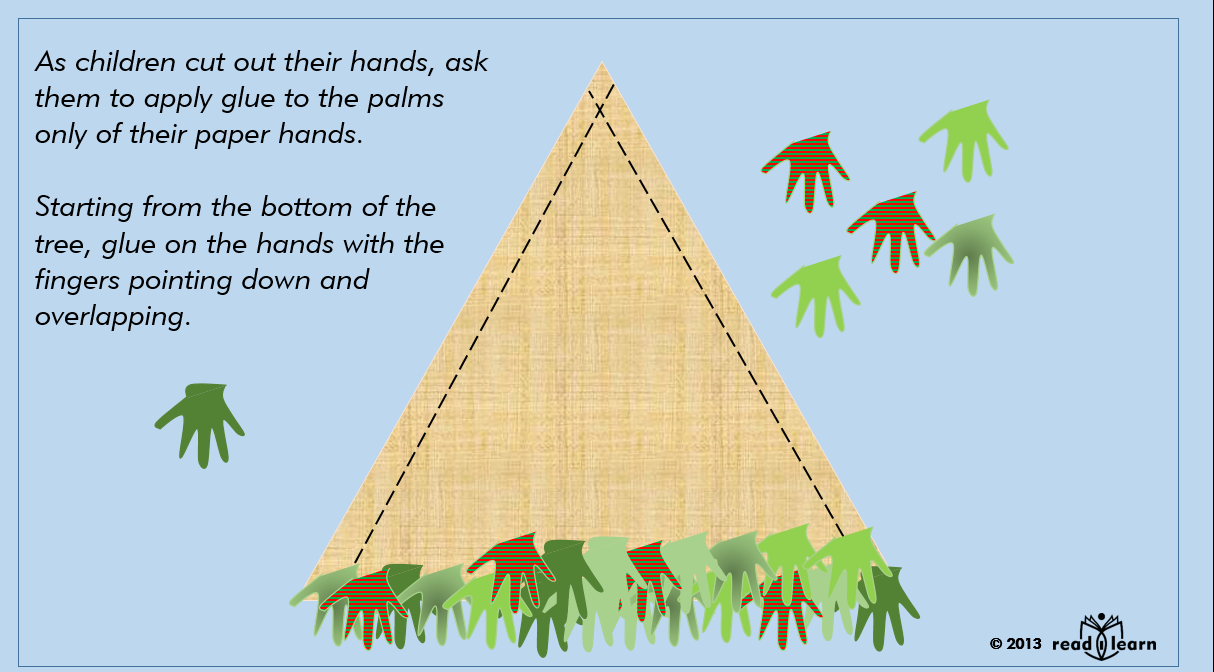
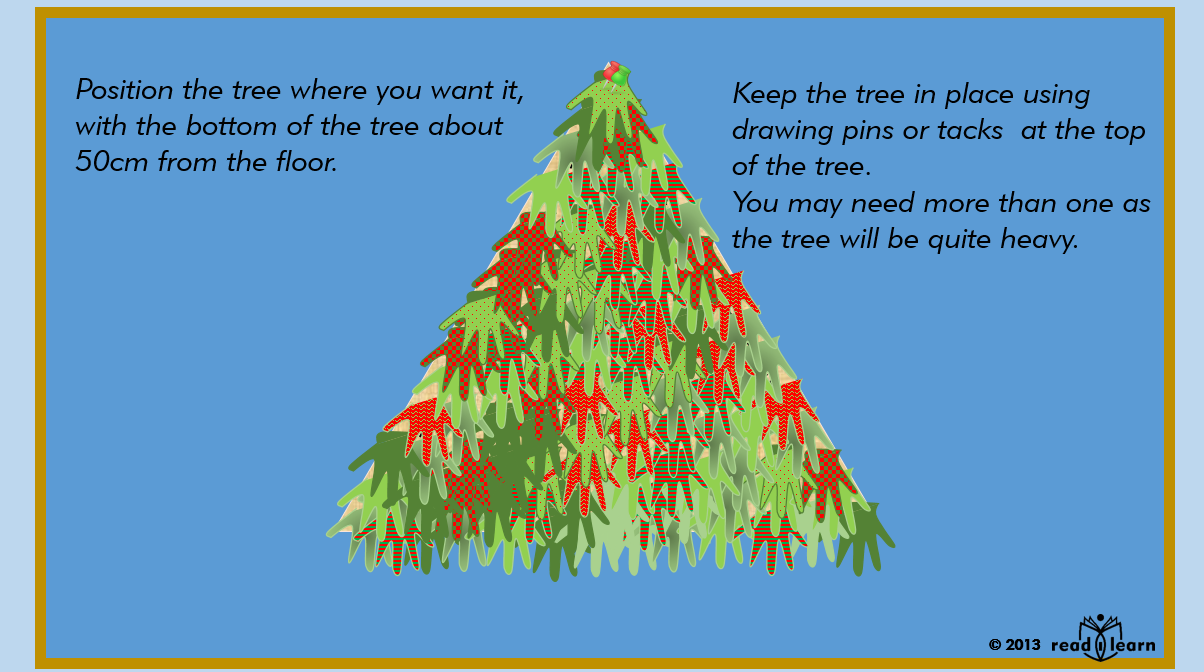
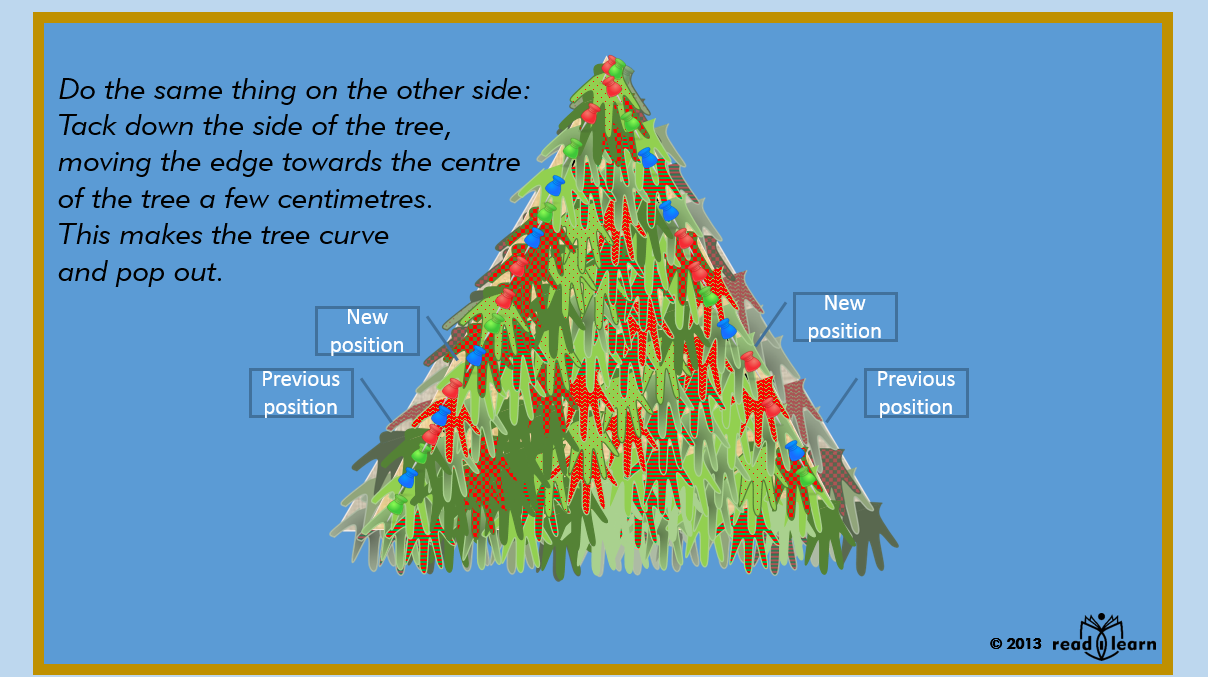
    It became a tradition in my year one classroom to make a large 3D Christmas tree to adorn our classroom wall and become the focal point of our learning.

    We would sit in front of it to have our discussions and read our stories.

    To the display surrounding it, we would add child-made decorations, stories and poems they had written, holiday messages and gifts.

    I would photograph each child in front of the tree, holding a sign with the message e.g. “Happy Christmas 2013”. These photographs would then be added to calendars which became a Christmas gift for parents.

    The children loved doing the tree, partly because of the inherent excitement at the end of the school year with Christmas holidays imminent. But they also loved doing it because they were working together, making something meaningful to them; and as they worked together and saw the tree take shape, they realised that what can be achieved together is far more (as well as more fun) than they would have achieved on their own.

    And while they were busily tracing and cutting, they were talking and sharing ideas and thoughts with each other and with me. We began to learn a lot about each other’s experiences, traditions and feelings.

    Having made the tree together, the children had an enormous sense of collective pride in what they had achieved, especially when all those viewing it remarked upon how lovely it looked.

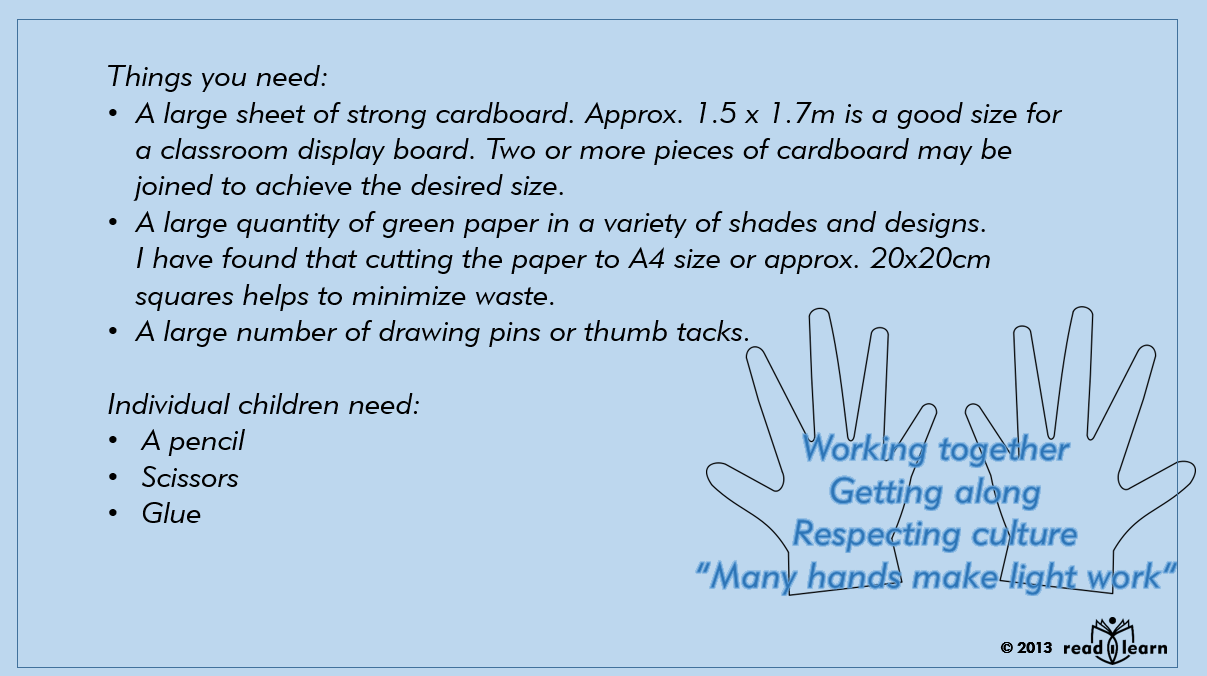
    While I include instructions for making the tree here, they are also available from readilearn.

    slide 2

    slide 3

    slide 4

    slide 5

    slide 6

    slide 7

    slide 8

    slide 9

    slide 10

    slide 11

    What do you think? Do you think Christmas should be celebrated in schools?

    What reasons would you add to my list? What do you disagree with?

    Leave a comment or indicate your thoughts below.

  • Friendship trees

    Friendship trees

    Summer_2010_ClipArt10_HeaderThe end of the school year in Australia coincides with Christmas and the summer holidays.

    TheresaKnott_christmas_tree

    This coincidence provides an opportunity to not only reflect on the year’ achievements, but to share appreciation of friendships made throughout the year while developing understanding of Christmas traditions.

    During the last few weeks of the school year, I use friendship trees with my early childhood classes for these purposes.

    About three weeks before the end of the school year each of the children make their own tree which is then displayed in the classroom until taken home on the last day of school. By then the trees are filled with messages of friendship and affirmation which the children write anonymously to each other each day.

    Although the end of the school year is when I use friendship trees in my classroom, they could be used at any time throughout the year. However they will work better when the children have been working together for a while and know a little about each other.

    These are some of the benefits of incorporating the friendship tree into the class program:

    • Is inclusive with its emphasis upon friendship
    • Provides an opportunity for reflection on friendships made
    • Encourages students to comment positively to classmates
    • Affirms students by the receipt of multiple positive comments
    • Encourages a giving attitude
    • Provides an opportunity to discuss Christmas traditions (tree as a bearer of gifts) as a way of developing cultural understandings
    • Develops understanding that kind words and actions are the greatest gift

    happy_sun_gm

    How it works

    • Children make and decorate a “friendship tree”, attaching or writing their name prominently on it. Trees are then displayed in the classroom.
    • Each day children select a name “from the hat”. (In preparation I prepare a class list of names in a table, one name per row, which I print out and cut into strips for the students to select and write their messages on.)
    • Children write a friendship note to the child whose name they have drawn, but they are to not tell anyone who it is or what they have written.
    • They may return the name and select another only if it is their own name or the name of someone for whom they have already written a message
    • They are to write something they like about the person, something the person is good at or something they appreciate about them.
    • I check what the children have written, ostensibly for readability, but also to ensure appropriateness of the message. However I have never had to edit the content. I have always been impressed by the messages the children write.
    • Children then fold and “secretly” place the messages into the tree of the recipient.
    • On the last day of school children take their trees, filled with positive messages, home to read and share with their family.

    Before children write their first message, we brainstorm what a friendship message might be. These are some examples:

    Thank you for being my friend.

    I like the way you laugh at funny stories.

    You are a good writer.

    You always do the right thing.

    Thank you for playing with me.

    However these ideas are only a starting point. I have always been amazed at the very appropriate and personalised messages the children write for each other. They really do notice the lovely things their classmates do throughout the year, and the different things that make them special.

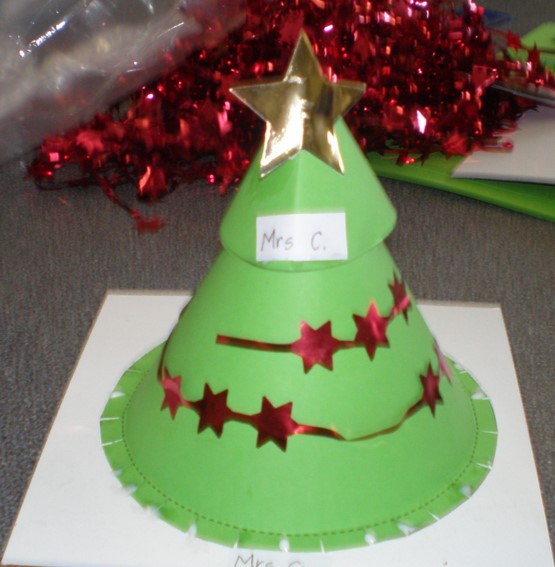
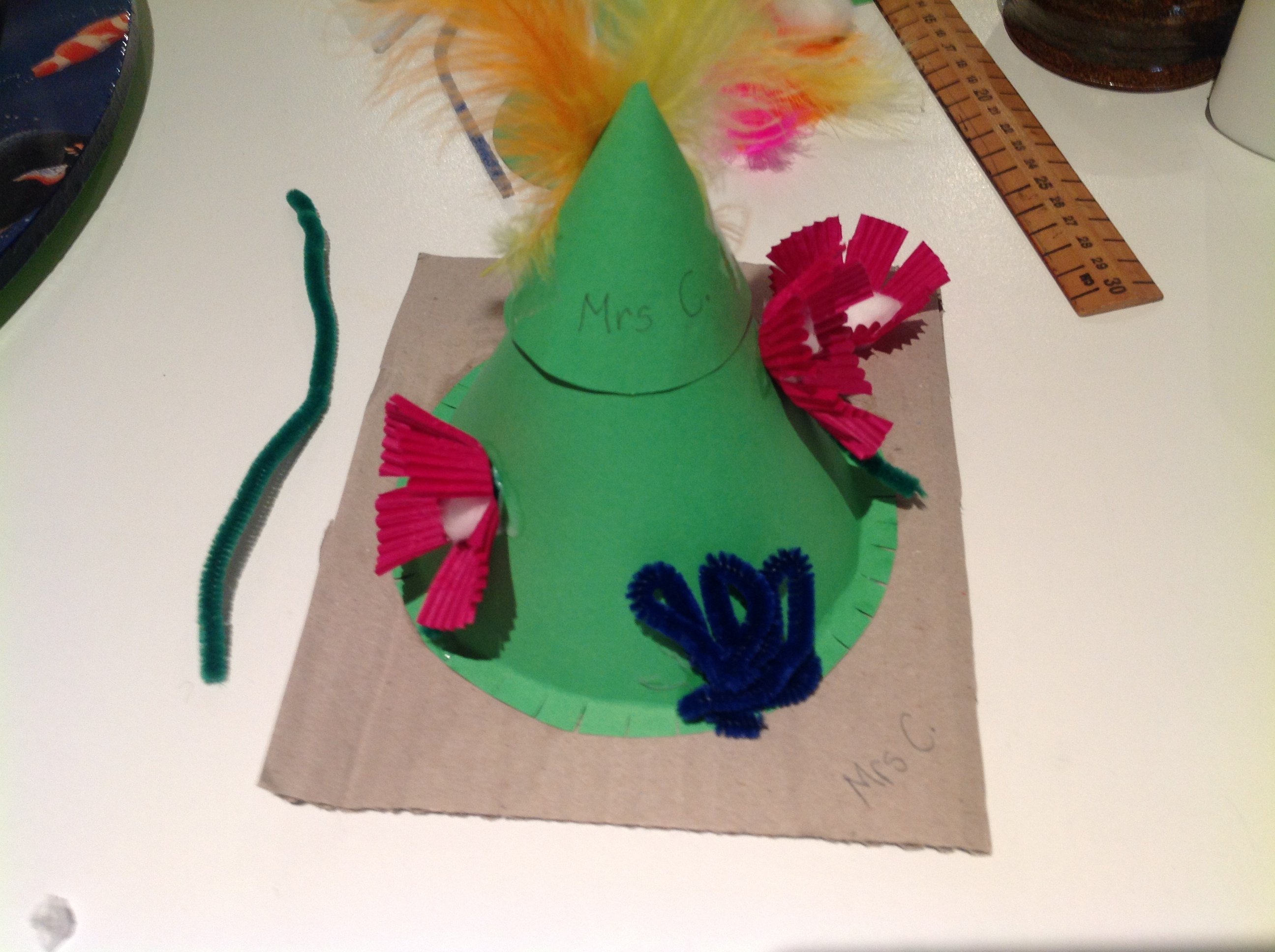
    Here are photographs of two  friendship trees I have made, one decorated for Christmas, the other for friendship:

    Friendship tree

    completed tree

    A cardboard cone (with a cut-off top) is attached to a cardboard base. A smaller cone (removable lid) tops the tree. Children lift the top to place their messages inside.

    If you would like to use a template for making the cone or view step-by-step instructions, I have made these available on the website TeachersPayTeachers. Please click here to follow the link.

    If after viewing this site, you decide to join up as I have, I would appreciate it if you refer your membership back to me my using this link. Thank you. tomas_arad_heart

    I hope you and your students enjoy the friendship tree experience as much as I and my students have!

    Let me know how it goes.

    Clipart courtesy of www.openclipart.org

  • How was your day?

    How was your day?

    Have you ever been asked that question and simply answered, “Same ol’ same ol’” without making any attempt to elaborate or delve deeper into the day’s activities.

    If so, did this mean that you didn’t enjoy your day and that there wasn’t anything interesting in it?

    Sometimes much of what we do on a daily basis can become routine with activities seeming to flow from one to another without a great deal of change or significance worthy of a remark.

    peole_laptoppeole_computer

    There are many reasons people don’t immediately share what has happened in their day, and the lack of a truly amazing outstanding event may be just one of them.

    johnny_automatic_magician_and_floating_lady

    Similarly, in response to the question “What did you do today?” school children, often simply answer “Nothing” (as described by SHECANDO) without making any attempt to elaborate or delve deeper into the day’s activities.

    Parents and others often jump to the conclusion that the child’s day has been uneventful and boring and, unless the child later volunteers some information, or the parent has a specific question to ask, that may be the end of the subject.

    However, just as with adults, there may be a number of reasons the “Nothing,” response is given, including the generalised nature of the question.

    Some reasons for this failure to elaborate, although unspoken and often unidentified, may be:

    15073-Briana-web
    Courtesy of eLearningbrothers

    ‘I’ve just finished a hard day, I don’t want to talk about it right now.”

    “So much happened today, I don’t know where to start.”

    “I don’t think you’d be interested in anything that happened to me.”

    “I can’t really think. What do you want to know: something bad, something funny or something amazing? I didn’t get into trouble.”

    Additionally, if children are not already practiced in the art of sustaining conversation with an adult, then these discussions will rarely come easily or spontaneously.

    Sometimes specific questioning, requiring more than a yes/no answer, may elicit a more detailed response that in turns leads to a more in-depth discussion of the day’s events, e.g.

    liftarn_Adult_and_child

    “Who did you sit with at lunch today?”

    “What games did you play at recess?”

    “What story did your teacher read to you? What was it about?”

    Knowing something of what occurred during the day helps parents formulate appropriate questions to elicit conversation.

    In my role as a year one classroom teacher I believe in the importance of these conversations between children and parents for a number of reasons, including:

    • to keep parents informed of what is happening the classroom, which in turn encourages a positive attitude and participation;
    • to develop children’s language skills by engaging them in conversations which require them to describe, explain, respond and exchange ideas;
    • to develop children’s thinking skills and memory, “What did I do today?” “What did I learn?” “What happened before/after lunch?”
    • to provide a time for reflection and review e.g. “What can I do now that I couldn’t do before?” “When we were doing x, we had to y. Oh, now I get it. That means . . . “
    • to provide opportunities to sort out feelings and emotions  experienced during the day, but not yet dealt with e.g. “I don’t know why that happened at lunch time. Tomorrow I will . . .”
    • to strengthen the child-parent relationship by sharing ideas, attitudes and events in their daily lives.

    In addition to giving children reminders before they left for home in the afternoons, I developed a strategy that specifically targeted the need to provide parents with a window into the child’s day in order to arm them with sufficient information to instigate robust discussion.

    I called this strategy

    Class news

    1269850054

    Each day I published class news which the children pasted into a book to take home and read with parents. These days many teachers, like Miss Hewes, use a blog to keep parents informed. However there were no blogs around when I began doing this in the 1980s!

    The class news consisted of three main sections:

    • News of individual students
    • Class things we did today
    • Class reminders

    News of individual students

    15026-Mac-web
    Courtesy of eLearningbrothers

    Each day 2 – 3 children told the class about an item of interest to them e.g. an activity, a recent purchase, a family event, or a wish.

    After each child shared their news, the class and I cooperatively composed a brief summary (one or two sentences at first). I scribed and the children read. Later in the day I printed this out for the children to take home and read to their parents.

    As well as being a very effective literacy learning strategy (which I will write about in a future post), it helped parents get to know the names of classmates and a little about each one; it provided a discussion starter about which their child could elaborate. It also affirmed the children by providing each a turn of “starring” about once a fortnight.

    Things we did today

    In this section I would tell parents briefly about a few things we did that day, e.g.

    “Mrs Colvin read “Possum Magic”. We talked about what it would be like to be invisible and discussed what we thought would be good and not-so-good about being invisible. Then we wrote our very own stories about being invisible. We had some very interesting ideas!”

    “We learned about odd and even numbers by finding out which number of different objects we could put into two even lines.  Where can you find some odd or even numbers of objects at home?”

    “In art we learned about lines: straight lines and wriggly lines; long lines and short lines; jagged lines and curved lines; thick lines and thin lines. What sort of lines can you see in your pictures?”

    When parents are informed about things that have happened during the day, they have a firm basis for opening a meaningful discussion with their child. This in turn validates the child by giving importance to the child’s activities.

    I often included a question to help parents realise that they could easily extend the child’s learning at home.

    Class reminders

    A reminder or two would be included if particular events were coming up, or payments needed e.g.

    “Sports day tomorrow. Remember to wear your sport uniform and running shoes.”

    “Friday is the final day that excursion payments will be accepted.”

    These reminders helped to reduce the possibility of a child being upset by forgetting or missing out on a class activity. They also provided parents with another opportunity for discussion and the ability to enthuse their child with the anticipation of future events.

    Publishing the class news like this every day did eat into my lunch time, but the advent of computers in the classroom helped as I was able to set up a template and print copies on the classroom printer. In the “olden” days of the spirit copiers, every day meant starting out again and having to go to another room to churn the copies out by hand.

    I continued using this strategy throughout three decades of teaching because I believe in its power to develop readers and talkers, and to involve parents by keeping them informed of classroom learning and activities. Having already received a child’s answer of ‘nothing’ to the question “What did you do today?” I was determined that no child from my class would have a reason to answer in the same way.

    What questions encourage you to open up and talk about your day?

    What questions encourage you to keep your mouth shut?

    What do you think of my daily class news?

    What other strategies do you suggest to encourage communication between parents and children?

    All images courtesy of www.openclipart.org unless stated otherwise.