In the US, for the entire month of May, people are encouraged to acknowledge and show appreciation for teachers who have influenced their lives. Although the first week is the main focus, I think it is wonderful to have a month dedicated to appreciating teachers. While I always felt the appreciation of my students and their parents, there seemed to be little shown in the community beyond that and it was often a struggle even to get World Teachers’ Day acknowledged in some places I worked.
In previous posts here, here, and here, for example, I acknowledged teachers who had a positive impact upon my learning and my teaching. In this post I even shared a letter of appreciation written by a parent about me. It was lovely to read Emily Case’s Reflections on Teacher Appreciation Week and the acknowledgements she received from students and parents.
From time to time I have shared the work of other inspiring teachers, and discussed with many, teachers who had influenced them. I was pleased to read this email in which President Obama honoured his fifth grade teacher, Ms Hefty. He said that she made everyone in the class feel special, and reinforced the value of empathy, a message which he carries with him every day.
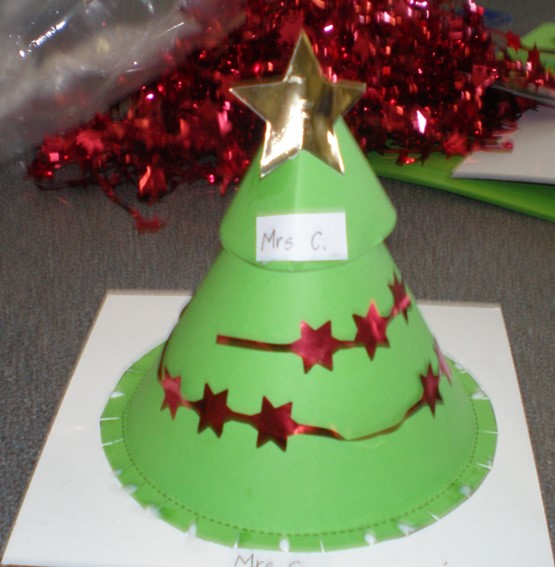
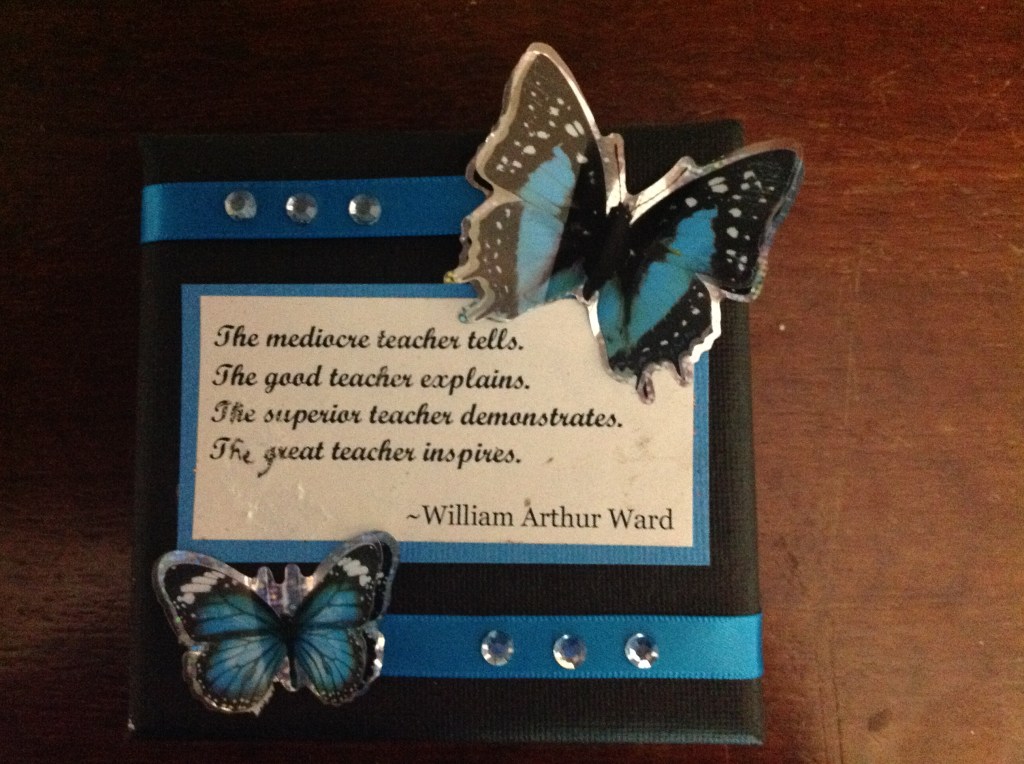
Thank you to my wonderful students, and their lovely Mum who made this for me!
He wrote of librarians and their important role in bringing people and books together, and of programs to provide books for those who might otherwise not have access. He acknowledged that reading for just 20 minutes a day can have a powerful effect upon one’s life. I’m delighted to say that on those issues the President and I agree. They are familiar topics on my blog.
For me there is nothing like passionate educators sharing their love of learning and the joy they receive from working with children. I have to admit that it gives me goosebumps; but I am a softie at heart.
In this post I am delighted to share with you a TEDX talk by teacher Lisa Lee who shares her passion for education and admits, as I also have, that she has learned more from her students than they ever learned from her.
In the video she shares her belief that
“Every single person has the capacity to make a difference”
She also discusses the Common Core, but perhaps not in the form those words may conjure up for you. She speaks of the common core in the heart, and says it must come first. I can do nothing other than agree with her words:
The common core – everyone one of us needs to be “valued, respected and accepted and seen as who we are”
I hope you enjoy the video.
Please share your thoughts and, if you care to, your appreciation for a teacher who inspired you. As President Obama said it can be “a teacher who inspired you, a book that changed you, or a college that shaped you.”
Thank you for reading. I appreciate your feedback.
In that post I mentioned classroom sharing circles where everyone comes together to share their work, thoughts and ideas, not unlike the sharing of stories and ideas at the Carrot Ranch. In the classroom everyone in the circle is equal, with equal opportunity to see and hear, and to be seen and heard. The focus is lifted from the teacher and shared equally among class members, creating a democracy.
In this post I describe some of the sharing circles I used in my classroom and show how these processes are not all that dissimilar from our own blogging circles.
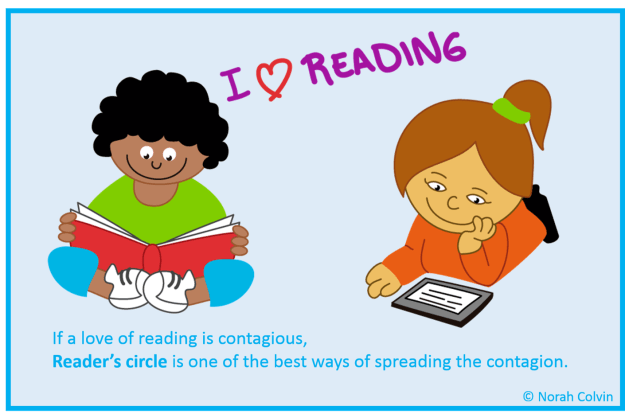
D.E.A.R.(Drop Everything and Read) is a daily quiet reading session lasting about 15 minutes. In these sessions everyone, including the teacher, chooses a book and finds a comfortable space for reading. Some children sit at desks, some on cushions in the reading corner, others prop themselves up against the wall, and others lie on the floor.
The one rule is:
Everybody reads without interruption.
This means:
Nobody talks
Everybody chooses enough reading material for the session
No outside interruptions are permitted (unless it’s an emergency)
It is essential for the teacher to engage in personal reading, along with the children, to show that reading is valued and to provide a model of “expert reader” behaviour. Inviting other school personnel to join the session is also valuable. It is particularly important for children, who may not see adults engaged in regular sustained recreational reading at home, to see adults enjoying reading.
I always concluded my D.E.A.R. sessions with a Reader’s circle. Children would bring their books to the circle and share what they had read. While there wasn’t time for every child to share every day, I ensured each child had an opportunity of doing so at least once a week. Children would:
Tell the book’s title and author
What it was about
What they liked about it, and
Read a small section to the class
I loved the way children would look to each other’s book responses to guide their own selection, often asking others to help them find a book that had previously been talked about. We do the same in sharing and reading book reviews on our blogs.
If a love of reading is contagious, Reader’s circle is one of the best ways of spreading the contagion.
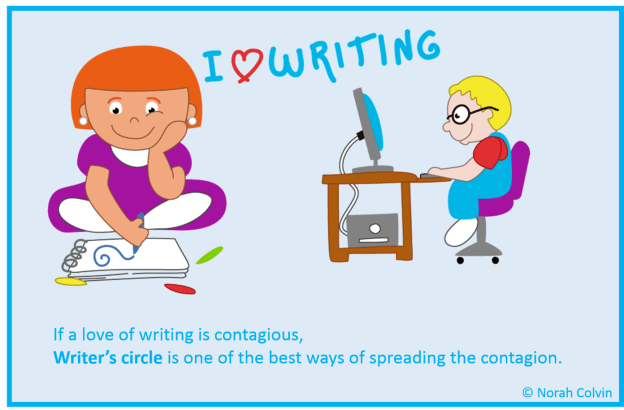
A love of writing can be equally contagious. One of the things children enjoyed most about writing, other than the actual writing, was sharing it with others. Children would have opportunities to discuss and read their writing to each other in pairs and small groups as well as in the Writer’s circle.
Sometimes we would have a pre-writing circle to share ideas and inspiration. It was rare that anyone would leave the circle without an idea. Surprisingly perhaps, it was even rarer that two would write about the same thing. Bouncing ideas off each other seemed to encourage a diversity, rather than similarity, of ideas. I guess the responses to Charli’s flash fiction prompt demonstrate the same principle.
Post-writing circles provided opportunities to discuss what had been written and to read sections to others. Writers might share what they liked about their writing, or what they were having trouble with. Others might ask questions for clarification, to understand character motivations, or to find out what will happen next. Sometimes, with the writer’s permission, I would use a piece of writing to discuss an aspect of the writing process that would have application for many. If any children were reluctant to read their own writing, I would be more than happy to read it with them.
If a love of writing is contagious, Writer’s circle is one of the best ways of spreading the contagion.
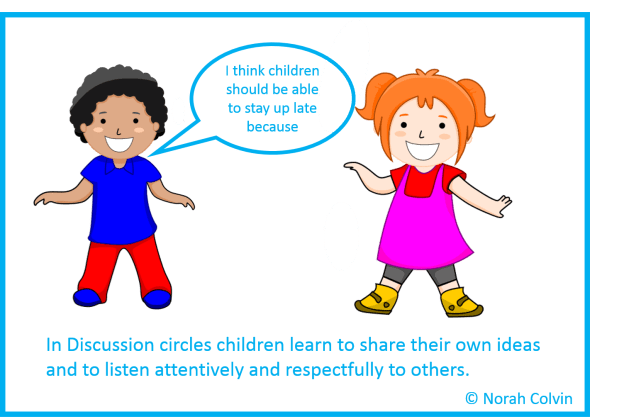
Discussion circles could occur at any time, in any subject on any topic where a sharing of ideas was required. I had a lovely smiley face ball that children would sometimes pass around, or across the circle, to each other, to indicate whose turn it was to talk. This ensured that everyone had an opportunity to share their ideas and thoughts, as well as to hear the ideas and thoughts of others. Topics could be as diverse as:
“I feel happy when …”
“When I lose a tooth …”
“On the holidays, I …”
“I think children should be able to … because …”
Each of these sharing circles gives children a voice, demonstrating that they, their thoughts, their ideas and their opinions are accepted and valued. Each encourages children to listen attentively and respectfully to others by providing a supportive environment in which they can test out ideas, then reflect and reassess in response to the reactions of others.
These discussions are not unlike those we engage in on our blogs; sharing books and articles read, and videos watched, along with our ideas and opinions and, most of all, our writing.
Thank you for the opportunity of sharing mine. I appreciate your feedback. Please share your thoughts.
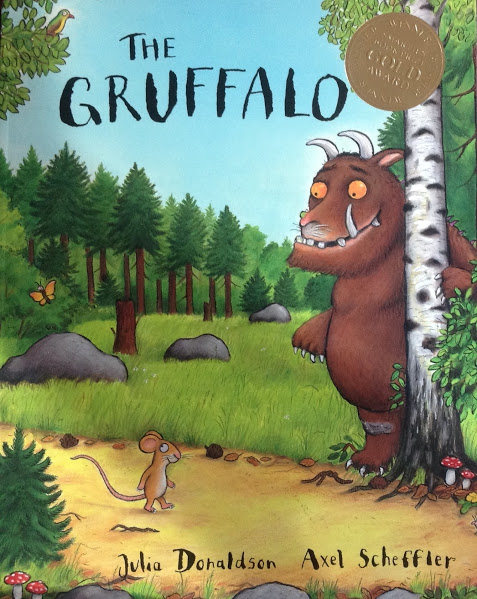
The Gruffalo is as fearsome as any monster you are likely to meet with its “terrible tusks, and terrible claws, And terrible teeth in his terrible jaws”; “a poisonous wart at the end of his nose” and “purple prickles all over his back”. The quick witted mouse, who imagines the Gruffalo into storybook “reality”, must find a way of ridding himself of the monster’s inherent danger and once again uses his ingenuity to escape.
I’m not sure if it was Donaldson’s intention, but I think this is a great analogy for the monsters we create for ourselves such as self-doubt, unrealistic expectations, and (you can add your own monster here). Not that I’d be sharing that thought with young children.
In this video Axel Scheffler explains his concept of the Gruffalo and even hints, a couple of times, that he too may be troubled by that all too common of personal monsters, self-doubt.
Throughout The Monster at the end of this BookGrover, from Sesame Street, pleads with the reader to not turn the page as there is a monster at the end of the book. You could almost say he is immobilised by this fear, or that he tries to immobilise the reader. Of course it is a lot of fun and provides much laughter. When we (reader and Grover) do get to the end of the book, he is rather embarrassed to find that he, “lovable, furry, old Grover” is the Monster. He tries to assure us that we, and not he, were the scared ones.
Of course Grover wasn’t the monster only at the end of the book. He was always the “lovable, furry” harmless monster. It was his fear that was the real monster. How often are we immobilised by our fear, and how often when we take that jump despite it, do we find our fears to be groundless? Sometimes I think, or is it only me, we are our own worst monsters setting ourselves impossible targets with too-high expectations that lead us only to disappointment if we don’t achieve them.
But if we view ourselves as works in progress, in the process of working out where we want to be and how to get there, we can find contentment in what we achieve along the way, in where we are and how far we have come, rather than ignoring those milestones and looking only at how much further we must (in our own minds) go.
It is all too easy to contribute to the development of children’s personal monsters by doing to them what we do to ourselves: setting unrealistic targets, expecting too much, insisting on error-free work, measuring them against external benchmarks … To avoid this, we need to view them also as works in progress and encourage them, through a growth mindset, to reach their own milestones and goals in the time that is right for them.
Like the mindset of the mouse in The Gruffalo who was able to think on his feet and overcome the obstacles, or that of Grover who realised there was really nothing to be worried about at all.
We need to be not afraid of the monsters under the bed or in the cupboard, most of which we have created in our imaginations and stuffed there, sometimes with the assistance of others, allowing them to multiply like wire coat hangers until there is no room left for anything good. I have taken the theme of internal monsters for my response to Charli’s challenge.
Open, close them, open anew
The picture was clear. Taken with wide open shutters and long exposure, then developed in black and white for extra clarity, the result was undeniable and exactly what would be expected.
“You’ll never amount to anything.”
“That’s rubbish.”
“Pathetic.”
“You’re always the troublemaker.”
“Because I said.”
“Shut up!”
“Stop asking questions.”
An existence devoid of value was drilled with reminders hurled unrelentingly from birth. Well-schooled in self-loathing, the lessons were regurgitated without effort or question. The monsters without had created the monster within. How could one escape from what was recognised only as truth?
And now for something a little lighter:
The Monster Mash
Thank you for reading. I appreciate your feedback. Please share your thoughts.
In recent posts there was some discussion about the importance of education, the value of schools and the role of teachers. I thought it timely to re-share this post, first published in July 2015.
Earlier this week I read a post by Kimmie of Stuck In Scared about Ten Things of Thankful. I have also read many other posts about things to be thankful for. These posts prompted me to share something for which I am thankful: schools and education.
I know that I often write about what I consider the shortcomings of traditional schooling and make suggestions of how schools could be improved. However I live in a country that values education and in which every child has a right to a free education. For that I am thankful. Those of us who have access to schools and education are the lucky ones.
Malala’s is an inspirational story of courage, and how one person can change the world. In this trailer for the movie of her story to be released later this year, she says,
“One child, one teacher, one book and one pen can change the world.”
(Note: I haven’t seen the movie yet. I’d love to know if any readers have.)
In her speech accepting the Nobel Peace Prize in 2014, Malala says,
“I am just a committed and even stubborn person who wants to see every child getting quality education, who wants to see women having equal rights and who wants peace in every corner of the world.”
The Malala Fund, of which she and her father are co-founders and to which she donated her prize, “empowers girls through quality secondary education to achieve their potential and inspire positive change in their communities.”
She calls world leaders and people everywhere to take action and make education their top priority, for all the children of the world, not just their own children.
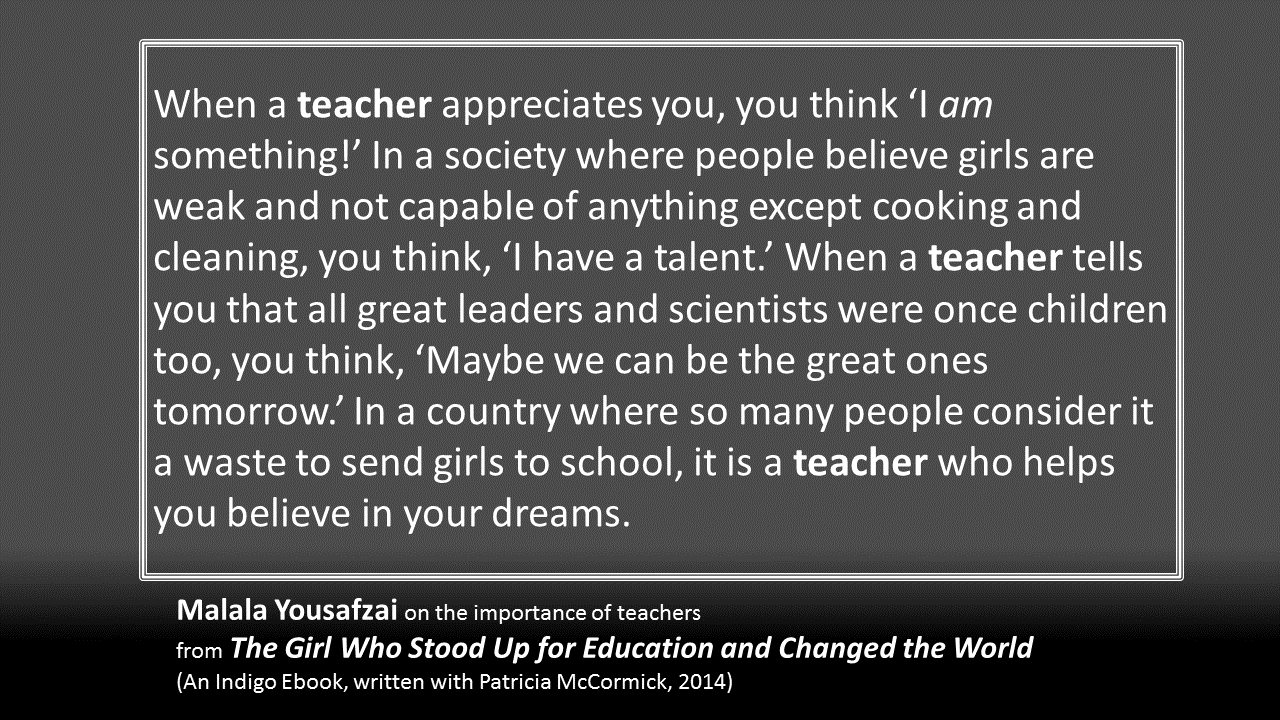
This is one of my favourite quotes from the book:
I think one of her most influential teachers must be her father.
Thank you for reading. I’m sure you have found Malala’s story just as inspirational as I have.
I appreciate your feedback. Please share your thoughts.
This week at the Carrot RanchCharli Mills is talking about the importance of belonging to and having the support of a community. Charli is talking about the supportive rural community where she lives and describes the way everyone rallies around to help in times of need. No asking is required. Everyone responds and pitches in, like spokes on a well-oiled wheel.
Charli also talks about the importance of the online community, reminding writers that spending time on social media is not a bad thing but an essential part of building community. For many of us introverted writers it is the easiest way of linking up with like-minded people. We gravitate like moths to the flame for our weekly meet-ups around the Carrot Ranch camp fire where Charli stokes the flames to inspire writers and build community.
Charli says that,
“Community is my foundation. All else pushes out from that hub like spokes on a wagon wheel.
Community is the hub; it’s our core. From the community, spokes of opportunity open up to reach the wheel that drives us in the writing market — readers.
An organic community is one that occurs naturally. It’s the kindred-spirits, the shared-values bloggers, the like-minded who gather to write, read and discuss. We might be from varied backgrounds, genres and experiences, but we find common ground in our process, ideas and words.”
People are social creatures, and that sense of belonging to a community, whether large or small, is something most desire. The type of community in which I have spent most of my life is the classroom community, typically an early childhood classroom. As with any other, it is essential that all members of a classroom community have a sense of belonging and feel valued and respected.
Creating a welcoming classroom with those essential ingredients: having a sense of belonging and feeling valued and respected were always high on my list of priorities as a teacher. I tend to mention this frequently and have done so here, here and here, to list just a few.
That these ingredients, along with the other essentials, learning and fun, were thoroughly mixed through everything I did is what characterised my classroom. In my classroom, the community knew that everyone, whether child, parent, support staff, or volunteer, was welcomed and valued for the contribution each made.
Routines and expectations enabled the classroom to function effectively and I tried to add a little fun to lighten up even the dullest of routines expected of us. One routine that will be familiar to many is the daily roll call. The teacher sits or stands at the front of the room calling, in a repetitive monotone and in alphabetical order, the name of each child who responds with a half-hearted, “Present, Miss”. Meanwhile the other children wriggle and fidget waiting for the tedium to finish.
But not in my classroom. Within a matter of days my children knew their position, and probably that of many others, in the roll. While I marked attendance on the roll each day as required, I didn’t call the children’s names. Each child in turn stood and greeted the class warmly, “Good morning, everyone!” The class and I responded by returning the greeting to the child. Everyone was involved all of the time, a community in action.
This five minutes of the day was always fun and filled with smiles and laughter. Some children jumped up with arms outstretched and called out loudly. Some popped up quickly and back down with a quick greeting. Some did a little dance and sang the greeting. Others greeted us with a new language they were learning, or their own first language.
When the children were confident with the order, we would sometimes do it in reverse order. This gave them a little more to think about, but it didn’t take them long to get the hang of it. The children who were usually last on the list enjoyed being first for a change.
When new children joined our class, their names weren’t always immediately added to the roll in their permanent alphabetical location as the rolls were printed fortnightly. This gave us a great opportunity to discuss where in the roll the child’s name would be. Sometimes we had to discuss more than the first letter in family names to determine the correct placement. Oftentimes this would be one of the first things children would insist upon. They wanted everyone to feel welcome and fit in to our warm classroom community.
Adding a little bit of fun to an otherwise tedious task had other benefits:
Building community,
Recognising individuals.
Being engaged,
An opportunity for activity
Learning alphabetical order
Developing memory
We could also have a bit of fun seeing how quickly we could line up in alphabetical order, each time improving on the last. It was a quick way of making sure everyone was there after an activity or break.
He waited quietly as yet another teacher heard his life story; a story without hope of redemption or the expectation of a happy ending. With each familiar incriminating snippet, “more schools than years”, “single parent”, “transient”, “neglect and abuse”, he’d instinctively glance towards the teacher. Instead of the usual furrowed brow and flat-mouthed grimace, he found sparkling eyes and a turned-up smile. He peered into the room. When the children saw him looking, they waved him in. He hesitated. Then the teacher said, “Welcome to our class, David. We’ve been waiting to meet you. Come and join us.”
Thank you for reading. I appreciate your feedback. Please share your thoughts.
This morning Hub mentioned a book he had read about and asked if I had heard of the author Wayne Dyer. “Of course,” I replied and proceeded to explain that I had read many of Dyer’s books, had gone to a seminar to hear him speak and had been swept off my feet by accompanying speaker Deepak Chopra. I mentioned that a favourite book of his was marked now by a gap on my shelves, a phenomena recently mentioned by both Caroline Lodge, who blogs at book word and talked about missing books, and Anne Goodwin, who blogs at annethology and talked about the dilemma of lending books.
I think there may be more than one missing from my self!I think. looking at these titles, its time for some re-reading!
This favourite book, read and lent many times, What Do You Really Want for Your Children? was very influential in shaping the way I parented and taught. It is one of a few books that I read and re-read with a highlighter and sticky notes. There was much in it for me to get my head around. While I am unable to now refer to it for its wisdom, one of the things that I remember most was a hypothetical letter from a child thanking parents for the way they had parented. I considered it a letter any parent would love to receive, personalised of course.
As often happens, Hub got the long (love) story as it tumbled out in a torrent of reminiscences and of joys in discovering inspiring minds. When I paused long enough to take a breath, I remembered to ask about the book to which he referred. He said it was about the recollections of past lives as told by young children, of children choosing their parents and of being in heaven. Later research informs me that the book is Memories of Heaven, subtitled “Children’s astounding recollections of the time before they came to Earth”.
I had previously, many years ago, heard the suggestion that children choose their parents. I like to think (though don’t believe) that my children chose me, and often thank them for doing so. They have taught me a lot about life. I am a strong believer in the wisdom of young children: if we are attentive and take the time to observe and listen, we can learn much from them. Sometimes it seems they enter the world with wisdom but “we” do our best to obliterate it as quickly as we can.
As it is wont to do, my thinking followed a circuitous path with if, buts, maybes and questions. Children choosing parents may be a nice idea; but what of the children living in poverty, with famine, and in war-torn areas? Why would anyone choose those conditions?
That question led me through my basic understanding of the Buddhist philosophy in relation to karma and rebirth. I have read a few books on the subject but don’t profess to have any real knowledge. I don’t like to think that these situations may be endured as the result of bad karma from a previous life, and am not even sure if they would be viewed that way in Buddhist thinking. Perhaps these situations could be an improvement on the previous, a step to the next? Maybe that’s not so unpleasant a thought.
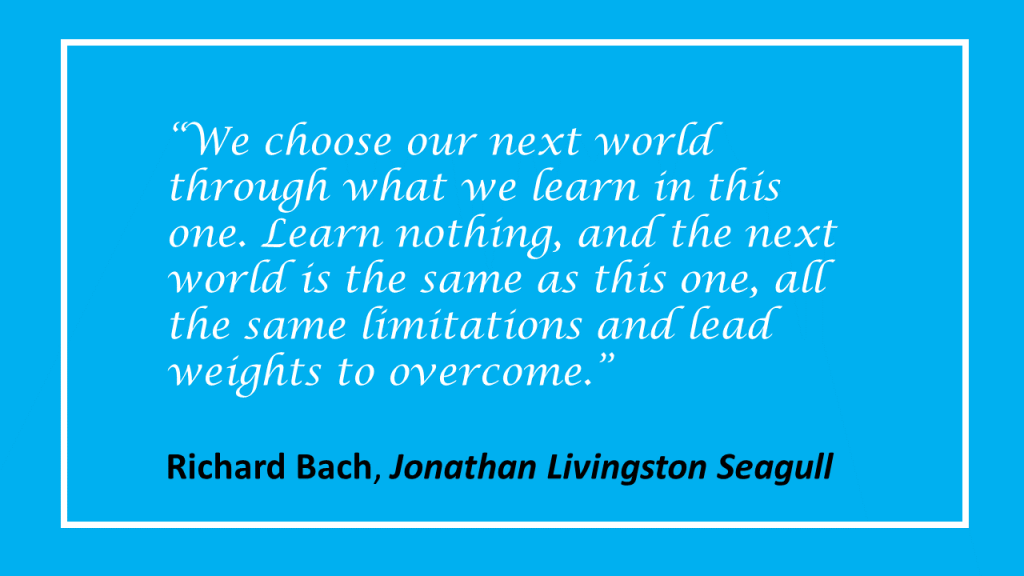
I like the idea of improvement, of always learning, of striving for perfection and enlightenment. It is probably one of the reasons that the “yet” thinking of a growth mindset fits nicely into my philosophy. It explains why one of my favourite books (I almost wrote “of all time” – what would that say about me and my past lives?) is Jonathan Livingston Seagull by Richard Bach, who dedicated the book “To the real Jonathan Seagull, who lives within us all”.
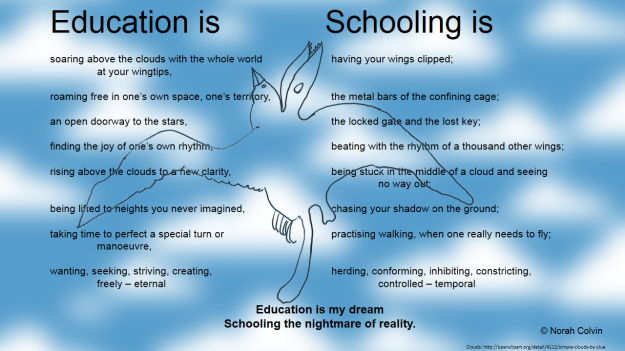
I had always thought that being a bird would be pretty amazing with the freedom to fly above the world and look down upon its beauty. Maybe this is one reason Jonathan’s story appealed to me. Perhaps it explains the analogy of flight in my poem about education. Maybe it’s why I love to sit at an airplane’s window and marvel at the scenes below.
And so my thoughts meandered, drifting through clouds and pockets of time, until they were suddenly interrupted by the voice of the child next door singing, “Let it go”.
I think those three words “Let it go” may be the only ones that anyone sings along with, but the message of the song is powerful: to let go of insecurities and realise the potential within; don’t care “what they’re going to say” and acknowledge that “It’s time to see what I can do”.
The message is not unlike that of Jonathan Seagull: to stretch beyond the limits imposed by others and their labels and to attain self-realisation. It is a journey undertaken by most thinking people, as demonstrated by the identity crisis that has befallen Sarah Brentyn who blogs at Lemon Shark. What is that if not a call for release from chains that may bind to enable the freedom for flight?
The end of a year is generally a time for reflecting on what has been achieved and what is yet to be. Perhaps it is also a time for letting go in preparation for what lies ahead.
I hope that, as you reflect, you are happy with what you have achieved, with where you are, and with the path that lies ahead. I wish you a safe, fun and fruitful journey along the “road to find out”.
I have enjoyed your company this year and appreciate your feedback. The conversations are what keep me going, growing and learning. Thank you. I look forward to the journey continuing.
Thank you for reading. I appreciate your feedback. Please share your thoughts.
At this time of year in many places around the world there are children excited about the magic of Christmas. I don’t know the numbers to compare but there are a good few, mainly adults I suspect, who say “Bah humbug!” While I was once a firm believer in the magic and did my best to keep it alive, I now tread warily, unsure of how best to approach this topic. As a parent I didn’t get it right so can offer no wisdom of my own.
After many years of seeming to go along with the story, long after I thought it should have been abandoned, Daughter finally questioned why, if the stories weren’t true, would parents lie to their children. She preceded her question with the request to not say if it was true or not, she just wanted to know why parents would lie.
I let her down on both counts. I told her the truth of the story and couldn’t explain why parents would lie. I’m not sure that I’ve been forgiven for either failing, and I have never stopped thinking about what may have been a better way of handling the situation if I was ever offered the opportunity for a do-over.
Interestingly I don’t recall having any similar concerns about my parents lying or disillusionment on finding out the truth. Daughter’s older brother voiced no concerns either, but I cannot be certain whether or not he had any. Until now when, with children of his own, the issue again is raised.
At first Son’s intention was to not engage in Santa stories; but with one child at school and the other in kindy the situation becomes more complex. The children are more exposed to the stories through friends and organized events and there is the concern about “spoiling” things for other families. Caught between the pressures of a shared popular culture and the questions of intelligent, critical thinking children, the parents must make a decision. I sympathize and wish them better success than I experienced. I have suggested to Son that he consult his sister. She knows better than I about this one and can maybe help him avoid making the mistakes with his children that I made with her.
There is a lot of well-intentioned advice on the internet, but the value of some is debatable. Many explain the Santa story as being about love, kindness and generosity, and the magic as the assistance given by many helpers, including parents, throughout the world. Many explanations are likely based on the famous response, Yes Virginia, There is a Santa Claus, to an 8-year old’s letter, the authenticity of which has been questioned.
Some of the explanations and stories encountered recently include:
As much as I love the sentiments of these stories, they don’t really help me with my truth or lie dilemma. So I returned to a post by philosopher Michelle SoweyHO HO HO! (Q.E.D.) in which she questioned the ethics of the Santa lie. I shared this post previously in April 2014. Michelle agrees that the attempt at compromise in many of the explanations, “It’s Santa, Jim, but not as we know him”, is unsatisfactory because:
the historical figure St Nicholas is omitted
Christmas for most children is more about receiving than giving
of a conviction that children should be encouraged to believe in things that are real (visible or invisible, tangible or intangible) and to disbelieve in things that aren’t (all of which are invisible), and
it is better to develop critical thinking than to believe in intangible things.
She says,
“Parents can be powerful advocates for their children’s intellectual autonomy. They can help their kids to draw their own well-reasoned conclusions; to value coherence and logical consistency (among other things) in the construction of their worldviews; and to cleave to their beliefs with a level of confidence proportional to the amount and quality of evidence available.
With a little analysis and reflection – perfectly accessible to an eight-year-old – it’s clear that believing in things without good evidence often means believing in things that aren’t true.”
Okay. We agree on that, but how would a parent extricate themselves from the myth once they have become entangled?
David says that parents who lie to their children by supporting the myth are not necessarily bad parents (thank you!) but they would be better parents if they didn’t.
He adds to Michelle’s list with these:
Children should thank their parents, who have purchased and sacrificed, not Santa; “gifts are the giver’s way of showing the recipient that he or she has worth and is loved. Children need assurance their parents see them as worthwhile and valuable – not Santa Claus.”
Santa shouldn’t be used as a threat e.g. stop doing that (bad behaviour) or Santa won’t come
It stifles imagination because you can’t pretend if you believe: “By tricking children into actually believing Santa exists we rob them of the opportunity to imagine he does.”
And the big one: the loss of trust“Finding out their parents have lied to them about Santa Claus can cause children to think their parents are lying to them about a great many other things.” He says it is probably a bigger risk than most parents realize.
David says that the tradition of Santa and gift giving is relatively recent and “sold” to consumers primarily for financial reasons. He urges parents to stop tricking their children into believing the myth. My experience supports that, and I wonder how I would go about it if I had the opportunity again.
This week at the Carrot RanchCharli Mills challenges writers to In 99 words (no more, no less) write a story about “spreading the light.” While she suggests it could be used it to honor or memorialize a loved one, I thought I would attempt to shed light on the Santa myth and its potential for harm. Hopefully it’s not too far off the mark as I always loved, and protected, this myth; but perhaps a decision to protect the intelligence and critical thinking of my loved ones, and children in general, is even more important.
Jimmy searched the shelf for something he hadn’t heard before. There weren’t many. Suddenly he found one, slid it off the shelf and nestled into Dad’s lap.
“Twas the night before Christmas …” began Dad.
“Who…, what…, where…, why…, how…,?” began Jim, marveling at flying reindeer and pondering possible destinations.
As Dad closed the book Jimmy was ready with his usual question, “Is it true?”
“What think you?”
“As true as a fire-breathing dragon, a flower-petal fairy, and a talking animal,” laughed Jim; then added, “But you know, parrots really can talk!”
For whichever December festival you celebrate, and in whichever way you celebrate it, I wish you peace, joy and love enough to light up your world.
Thank you for reading. I appreciate your feedback. Please share your thoughts.
One of the greatest contributors to a child’s happiness at school, indeed for happiness in life, is friendship. Talking with children about their day at school will more than likely contain some reference to their friends; who they played with, who they didn’t, who was absent, who was mean. If they felt sad during the day it was possibly because someone wouldn’t play, wouldn’t let them play, or was mean.
Getting along with others seems to come naturally to some children, especially to those who see positive social skills modelled by parents and family friends, who are given lots of opportunities to mix with others of all ages, and who are encouraged to express themselves and their feelings. Other children don’t find it so easy, sometimes due to lack of positive role models, but often for other reasons.
Most children require some explicit teaching from time to time, for example to share, take turns and to use friendly words. Many schools incorporate the development of friendship skills into their programs. Some schools, such as one that employed me to write and teach a friendship skills program in years one to three, develop their own programs. Other schools use published materials such as the excellent You Can Do It!program which teaches the social and emotional skills of getting along, organisation, persistence, confidence and resilience.
In the early childhood classrooms of my previous school, we used the songs, puppets and stories included in the You Can Do It! Program. We also involved children in role play and discussion, providing them with opportunities to learn the language and practice the skills in supportive and non-threatening situations. Having a common language with which to discuss feelings, concerns and acceptable responses meant issues were more easily dealt with. More importantly children learned strategies for developing positive relationships and friendships with others. They came to understand their own responses as well as those of others.
I have talked about friendship in many previous posts, including here, here and here. My online friend Anne Goodwin, who blogs at Annecdotal, even wrote about it in a guest post here, and I described friendship trees that I used with my class here.
In this post I want to acknowledge a new friend and a long-time friend. (I can’t say ‘old’. She’s younger than I!)
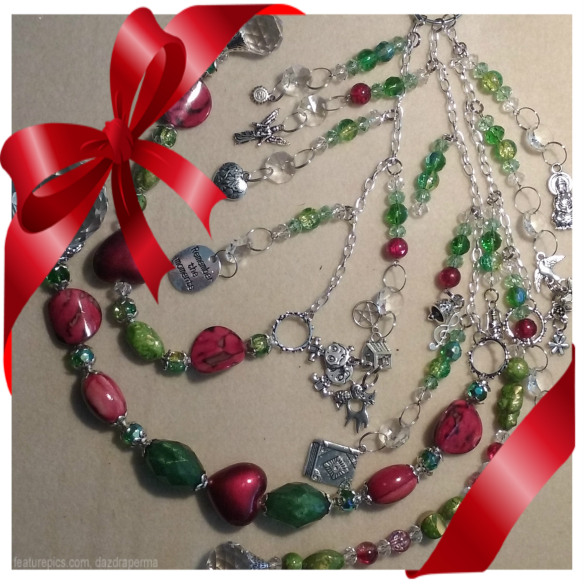
My new friend is Pauline, The Contented Crafter. At the beginning of last week Pauline announced a very generous giveaway for Christmas which I shared with you here. Pauline invited readers to nominate someone as a deserving recipient of her beautiful Christmas light catcher. She posted the nominees and their stories here and invited readers to vote for the two they would most like to receive the light catcher.
I nominated Robin, a friend of over thirty years. That must be deserving of an award in itself! In case you missed her story on Pauline’s blog, I include it here so that you can understand why I value her friendship so highly.
I have a wonderful friend for whom this beautiful light catcher would be a perfect gift. Each of its strands holds a special significance, as if Pauline had her in mind.
She gifted her friendship to me more than thirty years ago and, thanks to a miracle and the protection of angels, it is a gift that continues.
Over twenty years ago, on my birthday, she was involved in a serious car accident. My birthday became her life day, a constant reminder that life and each passing year is a precious gift.
Her many injuries, requiring numerous surgeries over the years, did not injure her bright, cheerful nature and positive outlook on life. Although she lives with constant pain you wouldn’t know unless you asked, and then only if she chose to tell you.
She has an enormous generous and loving heart, and her home is warm and welcoming. Family, especially her two grown daughters and her dear Mum who passed this year, is important to her. She loves to bake and craft individual gifts for her family and friends. She is always busily thinking of others.
She is a gifted musician and amazing music teacher. She plays the flute and sings like a Robin. She incorporates music and fun into classes for children and lessons for adults learning English. All come to her classes eager to learn and leave singing with joy and acceptance.
At Christmas the family gather round to decorate the tree and “remember the moments” marked by ornaments made by smaller hands, collected on travels, or signifying achievements and occasions like graduations and engagements.
I know my friend would treasure this beautiful light catcher as another reminder of life’s precious gifts and moments that make it magic. Thank you Pauline for the opportunity to express openly how much I value her friendship.
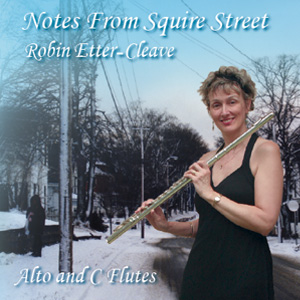
You can find out more about Robin on her website and even purchase her wonderful CD “Notes from Squire Street”.
I am very excited to say that Robin is included in Pauline’s list of winners. In fact Pauline’s generosity is being extended to many of the nominees, and even to one for commenting on the post. Very soon Pauline’s light catchers will be dispersing rainbow light of friendship and joy around the world. I think that is a beautiful and generous gesture.
Thank you for reading. I appreciate your feedback. Please share your thoughts.
Creating a positive classroom environment in which students feel welcome, accepted and respected is probably high on the agenda for most teachers. It certainly was for me during all my years of classroom practice.
Students require an environment in which they feel comfortable and supported, as well as encouraged and challenged to stretch beyond current levels of skills and knowledge, to step beyond their current comfort zones with confidence in the knowledge that, while learning anything new can be a risky business, they will be supported in the process.
But this does not just come from a “feel good” place in teachers’ dreams and imaginations. Research provides evidence that it is true. Professor John Hattie, a researcher in education, undertook a very ambitious project, synthesising data from over 800 studies involving more than 80 million students. He published his findings in two books called Visible Learning and Visible Learning for Teachers.
Hattie says that
“It is teachers who have created positive teacher student relationships that are more likely to have the above average effects on student achievement”.
Thank you to my wonderful students, and their lovely Mum who made this for me!
This article, which summaries some of Hattie’s findings about teacher-student relationships, states that
“the quality and nature of the relationships you have with your students has a larger effect on their results than socio-economic status, professional development or Reading Recovery programs. It is not that these things don’t matter, but rather that your relationships with students matter more.”
It is wonderful to find that what I have always believed and practiced is now firmly backed up with research.
I have written before about my use of affirmation songs and of connecting literacy learning to children’s lives and interests. In this post I will share just a few of the physical attributes of the classroom that contributed to that overall positive and supportive environment I worked so hard to establish.
From the very first day of any school year I ensured that children not only felt welcome in the classroom but knew that it was their classroom, that they had part ownership of the space and its environment.
I would prepare a large welcome chart for the door with my name and photograph and the words: “Welcome to grade one.” Children’s names and photographs would be added by the close of the day.
In our school each child was allocated an individual desk with a tidy tray underneath for storing belongings. I would arrange the initial seating of children in groups based on what I knew of their friendship groups from the previous year. For each child I would place on the allocated desk:
A desk name (to identify the desk, to use as a model for writing, to assist children in learning to read each other’s names)
A welcome letter
A name badge (to identify them and their class at break time)
A small gift e.g. a pencil or keyring
Welcome pack
During the day I would photograph each child and print two of each.
One of each child’s photographs would be added to the welcome chart with the child’s name. (see above)
The other would be added to a self-portrait and displayed on a classroom wall.
I usually asked the children to complete these during the first session so that I could have them on display when the children returned to class after first break.
This was just the start. Throughout the year my classroom was a constantly changing display of children’s work. Children love to see their work displayed. It gives them an immediate sense of belonging, of being valued, and of ownership. Parents love to see it too, as this (unsolicited) letter written by a parent to the principal at the end of a school year testifies.
My classroom welcomed everyone: children, parents, volunteers, aides and administrators. It was a comfortable place to be. Fortunately it was not often required to be a refuge in the true sense of the word, though allowing me to experience over and over the joys of being six certainly shielded me from many less pleasant situations that may have been met elsewhere.
While Marnie of my stories is a fictional character, sadly there are many children suffering as much as or more than I portray for her. It is for children like her that a warm, caring relationship with a special teacher can be empowering and life-changing, the one bright spot in an otherwise difficult life. I wish for all children a loving place of safety, acceptance, trust and respect. Marnie found it in a special teacher, Miss R.
Safety
Marnie loved art classes with Miss R. She loved art, but she loved Miss R. more. The days when art class was last were best; had been ever since that first time when she’d dallied, nervously, reluctant to leave, and Miss suggested she stay and “help”.
Miss R. understood Marnie and Marnie trusted Miss R. Sometimes they would tidy in silence. Other times they’d chatter lightly about distracting things like television, music or books. But sometimes, when dark clouds loomed, Miss R. would gently ask, “What would you like to tell me?” Today the clouds looked about to burst.
Thank you for reading. I appreciate your feedback. Please share your thoughts about any aspect of this post or flash fiction.
This week at the Carrot RanchCharli Mills is talking about theft; of family pets, of the apples from her garden, of property, and even of good name through myths and false accusations.
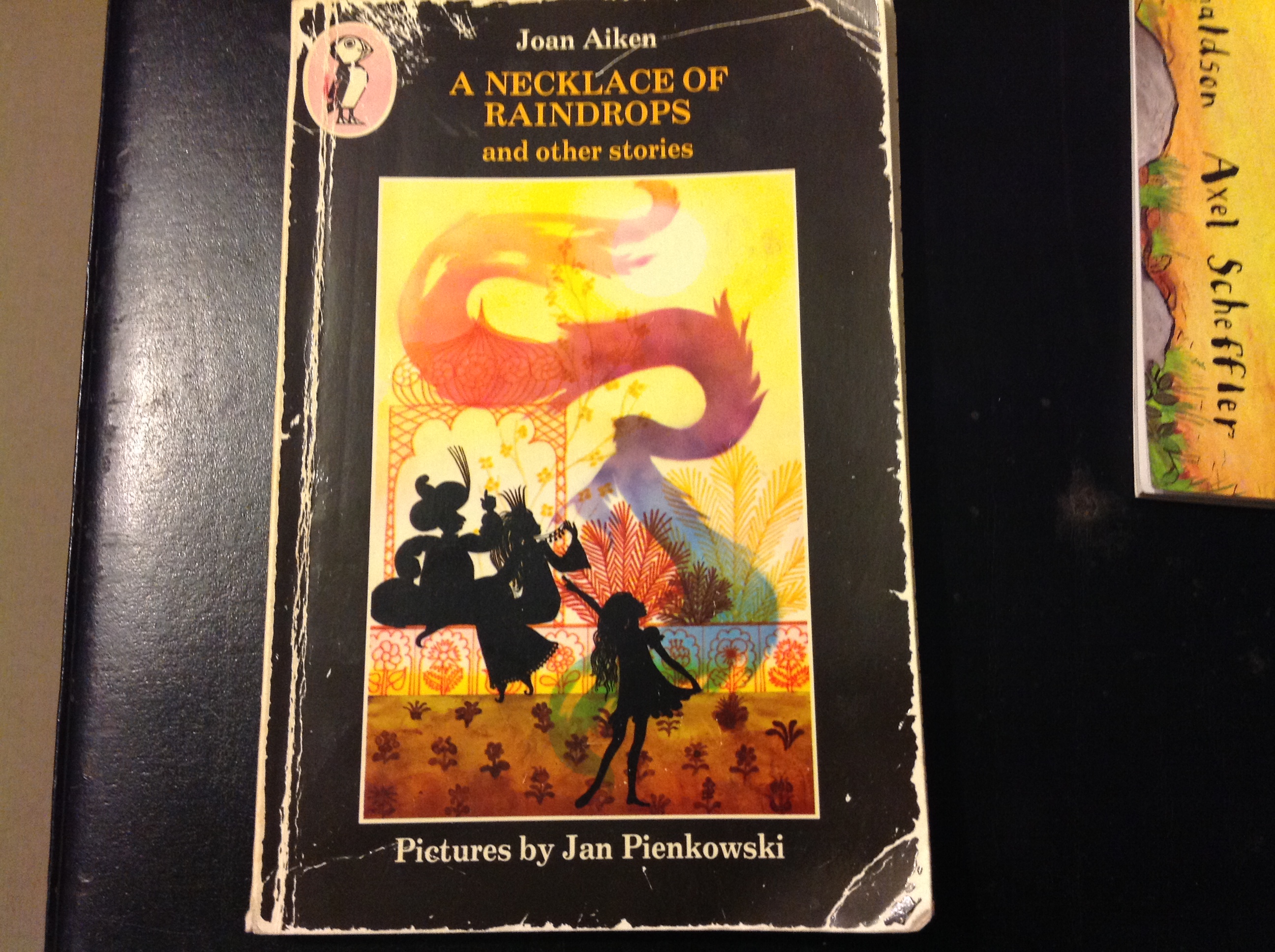
I didn’t have to think for long to come up with three fairy tales that deal with the issue of theft. Why three? Because three is the fairy tale number. I’m sure most of you will be familiar with these two traditional fairy tales: Goldilocks and the Three Bears, and Jack and the Beanstalk. Some will not be familiar with Joan Aiken’s more modern (1968) fairy tale A Necklace of Raindrops.
If you were to search online for teaching resources to support use of Goldilocks and the Three Bearsin an early childhood classroom, you would have much from which to choose. Many of the available resources are worksheets and printables with few requiring children to think beyond the surface level of the story.
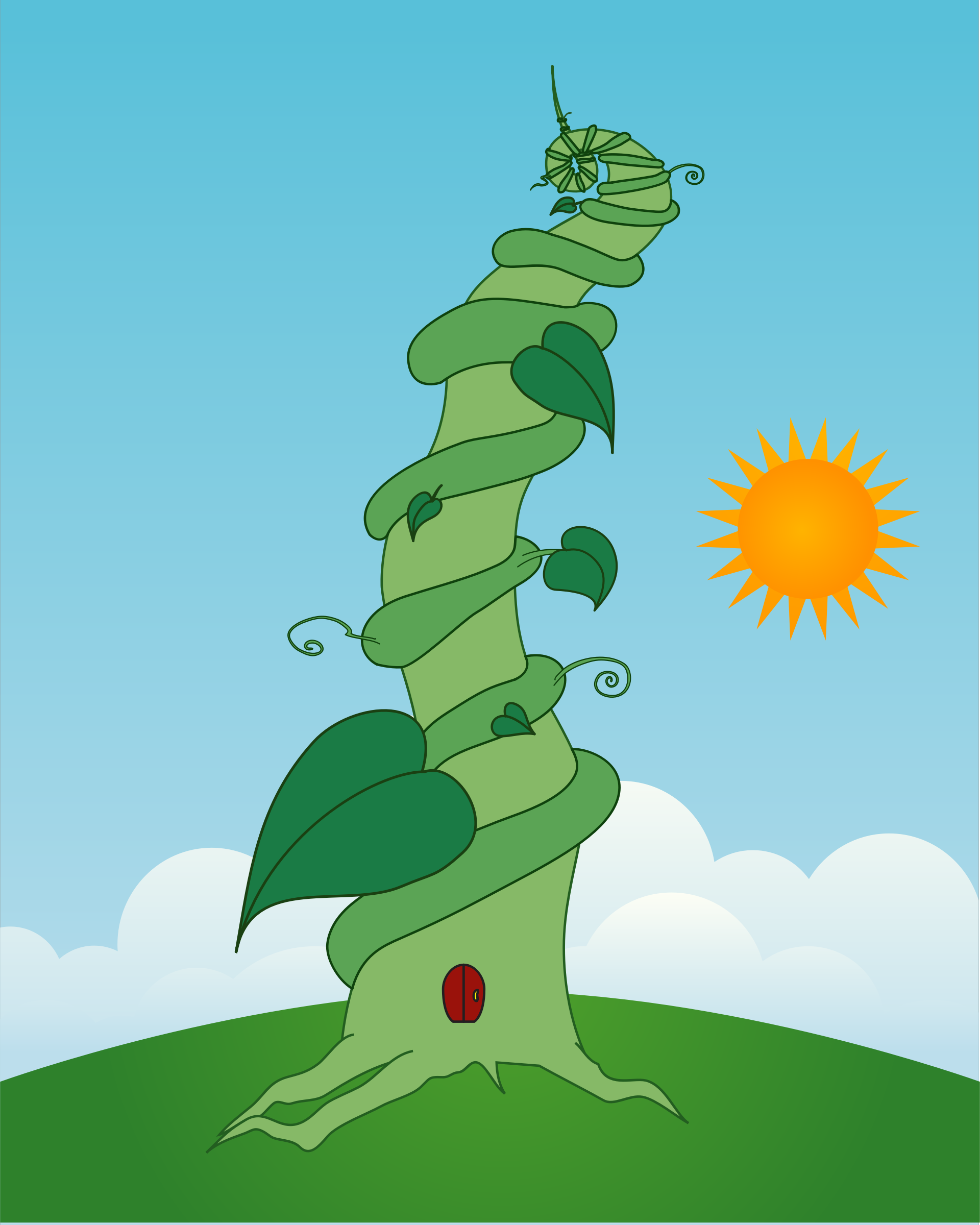
The same is true for Jack and the Beanstalk. A search for supporting teaching resources also brings up a plethora of worksheets and printables for colouring, cut and paste and writing activities.
While it’s no secret that I am not a fan of worksheets, activities such as those may have a place if they are used to stimulate language development through retell and role play, support beginning readers and writers in a meaningful context and develop basic mathematical concepts. Children might also be involved in activities associated with the story such as making porridge or growing beans.
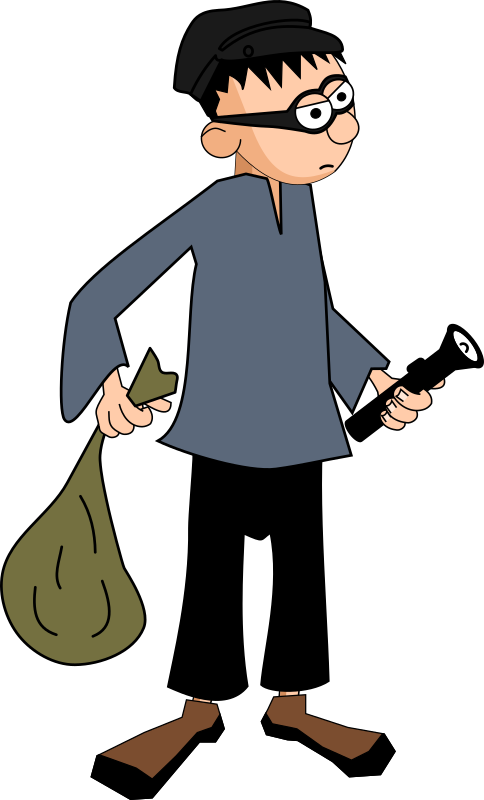
However children can be encouraged to think more deeply through discussion of the motives and feelings of the characters and the morality of their actions. After all, both Goldilocks and Jack were guilty of break and enter and theft; Jack repeatedly so. Jack didn’t follow his mother’s instructions and was “conned” by the man with the beans. Goldilocks was also guilty of vandalism.
A strategy for encouraging thinking:
Ask children to:
retell story events
tell about the character and character traits
make a judgement about the character’s actions: Was what Goldilocks did good or bad? Was what Jack did good or bad?(Note: It is best for children to make and record this judgement independently of others before sharing their thoughts. The method of recording would be dependent upon the age and ability of the children. They could, for example, write the word “good” or “bad” in a book; or colour a picture of the character e.g. green for good, red for bad.)
Tally and/or graph children’s responses.
Invite individuals to explain the thinking behind the decision. A lively discussion may ensue, particularly if there are mixed responses. It would be of interest to note which children maintain their position, which waiver and which change their opinion.
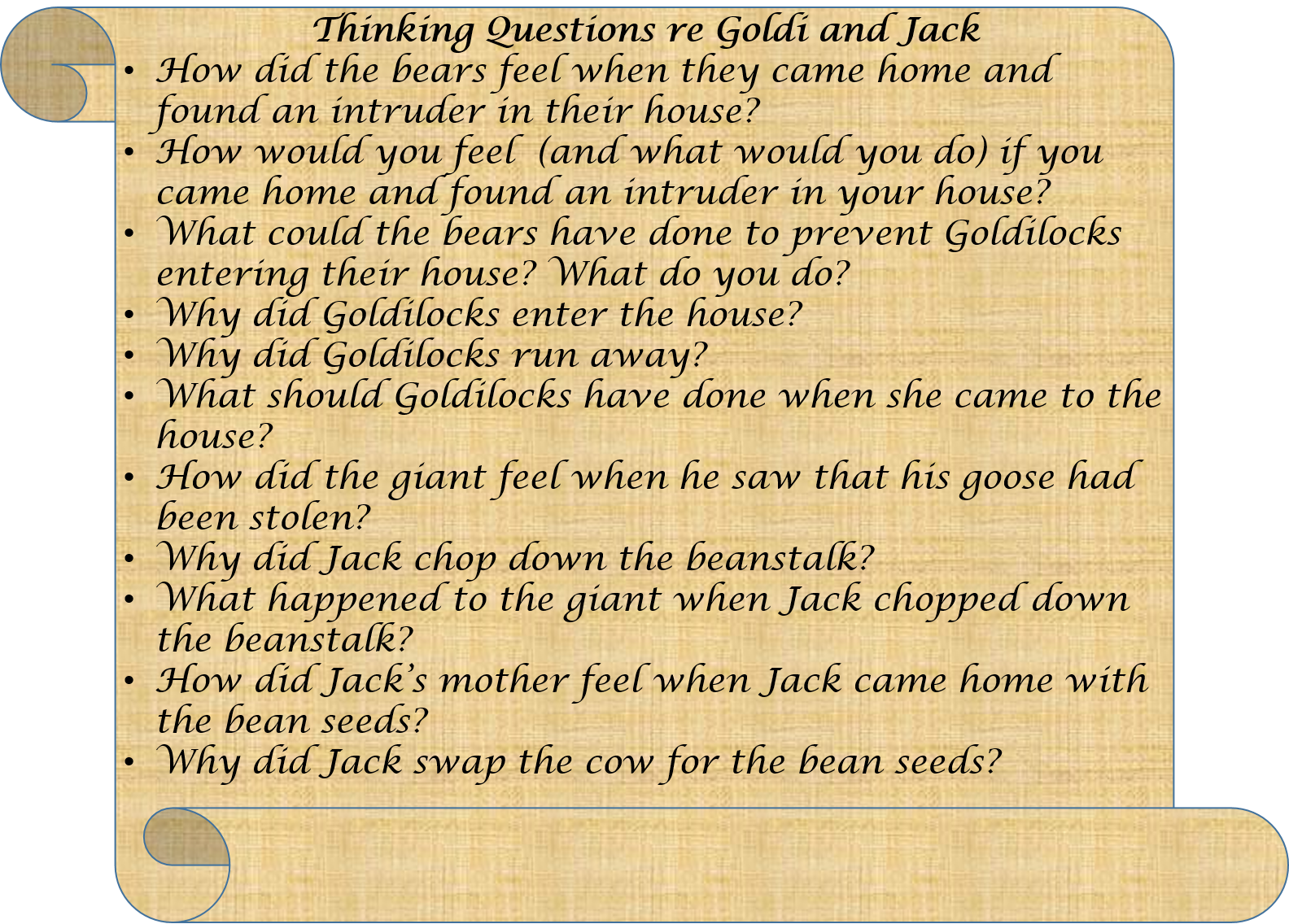
Other questions can also be asked, and children can be encouraged to ask questions of their own, for example:
Hopefully the events of these stories will be just as fanciful to the children as the settings. Most children will not have records of breaking and entering, and any incidences of petty pilfering or even vandalism will have occurred as part of their learning about property and ownership. Some appropriation of another’s toys or breakages in frustration or misuse are common and nothing to cause concern about future morality.
While the setting of A Necklace of Raindropsis equally fanciful with the personification of the North Wind, talking animals and a magic necklace, the situation, involving schoolyard jealousy and theft, may be more familiar. You will find few teaching resources to support it in an online search.
Here is a brief synopsis:
A man frees the North Wind from a tree.
The North Wind gives the man a necklace of raindrops with magical powers for his baby girl, Laura.
Each year a new raindrop with new powers is added.
Laura must not remove the necklace.
At school Meg is jealous of Laura’s necklace. She tells the teacher who insists Laura remove the necklace.
Meg steals the necklace.
The animals help Laura get the necklace back.
The North Wind punishes Meg.
(Note: My few words have not done justice to Joan Aiken’s beautiful story. If you can, please read the full version.)
The story is rich with opportunities for discussion with children, including:
Envy and jealousy — feelings familiar to many children who may have taken, borrowed or used something that didn’t belong to them. They may have squabbled about ownership or use of an item or had someone take something of theirs. Learning a sense of ownership as well as sharing is important in early childhood.
Telling the teacher — sometimes called “dobbing” in Australia. When is it important, when doesn’t it matter? What were Meg’s motivations?
Honesty — Was it okay for Meg to tell her father that she had found the necklace on the road? Why did she tell him that? What would he have done if she told him the truth?
“Finders keepers” — Is it ever okay to keep something you find? When might it be okay to do so?
Following the rules – The teacher insisted that Laura remove the necklace. What could Laura have done or said? What else could the teacher have done? Was it fair for Meg to tell the teacher?
Stealing the necklace — Was Meg good or bad to take the necklace? Why?
Why did the magic not work for Meg?
Was the North Wind’s punishment of Meg appropriate? (He blew the roof off her house so she got wet.)
Thinking of these issues familiar to many in the schoolyard and playground made me think of Marnie who has experienced some similar situations. In this episode a boy dobs on Marnie for having a unicorn at school. Toys weren’t allowed, but this boy knew it meant Marnie was troubled again and needed the teacher’s help. A teacher is also called upon in this episode when Marnie has locked herself in the toilet and won’t come out. In both those instances the children were dobbing for good reason.
In this episode Marnie is purposefully tripped and falls into a puddle losing hold of her “security” unicorn, and in this longer episode we find that, later that day, the same boy took her paint brush, and stashed it out of reach on a high shelf. He hadn’t taken it because he wanted it, as Meg had taken the necklace. He had taken it simply to torment, be mean and bully.
Children, like Brucie, who tease, torment and bully are often themselves victims of similar behaviour. They feel powerless, lacking control in their own lives, and probably lowest in the pecking order at home. Targeting someone more vulnerable provides an opportunity to find a sense of power; for a while at least.
The morning started badly; nothing unusual in that. He’d been woken in the night by shouting, slamming doors, and screeching car tyres. Nothing unusual there either.
There was no milk to moisten his cereal, only a slap to the head for daring to ask. He grabbed his bag and disappeared before she used him as an ashtray, again.
…
Looking for a fight, he couldn’t believe she was just sitting there clutching her stupid unicorn. He snatched it; danced a jig to her wails, then threw it onto the roof.
“I’m telling,” said a witness.
“Who cares?” was his response.
Thank you for reading. I appreciate your feedback. Please share your thoughts about any aspect of this post or flash fiction.

























 Norah Colvin