Reblogged from readilearn
We wish you and your loved ones
a peaceful and joyous Christmas.
Stay safe, relax, rejuvenate, and have fun!
Click to view the original: Holiday wishes – Readilearn

Reblogged from readilearn
Click to view the original: Holiday wishes – Readilearn

I am one of ten children, though none of us are children any more. The youngest has turned 50, and the oldest is nearing 70 (but don’t tell her that).
My mother sometimes had difficulty retrieving the correct name and often went through a list before hitting on the child she wanted. I know what it’s like. Sometimes it is difficult enough when there are only two or three to choose from! Maybe you’ve experienced it too. There’s probably a name for this phenomenon, but if there is, I’m not aware of it.

One day, when wanting to give me a direction, she rattled off a few names, but not mine. Finally, exasperated, she said, “Well, you know who you are.” It has become a family joke. It’s mostly true that I do know who I am. However, sometimes I’m not so sure! I must say that Mum had a wonderful memory until the day she passed just a few weeks before her 91st birthday.
This week at the Carrot Ranch, Charli Mills is talking about the importance of being able to name things and experiences. She says, “Names are such a human attribute,” and asks, “What is in a name?”
The ability to name things is important and a young child’s vocabulary often begins with the names of people and objects in the environment; for example, Mum, Dad, dog, car, cookie, juice.
I read once that children don’t really become aware of an object until they are able to apply a name to it. This doesn’t mean they must be able to say the name, just recognise it by name. Unfortunately I don’t remember the source and was unable to verify it with a Google search; but there is no denying that a well-developed vocabulary is a definite advantage to learning.

Children also quickly learn to recognise their own names. Choosing names for children can be a difficult process for parents, with much to consider; for example:
Teachers always have the extra burden of being influenced by the names of children they have taught.
Although this blog simply bears my name, choosing a name for my website was a more involved process. Years ago, I ran a home business called Create-a-Way. I chose the name as I thought it expressed the purpose of my business perfectly: children were encouraged to be creative, and it created a way for me to work with children in the way I wanted. I hoped to reuse the name for my website. Unfortunately, the domain names were not available, and I had to think even more creatively.
I eventually settled on the name readilearn as I love reading, and I love learning, and the ‘i’ in the centre puts the focus on the individual learner. I wanted the name of my website to show the importance of reading and learning to an individual’s growth and empowerment. However, when I say the name, I pronounce it “ready learn”. This refers to an individual’s innate readiness to learn, as well as to the resources which are ready for teachers to use in their support of learners.
One of the most important things for a teacher is to get to know the children. I used to pride myself on knowing the children’s names before morning tea on the first day. Of course, I had many strategies in place to help me with that. I have written about some of these strategies before, and there are readilearn resources to support teachers with that as well. In fact, writing this post has stimulated ideas for new resources to create, including resources that help children get to know each other. (Thanks, Charli!)
I have always found it fun to notice when people’s names are a good match for their profession; for example, Matt Dry the weather forecaster.
When Charli challenged writers to In 99 words (no more, no less) explore the importance of a name within a story, and reminded us of the classic Abbott and Costello Who’s on First, I decided I’d try a bit of fun with names as well. I hope it works.
The community hall was abuzz. Everyone was outtalking the other, except Ms Penn who quietly recorded everything.
“I’m pretty cut up about it,” complained Mr Carver.
“He fired me,” moaned Mr Burns.
“Said I was just loafing around,” grumbled Mr Leaven.
“Could’ve floored me,” griped Mr Lay.
“He was fishing for something,” remarked Ms Salmon.
“Said he’d top me,” sprouted Ms Bean.
“Another nail in his coffin,” whined Mr Chips.
Ms Chalk took the stand. “It’s not just black or white. He knows why you all avoid him like, well … Give him a chance. He’s not his name.”
Did you recognise them all: the journalist, the butcher, the fireman, the baker, the tiler, the fishmonger, the greengrocer, the carpenter, the teacher; and, of course, the one they’re all talking about: the new doctor.

Thank you for reading. I appreciate your feedback. Please share your thoughts.

Reblogged from readilearn
This week I have the great pleasure of inviting South Australian author Jane Jolly to the readilearn blog. Jane is author of a number of books, including the recently published Radio Rescue!

The book about which I am talking with Jane in this interview is Tea and Sugar Christmas. Like many of Jane’s publications, this one is based on a true story. It tells of a Christmas experience that is likely very different from your own.
The Tea and Sugar Train
Click the link to read the original: Meet Australian author: Jane Jolly – Readilearn

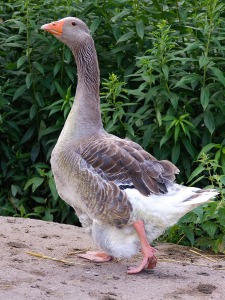
This week at the Carrot Ranch Charli Mills has challenged writers to In 99 words (no more, no less) write using the word gander as a verb.
Gander, the verb, means to look. Since a gander, a male goose, has a long neck which is, without doubt, suitable for sticking out and into things, the meaning to take a look is probably apt. However, I must say that, until reading Charli’s flash pieces, I was unfamiliar with its use as a verb, and still feel a bit uncomfortable in using it so, but I’ll give it a go – later.
First: What I would love is for people to take a gander at readilearn, a website I have been working on for more years that I care to tally right now.
It is a year since I took the leap and engaged a company to develop the site. It was nine months (not the one month promised) before the site was launched, just over three months ago. To use the nine months analogy of pregnancy; it wasn’t an easy gestation or birth, and we’re still experiencing teething problems and growing pains, including “how to grow?” pains.
Audience wanted
Marketing, as in attracting, building, and maintaining an audience, is difficult, as any writer knows. It is not just a matter of writing the stuff and hoping an audience finds it. It takes time, effort, and know-how. I’m a bit short on all three, but I’m going to stick my neck out, and ask if you’d be willing to help me a little with the know-how in finding my target audience.
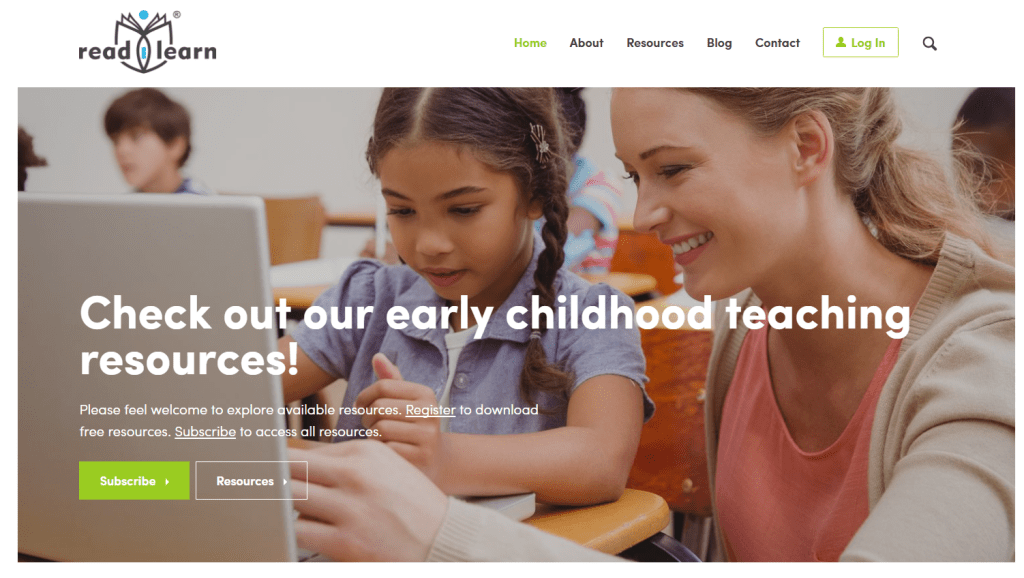
readilearn is a collection early childhood teaching resources. The target audience is teachers of children between 5 and 7 years of age, be they teaching in a school environment, or homeschooling their children. The resources are also suitable or use with children learning English as a second or other language, and with children with special needs.
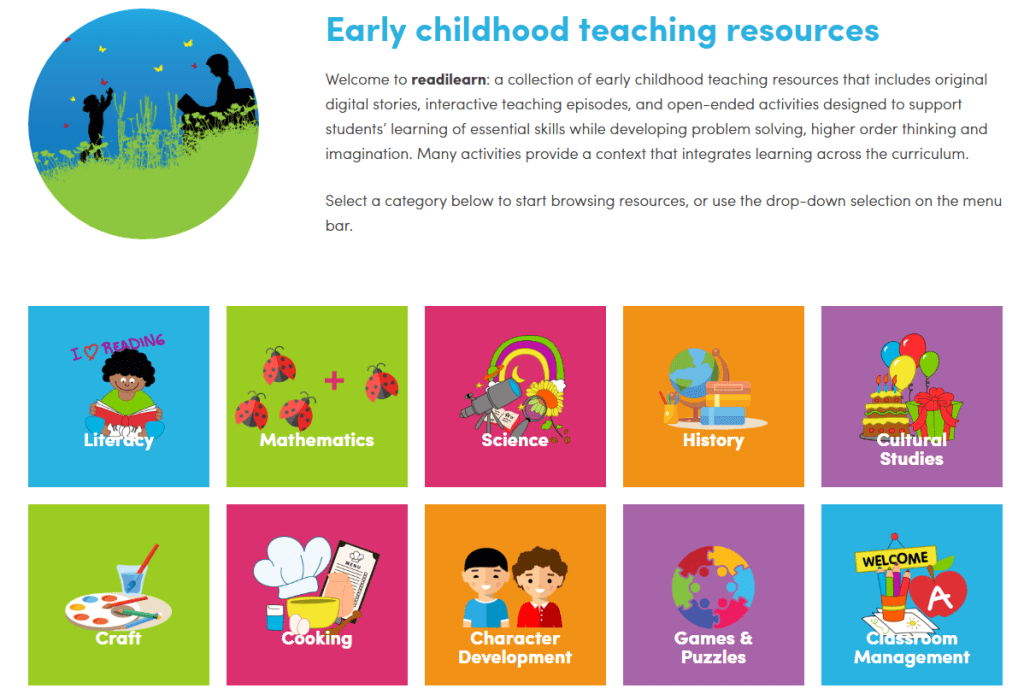
There are resources for most areas of the curriculum, with suggestions for integrating learning across curriculum areas in a meaningful context.
The materials are Australian (I’m Australian) but are suitable for use internationally.
There are:
Including:
Features
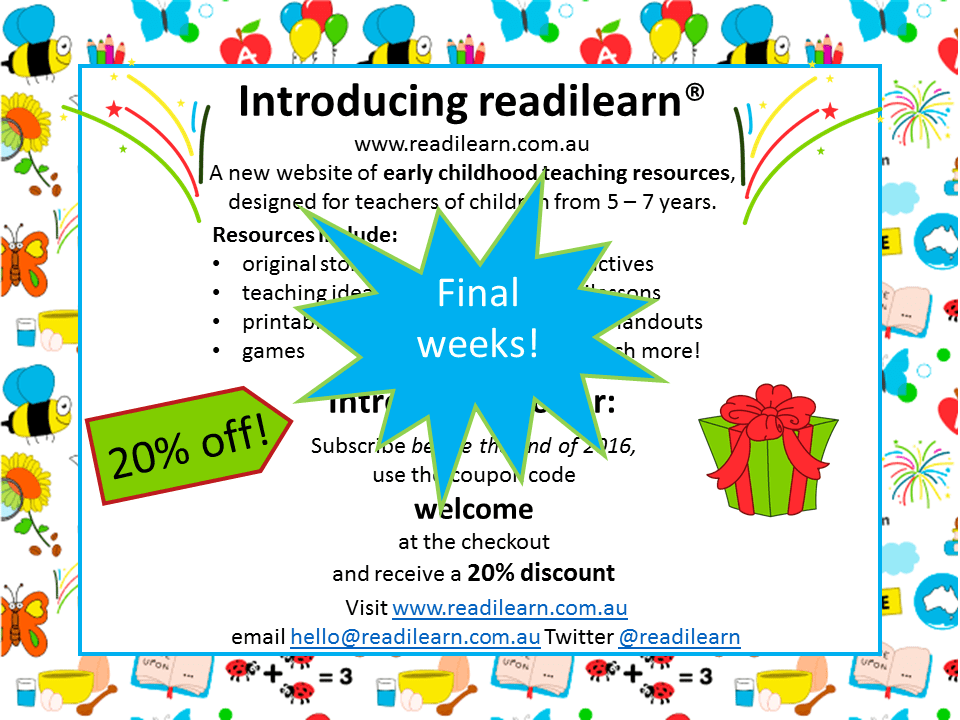
So what’s different?
I think that what differentiates readilearn is the integrated resources focusing on purposeful learning in context. The open-ended nature of many of interactive resources allows teachers to adjust the discussion to suit the needs of their students. readilearn is not just bunch of worksheets for repetitive practice of skills in isolation, or endless pretty charts to hang in the room. It is designed to support effective teaching and learning in meaningful contexts.
More than just resources
I would very much appreciate it if you could spread the word to any of my target audience in your circles: teachers of children from 5 – 7 years. I’d also love some suggestions for ways of connecting with my audience. Although my audience may differ from yours, what you have learned may also be useful for me.
Maybe you’d like to gift an early childhood teacher their first year’s subscription. It’s easy. Just email hello@readilearn.com.au to find out how.

Now back to Charli’s challenge to include gander as a verb in a 99-word story. It got me thinking about all the bird words in common use, even when not referring to birds. I decided to incorporate as many as I could into a story while still maintaining a certain amount of sense. I have used over twenty. Can you (bird)spot them all? I hope you think it’s grouse! (Well, maybe just a little bit not too bad. 🙂 )
Bird (non)sense
Finch’d had an eagle eye on the play all day.
Robin’d been hawking chicken pies. Now sold out, he wandered over to gander with Finch.
Robin craned his neck, just as “He’s out for a duck!” was announced.
“He’s out for a duck,” he parroted. “That’s something to crow about.” One team was swanning around, exuberant as monarchs. The other was as despondent as miners on strike.
Martin was larking around. “Yeah,” he sniped. “The silly goose was distracted by the kite and missed altogether.”
“More like a turkey, I’d say,” Robin reterned swiftly.
“You’re a hoot!” chirped Finch.
Thank you for reading. I appreciate your feedback. Please share your thoughts.

 A great way of sharing information about holiday traditions is through the use of class surveys. It’s fun, engaging, and provides opportunities for learning across the curriculum.
Here are some of the benefits:
This week I have uploaded three new resources to support early childhood teachers’ use of Yes or No class surveys, and a quick and easy recipe for entertaining at home or to contribute to a “bring a plate” function.
Click here to read the original: Sharing holiday traditions – Readilearn


How many of these did you hear when you were a child?
Sometimes it was difficult to find an activity that, like Baby Bear’s bed, was just right. Oftentimes it was only ‘just right’ in the eyes someone wielding the power; and not always in the eyes of the one wishing to have, do, go, or be. Setting limits is often easier than chasing possibilities.
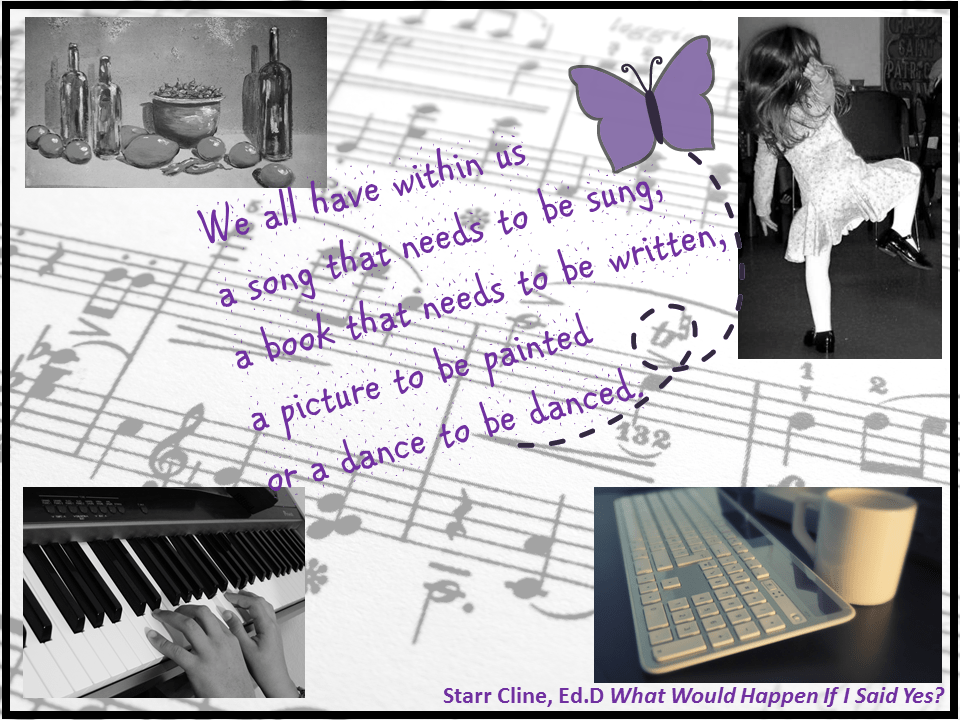
Many years ago I read What Would Happen If I Said Yes?… A Guide to Creativity for Parents and Teachers by Starr Cline. Cline writes about creativity, emotional intelligence, giftedness, intelligences, diversity, and the power of “Yes”. On her website, she makes this statement:
“After years of observation and research, I have drawn the following conclusions:
I’m inclined to agree, and feel especially sad about the last point she makes.
What Would Happen If I Said Yes? challenged me to think about ways in which I could parent (and teach) more positively and encourage, rather than inhibit, creativity; encourage a willingness to try new things; and to avoid placing unnecessary limitations upon others and myself. I can’t say I was entirely successful, but I did make some gains.
In the book, Cline suggests that you “STOP every time you are about to say no. THINK about what might happen if you said yes!” Consider the worst scenario that could occur if you said yes, and whether it would be really that bad, or even likely.
She says to consider why you may say No.
“Is it because …
You don’t want to be bothered
It wasn’t your idea
It’s a habit
Someone treated you that way
It makes you feel powerful”
She reminds that the messages saying “No” often sends are:
“Your idea is stupid
You are stupid
You’re not capable
You’re not worth it.”
In the long term, are these negative messages more important than a temporary inconvenience, or than the benefits that would accrue from positive responses?
But don’t get me wrong. Cline doesn’t suggest you just say “Yes” to everything. She says that sometimes you may need to come up with a creative way of saying no. She provides many ways of doing so in her book, which I recommend as a great read for both parents and teachers.
Even as adults we can find ourselves in situations where certain things are not allowed and rules are imposed, such as in the workplace or in clubs and other organisations.
Sometimes the things we are not allowed to do are self-imposed limits; we may not allow ourselves to do things because:

Sometimes, as I explained about my attitude to camping in a previous post Around the campfire, we make choices and find ways of justifying our decisions, at least to ourselves if not to anyone else. There are many reasons I choose to avoid camping, many other things I’d prefer to do, and I don’t often consider myself to be missing out.
Although I can appreciate camping’s appeal to others, it was only when I read a late comment by Bruce Mitchell that I began to consider some of the wonders, including Antarctica, I had missed. Maybe I’ll be more adventurous next time round!
This week at the Carrot Ranch Charli Mills has challenged writers to In 99 words (no more, no less) write a story about something or someone not allowed.
In her post, Charli speaks of many injustices, including the rules that say who is and is not allowed to vote in elections in the United States. The rules affect many, for many different reasons (or petty excuses based on power) and tend to be divisive rather than inclusive.

Charli says that,
“The greatest gift you can give is to allow another. Allow someone else to listen to their favorite music. Allow someone else to tell you their story. Allow someone to connect to you even if you feel harried. Smile back, nod, acknowledge, empathize. Be loving. Some among us have denials you can’t see stamped upon their countenances because of circumstances.”
While deciding what we will or will not allow our children to do may seem trivial in comparison, surely bringing up our younger generations to be confident, independent, responsible, and accepting of others, allowing them to join in; creating an inclusive society, is something to strive towards. Perhaps if we allow our children, they will allow others.
For my response to Charli’s flash, I’ve gone back to childhood. Where else? I hope you enjoy it.
Not allowed
She knew they were in there. She heard their chatter. Her knocks began timidly, then louder. The room hushed. There was rustling, then padding feet. She waited. The door opened a peek. Her loving sister’s smiling face appeared, then contorted unrecognisably.
“You’re not allowed!” the monster screeched, and slammed the door.
She froze – obliterated, erased, smashed to smithereens. She was nowhere, nothing. Why? What had she done?
She could only shrug when Mum asked why she wasn’t playing with her sister.
Later, at dinner, she viewed her sister’s sweet smiles cautiously. Was she real? When would the monster reappear?
Thank you for reading. I appreciate your feedback. Please share your thoughts.

 As the school year in Australia comes to a close, teachers are busy preparing ways to say “Thank you” to their classroom aides and volunteers, organising gifts for their students (remember to add a 9 square Christmas puzzle), and gifts their students can make for their parents (a poem makes a great gift).
With all that going on, one would think it impossible for teachers to think ahead to the new school year, but they do; and are already making preparations to ensure the beginning of the year goes smoothly.
If students and teachers are fortunate enough to know to which class they will be allocated in the following year, things can be much easier.
One school made the transition from one year to the next more efficient than most with which I’d been involved.
The process of allocating children to new classes can be daunting
Click here to read the original: Thinking ahead to the new school year – Readilearn
 Thank your for reading. I appreciate your feedback. Please share your thoughts.


I am notorious for gifting books. I’ve written about this before in Guess what you’re getting for Christmas and other posts. It would not surprise me if you are also a notorious gifter of books. Perhaps that could be our super power: The Book Gifters!
Reading is empowering. A book is a gift that continues to give, long after the occasion has past. It’s effects cannot always be measured.

In this post, I suggest some books you may like to purchase for special people in your life. And why not treat yourself with one or two as well?
Most, but not all, are fairly recent releases. A few are long-time favourites.
Most, but not all, are written by people I know personally or through blogging. You might recognise their names from comments on other of my blog posts. A few are long-time favourites written by people who inspire me.
I have read most. The only two not read (the books of short stories) are very, very recent. However I am happy to recommend them as I am already familiar with some of the stories, and the writers’ work from their blogs.
Disclaimer: These are books that appeal to me. They may not appeal to you. The important thing in choosing books for others is in finding something that they will like.
The list is not exhaustive. It is just a beginning to provide a few ideas that you may not have considered. There are many other wonderful books that could just as easily have been included.
I have arranged my list in this way:
For children:
Picture books (including fiction, non-fiction, and poetry)
Early chapter books (for readers of about 7 to 12 years)
For adults:
Books of short stories
Novels
Memoirs
Books for teachers and parents
If you follow the links you will be able to discover more about the writers and their other work.
For children:
Picture books – Fiction

Lauri Fortino The Peddler’s Bed This heart-warming story demonstrates that a kindness given can encourage kindness in others. You can read a lovely interview with Lauri on the readilearn blog here.
Tara Lazar Little Red Gliding Hood In this fun fractured fairy tale, Little Red Riding Hood needs a new pair of skates. The only way she can acquire them is by winning a skating competition. But which fairy tale character will be her partner?
Galvin Scott Davis Daisy Chain This is a beautifully illustrated, animated and interactive, anti-bullying book app, narrated by Kate Winslet.
Non-fiction

Rebecca Johnson The Insect Series This series of ten little books, each about a different insect, combines both fact and fiction with stunning close-up photographs. You can read a lovely interview with Rebecca on the readilearn blog here.
Sue Fliess The Bug Book This book about bugs is beautifully illustrated with stunning photographs. Written in rhyme, it introduces children to many tiny creatures.
Poetry
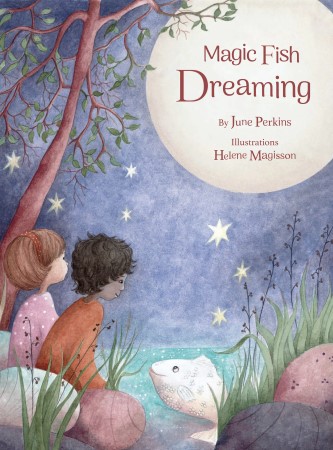
June Perkins Magic Fish Dreaming This gorgeous book of poems with its focus on nature will uplift and inspire you and your children. You can read a lovely interview with June on the readilearn blog here.
Early chapter books (about 7 to 12 years)
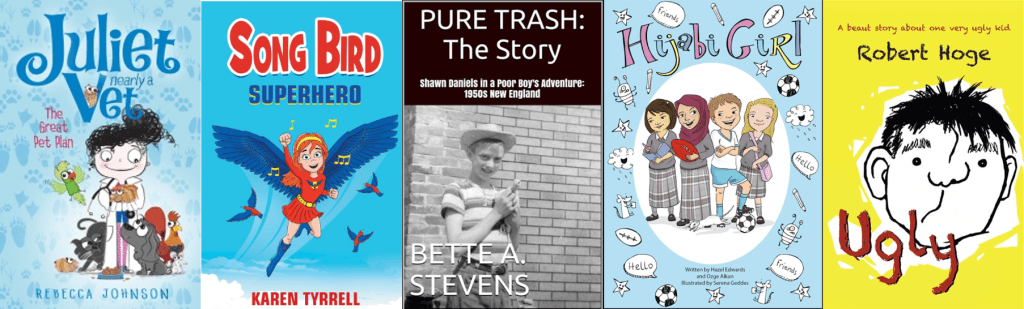
Rebecca Johnson Juliet nearly a Vet This lovely series of books tells of the adventures of ten-year-old Juliet who aspires to be a vet, just like her mother.
Karen Tyrrell Song Bird Superhero This story tells of Rosella Bird and her quest to fly. While she battles the bully at school and at home, she is empowered and discovers the joy of flight when she finds her voice.
Bette A. Stevens Pure Trash: The Story Set in New England in the 1950s, this story tells of a Saturday afternoon adventure of two young boys. The Kindle version is free on Amazon until 29 November (today – be quick!).
Hazel Edwards & Ozge Alkan Hijabi Girl In this story, when eight-year-old Melek is deciding what to wear to the book parade, she is unable to find a super-hero who wears a hijab, so she creates her own.
Robert Hoge Ugly (a memoir) Robert’s story is one of resilience, of survival against the odds, and of making hard decisions. While coping with difference and bullying, Robert shows that strength of character is a trait of survivors. I have introduced you to Robert previously here and here.
Books of short stories

Sarah Brentyn Hinting at Shadows This book is a collection of very short stories, each 100 words or less. While each may be a quick read, they will give insight, inspiration, and a greater understanding of what it means to be human.
Hugh Roberts Glimpses Launching on 2 December, available for pre-order “28 short stories that will take your mind on a rollercoaster of a ride into worlds that conceal unexpected twists and turns.”
Novels
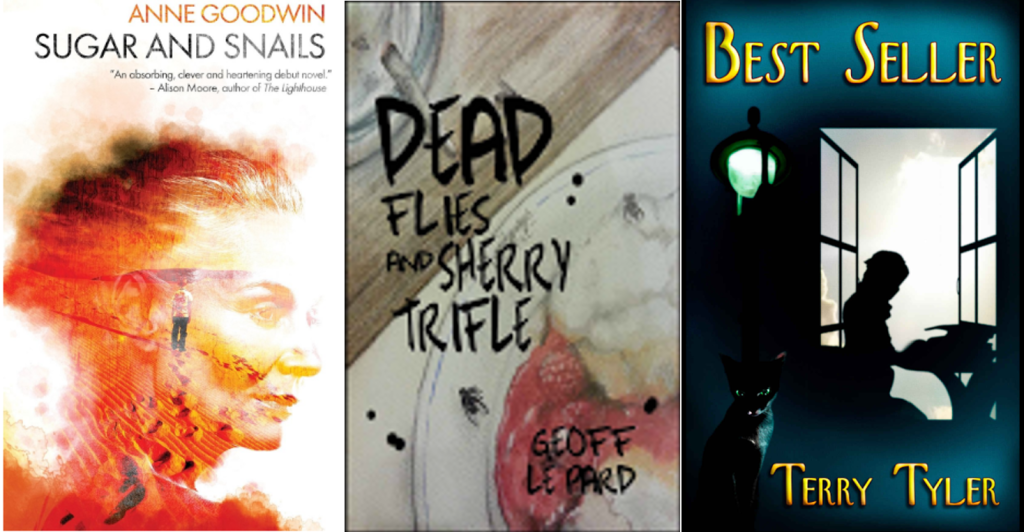
Anne Goodwin Sugar and Snails In this mid-life coming-of-age story, Diana Dodsworth has some tough decisions to make as she comes to terms with who she really is. Anne has previously talked about her book on my blog here and here.
Geoff Le Pard Dead Flies and Sherry Trifle This story about nineteen-year-old Harry Spittle, who is home from university for the hottest of hot holidays, will have you laughing out loud at his misadventures.
Terry Tyler Best Seller This intriguing novella is about three writers, all of whom wish to write a best seller. One does; but which one?
Memoirs

Robert Hoge Ugly (a biography) Robert’s inspirational story is one of resilience, of survival against the odds, and of making hard decisions. While coping with difference and bullying, Robert shows that strength of character is a trait of survivors. I have introduced you to Robert previously here and here.
Lesley and Tammy Williams Not Just Black and White Told as a conversation between mother and daughter, this inspirational story tells of the importance of family, of difficulties experienced by many Indigenous Australians in relatively current times, with a drive to ensure that history is neither forgotten nor repeated.
Malala Yousafzai Malala The Girl Who Stood up for Education and Changed the World The story of Malala, winner of the Nobel Peace Prize, is one of courage and of the difference that one person can make in the world. I have previously written about Malala here.
Magda Szubanski Reckoning: A Memoir With a Polish father, a Scottish mother and an Australian childhood, Magda’s story is complex, courageous, compassionate, and inspirational.
Books for teachers and parents

Mem Fox Reading Magic This book provides lots of practical advice and support for parents in developing a love of reading in their children. I have introduced you to Mem many times previously, including here and here.
Michael Rosen Good Ideas: How to be Your Child’s (and Your Own) Best Teacher This very readable book is packed full of suggestions for encouraging curiosity and learning in children (and you!) I have previously introduced you to Michael here and here.
Vivian Kirkfield Show Me How Vivian passion’s for picture books and her understanding of the importance of literacy are obvious in this book that provides great ideas for reading and extending the learning experience associated with many picture books.
Or, for a special early childhood educator, gift a subscription to readilearn, a collection of teaching resources that can be used throughout the year.
It’s easy. Simply send an email to hello@readilearn.com.au, arrange payment for the currently discounted subscription, and you will be emailed a voucher with a coupon code, unique to your special teacher. Print the voucher and personalise it with your own message before presenting your gift.
Note: The subscription is for 12 months from date of activation, not purchase: a gift that will go on giving all year long.

I hope there is something in this list that you can add to your gift list.
Thank you for reading. I appreciate your feedback. Please share your thoughts.

 At this time of the year, people around the world are preparing to celebrate a variety of holidays. Christmas, celebrated by almost half of the world’s population, is perhaps the biggest holiday of the year. While traditionally a Christian celebration, its focus for many is now more secular than religious and is celebrated by both Christians and non-Christians. Even within the Christian community, there are many ways in which the festival is observed.
In addition to Christmas, children in Australia are preparing for the end of the school year and their long summer holidays from approximately mid-December to late January. While not as long as that of some of our northern cousins, the six-week break challenges parents in thinking of ways to keep the children occupied, while ensuring that the achievements of the year are not lost before the new school year begins.
In this post, I share some suggestions and readilearn resources to assist in preparation for both.

Click here to read the original: Preparing for holidays – Readilearn

You could count the number of times I have been camping on one hand with a few fingers chopped off. And those times, in the main, could not even be considered real camping. They involved cabins, water on tap, and flushing loos. Only once was I required to sleep in a tent, and the experience wasn’t one I wished to repeat: as much to do with other campers as with facilities.
I am not into roughing it. I like the convenience of warm showers, flushable toilets, and power at the touch of a button. I acknowledge my privilege in being able to take these things for granted and, when I holiday, to choose accommodation at which they are available. I recognise that for much of the world’s population, that privilege is as unattainable as a dream.

So, for this week, in which the flash fiction prompt by Charli Mills coincides with World Toilet Day, it is fitting to combine the two.
Anne Goodwin who blogs at Annecdotal has also combined Charli’s flash fiction prompt in her post about Fictional Toilets for World Toilet Day. Anne has included snippets of toileting issues from novelists whose characters, unlike most “fictional characters, (who) like royalty, don’t have to suffer the indignity of urinating or opening their bowels”, deal with the inconveniences of life. Her own novel Sugar and Snails is among those quoted. You can read the post here.

For a while now I have been supporting Who Gives a Crap, a company that takes toileting seriously. In its production of toilet paper, tissues, and paper towels it uses only 100% recycled paper, bamboo, or sugarcane. It also donates 50% of its profits to providing toilets for those in need. I am in favour of both those practices.
I am also in favour of helping children recognise their privilege and to understand that not everyone in the world can take for granted what they can. With Christmas celebrations just around the corner, a picture book that encourages children to think of others, rather than just what they can get, is useful in starting the discussion.

Dear Santa: Please Don’t Come This Year written by Michael Twinn and illustrated by Patricia D. Ludlow explains that Santa has tired of children’s requests, of their always wanting more, and of their lack of gratitude. He considers making this Christmas delivery his last; until he receives one final letter that turns his thinking around.
The letter is from a group of children who write:
“Dear Santa,
Please don’t come this year … we have almost everything we want.
So, we don’t want presents for ourselves this year …
We want to help other children, instead.
And old people and animals in need …”
Santa feels heartened by the children’s selflessness, and he spends the year travelling the world, sharing the gifts suggested by the children:
“The gift of food
The gift of health
The gift of sight
The gift of water
The gift of technology
The gift of hard work
The gift of peace
The gift of learning
The gift of survival”
At the end of the year, Santa realises that “The greatest gift is yourself.”
(Note: I’m not sure if it is still so, but at the time of its publication, sales of the book helped raise funds for UNICEF.)
Now, I seem to have strayed a little, but I’m thinking that’s probably what happens when a group is sitting around the campfire discussing life. I’m sure no subject is taboo, Blazing Saddles proved that, and that the conversation would flow from one topic to another with just a few meagre threads to hold it together.
Song, too, would be a big part of the campfire tradition. I learned a campfire song from Bill Martin Jr. at a reading conference years ago. (I’ve written about that previously here.)
The song “I love the mountains” is perfect for teaching to children and as a structure that children can use to write poems of their own. Sample innovations; for example, “Christmas in Australia” have been included just for that purpose in readilearn resources.

Writing “I love” poems is also a good way for children to express gratitude in their everyday lives, which fits perfectly with Thanksgiving celebrations in the United States, also this week.
Happy Thanksgiving to my American readers!
This week at the Carrot Ranch Charli Mills has challenged writers to In 99 words (no more, no less) write a story that is told around a campfire. It can be a bonfire, burning trash can, a fire pit, something flaming outdoors. It can be a prop, and you can tell the story of anything — ghosts, ancients, jokes. Who is gathered and listening?
Even if you don’t intend joining in the challenge, and there is an extra week with this prompt if you are tempted, please pop over to the Carrot Ranch to read Charli’s fascinating report of her explorations of The Zion Valley area and of the historical artefacts and remnants she found there. You’re sure to find a gem or two, as she did.
Here is my response to her challenge.
Around the campfire
“Smile,” they said. “It could be worse.”
Than what: a compulsory “adventure”? navigating scrub lugging a loaded rucksack? avoiding plant and animal nasties? digging a toilet? erecting a recalcitrant tent? enduring inane chatter and laughter roaring as insanely as the campfire flames?
“You’ll learn something,” they’d said.
Fat chance.
Darkness hung low like her spirits.
Along with the dying flames, the mood quietened and, one by one, each told a story of horrors beyond her imaginings: of fleeing famine, war, abuse, hate …
Along with the sky, her heart softened with the light of a new day, and gratitude.
Thank you for reading. I appreciate your feedback. Please share your thoughts.

 Norah Colvin