

I’ve been reading a lot of posts about Asperger’s Syndrome and Autism lately. It’s a topic about which I need to increase my understanding. If you’re like me, you will find this post by Sherri Matthews helpful.
Author: Norah
-
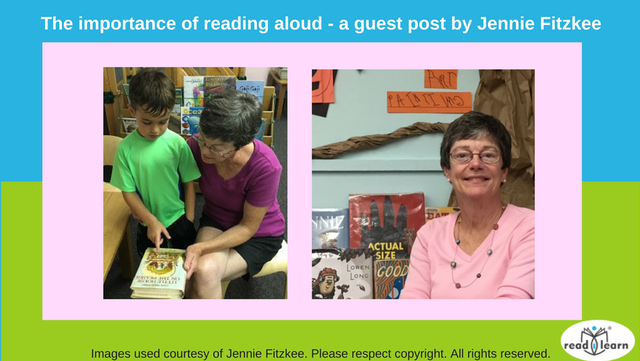
readilearn: The importance of reading aloud – a guest post by Jennie Fitzkee – Readilearn
Every day is a great day for reading aloud to children, but with the celebration of International Read to Me Day on March 19, now is a great time to give some thought to the importance of reading aloud in preparation for the Day’s celebrations. by arming yourself with a basket of books to read.
To help put us in the mood and assist our preparations, Jennie Fitzkee is here to tell us why reading aloud to children is important.
Jennie, a passionate and inspirational teacher, has been teaching preschool in Massachusetts for over thirty years. She is considered by many to be the “book guru” and the “reader-aloud”. She is also a writer and her work is often posted by The Eric Carle Museum of Picture Book Art. This is what Jennie says of teaching:
“I believe that children have a voice, and that is the catalyst to enhance or even change the learning experience. Emergent curriculum opens young minds. It’s the little things that happen in the classroom that are most important and exciting. That’s what I write about.”
Jennie is highlighted in the new edition of Jim Trelease’s bestselling book, The Read-Aloud Handbook because of her reading to children. Her class has designed quilts that hang as permanent displays at both the National Liberty Museum in Philadelphia, and the Fisher House at the Boston VA Hospital. Their latest quilt is currently hanging at the Massachusetts State House in Boston. In 2016, Jennie was one of seven teachers in Massachusetts to receive the Teacher of the Year Award.
I’m sure you’ll agree that there is much we can learn from Jennie.
Welcome to readilearn, Jennie. Over to you.

Continue reading: readilearn: The importance of reading aloud – a guest post by Jennie Fitzkee – Readilearn
Thank you for reading. I appreciate your feedback. Please share your thoughts.
Share this:
-

What’s there to crow about?
This week at the Carrot Ranch, Charli Mills challenged writers to In 99 words (no more, no less) write a story that includes a raven. It can be in nature or used to describe humanity as a metaphor. Follow the bird. Go where the prompt leads.
While ravens and crows may have their differences, as an Australian, I can be forgiven for having difficulty in telling them apart. As this article about the Australian Raven in Birds in Backyards says,
“There are six members of the family Corvidae found in Australia: five native breeding species and one infrequent self-introduction. Three are called crows and three ravens, although there is really little difference. Most Australian species are similar in size and colouration, and can be difficult to tell apart.”
In fact, when I attempted to find photographs of crows and ravens, I found the same photograph labelled ‘crow’ in one location and ‘raven’ in another!
I provide this information only so you’ll understand why I refer to crow rather than the raven of Charli’s prompt.
You see, Charli’s prompt reminded me of this video in which a crow shares its bread with a mouse.
I wondered why the crow would make such an effort to share with a mouse. Don’t crows usually eat mice?
I was reminded, then, of the Aesop’s fable The Lion and the Mouse in which a lion, surprised at the idea that a mouse might one day be able to help him, forgoes a meal and releases the mouse. The mouse returns the favour one day by freeing the lion when it was ensnared by hunters.
However, in the fable, it was the potential prey who helped the predator in an act of kindness.
In the video, it is the predator showing kindness to potential prey. Finding a motive required some divergent thinking. This is what I came up with as a start.
Crow and Mouse
“Caw, caw,” called Crow in the morning from atop the tree.
“Caw, caw,” called Crow at midday from the neat vegie patch.
“Caw, caw,” called Crow, perched high on a wire, at the end of the day.
“Shoo, shoo,” shouted Man in the morning, shaking knobbled fists.
“Shoo, shoo,” shouted Man at midday, stamping his feet.
“Shoo, shoo,” shouted Man, clattering his pans at the end of the day.
Sneak, sneak went Mouse from his hole in the wall, to the kitchen and back, unnoticed by Man who was noticing Crow.
And so it repeated, day after day.
Until, one day, Man grew tired of shooing Crow and loaded his slingshot with a rock. Mouse, ready to sneak, saw Man take aim. Mouse ran–across the floor and up Man’s leg. Man stumbled. In so doing, he dropped the rock upon his toe. He hollered. Crow heard the commotion and flew away, cawing his thanks to Mouse.
Man saw where Mouse hid. He fetched his hammer, nails and a board.
Just in time, Mouse escaped–down the stairs, through the garden and into the woods. In the darkness, Mouse trembled. All his life, he had filled his belly with three good meals a day from Man’s kitchen. Could he fend for himself? He looked about this unfamiliar world. When the quiet was interrupted by a flap-flap-flap, he ducked for cover.
Too late–he’d been spotted.
“There you are,” cawed Crow, placing a piece of bread on the ground in front of Mouse. “Thank you for your kindness. One good turn always deserves another.”
What do you think?
Stories, stories, everywhere
I had fun writing the story and it reaffirmed for me that potential stories are everywhere, not only for adult writers, but for children too. I think children would love to discuss the video of the crow and the mouse and would ask many more questions and come up with more inventive stories than I did. What a fun writing prompt it would be. Children could also compose dialogue for the animals and act it as a play.
Of course, this story is much too long to qualify for Charli’s flash fiction 99-word requirement. For that I thought I’d go back to school with a chance for the bully Brucie to learn some kindness. The timing is just right with the observation of National Day for Action Against Bullying And Violence on 16 March, and both Harmony Day and the International Day for the Elimination of Racial Discrimination on 21 March.
In this article from ABC News, I discovered that clever crows are learning from magpies to swoop in order to protect their nests. It also seems that they never forget a face. Perhaps they are no happier to see bullying than we are.
This is my response to Charli’s challenge. I hope you like it.
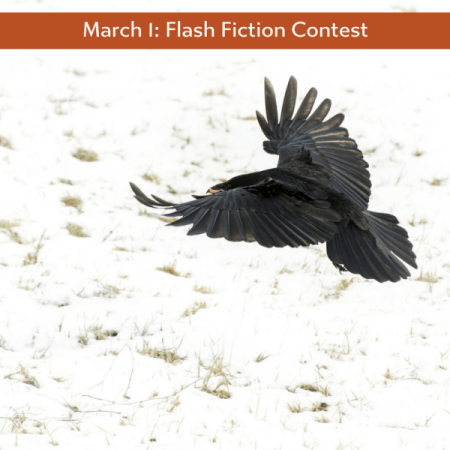
Nothing to crow about
Brucie had to get there first to stake his place at the very top. He didn’t slow on the still-wet grass, and only momentarily to laugh at Jasmine who slipped as he brushed past. From his perch, he smirked at the disappointed faces below.
“Caw!” said a crow, alighting alongside.
“Shoo!”
It didn’t shoo–more came.
Brucie shouted, waving his arms.
The crows shuffled closer.
Brucie thrashed wildly.
Bang! Bang! Bang! Jasmine banged a cricket bat against the frame.
The crows flew away.
“Are you okay?” asked Jasmine.
Brucie nodded, then let the others play.
The crows never returned.
Thank you for reading. I appreciate your feedback. Please share your thoughts.
Share this:
-
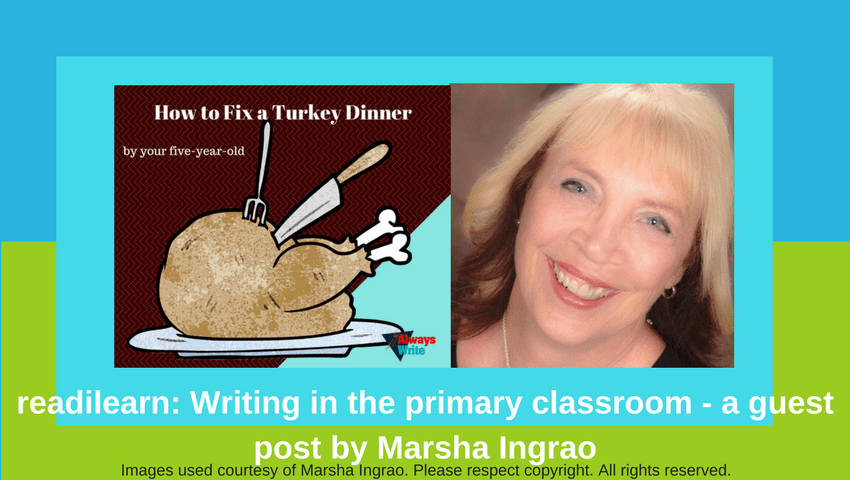
readilearn: Writing in the lower primary classroom – a guest post by Marsha Ingrao – Readilearn
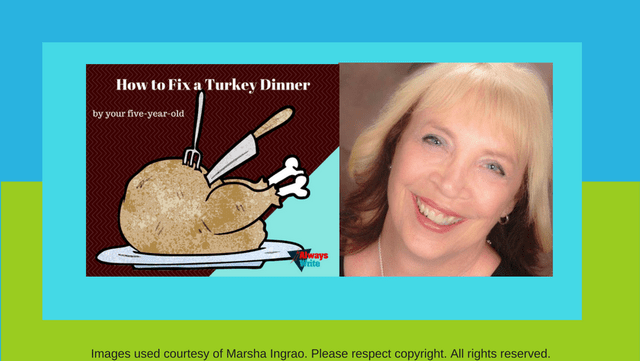
Providing children with fun and purposeful activities for writing is one of the best ways to encourage a love of writing, to replace the drear with enthusiasm.
In this post, I introduce guest author Marsha Ingrao who shares suggestions for bringing joy to your writing lessons through the Language Experience Approach.
“The Language Experience Approach (LEA) is a literacy development method that has long been used for early reading development with first language learners…It combines all four language skills: listening, speaking, reading, and writing.”
Although Marsha retired from public education in 2012, her passion for education remains and she continues to educate through blogging, speaking engagements and volunteering for Kiwanis and the Chamber of Commerce. Her classroom experience ranged from teaching kindergarten to fourth grade. She left the classroom to work as a consultant for the county office of education first in math, working with migrant education, then in history and language arts. She is author of Images of America Woodlake, a history of her local Woodlake area, published by Arcadia Press.
Welcome to readilearn, Marsha. Over to you.
Because LEA employs all four branches of language arts, listening, speaking, reading and writing, it is perfect for teaching writing to pre-school and primary students as well. With the thrust in the United States for non-fiction reading, the language experience approach becomes the perfect avenue for teaching writing to young children.
To make the language experience approach applicable to all young students, adult assistance is required.
The “How To” Essay
Beginning in pre-school, we tackled one of the hardest types of writing, the “how to” essay. Holiday traditions are the perfect avenue for this
Continue reading: readilearn: Writing in the lower primary classroom – a guest post by Marsha Ingrao – Readilearn
Share this:
-

Can you think of five reasons for writing flash fiction? Sacha Black can!
This week the Rough Writers Tour Around the World stops off in the UK with Sacha Black, YA sci-fi writer.
Pop over to Sacha’s blog to find out how to harness the power of writing flash fiction to hone writing skills.
Sacha also tells you how to purchase the Congress of Rough Writers Anthology Volume 1.
Here is a list of March Tour dates:
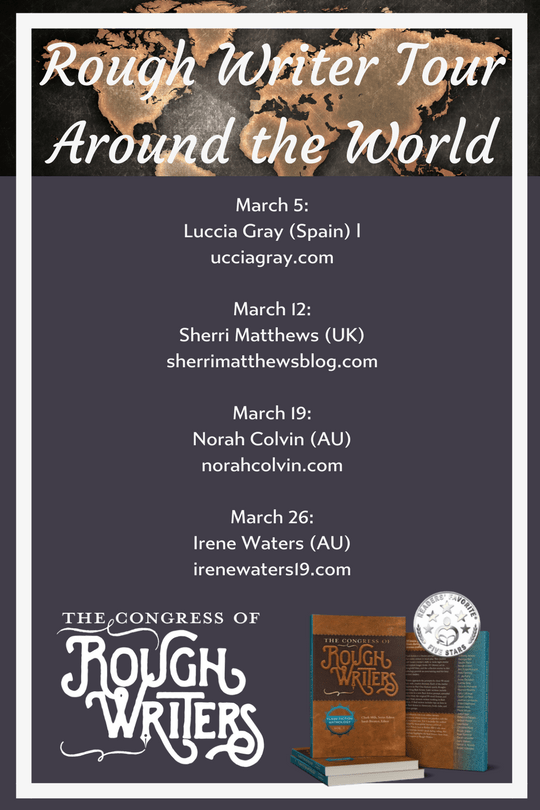
Each one is bound to hold interesting insights into the writer’s process. Make sure you don’t miss any!
Share this:
-

Everything you always wanted to know about unicorns
What do you know about unicorns?
- mythical creatures
- look similar to horses
- usually white
- have a single horn protruding from the forehead.
What else is there to know?
It appears there could be much more to learn by engaging in philosophical discussions, especially with young children, about the existence of unicorns and their features.
For many years I have been a fan of Philosophy for Children (P4C), a pedagogical approach for teaching children to think critically, to wonder, question and reason. The approach is “taught” through student-led discussion in which the teacher is present to offer support, rather than leadership. Students are presented with a stimulus, about which they initially ask questions. When there are no more questions to ask, children discuss their thoughts and responses.
I knew unicorns would be a great starting point for philosophical discussions with children, so wasn’t surprised to find suggestions for conducting an enquiry into Unicorn Horns – Thinking about Things that Don’t Exist by The Philosophy Foundation.
The suggested discussion centres around fictional characters, including the more controversial ones such as Santa Claus and the Tooth Fairy which I’ve previously discussed here and here.
What intrigued me most in the article was
“The problem (is) characterized in this statement ‘The Tooth Fairy does not exist’, which seems to say ‘there is something that does not exist’, but then if it does not exist then how can it be anything?”
Or another way of putting it,
“‘If there is anything that can’t exist, then it exists, so there can’t be anything that can’t exist.’”
Totally confused?
Me too! Please pop over to the article for greater clarity. Then maybe you can explain it to me.
The article continued with suggestions of other questions about unicorns that could be discussed; for example:
- Are unicorns real?
- If something doesn’t exist, can it have any special features?
- How many horns does a unicorn have?
- What if a unicorn is born without a horn, is it still a unicorn?
- What if a horse is born with a horn, would it be a unicorn?
- Since ‘uni’ means one, is any animal with one horn a unicorn?
- What about a narwhal? Is it a unicorn?
My thoughts of unicorns this week were instigated by the flash fiction prompt by Charli Mills at the Carrot Ranch to In 99 words (no more, no less) write a story about a unicorn. It can be realistic or fantastical. Go where the prompt leads.
Now, I have written about unicorns before, here, here and here.
In a post about security comforters, I explained that a toy unicorn was of comfort to Marnie when she was feeling particularly vulnerable. Her need for it continued into her early school years and its appearance was an indicator to teachers that things were going badly for her again. When, as a confident adult, she returned to her childhood home, she found she had long outgrown the unicorn that had given her comfort as a child.
In some of Marnie’s stories, she was teased and bullied, mainly by a boy named Brucie. Fortunately, she had a good friend in Jasmine who was often there to offer her support.
In my response to Charli’s unicorn prompt, I revisit Marnie and Brucie and attempt to add a little philosophy to their discussion. I hope you like it.
Unicorns aren’t real
“What’s that supposed to be?” sneered Brucie.
Marnie bit her lip.
“Doesn’t look like anything to me,” he scoffed, inviting an audience.
“A unicorn,” she whispered.
“Miss said, ‘Draw your favourite animal.’ A unicorn can’t be your favourite animal–it’s not even real.”
Marnie continued drawing.
“Anyway, doesn’t look like a unicorn with those four horns.”
“They’re not horns.”
“Marnie’s unicorn’s got four horns,” laughed Brucie, a little too loudly.
Miss investigated.
“He said my unicorn’s got four horns. He said unicorns aren’t real.”
“How can unicorns have four horns if they’re not real?” asked Miss.
Brucie was silent.
Thank you for reading. I appreciate your feedback. Please share your thoughts.
Share this:
-

#WATWB Vending Machines for the Homeless
On the last Friday of each month We Are the World Blogfest invites bloggers to join together in promoting positive news. If you would like to join in, please check out the rules and links below.
“There are many an oasis of love and light out there, stories that show compassion and the resilience of the human spirit. Sharing these stories increases our awareness of hope in our increasingly dark world.”
This month I am sharing an inspiring story of vending machines that provide free food to the homeless.
Action Hunger, a non-profit organisation founded by Huzaifah Khaled in Nottingham, England, gives the homeless access to free food and other basic essentials such as toothbrushes and socks from vending machines. The items are accessed by use of key cards which are available through organisations that assist the homeless. Where other services are provided during restricted hours, the vending machines are available all day every day. Use of the service provided by the vending machines is considered a temporary measure for people who are working to improve their life situation.
The project Action Hunger was inspired when Khaled “learned that even access to basic necessities like food and water was sporadic and oftentimes cumbersome . . . [He] realized that there had to be a more effective way of at least ensuring the bare necessities were always available.”
The project plans to expand into the US in the near future. What a great initiative.
Click to read the whole article: These Vending Machines Give the Homeless Free Food

Here are the guidelines for #WATWB:
1. Keep your post to Below 500 words, as much as possible.
2. Link to a human news story on your blog, one that shows love, humanity, and brotherhood. Paste in an excerpt and tell us why it touched you. The Link is important, because it actually makes us look through news to find the positive ones to post.
3. No story is too big or small, as long as it Goes Beyond religion and politics, into the core of humanity.
4. Place the WE ARE THE WORLD badge or banner on your Post and your Sidebar. Some of you have already done so, this is just a gentle reminder for the others.
- Help us spread the word on social media. Feel free to tweet, share using the #WATWB hashtag to help us trend!
Tweets, Facebook shares, Pins, Instagram, G+ shares using the #WATWB hashtag through the month most welcome. We’ll try and follow and share all those who post on the #WATWB hashtag, and we encourage you to do the same.
The co-hosts for this month are: : Shilpa Garg, Peter Nena, Eric Lahti, Roshan Radhakrishnan and Inderpreet Kaur Uppal. Please pop over to their blogs to read their stories, comment and share.
Click here to join in and enter the link to your post. The bigger the #WATWB group each month, the greater the joy!
Thank you for reading. I appreciate your comments. Please share your thoughts.
Share this:
-
readilearn: Engage learners with pizza-themed cross-curricular teaching and learning resources
Pizza is a popular food in many countries around the world and is often a children’s favourite. Why not capitalize on children’s interests to make learning fun and meaningful?
This week I have uploaded six new pizza-themed resources with suggestions for learning across the curriculum; including literacy, mathematics, and science.
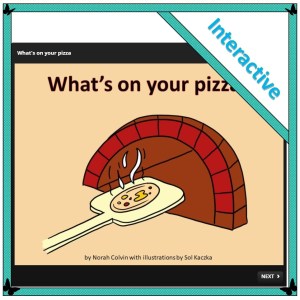
The new interactive resource What’s on your pizza is a great stimulus for engaging children. Children help Andy and Paige make their own pizza by choosing the toppings and working out the different combinations of toppings that are available. The resource can be used as a springboard for discussion, writing, mathematical investigations, science explorations and talking about healthy food choices.
In this post, I outline some ways pizza-themed learning can be incorporated across the curriculum. I anticipate the suggestions will inspire ideas of your own with relevance to your own group of children.
Literacy
Oral Language
Discussion is one of the best ways of developing children’s language. Starting with topics already familiar to and of interest to children facilities discussion into which new vocabulary and concepts can be added. Discussion could centre around; for example: who likes pizza, types of pizza, when children have pizza and their favourite pizzas.
Reading and spelling
Continue reading: readilearn: Engage learners with pizza-themed cross-curricula teaching and learning resources – Readilearn
Share this:
-
Rough Writer Tour stops in Canada with Ann Edall-Robson

This week the Carrot Ranch Round the World Tour stops at Alberta in Canada with Ann Edall-Robson, celebrating Family Day, no less.
Read how Ann became one of the Rough Writers and how writing flash fiction adds to her writing process.
Find out what she writes about this beautiful little cottage.

Thanks, Ann. It’s a pleasure to ride the Ranch with you.
Salute to the Congress of Rough Writers Flash Fiction Anthology Vol 1
Source: Ann Edall-Robson’s – Ann Edall-Robson
Share this:
-

Would you like ice with that?
This week at the Carrot Ranch, Charli Mills writes about her daughter’s current lifestyle in Longyearbyen, the world’s most northern town. I thought the town may have been named for seeming to have a long year when the days are dark and sunless. But no, as I found out in this article, 12 facts you never knew about Longyearbyen, the world’s northernmost city, it was named after American John Longyear who started the Arctic Coal Company there in 1906.
The article is worth a read for the information it shares. What spoke strongest to me, in these times of horrific shootings, was a sign displayed on the entrances to buildings:
“All the polar bears in this shop are already dead, please leave your weapon with the staff.”
The article explains that, as polar bears are quite common in the area, locals are required to carry high-powered rifles when they are out and about. There is no need for them indoors.
It was thoughts of her daughter’s icy environment that inspired Charli’s challenge to In 99 words (no more, no less) write a story on ice. It can be an event on ice, a game on ice or a drink on ice. Go where the prompt leads you.
My thoughts went immediately to Elsa in the movie Frozen, based on The Snow Queen by Hans Christian Andersen. In the movie, Elsa has the power to turn things to ice. The song Let It Go became very popular, and for a while I couldn’t go anywhere without seeing a little girl dressed as Elsa, or hearing another one singing it. I didn’t mind. I love the song and blue is my favourite colour. I couldn’t help but smile at the enthusiasm with which the girls belted out the song.
Elsa’s ability to turn things to ice reminds me of the curse placed on King Midas to teach him a lesson about greed–everything he touched, including his beloved daughter, turned to gold.
Neither ice nor gold were particularly good outcomes. E.T.’s healing finger would bring better results.
If you had fingers with power to affect everything they touched, what would that power be? Perhaps it is impossible to know in advance all possible repercussions, but kindness would be a good place to start. We don’t have to try to heal the world. It is best to start small and effect positive changes and heal hurts within our own circles of influence.
Back in the old days at school, we used to kiss small hurts better with a Band Aid. Nowadays, when children may be allergic to the materials used in plasters of any kind, ice has become the “kiss” of choice, with many children believing it to be imbued with magic healing powers.
That’s where I’ve gone with my flash, renewing acquaintance with some of the characters from the Marnie stories again. We’ve met Jasmine and Georgie before here and Mrs Tomkins here.

Ice Magic
Mrs Tomkins was sorting the mail when she noticed two big tear-filled eyes peering up at her–Liam.
“Can I have some ice, please?”
“Where does it hurt?”
“All over.”
She pointed to the chair and got him some ice.
“Now tell me what happened.”
“No one will play with me,” he said, holding the ice to his temple.
“Have you…”
Mrs Tomkins looked up as Jasmine and Georgie burst in.
“Liam. Come on. We’ve been looking for you.”
Liam thrust the ice at Mrs Tomkins.
“Thanks,” he said, smiling. “The ice worked.”
Mrs Tomkins smiled too. Ice magic.
Thank you for reading. I appreciate your feedback. Please share your thoughts.
Share this:


 Norah Colvin