The winners of the Bonus Old Time Radio Contest at the Carrot Ranch are announced! Read the winning entries here, and link through to all entries. What a feat!
Thanks to the Continental Fire Company for their generous sponsorship and support.
Author: Norah
-

Bonus Rodeo: Old Time Radio Winners
-

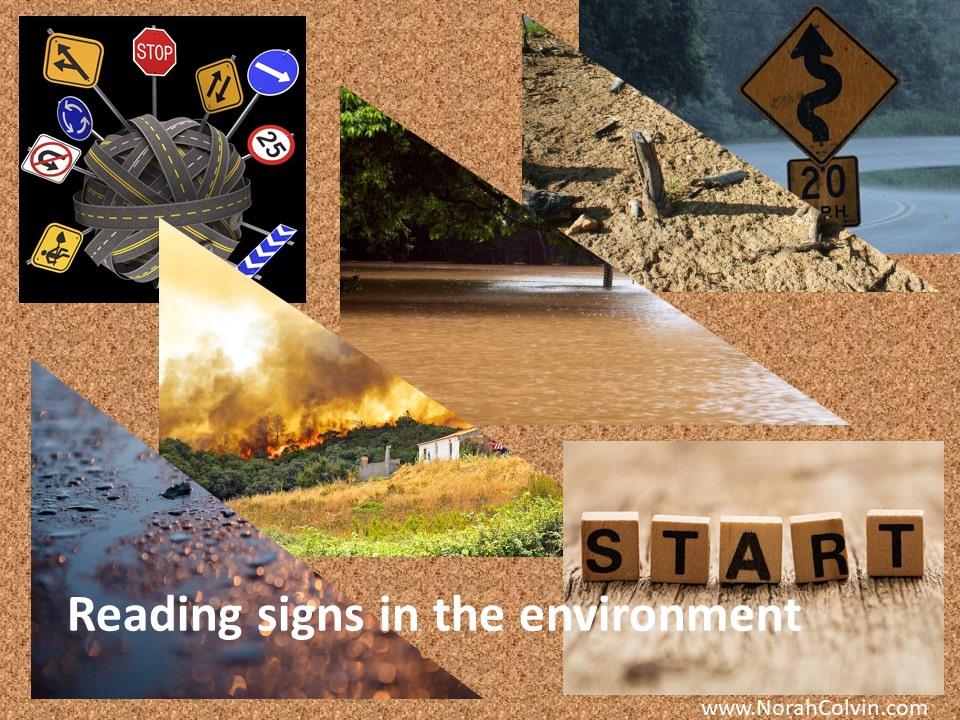
Reading signs in the environment
Our environment is rich in print. From their earliest days observing the environment, children are surrounded by print that may include words, symbols and images, each portraying meaning in different ways. We see:
- names of stores
- signs directing pedestrians and vehicles
- instructions for entering and leaving buildings
- labels on items
- prices on goods
- timetables
- banners advertising local events
- information about landmarks and points of interest
and so the list goes on.
Reading and understanding the plethora of signs is important to independent living and successful negotiation of our print-rich and print-dependent world. Although we often take our ability to do so for granted, one only has to visit a foreign place to realise how much we rely on print to navigate our way.
Helping children to read and understand signs is important, requires no planning and can occur effortlessly whenever parents are out and about with their children. All that is required of the parents is to point them out and explain their meaning.
Very young children can learn to recognise the entry and exit and signs on doors, particularly if colour is used as a clue, and the signs on restroom doors.

Stop signs are easily recognisable as are other road signs such as those indicating speed humps, pedestrian and animal crossings, speed limits and left and right turns. Children quickly come to understand what is happening when the traffic lights change colour, but their learning is always enhanced by parental explanations. On journeys when children might become restless, it can be fun to keep their minds occupied by spotting particular signs.
It doesn’t take children long to recognise the logo of their favourite fast food or ice cream store. Names of other stores frequented by the family can also be pointed out for them to learn to recognise. It can also be useful to explain to children how items are being selected, how you know what the items are and where you locate the price. They can be shown how to use symbols and colours on packaging to identify items they like and may come to recognise (if not read) the names of some of their favourite products.
A fun activity for the first days of school is to provide children with an assortment of environmental print to identify. Often children begin school hoping to learn to read on the first day, little realising how much they can already ‘read’. Reading environmental print boosts their self-esteem and self-confidence by showing what they can do and makes a connection between school and what is familiar to them.
I used to like making an ‘I can read’ book on the first day with my children. I would supply children with a collection of advertisements cut from magazines and product labels that I thought children would readily recognise. I would also print signs, symbols and company logos from the computer.
I would provide children with six to ten pages, each labelled with the words ‘I can read’. Children would then select items they could ‘read’ (recognise) from the collection and paste each onto a page. When they were done, children would proudly read their books to their friends and to me, and take them home to read to their families.
I am thinking about signs in the environment as this week Charli Mills at the Carrot Ranch challenged writers to In 99 words (no more, no less) write a story that includes a sign. It can be a posted sign, a universal sign, a wonder. Go where the prompt leads.
I could have written a flash about children reading signs in the environment, as I’ve described. Or, still in keeping with my educational theme, I could have written about the signs that teachers look for everyday showing that progress has been made or that misconceptions and misunderstanding exist.
However, the environment worldwide is shouting to us loud and clear, with signs that can no longer be denied, that our climate is changing.
Since the beginning of this year, Australia has suffered unprecedented and catastrophic weather events. Across the country, the land has been ravaged by heatwaves that have seen record maximums in temperatures and bushfires have raged across large tracts of land. While much of the country is suffering from prolonged drought, other areas have been devastated by extraordinary rainfalls and flooding. In fact, some of the farming community, who had been crippled by drought, rejoiced when the rains began, only to lament when the rains didn’t end and the rain and floods caused massive stock losses.
It is of these farmers that I have chosen to write. Some of my family live and raise stock, some sheep and some cattle, in the devastated areas and have suffered enormous losses. The heartbreak is unimaginable. If you would like to help the farmers, you can find out how to do so in this article.
You can read more about the plight of the farmers in these articles:
Flood Affected Farmers Witness Entire Cattle Herds Wiped Out By Catastrophic Deluge
Queensland Farmers Confronted by Stock Losses
Torrential Rain in Queensland is Manna from Heaven for Some Farmers but Catastrophic for others
How to Help Farmers in Flood-Ravaged Queensland
I hope my flash goes a little way to recognising the plight of our stoic farmers.
Ominous Signs
Every day, the farmers scanned the skies for a sign, any sign, that a reprieve from the relentless drought was on its way. The dusty red soil yielded not a single blade of feed for the suffering stock. Bales of hay, donated by city folk, helped but soon it too would be gone. When the rains finally came, the farmers rejoiced. For four days it rained; beautiful, drenching, life-giving rains, soaked up by the thirsty soil. But it wouldn’t stop. It transformed their world into an enormous, red, muddy sea. Hopes drowned alongside precious stock leaving heartbreak and devastation.

Thank you for reading. I appreciate your feedback. Please share your thoughts.
-

Teaching place value to young children – readilearn
Teaching place value is a vital part of mathematics programs in lower primary classrooms. This post outlines lessons and activities to teach place value.
Teaching place value is a vital part of mathematics programs in lower primary classrooms. It is essential that children develop a firm understanding of place value right from the start to avoid later confusion and maths anxiety.
Sadly, many children and adults confess to having an aversion to mathematics. My belief is that the aversion is often learned from ineffective teaching methods. For this reason, there is a strong focus on number in readilearn resources with lessons and activities that provide opportunities to develop understanding in fun and meaningful ways.
It starts with understanding number
Before we begin to teach place value, we must ensure that children have a strong sense of number. Understanding number is more than simply being able to rote count or recognise numerals. While even very young children may learn to memorise and recite the sequence of numbers from one to ten, they don’t always understand what the words mean.
Rushing children through to abstract processes before they have developed a strong foundation creates confusion. It sets them up for frustration, fear, failure, and a dislike of maths.
This can be avoided by encouraging an “I can do it. I get this. Maths is fun” attitude.
To develop an understanding of number, children require many and varied experiences using concrete materials in many different situations.
One-to-one correspondence
Continue reading: Teaching place value to young children – readilearn
-

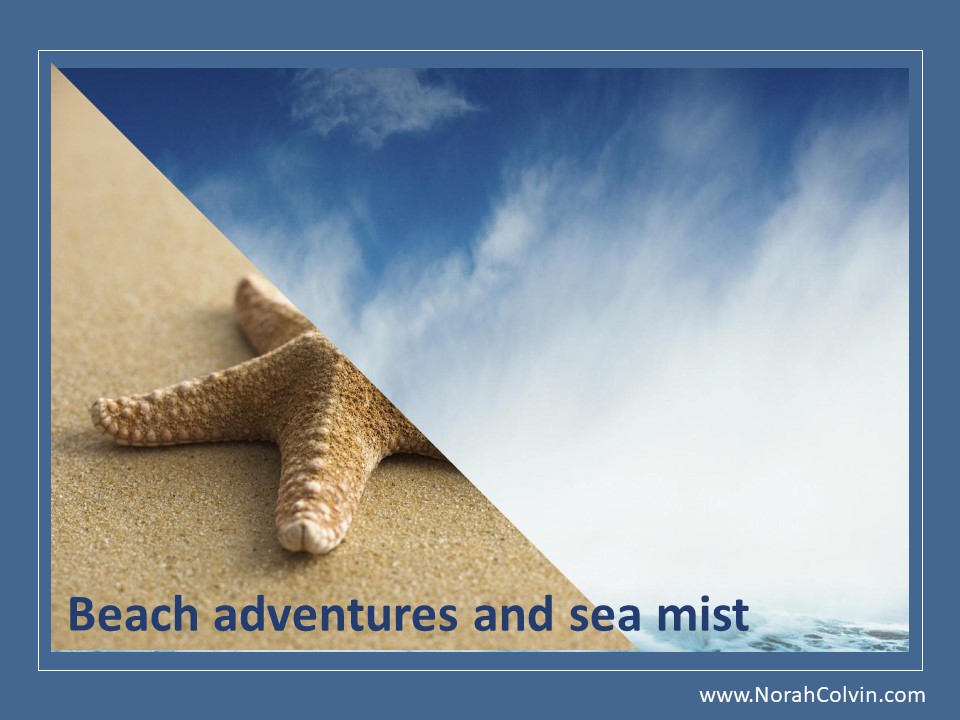
Beach adventures and sea mist
Growing up near the beach
Beach adventures were a big part of my childhood. I spent many long days swimming, sunbaking and exploring with friends and siblings at the beach no more than 500 metres from home. Generally, the instruction was to be home by tea time so, on our long summer holidays, we could spend as much time on the beach as we liked.
It wasn’t the most beautiful of beaches. The sand was coarse and yellow and the shore rocky in places. The water was often filled with jellyfish and seaweed. The narrow beach was edged by tall red cliffs which prompted Captain James Cook to name the area Redcliffe when he passed by in 1770. But we loved it anyway.
There were huge cotton trees, as perfect for climbing as the red cliffs were for scaling, and a playground with swings and slides, many of which are no longer considered child-safe. But we survived.
We’d explore the rocks for sea life, avoiding the jellyfish and seaweed as best we could, both in and out of the water. We’d play in the water and on the sand and lie on our towels talking, laughing and dreaming of whatever we did as children back then.
Sun safety
It may sound idyllic and perhaps it was, though to us, it just was. Most of us are now paying for those long days at the beach with sun damaged skin. If anyone was aware of the dangers of being too long in the sun back then, we certainly weren’t. We considered a bad dose of sunburn as nothing more than inconvenient and we took turns to peel layers of skin off each other’s backs when the blisters burst.
Nowadays, my beach adventures are mostly confined to observations of sparkling white sands and perfect blue water from a shady deck with a cool drink in hand. However, I may venture out for a stroll in the late afternoon when the sun’s light has dimmed, leaving the water and sky to meet and greet in shades of pink and lilac.
Our Australian culture has a love-hate relationship with the beach and sunshine. At the first hint of warm summer weather, we’ll be told it’s a great day for the beach and we’ll be presented with images of beaches crowded with sunbathers. On another occasion, we’ll be advised to stay out of the sun and avoid the damage to our skin. Queensland is, after all, the skin cancer capital of the world. I’ve never figured out why we don’t get a more sensible approach that combines enjoyment with safety.
But let’s not dwell too long on the negatives. Hopefully now with better education and the availability of protective products, the younger generation will not be so nonchalant about time spent in the sun.
A beach excursion
A beach excursion, whether with school or family, presents as many opportunities for learning as it does for fun. There are phenomena to inspire wonder and stimulate curiosity, and countless questions to ask and answers to discover; for example,
Ten beach-inspired questions
- What makes the waves?
- Why does the tide come in and out?
- How is sand made?
- Where do the shells come from?
- Why does the sand squeak when we walk on it?
- What lives in the ocean?
- Why should we take our rubbish home with us or put it in a bin?
- How do fish breathe?
- What made these tracks on the sand?
- My sandcastle was here this morning. What happened to it?
Some answers can be discovered through investigation and exploration at the beach. Others require research.
Three fun beach activities that involve learning
Shells are not only fun to collect, they are great for sorting and counting, measuring and making, creating patterns and trading.
Fish might be fun to catch (for some); but they can also be identified, measured and weighed. Children can research the different types of fish and regulations for catching them.
Photographs provide a great record of beach adventures. Children can be encouraged to compile them and write a recount or report about the outing.
And of course, there are always wonderful books to read about the beach; such as:
Ten beach or ocean themed picture books
The Magic Beach by Alison Lester
Where the Forest Meets the Sea by Jeannie Baker
Circle by Jeannie Baker
The Hidden Forest by Jeannie Baker
The Rainbow Fish by Marcus Pfister
Mister Seahorse by Eric Carle
One Less Fish by Kim Michelle Toft
Coral Sea Dreaming by Kim Michelle Toft
Neptune’s Nursery by Kim Michelle Toft
Swimmy by Leo Lionni
Beach-inspired flash fiction

I was taken back to the beach this week by the challenge set by Charli Mills at the Carrot Ranch to In 99 words (no more, no less) write a story about sea mist. How does it create an environment for a story? It can set the stage or take the stage. Go where the prompt leads.
This is my response. I hope you like it.
Canned Sea Mist
No more than a hint of sea spray and she was flown back on wings of joy to carefree childhood days frolicking in the shallows, basking on golden sands, fossicking for hints of life in rockpools and amassing precious collections of shells and other treasures arranged for her pleasure by the tide. Lulled by a gentle breeze and waves whispering a heart’s rhythm, she dozed, uninterrupted by seagulls squawking, murmured conversations, hushed laughter, or the shuffle of approaching and receding footsteps. As the sun glowed bright above, she sighed her last, now and forever one with the sea’s mist.

Thank you for reading. I appreciate your feedback. Please share your thoughts.
-

Meaning in each word

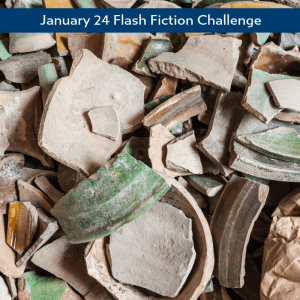
This week at the Carrot Ranch, Charli Mills challenged writers to In 99 words (no more, no less) write a story about shards. You can write about the pieces, the item they once were, or who picks them up and why. Go where the prompt leads.
I had an idea I wanted to craft into a story. I’ve had a go. I’m not certain that it expresses quite what I was hoping, and certainly not as explicitly as I hoped. I had wanted it to stand alone, requiring no other explanation or padding and, while it fails, I’ve let it do just that.
Analyse the Detail
The artisan turned each piece to the light, this way and that, fitting and refitting, arranging and rearranging. Finally, it was done. Each piece necessary and perfectly positioned creating the whole— exquisite, harmonious, illuminating—not one greater nor outshining any other. It filled each open heart with hopes of dreams fulfilled.
Another sought to analyse its beauty, the power of its message to explore. He picked out all the pieces one by one and examined each in every detail. Too late he saw that, shattered and alone, not one shard revealed a secret. Only united did their meaning shine.

Thank you for reading. I appreciate your feedback. Please share your thoughts.
-

What can you do with a puzzle? – Readilearn
Puzzles are a fun way to encourage thinking and problem solving as well as mathematical and language skills. The celebration of National Puzzle Day on 29 January is a great excuse to introduce some puzzles into the classroom. The day may be American in origin, but there’s no reason the rest of us can’t join in the fun too.
I have always enjoyed puzzles; both the fun of figuring something out or solving a problem and the satisfaction in having done so. My favourite types of puzzles include (in no particular order):
- Jigsaw
- Sudoku
- Crosswords
- Logic puzzles
- Block puzzles
- Word puzzles
- Lateral thinking puzzles
Puzzles aren’t just those that come in a box, a book or online. Life presents us with puzzles and problems with regular frequency. Most days we will be faced with something that will stretch our thinking in divergent, convergent or lateral ways. It is good to provide children with opportunities to think too. Brief interludes of puzzle solving throughout the day can add fun, energise and refocus.
A variety of puzzles and resources to develop children’s thinking are available in the readilearn collection. Some are interactive lessons ready to teach on the interactive whiteboard. Others are printable for offline use. All provide opportunities for learning in context with the greatest benefit coming from the discussions with the teacher and other students.
Check out this previous post for other thoughts about Logical thinking and problem solving.
Learning with readilearn puzzles
Sorting puzzles
Continue reading: What can you do with a puzzle? – Readilearn
-

From my bookshelf — 22 Multicultural picture books – Readilearn
In last week’s post, Multicultural Children’s Book Day: Book Review, I suggested that the day “provides us with an opportunity to examine the collections of books in our classrooms and libraries to determine if they reflect the lives our children.”
I decided that perhaps I should examine my own personal picture book collection too. While I am happy with the collection, there are gaps and I’m sure more could be added. However, I know that a visit to my local or school library will provide me with access to many more.
readilearn’s multicultural teaching resources
As well as investigating my book collection, I had a look at readilearn teaching resources to see how they stacked up.
The establishment of a supportive classroom, one that is welcoming to all, is a recurrent theme on readilearn; as are activities for getting to know one another and establishing friendship skills.
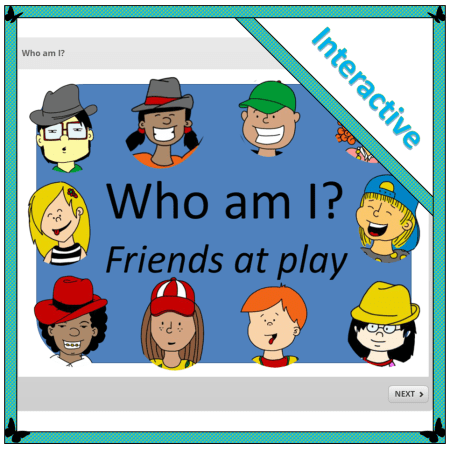
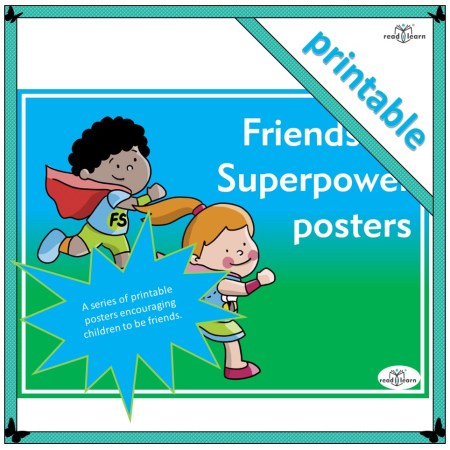
I am proud to say that, when children are included in illustrations, children from diverse backgrounds, even if not in traditional costume, are portrayed. This is intentional. You can see evidence of this on the Home page and in the Literacy and History banners as well as in teaching resources such as Friendship superpower posters and Who am I? Friends at play.
Resources that encourage children to get to know each other rank highly in the readilearn collection. The reason for this is my belief that with knowledge comes understanding, respect and friendship.
Continue reading: From my bookshelf — 22 Multicultural picture books – Readilearn
-

Don’t give up – Yet!
Discussions of the importance of having a ‘yet’ attitude or a growth mindset abound, including on this blog. I am very much in favour of the ‘yet’ thinking, as proposed by Carol Dweck.
Basically, it means that we don’t consider our ability to learn as finite. We believe our potential to be constantly expanding. We may not know or be able to do something ‘yet’, but we can work at it and with each attempt come closer to achieving it.
The resolve to maintain a growth mindset can be challenged at times when the going gets tough and there is no obvious solution. It can be difficult knowing when enough is enough and it’s time to move on; or if success is hiding just around the corner or on a slight detour.
I often debate with myself about how to interpret the truth in the messages the universe seems to be sending, weighing up giving up against exerting just a little more persistence and patience. Consequently, I shouldn’t have been surprised by the unplanned theme in my response to the flash fiction prompt at the Carrot Ranch this week.

Charli Mills challenged writers to In 99 words (no more, no less) write a story that includes colonnades. It can be natural, architectural, or a metaphor. Take a stroll and go where the prompt leads.
What could colonnades possibly have to do with a growth mindset you might think, as would I. But when I sat at the keyboard, without a clue of what to write, this is what developed. I hope you like it.
Never Give Up
The solid grey wall stretched without end, both left and right —impenetrable, no way around, no way through. Perhaps a way over? Even from that distance, it appeared unscaleable.
He removed his backpack and rested his head upon it as he lay, gazing upward. He sighed heavily. He’d trekked so far believing this was the way. How could he have been so wrong?
He closed his eyes and drifted into a deep sleep. Refreshed, upon awakening, he decided to continue rather than retreat.
As he drew closer, the wall separated into columns spaced perfectly to allow an easy passage.
…
Do you see what I saw emerge? A story about not giving up? Of the importance of adjusting focus when it seems a dead end is reached, when there’s nowhere else to go and nothing else to try? Or is the theme significant to only me as I try to find a way through the colonnades in my path?
As I was writing this story, I was reminded of one I wrote for children using the nursery rhyme Humpty Dumpty as a stimulus. In a similar way to Charli’s prompts, I was prompting children to think about possible reasons for Humpty Dumpty to be sitting on a wall and causes for him to fall.
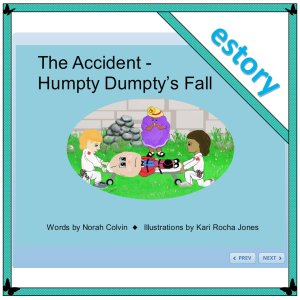
Of course, I couldn’t do the prompting without writing a story of my own: The Accident – Humpty Dumpty’s Fall.
In the story, ‘Humpty looked at the wall. He couldn’t see through it. He couldn’t see over it. And there was no way around it.’ He thought it was ‘no use’. Fortunately, his friend Pomble wasn’t one to give up quite so easily and found a way for them to see over the wall. It was what occurred when Humpty was looking over the wall that caused him to fall. I won’t tell you what happened but, unlike the nursery rhyme, my story has a happy ending.

Thank you for reading. I appreciate your feedback. Please share your thoughts.

-

Multicultural Children’s Book Day: Book Review – Readilearn
Now in its sixth year and held on the last Friday in January, Multicultural Children’s Book Day (MCBD) celebrates books that celebrate diversity. As classrooms are increasingly filled with children from a diversity of backgrounds, it is important to provide them with books that reflect their lives, books in which they can find themselves.
The purpose of Multicultural Children’s Book Day is to create awareness of books that celebrate diversity and to get more of them into classrooms and libraries.
Valarie Budayr and Mia Wenjen, co-founders of MCBD, define multicultural books as:
- Books that contain characters of color as well as main characters that represent a minority point of view.
- Books written by an author of diversity or color from their perspective. Search #ownvoices to discover diverse books written by diverse authors.
- Books that share ideas, stories, and information about cultures, race, religion, language, and traditions. These books can be non-fiction, but still written in a way that kids will find entertaining and informative.
- Books that embrace special needs or even “hidden disabilities” like ADHD, ADD, and anxiety.
Multicultural Children’s Book Day provides us with an opportunity to examine the collections of books in our classrooms and libraries to determine if they reflect the lives our children.
This year, for the first time, I am participating in the MCBD celebrations with a review of I am Farmer, a picture book written by Miranda and Baptiste Paul and illustrated by Elizabeth Zunon. I am grateful to Miranda and Paul and publisher Millbrook Press for providing me with a link to access the book on NetGallery prior to its publication in early February.

Continue reading: Multicultural Children’s Book Day: Book Review – Readilearn