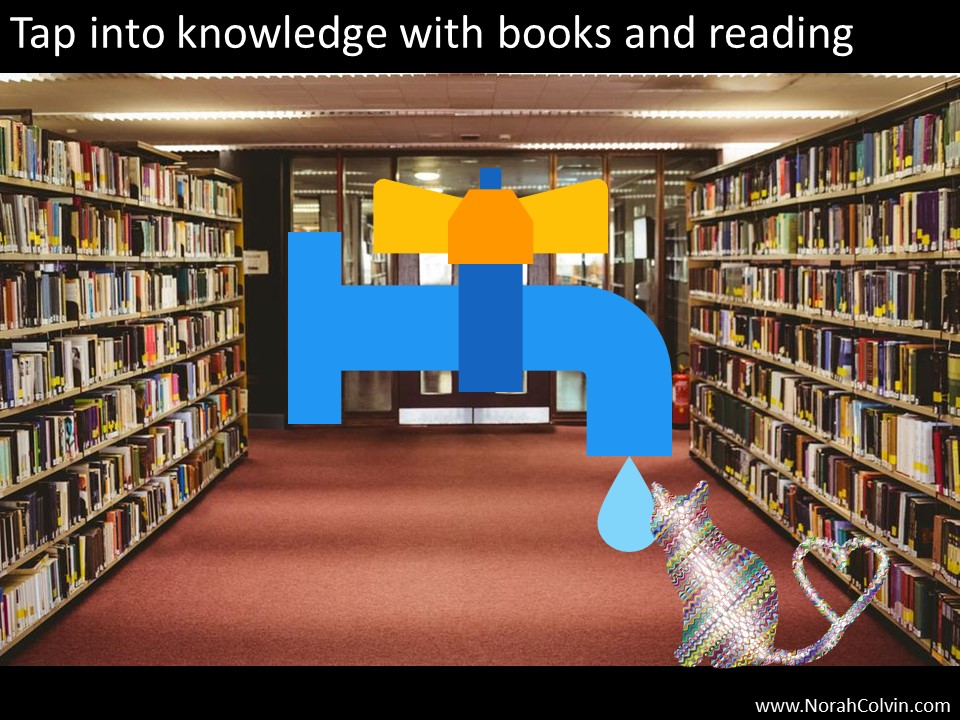
As it usually does, the prompt led me to children and education, especially the empowerment that comes from being able to read. Reading is the key that unlocks the wonders of the world.
While not a continuation of previous stories, it does include some of the characters. I hope you like it.
The Key
Tap-tap-tap, tap-tap-tap.
Peter removed his headphones.
Silence.
He returned to his game. ZING! KAPOW! BOOM!
Tap-tap-tap, tap-tap-tap.
There it was again. Incessant.
What was It? Where was it?
He placed his tablet and headphones on the couch and crept towards the sound — the bookcase!
Tap-tap-tap, tap-tap-tap.
With every step, the tapping intensified. The dusty glass obscured the interior, but the key was in the lock. Should he, or shouldn’t he?
He did!
Into his lap tumbled a rainbow cat, a girl in a hood, a herd of dinosaurs, an Egyptian Pharaoh and all the wonders of the world. Magic!
Thank you for reading. I appreciate your feedback. Please share your thoughts.
The 2020 Student Blogging Challenge starts on March 15. If you wish to participate, it’s still not too late to join in.
What is the Student Blogging Challenge?
The Student Blogging Challenge encourages students around the world to create a blog and experience the benefits of publishing online including:
developing digital writing skills
becoming aware of the possibilities and responsibilities of digital citizenship
writing for and developing an authentic audience
making connections with others around the world.
The project was founded in 2008 by Sue Wyatt and has been held twice a year since then in March and October. Each Challenge runs for eight weeks. A different blogging task is to be completed each week. You can download a copy of the schedule and a checklist of tasks here.
Who can be involved?
The challenge is open to students from K–12 around the world. However, organisers suggest that it is most suited to students from 8–16 years. Students can join in as part of a class group or individually. Participation is free.
I’m sure you all know the nursery rhyme Hey Diddle Diddle about a cat playing a fiddle and a cow jumping over the moon.
I love using nursery rhymes with young children. They are a great way for them to learn the sounds and rhythms of our language, develop their memories and just have fun with nonsense. I’ve never considered it important for them (or me) to know the background of the rhymes. We can leave that to more serious students of literature.
The rhythm and rhyme of nursery rhymes encourage children to join in with the recitation and commit them to memory. Their memory for the rhymes can be used as a step into reading. I’ve written before about nursery rhymes, both on this blog and on the readilearn blog here and here. I have also some written some literacy lessons based on nursery rhymes that are available in the readilearn collection, including Let’s read and write with Little Miss Muffet, Humpty Dumpty — a story in five sittingsandThe Accident — Humpty Dumpty’s Fall.
You may well wonder what that prompt has to do with nursery rhymes. But Charli always says to go where the prompt leads. It usually leads me to children and education in some way. This time, and with a huge apology to all the Clarices out there, it led me to a cow in a nursery rhyme. Why should she be called Clarice? I don’t know, but I thought the first cow in space would be quite an imaginary historical figure. I hope you like my story. I’m certain, if given a chance, children would come up with their own wonderful innovations too.
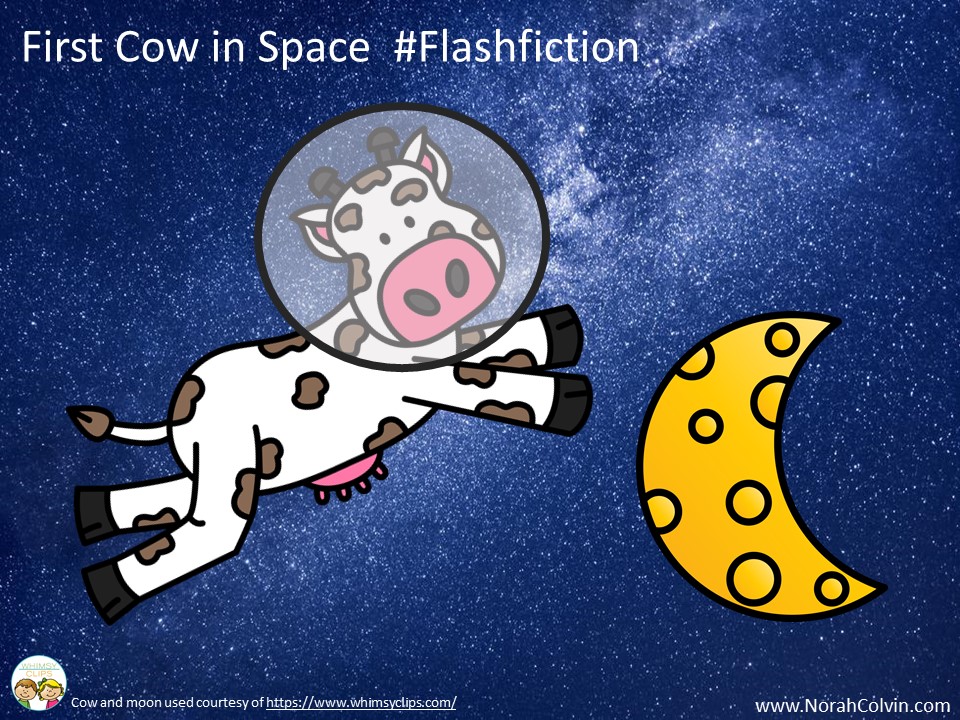
First Cow in Space
“We are here today with the first cow in space, whose identity, until now, has been kept secret. Will you please welcome [drum roll] Clarice Cloverdale.”
[Applause]
“Clarice, please tell us about your adventure and why your identity was undisclosed for so long.”
“It was simply a non-disclosure agreement. That contract has now terminated so I’m free to tell.”
“Go on.”
“We were all tired of playing second-fiddle to Cat. Dish and Spoon ran away so Dog had no alternative but to make me the star. Needless to say, I was over the moon. The rest is history.”
[Applause]
Thank you for reading. I appreciate your feedback. Please share your thoughts.
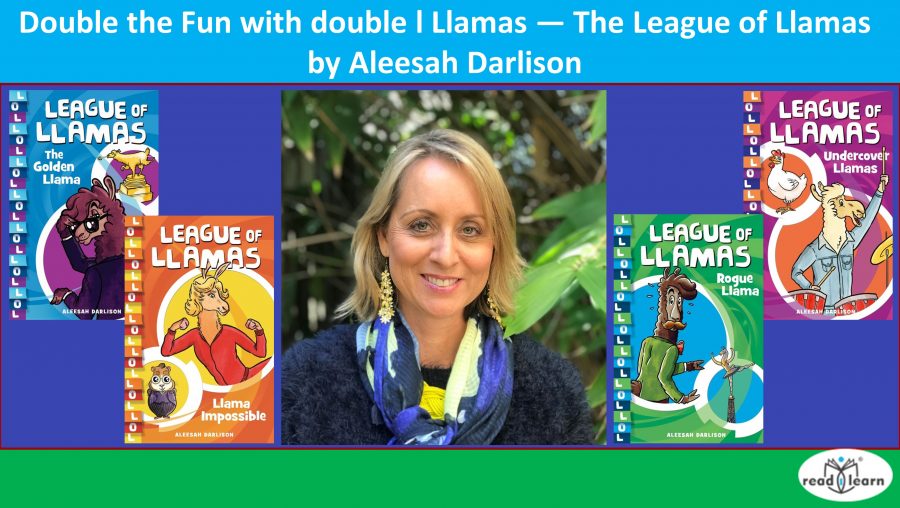
Children will love this newly released series of books by Aleesah Darlison. Teachers and parents will take just as much delight in reading the books aloud as children will in reading them independently or listening to them.
The books are fun from beginning to end with The League of Llamas (LOL) — spies out to save the world from their arch-enemy General Bottomburp.
The series will appeal to those reading their first chapter books, whatever their age. Or, as Aleesah writes,
“With high action, high adventure, and loads of side-splitting laughs, this series suits young readers aged seven and over. And anyone who likes llamas. Oh, and anyone who loves laughing!”
My review of Book 1 The Golden Llama
As if a story about spies and espionage wasn’t enough, Darlison has filled her stories with fun word plays that will amuse and entertain all readers. James Bond fans will not be disappointed in the escapades, close calls and derring-do of top spy Phillipe Llamar, otherwise known as 0011.
The names of the Llamas in the League are spelt with double ll. There’s Phillipe, Lloyd and Elloise. There’s Mama Llama who rhymes and General Bottomburp, the beaver, with his alliteration. Darlison has also dropped in many other double ll words; like llamaborghinis and prob-llama (as in ‘no prob-llama). There are place names like Chickenslovakia, Crowatia, Portugull, Leechenstein and Killamamaanjaro; characters like President Ollama; and artworks like Llama’s Mother and Venus de Llama in the Musée du Llama.
Double the fun with double l llamas — The League of Llamas by Aleesah Darlison is a fun new series about llama spies. Their antics will make you LOL
My passion is education in general with a focus on the education of young children. The development of literacy is a major part of that. Much of one’s success in life depends upon being literate. Literacy is recognised by the United Nations as a basic human right. Anything that impedes a child’s ability to learn to read and write violates that right.
Being literate is not only empowering, it can be a source of joy and escape. A literate population requires access to books of all kinds so that readers can choose materials relevant to interests and purpose.
I fail to see any sense behind decisions to have school libraries without trained teacher-librarians, or indeed, to close school and public libraries. I was incredulous when I learned that new schools were opening without a library, let alone a teacher-librarian. In my opinion, the library should be the hub of the school. I am happy to say I am not alone in that thought.
But the idea needs more support. Fortunately, there is at least one Australian politician who agrees.
As reported on the SCBWI blog, NSW Member of Parliament David Shoebridge says that “libraries should be the heart of every school and that investment in school libraries is essential!”
In the next sitting of Parliament, he is moving that “every public school student in NSW has access to a quality school library and a qualified teacher librarian.”
If only we could get all MPs in every state to support the same movement for all our children, in every state, in every school.
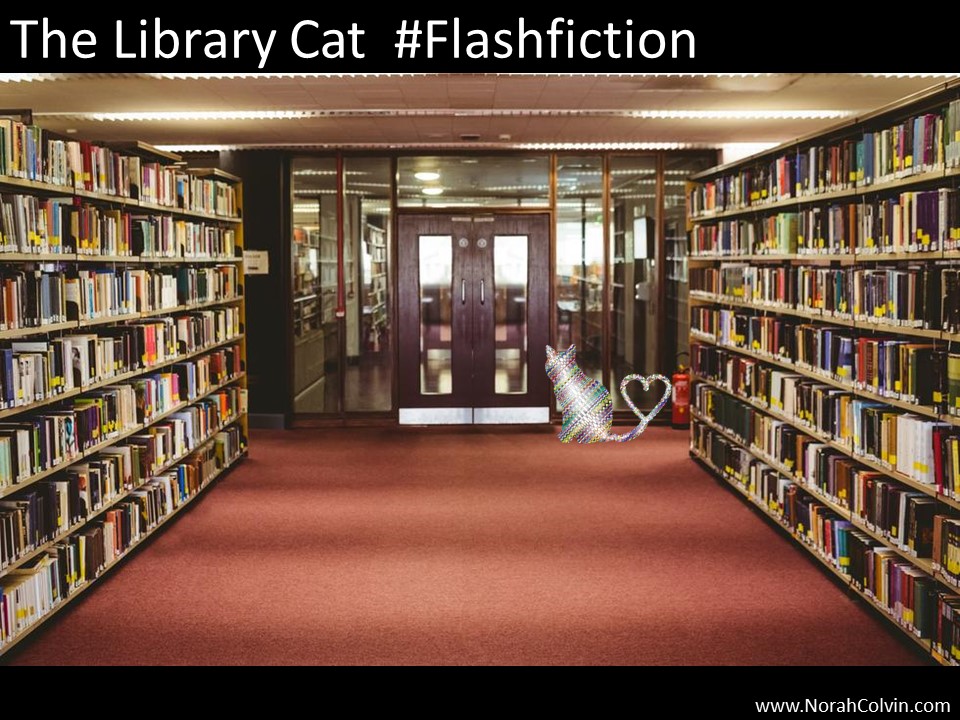
Last week I wrote a story about a library cat. It was well received so I decided to write another episode this week.
Rainbow Cat clawed through the rubble. One by one she pulled out the survivors — Little Red Riding Hood, Little Miss Muffet, The Gingerbread Man; even Wolf who promised to behave.
“Where are we going?” squealed the Three Little Pigs as they piled onto the bus.
“Where children will love us, like before.”
For many, this was their first time beyond the covers of a book. As the bus roared down the open road, they peered through the windscreen and out the windows, dreaming up new adventures yet untold.
Spontaneously, they burst into a chorus of On the Road Again.
Thank you for reading. I appreciate your feedback. Please share your thoughts.
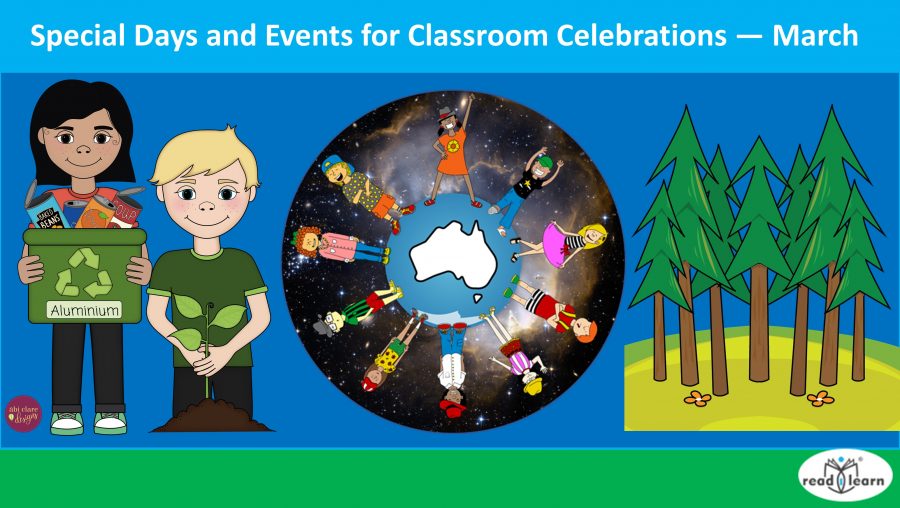
As we step into March, here in the Southern Hemisphere, we are looking forward to some cooler weather and a reprieve from summer’s heat as autumn begins. In the Northern Hemisphere, many will be looking forward to springtime and warmer days.
Things to do in March
Regardless of your location, March is a good time for discussing the seasons and observing changes in the environment.
Records might include observations of changes in:
plants (remember this is the International Year of Plant Health so add that to your discussions)
animals
the weather including temperature
their own activities
the clothing they wear
the foods they eat
Records could be made using photographs, artworks (including drawing, painting, collage) and words.
The first of March is Clean up Australia Day. The website provides useful information to assist each of us to be proactive in eliminating waste and reducing pollution. Each section in helping us to ‘Clean Up Our Waste’ explains the problem and suggests actions we can take. Whether large or small, every action makes a difference. Why not encourage your students to employ positive actions for the environment.
The website also lists ways individuals, schools and communities can become involved in cleaning up Australia on Sunday 1 March. (Clean Up Schools Day is today, 28 February.)
I haven’t joined in the prompts recently for a variety of reasons — other priorities mainly. However, I couldn’t resist this one about libraries and stories — two things of which I am very fond.
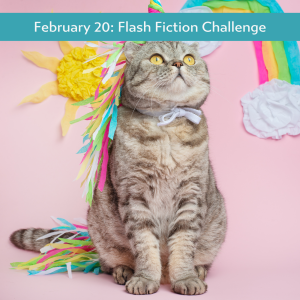
I think a cat, especially a rainbow cat, would make a wonderful addition to any library, especially one packed with great children’s literature. I can just imagine the children reading while the cat devours every word.
Of course, I had libraries, books, stories and children in mind as I wrote my story in verse —aimed at a younger audience, of course. I hope you enjoy it, nonetheless.
The Library Cat
The library cat is fatter than fat.
She sits by the door on the welcome mat.
She greets the readers as they come in —
Nods her head with a welcome grin.
Sometimes she’s in. Sometimes she’s out.
She’s especially quiet when a reader’s about.
She sits so still you can see her purr
When the reader strokes her rainbow fur.
She’s heard every story there is to be told.
Even the classics never grow old.
But read her stories of adventures rare
She twitches her whiskers, “I’ve been there.
No need of a cape. Reading books is my escape.”
Thank you for reading. I appreciate your comments. Please share your thoughts.
Next Saturday 29 February is a leap day. A leap day is an extra day added to every fourth year to keep the calendar in line with the solar year. Since we only have one 29 February every four years, it is a day worthy of celebration. Here are some ideas to get you started.
20 Fun facts about leap years
A leap year occurs once every four years.
A leap year has 366 days instead of the 365 days of other years.
The extra day added to a leap year is 29 February.
The extra day is added to keep the calendar year in line with the seasons and astronomical calendar.
The number of leap years are all divisible by 4; for example, 2000, 2004, 2008, 2012, 2016, 2020, 2024, 2028.
However, although all hundred years are divisible by 4, not all hundred years are leap years. Hundred years are only leap years if they are divisible by 400. So, while 2000 was a leap year, the next hundred year to be a leap year will be 2400.
Leap years were first introduced by Julius Caesar over 2000 years ago with the Julian calendar. His rule was to add a leap day to every year that was divisible by 4.
The leap year as we now know it, with the hundred year rule, was introduced by Pope Gregory VIII in 1582. In that year, Pope Gregory had to remove ten days from calendar to keep it in sync with the solar year. The calendar we still use, the Gregorian Calendar, is named after him.
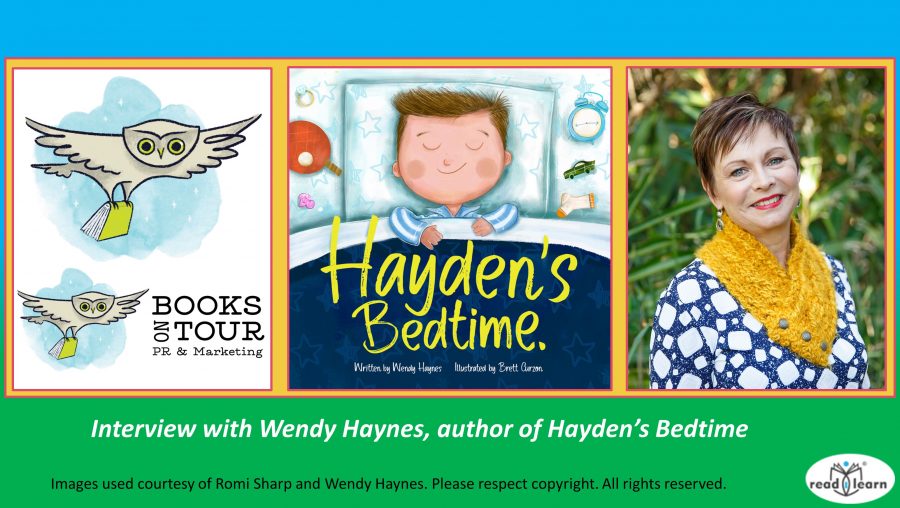
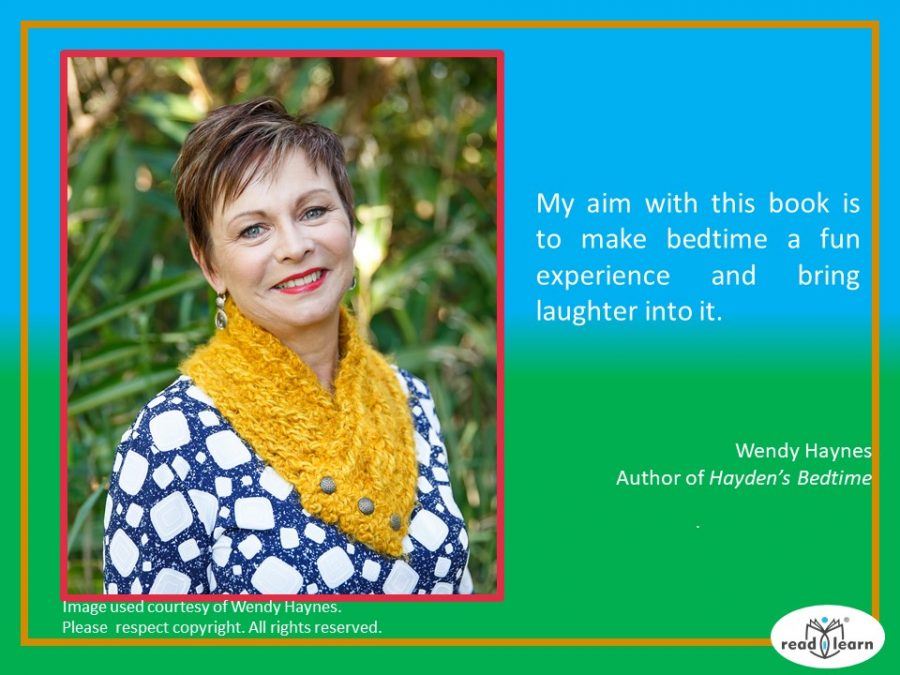
Today, it is with great pleasure that I introduce you to Wendy Haynes and her delightful new picture book Hayden’s Bedtime as part of the Books on Tourpromotion.
About Wendy Haynes
Wendy Haynes has completed a Diploma in Creative Writing at Southern Cross University. Her writing focuses on middle-grade fantasy, historical, and contemporary stories for children, picture books, junior fiction, and YA. She believes that having a regular writing practice, and understand the device at your disposal, is the key to not only completing a story but in building the skills required to produce a worthy manuscript.
About Hayden’s Bedtime
What parent of a young child hasn’t had to perform a bedtime ritual to get the child into bed and off to sleep? Hayden’s Dad is no different as he checks every corner, every nook and cranny to ensure there is nothing lurking in the bedroom. All he finds are everyday things like building blocks and smelly socks, toy cars and chewed up gum. When the child is satisfied that all is safe, Dad reads a story and the child settles down for a good night’s sleep.
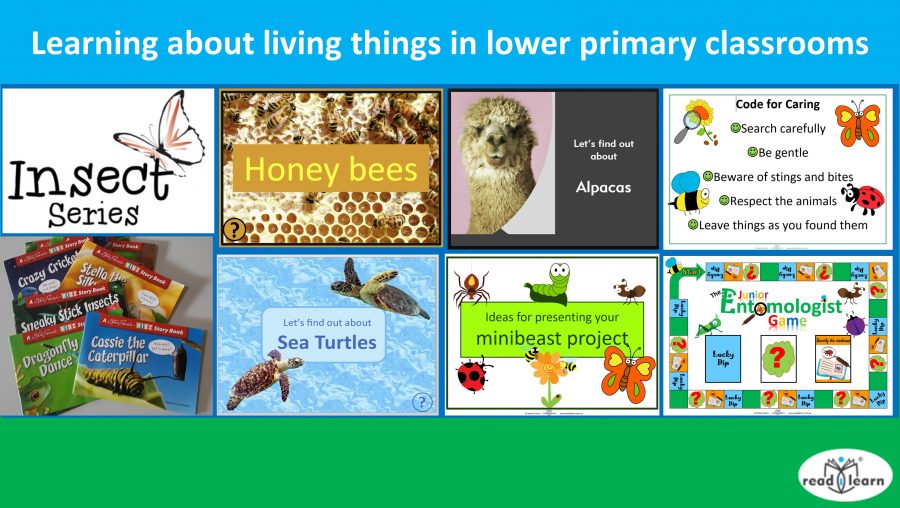
Learning about living things is an important part of education for young children. This post suggests ways of teaching biological science in lower primary classrooms with lessons ready-to-teach and activities that make learning memorable and fun.
Concepts include:
the needs of living things
external features of living things
where living things live
how living things grow
and relate specifically to insects and other minibeasts.












 Norah Colvin