Live Love Laugh Learn … Create the possibilities

Month: April 2019

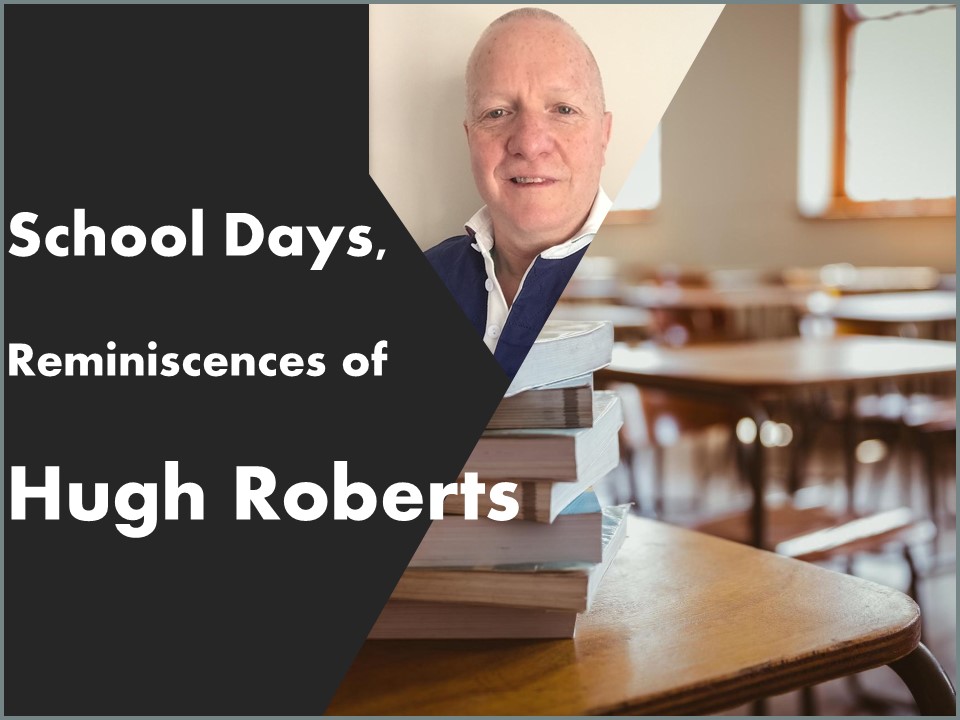
  • School Days, Reminiscences of Hugh Roberts

    School Days, Reminiscences of Hugh Roberts

    Welcome to the School Days, Reminiscences series in which my champion bloggers and authors share reminiscences of their school days. It’s my small way of thanking them for their support and of letting you know about their services and publications.

    This week, I am pleased to introduce Hugh Roberts, author, blogger and WordPress Whiz who generously shares his knowledge and advice to assist others along their blogging journey.

    I’m not quite sure when or how Hugh and I met, but it was probably over at Geoff Le Pard’s blog some years ago. They are both now involved in the organisation of the Annual Bloggers’ Bash celebrating its fifth anniversary in London later this year (find out more on Hugh’s blog here).
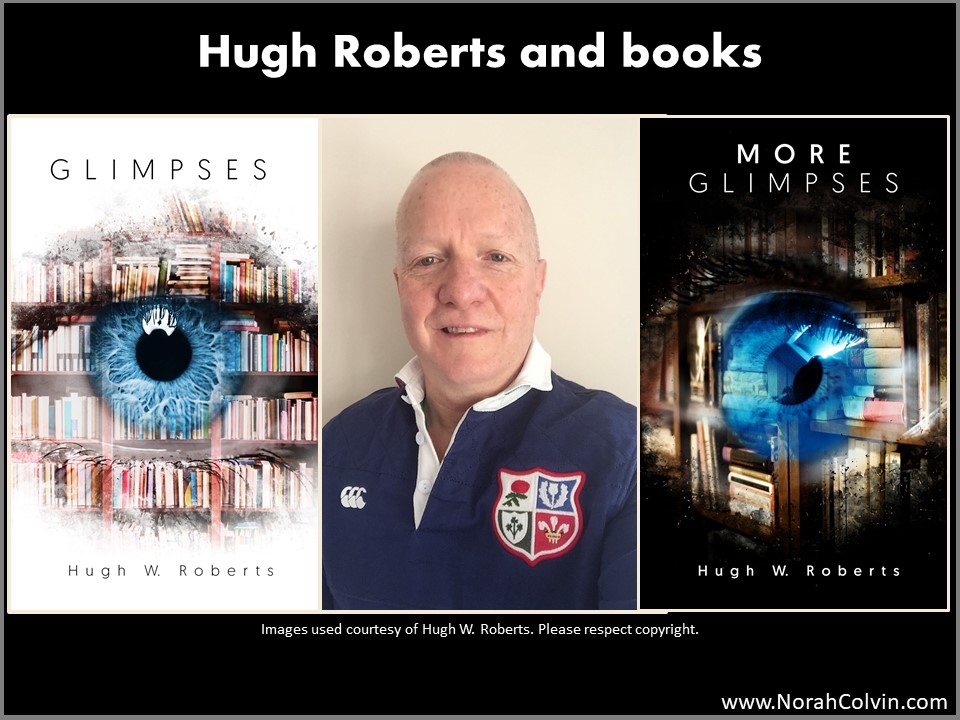
    Hugh Roberts and Books

    Hugh features many interesting series on his blog and always welcomes new readers and often contributors. I read and enjoyed Hugh’s first book of short stories Glimpses. The second volume More Glimpses has recently been released, and I am looking forward to seeing what twists and delights Hugh has in store for me now.

    Hugh also entered both Carrot Ranch Rodeo Contests that I hosted. Although they are judged blind, Hugh won the first competition and came second in the second. That’s a fair indication of what I think of his story telling. 😊

    Before we begin the interview, I’ll allow Hugh to tell you a little of himself:

    Hugh W. Roberts lives in Swansea, South Wales, in the United Kingdom.

    Hugh gets his inspiration for writing from various avenues including writing prompts, photos, eavesdropping and while out walking his dogs, Toby and Austin. Although he was born in Wales, he has lived around various parts of the United Kingdom, including London where he lived and worked for 27 years.

    Hugh suffers from a mild form of dyslexia but, after discovering blogging, decided not to allow the condition to stop his passion for writing. Since creating his blog ‘Hugh’s Views & News’ in February 2014, he has built up a strong following and now writes every day. Always keen to promote other bloggers, authors and writers, Hugh enjoys the interaction blogging brings and has built up a group of on-line friends he considers as an ‘everyday essential’.

    His short stories have become well known for the unexpected twists they contain in taking the reader up a completely different path to one they think they are on. One of the best complements a reader can give Hugh is “I never saw that ending coming.”

    Having published his first book of short stories, Glimpses, in December 2016, his second collection of short stories, More Glimpses, was published in March 2019. Hugh is already working on the next volume.  

    A keen photographer, he also enjoys cycling, walking, reading, watching television, and enjoys relaxing most evenings with a glass of red wine.

    Hugh shares his life with John, his civil-partner, and Toby and Austin, their Cardigan Welsh Corgis.  

    Welcome, Hugh. Now let’s talk school.

    First, could you tell us where you attended school?

    I spent my whole school life in the town of Chepstow; a town on the south-east border of Wales and England in the UK.

    Did you attend a government, private or independent school?

    They were government-run schools.

    What is the highest level of education you achieved?

    I left school at the age of 16 with five ‘O’ Levels and three GSCEs.  I then did a brief stint in college on a hotel and catering management course. A job offer meant I left the class before it finished.

    What work or profession did you choose after school and was there anything in school that influenced this choice?

    My first job was as an office junior before I went into retail.  I enjoyed an office environment, but it wasn’t customer facing (which is what I wanted). I told my careers teacher at school that I wanted to join the police force or fire brigade. Unfortunately, I didn’t qualify to join either because you had to be above a certain height. I was a couple of inches too short!

    What is your earliest memory of school?

    I was the only one standing up in class crying my eyes out while I watched all the mums and dads walking away. It was my first day at school, and I didn’t want my mum to leave me there. I was very emotional and felt she had abandoned me and was not coming back. Of course, she did.

    What memories do you have of learning to read?

    I remember the ‘Peter and Jane’ books which started at 1a, 1b and 1c and went up to 12c (which was the last book in the series). They got harder as you moved up to each one, and you were only allowed to move on to the next book when your teacher was satisfied that you could read the current book satisfactorily.

    What memories do you have of learning to write?

    I remember the first ink pens given to us to practice writing. They were very thin and had to be filled with ink from a bottle, which we had to fill ourselves. It could sometimes get very messy.

    While many of the children around me were doing ‘joined-up’ writing, I was doing all mine in block letters. I can remember being taken aside and told that I had to join the letters together. It took me a long time to gets to grips with joining the letters together, and it wasn’t long before I was left behind.

    What do you remember about math classes?

    I was not too fond of maths. Numbers did not interest me. All I wanted to do was make up stories. All my maths teachers were rigorous, which didn’t help in me gaining any confidence in numbers. I saw them as nasty, uncaring people, who didn’t seem to care about the children around them. I’m sure they did, but I didn’t see it that way.

    What was your favourite subject?

    Geography. I enjoyed learning about other countries and the people who lived in them. I was fascinated by maps and the names of towns and cities and the roads that connected them. Even the positions of countries intrigued me, and when I discovered time zones and realised that it wasn’t ‘lunchtime’ everywhere at the same time, ‘time-travel’ entered my life.  I remember wishing that it would become part of the Geography education module before I left school.

    School Photo - Hugh Roberts

    What did you like best about school?

    Drama class. In primary school, I could run around being who or what I wanted to be. Whether it was a tree, an animal or somebody driving a vehicle, I enjoyed the fun, laughter and enjoyment of the class.

    As I grew up, Drama got more serious, but I enjoyed playing different parts in the school play.

    What did you like least about school?

    Playing sport. I had no liking for playing any physical games, especially on cold, wet days on muddy fields. After Easter, we would do athletics which I enjoyed a lot more. The long jump was my speciality!

    How do you think schools have changed since your school days?

    Unfortunately, I think there are now more children who have no respect for their teachers than there were in my school days. Not only that, but some of the parents also have little regard for the teachers.

    It also saddens me to hear about schools not being able to afford to buy the basics like pens, pencils, books and even toilet rolls, because their budgets have been cut so much. Many now turn to the parents asking them to help fund children’s education when it really should be the government which funds it. I was so lucky to have ‘free’ education but, these days, ‘free education’ is something that is disappearing fast.

    What do you think schools (in general) do well?

    I hear more and more about schools inviting authors, writers and experts to come in and talk to the pupils about a particular subject. Whether it be about self-publishing, how to be safe on social media, or help and advice on careers or money matters, it gives those who want to help a chance to pass on their knowledge to new generations to come. I think it’s fantastic that they also ask people to come in and talk about their memories about specific events. It helps keeps memories and ‘past ways of lives’, alive.

    How do you think schools could be improved?

    More needs to be done in educating children about diversity and the hate crimes we hear so much about nowadays. Nobody should feel afraid to go to school because they are bullied or just because they’re told they are different and don’t fit in. Children should be encouraged to read about different ways of lives and to speak out about bullying. As a child who was bullied at school, my life was made much worse because I was afraid to tell an adult what was happening. These were the days before social media where bullying and hate crimes have now taken up residence. Children, these days, have a lot more to put up with, but I think there are also more bullies these days than there were when I was at school.
    thank you for your participation

    That’s an interesting observation with which to conclude, Hugh. Thank you for sharing your reminiscences of school and thoughts about education in general. It’s been wonderful to have you here. I’m sorry you were bullied in school and wish bullying was something we could eradicate.  


    Find out more about Hugh Roberts

    on his blog: Hugh’s Views and News

    Amazon Author Page

    Goodreads

    Connect with him on Social Media

    Twitter: @HughRoberts05

    Flipboard

    Mix.com

    Purchase Hugh’s books here:

    Glimpses by Hugh Roberts

    Universal Link for buying Glimpses

    More Glimpses by Hugh Roberts

    Universal Link for buying More Glimpses


    If you missed previous reminiscences, check them out here:

    Charli Mills

    Sally Cronin

    Anne Goodwin

    Geoff Le Pard

    Look for future interviews in this series to be posted on Sunday evenings AEST.

    Coming soon:

    Debby Gies

    Pauline King

    Jules Paige

    D. Avery

    with more to follow.

    Thank you blog post

    Thank you for reading. I appreciate your comments. Please share your thoughts.


  • Interview with Teena Raffa-Mulligan, author of The Apostrophe Posse

    Interview with Teena Raffa-Mulligan, author of The Apostrophe Posse

    Today, it is with great pleasure that I introduce you to Teena Raffa-Mulligan, author of a fun story for young readers The Apostrophe Posse.

    This interview is part of Romi Sharp’s Books On Tour PR & Marketing and just one of several celebrating the launch of Teena’s book. Please read to the end of the post for details of other posts celebrating Teena’s work.

    Note: Mostly, I publish these interviews first on readilearn but, until the readilearn blog schedule is resumed, I am sharing them here first.

    About Teena Raffa-Mulligan

    About Teena Raffa-Mulligan

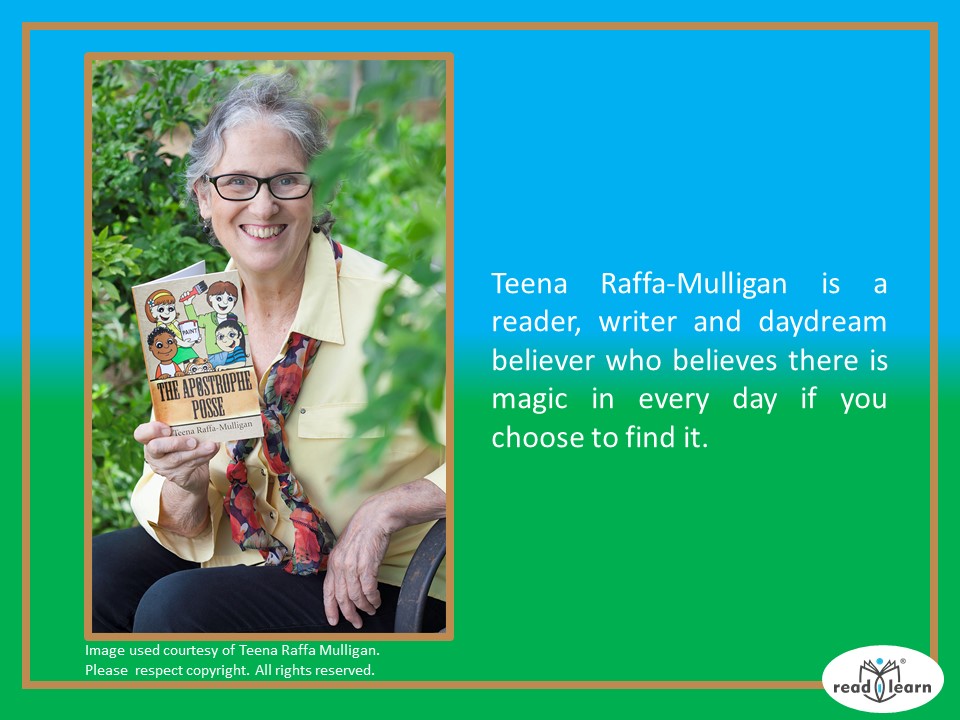
    Teena Raffa-Mulligan is a reader, writer and daydream believer who believes there is magic in every day if you choose to find it. She discovered the wonderful world of storytelling as a child and decided to become a writer at an early age. Teena’s publications for children include poetry, short stories, picture books and chapter books. Her writing life has also included a long career in journalism. She shares her passion for books and writing by presenting talks and workshops to encourage people of all ages to write their own stories.

    About The Apostrophe Posse

    Trouble comes to Tea Tree Bend…

    In cowboy movies the sheriff forms a posse to round up all the bad guys. Cam and Ellie from Daisy Cottage and their friends Billy and Louisa have formed a different posse. Their mission is to find and fix all the signs in Tea Tree Bend with missing apostrophes. The summer holidays are almost over so they have just nine days to complete their task.
    How can doing the right thing go so wrong?

    My thoughts

    I couldn’t resist reading a book with the title The Apostrophe Posse. Many writers, children and adults alike, have difficulty with apostrophes and I could just imagine a posse going out after all the missing or misused apostrophes. I see so much of it myself and would love to round up all those apostrophes and put them where they should be.

    I also found the consonance and assonance in the title appealing. It hinted that the book would be fun, and it is.

    The book would be a great stimulus to discussions about the placement of apostrophes, but it’s too good a read to be limited to that alone.

    Let’s find out what Teena has to say.

    The interview.

     Hi, Teena. Welcome to my blog.

    Thanks for inviting me.

    Teena, when did you know you wanted to be a writer?

    I grew up in an English/Italian family, surrounded by natural story tellers whose tales about their lives captured my imagination. Once I learnt to read, books opened a wonderful window into the world of make believe and I knew from a very early age that I wanted to become a writer. I also wanted to be a ballerina, so I thought I’d write novels in the dressing room between performances while travelling the world. Reality woke me from the dancing dream, but I didn’t give up on the ambition to become an author and began submitting short adult fiction and poetry to publishers in my late teens. When I became a mum at the age of 21 and began sharing books with my small son, I realised I wanted to write for children.

    Where do you write? Do you like to be by yourself in the quiet, or do you like to write in a noisy space?  

    Teena Raffa-Mulligan's roll-top desk

    I write in the lounge room in my recliner chair near the front window, in bed, at the kitchen bench, on the back patio, out on the deck overlooking the back garden, and I also have the luxury of my own office at home. When my children were small, I wrote anywhere around the house in snatched fragments of time. I didn’t have an office (they needed somewhere to sleep!) so I had a gorgeous timber roll-top desk in the kitchen that I bought with my first earnings from writing stories. It wasn’t quiet or peaceful with the business of the household going on around me and that didn’t seem to matter then. Those days are long gone, and I have become accustomed to my peace and quiet. I don’t even play music while I’m writing.

    What do you use to write – pencil and paper or computer?

    Teena Raffa-Mulligan's writing process

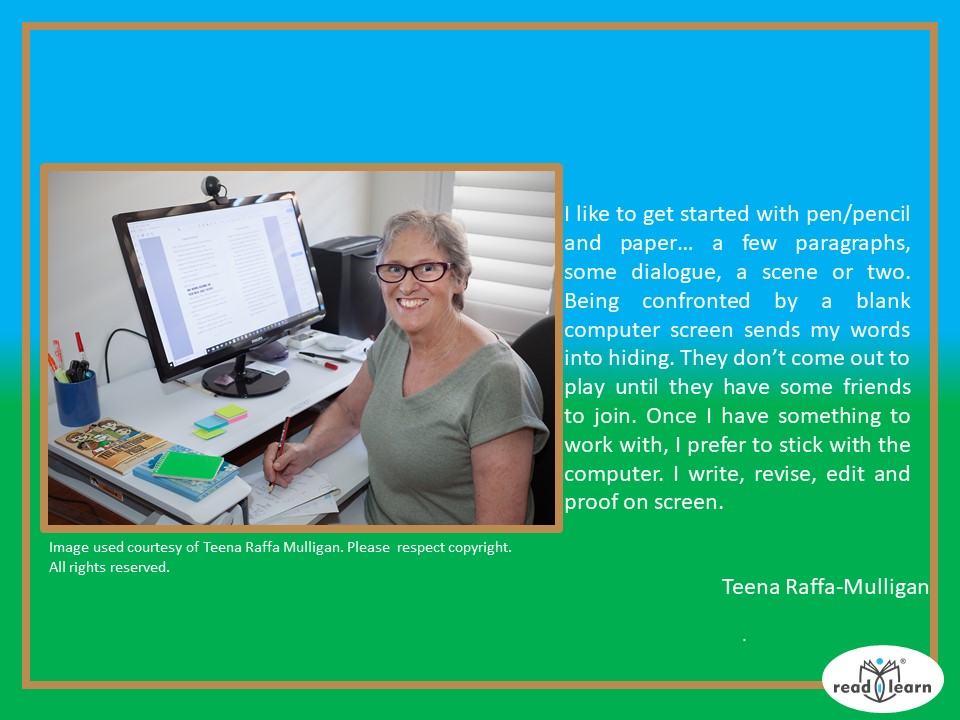
    I like to get started with pen/pencil and paper… a few paragraphs, some dialogue, a scene or two. Being confronted by a blank computer screen sends my words into hiding. They don’t come out to play until they have some friends to join. Once I have something to work with, I prefer to stick with the computer. I write, revise, edit and proof on screen.

    When do you write?

    Not often enough! I spend hours every day on writing related activities but not necessarily on progressing my current WIP. I’m volunteer coordinator of the local writing centre so that keeps me busy. I also visit schools, libraries and community groups to present author talks and writing sessions whenever I get the opportunity. I recently ventured into indie publishing, releasing some of my own books and also my late father’s collection of spiritual writing. Then there’s social media to keep up with, plus reading blogs and watching videos to develop new writing and publishing skills. My new writing happens around all of that. I do set myself deadlines each week but they’re rather elastic.

    When do you get your ideas?

    They can come anytime and anywhere. The best ideas often arrive unexpectedly in the middle of the night, especially in winter when the last thing I want to do is leave my cosy, warm bed. I’ve learnt to keep notebooks handy after losing some wonderful stories because I thought I’d remember them in the morning. Once I have an initial idea, I don’t plan my stories. I start writing and see where they take me. This means I often don’t know what happens next. Walking, driving and washing dishes are great times for figuring that out.

    Do you think of the story in your head before you write it?

    Always. I compose sentences, mentally write paragraphs, describe scenes and devise conversations.

    What gave you the idea for The Apostrophe Posse?

    Teena Raffa-Mulligan's thoughts about apostrophes

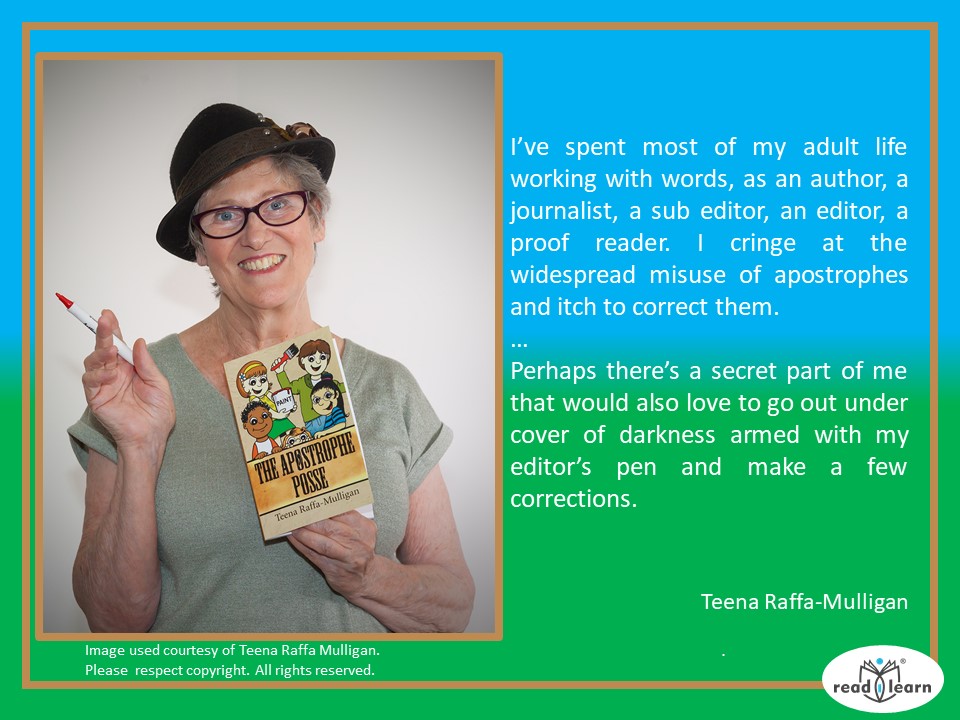
    I’ve spent most of my adult life working with words, as an author, a journalist, a sub editor, an editor, a proof reader. I cringe at the widespread misuse of apostrophes and itch to correct them. I love the book Eats, Shoots and Leaves by Lynne Truss. I was driving to my job at the local paper one morning after dropping my children off at school when the idea for The Apostrophe Posse popped into my head. I watched quite a few cowboy movies as a kid and the sheriff often gathers his posse of men to ride out of town to catch the bad guys. In my story that’s Cam and company and they want to find and fix all the incorrect signs around town.  Perhaps there’s a secret part of me that would also love to go out under cover of darkness armed with my editor’s pen and make a few corrections.

    What do you like best about The Apostrophe Posse?

    The way Cam, Ellie, Billie and Louisa want to put something right, but everything goes wrong.

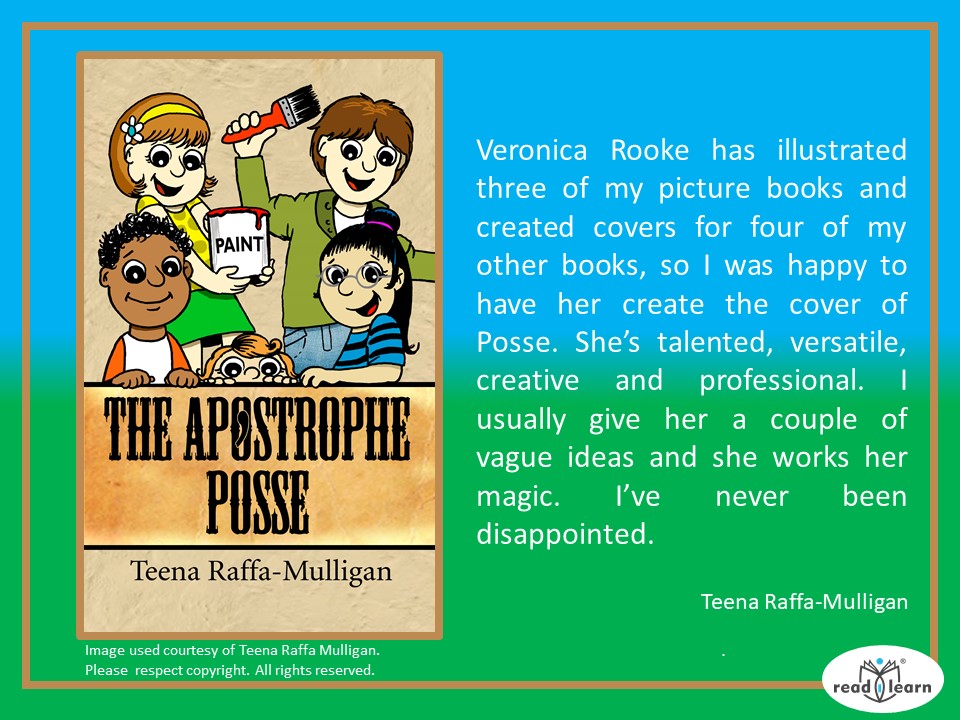
    Do you like the way Veronica Rooke illustrated the cover?

    Teena Raffa-Mulligan's thoughts on Veronica Rooke's illustrations

    Veronica has illustrated three of my picture books and created covers for four of my other books, so I was happy to have her create the cover of Posse. She’s talented, versatile, creative and professional. I usually give her a couple of vague ideas and she works her magic. I’ve never been disappointed.

    How did you feel when you wrote The Apostrophe Posse?

    It was fun coming up with what could go wrong when a group of well-meaning country kids set out to do their good deed for the community. Of course, everything worked out happily in the end, as it always does in my stories, so I sat at my computer with a big smile on my face.

    How do you hope readers will feel?

    It would be great if my story brought a smile to their day and left them with the feeling they’d made some new friends.

    How would you like teachers to present The Apostrophe Posse? to children?

    I hope it will be presented first as a book to enjoy, a fun story about a group of kids whose good intentions get them into trouble. Discussion could follow about community, cooperation, consequences and, of course, punctuation and why we need it if we are going to communicate clearly with each other.

    Are there any messages you would like them to discuss?

    Cooperation and the importance of working together to achieve something positive. Facing the consequences of our actions. Children could also think about why we have rules and guidelines in our communities and what might happen if there were none.

    Do you have any advice for teachers in their role as writing guides?

    If you’re excited about books and language, students will pick up on this. Create a spirit of adventure around writing stories and encourage them to explore where words can take them. A lot of kids get stuck at the start because they’re convinced they don’t know what to write or how to express the ideas they do have. It’s important to stress that they don’t have to get it right, just get it down. In the beginning, it’s all about creating something to work on.    

    Do you have any advice for children as writers?

    Teena Raffa-Mulligan's advice for children as writers

    Writing stories is fun. You get to create characters, put them in weird and wonderful situations and then decide what happens next. In your imagination you can be anyone, go anywhere and do anything at all. What will you be today? A super hero? A detective? An astronaut? Where will you go? Deep beneath the sea? To the top of the world’s highest mountain? To the farthest stars? It’s up to you! Don’t worry about whether what you’re writing is an amazing story. Just play with the words. Let one follow another and see where they take you. It’s an adventure.

    What is your favourite children’s book?

    I’ve read so many wonderful books for children over the years and it’s impossible for me to choose just one. Books I loved reading when I was in primary school were Enid Blyton’s Famous Five and Secret Seven series, E. Nesbitt’s Five Children and It and The Railway Children and Frances Hodgson Burnett’s The Secret Garden. What Katy Did also struck a chord, as did books by Elizabeth Goudge. As a teenager I discovered John Wyndham and read all of his books including The Chrysalids, Day of the Triffids and The Kraken Wakes. Fantasy also captured my imagination, particularly Anne McCaffrey’s Dragon Riders of Pern series.

    Who is your favourite children’s author? What do you like about his or her work?

    When I visit schools and children ask me which of the books I’ve written I like best, I always tell them I have three children and they are all special in their own way. I could not choose one ahead of the other. I feel the same about authors. I am in awe of some of the writing being produced, from picture books to YA novels, and I’ve lost count of the times I’ve come to the final word in a story and closed the book on the thought, ‘Wow! I wish I’d written that!’

    When my children were small, I enjoyed sharing the Dr Seuss books with them. I loved the way he played with words.

    thank you authors and illustrators

    Thank you, Teena. I enjoyed meeting you and finding out a little more about your writing process, your fun book The Apostrophe Posse and your purpose for writing it. As you said, there is much more to your book than a lesson in apostrophes. It is a lesson in life. You have shared so many valuable thoughts with us. I found myself nodding along with you and thinking, “I wish I’d said that!”


    Find out more about Teena

    from her website: Teena Raffa-Mulligan

    or her blog: In Their Own Write

    Connect with her on social media

    Facebook: Teena Raffa-Mulligan.Author


    The Apostrophe Posse blog tour schedule

    Check out other posts about The Apostrophe Posse on the Blog tour schedule:

    Monday April 1 – Friday April 5: www.justkidslit.com/blog

    PLUS!

    Tuesday April 2: www.instagram.com/thebyrdandthebookworms

    Thursday April 4: www.authorjillsmith.wordpress.com

    Friday April 5: www.littlebigreads.com

    SPECIAL FEATURE!

    Middle Grade Mavens Podcast: www.middlegradepodcast.com

    Thank you blog post

    Thank you for reading. I appreciate your feedback. Please share your thoughts.

  • Let’s pretend — play and imagination

    Let’s pretend — play and imagination

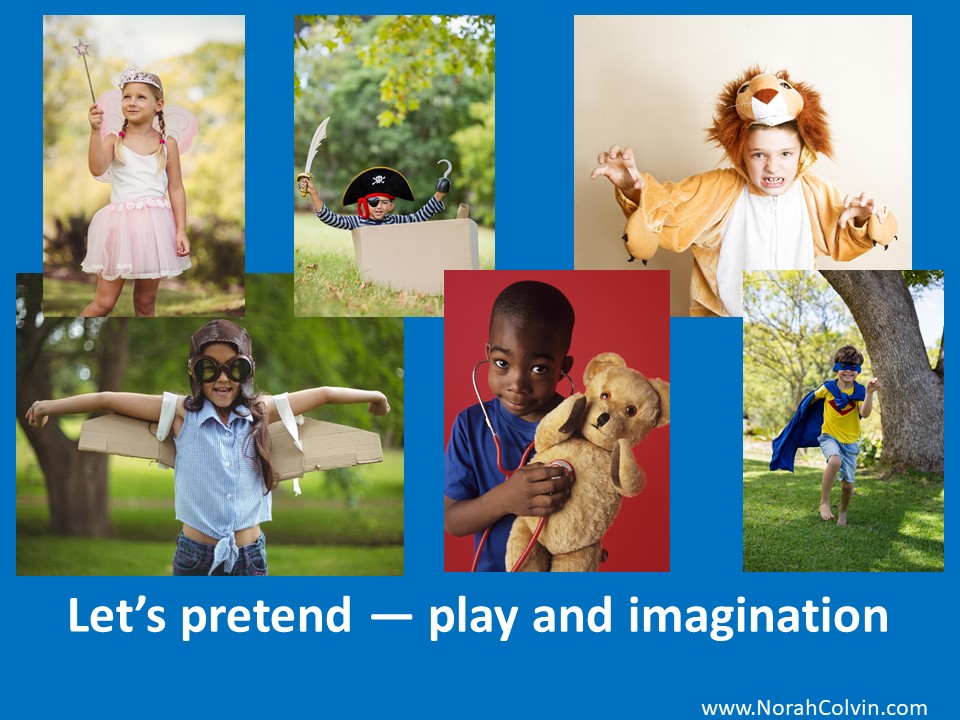
    If the title conjures up images of children playing dress-ups with forts and castles, saving princesses and defeating dragons, that’s good. Such was my intention.

    Pretend play, in which children use their imaginations, allows them to try out different roles, experience different possibilities and enact a variety of solutions to problems they encounter.

    But play and imagination isn’t just for children. It is through playing with ideas that new discoveries are made, inventions are created, and innovations implemented. Without imagination, everything would always stay as it always was. Science wouldn’t progress and stories wouldn’t get written.

    Charli Mills of the Carrot Ranch flash fiction challenge Eminence

    When Charli Mills at the Carrot Ranch challenged writers to In 99 words (no more, no less) write a story that uses the word eminence. It’s a rich word full of different meanings. Explore how it sounds or how you might play with it. Go where the prompt leads!, I knew that imaginations the world over would be employed to respond.

    Every week when Charli sends out a prompt, writers play with ideas to engage readers with unique and imaginative perspectives on the word or phrase. When all have been submitted, Charli searches for threads that bind the diverse stories together and compiles them into a connected whole.

    Charli’s use of the word ‘eminence’ in her flash fiction story was unfamiliar to me, so I opted to stay within my comfort zone. With such a serious and imposing word though, what could I do but play? I hope you enjoy it.

    Your Eminence

    She glided in, regal robes flowing, loyal subjects lining the path.

    “Your eminence,” they bowed as she passed.

    She occasionally extended her gloved hand to receive their kisses of adoration or stopped to bestow a gift of royal chatter. Though her crown and responsibilities weighed heavily, she held her head high as she proceeded towards the throne. Decorum dictated every move. She dared not breathe out of sync. Her subjects depended upon her.

    When seated, she motioned for all to sit. They obeyed, listening respectfully.

    “I decree– “

    “Lunch is served, Your Majesty.”

    “Aw, Mu-um!”

    “You’ll reign again later.”

    Thank you blog post

    Thank you for reading. I appreciate your feedback. Please share your thoughts.