Live Love Laugh Learn … Create the possibilities

Month: September 2018

  • readilearn: Celebrating reading and writing on International Literacy Day

    readilearn: Celebrating reading and writing on International Literacy Day

    Tomorrow is International Literacy Day. It has been celebrated on 8 September for over fifty years. The purpose of the day is to remind the international community of the importance of literacy and to eradicate illiteracy around the world. It values literacy education for young people the world over. This year’s theme is Literacy and skills development and focuses on the integration of literacy with other skills to enhance people’s lives and employment opportunities.

    In our early childhood classrooms, the focus is always on the development of literacy. A strong foundation in both reading and writing enables children to be more successful learners at school and independent learners out of school. It provides them with skills essential to full participation in and contribution to our world. While we may not be ostensibly training them for future employment, the literacy skills they learn in early childhood form the foundation upon which that learning develops.

    The idea of integrating literacy development with other skills is not unfamiliar to early childhood classrooms. The most effective approaches focus on teaching skills in meaningful contexts rather than in isolation.

    In celebration of International Literacy Day this year, I have uploaded some new resources to the literacy collection. As with other readilearn literacy resources, the focus is on teaching literacy skills in context.

    Continue reading: readilearn: Celebrating reading and writing on International Literacy Day

  • Lemons, Limes and Other Mysteries

    Lemons, Limes and Other Mysteries

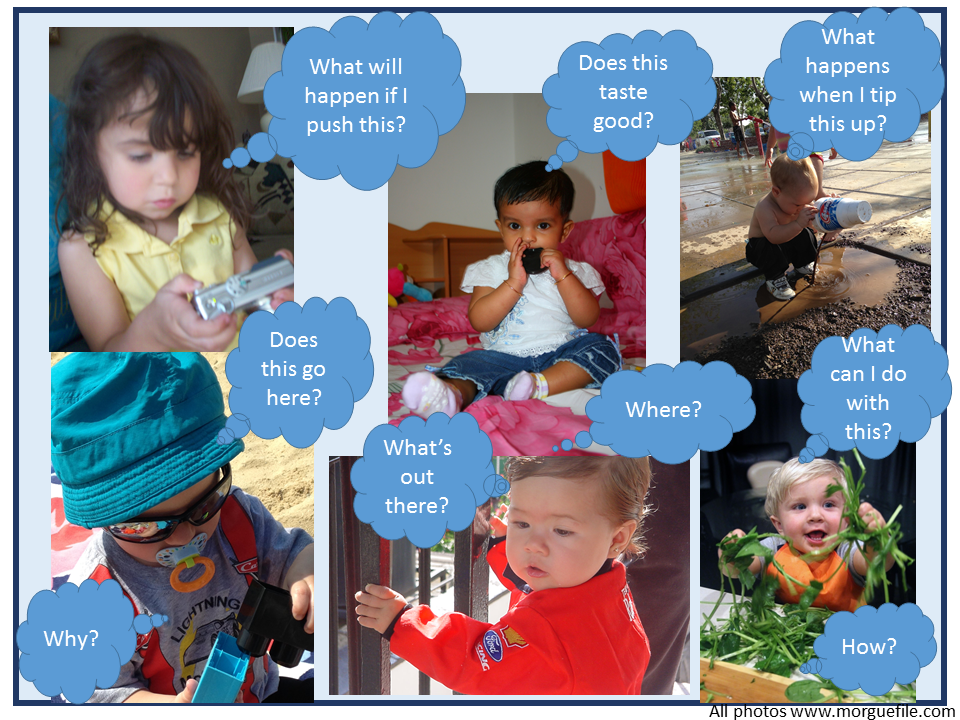
    Children are question machines, churning out question after question: why is it? how does it? Their mission is to find out about the world and everything in it, not to drive their parents crazy, as many believe.

    Of course, the best response to children’s questions is to help them find the answers, unlike in this scenario.

    Unknown source. Apologies. Happy to attribute if informed.

    I always love the story of David Attenborough shared by Michael Rosen in his wonderful book Good Ideas: How to Be Your Child’s (and Your Own) Best Teacher. Rosen says that, as a child, David took an interest in bones and if he was out walking and found some he would take them home and ask his father (a GP so would probably know) about them.

    But his father didn’t just tell him. Wanting his son to be curious and interested in finding things out for himself, he responded, for example: “I wonder if we can work it out . . .” They would then look through books about zoology and anatomy and try to identify the bone’s origin.

    I would like to have been a parent like David Attenborough’s father, perhaps more often than I was. But sometimes the situation is not conducive to an immediate quest for answers, and oftentimes we don’t have a satisfactory one to give.

    Our language, with multiple meanings for the same word, and an abundance of phrases that can’t only be taken literally, is not the easiest to learn. I often marvel at how well our children learn it and wonder even more about the complexity our language has for learners of English as another language.

    Charli Mills flash fiction challenge bottleneck

    This week at the Carrot Ranch, Charli Mills challenged writers to In 99 words (no more, no less) write a story about a bottleneck. You can be literal or use the term to describe congestion. Go where the prompt leads.

    Bottleneck is one of those words that can’t always be taken literally. I’ve used my response to Charli’s prompt to honour parents who are under constant scrutiny and bombardment with questions from their little ones. Sometimes it feels more like a battleground and they do well to maintain a peaceful composure. I hope you enjoy it.

    Lemons, Limes and Other Mysteries

    She hit the brakes and thumped the steering wheel.

    “Mummy swore.”

    “Didn’t.”

    “I heard.”

    “Why we stopped, Mummy?”

    “There’s a traffic jam.”

    “Jam? I love stawbrey jam sammich.”

    “Not that jam — must be a bottleneck up ahead.” Please be a merge, not an accident.

    “We learned ‘bout bottlenecks today.”

    “What?”

    “Live in the ocean. Maminals, like us. Where’s bottleneck, Mummy?”

    “Not bottleneck, Jamie, bottlenose.”

    “You said bottleneck.”

    “I meant — aargh!”

    Finally, they were home.

    “You look frazzled, hon.”

    She rolled her eyes and took the beer.

    “Why lemon is in your bottle neck?” asked Jamie.

    “Because it’s not lime.”

    Photo via Good Free Photos

    Why do they put that lemon or lime in a Corona? Do you know?

    Thank you blog post

    Thank you for reading. I appreciate your feedback. Please share your thoughts.